Roadmachine
vsURS
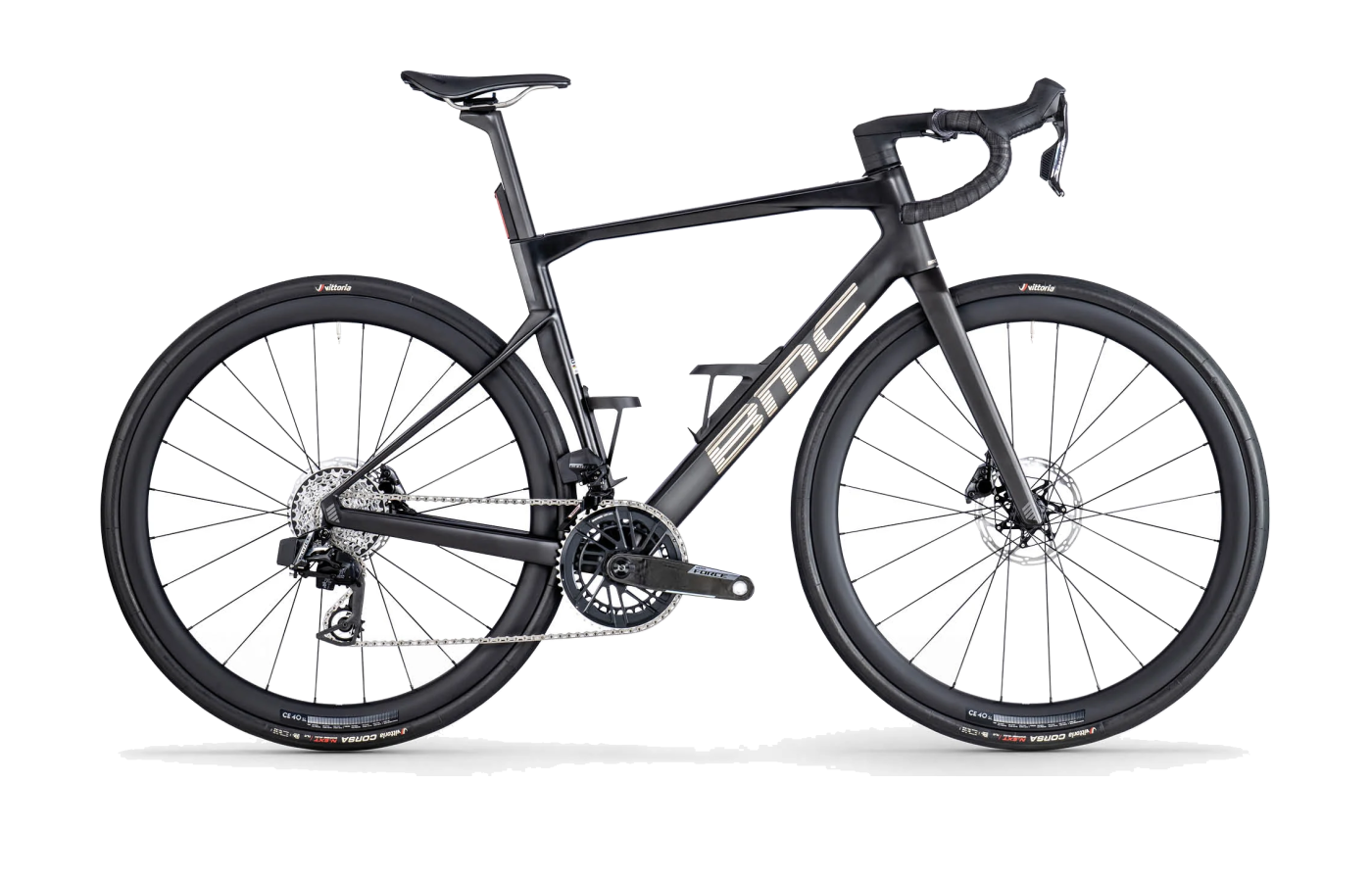
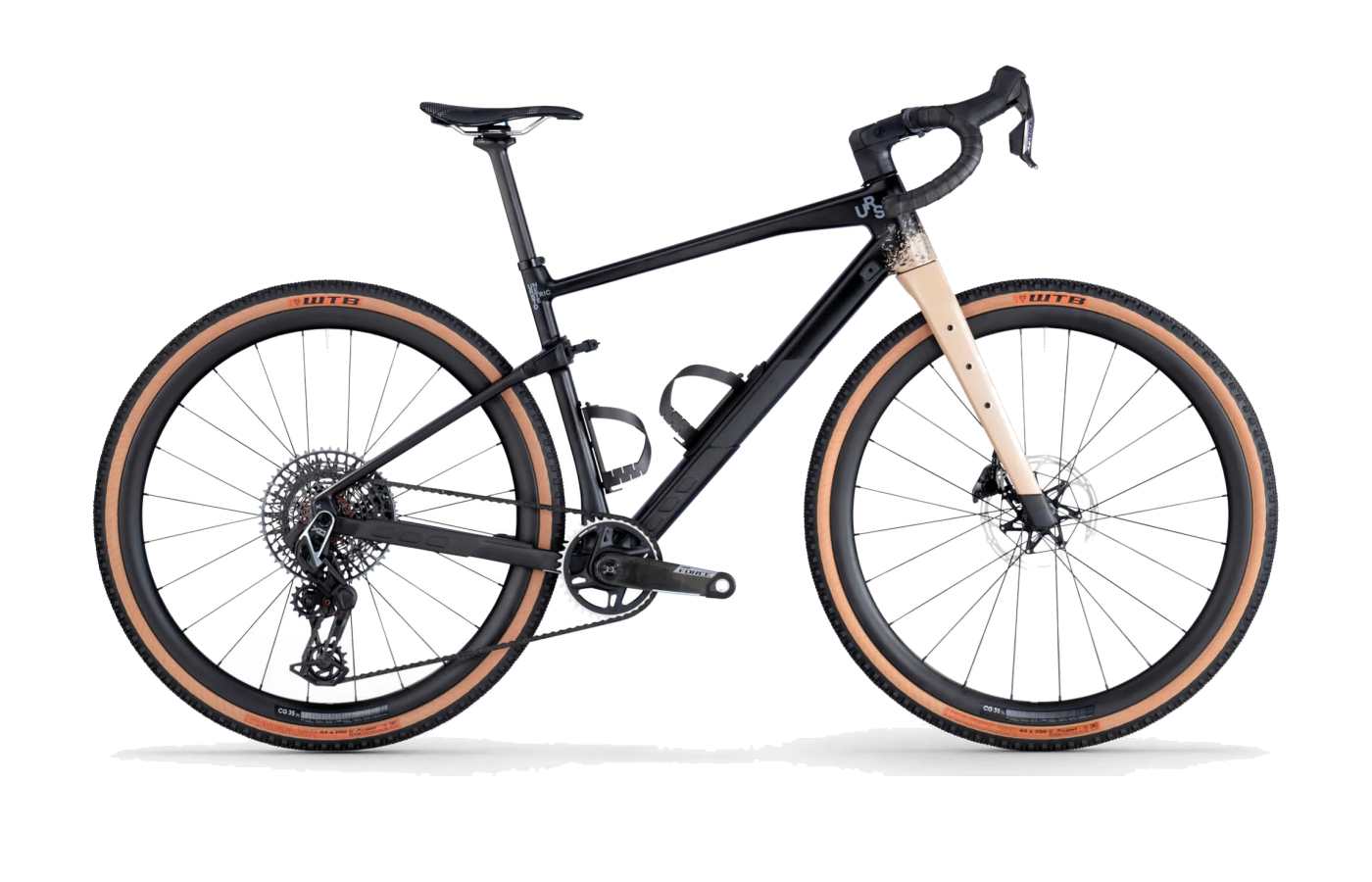
Same brand, opposite jobs.
The Roadmachine is BMC's endurance road bike pushed to a 40 mm tire clearance. The URS is a drop-bar XC bike with elastomer suspension and slack geometry.
Roadmachine
- Class-leading road compliance — frame deflection plus the ICS Carbon Evo cockpit absorb chatter without active suspension.
- 40 mm tire clearance is generous for a road platform, opening up hardpack and chip-seal without a second bike.
- Wide build range from $3,299 mechanical 105 to $12,999 Dura-Ace Di2 — endurance road at almost any budget.
- Frame weight (~963 g for the 01) is heavier than rivals like the Aethos or Domane SLR.
- Integrated ICS cockpit ships in one width per size — fit changes mean a dealer swap.
URS
- Drop-bar XC geometry — 69.5° head, 86 mm trail, and a 76 mm BB drop make singletrack descents feel composed, not survival-mode.
- 47 mm tire clearance and 10 mm of MTT rear travel let it run pressures and lines that most gravel bikes can't.
- Mullet 1x drivetrains with 10–52 cassettes — the climbing range is set for loaded bikepacking, not road racing.
- Slow on tarmac — slack steering and knobby tires kill rolling efficiency on smooth surfaces.
- The Redshift suspension stem polarizes — several reviewers found it 'destabilizing' under hard out-of-saddle efforts.
Editor’s analysis
BMC sells these as siblings in the same family — they are not. One is built around tarmac with room for an excursion. The other is built around singletrack with the wrong handlebars.
On paper they share a brand and a price-bracket overlap. In practice the BMC Roadmachine is an endurance road bike with a 71.4–72.2-degree head angle, 63 mm trail, 415 mm chainstays, and a tuned-compliance carbon rear triangle that BMC claims gives 27% more give than the previous generation. The BMC URS runs a 69–69.5-degree head, 84–86 mm trail, 430 mm chainstays, and a 76 mm bottom bracket drop with 10 mm of elastomer-driven rear travel and a 20 mm Redshift suspension stem. Different bikes, different missions.
The Roadmachine is the answer when the question is 'I do most of my riding on roads, but the roads are bad and I'd like to take the occasional fire-road shortcut.' Reviewers across BikeRadar, Granfondo, Velo, and Cyclist consistently call it one of the most compliant endurance bikes on the market — a frame that 'disappears under you' over chatter without resorting to suspension. With 32 mm Vittoria Corsa tires shipped stock and clearance for up to 40 mm, it covers chip-seal, gravel detours, and dry hardpack, then snaps back to a road race position when the surface improves.
The BMC URS is the answer when the question is 'I want to ride drop bars on actual singletrack.' Velo's first-ride headline calls it a 'drop-bar XC bike' and that's the right framing — 47 mm tire clearance (700c), elastomer rear suspension, and geometry that's closer to a modern hardtail than a road bike. The URS is strictly 1x with a SRAM Eagle mullet on the higher builds, giving you a 10–52 cassette for loaded bikepacking climbs that no Roadmachine drivetrain can touch. It's also slower on tarmac — long wheelbase, slack steering, knobby tires, and a suspension stem that some reviewers found 'destabilizing' under hard sprints.
Put another way: if you draw a Venn diagram of where these two overlap, it's the middle 5% — fast hardpack on a dry day. Outside that strip the Roadmachine wins everything paved and the BMC URS wins everything technical. Pick by where you ride 80% of the time.
Where the builds differ.
Comparing our editor's-pick builds side-by-side. Winners highlighted row-by-row — lower price and weight, and the better-spec component, each mark a point.
Build variants & pricing
Both lineups are 1x or 2x carbon-only. The Roadmachine starts cheaper and tops out higher; the URS caps out one tier earlier on both drivetrain and price.
Prices are current US MSRP. The URS lineup peaks at SRAM Force AXS — there is no Red AXS or Dura-Ace Di2 build, so a Dura-Ace/Red comparison would put the Roadmachine in a class the URS doesn't compete in. Force AXS is the highest tier both platforms share.
How they fit, how they steer.
Roadmachine 51 vs URS XS — the fit-picked sizes for a 5'8" rider on each. The URS sits 10 mm taller, 11 mm longer in reach, 2.4° slacker at the head tube, and adds 21 mm of trail and 52 mm of wheelbase. Different geometry, different intent.
Which size should I buy?
Sizes recommended from stack, reach, and effective top tube. The Roadmachine offers six sizes (47–61); the URS offers five (XS–XL) with bigger steps between them.
→These are starting points. Flexibility, riding style, and preferred position all shift the answer — if you’re between sizes, a professional fit beats a chart.
What the magazines said.
Published reviews from trusted cycling outlets. Click through for the full write-up.
Which one should you buy?
If most of your miles are paved, get the Roadmachine. If most of your miles are dirt and you'd rather pick lines than draft, get the URS.
Roadmachine
If you spend most of your time on tarmac but live somewhere the pavement is broken, the Roadmachine is the easy pick. It rides like a fast endurance bike on smooth roads, soaks up chatter on rough ones, and has enough clearance to take a gravel detour without feeling overwhelmed.
URS
If your gravel rides keep ending on hiking trails, or you want one drop-bar bike for bikepacking and technical terrain, the URS is the clearer answer. Slack geometry, big tire clearance, and elastomer suspension make it feel less like a road bike with knobs and more like an XC hardtail with drops.
Questions buyers actually ask.
Short answers to the things we get emailed about most often.
01Can the Roadmachine replace a gravel bike?
For light gravel and hardpack, yes. With 40 mm tire clearance and 32 mm Vittoria Corsa tires stock, the Roadmachine handles fire roads, chip-seal, and dry hardpack without complaint — BikeRadar and Granfondo both rode it on light gravel and called it 'composed.'
For technical gravel, no. The 71.4–72.2° head angle, 63 mm trail, and short 415 mm chainstays are road-bike numbers. On loose, rocky, or rutted terrain it gets shoved around and reviewers consistently note it starts feeling 'underbiked' on anything genuinely rough. If your gravel rides regularly involve singletrack, the URS is the right tool.
02Can the URS replace a road bike?
Not really, no. The URS rolls on 44 mm WTB Raddler knobby tires from the factory, runs a 69.5° head angle, and has a wheelbase ~50 mm longer than the Roadmachine. On smooth tarmac it will feel slow, vague through corners, and noticeably draggy compared to any road bike — including the Roadmachine. You can fit slicker tires and ride it on the road, but it'll never feel like a road bike. If most of your riding is paved, get the Roadmachine.
03What's the maximum tire clearance on each?
Roadmachine: 40 mm officially per BMC, with the stock build shipped on 32 mm Vittoria Corsa N.EXT tubeless. 36 mm is the practical limit on most builds with no fender.
URS: 47 mm at 700c, or 50 mm at 650b. Stock build is a 44 mm WTB Raddler at 700c on every model.
The URS has roughly 7 mm more clearance than the Roadmachine — a meaningful gap once you start running aggressive tread.
04How does BMC's MicroTravel Technology actually work?
Two pieces. The MTT seatstays on the URS use an XCell elastomer damper between the seatstays and seat tube to deliver up to 10 mm of rear-wheel travel, with no pivots and almost no moving parts. Reviewers (Velo, Blister, BikeRadar) consistently call it efficient — minimal pedal bob, tunable elastomer densities for rider weight.
The MTT Suspension Stem (developed with Redshift) sits up front on the URS 01, providing 20 mm of travel through a pivoting linkage. Opinions split here: it damps washboard chatter well, but several reviewers found it felt 'loose' or 'destabilizing' when sprinting hard out of the saddle.
The Roadmachine has neither. Its compliance is purely passive frame deflection — kinked seatstays, a thin seat tube, a D-shaped seatpost. No moving parts, no service items.
05Can I run a 2x drivetrain on the URS?
No. The BMC URS is a 1x-only platform — the frame and fork are designed around mullet drivetrains (drop-bar shifters with SRAM Eagle MTB cassettes) and there's no front derailleur mount on the carbon frame.
If you want a wider road-style cassette spread on a BMC gravel bike, the Kaius is the 2x-compatible race-gravel platform in their lineup. The Roadmachine, of course, is fully 2x — every build ships with a road double up front.
06How serviceable are the integrated cockpits?
The Roadmachine 01 ships with a one-piece ICS Carbon Evo cockpit on the top builds and a 2-piece ICS2 (alloy bar + integrated stem) on the 01 Three / 01 Four. BMC's design lets you change stem length by 10 mm without cutting hydraulic hoses (up to 30 mm of slack hose can be tucked inside) — better than most one-piece systems, but still a dealer-shop job.
The URS 01 uses the MTT x Redshift suspension stem mated to an Easton EC70 AX alloy/carbon bar. It's a more conventional two-piece setup, easier to swap bars or stem length, but you lose the suspension if you replace the stem.
07Which has integrated downtube storage?
Both. The Roadmachine has a downtube hatch with a stash bag and bespoke bottle cage — BMC's first generation of this feature on the platform, and reviewers (Velo, BikeRadar) note that larger gravel-sized tubes and mini-pumps don't fit comfortably.
The URS uses the same general design on the carbon frame (non-AMP models), and because it's a gravel bike the stash bag is sized for a gravel tube, multi-tool, and a CO2 — a more practical implementation for the bikepacking use case.
08Are the warranties the same?
Yes. Both frames carry BMC's standard lifetime frame warranty to the original owner against manufacturing defects, and BMC offers crash-replacement pricing on damaged frames at the dealer's discretion. Component warranties follow the original manufacturer (SRAM, Shimano, DT Swiss, Vittoria) on standard terms.
Similar bikes
If your priorities don’t map cleanly onto either of these, one of these adjacent bikes probably fits better.
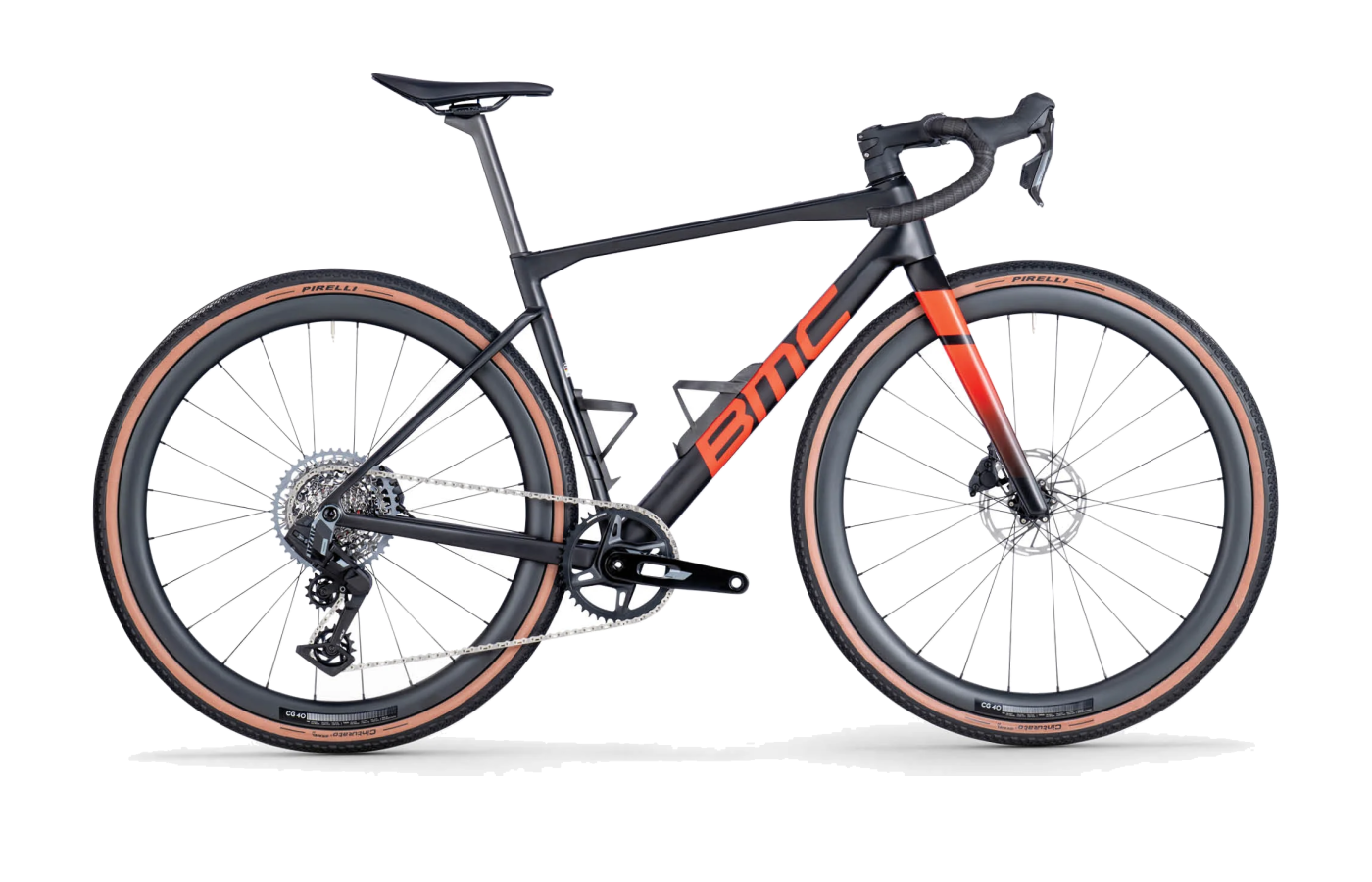
Kaius
BMC's race-gravel platform — the middle ground between these two. Tighter geometry than the URS, more tire room than the Roadmachine, and 2x-compatible. The right pick if neither side here is dialed-in enough.
Compare →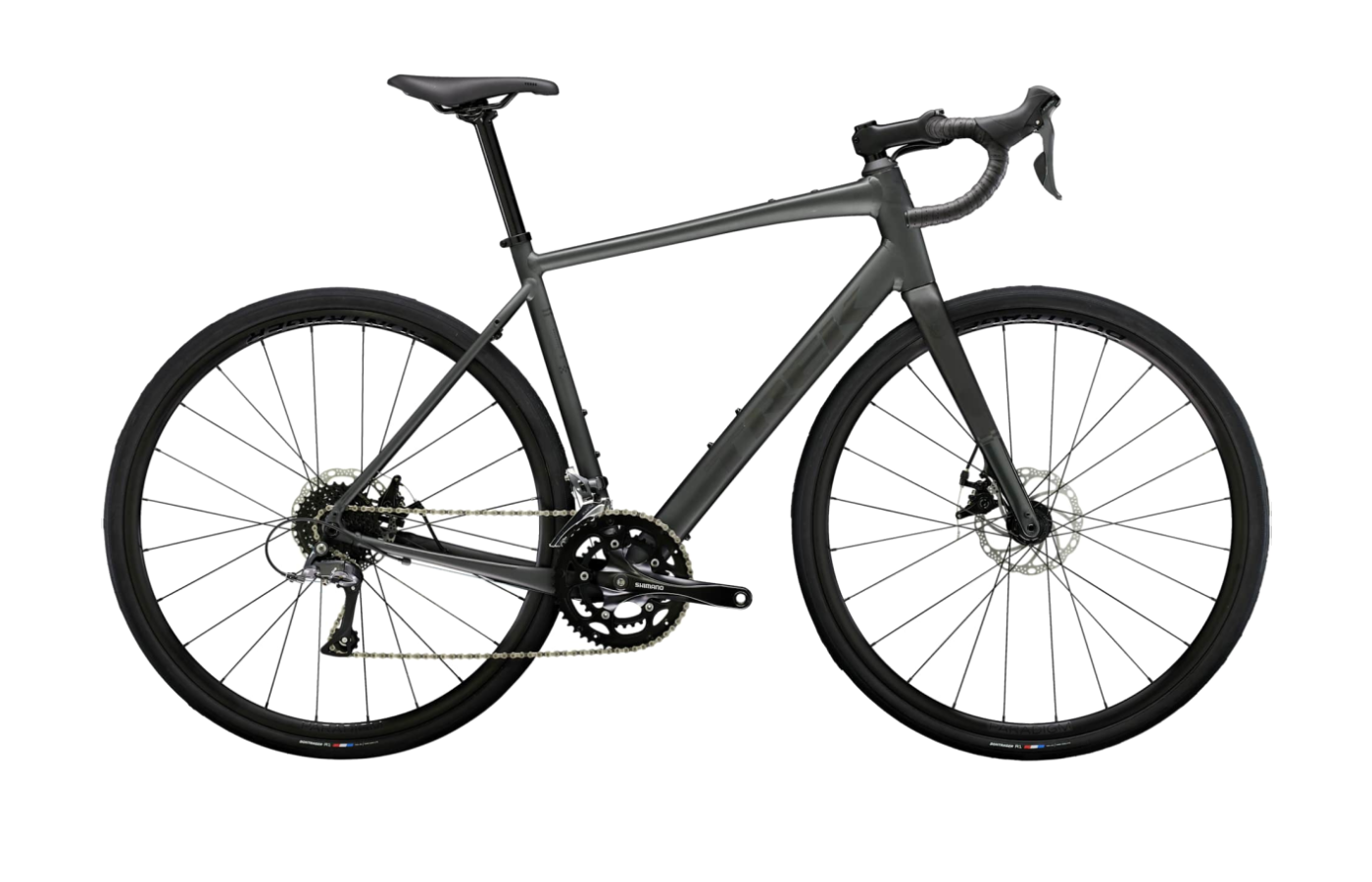
Domane
Trek Domane is the Roadmachine's most direct rival — endurance road with downtube storage, an IsoSpeed decoupler for rear compliance, and 38 mm tire clearance. Lighter frame, slightly less tire room.
Compare →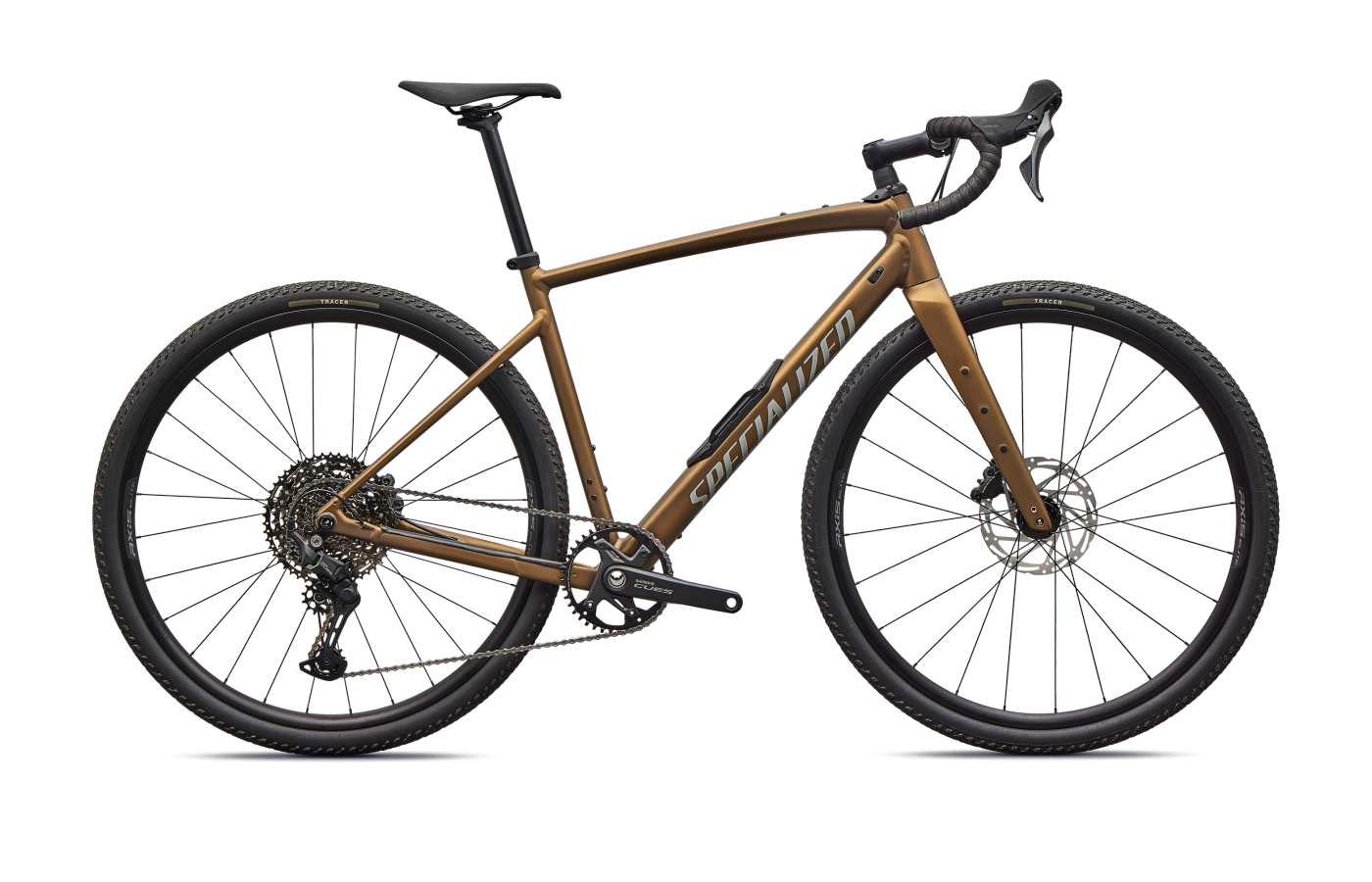
Diverge
Specialized Diverge runs the same playbook as the URS — Future Shock front suspension, slack geometry, big tire clearance for genuinely technical gravel. The closer rival to the URS than to the Roadmachine.
Compare →