V10
vsTues
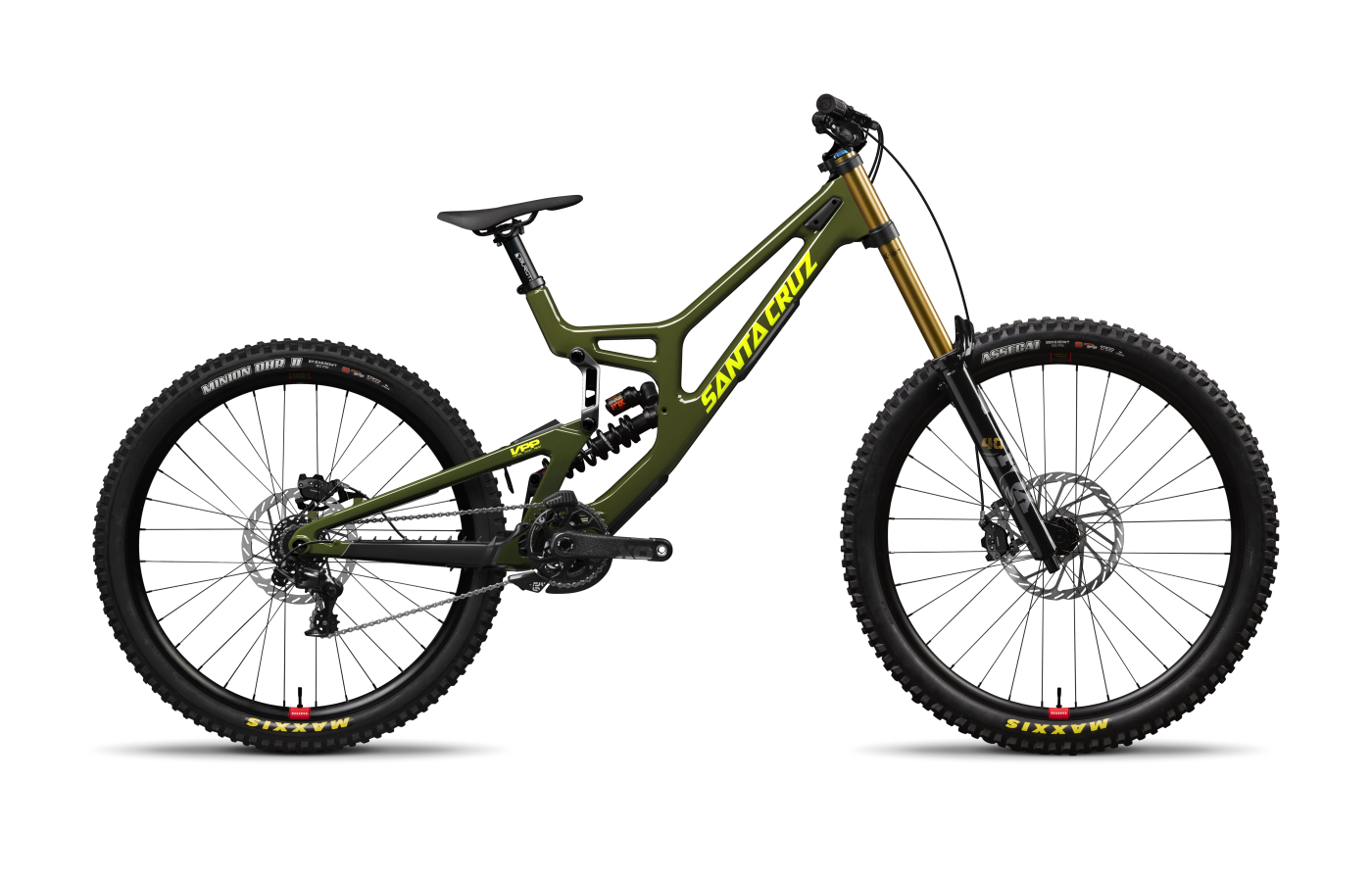
Two World Cup downhill bikes, two price tags.
The Santa Cruz V10 is the polished Syndicate weapon with lifetime support. The YT Tues is the direct-to-consumer answer at thousands less.
V10
- Lifetime warranty + free pivot bearings for life — ownership cost over a decade is a real part of the value.
- Carbon CC frame on every build — no tiered carbon layup; the $7k bike has the same chassis as the Syndicate's.
- Three-way geometry adjustment included — reach (+/- 8 mm), chainstay (+/- 5 mm), and a flip chip for BB and HTA, all hardware in the box.
- $2,000 more expensive than the equivalent Tues build, with no entry-level model under $7k.
- XL rolls full 29er only — no mullet option for taller riders who want a smaller rear wheel.
Tues
- Race-ready spec at $6,899 — full Fox Factory suspension, SRAM X01 DH, and 220 mm TRP rotors on the Core 4.
- Three build tiers from $4,299 — the Core 2 opens DH ownership to riders the V10 simply prices out.
- Flip Link wheel-size swap on every size — run mullet or full 29er on the same frame without buying parts.
- Noticeably more pedal feedback and chatter through the feet than the V10's VPP.
- Direct-to-consumer only — no dealer network, no demo days, sizing is on you.
Editor’s analysis
This isn't a fight about who wins races — both already have. It's a question of what you're paying for once the start gate drops.
Both bikes show up to the same World Cup paddock and run nearly identical numbers on paper: 200-208 mm of rear travel, 63-degree-ish head angles, mixed-wheel layouts on the small/medium sizes, and seven-speed SRAM DH drivetrains on the flagship builds. They've both put riders on the top step in the last two seasons. But the way each brand gets there could not be more different.
The Santa Cruz V10 is the boutique answer. Carbon CC layup only — there's no alloy or lower-grade carbon version — paired with a lifetime warranty on the frame and Reserve wheels and free replacement pivot bearings for life. Reviewers at Pinkbike and Enduro MTB call it the 'Ferrari of mountain bikes' and a 'flying carpet' that 'dumbs down' chunky terrain. The VPP suspension stays high in its travel and refuses to wallow, so you can pump berms and boost jumps without losing the rear end into its stroke. The price reflects all of it: $7,049 for the entry GX DH build, $8,899 for the X01 DH flagship.
The YT Tues MK4 is the lean alternative. Same carbon-only construction, same race pedigree (Vali Höll just won World Cups on it), but priced from $4,299 for the Core 2 to $6,899 for the Core 4 flagship — meaning the top-tier Tues lands $2,000 below the top-tier V10. The trade is in feel, not pedigree. Reviewers describe the Tues as 'sharp,' 'pointy,' and 'noisy through the feet' — a four-bar linkage that delivers more pedal feedback and high-frequency chatter than the V10's silent VPP, but rewards an active rider who likes to generate speed by pumping rather than plowing.
Put simply: the V10 is what you buy when you want the most refined downhill experience money can buy and you'll keep the bike for a decade. The Tues is what you buy when you'd rather spend the savings on lift tickets and a spare wheelset.
Where the builds differ.
Comparing our editor's-pick builds side-by-side. Winners highlighted row-by-row — lower price and weight, and the better-spec component, each mark a point.
Build variants & pricing
The V10 sells two builds from $7,049. The Tues spans $4,299 to $6,899 across three.
Prices are current US MSRP. The flagships are tier-matched (SRAM X01 DH, Fox Factory suspension, Maxxis DH casing) but the V10 X01 lands $2,000 above the Tues Core 4 — that gap is the platform pricing reality, not a spec asymmetry.
How they fit, how they steer.
Both at size M — the fit-picked size for a 5'8" rider on each bike. Reach is nearly identical (V10 447 mm, Tues 446 mm), but the Tues sits 7 mm taller in stack and 0.2° steeper at the head — a more upright, pointier front end.
Which size should I buy?
Sizes shown are picked from each frame's geometry chart against a default rider. The V10 runs S/M/L/XL with mullet on S-L; the Tues spans a wider S-XXL range and lets you flip any size between mullet and full 29er.
→These are starting points. Flexibility, riding style, and preferred position all shift the answer — if you’re between sizes, a professional fit beats a chart.
What the magazines said.
Published reviews from trusted cycling outlets. Click through for the full write-up.
Which one should you buy?
If you want the most refined DH bike money can buy and you'll keep it for a decade, get the V10. If you want World Cup-grade performance at privateer prices, get the Tues.
V10
If you want the silent, planted, 'cheat-mode' ride that erases trail noise — and you value a lifetime warranty plus free bearings over the lowest sticker — this is the bike. Especially strong for riders who race or session chunky, technical tracks where the VPP's mid-stroke support pays off lap after lap.
Tues
If you want a race-ready carbon DH bike for the price of a mid-tier enduro, the Tues delivers. It rewards an active, jumping, pumping rider on flow-heavy parks and bike-park laps — and the $2k savings versus the V10 buys a lot of chairlifts.
Questions buyers actually ask.
Short answers to the things we get emailed about most often.
01How big is the price gap between the flagship builds?
The YT Tues 29 Core 4 sells for $6,899. The Santa Cruz V10 DH X01 sells for $8,899 — a $2,000 gap for tier-matched specs (both run SRAM X01 DH 7-speed, Fox 40 Float Factory + DHX2 Factory suspension, Industry Nine 1/1 hubs, and Maxxis DH casing tires).
At the entry end the gap widens further: the Tues Core 2 starts at $4,299 versus $7,049 for the V10 DH S — the V10 has no answer below $7k.
02Which one is more comfortable on rough, technical tracks?
The V10, by consensus. Pinkbike, Enduro MTB, and Revolutionmtb all describe its VPP suspension as 'glued to the ground' and praise the chassis for absorbing 'trail noise' to the point one reviewer called it a 'flying carpet.'
The Tues is more energetic but transmits more pedal feedback and high-frequency chatter — testers called it 'noisy through the feet' and noted it 'hangs up a bit more' in square-edge hits. Some YT team riders run an O-chain device to mute that feedback.
03Which one accelerates and pumps faster?
Both are excellent here, with slightly different characters. The V10's VPP is praised by Pinkbike for 'minimal pedal bob' out of the gate and a mid-stroke that resists 'mushing' when you pump rollers.
The Tues is described as 'sharp' and 'pointy' with a supportive mid-stroke that makes it 'easy to wring its neck' on jump lines like A-Line or Dirt Merchant. Both reward an active rider; the Tues just gives more direct feedback in return.
04What are the geometry adjustments?
Santa Cruz V10: drop-in headset cups for reach (+/- 8 mm), chainstay flip chips (+/- 5 mm), and a lower shock flip-chip for BB height and head angle. All hardware ships with the bike.
YT Tues: a Flip Link at the seatstay swaps between 27.5" and 29" rear wheels on any frame size, a lower-shock flip chip toggles HTA between 63.5° and 63.2° (and BB height by 5 mm), and a chainstay chip provides +/- 5 mm of length adjustment.
Both are exceptionally tunable; the Tues is the more flexible on wheel size, the V10 is the more flexible on reach.
05What's the warranty and long-term support like?
Santa Cruz offers a lifetime warranty on the frame and Reserve wheels, plus free replacement pivot bearings for life — multiple reviewers cited this as a meaningful chunk of the V10's value over a decade of ownership.
YT provides a standard manufacturer warranty (typically 5 years on the frame for the original owner) but no free-bearings program. Service is also handled differently: YT is direct-to-consumer with no dealer network, while Santa Cruz uses a global dealer network for fitting and service.
06Which is better for a bike-park-only rider?
Both are excellent park bikes — that's actually most of their use case. The Tues edges ahead for jump-heavy, flow-oriented parks (think Whistler's A-Line and Dirt Merchant): reviewers praised its 'pop' and how easily it pumps and jumps, and it's 'one of the lightest bikes' in the test field at 16.1 kg.
The V10 is the better pick for parks with chunky, rooted, technical lines (Garbanzo, Snowshoe-style terrain) where its silent chassis and supple-but-supportive VPP let you carry more speed without getting rattled.
07Are these bikes adjustable for both 27.5" and 29" rear wheels?
YT Tues: yes, on every frame size. The Flip Link at the seatstay handles the swap with a 6 mm Allen key — no extra parts required.
Santa Cruz V10: partially. Sizes S, M, and L ship as mullet (29" front, 27.5" rear) and the XL ships as a full 29er. There is no Tues-style swap on the V10 — Pinkbike specifically called this out as a 'handcuff' for taller riders who'd prefer a mullet on the XL.
08Which is the better choice for a privateer racer on a budget?
The Tues, by a clear margin. Reviewers repeatedly framed the Tues MK4 as 'race-ready at a far more affordable price than just about anyone else' and noted the Core 4 spec needs 'nothing you'd really change' before a World Cup start gate.
If budget is no object and you're chasing every last percent of refinement and long-term support, the V10 wins. But for a rider funding their own season, $2,000 saved on the chassis is two more race entries and a spare set of wheels.
Similar bikes
If your priorities don’t map cleanly onto either of these, one of these adjacent bikes probably fits better.
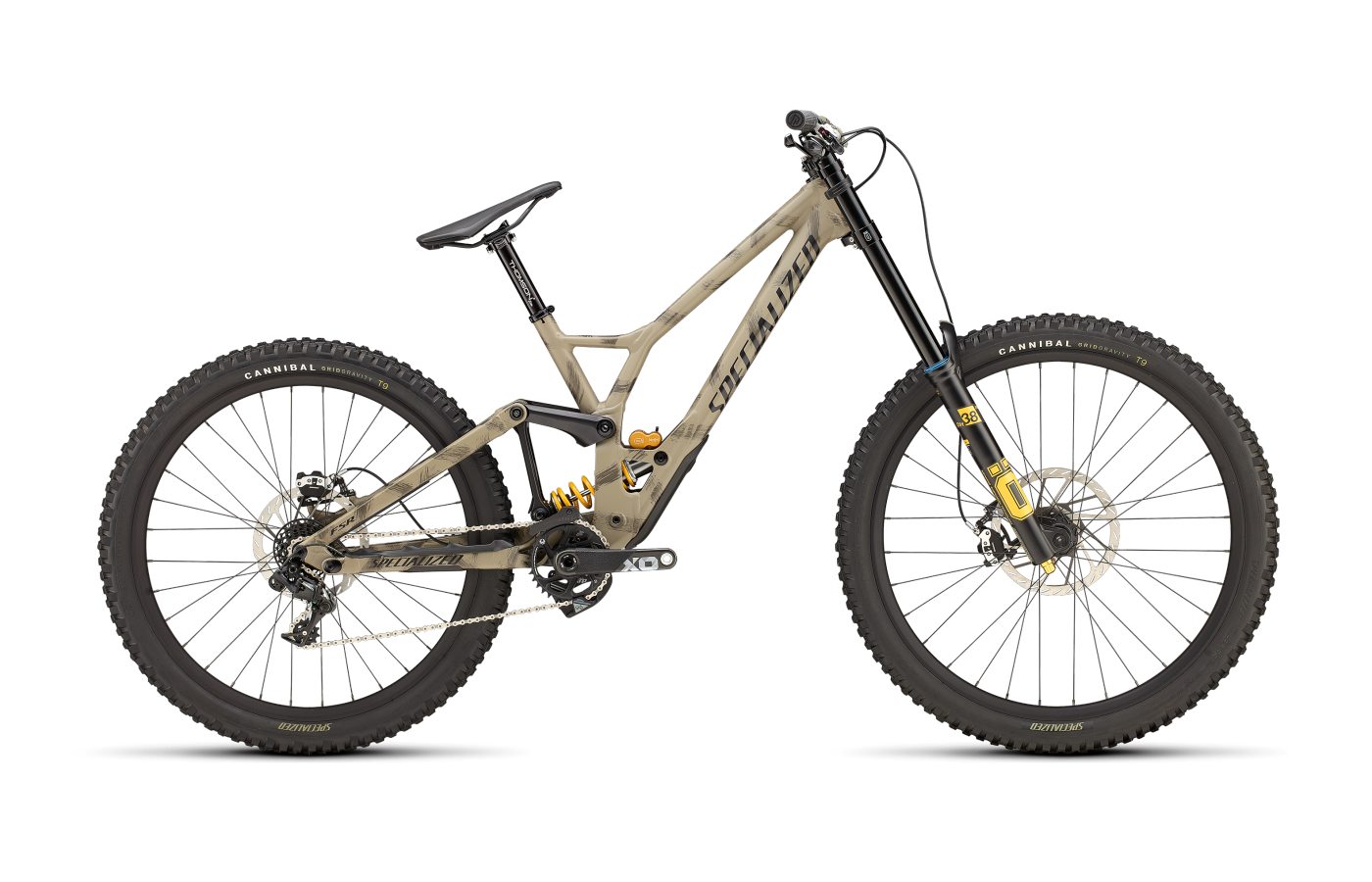
Demo
A Horst-link rival with a deeper World Cup history than either bike here, plus extensive wheel-size and chainstay adjustments. The Specialized Demo is the established race-pedigree alternative if you want a third option from a major dealer-network brand.
Compare →Session
Trek's Session uses a high-pivot, idler-pulley layout that delivers a more rearward axle path than either the V10 or Tues — the pick if you want maximum isolation in brutal rock gardens and don't mind the extra drivetrain complexity.
Compare →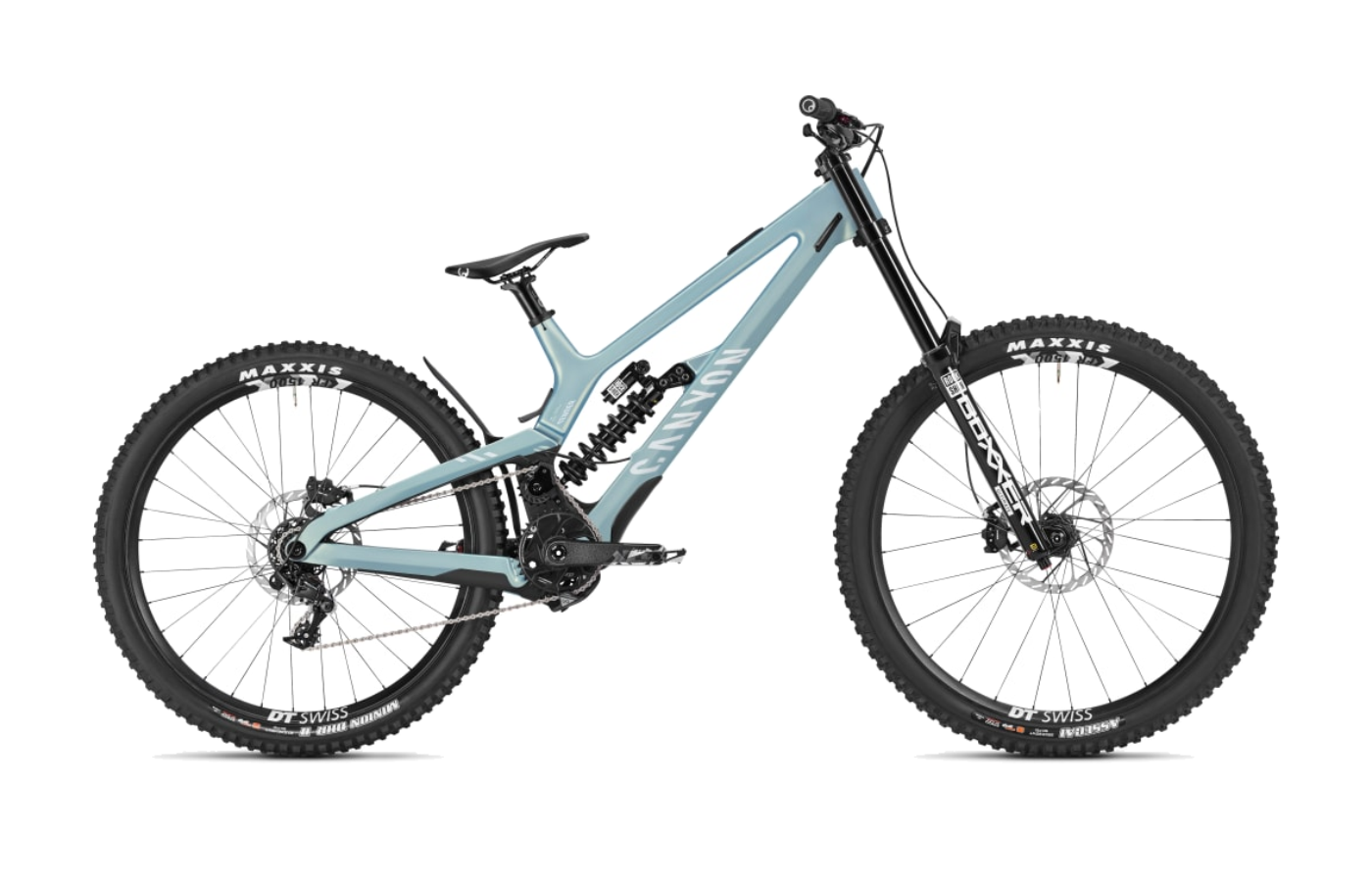
Sender
Another direct-to-consumer carbon DH bike at Tues-adjacent pricing, with Canyon's race-focused geometry and adjustability. The Sender is the natural cross-shop if the Tues is sold out in your size.
Compare →