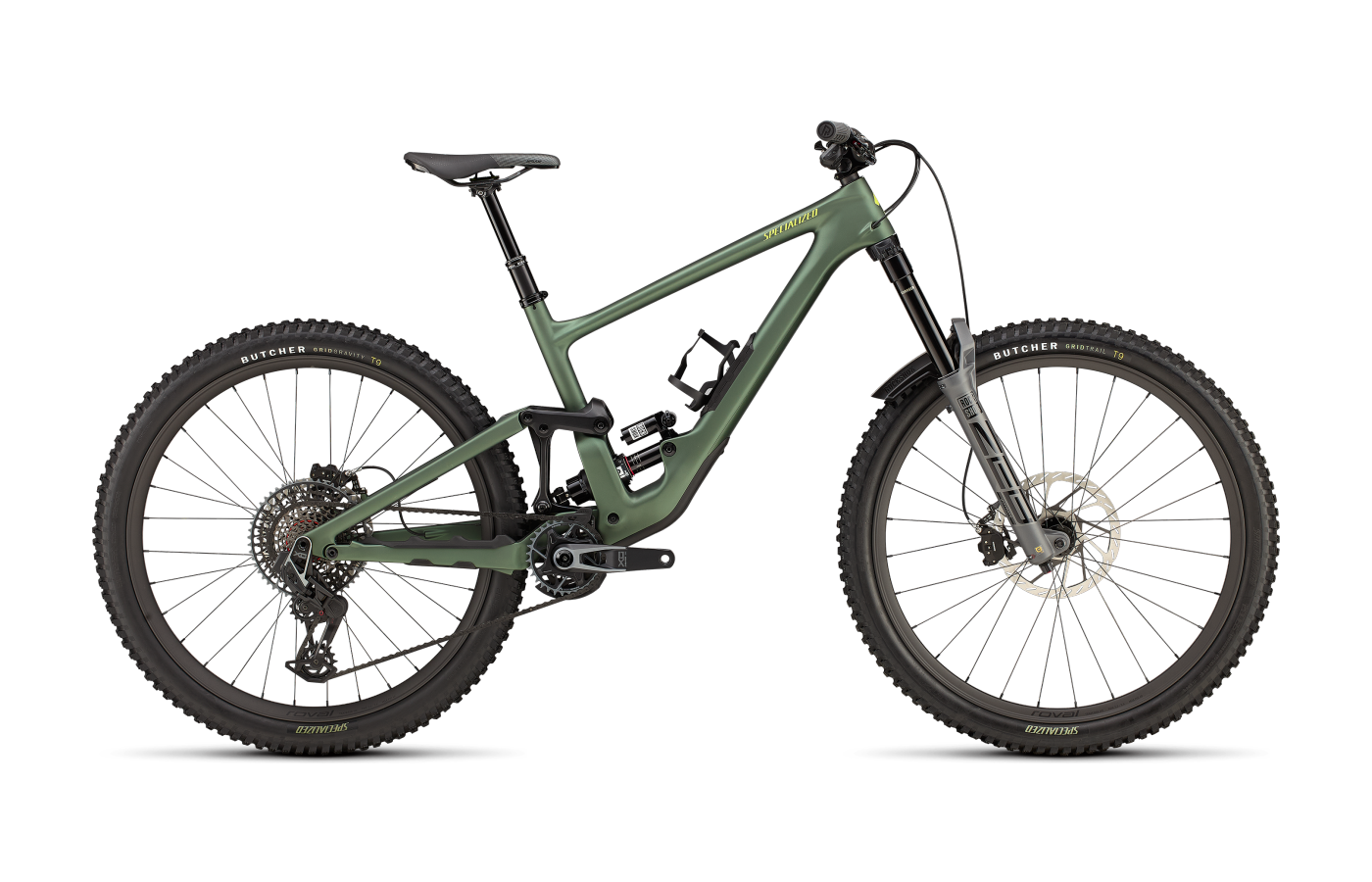
Demo
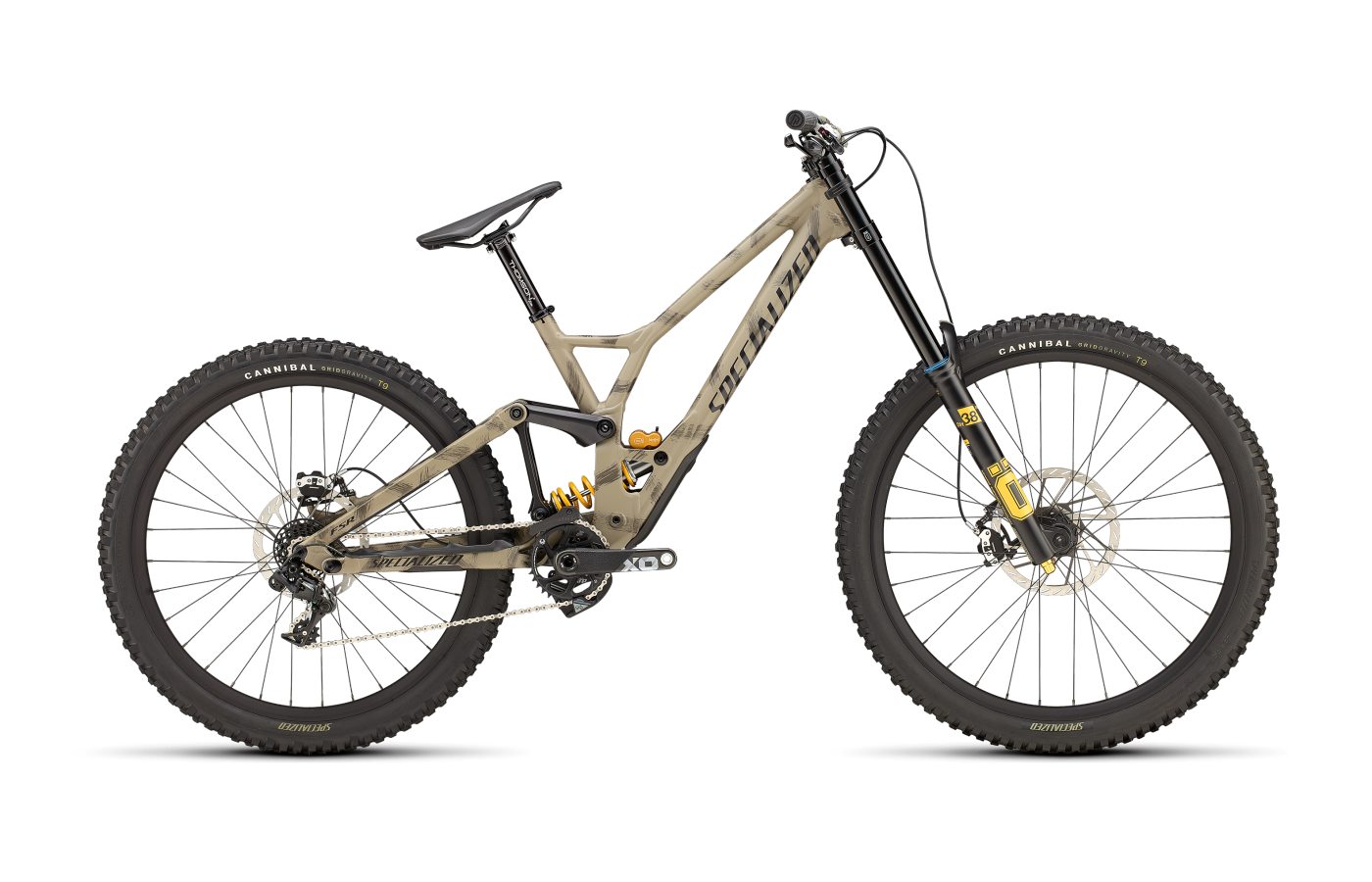
Introduced for the 2020 model year, the Specialized Demo 29 represents a comprehensive redesign of the brand's flagship downhill racing platform. Moving away from the highly active, sometimes unpredictable feel of its predecessors, this generation prioritizes momentum, stability, and composure in rough terrain. Built entirely around an M5 aluminum chassis, the frame delivers 200mm of travel via a heavily revised Horst-link suspension layout. Specialized engineered a more rearward axle path to prevent the rear wheel from hanging up on square-edge impacts, while significantly increasing anti-squat and anti-rise values to improve pedaling efficiency and braking neutrality. Initially launched as a dedicated 29er, the platform evolved to embrace mixed-wheel setups. Current iterations feature an adjustable rear end with a flip-chip, allowing riders to run either a 27.5-inch or 29-inch rear wheel without compromising the bike's intended geometry. It is a dedicated gravity machine built for World Cup tracks and heavy bike park use.
Geometry & fit.
3 sizes published.
The Demo utilizes Specialized’s S-Sizing system, offering S2, S3, and S4 frames to decouple rider height from frame length. This allows riders to choose a size based on their handling preferences—sizing down for agility or sizing up for high-speed stability. The geometry features a slack 62.8-degree head tube angle and a relatively low bottom bracket, placing the rider in a centered, neutral stance that feels intuitive from the first drop-in.
Reach numbers are somewhat conservative by modern downhill standards, maxing out at 466mm on the S4 frame. While this keeps the bike manageable and responsive in tight terrain, taller riders may find the cockpit slightly cramped and might struggle to find a roomy attack position. The chainstay length sits at 443mm across all sizes, striking a balance between cornering traction and maneuverability. When utilizing the Horst-link flip-chip to swap rear wheel sizes, the frame maintains consistent bottom bracket height and chainstay proportions, ensuring the rider's weight distribution remains balanced regardless of the chosen wheel configuration.
Where the handlebar sits relative to the bottom bracket — the single most important fit pair.
01Fit geometry4 values
03Handling geometry9 values
Which size should I buy?
Slide your height to see the recommended size. GearWise's fit algorithm works from the published stack, reach, and ETT — the brand's own recommendation may differ.
→Calculated from GearWise's own stack / reach / ETT algorithm — the brand's size chart may recommend a different size, and a proper bike fit beats any calculator.
The lineup.
1 build, ranging $7,100.
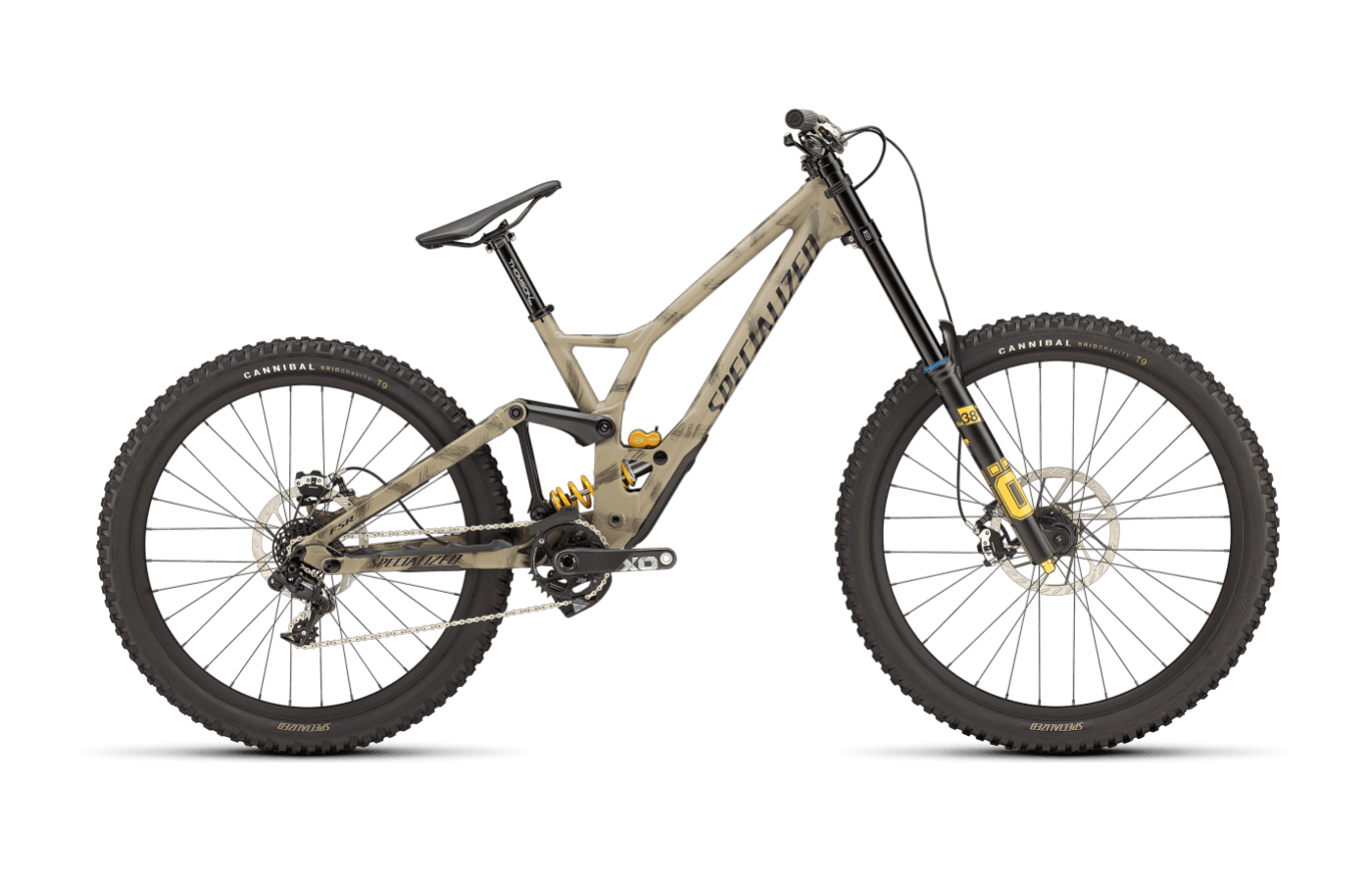
The current Demo lineup is streamlined into a single premium Race build, focusing entirely on high-end suspension and durable downhill components rather than carbon fiber weight savings. Priced at $7,099.99, the Race model is built around the M5 alloy frame and features top-tier Öhlins suspension. An Öhlins DH38 M.1 fork handles the front end, paired with a TTX22M.2 coil shock in the rear, offering extensive adjustability for demanding tracks.
The drivetrain relies on SRAM's downhill-specific X01 DH 7-speed group, utilizing a carbon crankset and a tight 10-24T cassette. Braking is managed by SRAM Maven Ultimate four-piston hydraulic discs, matched to a massive 220mm front rotor and a 200mm rear rotor for consistent heat management on long descents. The bike rolls on Roval Traverse Alloy rims laced to DT Swiss 350 hubs, wrapped in Specialized Cannibal tires with heavy-duty Grid Gravity casings. Notably, the frame uses 148mm Boost rear hub spacing rather than the wider downhill standard, which keeps the rear end narrow for heel clearance but limits aftermarket wheel compatibility.
From the press.
6 reviews from the cycling press.
Reviewers consistently note how quickly riders can adapt to the Demo, moving away from the steep learning curve often associated with elite downhill bikes. The revised suspension kinematics deliver a composed ride that carries speed efficiently through rough sections. One tester noted that the chassis "plows right through" (PinkBike) rooty impacts without transmitting harsh feedback or pulling the rider backward. The increased anti-rise keeps the bike remarkably level under heavy braking, allowing riders to maintain a neutral body position through steep, chewed-up chutes.
Handling characteristics shift noticeably depending on the rear wheel size. In the mixed-wheel configuration, the bike becomes highly maneuverable, with one reviewer calling it an "absolute treat through tight corners" (Theloamwolf). The tradeoff is a slight reduction in outright stability at terminal velocities compared to the full 29-inch setup, which requires more physical effort to lean over but excels at maintaining straight-line momentum.
While the suspension performance and chassis damping earn high praise, testers frequently point out a few mechanical quirks. The internal cable routing is prone to rattling unless riders apply aftermarket damping. Despite this, the overall consensus points to a highly capable descender. As one reviewer summarized, it is an "easy bike to jump on and just go" (PinkBike), offering a blend of predictability and speed that suits both privateer racers and dedicated park riders.
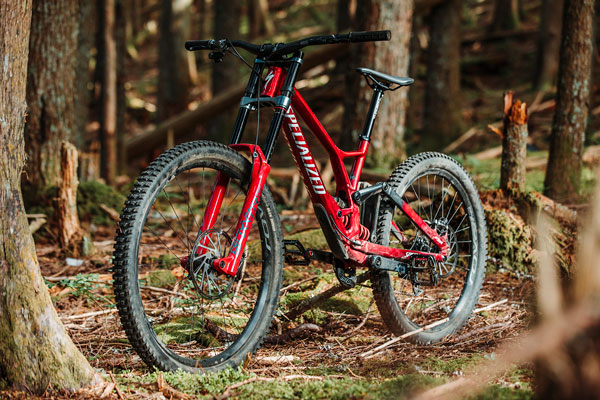
Review: 2021 Specialized Demo Race
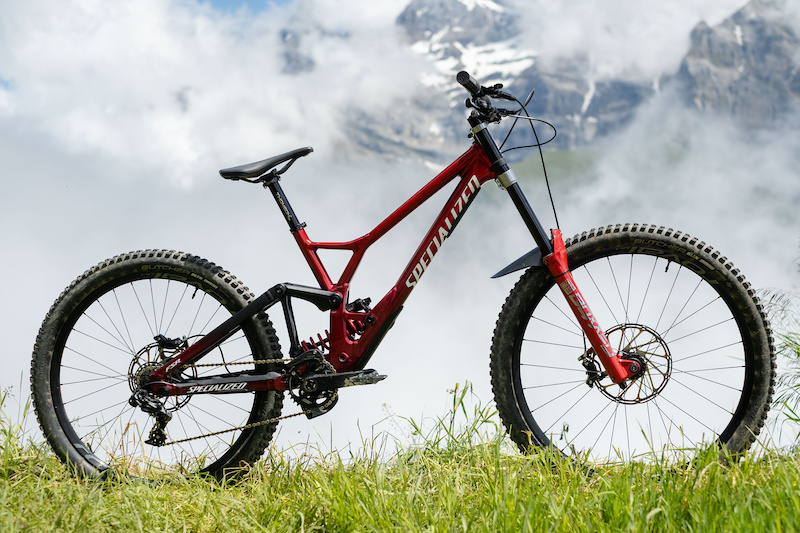
Review: 2021 Specialized Demo Race - DH Bike Week - Pinkbike
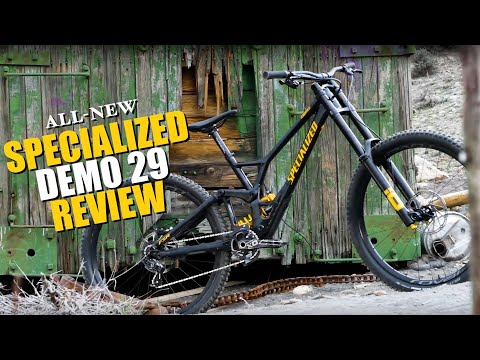
REVIEW: New Specialized Demo 29 Downhill Bike
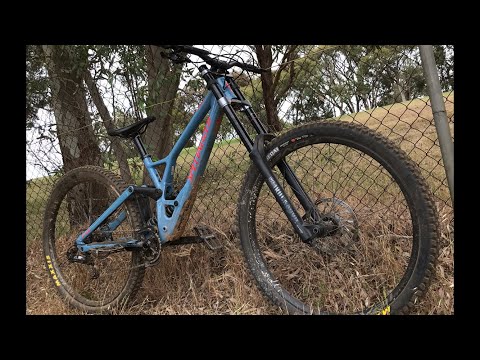
One Lap on the 2020 Specialized Demo Expert 29, at ...
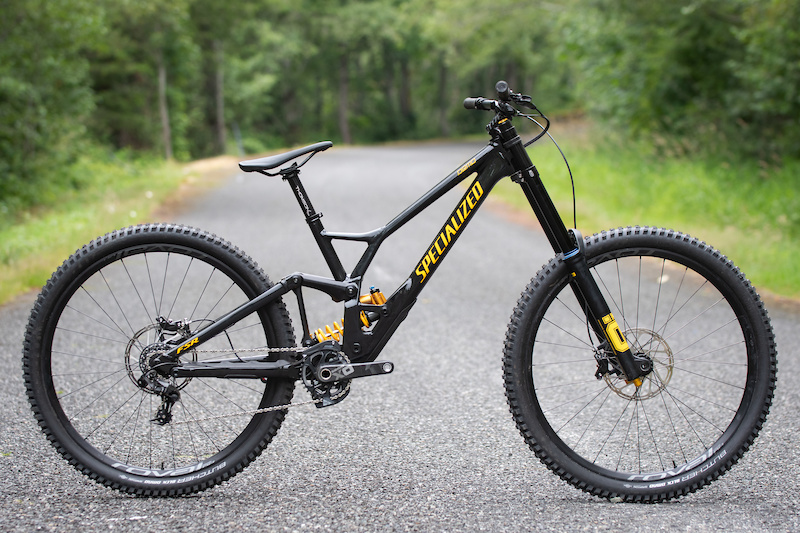
First Ride: The 2020 Demo 29 - Specialized's ... - Pinkbike
2020 Specialized Demo Race 29 Bike - Vital MTB
Compared to.
Most-viewed comparisons.
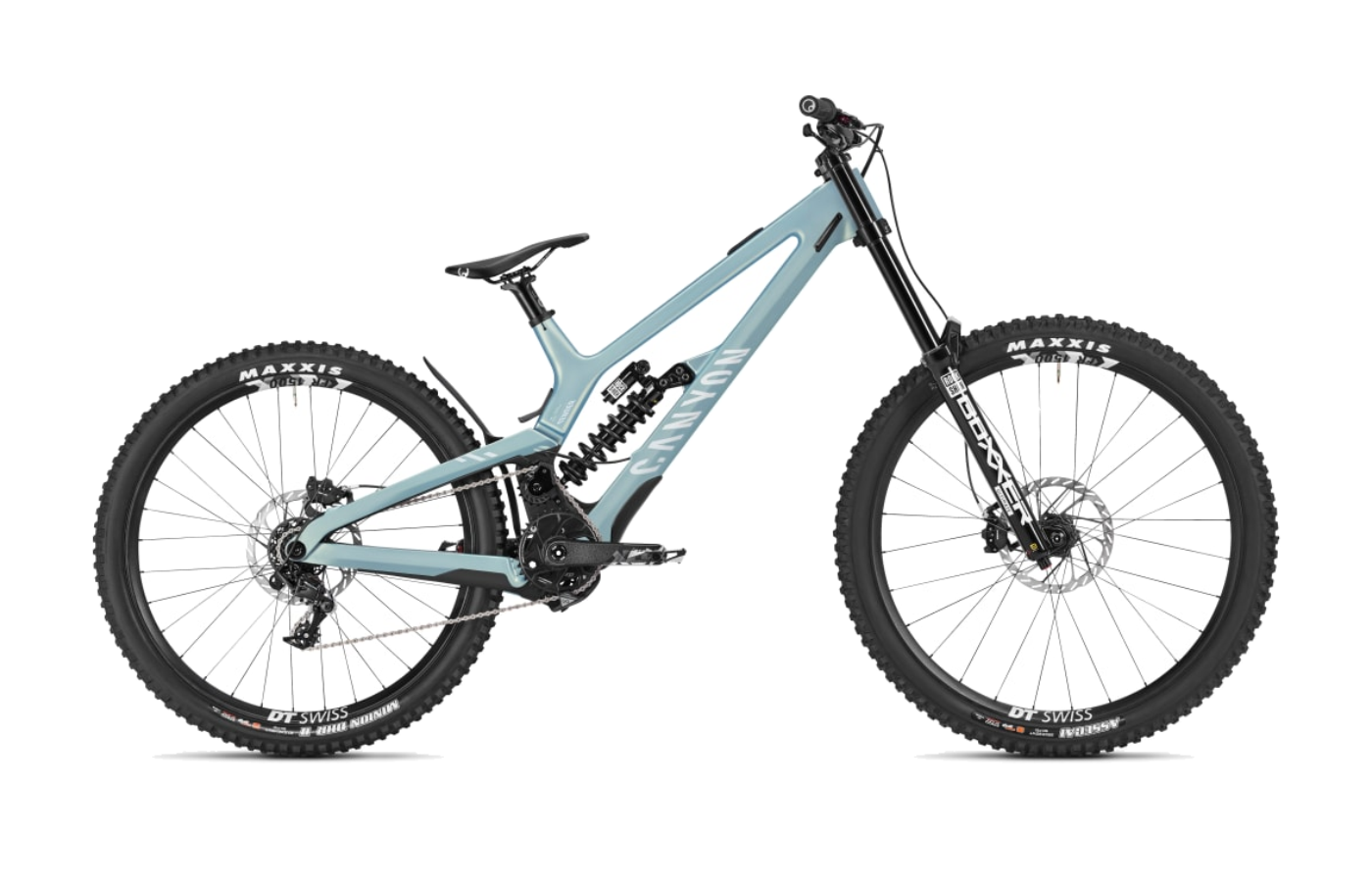
Canyon Sender vs Specialized Demo
Read comparison→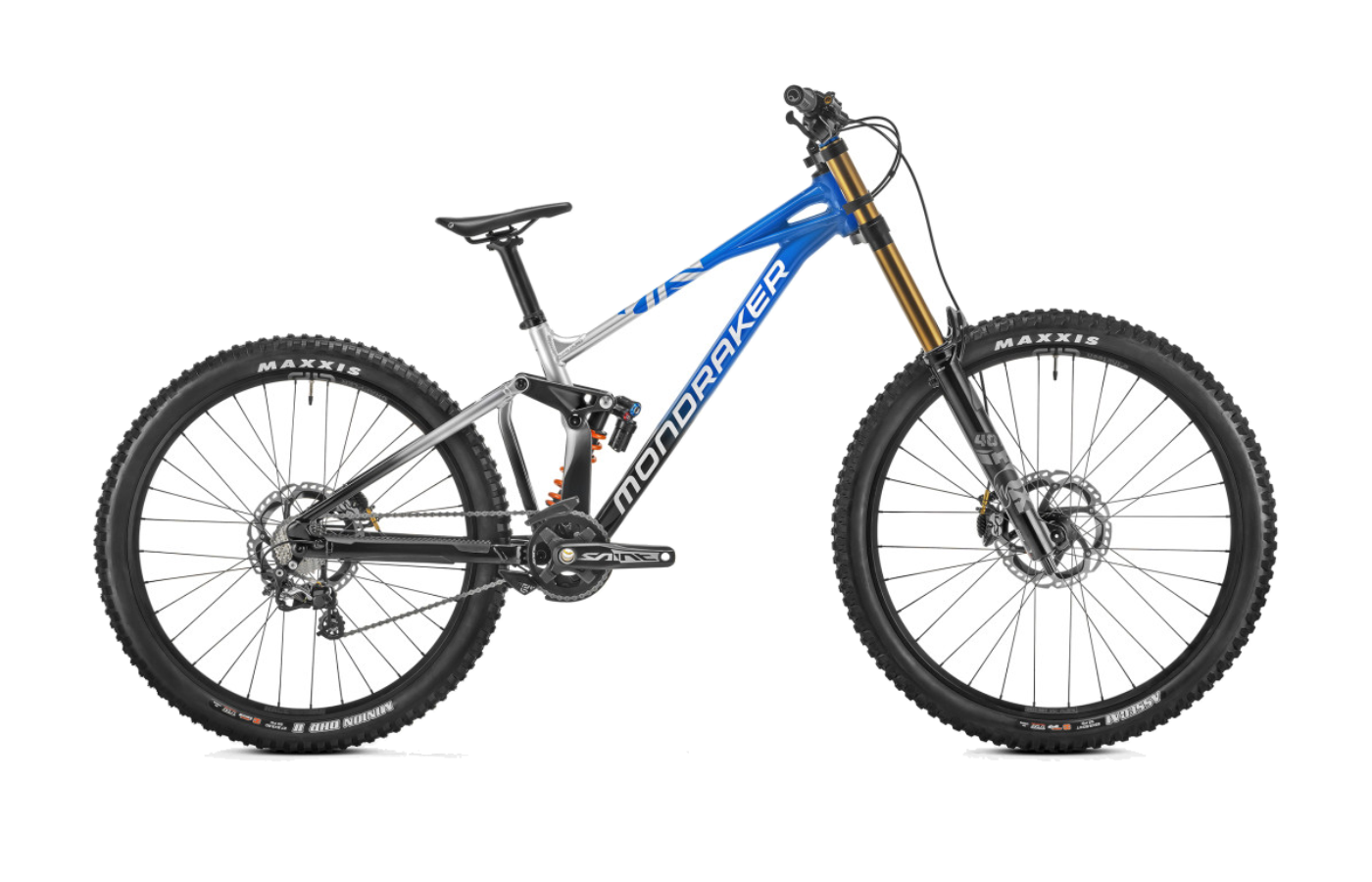
Mondraker Summum vs Specialized Demo
Read comparison→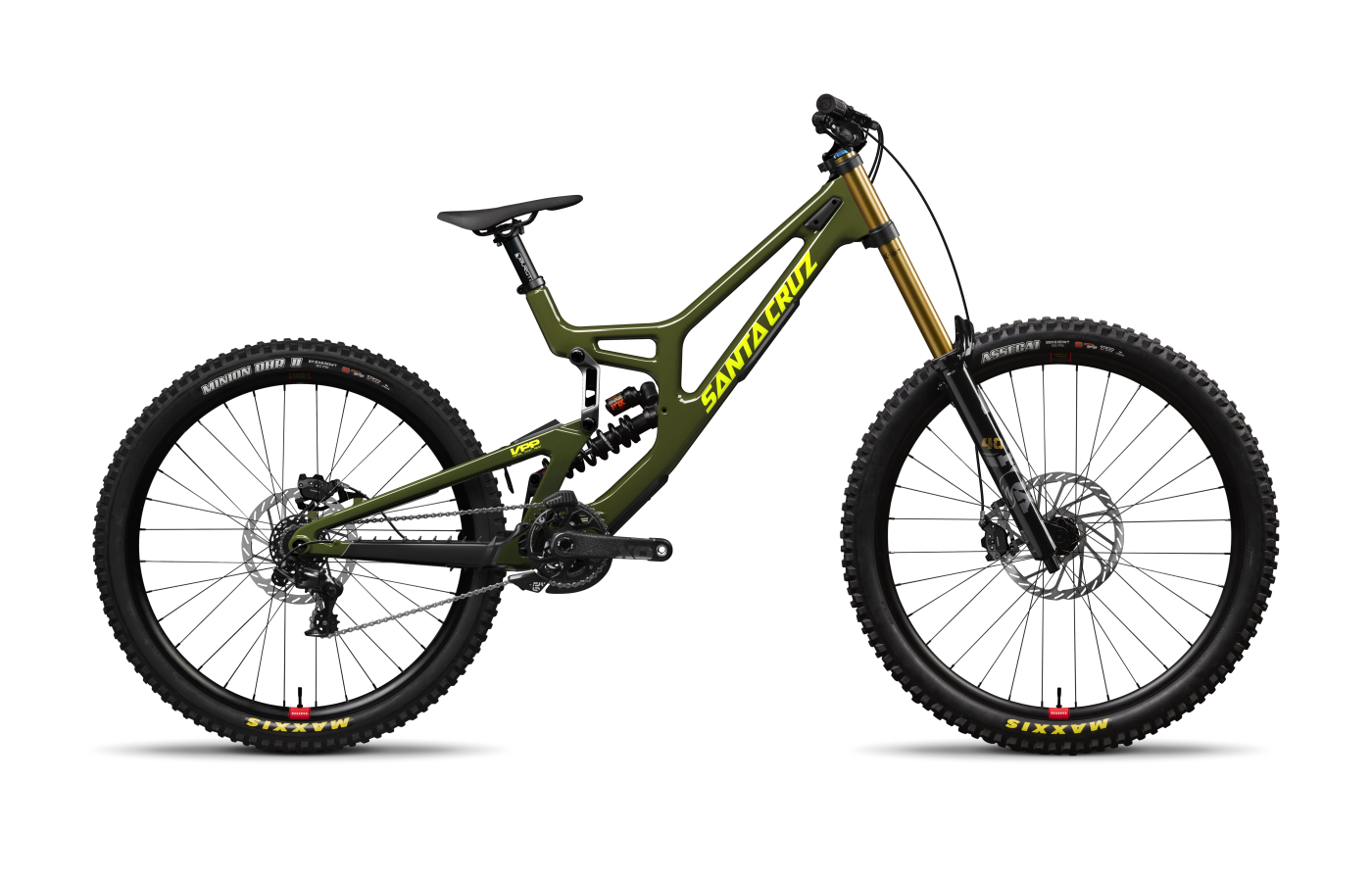
Santa Cruz V10 vs Specialized Demo
Read comparison→