Summum
vsDemo
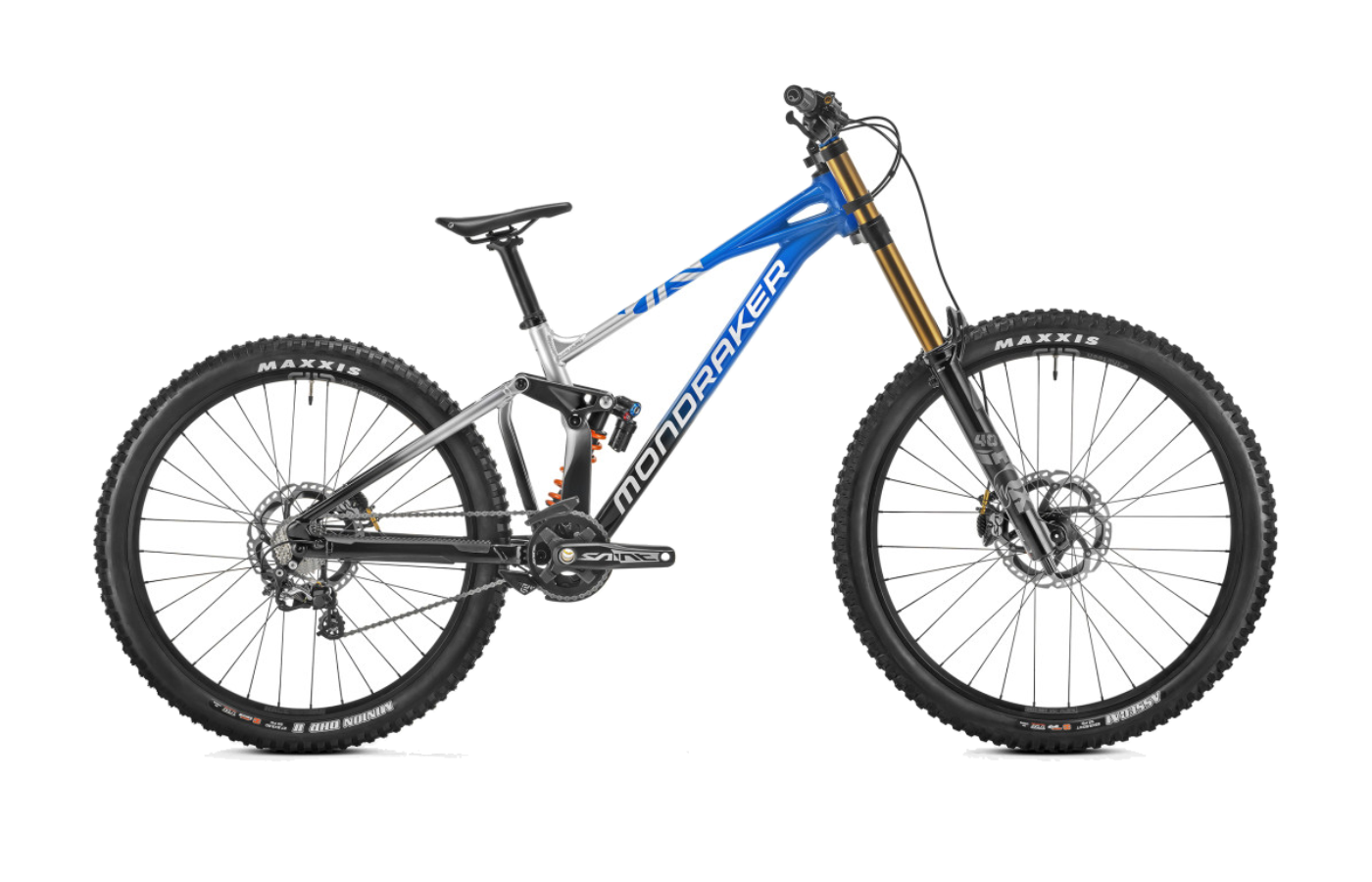
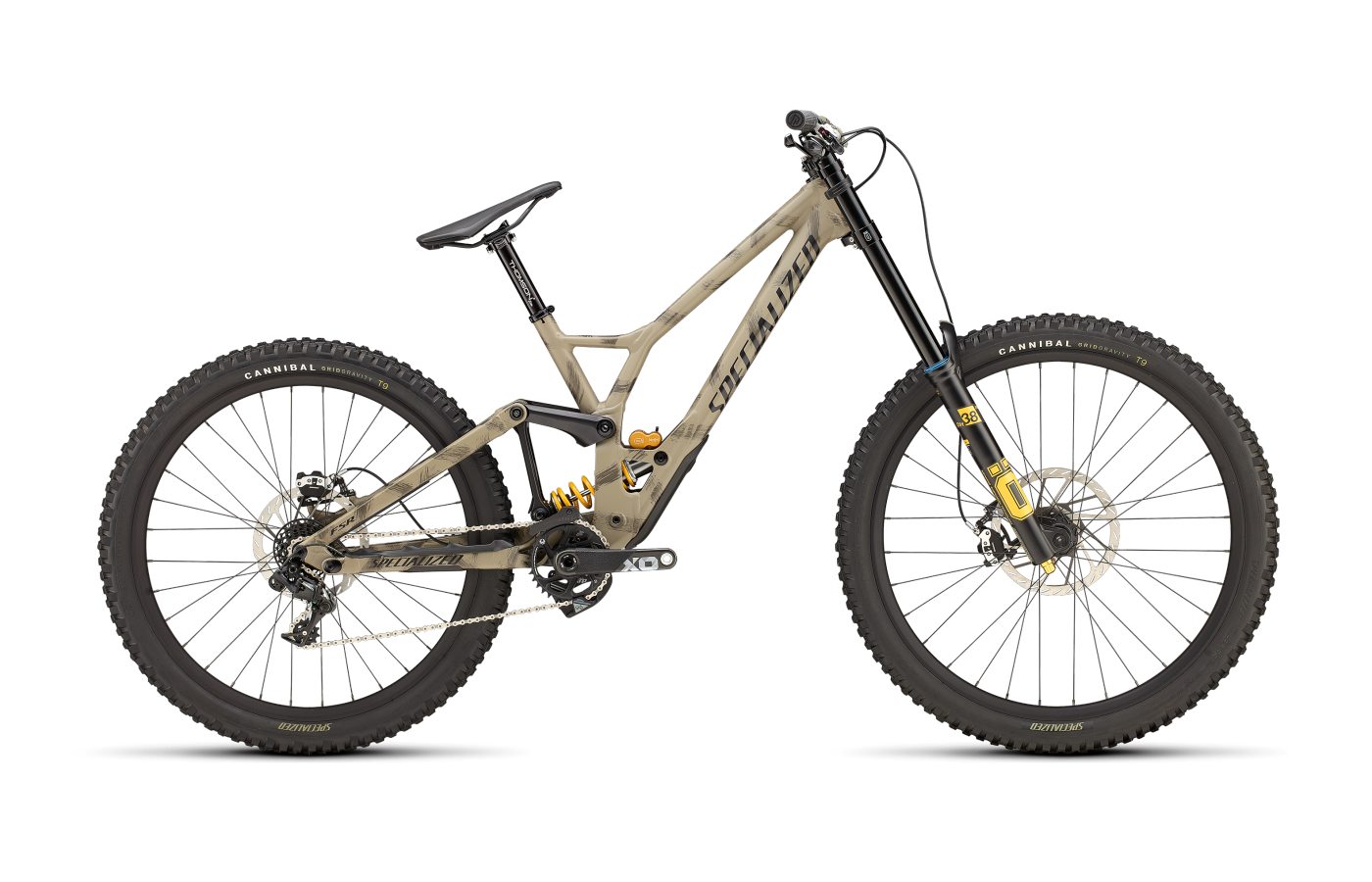
Two World Cup downhill rigs, two suspension religions.
The Mondraker Summum is the long, mullet, Zero-suspension plow bike. The Specialized Demo is the all-alloy, FSR-revamped race tool that turned itself into a momentum machine.
Summum
- Long, planted high-speed stability — 63.5° HTA, 1,270 mm wheelbase at M, and Forward Geometry make it a true plow bike on rough, fast tracks.
- Race-proven Zero Suspension — minimal chain growth and pedal kickback, with a supple isolated rear feel under braking and big hits.
- Industry-leading 25-year frame warranty — Mondraker backs the alloy chassis longer than almost anyone in the category.
- Only 2 builds, both mullet — no full-29 option from the factory at this price.
- "Plowing mentality" can feel less lively in low-angle, momentum-dependent rock gardens.
Demo
- Confidence-inspiring on the first lap — neutral attack position and revamped FSR layout make it the easier bike to jump on cold.
- Massive anti-rise and anti-squat gains — 70% more anti-rise keeps the bike level under braking; 300% more anti-squat firms up sprint efficiency.
- Flip-chip mullet/29 versatility — the Horst pivot lets you swap between full-29 and mixed-wheel without buying a new frame.
- Conservative reach (max 466 mm at S4) leaves taller riders over 6'2" cramped.
- Premium price for an alloy-only chassis when several competitors offer carbon at similar money.
Editor’s analysis
These bikes share a job description — get to the bottom of a World Cup track faster than anyone else — and almost nothing else.
On paper they line up close. Both run 200 mm of rear travel, slack head angles, mullet-capable layouts, and price tags inside $1,700 of each other. Both have a real race pedigree — the Summum traces back to Fabien Barel in 2009; the Demo has been under Loic Bruni and Finn Iles for the last several seasons. But the engineering philosophies behind the two bikes are nearly opposite.
The Mondraker Summum leans hard into Forward Geometry and stability. The 63.5-degree head tube, 1,270 mm wheelbase at size M, and the brand's signature 30 mm stem put the front wheel way out front and the rider deeply seated in the bike. Reviewers describe it as a bike that lets you "let off the brakes and haul ass" — a plow weapon for fast, rough, sustained descents. The Zero Suspension System is independently praised for minimal pedal kickback and a supple, isolated rear feel, though testers note the Performance-tier suspension on lower builds gets overwhelmed when ridden at the absolute limit.
The Specialized Demo went the other way for this generation. Specialized stayed with M5 alloy (no carbon option) and poured the engineering into kinematics: a 70% increase in anti-rise, a 300% increase in anti-squat, and a more rearward axle path. The result is a bike that's level under braking, supportive on the pedals, and noticeably less prone to hanging up on square edges than the previous Demo 8. Reviewers consistently call it an "absolute confidence machine" and "easy to jump on and go" — but several noted it lacks the single-minded race focus of some high-pivot competitors at outright terminal velocity.
Put another way: the Summum asks the rider to commit, then rewards stability and momentum on the rough stuff. The Demo meets the rider in the middle — friendlier on the first lap, more versatile across full-29 or mullet, but with conservative reach numbers that may not stretch to fit taller pilots.
Where the builds differ.
Comparing our editor's-pick builds side-by-side. Winners highlighted row-by-row — lower price and weight, and the better-spec component, each mark a point.
Build variants & pricing
Both lineups are thin at the top: Mondraker offers two Summum builds ($6,499 and $8,799), Specialized sells the Demo Race only ($7,099).
Prices are current US MSRP. The Summum RR Mullet sits about $1,700 above the Demo Race, but it gets you Fox Factory Kashima 40 / DHX2 suspension and Shimano Saint vs. the Demo's Öhlins DH38 / TTX22 and SRAM X01 DH — both top-tier DH-grade kits, just different recipes.
How they fit, how they steer.
Compared at Mondraker M (450 mm reach, 632 mm stack) vs Specialized S3 (446 mm reach, 632 mm stack). Reach and stack are within 4 mm; the Demo runs a slacker 62.8° head angle vs the Summum's 63.5°, and the Demo's chainstays sit 7 mm shorter (443 vs 450 mm).
Which size should I buy?
Sizing is picked by the fit algorithm against a default 5'8" rider; Mondraker uses S/M/L/XL while Specialized uses S2/S3/S4 — the labels differ but the recommended sizes line up closely on reach.
→These are starting points. Flexibility, riding style, and preferred position all shift the answer — if you’re between sizes, a professional fit beats a chart.
What the magazines said.
Published reviews from trusted cycling outlets. Click through for the full write-up.
Which one should you buy?
If you want the most planted, high-speed plow bike with a 25-year warranty, get the Summum. If you want the friendliest, most versatile race rig you can jump on cold, get the Demo.
Summum
Pick the Summum if your home tracks are fast, rough, and sustained — the kind of terrain where Forward Geometry and a 1,270 mm wheelbase let you stop fighting the bike and just commit. The Zero Suspension, mullet layout, and Mondraker's 25-year frame warranty make it a long-term race weapon for riders who push the rough stuff hardest.
Demo
Pick the Demo if you want a downhill bike that's intuitive on the first lap and adaptable across tracks. The flip-chip mullet/29 swap, revamped FSR kinematics, and that "easy to jump on and go" character make it as much at home on a park lap as a World Cup run — provided you fit inside the conservative S2–S4 reach range.
Questions buyers actually ask.
Short answers to the things we get emailed about most often.
01Which is the more stable bike at speed?
The Summum, by a small margin. Its 63.5° head angle, 30 mm stem, and 1,270 mm wheelbase at size M put the front wheel further out and the rider deeper in the cockpit — reviewers describe a "chilled handling" feel that lets riders "let off the brakes and haul ass" on rough, fast tracks.
The Demo isn't far behind — a slacker 62.8° head angle and revamped axle path make it remarkably planted — but several reviewers noted that at "absolute breakneck speeds," the window for error narrows compared to longer, more single-minded race bikes.
02Which is friendlier to ride on the first lap?
The Demo. Pinkbike, Vital MTB, and The Loam Wolf all describe it as "easy to jump on and go," with an intuitive neutral attack position that lets riders find their stride immediately. The revamped FSR layout and a 300% increase in anti-squat make it feel supportive and predictable from the first run.
The Summum can feel "strange" or "ergonomically foreign" at first — the 30 mm stem and Forward Geometry take adjustment — but most testers report it "only takes two runs to forget" and trust the front end.
03Mullet or full 29?
Summum: The current US lineup only sells the mullet (29" front / 27.5" rear) configuration in both the R and RR builds. If you want full 29, you'll need to source a different region's spec or build it yourself.
Demo: The Race build ships as a mullet by default, but the Horst pivot flip-chip lets you convert to full 29 without buying a new frame. Reviewers describe the full-29 setup as a "monster truck" for high-speed straight-line stability, while the mullet is praised as an "absolute treat through tight corners."
04How does the suspension design differ?
The Summum uses Mondraker's Zero Suspension System — a four-bar layout that floats the rear shock between two links so it compresses from both ends. Reviewers credit the design with "minimal chain growth and minimal pedal kickback" and a notably supple, isolated rear feel under braking.
The Demo uses an updated Horst Link FSR layout with a more rearward axle path, a 31.4–35% leverage progression, a 70% jump in anti-rise, and a 300% jump in anti-squat versus the previous Demo 8. The result is a bike that stays level under braking and pedals harder than most 200 mm rigs.
05How tall a rider can each bike fit?
Summum: Sizes S, M, L, and XL with reaches of 430 / 450 / 475 / 500 mm. The XL at 500 mm reach and 1,326 mm wheelbase comfortably fits riders into the 6'3–6'5" range.
Demo: Sizes S2, S3, and S4 with reaches of 426 / 446 / 466 mm. Reviewers consistently flagged the conservative reach as a fit issue — Pinkbike's Mike Kazimer (5'11") found the S3 cramped, and several testers noted that riders over 6'2" may find the S4's 466 mm reach too short for a modern DH bike.
06Carbon or alloy?
Summum: The current US lineup at this price tier is alloy (Mondraker's 6061 Alloy Stealth Evo). Mondraker does build a carbon Summum (Stealth Air, ~2,800 g claimed frame weight), but it isn't part of the two-build US offering shown here.
Demo: Alloy only. Specialized chose to stay with M5 aluminum for this generation, citing faster R&D iteration. The trade-off is that the Demo is heavier than carbon competitors at a similar price — a point Pinkbike's Dan Roberts called out as a value concern.
07What about long-term durability and warranty?
The Summum comes with Mondraker's 25-year frame warranty — one of the longest in the industry — and the alloy chassis is consistently described as "superb" and "quality." Reviewers did flag component-level issues on lower builds (DHX2 Performance shock blowing up, e*thirteen LG1 Plus wheels losing spoke tension), but those don't apply to the RR Mullet's Factory-tier suspension.
The Demo ships with sealed pivot hardware, lip seals on all pivot bolts, and 20 cartridge bearings in the linkage. Reviewers praised the mechanic-friendly design but noted persistent internal cable rattle and a report from The Loam Wolf of lower linkage bolts backing out (fixable with Loctite). Specialized's standard frame warranty is shorter than Mondraker's.
08Which is the better value?
It depends what you're buying. The Demo Race at $7,099 gets you Öhlins DH38 / TTX22 suspension and a SRAM X01 DH drivetrain on an alloy frame — a strong race-grade kit, though Pinkbike noted the alloy-only construction at this price is a hurdle when carbon competitors exist.
The Summum RR Mullet at $8,799 buys Fox Factory Kashima 40 / DHX2 and Shimano Saint on Mondraker's alloy frame — ~$1,700 more than the Demo, but with the Factory-tier suspension and the 25-year warranty thrown in. The cheaper R Mullet at $6,499 undercuts the Demo by $600 if you can live with Performance-tier suspension.
Similar bikes
If your priorities don’t map cleanly onto either of these, one of these adjacent bikes probably fits better.
V10
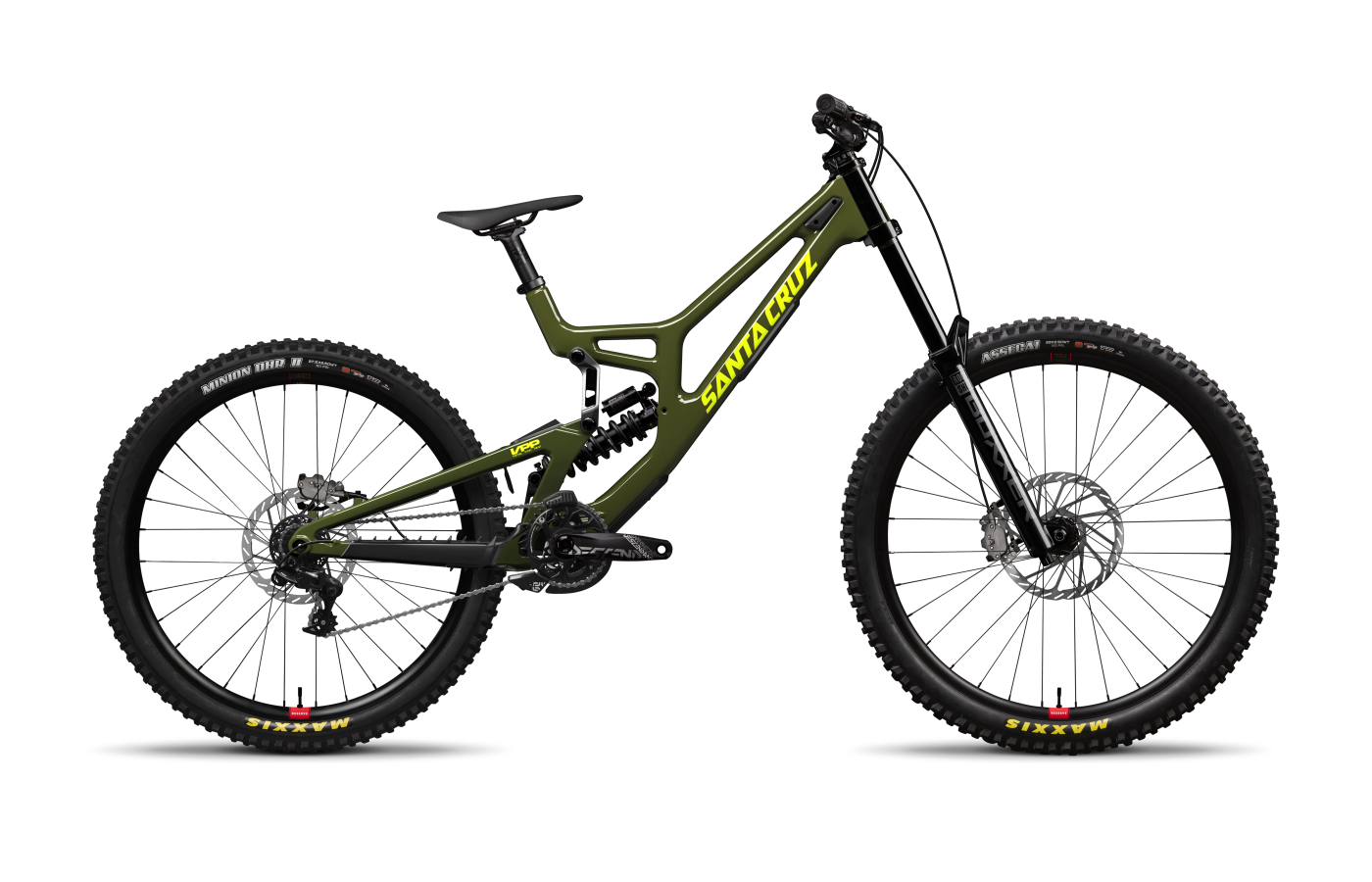
The Santa Cruz V10 is the iconic VPP-suspension downhill bike with a long World Cup history. Different ride feel from either the Zero Suspension Summum or the FSR Demo — worth a look if you want a third platform philosophy in the conversation.
Compare →Session
The Trek Session is a perennial favorite in the DH scene with a balanced ABP suspension layout and proven race pedigree. Often praised for striking the middle ground between plow stability and playful agility.
Compare →Tues
The YT Tues is the direct-to-consumer value play in the category — race-ready kit at a meaningfully lower price, with the usual DTC catch of no local dealer support and no demo program.
Compare →