Demo
vsTues
Two World Cup downhill bikes, two different bets.
The Specialized Demo is the alloy plow built around kinematics. The YT Tues MK4 is the carbon all-rounder that undercuts it on price and tops it on adjustability.
Demo
- World-class plow character — rearward axle path and 70% more anti-rise keep the chassis level through braking bumps and rock gardens.
- 300% more anti-squat than the previous Demo — sprints out of the gate without wallow, rare for a 200 mm DH bike.
- Race-grade Öhlins DH38 + TTX22M.2 coil as standard on the only build offered.
- Aluminum frame at $7,099 — competitors at this price point are carbon.
- S-Sizing maxes out at S3 reach 446 mm; riders over 6'2" will feel cramped.
Tues
- Carbon frame at 16.1 kg — roughly 1.5 kg lighter than the Demo Race, and noticeably easier to manhandle through tight terrain.
- Three independent geometry adjustments — head angle/BB flip chip, +/- 5 mm chainstay length, and a Flip Link for 27.5 or 29 rear without spare parts.
- $6,899 with X01 DH, Fox 40 Factory, and TRP DH-R EVO + 220 mm rotors — a build that needs nothing before you race it.
- Noisier through the feet on high-frequency chatter; can hang up where the Demo plows.
- TRP brake feel is divisive — some testers find them grabby with a bite point far from the bar.
Editor’s analysis
Both bikes have stood on the top step of a World Cup. They get there in very different ways.
The Specialized Demo and YT Tues are the two bikes you find yourself comparing once you've decided to spend serious money on a downhill rig that isn't a boutique high-pivot. Both run 200 mm of travel, both use a four-bar layout, both are happy with mixed wheels. The conversation starts where the philosophies diverge: the Demo is an aluminum chassis built around four years of kinematics work; the Tues is a carbon chassis built around adjustability and a price tag the German-direct model lets YT defend.
The Specialized Demo plows. The 2021 redesign added a 70% bump in anti-rise and a more rearward axle path, and reviewers describe the result the same way every time — an "absolute confidence machine" that stays level under braking and refuses to hang up on square-edge hits. It's also a heavy bike (17.6 kg in size S3) on a frame Specialized priced at $7,099 — a number that drew flak even at launch for being aluminum-only at this tier. What you're buying is the kinematics, not the material.
The YT Tues MK4 takes the opposite tack. The Core 4 is 16.1 kg of carbon, a Fox 40 Factory, X01 DH, TRP brakes with 220 mm rotors front and rear — and $6,899. Geometry is adjustable in three places (head angle/BB, chainstay length, 27.5 vs 29 rear), and reviewers consistently note the bike rides "sharper and steeper" than its 63.2-degree head angle suggests. It rewards an active rider — pump it through rollers, sprint out of corners — and it transmits more feedback through the feet than the Demo does.
Put another way: the Demo is what you buy when you want the bike to do the thinking on rough, ugly tracks. The Tues is what you buy when you want a lighter, sharper carbon platform that scales from A-Line laps to a regional DH podium without ever feeling like a tank.
Where the builds differ.
Comparing our editor's-pick builds side-by-side. Winners highlighted row-by-row — lower price and weight, and the better-spec component, each mark a point.
Build variants & pricing
Specialized sells the Demo in a single $7,099 alloy build. YT offers three carbon trims from $4,299 to $6,899 — the Core 4 is the X01 DH match for the Demo Race.
Prices are current US MSRP. The Demo's lone Race trim leaves no cheaper entry point into the platform; YT's Core 2 CF gets you a carbon Tues for $4,299, well under the Demo's floor.
How they fit, how they steer.
S3 Demo and M Tues match for reach (446 mm both) and seat tube angle within half a degree. The Tues sits 8 mm taller in the stack and runs a 0.4-degree steeper head angle — geometry that lines up with the "sharper and steeper" feel reviewers report on the Tues.
Which size should I buy?
Specialized's S-Sizing offers three sizes (S2/S3/S4) and tops out at 466 mm reach. YT runs five sizes (S–XXL) up to a 510 mm reach — the only choice for taller riders.
→These are starting points. Flexibility, riding style, and preferred position all shift the answer — if you’re between sizes, a professional fit beats a chart.
What the magazines said.
Published reviews from trusted cycling outlets. Click through for the full write-up.
Which one should you buy?
If your tracks are rough and you want the bike to do the thinking, get the Demo. If you want a lighter, sharper, more adjustable carbon chassis at a lower price, get the Tues.
Demo
If your local DH is square-edge rock and braking bumps that rattle your hands off the bars, the Demo's rearward axle path and anti-rise make it a confidence machine from the first lap. You're paying for the kinematics, not the frame material — and World Cup results suggest that's the right call.
Tues
If you split your time between race tracks and jump lines, want the lighter carbon chassis, and care about being able to fine-tune geometry trail by trail, the Tues is the better tool. It rewards an active rider and undercuts everything in its component class on price.
Questions buyers actually ask.
Short answers to the things we get emailed about most often.
01Which is faster on rough, square-edge tracks?
The Specialized Demo, by consensus. The 2020 redesign added a more rearward axle path and a 70% increase in anti-rise, and reviewers across Pinkbike, Vital MTB, and The Loam Wolf describe the same effect — the rear wheel stops hanging up on square-edged hits and the chassis stays level under braking.
The Tues is no slouch on rough tracks (Vali Höll has won World Cups on it), but reviewers consistently note it "hangs up a bit more" in technical holes and is "noisier through the feet" than plow-style competitors.
02Which is faster on flow, jumps, and pump tracks?
The YT Tues. Reviewers single out its mid-stroke support and "pop" as ideal for pumping through rollers and generating speed on jump-heavy trails like Whistler's A-Line. It's also roughly 1.5 kg lighter (16.1 kg vs 17.6 kg for the Demo Race in S3), which makes it easier to throw around.
The Demo is a more grounded, momentum-carrying bike. Faster when the trail does the work; slower when the trail asks you to do it.
03Why is the Demo aluminum at $7,099 when the Tues is carbon at $6,899?
Specialized went all-in on aluminum for this generation specifically so engineers could iterate on geometry and kinematics quickly during development. The frame uses heavily forged tubing and a sophisticated 20-bearing linkage, and reviewers like Dan Roberts at Pinkbike note that the engineering — not the material — is what you're paying for.
That said, multiple reviewers flagged it as expensive for an alloy frame given direct-to-consumer competitors like YT offer carbon at the same or lower price. If frame material matters to you, that's a real difference.
04Can I run a mullet (29" front, 27.5" rear) on both?
Yes, both. The Demo Race ships with a Horst pivot flip chip that swaps between full 29 and mullet without other changes, and Specialized actually spec the bike as a mullet from the factory.
The Tues MK4 uses an integrated Flip Link at the seat stay that does the same job — switch between 27.5 and 29 rear with a 6 mm Allen key, no other parts required. Multiple reviewers called out the Tues's adjustment system as one of the most elegant in the segment.
05How tall a rider does each fit?
Specialized Demo: S2/S3/S4, with the largest size topping out at 466 mm reach. Pinkbike's 5'11" Mike Kazimer found the S3 cramped and preferred the S4 — for riders over 6'2", even the S4 is likely too short.
YT Tues MK4: five sizes (S/M/L/XL/XXL), with the XXL stretching to 510 mm reach. If you're over 6'2", the Tues is meaningfully better-sized; under 6'0" the Demo's S3 and Tues's M are a near-identical fit at 446 mm reach.
06Which suspension setup is better out of the box?
The Demo Race ships with an Öhlins DH38 M.1 fork and an Öhlins TTX22M.2 coil shock — the gold-anodized Swedish setup many top racers run. Reviewers note the stock 400/450 lb springs run soft for aggressive riders and recommend going up.
The Tues Core 4 ships with a Fox 40 Float Factory and a Fox DHX2 Factory coil — the standard premium DH suspension package. The Core 3 CF actually runs the same Öhlins setup as the Demo at $5,499, if you specifically want that combo on a lighter carbon frame.
07Are there any known maintenance issues to watch for?
On the Demo, multiple reviews flag two recurring items: persistent internal cable rattle that benefits from foam sleeving or mastic tape, and lower linkage bolts that have been reported to back out under heavy bike park use (Loctite is the standard fix). The pivot hardware itself is praised — sealed cartridge bearings and proper lip seals.
The Tues is more straightforward — no idler pulleys, no high-pivot complexity, and the four-bar V4L layout has a long service history. Plan on regular bolt checks around the geometry-adjust hardware.
08Which is the better value at the lower end of the lineup?
The Tues, comfortably. YT offers three carbon trims — Core 2 CF at $4,299, Core 3 CF (Öhlins, GX DH) at $5,499, and Core 4 (Fox Factory, X01 DH) at $6,899. Every one of them is carbon.
The Demo is sold in a single $7,099 alloy Race trim. Specialized has previously offered cheaper Expert builds, but at the time of writing the Race is the only one available. If your budget is under $5k, the Tues isn't just the better choice — it's the only one of the two even in the conversation.
Similar bikes
If your priorities don’t map cleanly onto either of these, one of these adjacent bikes probably fits better.
Session
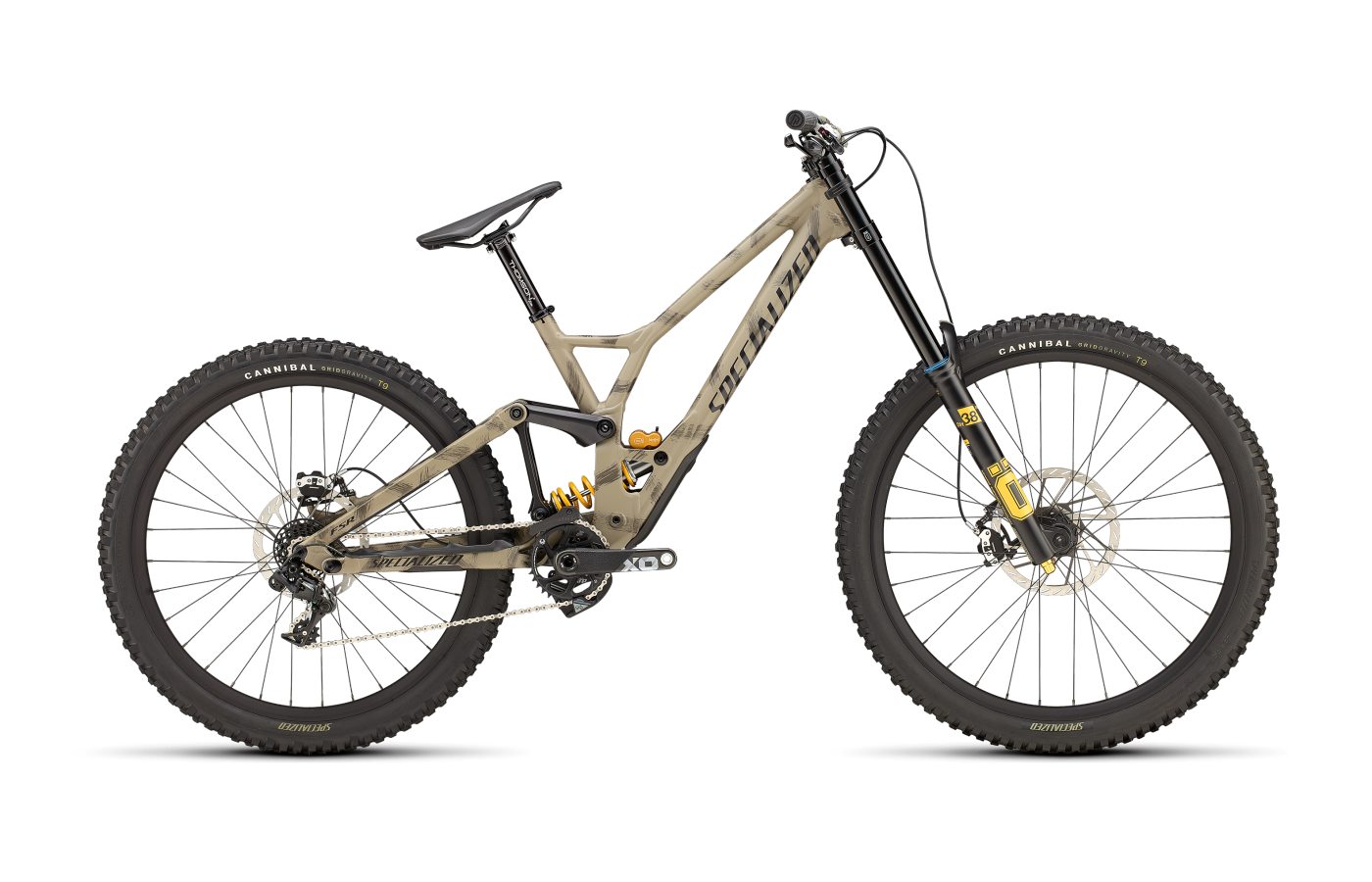
The Trek Session takes the plow concept further than the Demo — a high-pivot layout with an idler pulley delivers a near-pure rearward axle path and almost no pedal kickback. Pick this if you wish the Demo were even more glued to the ground in chunder.
Compare →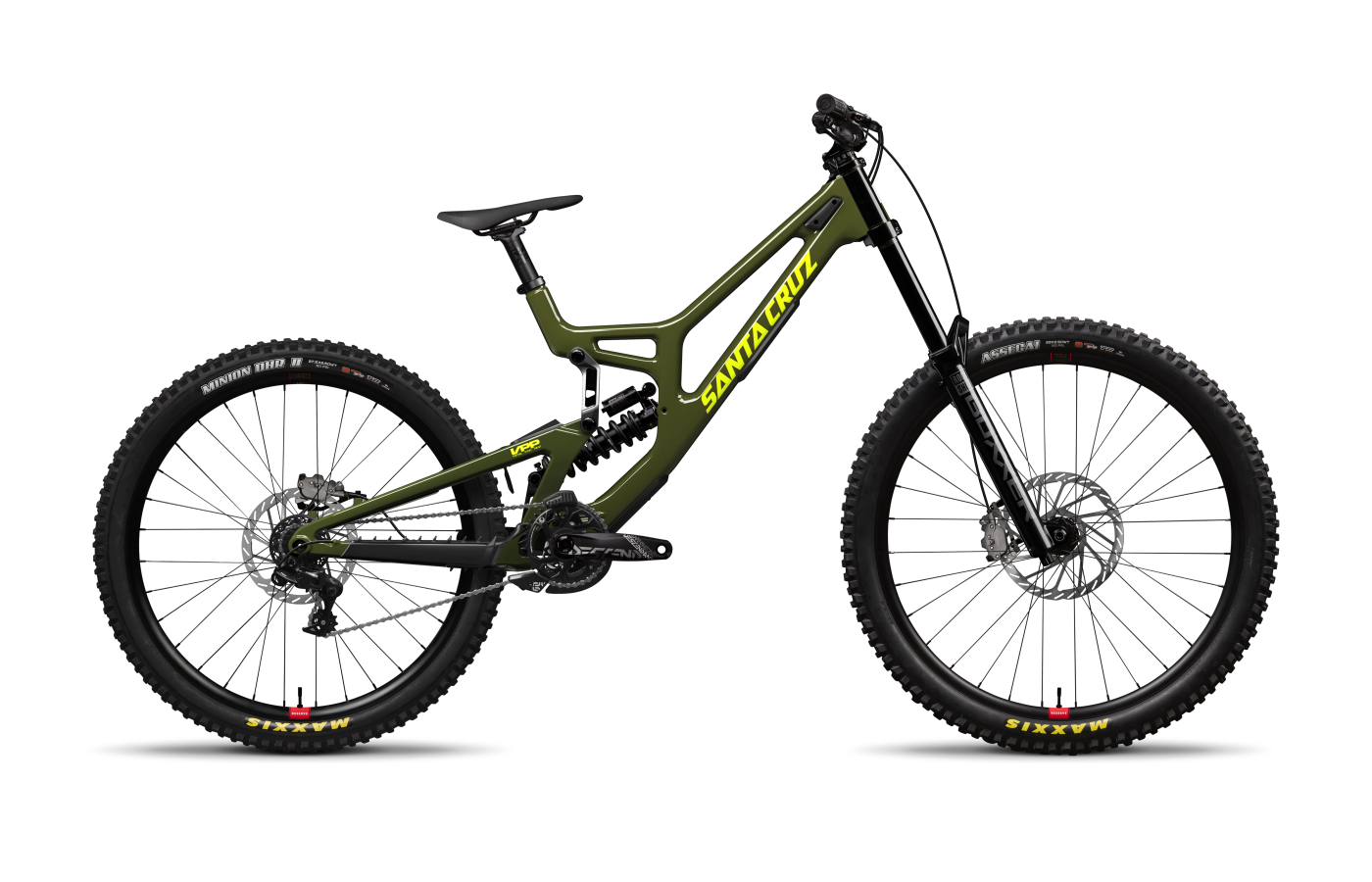
V10
Santa Cruz's V10 is the long-running carbon DH benchmark — quieter, more refined, and more expensive than the Tues. Worth the premium if you want boutique build quality and don't mind paying for the badge.
Compare →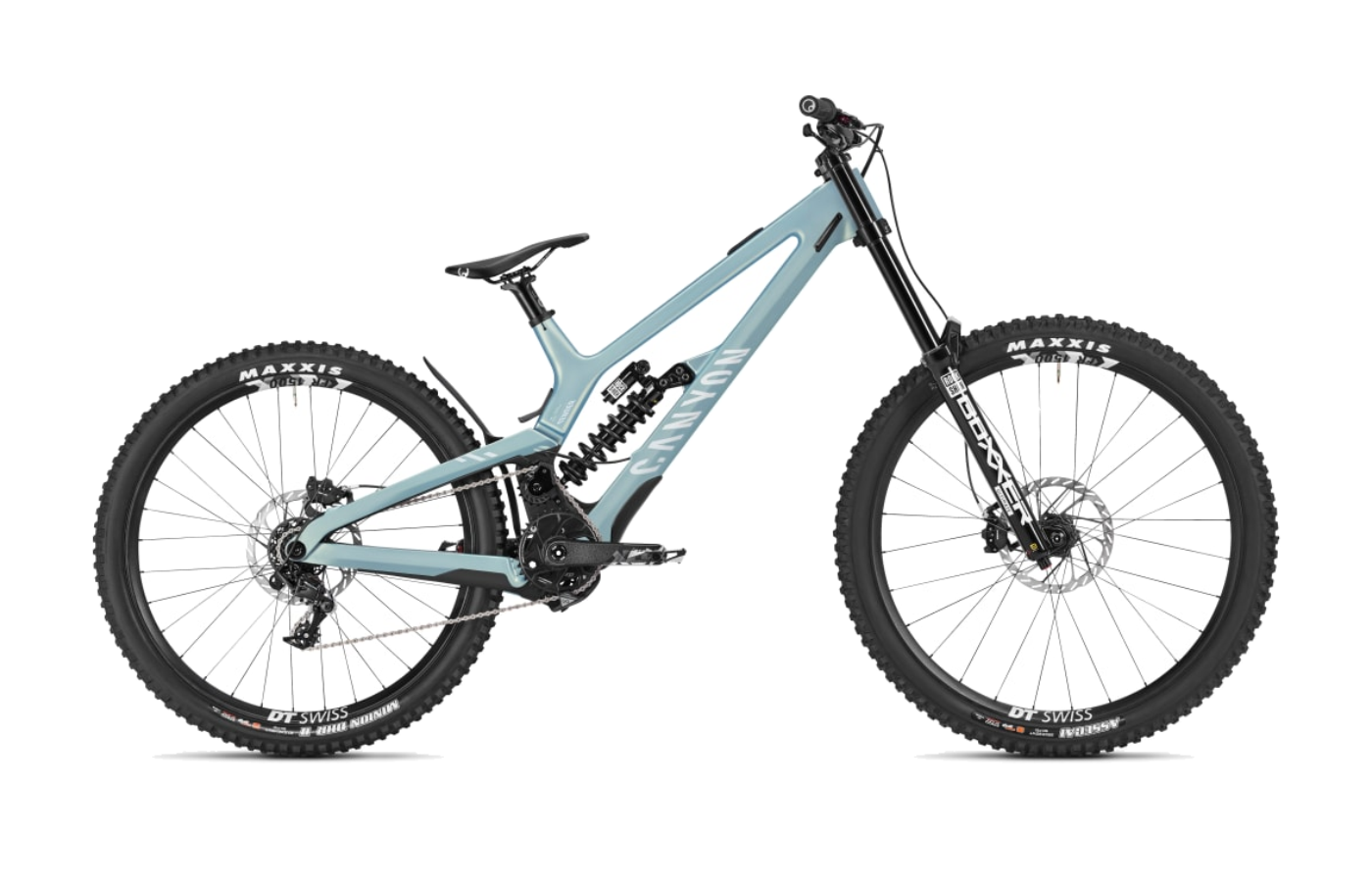
Sender
Canyon's Sender splits the difference: direct-to-consumer pricing like the Tues, but a heavier, more monster-truck ride feel closer to the Demo. The pick if you want the Demo's character without the alloy-price-tag debate.
Compare →