Demo
vsEnduro
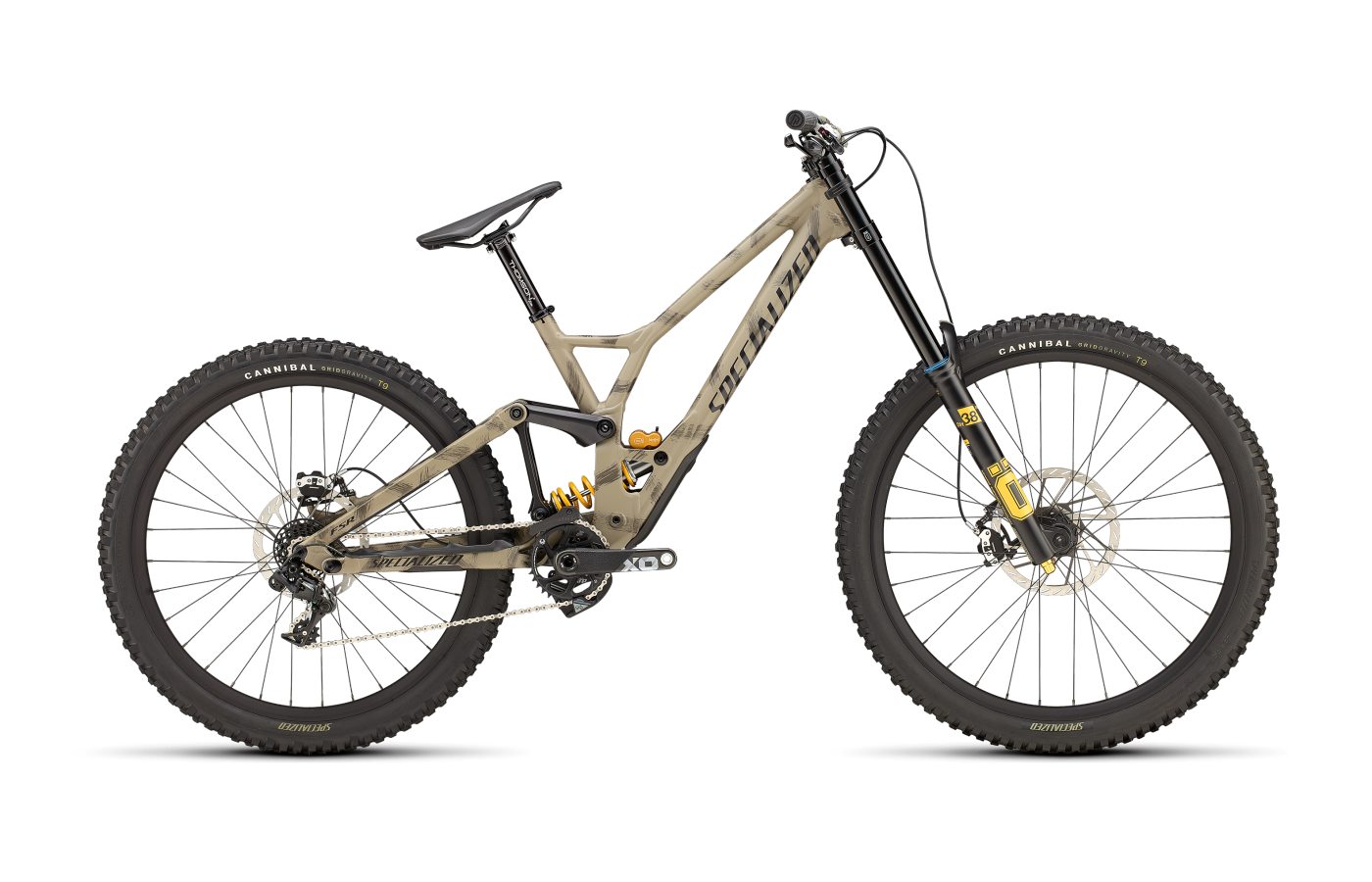
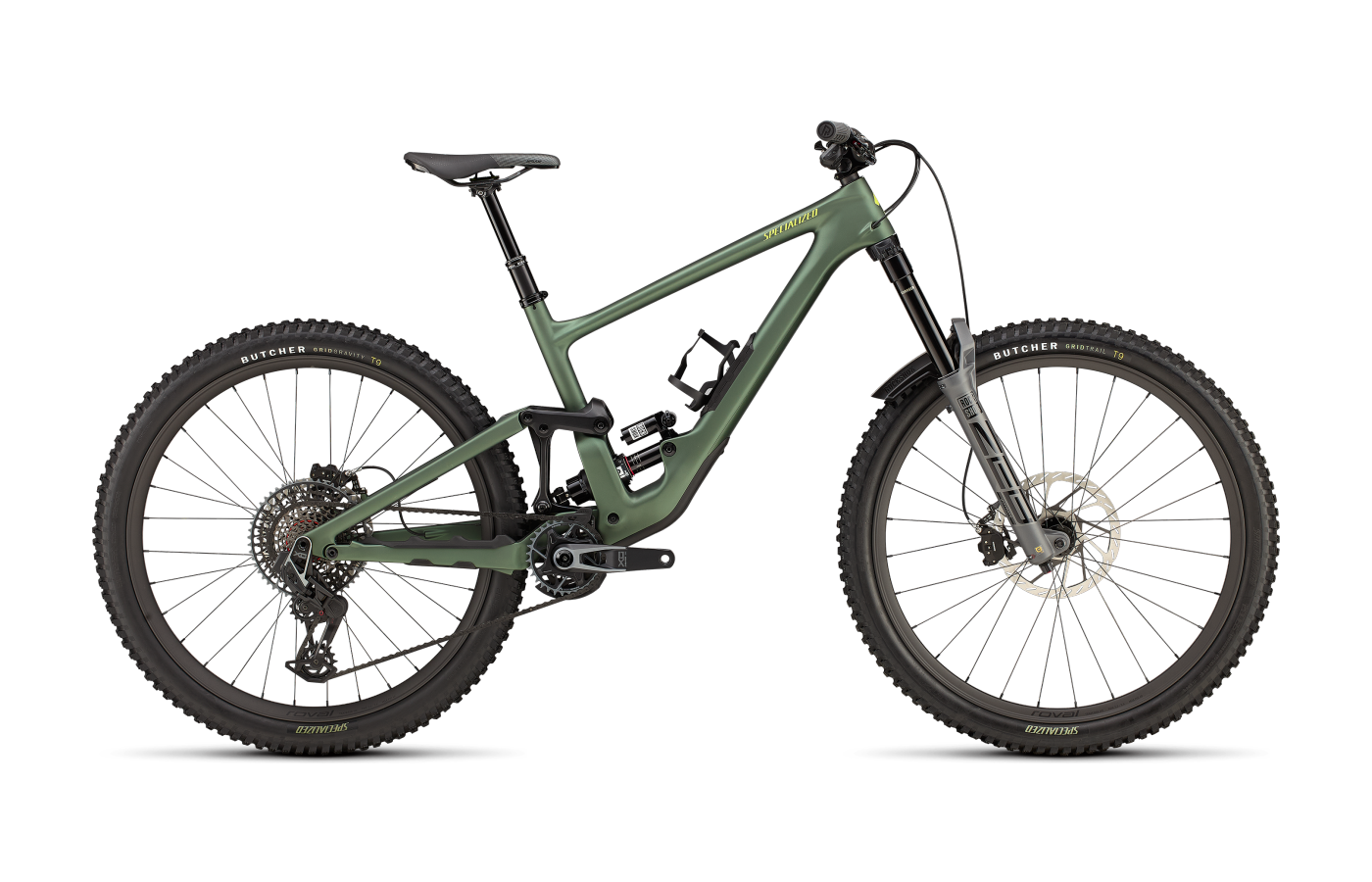
A race-only DH sled, or a mini-DH you can pedal.
The Demo is built for a start gate and a shuttle rig. The Enduro borrows its DNA, trims 30 mm of travel, and adds a 76° seat tube so you can earn the descents.
Demo
- 200 mm of world-cup-proven travel — Öhlins DH38 / TTX22M.2 coil and a 62.8° head angle let you drop your heels and trust the bike through rock gardens.
- Plow-through-anything kinematics — the redesigned rearward axle path and 70% more anti-rise keep the bike level under heavy braking in steep chutes.
- Flip-chip wheel-size switching — run full 29 for monster-truck stability or mullet for snappier cornering, on one frame.
- No climbing ability — no bottle mount, no SWAT, no dropper post. You need a shuttle or a lift.
- Alloy frame at $7,099 feels steep next to carbon-framed DH competitors at similar money.
Enduro
- DH-derived kinematics on a pedalable chassis — 40% more anti-squat and a 76° seat tube let it climb without a lockout.
- FACT 11m carbon with SWAT storage — internal downtube stash for tube, snacks and tool means you can ride all day without a pack.
- Four sizes covering S2–S5 — reach from 437 mm to 511 mm fits riders the Demo's three-size range can't stretch to.
- Pro build is $8,499 — the cheaper Comp at $4,999 gets the same frame but mid-tier suspension.
- Can feel "boring" or overbiked on flatter, mellower trails where its length and ground-hugging character flatten the ride.
Editor’s analysis
Same design team, same suspension philosophy, two completely different use cases — the only real question is whether you'll ever pedal uphill.
The 2020 Demo and the 2020 Enduro share a bloodline. Specialized redesigned the Demo first — new FSR kinematics, a more rearward axle path, a 300% bump in anti-squat and a 70% bump in anti-rise — then shrank the template, wrapped it in FACT 11m carbon, and called it the Enduro. Pinkbike's headline on the Enduro was literal: "basically a DH bike without a dual crown fork." That shared DNA is the whole conversation here.
Where they diverge is travel and intent. The Specialized Demo runs 200 mm front and rear on an M5 alloy frame, a 62.8° head angle, and a 7-speed X01 DH drivetrain — there's no climbing pretense, no SWAT box, no bottle mount. It comes in one trim (Race, $7,099) with an Öhlins DH38 fork, a TTX22M.2 coil shock, a Horst pivot flip-chip for full-29 or mullet, and 148 mm rear spacing so you can steal a wheel off a trail bike in the pits.
The Specialized Enduro cuts travel to 170 mm, swings the head angle to 64.3°, steepens the seat tube to 76°, and adds a 40% anti-squat bump that reviewers from Bike Magazine to Enduro-MTB said made it "the first Specialized FSR that can genuinely be pedalled uphill without a lockout." You pay for that versatility two ways — price (the Pro is $8,499 vs. the Demo Race's $7,099) and focus. On mellow terrain several testers called the Enduro "boring" or "overbiked"; it wants a real gradient to come alive.
Put simply: the Demo is a tool for a lift line or a shuttle truck. The Enduro is the tool for someone who wants 90% of that descending composure and the ability to grind 3,000 ft back to the top. Neither is wrong — they're solving different problems for different weekends.
Where the builds differ.
Comparing our editor's-pick builds side-by-side. Winners highlighted row-by-row — lower price and weight, and the better-spec component, each mark a point.
Build variants & pricing
The Demo comes in a single $7,099 Race trim. The Enduro spans $4,999 Comp to $8,499 Pro — same carbon frame either way.
Prices are current US MSRP. The Demo lineup is short because it's a race-only platform; the Enduro's wider range is the upside of a bike you might actually ride to the trailhead.
How they fit, how they steer.
Compared at their fit-picked sizes — Demo S3 vs. Enduro S2. The Demo sits 16 mm taller in stack and 9 mm longer in reach, with a head angle 1.5° slacker (62.8° vs. 64.3°). Chainstays are within 1 mm; trail is within 2 mm.
Which size should I buy?
Demo covers S2–S4 (reach 426–466 mm). Enduro stretches S2–S5 (reach 437–511 mm) for riders the Demo's three-size range can't accommodate.
→These are starting points. Flexibility, riding style, and preferred position all shift the answer — if you’re between sizes, a professional fit beats a chart.
What the magazines said.
Published reviews from trusted cycling outlets. Click through for the full write-up.
Which one should you buy?
If your day ends at the top of a shuttle road, get the Demo. If it starts there, get the Enduro.
Demo
If your weekends involve a full-face, a chairlift or a shuttle truck, and a stopwatch, the Demo is the tool. 200 mm of Öhlins, an alloy chassis that shrugs off bike-park abuse, and a flip-chip that lets you toggle between full-29 stability and mullet agility on the same frame.
Enduro
If you need DH confidence but also need to climb 3,000 ft to earn it, the Enduro Pro is the right bike. FACT 11m carbon, SWAT storage for all-day rides, 40% more anti-squat than the previous Enduro, and a 76° seat tube that makes uphill pedaling genuinely tolerable — not a compromise.
Questions buyers actually ask.
Short answers to the things we get emailed about most often.
01Can I pedal the Demo uphill?
Technically yes, practically no. The Demo's 62.8° head angle, 200 mm of plush travel, and lack of dropper post or bottle mount make it a bike for going down — not around. Reviewers noted the 300% anti-squat increase over the old Demo makes it "less of a push bike" than it used to be — you can spin it up a fire road to lap a DH trail — but it is unequivocally built for shuttle laps and lift access.
If you're going to ride to the top regularly, buy the Enduro instead.
02Why is the Demo alloy-only at $7,099?
Specialized deliberately chose M5 aluminum for the current Demo so they could iterate geometry faster during R&D, and because a DH race frame eats rock strikes all day — alloy dents instead of cracking. Pinkbike's Dan Roberts called the bike "expensive considering the spec and aluminum frame," and that's a fair criticism versus carbon-framed competitors.
The counter-argument: the $7,099 Race build ships with top-tier Öhlins DH38 / TTX22M.2 coil suspension, a lifetime frame warranty, and crash-replacement pricing. You're paying for kinematics and support, not the frame material.
03What's the wheel-size situation on both bikes?
Specialized Demo: ships as a mullet (29" front / 27.5" rear) out of the box, but a Horst pivot flip-chip lets you convert to full 29" without new parts. Reviewers called the mullet "an absolute treat through tight corners" and said full-29 was the faster, more stable setup on wide-open tracks.
Specialized Enduro: 29" front and rear, full stop. No factory mullet conversion on this generation.
04Do these share a suspension platform?
Essentially yes. Specialized engineered the Demo's new FSR layout first — a more rearward axle path to prevent the rear wheel hanging up on square-edge hits, a 300% increase in anti-squat, and a 70% increase in anti-rise — then shrunk the same kinematics into the Enduro with 170 mm of travel instead of 200 mm. Pinkbike explicitly described the Enduro as "basically a DH bike without a dual crown fork."
The Enduro adds a 40% anti-squat increase of its own (over the previous Enduro) and a steeper 76° seat tube angle to make it climbable.
05Is 170 mm too much travel for an enduro race?
Depends on the course. The Enduro at 170 mm F/R is at the upper end of the enduro bracket — some reviewers noted it can feel "overbiked" on mellower stages where less-travel bikes pump and accelerate better.
On steep, rocky, high-speed EWS-style tracks the Enduro's extra travel and DH-derived suspension translate directly to time on the clock. If your local races are rough and steep, the 170 mm is a feature; if they're flowy and pedally, a 150 mm trail bike might be the faster tool.
06How serviceable are the pivots?
The Demo runs 20 cartridge bearings in its linkage; the Enduro, 14. Both use lip-sealed pivot bolts that keep factory grease clean, and both have threaded BSA bottom brackets for easy BB service.
Known issues: the Demo's internal cable routing is famous for rattling — plan on foam sleeving or mastic tape. The 2020–2021 Enduro had a documented headset-cracking issue that Specialized fixed on 2022+ frames and covered under warranty in the meantime. Both have had reports of linkage bolts backing out; a drop of blue Loctite on reassembly is the standard fix.
07What tires ship on each?
Specialized Demo: Specialized Cannibal 2.4" with GRID Gravity casing, both wheels. Built for DH duty, not subtle.
Specialized Enduro Pro: Specialized Butcher 2.3" — GRID Trail front, GRID Gravity rear. Reviewers across the board found the Trail front casing too flimsy for the bike's capability; plan to upgrade the front or install inserts if you ride aggressively.
08Which is a better bike-park bike?
The Demo, without much debate. The 200 mm of travel, slacker head angle, full DH drivetrain, and alloy frame are all optimized for the abuse of repeated lift laps. The Enduro can absolutely do a bike-park day — plenty of reviewers raved about its composure on steep tracks — but at 170 mm it'll pack out on the biggest jumps and drops where the Demo eats them.
Similar bikes
If your priorities don’t map cleanly onto either of these, one of these adjacent bikes probably fits better.
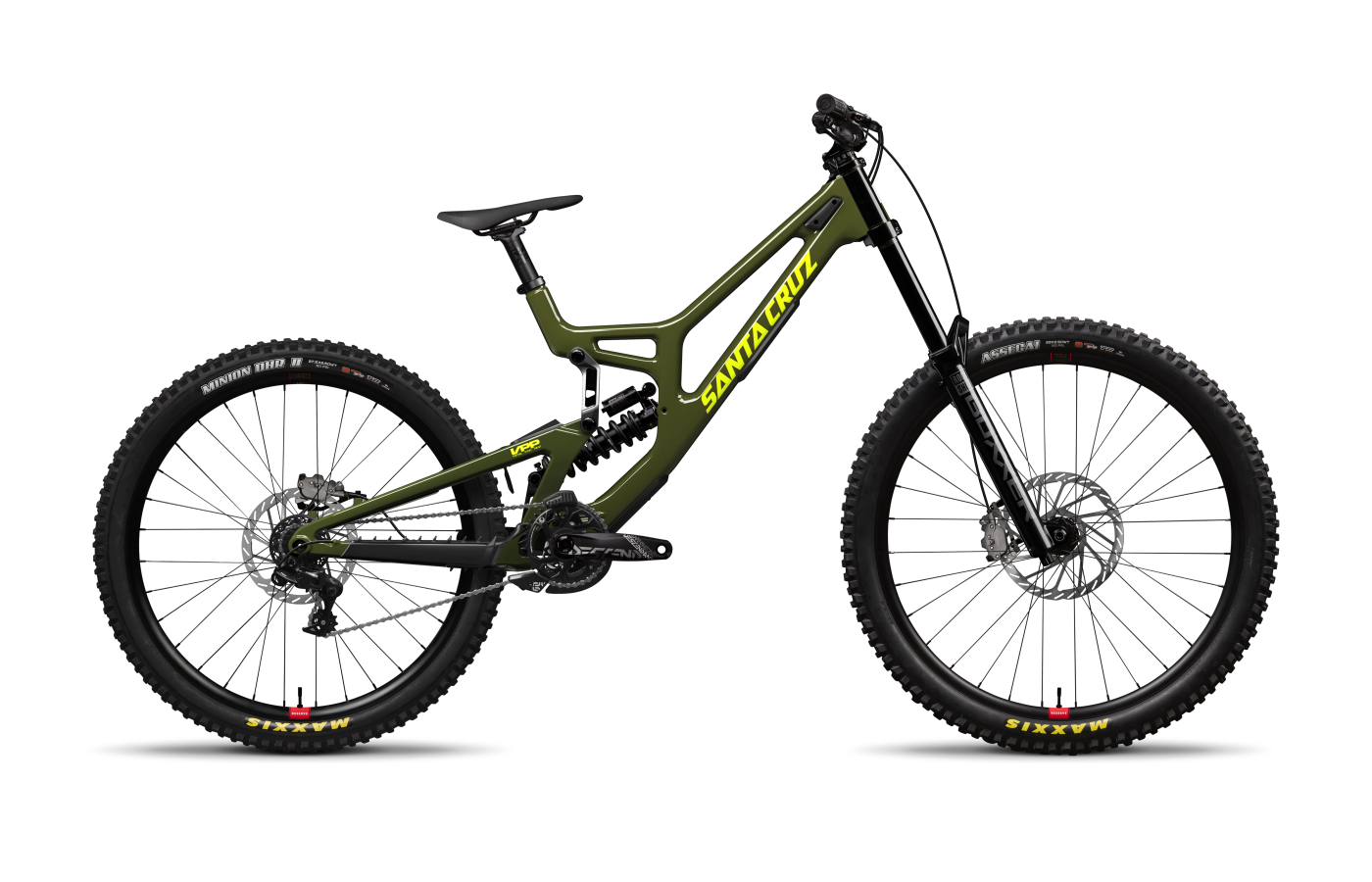
V10
The carbon counterpart to the Demo for riders who want a premium frame material and don't mind the tax. VPP suspension instead of Horst link, but a similar World Cup race pedigree.
Compare →Session
High-pivot DH design with an idler pulley — goes even further than the Demo on rearward axle path and straight-line stability. Best if you race the rowdiest tracks and want the plowiest bike going.
Compare →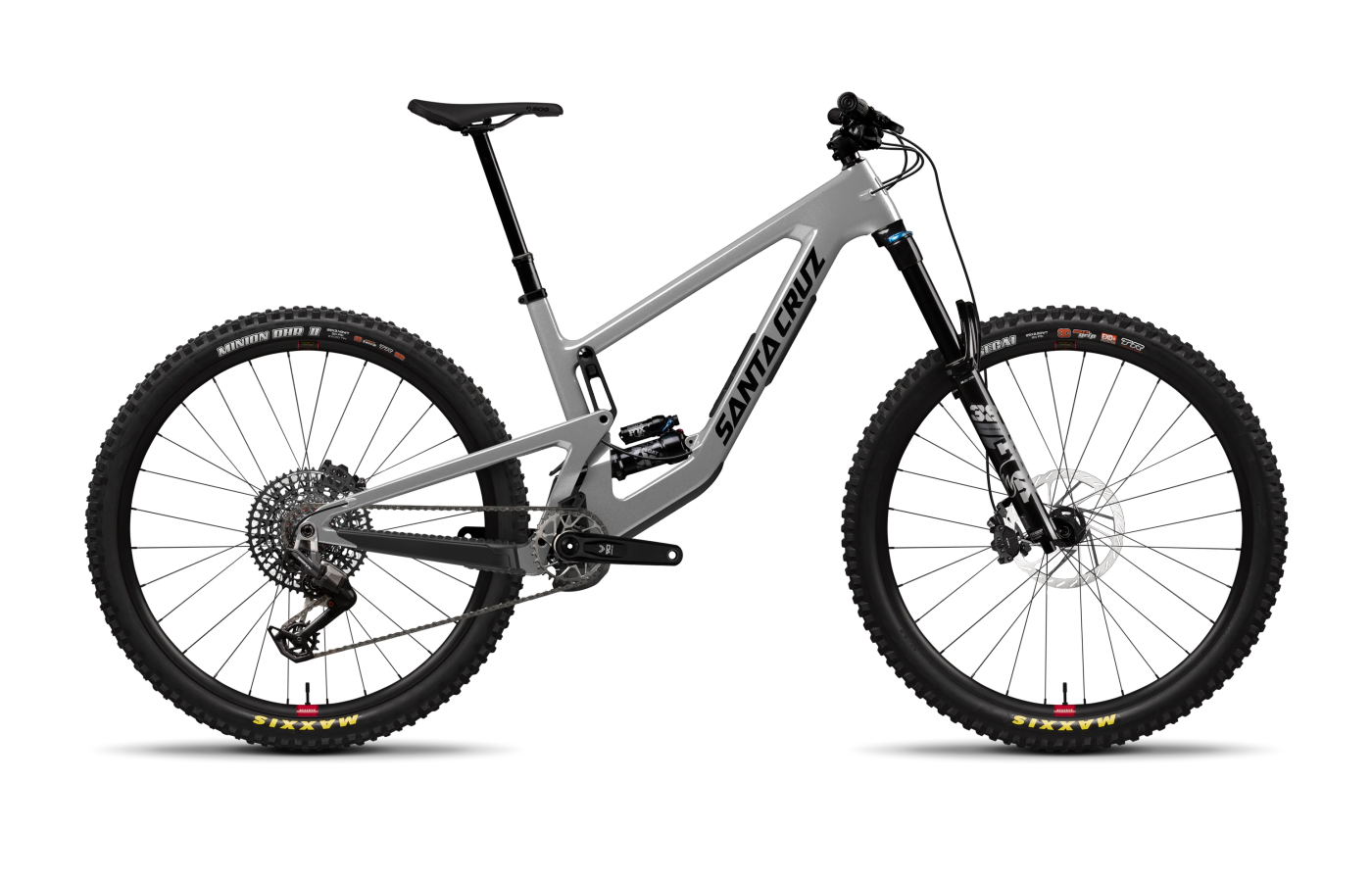
Megatower
Santa Cruz's direct rival to the Enduro — 170 mm travel, carbon chassis, VPP suspension that similarly balances climb-it manners with plow-it descending. Different linkage, same mission.
Compare →