Grizl
vsCheckpoint
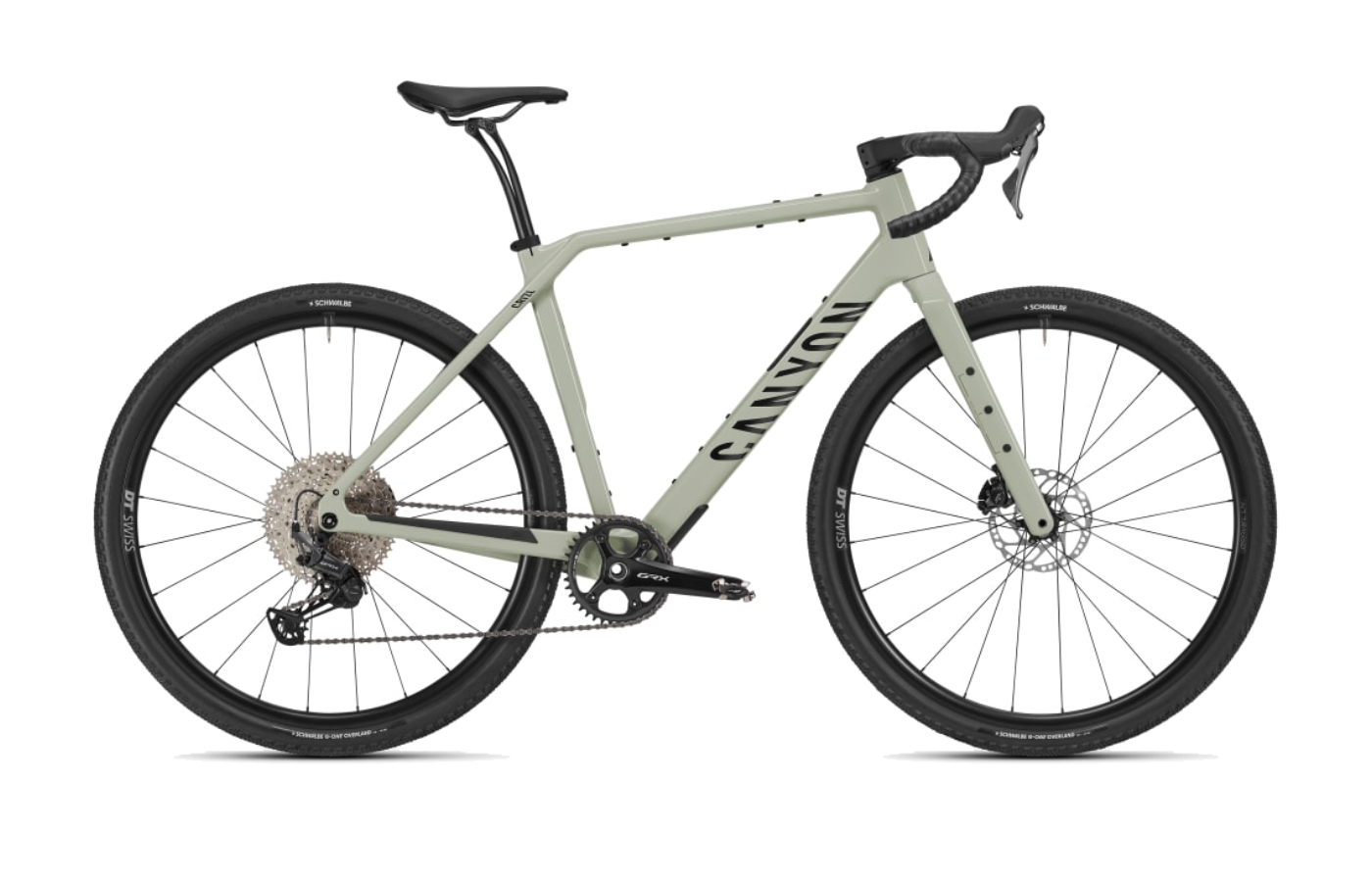
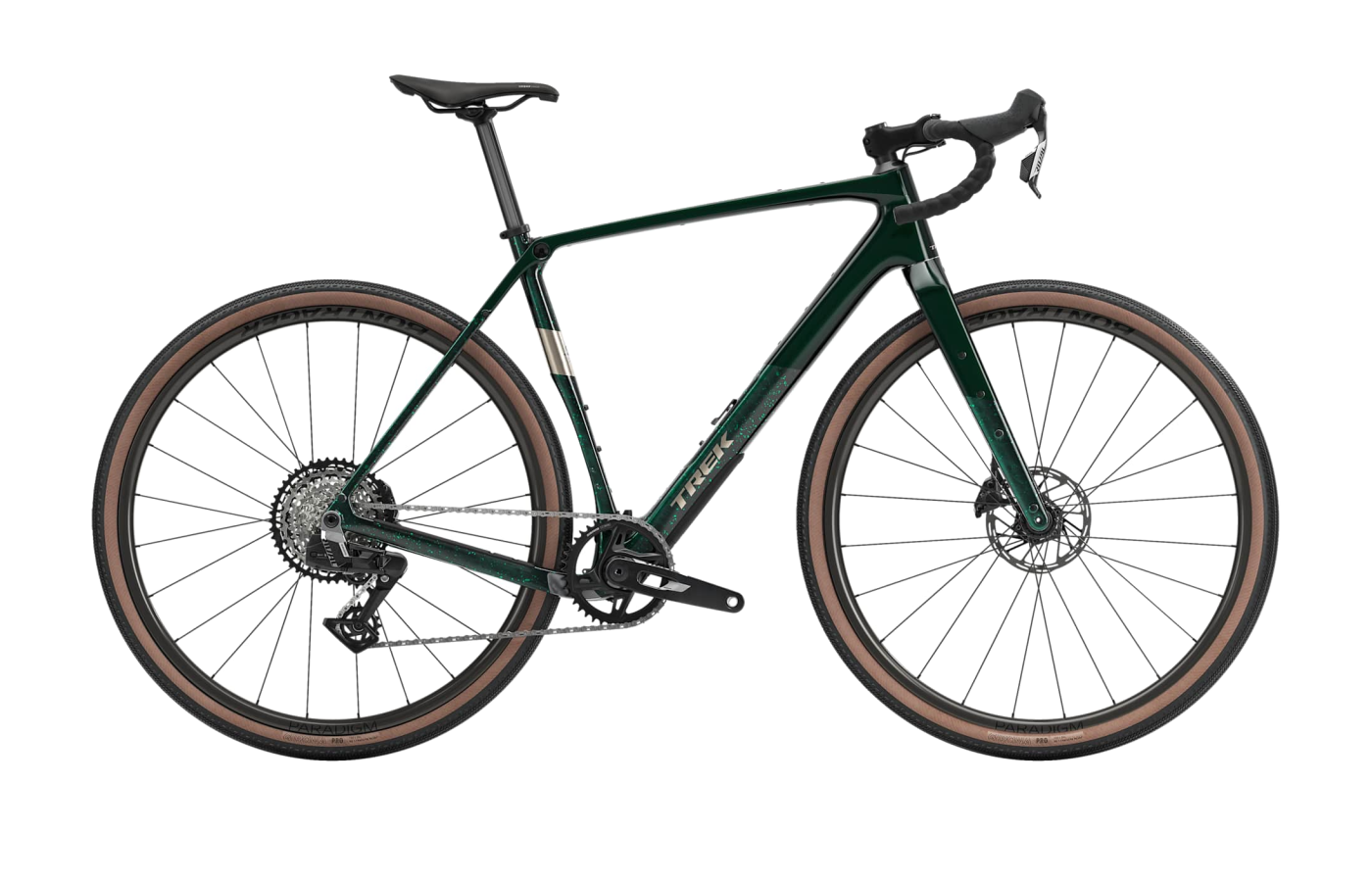
Two adventure rigs, two flavors of comfort.
The Canyon Grizl trades agility for plant-stable expedition geometry and 54 mm tires. The Trek Checkpoint engineers comfort into the frame with IsoSpeed and a refined endurance fit.
Grizl
- 54 mm tire clearance — the widest in the segment, opening the door to 2.1" rubber and light singletrack.
- Aggressive DTC pricing — the CF 7 lands a full carbon frame and 12-speed GRX for $3,399.
- VCLS seatpost stock — up to 20 mm of leaf-spring compliance on every CF model, no upgrade required.
- Less agile and "more of a boat" unloaded than the previous Grizl or a race bike.
- No local dealer for fit, demo, or warranty support — DTC ownership requires confidence in your own sizing.
Checkpoint
- IsoSpeed decoupler — a frame-level compliance system that works regardless of seatpost extension or rider weight.
- T47 threaded BB and UDH — two of the most service-friendly standards in the industry, future-proofed for the next decade.
- Sprightlier handling — a tighter 1,022 mm wheelbase (size S) and shorter chainstays keep it nimbler on flowing gravel and pavement transitions.
- 50 mm tire clearance vs. Canyon's 54 mm — a real ceiling if you want 2.1" rubber.
- Through-the-headset cable routing on mechanical builds (ALR 5/4/3) is a genuine serviceability red flag.
Editor’s analysis
Both bikes have walked away from the gravel-race fight — the question is whether you want comfort built into the frame or baked into the geometry.
Canyon and Trek read the same tea leaves and arrived at almost the same brief: most gravel riders aren't racing, and the platforms once positioned as do-it-all racers needed to lean further into adventure. Trek shipped the dedicated Checkmate to take over racing duties and let the Checkpoint sprawl into endurance territory. Canyon kept the Grail as the snappy gravel racer and pushed the Grizl into bikepacking-rig terrain. The result: two bikes that will both happily eat a 100-mile day, but get there very differently.
The Canyon Grizl is the more aggressive reposition. A 71-degree head angle on most sizes, 435 mm chainstays, an extended wheelbase, and 54 mm tire clearance — the geometry is closer to a drop-bar mountain bike than to a road bike. Reviewers describe it as "planted but predictable," "calm and composed" loaded, and noticeably less playful unloaded. The S15 VCLS 2.0 seatpost handles compliance with up to 20 mm of flex, and the optional DT Swiss F132 suspension fork on Rift trims pushes it deep into singletrack territory. This is a bike for riders who actually leave pavement.
The Trek Checkpoint plays comfort closer to the road end of the spectrum. The IsoSpeed decoupler at the seat tube is the signature move — it absorbs high-frequency chatter without adding weight, bobbing under power, or requiring service. A 71.4-degree head angle (size S), 430 mm chainstays, and a tighter 1,022 mm wheelbase keep the Checkpoint sprightlier and more road-bike-like in the corners than the Canyon. Tire clearance tops out at 50 mm — generous, but four mm shy of the Grizl. Multiple testers called it a "chameleon" and a "do-it-all daily driver."
Put it this way: if your gravel rides involve real dirt-road expeditions, multi-day bikepacking, or the occasional singletrack detour, the Grizl's geometry was built for that ride. If your gravel is a mix of pavement, hardpack fire road, and the occasional century with friends, the Checkpoint is the better-balanced platform — and the dealer network and threaded T47 bottom bracket are real long-term advantages.
Where the builds differ.
Comparing our editor's-pick builds side-by-side. Winners highlighted row-by-row — lower price and weight, and the better-spec component, each mark a point.
Build variants & pricing
The Grizl spans $1,799–$4,699; the Checkpoint runs $1,599–$6,499. Trek sells deeper into the budget end with two aluminum builds; Canyon caps lower at the top.
Editor's picks are mid-tier full-carbon builds at each brand's second-from-top trim. Canyon's lineup is mechanical-only on the carbon side — there's no GRX Di2 Grizl in this generation — so a strict like-for-like with Trek's Rival AXS isn't possible. The CF 7 vs. SL 6 AXS pairing matches frame grade and lineup position; the drivetrain split (mechanical vs. electronic) is a real platform difference, not a thumb on the scale.
How they fit, how they steer.
Both at size S — the fit-picked size for a 5'8" rider on each bike. Stack is identical at 556 mm; the Grizl runs 11 mm more reach (397 vs. 386), 5 mm longer chainstays (435 vs. 430), and a slacker 70.25° head tube (vs. 71.4°). The Trek is sharper-steering; the Canyon is more stretched and stable.
Which size should I buy?
Sizing is letter-based on both — Canyon offers a wider range with 3XS/2XS at the small end, while Trek slots an ML between M and L for finer mid-range fit.
→These are starting points. Flexibility, riding style, and preferred position all shift the answer — if you’re between sizes, a professional fit beats a chart.
What the magazines said.
Published reviews from trusted cycling outlets. Click through for the full write-up.
Which one should you buy?
If you bikepack, ride loose stuff, or want one rig to handle expedition duty, get the Grizl. If your gravel is fast, mixed-surface, and you value frame compliance plus a dealer network, get the Checkpoint.
Grizl
If your idea of a great weekend is a self-supported overnight on remote forest roads, with a side of light singletrack, the Grizl is purpose-built. The 54 mm tire clearance, mountain-bike-adjacent geometry, and (on Escape ECLIPS trims) integrated dynamo lighting make it the more capable expedition rig.
Checkpoint
If your gravel rides skew toward fast hardpack, mixed-surface centuries, and the occasional commute, the Checkpoint is the more refined daily driver. IsoSpeed handles the chatter, the geometry is sprightlier in tight corners, and a Trek dealer is probably already in your town.
Questions buyers actually ask.
Short answers to the things we get emailed about most often.
01Which has more tire clearance?
The Canyon Grizl, at 54 mm (roughly 2.1"), versus the Checkpoint's 50 mm. The four-millimeter gap matters more than it sounds — it's the difference between fitting a true 2.0" mountain-bike-style tire and topping out at a chunky 47 mm. If you ride loose, technical, or muddy terrain regularly, the Grizl's clearance is a meaningful advantage.
For most gravel riders running 40–45 mm tires, both bikes have plenty of room.
02Which is more comfortable on long rides?
Both are designed for long-haul comfort, but they get there differently.
The Grizl uses the Canyon S15 VCLS 2.0 leaf-spring seatpost (up to 20 mm of vertical flex) plus high-volume 45 mm tires. The catch: the seatpost only works if you have enough post showing — shorter riders with less extension may not feel the full benefit.
The Checkpoint uses the IsoSpeed decoupler built into the frame, which absorbs vibration regardless of seatpost extension. Reviewers consistently describe it as "subtle" but effective at "taking the sting out" of washboard and chatter without adding weight or bob.
In practice: the Trek's compliance is more universal across riders and frame sizes; the Canyon's depends more on fit and tire choice.
03Can I bikepack with either of these?
Yes — both are designed for it, but the Grizl is the more committed platform.
The Grizl has copious mounts (top tube, fork triple-mounts, downtube), a LOAD downtube storage compartment, and on Escape ECLIPS builds an integrated SON dynamo hub with Lupine lights and USB-C charging. Bikepacking.com called the ECLIPS system "a love letter to bikepacking" and noted the dynamo + lights would cost over $1,200 to assemble aftermarket.
The Checkpoint has integrated frame bag mounts, hidden fender mounts, rack mounts on frame and fork, and a downtube storage door on SL trims. It's well-equipped, but no integrated lighting system.
If you bikepack remote, multi-day routes, the Grizl's ECLIPS-equipped trims are unmatched. For shorter overnighters or supported trips, both work.
04Which is faster?
On flat, hardpack gravel and pavement, the Checkpoint is the marginally faster bike. The shorter wheelbase, more upright but sprightlier geometry, and reviewer consensus describing it as "light, flickable, nimble and fast" point that direction. The SL 7 AXS at roughly 9.3 kg is the lighter platform.
The Grizl is heavier (around 9.9–10.6 kg in equivalent trims) and explicitly tuned for stability over agility. Reviewers describe it as feeling "more of a boat" unloaded compared to racier gravel bikes — that's not a flaw, it's the design intent.
Neither is a gravel race bike — for that, look at the Canyon Grail or the Trek Checkmate.
05What about cable routing and serviceability?
Both bikes route cables through the headset, which adds complexity at any service interval. There are real differences in how this plays out.
The Grizl uses a semi-integrated routing where hoses enter under the headset top cap. Reviewers are split — some find it clean, others call it "an unnecessary complication." Triple-sealed stainless headset bearings claim long service life.
The Checkpoint also routes through the headset. On electronic builds (SL 6/7 AXS), this is a minor inconvenience. On mechanical builds (ALR 3/4/5), one technical editor warned a single shift cable replacement could cost up to $200 in labor at a shop. If you're shopping the aluminum Checkpoint, factor that in.
Trek's T47 threaded bottom bracket is a real serviceability win over Canyon's press-fit BB, which Canyon defends but which remains polarizing.
06Can I get electronic shifting on both?
On the Checkpoint, yes — three of the six builds (SL 5/6/7 AXS) ship with SRAM AXS wireless electronic shifting at $3,499, $4,199, and $6,499 respectively.
On the Grizl carbon lineup, no — every CF build in this generation is mechanical only, running Shimano GRX 12-speed or SRAM Apex (mechanical). If you specifically want electronic shifting on a Grizl, you'd need to look at out-of-this-generation builds or wait for a refresh. This is one of the bigger lineup gaps between the two platforms.
07Buying direct from Canyon vs. through a Trek dealer — what's the practical difference?
Canyon DTC ships the bike directly to you in a box for self-assembly (or you can pay a local shop to build it). The pricing advantage is real — comparable Trek/Specialized builds typically run $800–$1,500 more for similar spec. The trade-offs: no test ride before purchase, no in-person fit consultation, and post-purchase support is by phone or email only.
Trek's dealer network is one of the largest in cycling. You can demo a bike, get a professional fit, and walk a service issue into a shop. You pay for it in MSRP — the Checkpoint SL 7 at $6,499 is roughly the price of a Grizl CF 8 ECLIPS ($4,699) plus the dealer markup the DTC model bypasses.
If you know your fit and don't mind self-service, Canyon wins on dollar-for-dollar value. If you want the safety net of a local shop, Trek wins.
08Can either accept a suspension fork or dropper post?
Grizl Rift trims ship from Canyon with a DT Swiss F132 One 40 mm suspension fork — a factory option, not an aftermarket hack. Reviewers praised it as "so much better than a suspension stem" but noted the 50-hour service interval as a real maintenance burden for remote riders.
The Checkpoint Gen 3 is officially compatible with dropper posts and short-travel suspension forks (Trek confirmed at launch), but no current-year build ships with either — you'd be specifying and installing it yourself.
For riders who want suspension out of the box, the Grizl Rift is the more turnkey path.
Similar bikes
If your priorities don’t map cleanly onto either of these, one of these adjacent bikes probably fits better.

Grail
If the Grizl feels too "boaty" but you like Canyon's DTC pricing, the Grail is its sharper sibling — a dedicated gravel racer with snappier geometry and the polarizing Hoverbar cockpit.
Compare →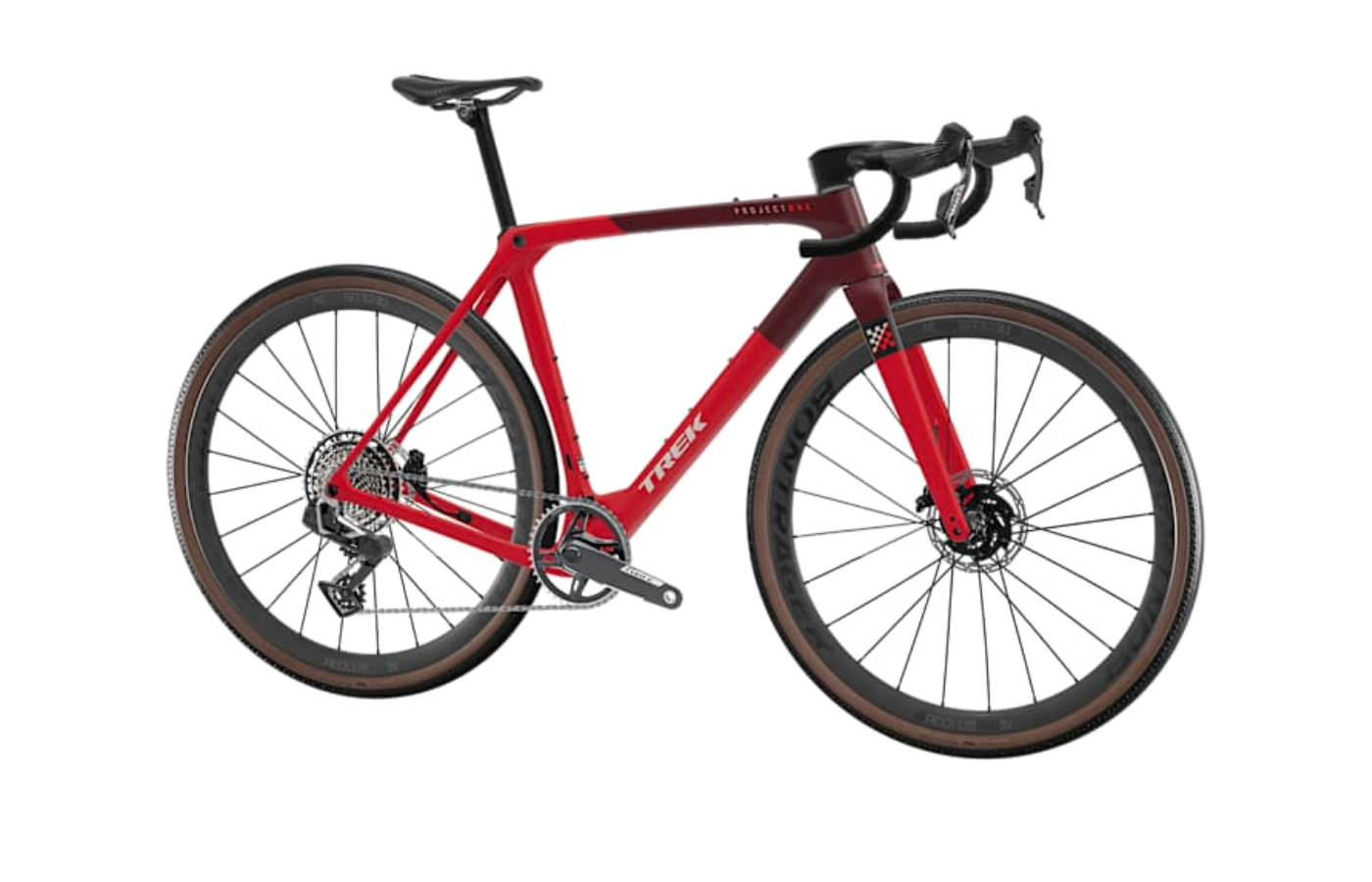
Checkmate
Trek's race-focused stablemate to the Checkpoint, built around higher-grade OCLV 800 carbon and aggressive geometry. Pick this if the Checkpoint's endurance fit feels too upright.
Compare →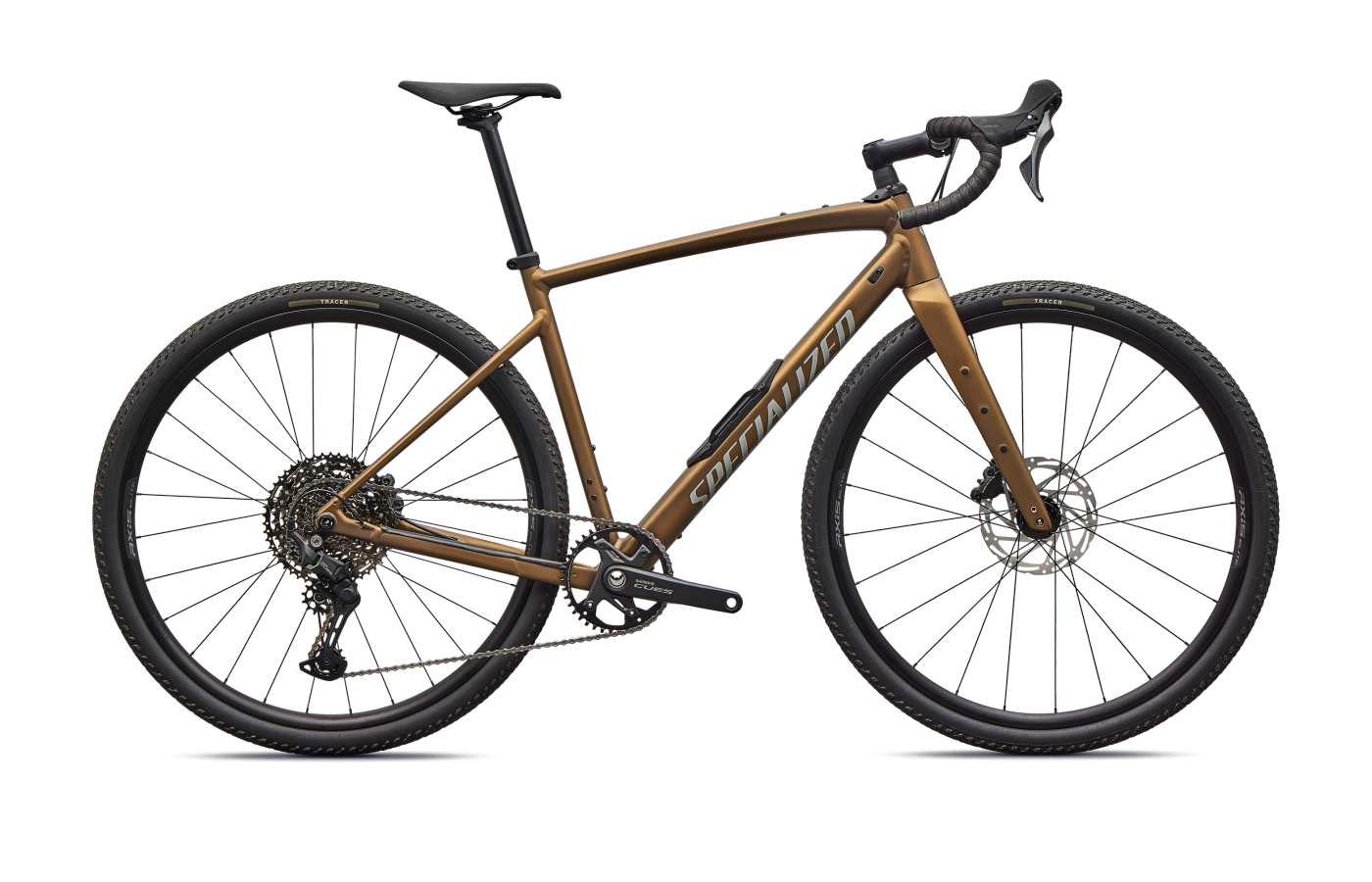
Diverge
Specialized's answer to both bikes, with the Future Shock providing front-end compliance that competes head-on with IsoSpeed. Strong pick if you want vibration damping at both ends.
Compare →