Canyon GrailvsGrizl
The Grail CF SL gives you a world-championship-winning aero frame for under $3,000, while the $4,699 Grizl CF 8 ESC arrives as a self-sufficient expedition rig with dynamo lighting. These bikes share a logo but exist at opposite ends of the gravel spectrum, forcing you to choose between outright race efficiency and backcountry utility.

Overview
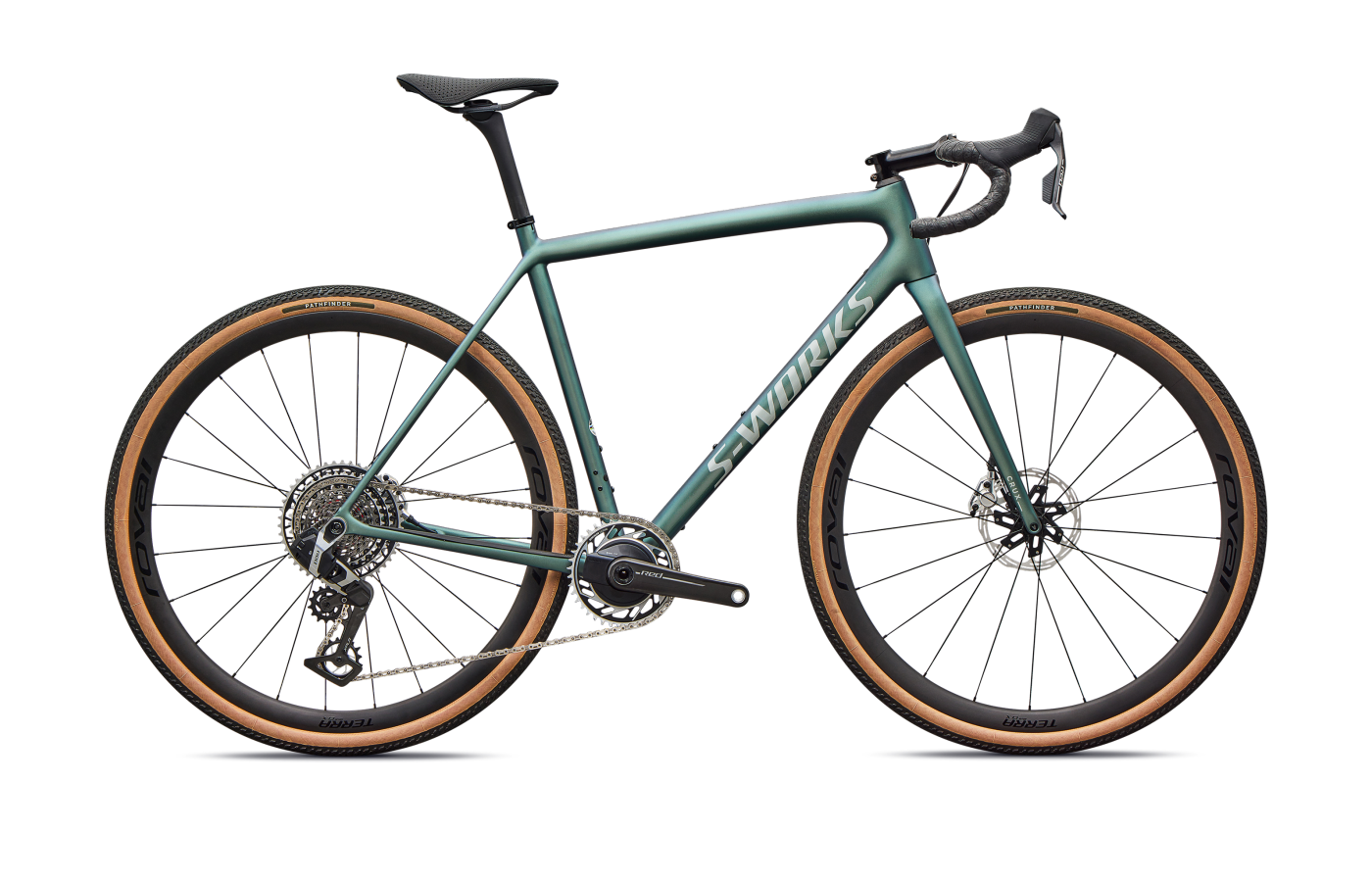
While both bikes sit in the gravel category, Canyon has finally put some real daylight between them. The Grail has shed its weird double-decker bars for a sleek, aero-focused frame that borrows tube shapes from the Ultimate road bike. It focuses on aerodynamic efficiency and speed, limiting tire clearance to 42mm to keep the weight down and the handling sharp. This is a bike designed to hide from the wind on hardpack fire roads rather than crawl over boulders.\n\nOn the other side of the garage, the Grizl has doubled down on its role as an all-terrain machine. It now clears a massive 54mm tire and uses a humpbacked top tube that creates extra space for frame bags. While the Grail is busy winning world titles, the Grizl is ready for multi-day jaunts with its ECLIPS lighting system and Full Mounty cockpit. It trades the Grail’s obsession with watts for a toolkit of mounting points, integrated power banks, and enough cargo capacity to turn the front end into a cargo rack.
Ride and handling
The Grail feels like it is constantly tempting you to push harder. Its taut, stiff frameset transmits every watt directly into forward motion, a trait reviewers call snappy and responsive on high-speed sections. It excels on smooth, fast straights where the aero-optimized silhouette can maintain momentum effortlessly. However, that rigidity has a sharp edge; the front end can get feisty when the terrain turns technical, with one-piece bars that transmit considerable chatter on rough descents. It behaves like a fat-tired road racer, meaning it can be less forgiving if you overcook a slippery corner.\n\nThe Grizl swaps that nervous energy for a point-and-shoot stability that makes it a delight on steep, rocky downhills. Its longer wheelbase and 435mm chainstays make it feel predictable, though some riders might find it handles more like a boat than a bicycle when trying to navigate tight singletrack. Where the Grail is firm to the point of being harsh on choppy surfaces, the Grizl uses massive tire volume and a VCLS leaf-spring seatpost to dampen vibrations effectively. It is the better choice for survivors of 200-mile slogs who need to stay fresh, while the Grail is for the rider looking to drop their friends on the local climb.\n\nClimbing highlights the split in character as well. The Grail feels enthusiastic out of the saddle, with no power lost to frame flex. The Grizl is more of a steady-state climber; it doesn't feel sluggish, but its geometry and 10kg-plus weight (depending on the build) favor seated grinding over explosive attacks. When loaded with gear, the Grizl actually becomes more composed, gaining compliance as the extra weight settles the frame into the terrain. The Grail, conversely, is best ridden light and fast.
Specifications
Drivetrain choices reflect the ideological gap between these frames. Grail builds frequently use road-leaning 2x Shimano GRX setups or high-speed 1x configurations with 42T chainrings to maximize flat-land pace. The Grizl Escape builds move toward mullet gearing with 51T mountain bike cassettes, acknowledging that a loaded rig needs a serious climbing gear to clear vertical terrain in the backcountry. The Grail's move to a standard 1 1/8 steerer is a huge win for maintenance, though its integrated Double Drop cockpit still limits fit adjustments compared to the Grizl’s more modular front end.\n\nIntegration is a focus for both, but for different goals. The Grail’s Gear Groove cockpit is a specialized interface for aero extensions, whereas the Grizl’s Full Mounty bar is a utilitarian loop designed to hold bags and dynamo lights. The Grizl CF 8 ESC features the ECLIPS system, which uses a SON dynamo hub to charge an internal 3,500 mAh battery. This power bank runs integrated Lupine lights and a USB-C port, a feature you won't find on the Grail. Canyon is also using the Grizl to debut its GR 30 CF in-house carbon wheels, which use a wide 27mm internal width to support high-volume rubber, whereas the Grail builds stick to aerodynamic DT Swiss GRC 1400 wheels that prioritize speed over cushioning.
| Grail | Grizl | |
|---|---|---|
| FRAMESET | ||
| Frame | Canyon Grail CF (carbon gravel race frame, 12x142mm, 42mm tire clearance) | Canyon Grizl AL (aluminium, Gravel Pro geometry, 12x142mm, 50mm tyre clearance) |
| Fork | Canyon FK0117 CF Disc (carbon, 12x100mm, 42mm tire clearance) | Canyon FK0087 CF Disc (carbon, 12x100mm, 1 1/4" steerer, 54mm tyre clearance, triple-mount) |
| Rear shock | — | — |
| GROUPSET | ||
| Shift levers | Shimano GRX RX610 shift/brake levers | Shimano GRX RX400 (shift/brake levers) |
| Front derailleur | Shimano GRX FD-RX820 | Shimano GRX FD-RX400-F |
| Rear derailleur | Shimano GRX RD-RX820, 12-speed | Shimano GRX RD-RX400 (long cage) |
| Cassette | Shimano 105 R7101, 12-speed, 11-34T | Shimano HG500 (10-speed, 11-34T) |
| Chain | Shimano Deore M6100 | KMC X10-93 (10-speed) with KMC Connection Link |
| Crankset | Shimano GRX RX600 2x (46/30T, 170mm) | Shimano GRX FC-RX600-10 (2x, 10-speed) |
| Bottom bracket | Shimano BB-RS500 Pressfit (PF86) | Token Ninja Lite BB4124 (PF86.5) |
| Front brake | Shimano GRX RX610 hydraulic disc (2-piston) | Shimano GRX RX400 hydraulic disc brake |
| Rear brake | Shimano GRX RX610 hydraulic disc (2-piston) | Shimano GRX RX400 hydraulic disc brake |
| WHEELSET | ||
| Front wheel | DT Swiss Gravel LN (Aluminium, 25mm rim height, 24mm internal, Center Lock, 12x100) | DT Swiss Gravel LN (12x100mm, Center Lock, aluminium rim, 25mm rim height, 24mm inner width) |
| Rear wheel | DT Swiss Gravel LN (Aluminium, 25mm rim height, 24mm internal, Center Lock, 12x142, Shimano freehub) | DT Swiss Gravel LN (12x142mm, Center Lock, Shimano freehub, aluminium rim, 25mm rim height, 24mm inner width) |
| Front tire | Schwalbe G-One R Performance, 40mm | Schwalbe G-One RX PRO V-Guard TLR, 45mm |
| Rear tire | Schwalbe G-One R Performance, 40mm | Schwalbe G-One RX PRO V-Guard TLR, 45mm |
| COCKPIT | ||
| Stem | Canyon Cockpit CP0045 (one-piece integrated carbon cockpit) | Canyon ST0035 (31.8mm clamp, 1 1/4" steerer, aluminium) |
| Handlebars | Canyon Cockpit CP0045 (16° flare at drops, 5° backsweep on tops) | Canyon HB0064 Ergo (flared drops, 31.8mm clamp, aluminium) |
| Saddle | Fizik Vento Argo X5, 140mm | Selle Italia Model X (145mm) |
| Seatpost | Canyon SP0096-01 carbon seatpost, 10mm setback | Canyon SP0043 VCLS CF (carbon, 20mm setback, VCLS) |
| Grips/Tape | — | Canyon Ergospeed Gel handlebar tape (black) |
Geometry and fit comparison
Actual numbers ground these fit differences: the Grizl Medium has a 579mm stack and 402mm reach, placing the rider in a taller, more relaxed position than the Grail Small’s 573mm stack and 394mm reach. Even though the Grail has a long wheelbase for a race bike (1,034mm for size S), the Grizl pushes further to 1,045mm. This extra length is what robs the Grizl of its agility but rewards the rider with unwavering stability when carrying a full load of camping gear. Both bikes have abandoned 650b wheels in the smallest sizes, meaning all riders now benefit from the increased rollover and tire availability of the 700c standard.\n\nHandling geometry remains surprisingly consistent in terms of angles, but the execution differs. Both bikes share a 71.5-degree head tube angle in these sizes, yet the Grizl’s longer chainstays (435mm vs 425mm) create a completely different weight distribution. The Grail feels centered and ready to pivot, whereas the Grizl feels elongated and steady. Riders with limited flexibility will prefer the Grizl's taller front end for all-day comfort, while racers will gravitate toward the Grail’s ability to achieve a deeper, more aerodynamic tuck without feeling crumpled.
| FIT GEO | Grail | Grizl | |
|---|---|---|---|
| Stack | 655 | 644 | -11 |
| Reach | 454 | 436 | -18 |
| Top tube | 648 | 627 | -21 |
| Headtube length | 230 | 205 | -25 |
| Standover height | 901 | 884 | -17 |
| Seat tube length | 600 | 612 | +12 |
| HANDLING | Grail | Grizl | |
|---|---|---|---|
| Headtube angle | 71.8 | 72.5 | +0.7 |
| Seat tube angle | 73.5 | 73.5 | 0 |
| BB height | — | — | — |
| BB drop | 75 | 75 | 0 |
| Trail | — | — | — |
| Offset | — | — | — |
| Front center | — | — | — |
| Wheelbase | 1118 | 1089 | -29 |
| Chainstay length | 425 | 435 | +10 |
Who each one is for
Canyon Grail
If your idea of a perfect Saturday is chasing QOMs on hardpack fire roads or lining up for a 100km gravel race with a number pinned to your jersey, the Grail is your tool. It thrives in scenarios where you are pedaling at the limit, looking for speed gains from aero-optimized tubes and a stiff frame that rewards every out-of-the-saddle sprint. It is for those who treat gravel like a high-speed road race and do not mind a firm ride if it means crossing the line a few minutes faster.
Canyon Grizl
The Grizl is for the self-sufficient explorer who wants to spend a week crossing the Badlands without worrying about where to charge their GPS or how to strap on a tent. If you regularly find yourself on tame mountain bike trails or carrying 15kg of camping gear, the Grizl’s 54mm tire clearance and integrated dynamo power are essential. It acts as a fun factory for riders who measure success by mountain passes conquered rather than the average speed on their computer.