URS
vsGrail
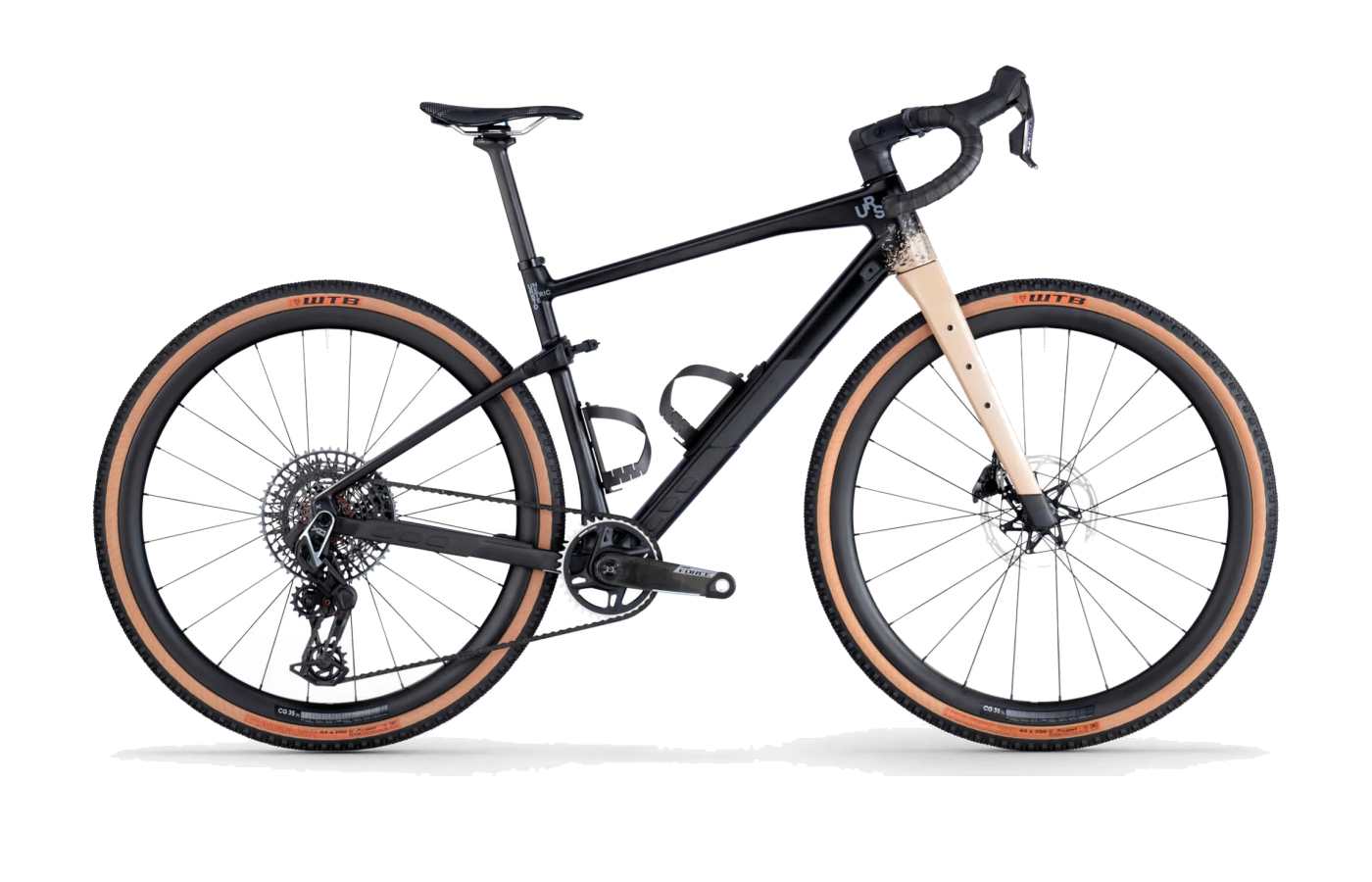
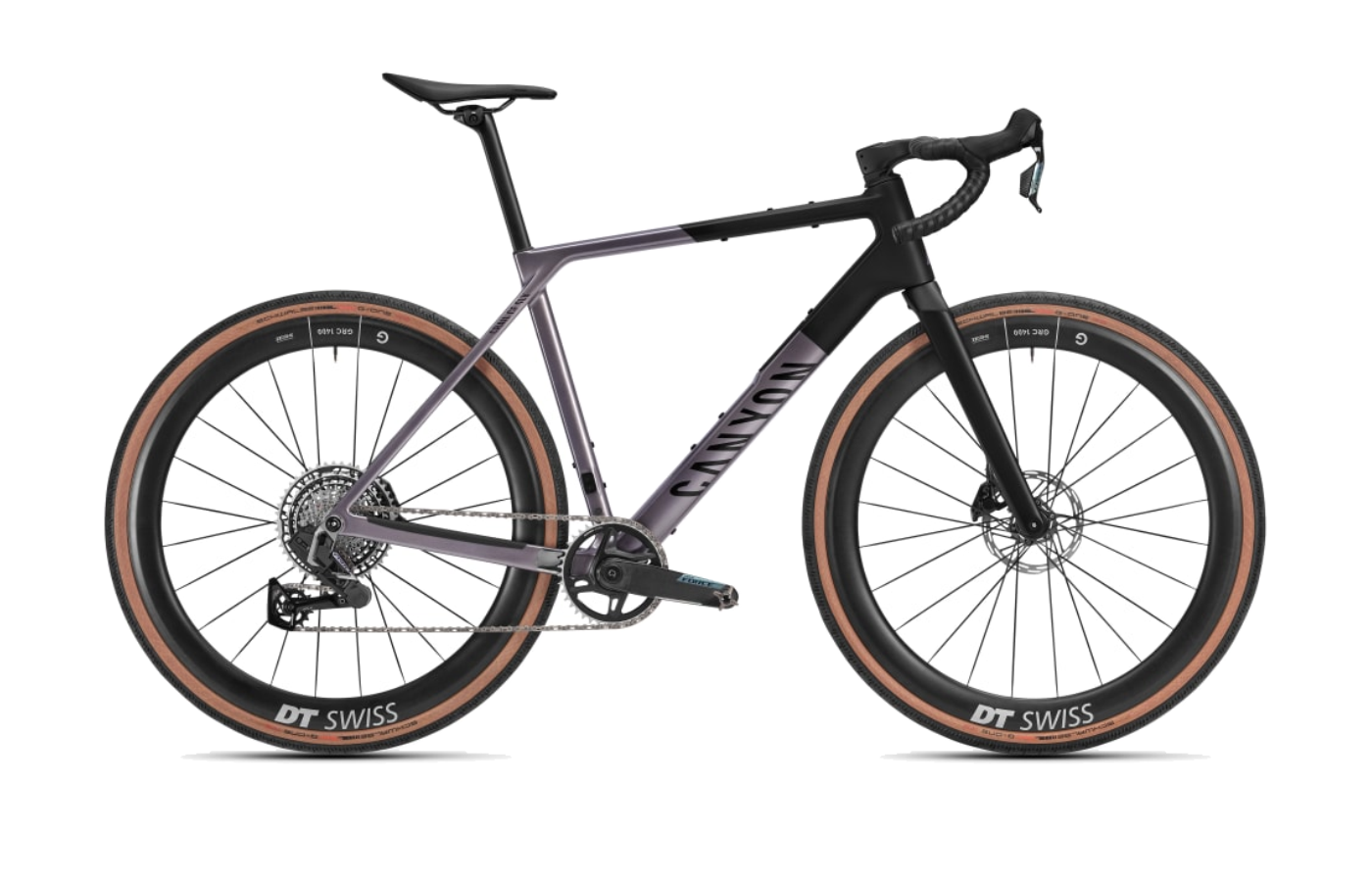
Two gravel bikes, two opposite missions.
The BMC URS is a drop-bar XC hardtail in disguise. The Canyon Grail is a stripped-down race bike chasing aero watts.
URS
- 47 mm tire clearance and integrated front + rear suspension — the URS rolls through chunky terrain other gravel bikes flinch at.
- Drop-bar XC geometry — 69° head angle and a long front-center make steep, loose descents feel manageable.
- Adventure-ready integration — downtube storage, fork cargo mounts, dynamo routing, and molded frame armor across all 01 models.
- Premium pricing — the cheapest URS is $2,799, and the suspension-equipped 01 builds start at $4,499.
- 76 mm bottom bracket drop invites pedal strikes on technical singletrack — review consensus across Velo, BikeRadar, and YouTube tests.
Grail
- Aero-tuned race chassis — Canyon's claimed 9.1 W saving at 45 km/h vs. the previous Grail comes from Ultimate-derived tube shapes and the integrated cockpit.
- Direct-to-consumer value — carbon wheels and electronic shifting at price points where most rivals still ship alloy rims.
- High-speed stability — the long wheelbase and 71.5° head angle (M and up) hold a line on fast, open gravel without wandering.
- 42 mm tire clearance is on the low side for modern gravel — limits comfort on truly rough terrain.
- One-piece cockpit and proprietary accessories make fit and storage upgrades expensive (or impossible).
Editor’s analysis
This isn't a gravel-vs-gravel fight. It's a question of what 'gravel' means to you — singletrack and bikepacking, or holding 35 km/h in a race echelon.
Both bikes carry drop bars and 1x-friendly drivetrains, but the geometry tells the real story. The BMC URS runs a 69° head angle (XS), 47 mm tire clearance, 10 mm of rear MicroTravel via elastomer seatstays, and a 20 mm suspension stem or fork on the 01 builds. The Canyon Grail runs a 71° head angle (XS), 42 mm clearance, no suspension anywhere, and a one-piece aero cockpit borrowed from the Ultimate road bike.
The BMC URS doubles down on the 'drop-bar XC' brief. Reviewers across Velo, Cycling Weekly, and BikeRadar all reach for the same comparison — XC hardtail with drops. The 76 mm bottom bracket drop, the long front-center, the slack head angle, the molded downtube and chainstay armor: this bike expects rock strikes and bridleway mud. The Redshift-developed pivoting stem and the MTT seatstays don't make it a mountain bike, but they push the envelope of what a gravel bike can sit on.
The Canyon Grail goes the opposite direction. Canyon claims a 9.1 W aero saving over the previous generation at 45 km/h, and reviewers consistently describe the ride as stiff, fast, and predictable on smoother surfaces. The D-shaped Comfortpost flexes a little; everything else is built for power transfer. Bike Perfect called it 'super fast with spellbinding handling' on race courses; Bicycling noted it transmits 'more shock to a rider's hands' than they expected on rougher dirt.
Put bluntly: the BMC URS is the bike you buy when you want to ride farther into the woods than your friends will follow. The Canyon Grail is the bike you buy when you want to be first to the gas station at the end of the gravel race.
Where the builds differ.
Comparing our editor's-pick builds side-by-side. Winners highlighted row-by-row — lower price and weight, and the better-spec component, each mark a point.
Build variants & pricing
Both lineups span roughly $3k of range. The Grail starts cheaper and tops out lower; the URS opens at a higher price and climbs further.
Prices are current US MSRP. The URS lineup uses 'Mullet' setups (road shifters, SRAM Eagle MTB derailleurs, 10–52T cassettes) on the AXS builds — handy if you need a 511% gear range for steep loose climbs. The Grail sticks to road-derived 1x XPLR or 2x GRX, geared for race speeds rather than vertical singletrack.
How they fit, how they steer.
Both at size XS — the fit-picked size for a 5'8" rider on each bike. The BMC URS sits 4 mm taller in stack and 5 mm longer in reach, with a 2° slacker head angle (69° vs 71°) and a 28 mm longer wheelbase. The Grail's geometry is tighter and racier; the URS is closer to a hardtail.
Which size should I buy?
Size recommendations based on stack, reach, and effective top tube. The Grail runs an extra 2XS, useful for shorter riders; the URS bottoms out at XS.
→These are starting points. Flexibility, riding style, and preferred position all shift the answer — if you’re between sizes, a professional fit beats a chart.
What the magazines said.
Published reviews from trusted cycling outlets. Click through for the full write-up.
Which one should you buy?
If you want to ride deeper into the woods than your gravel buddies, get the URS. If you want to be first to the finish line on a race-day course, get the Grail.
URS
If your weekends mean linking fire roads with rooty XC trails, or loading frame bags for a self-supported overnighter, the URS is the right tool. The slack head angle and integrated suspension are an insurance policy for terrain that would have most gravel bikes whimpering.
Grail
If you spend your rides chasing average speed on rolling dirt and want the most aero, lightest, most race-honed gravel bike in your price bracket, the Grail is hard to beat. Built for pace, not plushness — and priced to undercut traditional brands by a comfortable margin.
Questions buyers actually ask.
Short answers to the things we get emailed about most often.
01Which is faster on smooth gravel?
The Canyon Grail, by a meaningful margin. Canyon claims a 9.1 W aero saving at 45 km/h over the previous-gen Grail thanks to Ultimate-derived tube shapes and the one-piece Double Drop cockpit. On a fast, rolling gravel course — UNBOUND-style fire roads, packed dirt — the Grail's stiff frame and aero shaping pull away from the heavier, more compliant URS.
At slower exploration speeds (under 25 km/h), the aero gap closes and tire choice and gearing matter more than the frame.
02Which handles rough, technical terrain better?
The BMC URS, decisively. Its 69° head tube angle (XS, 69.5° on M and up), 47 mm tire clearance, 10 mm of rear MicroTravel suspension, and 20 mm front suspension (stem or fork on the 01 builds) let it tackle terrain reviewers compared to XC hardtail riding. Velo and BikeRadar both noted descents that felt 'unrestricted' — territory most gravel bikes won't enter willingly.
The Grail, by contrast, is described as 'feisty' on exposed roots and chunky rocks, with reviewers noting the front end can get upset where the URS would simply roll through.
03What's the maximum tire clearance?
BMC URS: 47 mm in 700c, 50 mm in 650b. Ships with WTB Raddler 44 mm tires across all builds.
Canyon Grail: 42 mm officially. Ships with Schwalbe G-One RS or G-One R 40 mm tires depending on build.
The 5 mm clearance gap is meaningful. If you want to run a true 45 mm tire for comfort or grip on rough terrain, the URS is the only option here. If 40 mm is enough — typical for race courses — the Grail's clearance is fine.
04How does the URS suspension actually work?
Two systems. The rear is MicroTravel Technology (MTT) — 10 mm of travel via an XCell elastomer integrated into the seatstays. No pivots, no damper to service, no maintenance beyond optionally swapping elastomer densities. Reviewers consistently describe it as supple without bobbing under power.
The front depends on the build. The URS 01 models use the ICS MTT x Redshift Suspension Stem — 20 mm of travel via a pivoting stem that rotates the bars downward. Effective for vibration damping; polarizing under hard sprints. The URS 01 LT models use a Hi-Ride MTT Suspension Fork instead — 20 mm of telescopic travel with a lockout. Most reviewers preferred the fork for technical riding.
05Is the Canyon Grail's integrated cockpit a problem?
It depends on your fit. The one-piece CP0039 (CF SLX/CFR) or CP0045 (CF SL) cockpit is praised for ergonomics — swept-back tops, flared drops, comfortable hoods. But it's stock-only: the XS frame ships with 420 mm bars, which several reviewers (Escape Collective, Cycling Weekly) found 'curiously wide' for smaller riders.
Canyon kept a standard 1 1/8" steerer, so swapping to a third-party stem and bar is possible — but Bike Perfect and Escape Collective both flagged this as an 'expensive route.' If you sit in the middle of the fit bell curve, the cockpit is fine. If you don't, plan for an upgrade.
06Which has the better drivetrain options?
BMC URS: all five builds run 1x with wide-range gearing. The AXS builds (01 One, 01 Two, One) use 'Mullet' setups — road shifters paired with SRAM Eagle MTB derailleurs and 10–52T cassettes for a 511% range. Useful for steep loose climbs.
Canyon Grail: mix of 1x XPLR (road-derived, 10–44T) and 2x GRX setups. Top-end gearing is higher than the URS — better for race speeds, less helpful for winching up vertical singletrack.
If your terrain is steep and loose, the URS is geared right out of the box. If your terrain is rolling and fast, the Grail is.
07How does pricing compare across the lineups?
BMC URS runs $2,799 (Two, GRX mechanical) to $5,999 (01 One, Force AXS/X0 Eagle).
Canyon Grail runs $2,899 (CF SL 7 GRX) to $6,099 (CF SLX 8 AXS, Force XPLR).
Price ranges look almost identical, but you get more bike for the money on the Canyon side at every tier — direct-to-consumer pricing means carbon wheels and electronic shifting show up earlier. The trade-off is no local dealer, no test ride, and Canyon-specific accessories that add up quickly if you want the integrated frame bag, GPS mount, or fork sleeves.
08Can either fit a dropper post?
BMC URS: technically yes via a 27.2 mm round-post adapter for the D-shaped seatpost, but dedicated D-shaped droppers are scarce, so options are limited.
Canyon Grail: the proprietary D-shaped SP0072 Comfortpost rules out a conventional dropper without a similar adapter workaround.
If a dropper is a must-have for your riding, neither bike is purpose-built for it. The URS is closer thanks to its more adventure-leaning design, but you'll be buying an aftermarket adapter either way.
Similar bikes
If your priorities don’t map cleanly onto either of these, one of these adjacent bikes probably fits better.
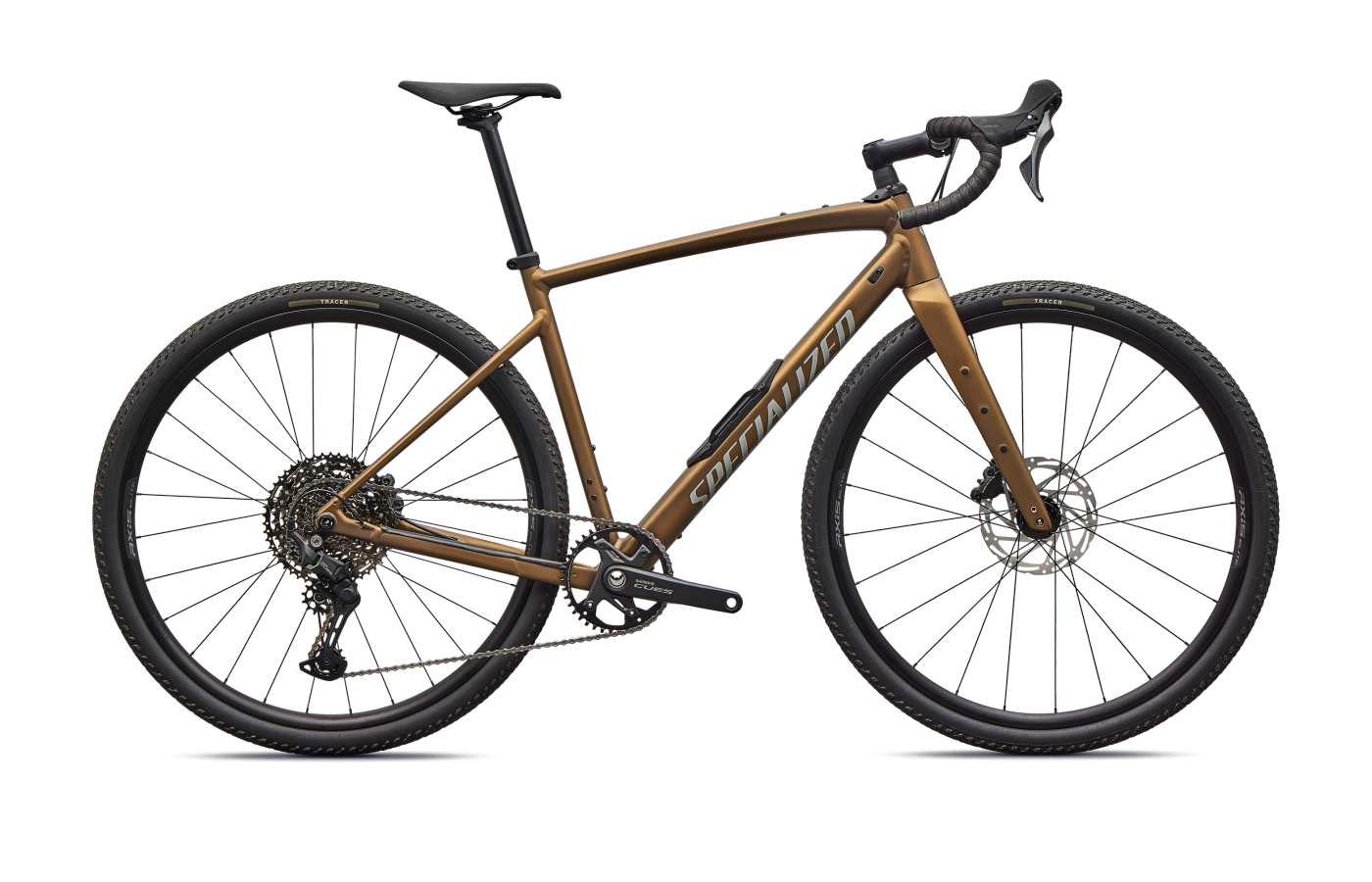
Diverge
Specialized's adventure-gravel answer to the URS — Future Shock 3.3 in the head tube delivers 20 mm of front-end compliance through a more conventional geometry. If you like the URS suspension idea but prefer a less radical head angle, this is the closer comparison.
Compare →Grizl
Canyon's adventure-side sibling to the Grail — 50 mm tire clearance, more mounting points, dropper-post compatibility, and the same direct-to-consumer pricing. If the Grail's 42 mm clearance and race focus feel too restrictive, this is the Grail's mirror image with the same value math.
Compare →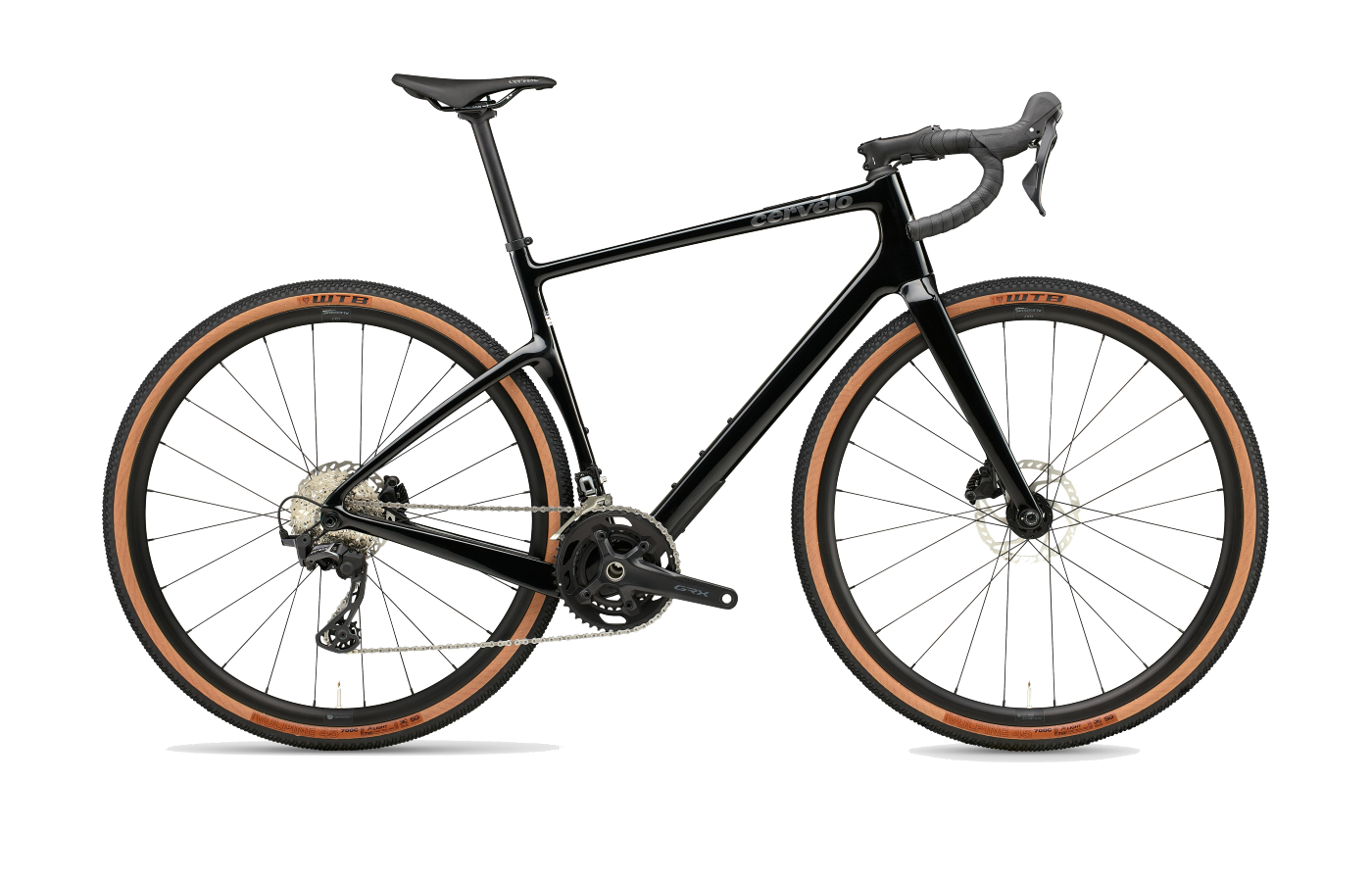
Aspero
Cervélo's pure gravel race bike — sharper, more agile, and noticeably less stable than the long-wheelbase Grail. If you find the Grail's race geometry too settled and want something that turns more like a road bike, the Aspero is the punchier pick.
Compare →