Slayer
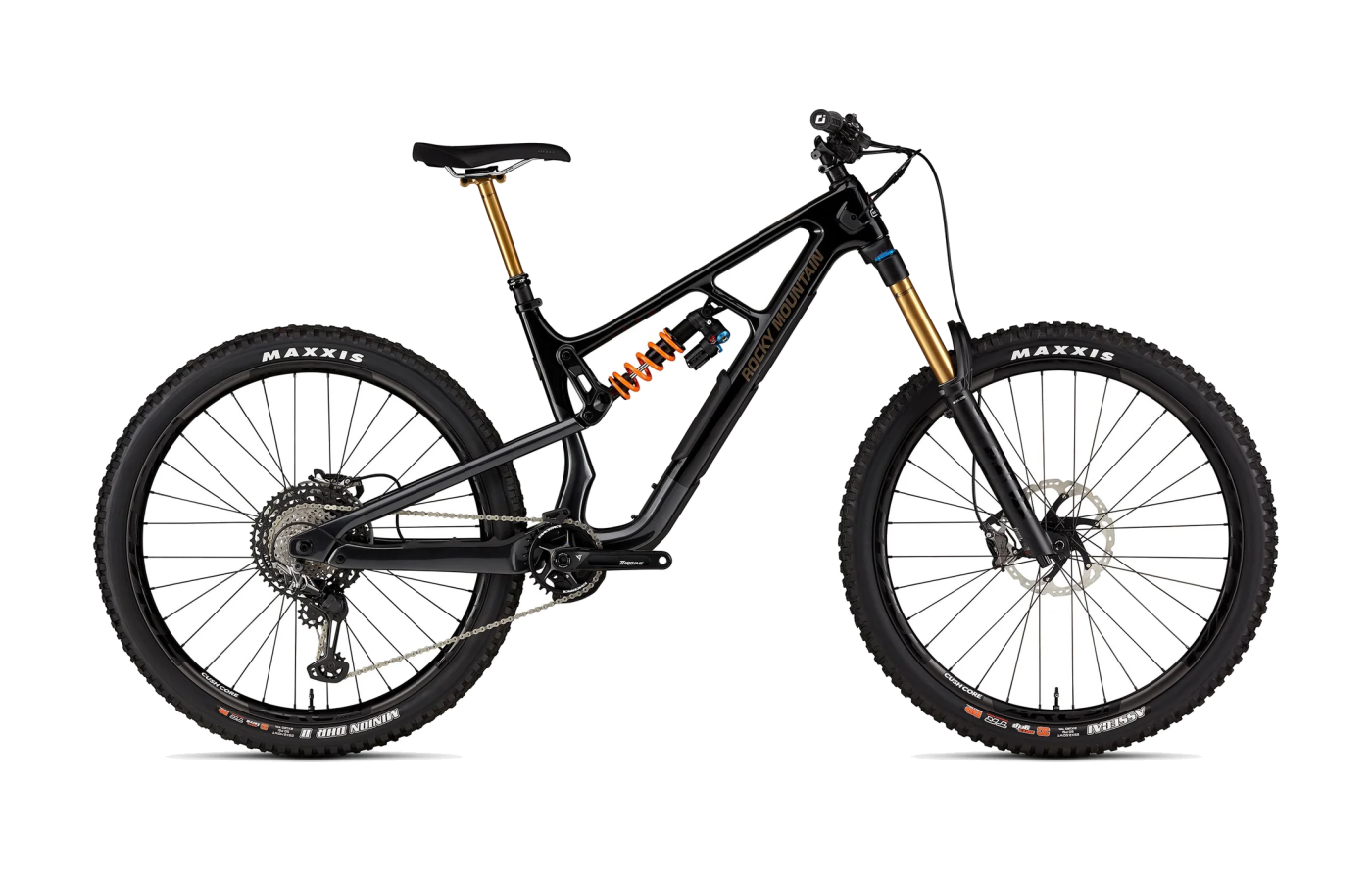
The Rocky Mountain Slayer is a dedicated freeride and big-mountain machine built for aggressive descending and high-consequence terrain. Redesigned for the 2023 model year, this generation moves further away from the enduro racing category to focus entirely on gravity riding. It pairs 180mm of front and rear travel with a robust frame architecture, catering to riders who frequent bike parks, shuttle laps, and steep, natural fall-line trails. Rocky Mountain offers the Slayer in both full-carbon and alloy frame options, with the carbon models introducing in-frame downtube storage and a carbon rear triangle. The platform is heavily adjustable, featuring a four-position geometry chip and a two-position chainstay flip chip to tune the chassis for different tracks. Sizing dictates the stock wheel configuration, with smaller frames shipping as mixed-wheel setups and larger sizes rolling on dual 29-inch wheels, though all frames can be converted with an aftermarket link.
Geometry & fit.
2 sizes published.
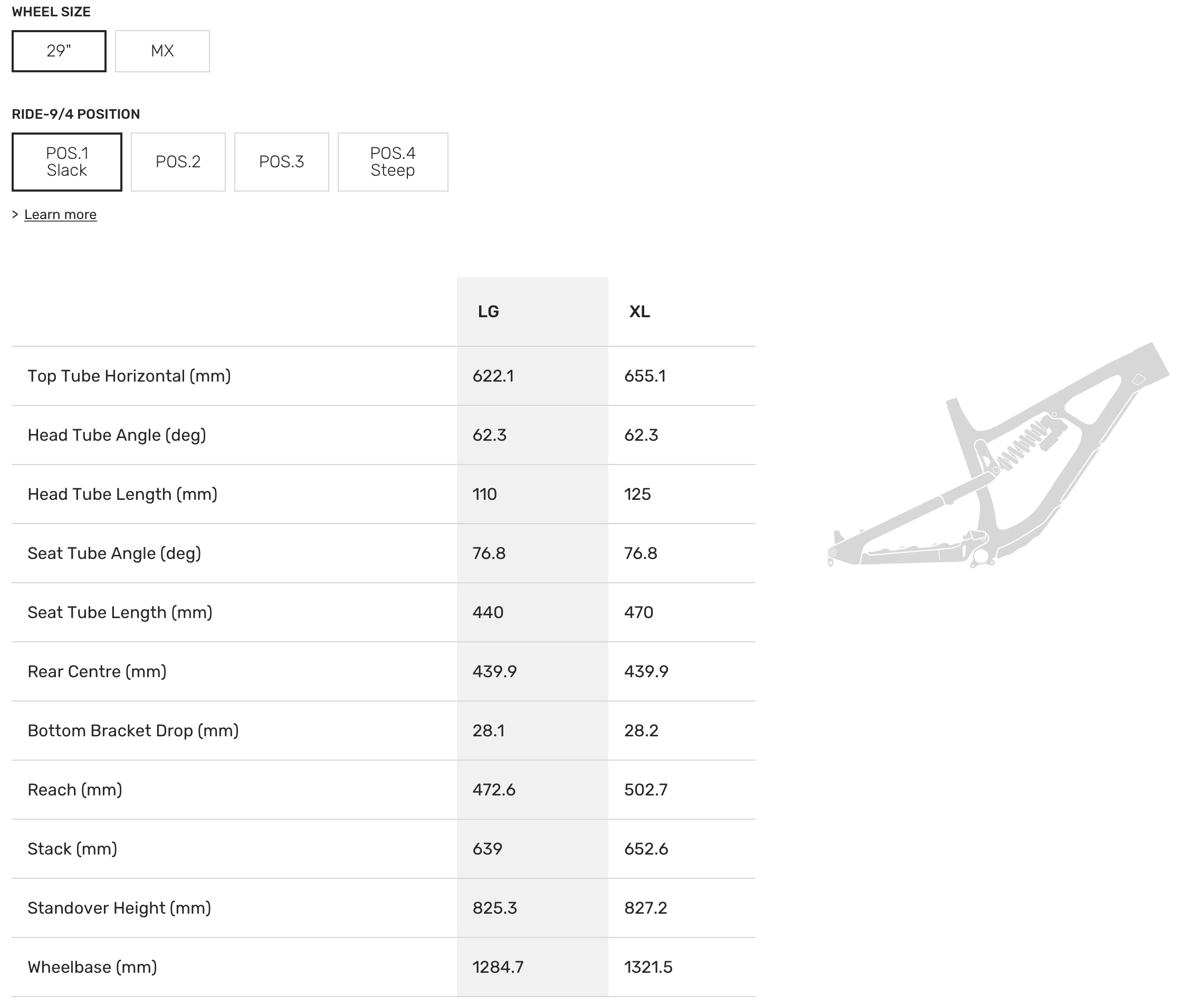
The Slayer’s geometry heavily prioritizes high-speed stability over low-speed maneuverability. A slack head tube angle, adjustable between 62.5 and 63.3 degrees, pushes the front wheel far out to handle steep, rowdy descents without pitching the rider forward. Reach numbers are generous, measuring 474mm on a size large, which pairs with a long wheelbase to create a highly composed chassis at speed.
To keep the rider centered during seated climbs, Rocky Mountain utilizes a steep seat tube angle hovering around 77 degrees. This pushes weight forward to counteract the slack front end, making the long-travel platform manageable on fire roads. The Ride-4 flip chip allows riders to steepen the angles and raise the bottom bracket, a setting many testers preferred for pedaling or tightening up the handling on flatter trails.
Rear-center length is adjustable by roughly 10mm via a dropout flip chip. The shorter 439mm setting helps the bike navigate tight switchbacks and adds a bit of agility, while the longer 449mm position maximizes straight-line plowing capabilities. The mixed-wheel setup on smaller sizes further aids cornering clearance and maneuverability for shorter riders.
Where the handlebar sits relative to the bottom bracket — the single most important fit pair.
01Fit geometry6 values
03Handling geometry5 values
Which size should I buy?
Slide your height to see the recommended size. GearWise's fit algorithm works from the published stack, reach, and ETT — the brand's own recommendation may differ.
→Calculated from GearWise's own stack / reach / ETT algorithm — the brand's size chart may recommend a different size, and a proper bike fit beats any calculator.
The lineup.
6 builds, ranging $4,599 – $10,299.
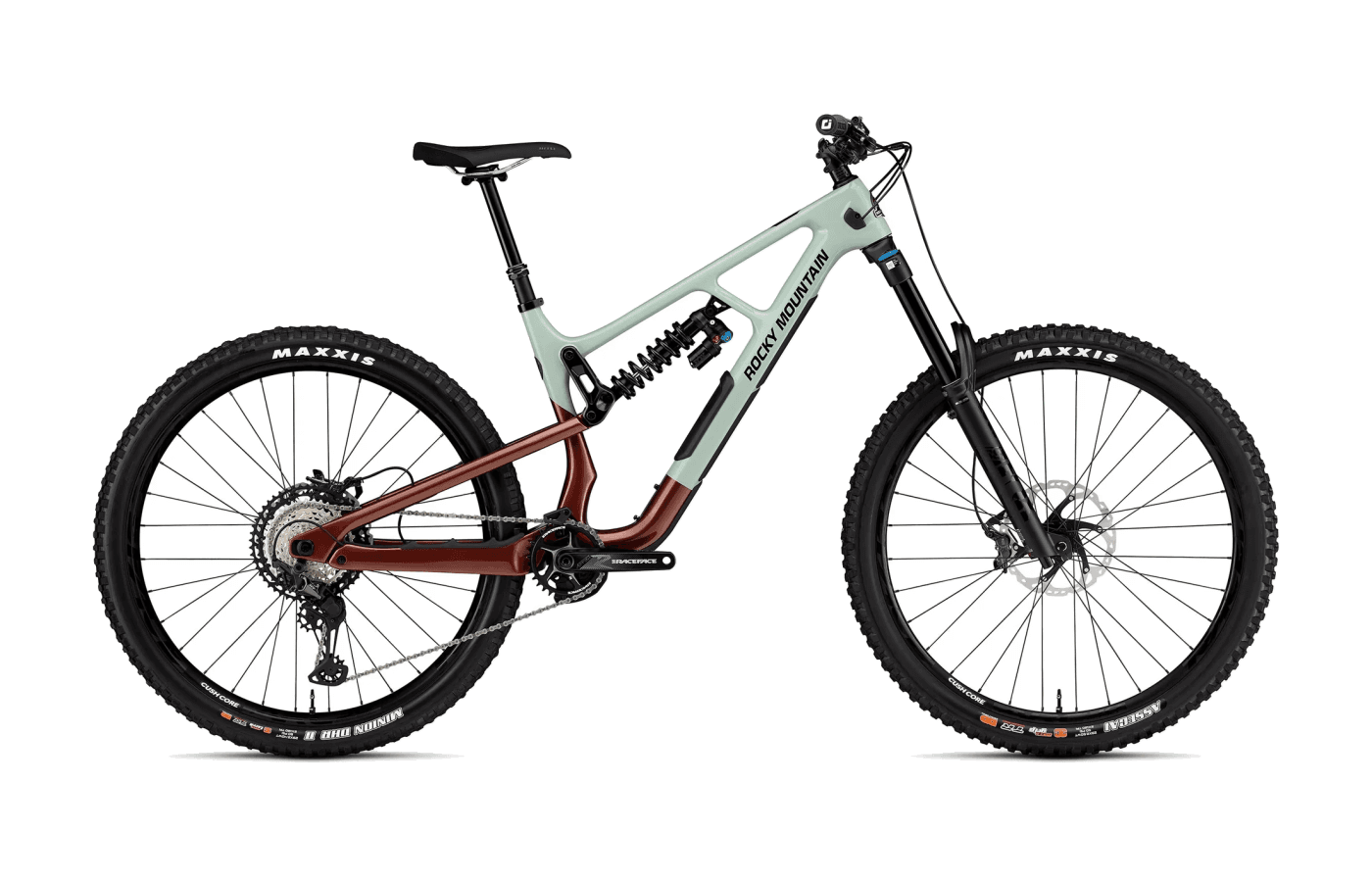
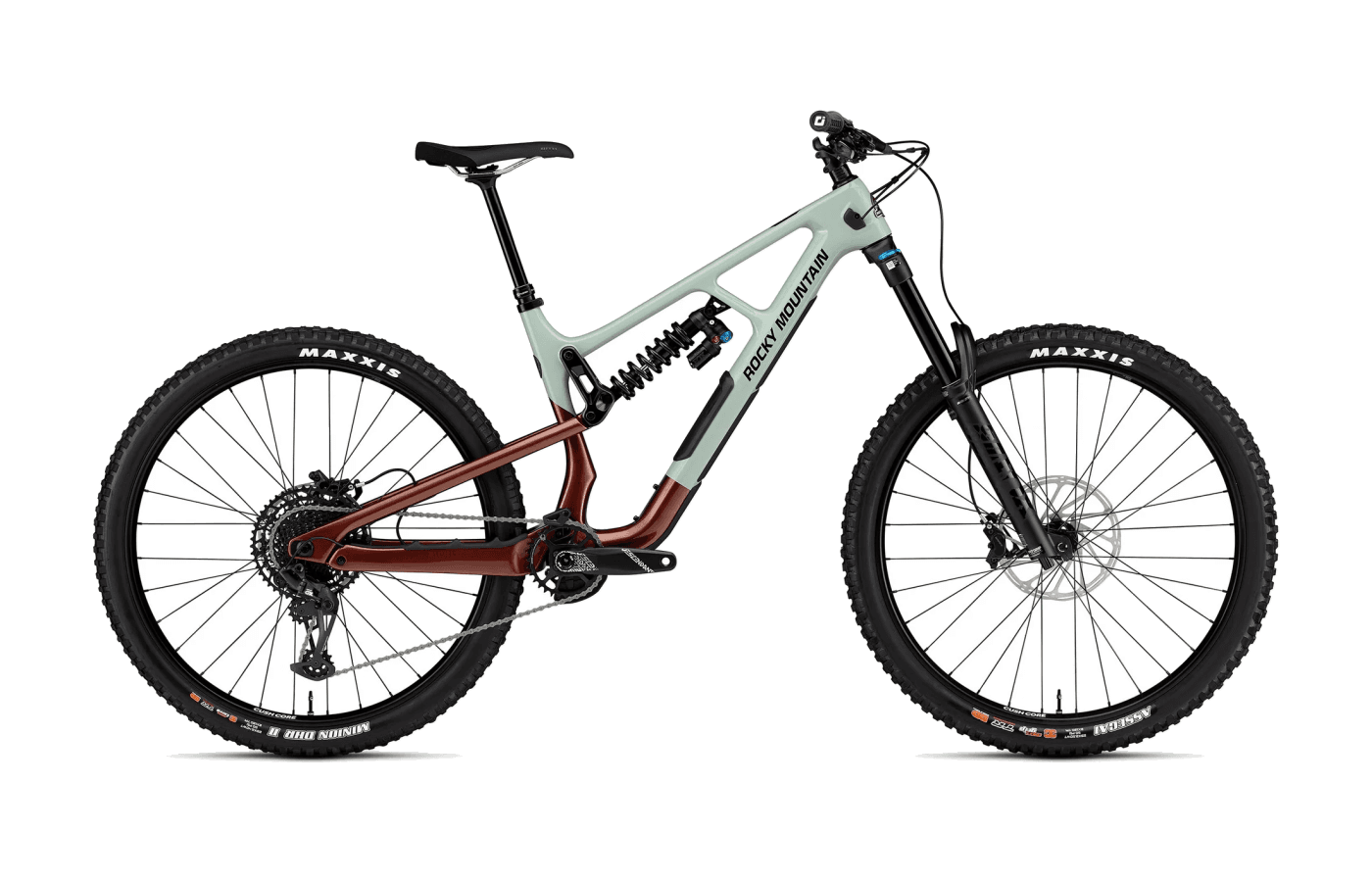
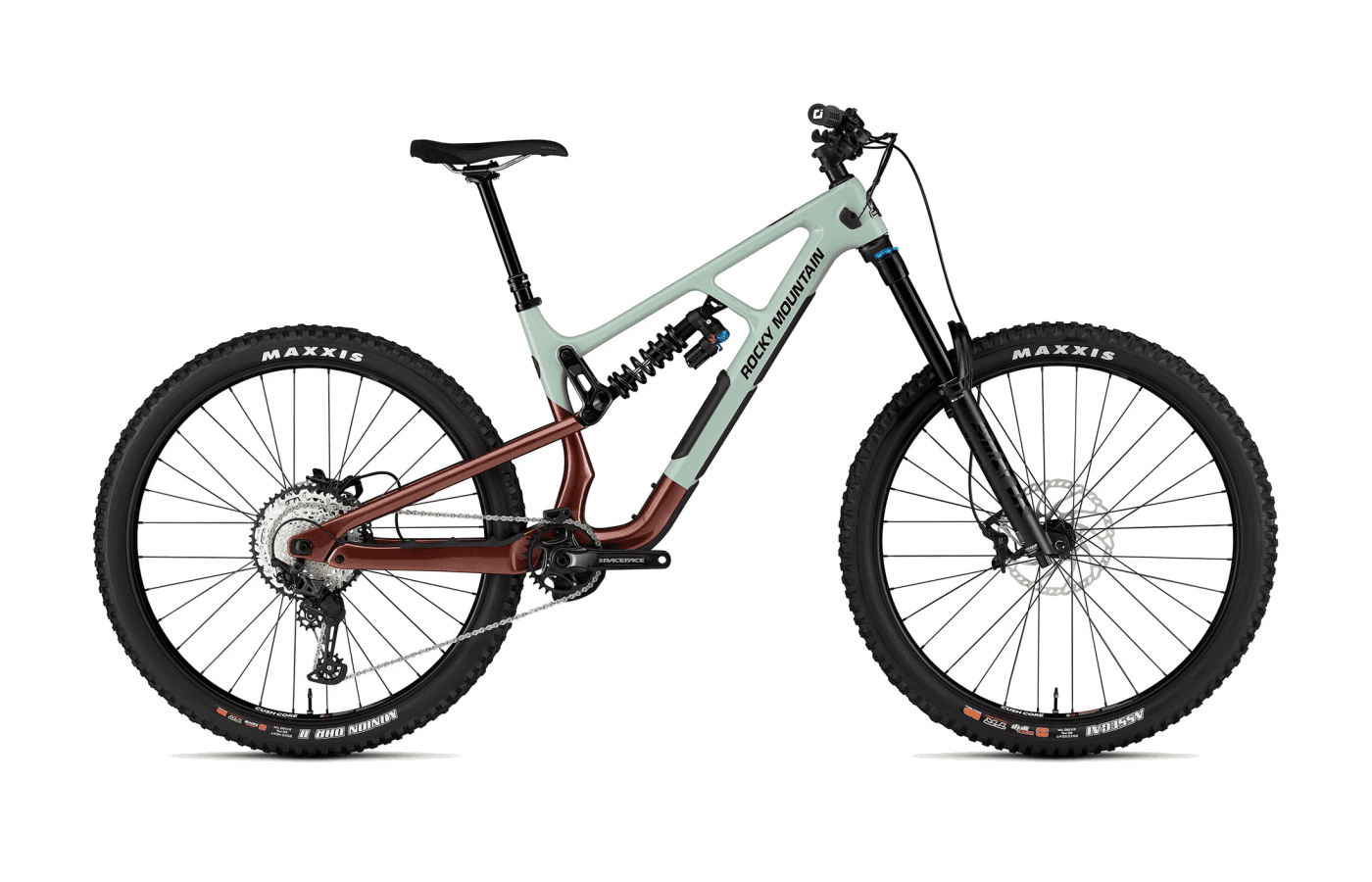
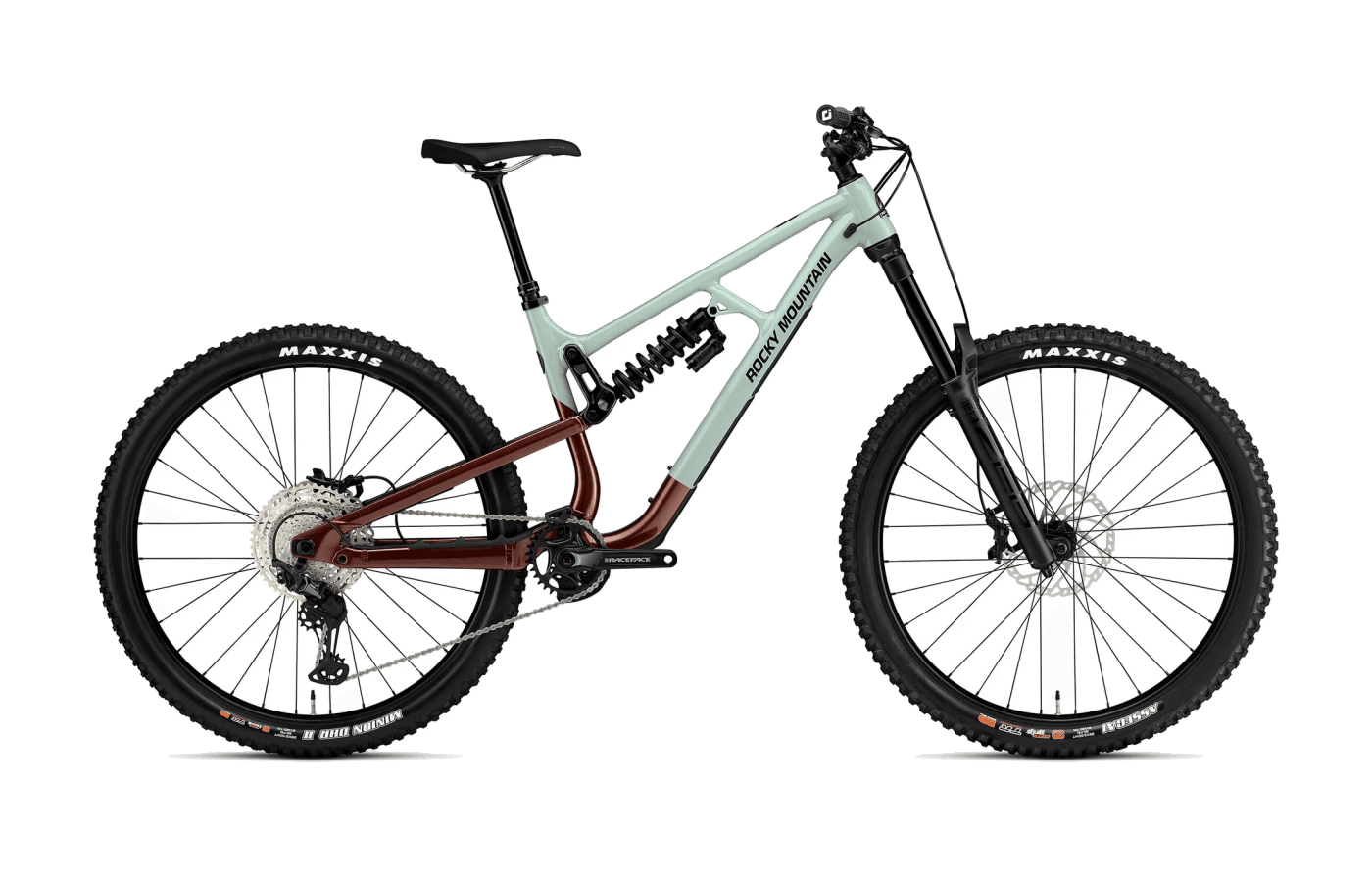
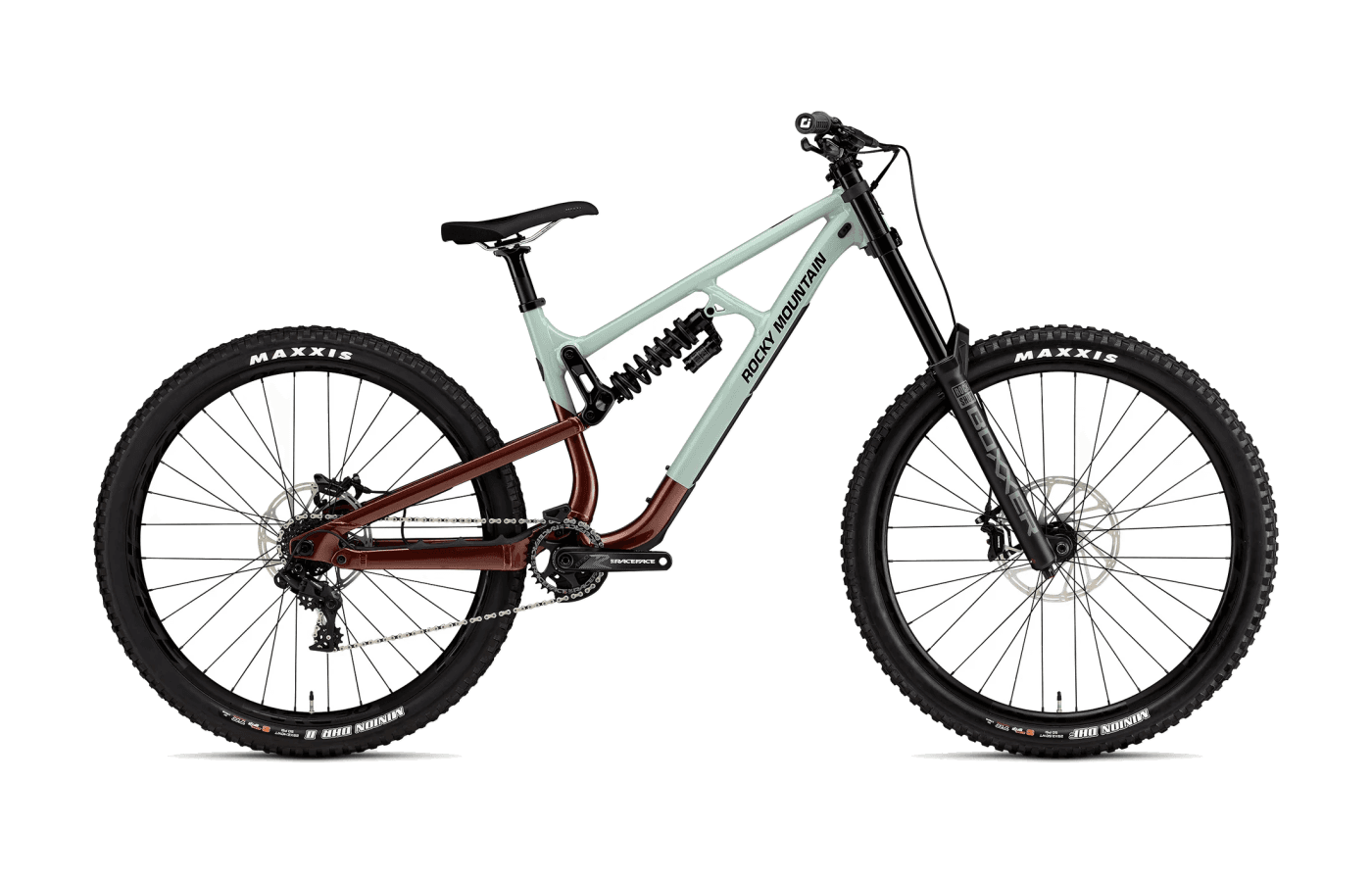
The Slayer lineup spans six builds across carbon and alloy frames. The entry point is the Alloy 30 Park, a dedicated lift-access build featuring a 200mm dual-crown RockShox Boxxer, a 7-speed downhill drivetrain, and SRAM Guide RE brakes. The standard single-crown range begins with the Alloy 50, which pairs a RockShox ZEB Select RC fork with a Shimano SLX and XT mixed drivetrain.
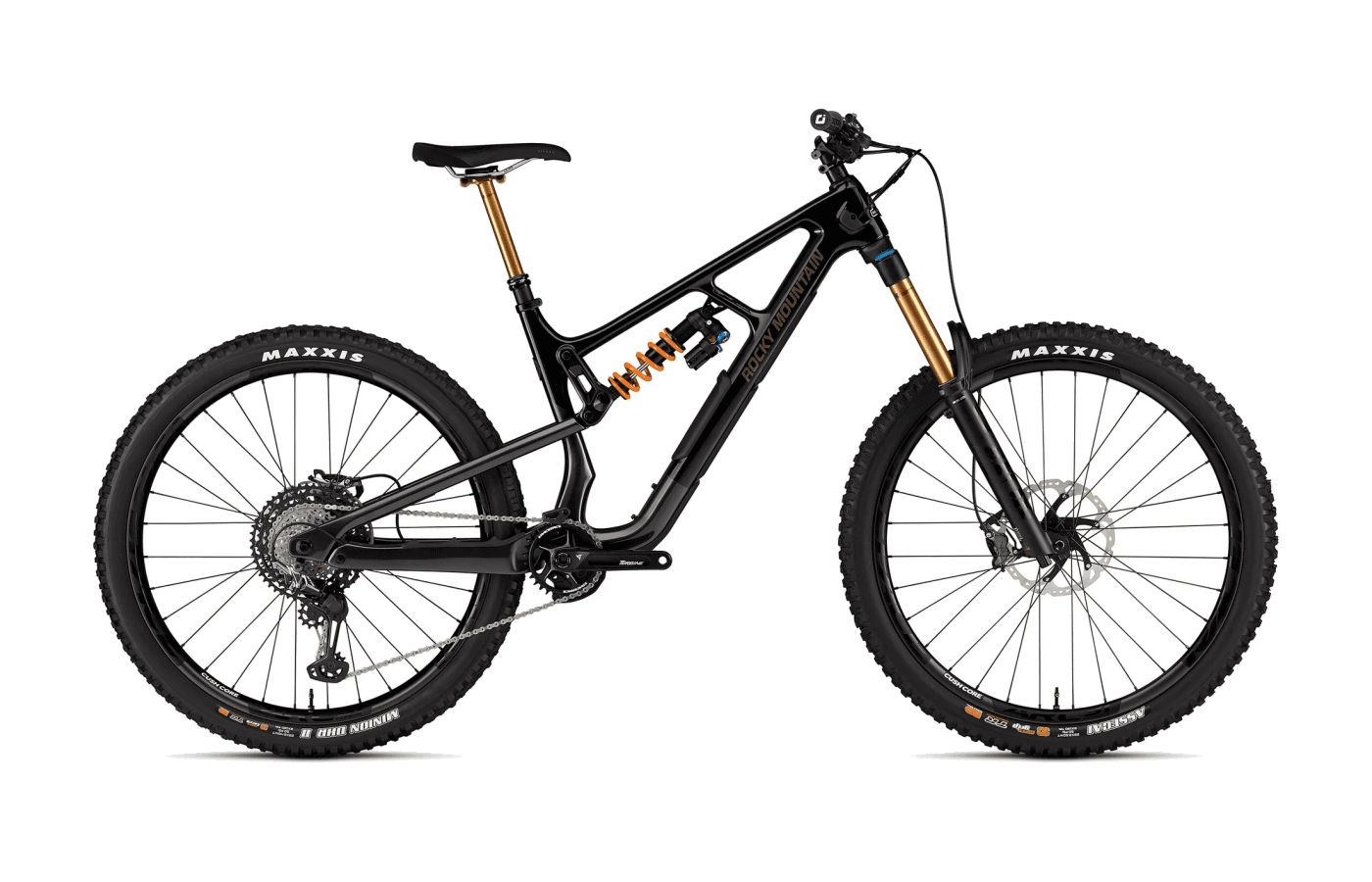
Moving to the carbon frames introduces the PenaltyBox downtube storage and a full-carbon rear triangle. The Carbon 50 is the most frequently tested model, utilizing a Fox 38 Performance fork, a Fox DHX2 Performance Elite coil shock, and Shimano SLX components. While the frame quality is high, reviewers frequently criticized the Carbon 50's WTB ST i30 alloy wheelset for being overly soft and prone to damage under heavy freeride use.
The Carbon 70 steps up to a Fox 38 Performance Elite fork with the highly adjustable GRIP2 damper, a full Shimano XT groupset, and sturdier Race Face ARC 30 rims. At the top, the Carbon 90 features Fox Factory suspension and Shimano XTR. Across the carbon range, Rocky Mountain equips the bikes with heavy-duty Maxxis DoubleDown tires and CushCore XC inserts straight from the factory.
From the press.
10 reviews from the cycling press.
Reviewers consistently characterize the Slayer as a downhill specialist that excels when the gradient drops and the trail gets rough. On steep, natural descents, the suspension is widely praised for its bump-swallowing plushness, with testers noting it offers "tons of small-bump composure" (NSMB) and easily absorbs heavy impacts. The bike requires momentum to come alive; at lower speeds or on flatter terrain, the handling can feel "sluggish and floppy" (Mountain Bike Action). However, once pointed down a proper fall-line trail, that length and slackness translate into immense stability.
While the deep suspension provides excellent traction, opinions diverge on the bike's mid-stroke support. Several testers found the stock coil shock tune on the Carbon 50 model lacked the necessary pushback for pumping through rollers or snapping out of tight corners, leaving the rear end feeling "more plush than precise" (PinkBike). Aggressive riders often noted a tendency for the bike to sit deep in its travel, suggesting that a firmer spring rate or custom damping tune is required to achieve dynamic support.
Climbing is universally viewed as a means to an end. The Slayer is a "slow burner rather than a bottlerocket" (PinkBike), relying heavily on the shock's climb switch to mitigate pedal bob. Additionally, multiple reviews highlighted persistent noise on rough descents, pointing to internal cable rattle and the magnetic storage door on carbon models as the primary culprits.
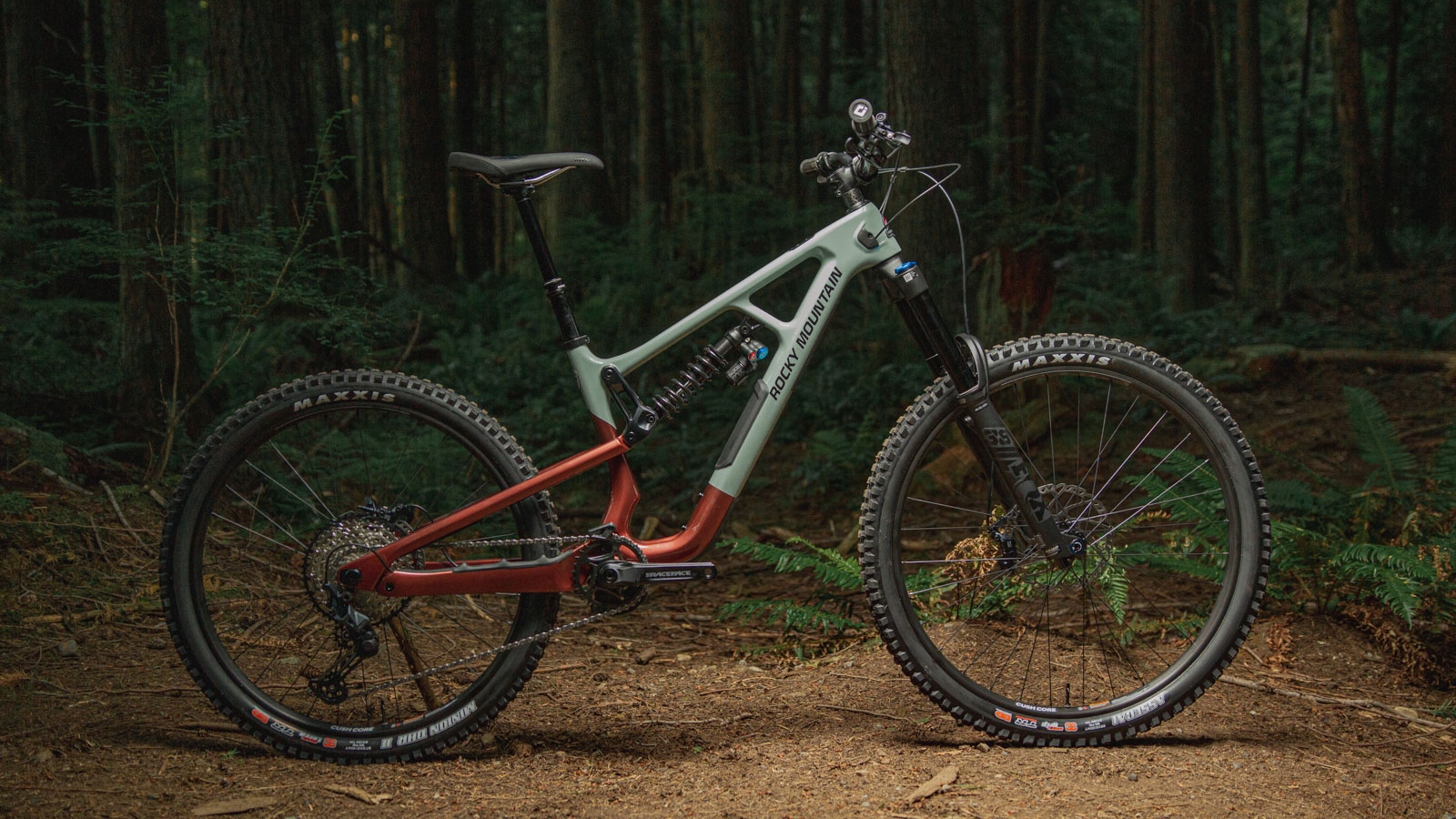
Rocky Mountain Slayer Bike Review
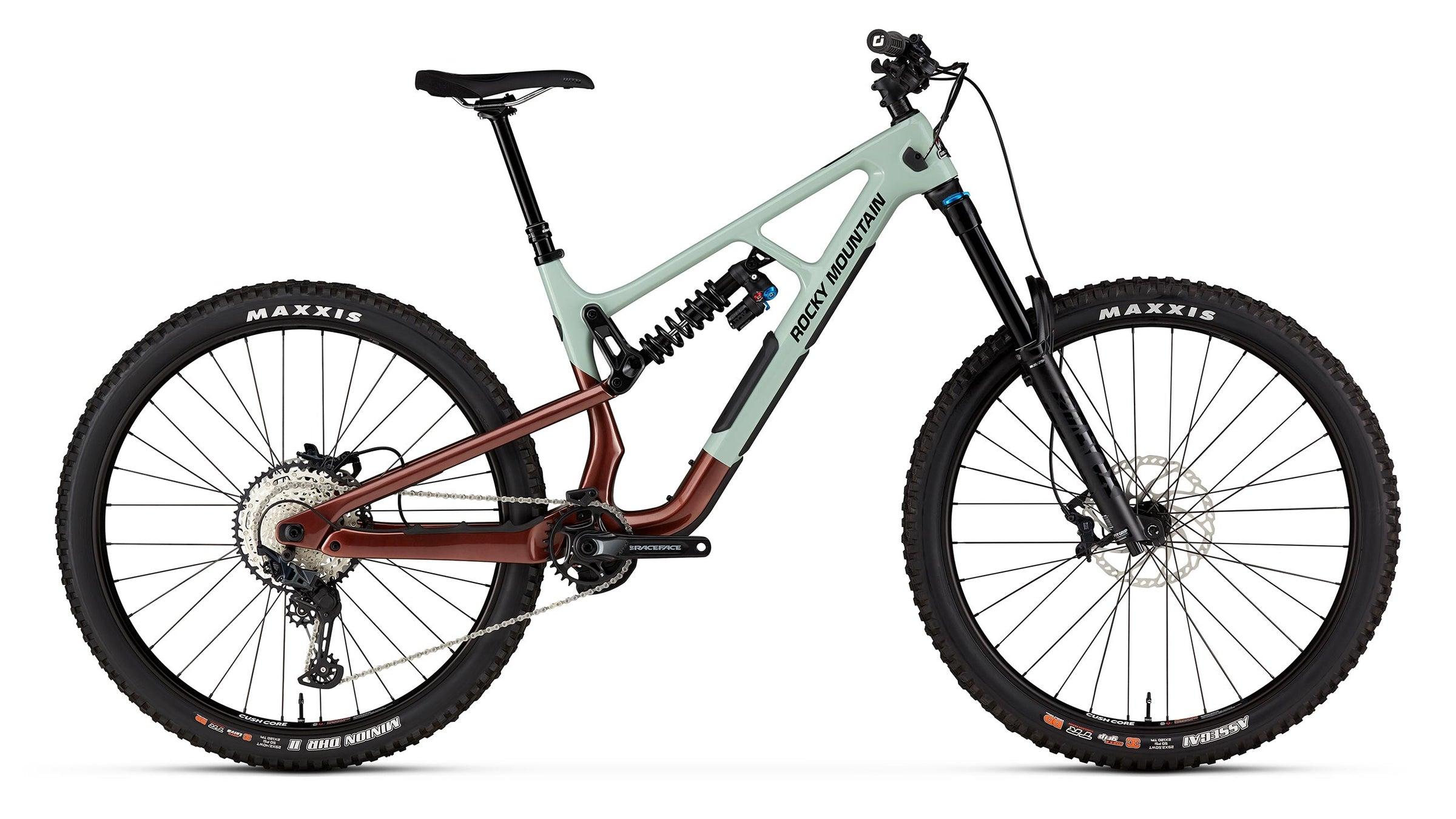
Rocky Mountain Slayer Carbon 50 2023 Review
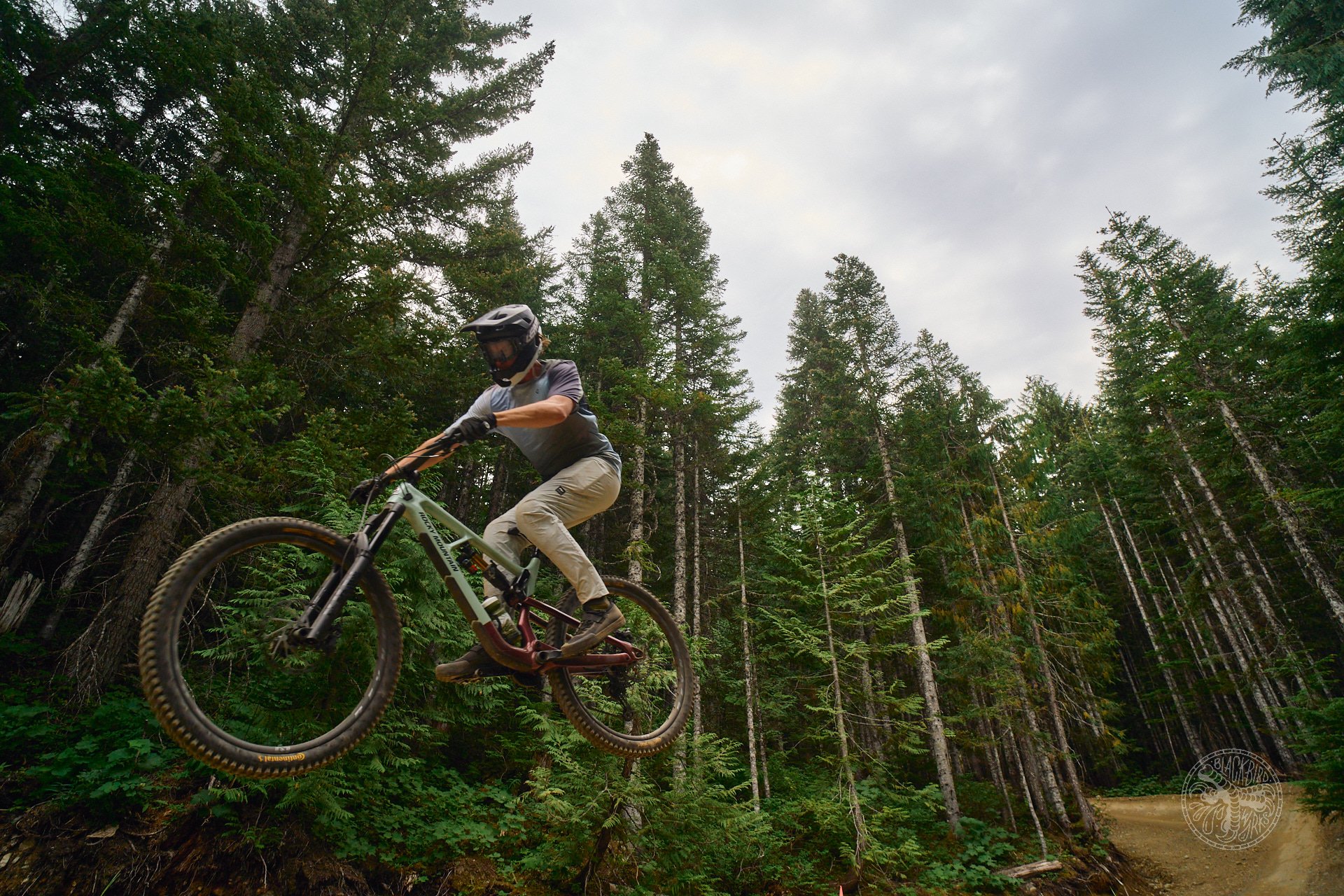
Rocky Mountain. Slayer Vs. Altitude
Rocky Mountain Slayer Alloy 50 2023 Review
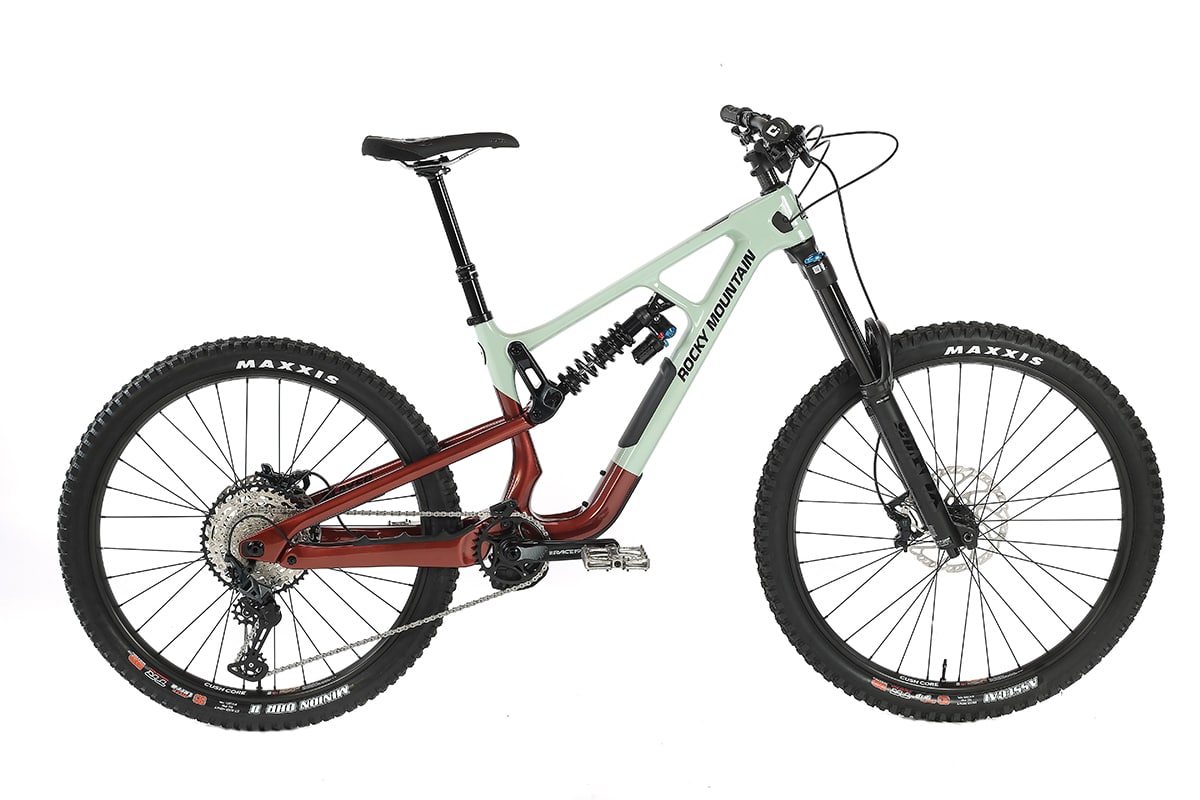
LONG TERM REVIEW: ROCKY MOUNTAIN SLAYER C50 FREERIDE MOUNTAIN BIKE
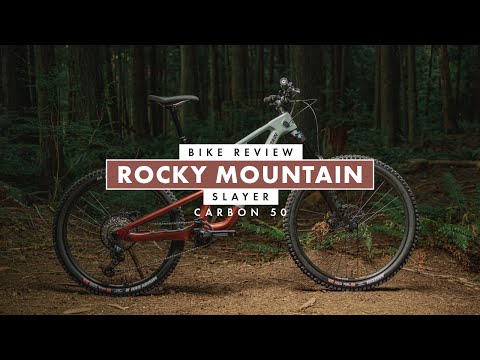
Rocky Mountain Slayer // Bike Review
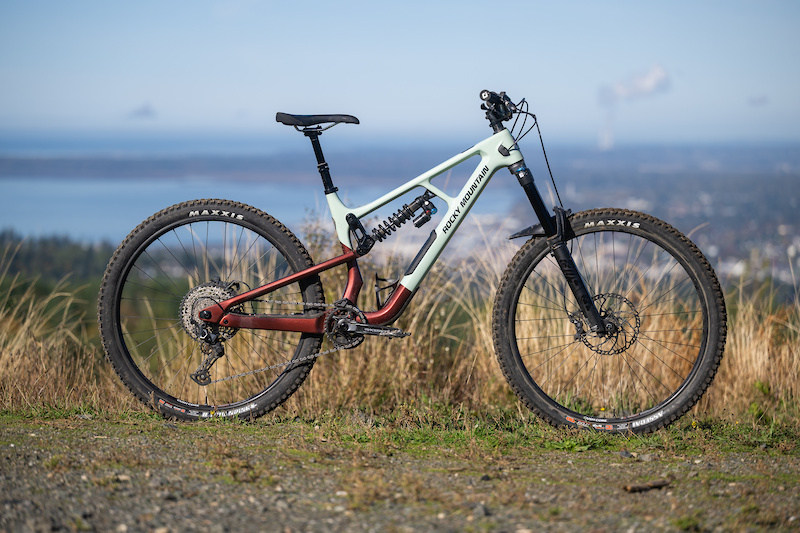
Review: Rocky Mountain Slayer C50
Rocky Mountain Slayer Park Edition vs. Whistler Bike Park
First Ride: 2024 Rocky Mountain Slayer - Pinkbike
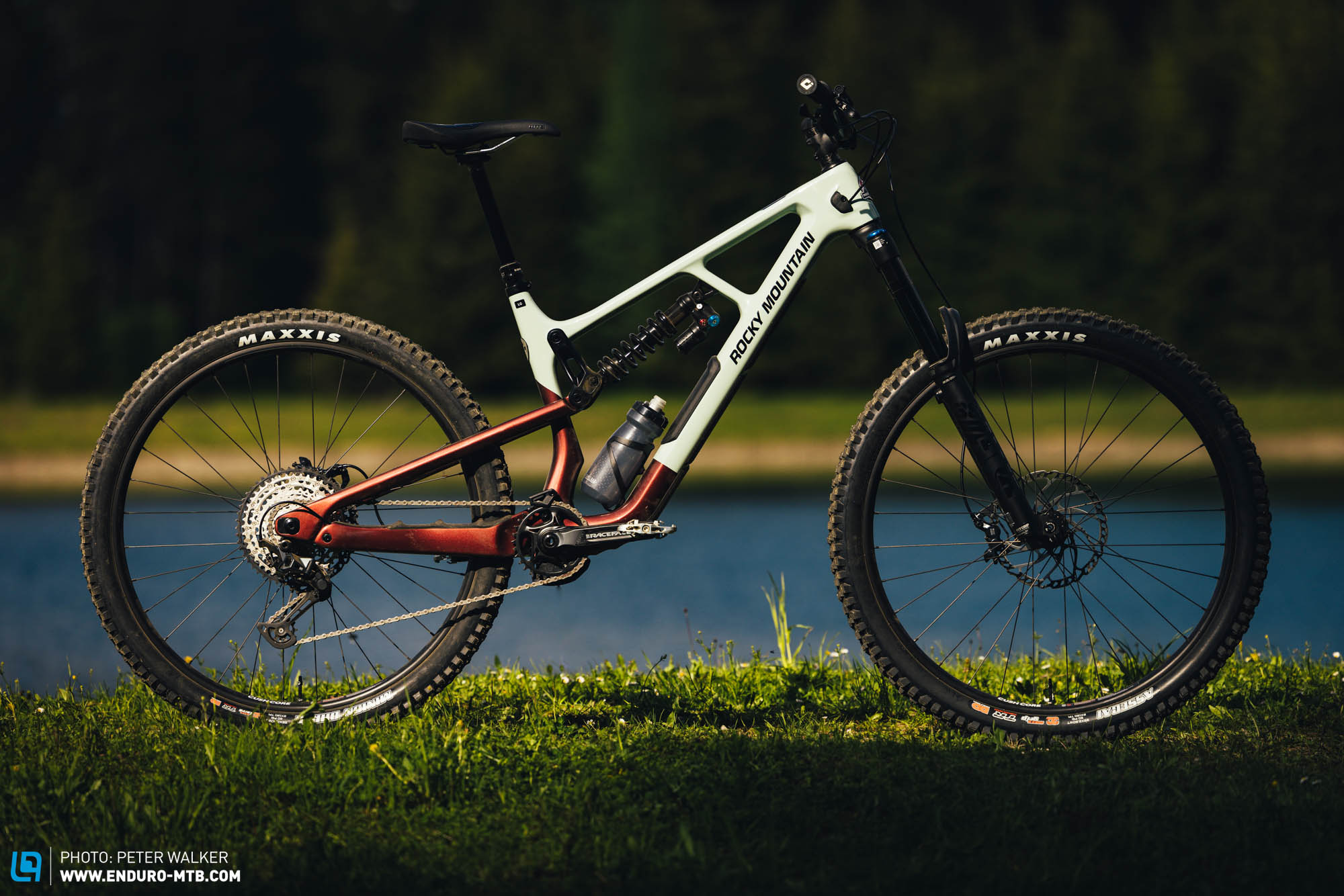
New 2023 Rocky Mountain Slayer Carbon 50 first ride review
Compared to.
Most-viewed comparisons.
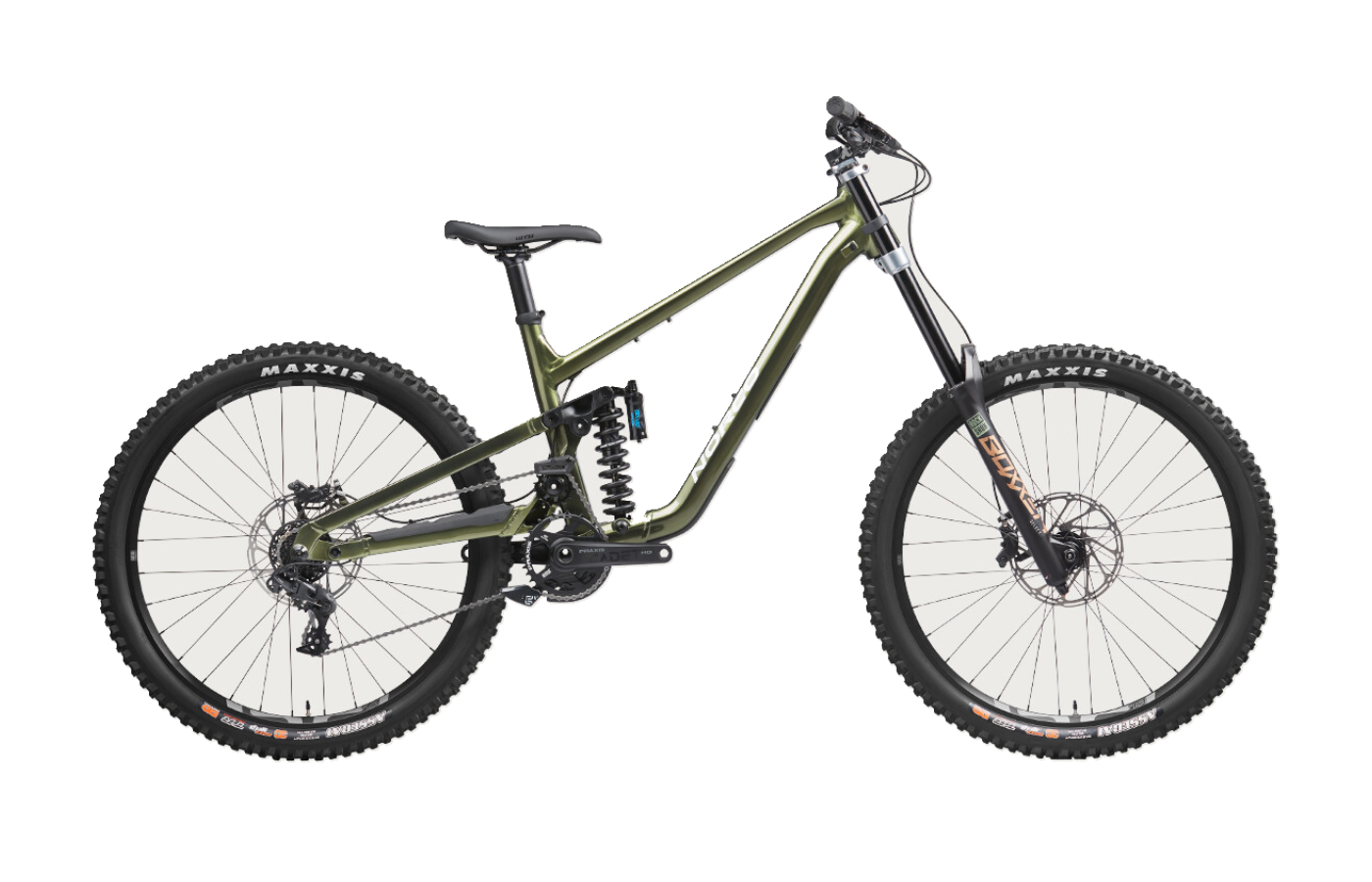
Norco Shore vs Rocky Mountain Slayer
Read comparison→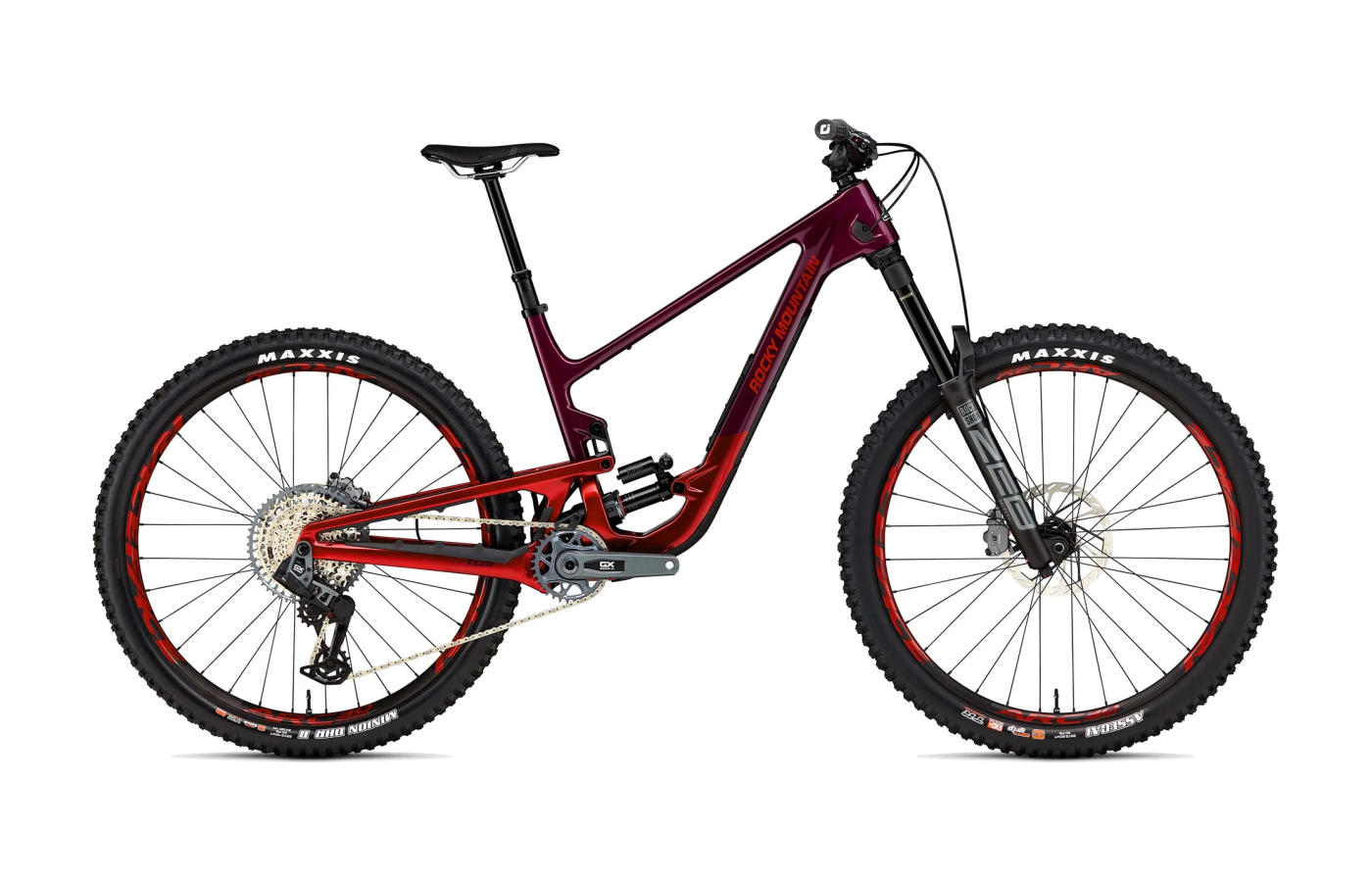
Rocky Mountain Altitude vs Slayer
Read comparison→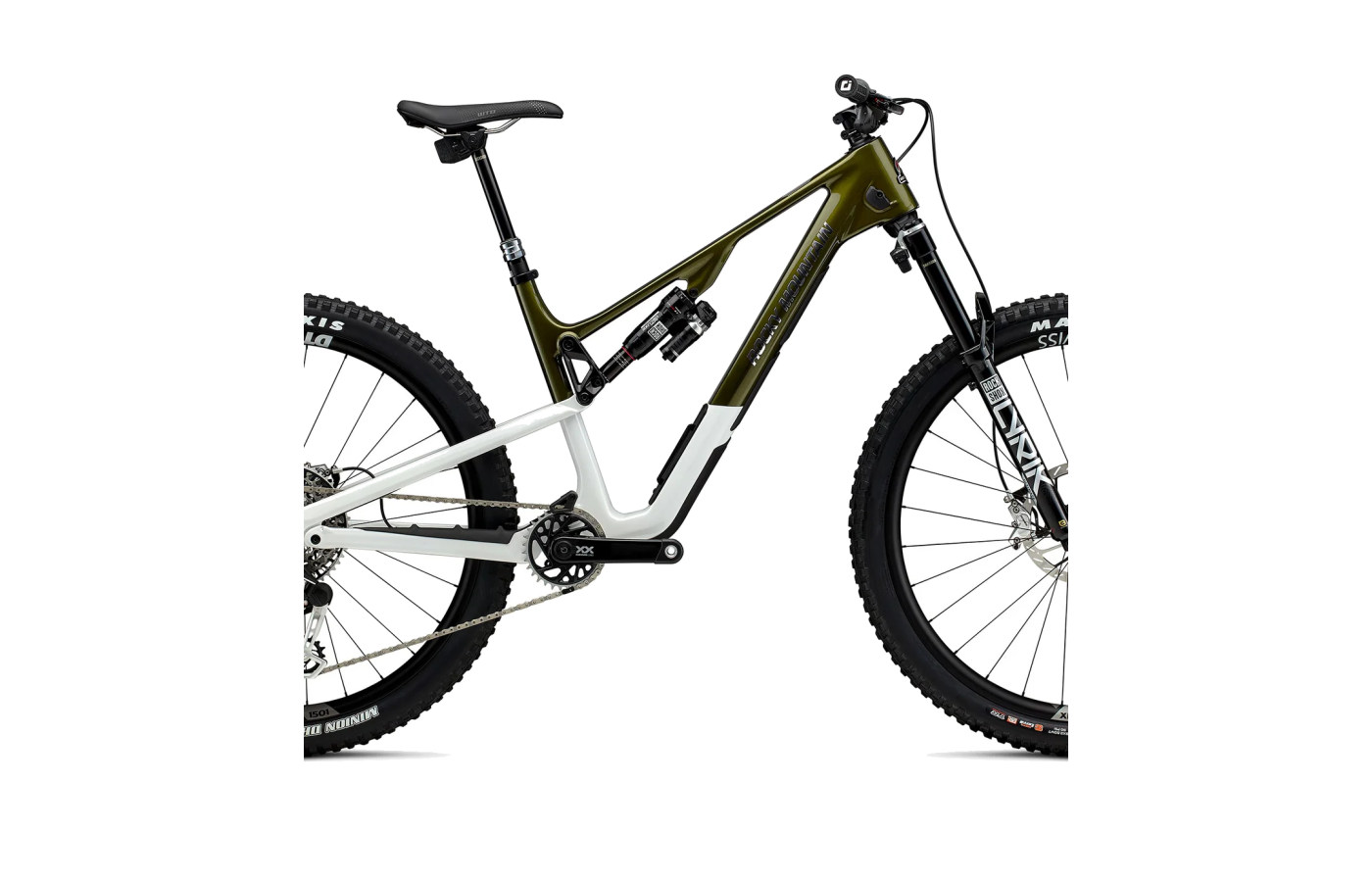
Rocky Mountain Instinct vs Slayer
Read comparison→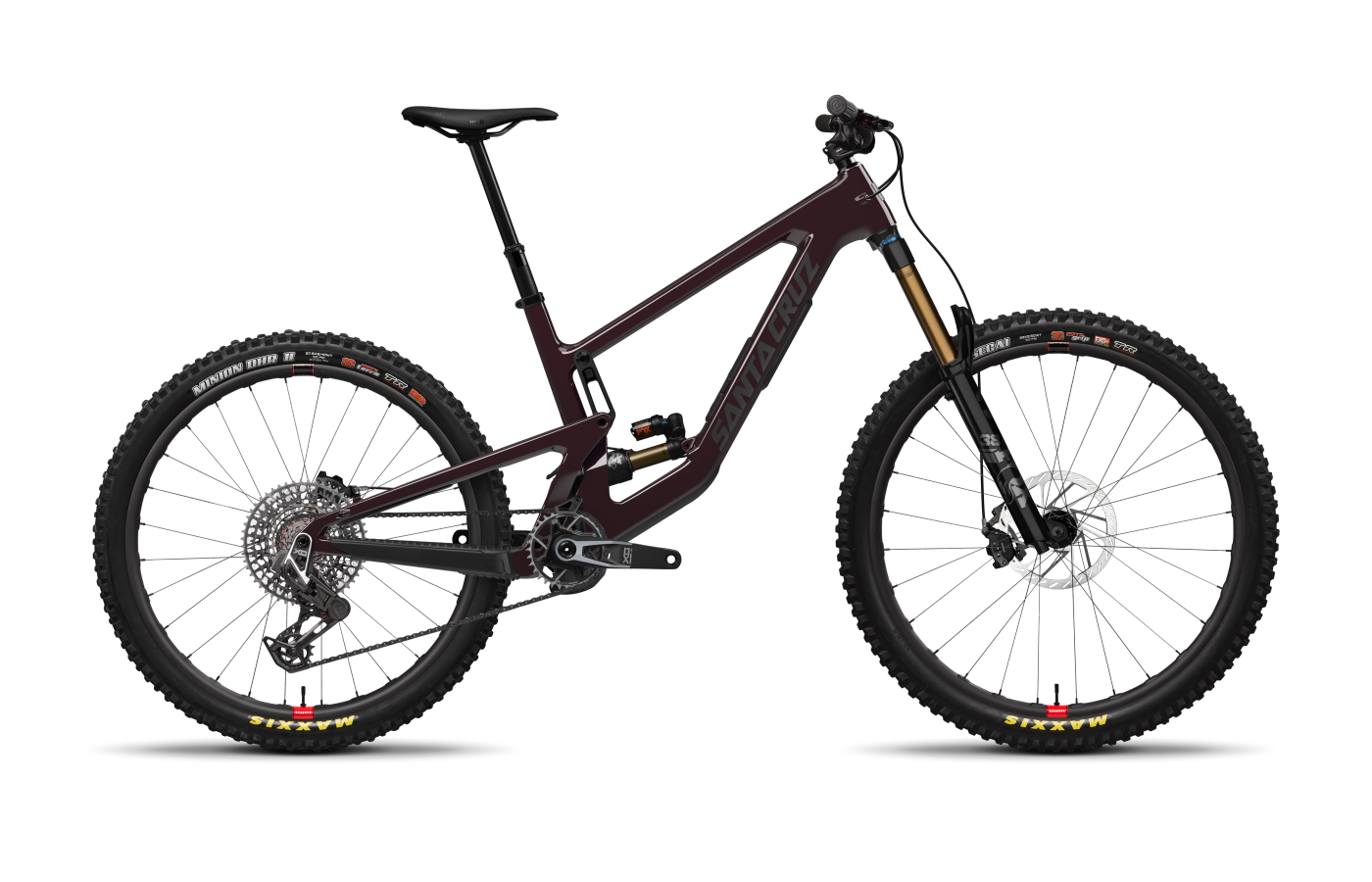
Rocky Mountain Slayer vs Santa Cruz Nomad
Read comparison→
Rocky Mountain Slayer vs Specialized Enduro
Read comparison→