Slayer
vsNomad
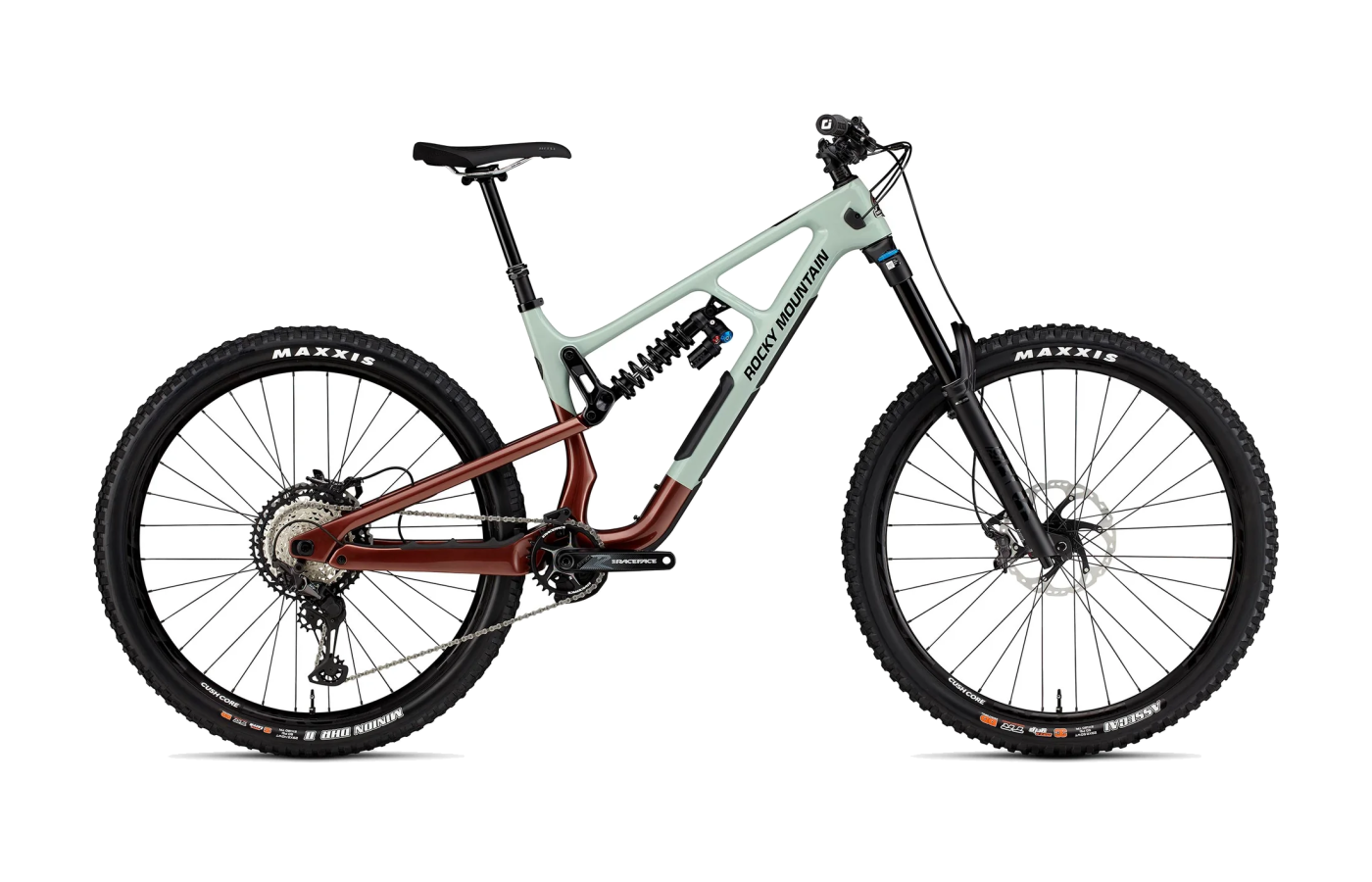
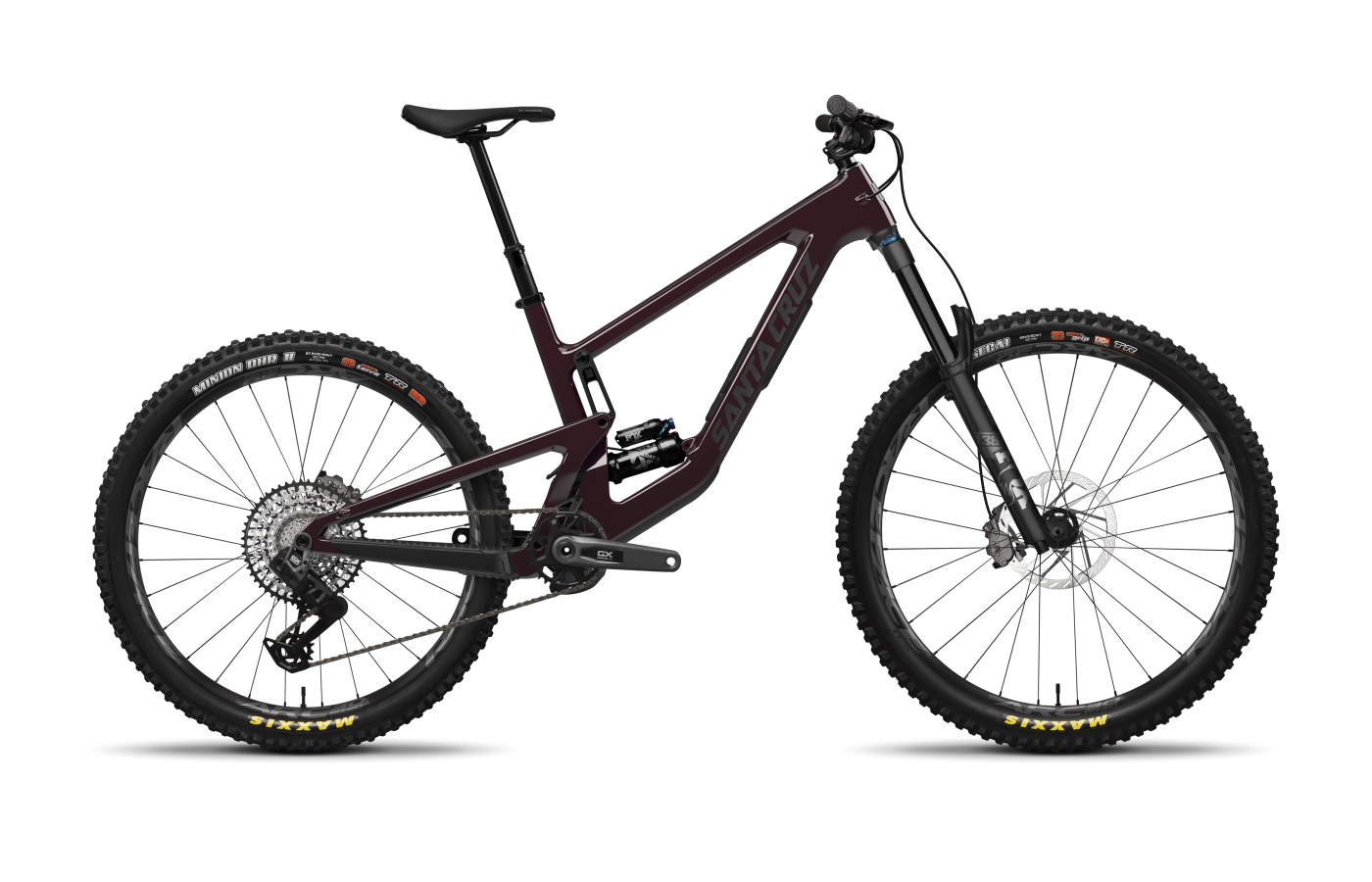
Two freeride weapons, two different intents.
The Rocky Mountain Slayer is a 180 mm bike-park bruiser. The Santa Cruz Nomad is a 170 mm mullet that corners like a go-kart.
Slayer
- 180 mm of bottomless travel front and rear — Fox 38 up front, DHX2 coil out back on every build above entry alloy.
- Adjustability with teeth — RIDE-4 flip chip spans 62.5-63.3 deg HTA, a 10 mm chainstay flip chip, plus MX or full-29 wheel swap.
- Starts $450 cheaper — entry Alloy 30 Park at $4,599 vs the Nomad's $5,149 floor, with a 200 mm dual-crown fork included.
- Heavy and floppy on flat, flowy singletrack — feels like work below plow speed.
- Stock coil shock tune runs soft; several reviewers upsized springs or retuned compression.
Nomad
- Peerless cornering for a 170 mm bike — the mullet plus size-specific chainstays make it flickable in ways the Slayer simply isn't.
- Actually climbs — 77.6 deg size-L seat tube angle and calmer VPP kinematics let it pedal like a shorter-travel bike on fire roads.
- Lifetime frame warranty plus free lifetime bearing replacement — a real long-term value offset the DTC brands can't match.
- Low 343 mm BB means frequent pedal strikes on chunky technical climbs.
- No alloy option — price floor is $5,149 and climbs fast from there.
Editor’s analysis
Both are long-travel carbon hammers, but one wants to plow, the other wants to slash.
On paper these bikes look close — slack head angles, coil-friendly rear ends, burly Maxxis tread, in-frame storage, carbon everywhere. But the Rocky Mountain Slayer and Santa Cruz Nomad solve the 'rowdy long-travel' problem from opposite ends. The Slayer is a true freeride rig with 180 mm front and rear, a 62.5 deg head angle in neutral RIDE-4, and a frame Rocky will happily sell you with a 200 mm dual-crown fork. The Nomad sits a clean 10 mm shorter in travel, rides a 63.8 deg head angle, and runs a 29/27.5 mullet across every size.
The Slayer is the pure plow-bike. Its 1281 mm size-L wheelbase, long rear end, and coil-only shock spec make it feel, in the words of multiple reviewers, like a monster truck — bottomless through brake-bumps, glued on off-cambers, scary-fast when pointed straight down. The trade-off is what it doesn't do: it's been described as sluggish on flat flow, floppy in tight switchbacks, and chronically noisy thanks to the Penalty Box lid. Bring it up to speed on real descents and all of that disappears. Ride it on rolling singletrack and you'll wish you'd bought something lighter.
The Nomad is sharper-edged. Size-specific chainstays (440 mm on size M, scaling up to 451 mm on XXL), a lower anti-squat VPP platform, and that 27.5 rear wheel give it what Vital called 'shifter-kart-like' handling. It's a genuinely capable climber for 170 mm — reviewers repeatedly say it spins up hills like a shorter-travel trail bike — and above 30 km/h it carves rather than plows. The downsides are a low 343 mm BB that punishes technical climbers with pedal strikes, and a price floor that starts at $5,149 and only goes up.
Put another way: if you're buying a Rocky Mountain Slayer, you're admitting you mostly ride chairlifts and shuttle roads. If you're buying a Santa Cruz Nomad, you still want to earn your turns — you just don't want to give up much on the way down.
Where the builds differ.
Comparing our editor's-pick builds side-by-side. Winners highlighted row-by-row — lower price and weight, and the better-spec component, each mark a point.
Build variants & pricing
Both platforms span roughly $5k of range. The Slayer starts cheaper via its alloy frames; the Nomad is carbon-only, top to bottom.
Prices are current US MSRP. The Slayer also offers an Alloy 30 Park edition with a 200 mm dual-crown fork for $4,599 — the closest thing to a pedalable DH bike in either lineup. Santa Cruz does not offer an alloy Nomad.
How they fit, how they steer.
Slayer at size L, Nomad at size M — the fit-picked sizes for a 5'8" rider on each bike. The Slayer is 13 mm taller in stack, 19 mm longer in reach, and rides a full 1.3 deg slacker head angle — it's the more stretched-out, downhill-biased cockpit.
Which size should I buy?
Size recommendations from the stack, reach, and effective top tube ranges. The Nomad runs S-XXL; the Slayer comes in S-XL only.
→These are starting points. Flexibility, riding style, and preferred position all shift the answer — if you’re between sizes, a professional fit beats a chart.
What the magazines said.
Published reviews from trusted cycling outlets. Click through for the full write-up.
Which one should you buy?
If you ride chairlifts, shuttle laps, and steep fall-line, get the Slayer. If you actually pedal to the top and want your long-travel bike to corner, get the Nomad.
Slayer
If most of your riding is lift-accessed, shuttle-fed, or otherwise gravity-assisted — and you want a single bike that can also run a dual crown on park days — the Slayer is the more honest tool. Plush, bottomless, confidence-inspiring when the trail gets ugly.
Nomad
If you climb to earn your descents and want peerless cornering in a 170 mm package, the Nomad is the sharper tool. Size-specific chainstays and the mullet layout give it a playful character few long-travel bikes match.
Questions buyers actually ask.
Short answers to the things we get emailed about most often.
01Which has more travel?
The Rocky Mountain Slayer — 180 mm front and 180 mm rear, versus the Santa Cruz Nomad's 170/170. It's only 10 mm either end, but combined with the Slayer's slacker head angle and longer wheelbase the ride character is meaningfully more gravity-biased.
The Slayer is also cleared for a 200 mm dual-crown fork, and Rocky sells a Park edition with one (the Alloy 30 Park). The Nomad is single-crown only.
02Which climbs better?
The Nomad, without much debate. Santa Cruz lowered anti-squat on the V6 specifically to improve traction, and the 77.6 deg size-L seat tube angle keeps you centered over the cranks. Multiple reviewers described it as climbing like a bike with much less travel.
The Slayer's Smoothlink suspension bobs noticeably without the climb switch engaged — Enduro MTB described it as 'swallowing up your input like a sandbag' — and the slacker 77 deg seat tube angle puts you further behind the BB. Expect to rely on the climb switch on every sustained fire-road grind.
03Which is more playful in corners?
The Nomad, by a clear margin. Vital MTB called its handling 'shifter-kart-like,' and Blister said it's the best-handling mullet they'd tested. The 27.5 rear wheel, low-slung VPP linkage, and size-specific chainstays let it initiate leans with almost no input.
The Slayer, with its 1281 mm size-L wheelbase and 62.5 deg head angle, is the classic plow bike — stable at speed, but reviewers repeatedly described it as sluggish on flat or tight terrain. Mountain Bike Action said it 'hesitated going into tight corners.'
04What about bottom bracket strikes?
This is a real tradeoff on the Nomad. Its 343 mm BB in the Low setting is low enough that multiple reviewers noted frequent pedal strikes on technical climbs and undulating terrain. One Vital tester even switched to 160 mm cranks to mitigate it.
The Slayer's RIDE-4 flip chip lets you adjust BB height alongside head angle, and in its steeper settings it avoids most of the pedal-strike complaints. If your local trails are rooty and chunky with forced pedaling, this is a real consideration.
05Which has better in-frame storage?
Both have it, but with different failure modes.
The Slayer's 'Penalty Box' sits in front of the bottle cage with a magnetic lid. It's roomy, but the lid has been a rattle point — Enduro MTB reported losing theirs after a few bike-park laps, and Mountain Bike Action cited it as a source of trail noise.
The Nomad's 'Glovebox' uses neoprene purses for tools and tubes and was widely praised for its execution. One caveat: it's not fully watertight, so expect contents to get damp during wet rides or bike washes.
06Can I get either with a coil shock?
Slayer: yes, and every build above the entry Alloy 30 Park ships with one — Fox DHX2 on the Carbon models, RockShox Super Deluxe Coil on the Alloy 50. Coil is the default spec here.
Nomad: yes, but Santa Cruz offers both air (Fox Float X / Float X2) and coil variants depending on the build. Reviewers generally preferred the coil builds for the Nomad's intended freeride use, noting the air shocks could blow through mid-stroke on aggressive pumping.
07What warranty do they come with?
Both are backed by strong long-term support.
The Slayer carries Rocky Mountain's 5-year frame warranty to the original owner.
The Nomad comes with a lifetime frame warranty and — uniquely in the industry — free lifetime bearing replacement. Over a multi-year ownership cycle that's a non-trivial savings, especially on a VPP bike that uses a lot of pivot bearings.
08Which should I get for mostly bike-park riding?
The Slayer is the more specialized tool for this. It's dual-crown compatible, ships with coil on every mid-and-up build, and its geometry is purpose-built for steep, fall-line descending. The Alloy 30 Park edition at $4,599 — with a 200 mm RockShox Boxxer dual crown and SRAM GX DH drivetrain — is effectively a pedalable downhill bike.
The Nomad can do park days happily, especially on coil builds, but it's optimized for riders who want to pedal to their lines too.
Similar bikes
If your priorities don’t map cleanly onto either of these, one of these adjacent bikes probably fits better.
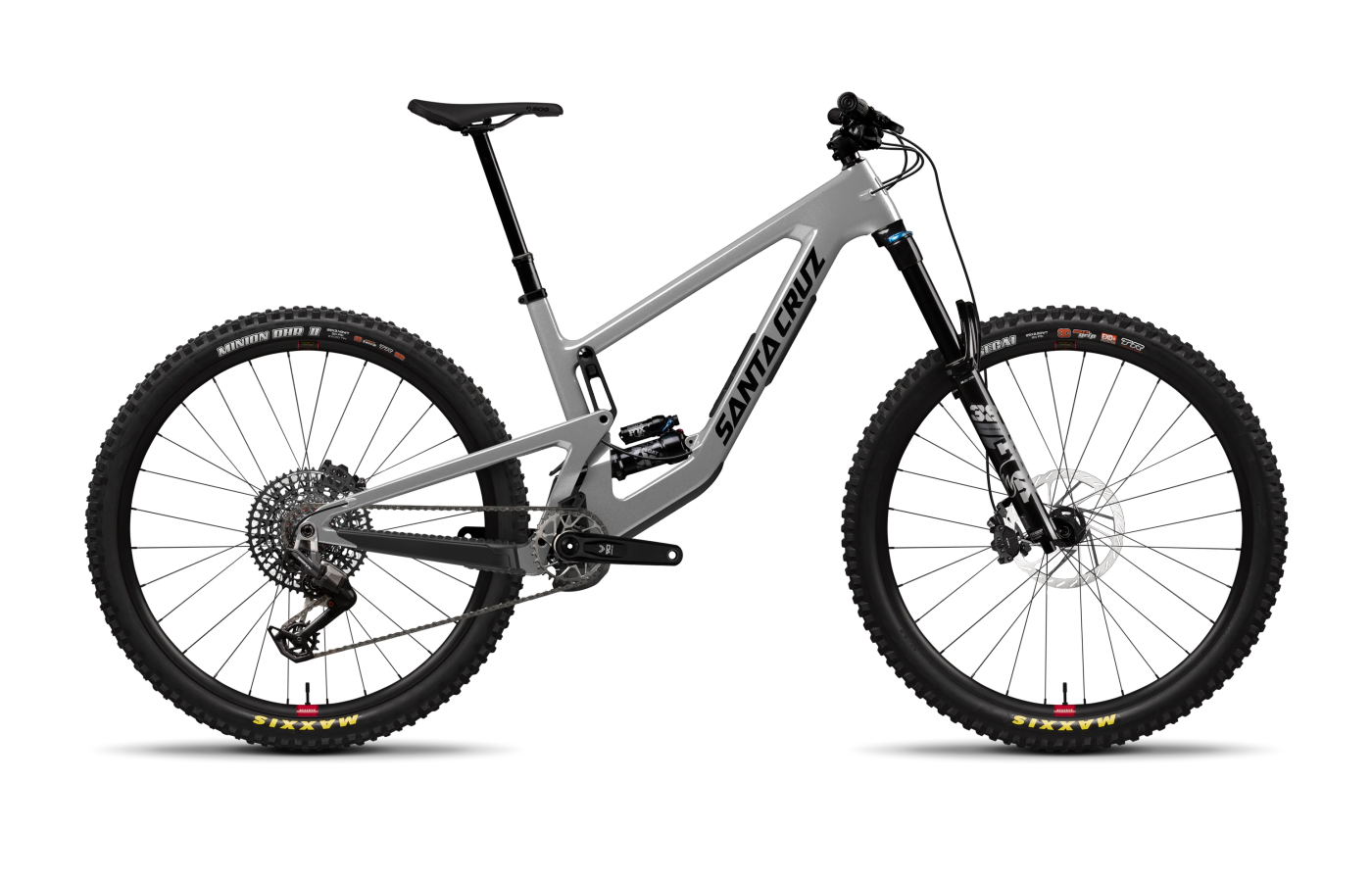
Megatower
The Nomad's full-29 sibling — same Santa Cruz DNA but tuned for flat-out enduro race speed rather than corner-slashing. If you like the Nomad's chassis but want a 29er's rollover, this is the move.
Compare →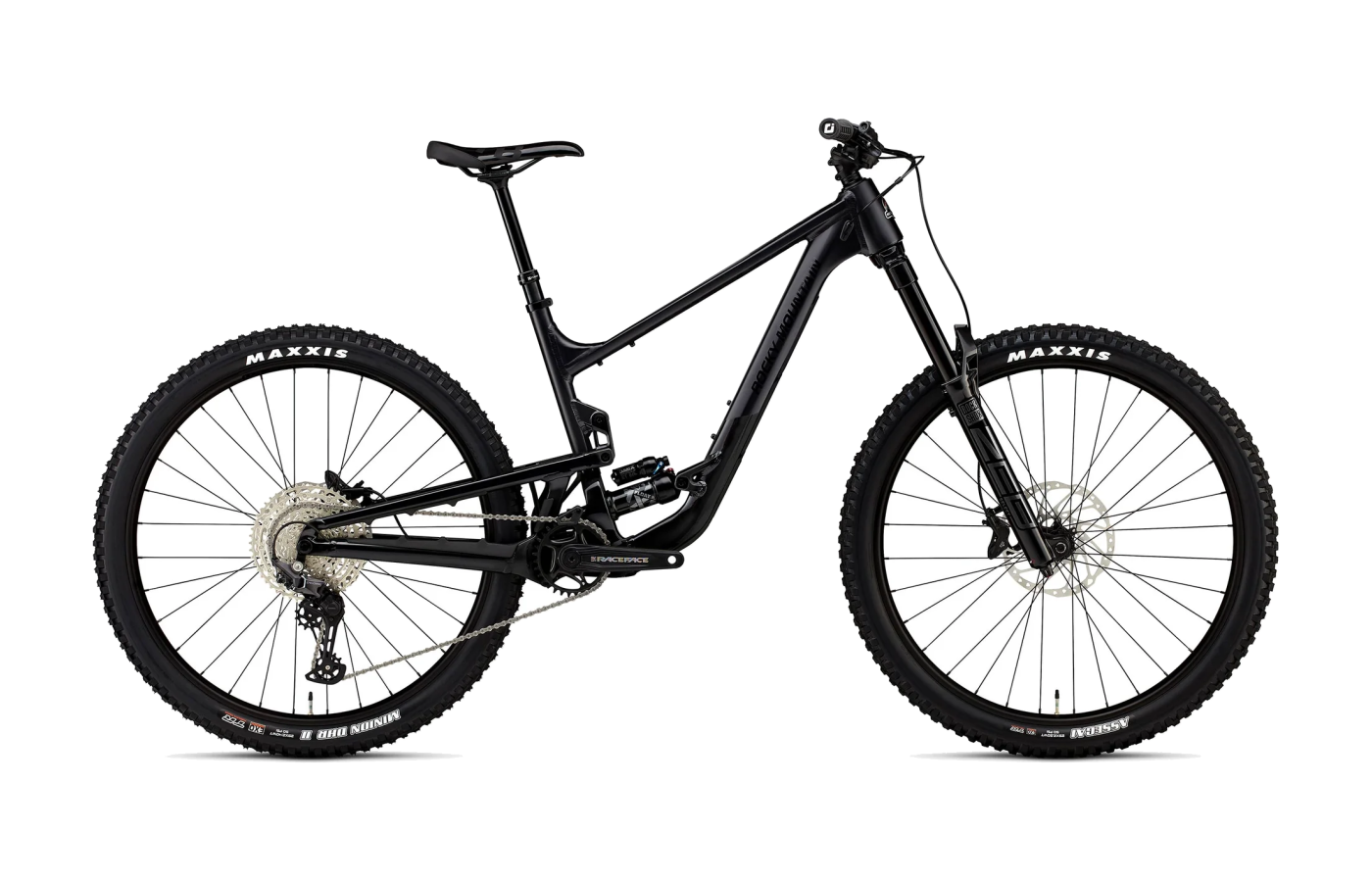
Altitude
Rocky's enduro race bike — shorter travel (170 mm) and the newer LC2R suspension platform that NSMB directly credits with more mid-stroke support than the Slayer. The Slayer sibling that actually pedals.
Compare →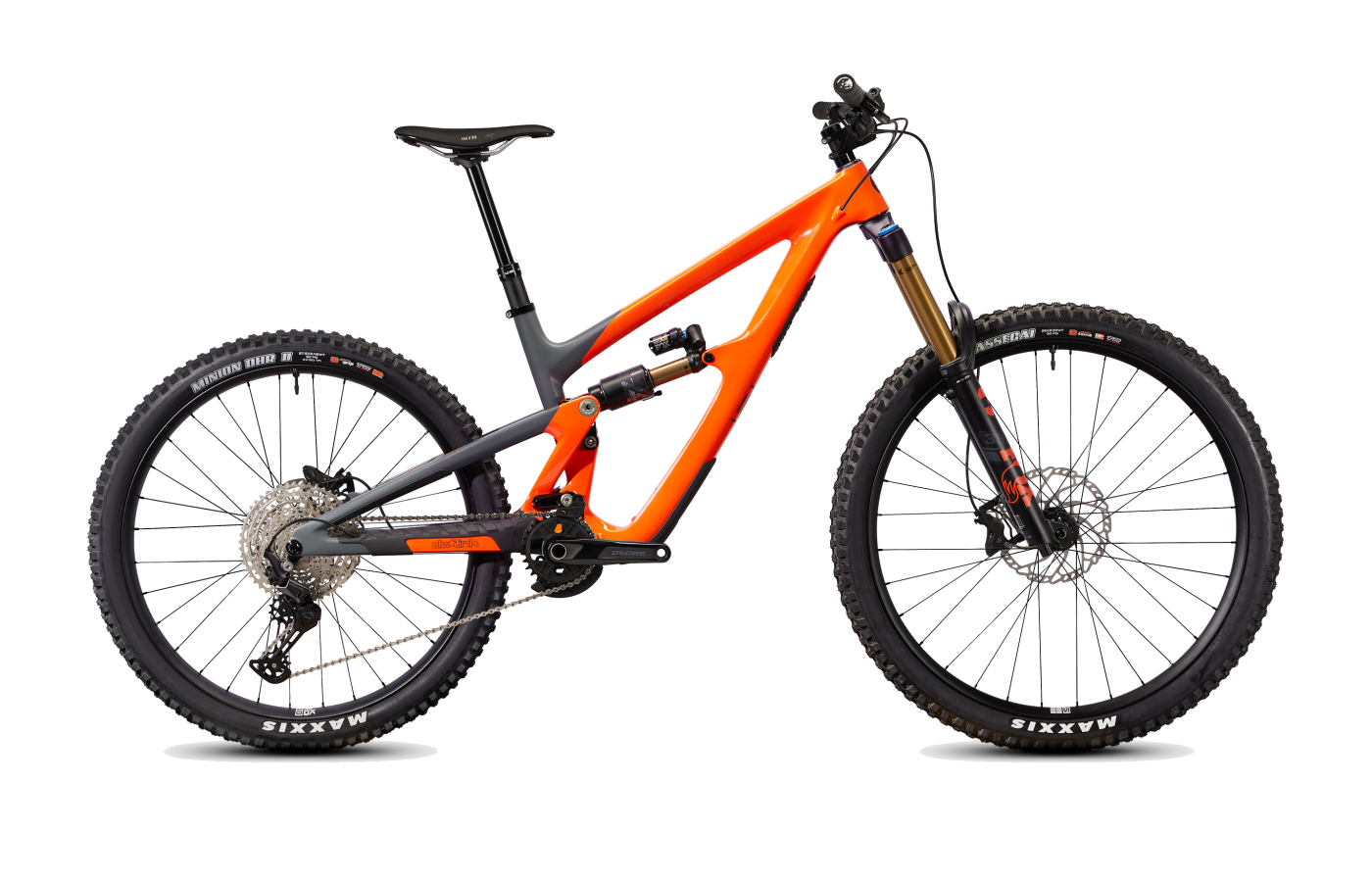
HD6
A 180/180 mullet with a reputation for playful downhill prowess — the closest thing to a Slayer that still corners like a Nomad. Priced in the premium tier both bikes live in.
Compare →