Altitude
vsSlayer
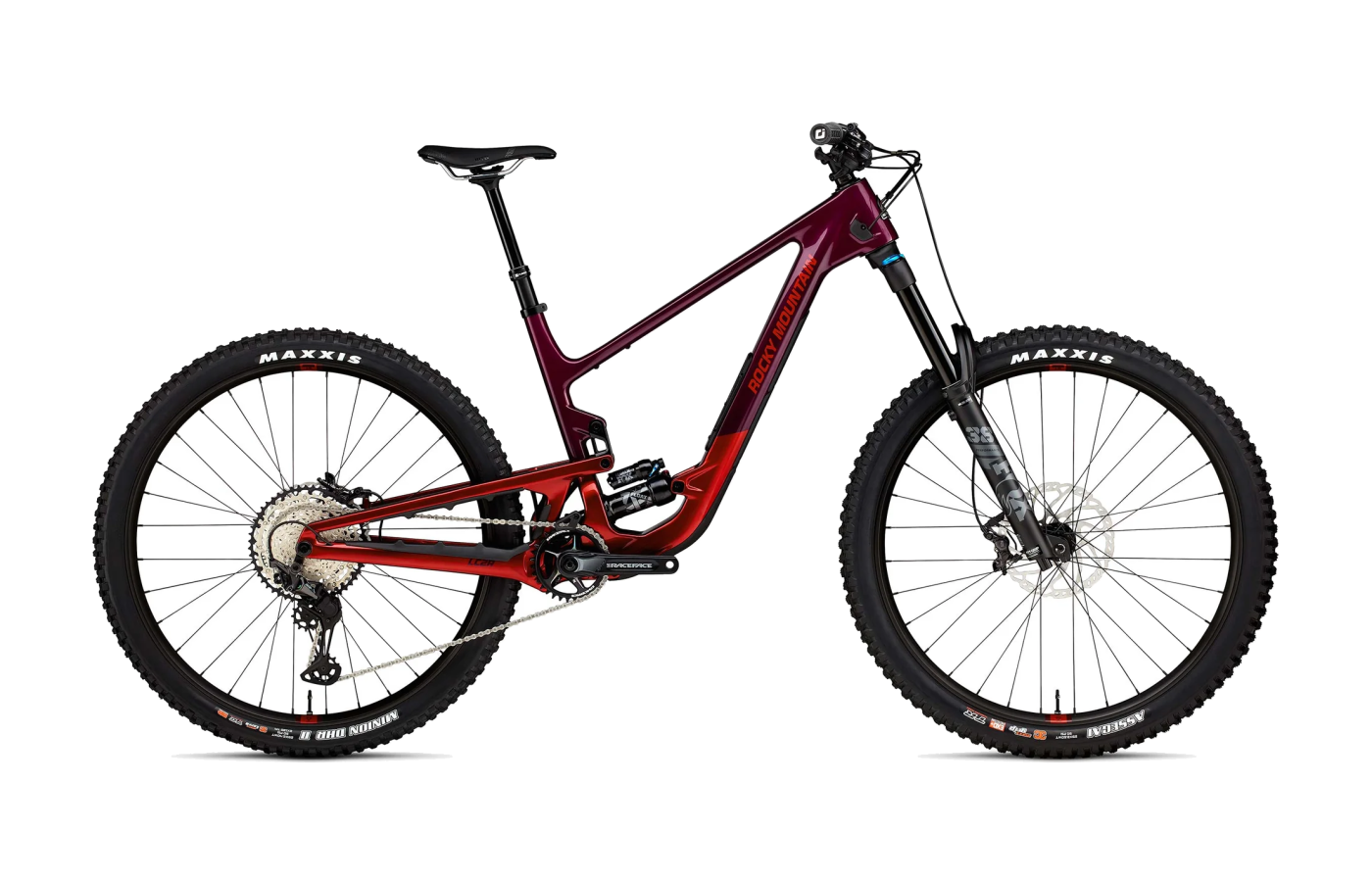
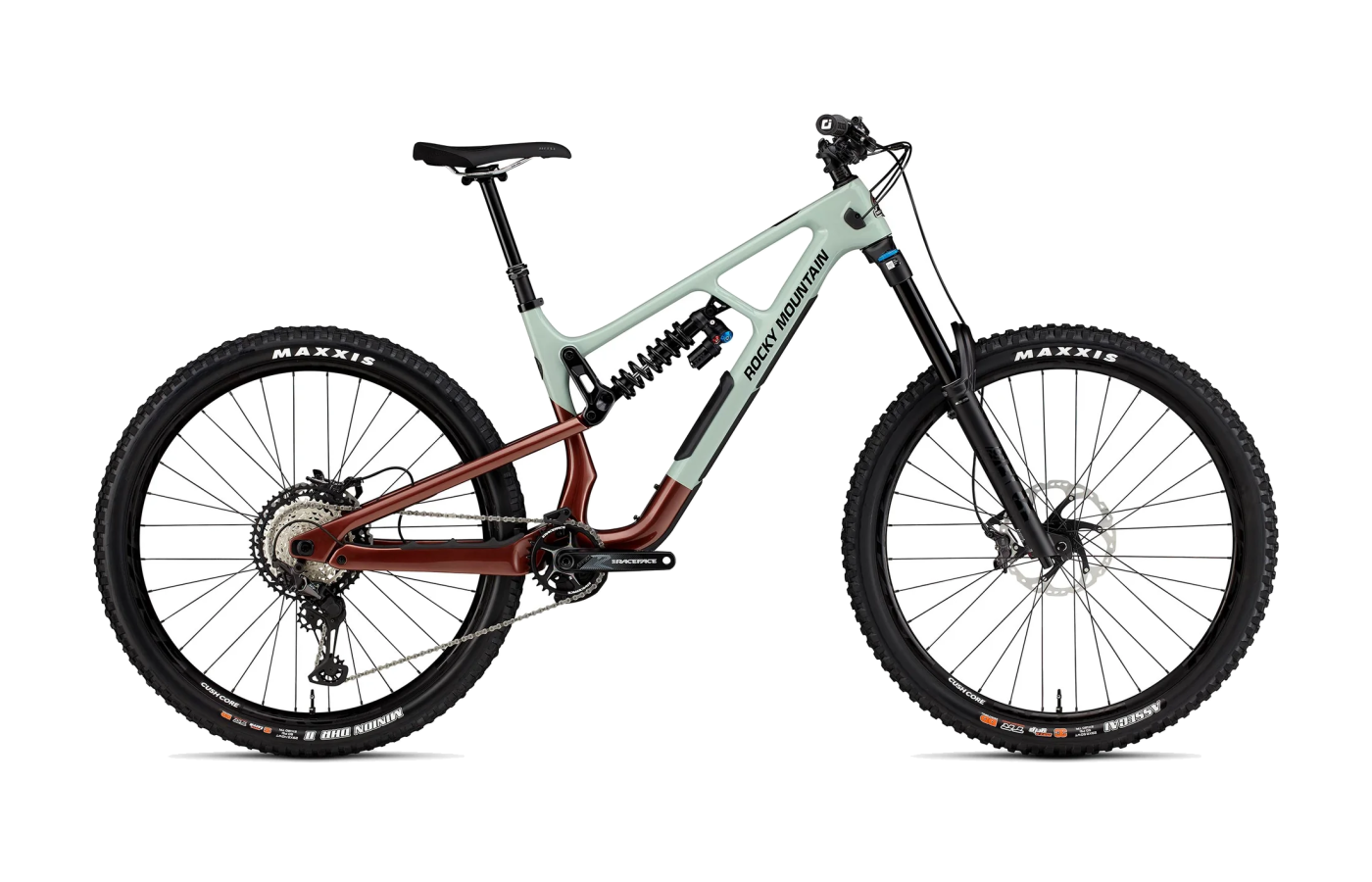
Same brand, two gravity philosophies.
The Altitude is Rocky's 160 mm enduro racer — sharp, planted, fast. The Slayer is the 180 mm freeride bruiser built to plow.
Altitude
- Sharper, faster platform — LC2R gives supportive mid-stroke and a stable high-speed feel without feeling dead.
- Actually pedals — reviewers consistently say it climbs "surprisingly well" for a 160 mm enduro bike, helped by a 77 degree seat angle.
- Deep adjustability — RIDE-4 chip plus a +/-5 mm reach-adjust headset means 24 usable geometry combinations.
- Long wheelbase (1243 mm on medium) feels cumbersome in tight, slow-speed switchbacks.
- Early-production cable and dropper rattle showed up across multiple reviews.
Slayer
- Bigger travel cushion — 180 mm front and rear swallows drops, g-outs, and high-consequence compressions the Altitude has to respect.
- Park-ready out of the box — DoubleDown tires, CushCore, coil shock, and a dual-crown-compatible frame (Alloy 30 Park ships with 200 mm Boxxer).
- Broader price floor — Alloy 30 Park opens the range at $4,599 for a true 180 mm freeride bike.
- Plusher tune feels "sluggish and floppy" on flatter or rolling trail and demands rider effort to get it moving.
- Stock WTB ST i30 wheelset is widely called "soft" and a frequent early upgrade target.
Editor’s analysis
This isn't a better-or-worse fight. It's a question of how you want to go downhill — trimming lines at race pace, or smashing straight through.
Rocky Mountain builds both the Altitude and the Slayer out of the same Smoothwall carbon playbook, shares RIDE-4 geometry adjustment between them, and even recycles the LC2R suspension name across generations. But the two bikes sit in genuinely different rooms of the gravity house. The Altitude is a 2024-redesign enduro race bike — 160 mm of travel front 170, 62.9 degree head angle, and the new low-slung LC2R virtual pivot. The Slayer is a 2023 freeride machine — 180 mm front and rear, 62.5 degrees, and the older Smoothlink four-bar design.
The Altitude is the bike that rewards input. Reviewers across Pinkbike, NSMB, and Blister describe it as a "magic eraser" that stays composed at speed while giving enough mid-stroke support to pump, jump, and carve. The LC2R platform is the story: reviewers consistently note "essentially endless traction" on technical climbs, a 36% progression curve that resists wallow, and a low center of gravity that erases twitchiness above 35 km/h. It also climbs well for a 34–36 lb enduro bike — not lively, but efficient enough that you won't dread the transfer stages.
The Slayer is a different animal. The extra 20 mm of travel at both ends, the slacker 62.5 degree head angle, and the plusher Smoothlink tune turn it into what NSMB literally calls "Godzilla" to the Altitude's "Kong." Reviewers love it on steep, natural fall-line trails and in the bike park, where the 180 mm coil rear simply absorbs what smaller bikes have to dodge. The tradeoff: on undulating trail or during climbs, the same active tune feels "sluggish and floppy" (Mountain Bike Action) and "dead and unsupported" compared to the Altitude's crisper LC2R. Pinkbike directly noted the Slayer feels like it "gets sucked into holes" where the Altitude skims over them.
Put another way: the Altitude is the one bike you own if you race enduro or ride steep technical trails under your own power. The Slayer is the second bike you own when your first bike is a trail bike and you want a park lap / shuttle / dual-crown-capable rig for the really big days.
Where the builds differ.
Comparing our editor's-pick builds side-by-side. Winners highlighted row-by-row — lower price and weight, and the better-spec component, each mark a point.
Build variants & pricing
The Altitude runs from $3,999 to $5,799. The Slayer starts at $4,599 but scales to $10,299 — the broader carbon range and coil-shock-as-standard drive the gap.
Tier-matched picks: both run Shimano XT-family drivetrains on Smoothwall carbon frames with Fox 38 / DHX2-family suspension. The Slayer Carbon 70 costs ~$2,100 more than the Altitude Carbon 50 primarily because it ships with Performance Elite dampers and a coil shock where the Altitude Carbon 50 runs Performance-tier dampers and a Fox Float X air shock. Prices are current US MSRP.
How they fit, how they steer.
The fit algorithm lands each bike on the size that best suits the same rider, which is Altitude medium vs. Slayer large — the Slayer runs a longer wheelbase at one-size-down. Head angles are 62.9 vs. 62.5 degrees, chainstays 440 vs. 440 mm, and seat angles are identical at 77 degrees.
Which size should I buy?
Size recommendations are based on stack, reach, and effective top tube. Both platforms skew long; expect most riders to size down relative to their past trail bikes.
→These are starting points. Flexibility, riding style, and preferred position all shift the answer — if you’re between sizes, a professional fit beats a chart.
What the magazines said.
Published reviews from trusted cycling outlets. Click through for the full write-up.
Which one should you buy?
If you race enduro or pedal to your downhills, get the Altitude. If you shuttle, lift, or live in the bike park, get the Slayer.
Altitude
If your rides are earned — transfer stages, technical climbs, timed descents — the Altitude is the sharper, more efficient tool. The LC2R platform gives you the mid-stroke support to pump and jump without giving up the composure that makes fast descents feel easy.
Slayer
If your riding is shuttle-, lift-, or van-accessed and you're chasing bike park laps and big-mountain lines, the Slayer is the bigger, plusher hammer. The extra 20 mm of travel and deeper coil tune are a real advantage when the impacts get ugly — and the Alloy 30 Park with its dual-crown fork is a proper freeride weapon.
Questions buyers actually ask.
Short answers to the things we get emailed about most often.
01Which is faster on an enduro race course?
The Altitude, clearly. Multiple reviewers including NSMB directly compared the two and concluded the Altitude's newer LC2R platform delivers "far more mid-stroke support," letting it "eat and keep moving forward with excellent composure" where the Slayer "tends to live in the latter half of its travel" and feels "overwhelmed and bogged down" on sustained enduro-style impacts.
The Slayer wins on individual huge hits. The Altitude wins a timed race run.
02Which climbs better?
The Altitude, by a clear margin. Reviewers consistently describe it as climbing "surprisingly well" for a 160 mm enduro bike, with the LC2R platform providing "essentially endless traction" on loose, steep, technical uphills.
The Slayer is a freeride bike first — Pinkbike called it "a slow burner rather than a bottlerocket" and noted the climb switch is "relied on heavily" because the stock tune bobs under power. Both share a 77 degree seat angle, so seated position is similar; it's the suspension and weight (Slayer C50 ~36.7 lb vs. Altitude ~34–35 lb) that separate them.
03How much travel does each bike have?
Altitude: 160 mm rear / 170 mm fork. Designed for enduro.
Slayer: 180 mm rear / 180 mm fork. Designed for freeride and park. The Alloy 30 Park ships with a 200 mm RockShox Boxxer dual-crown fork, which the Slayer frame is officially compatible with — the Altitude frame is not.
04Is the geometry really that different?
On paper the differences look small — Altitude size medium runs a 62.9 degree head angle, 450 mm reach, 440 mm chainstays, 1243 mm wheelbase; Slayer size large runs 62.5 degrees, 474 mm reach, 440 mm chainstays, 1281 mm wheelbase. Both use RIDE-4 for around +/-0.8 degrees of head angle adjustment.
On the trail the gap is bigger than the numbers suggest, mostly because the Slayer's 20 mm of extra travel plus the slacker static angle compound each other. The Slayer feels like a plow, the Altitude feels like a precision instrument.
05Can I run either as a mullet?
Yes — both frames officially support mixed-wheel (29 front / 27.5 rear) setups. The Slayer ships mullet on sizes S and M and 29er on L and XL, with the option to swap either way. The Altitude is 27.5 on size XS and 29 on M-XL, with mullet officially supported on M-XL.
Reviewers generally found the mullet setup added "pep" and made the rear end "snappier" on both bikes — especially useful if you spend time on tighter trails.
06What warranty do they come with?
Both come with Rocky Mountain's 5-year transferable frame warranty, one of the better warranties in the segment. Rocky has also been responsive in forums and comment sections — the Altitude's early main-pivot-bolt-loosening issue was addressed directly by the product manager with a documented fix (Loctite, 25 Nm torque).
07Which has the better in-frame storage?
Both carbon models use Rocky Mountain's "Penalty Box" magnetic in-frame storage. The Altitude uses the newer Penalty Box 2.0, which adds a clever AirTag holder. The Slayer uses the first-generation Penalty Box.
Reviewers reported mixed experiences with the Slayer's storage lid — Enduro MTB lost theirs in testing, and Mountain Bike Action reported rattling — while the Altitude 2.0 lid has been more consistently well-reviewed.
08Which is noisier on rough trails?
Both bikes were flagged for noise — a recurring critique across essentially every long-term review of either platform. Cable rattle in the bottom-bracket area and dropper-post noise are the two main culprits on both sides.
The Slayer also draws criticism for the Penalty Box lid rattling. If silence matters to you, budget an afternoon for cable foam and a dropper post service before the first big ride.
Similar bikes
If your priorities don’t map cleanly onto either of these, one of these adjacent bikes probably fits better.
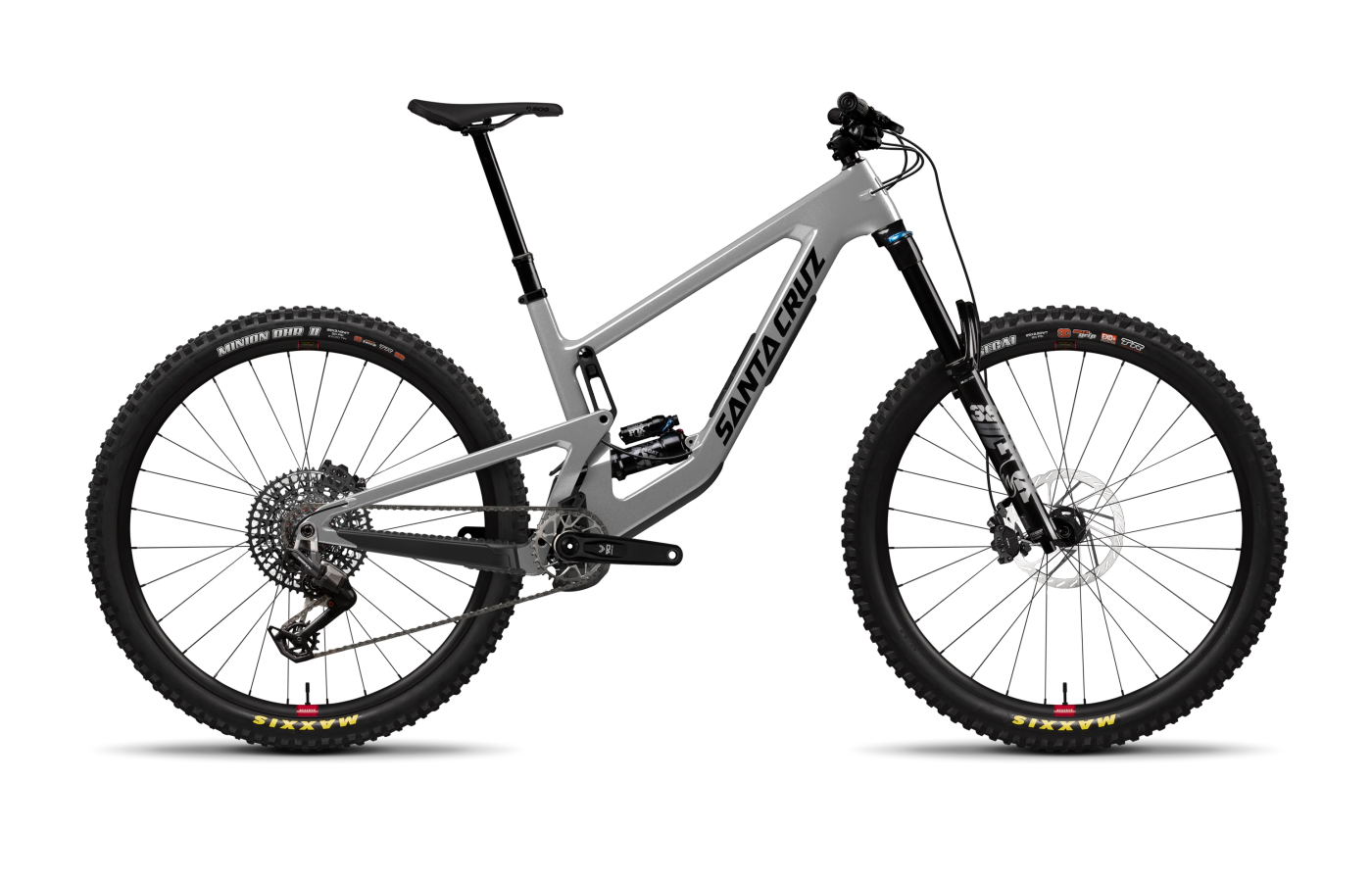
Megatower
Santa Cruz's direct Altitude cross-shop — a VPP-suspension enduro race bike that's slightly less burly but similarly composed at speed. Pick the Megatower if you want a lighter-touch platform from a more established dealer network.
Compare →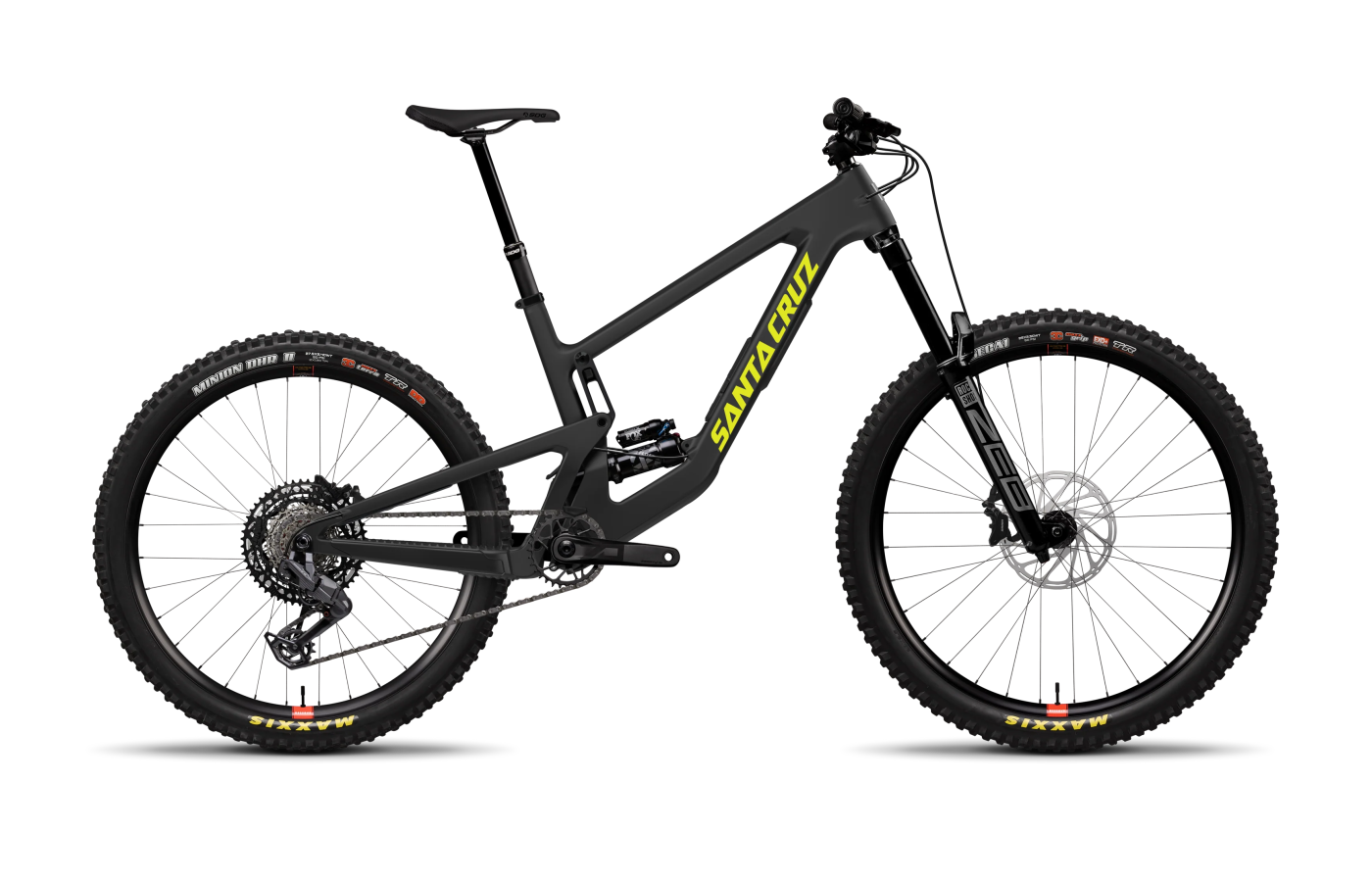
Nomad
The Santa Cruz freeride answer to the Slayer — same long-travel, gravity-focused brief, VPP suspension, and mullet-capable. Cross-shop this if you prefer Santa Cruz's playful kinematic over the Slayer's plush plow.
Compare →Spire
Transition's 170 mm enduro 29er — aggressive geo, a planted feel on descents, and typically $1-2k less than the equivalent Altitude build. The go-to if you want Slayer-adjacent descending without Rocky Mountain's price premium.
Compare →