Slayer
vsCapra
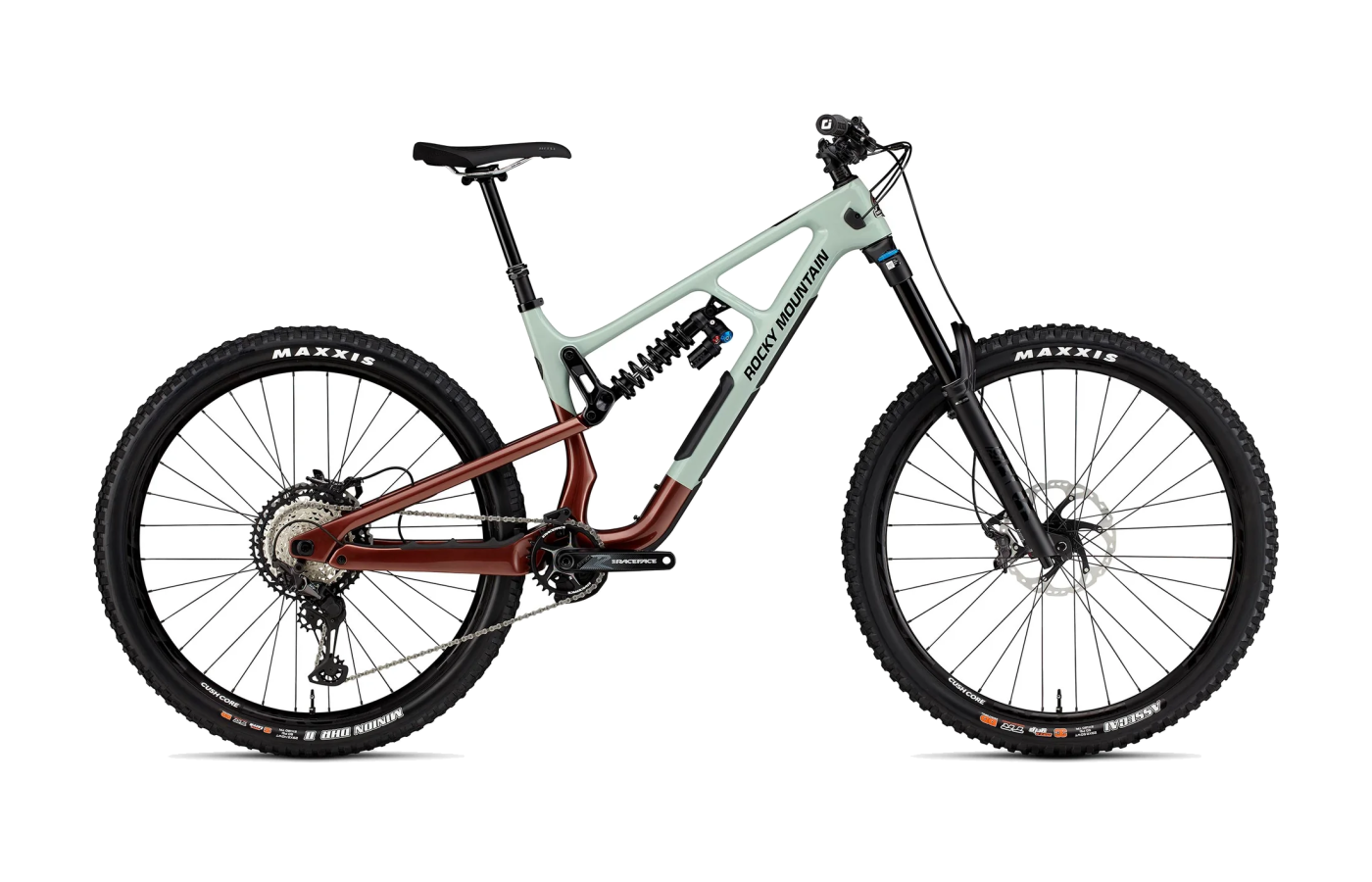
Two gravity bikes, two different missions.
The Slayer is a 180 mm freeride bruiser tuned to plow. The Capra is a 170 mm enduro all-rounder tuned to pop.
Slayer
- 180 mm of plush, coil-sprung travel — bottomless on steep, rough, fall-line terrain.
- 62.5 deg HTA and 1,281 mm wheelbase — monster-truck stability at speed.
- RIDE-4 + chainstay flip chips — meaningful geometry tunability and mullet-ready out of the box.
- Sluggish and floppy on flatter, twistier trail until the speed comes up.
- Reviewers consistently call it noisy — cable rattle and the Penalty Box lid.
Capra
- Class-leading value — direct-to-consumer pricing puts a Fox Factory build at $6,299.
- Taut, poppy V4L suspension — rewards active riders who pump and pop the trail.
- Eerily quiet chassis — internal cable sleeves and integrated frame protection cut down chatter.
- 165–170 mm of travel and shorter wheelbase show their limits on the gnarliest descents.
- DTC ownership means setup, sizing, and warranty are on you — no local dealer to lean on.
Editor’s analysis
Both want to take you down the mountain in one piece — but only one of them really wants to pedal back up.
On paper these look like neighbors: long-travel carbon, coil shocks at the top of the line, Fox 38 forks, mullet-ready frames, slack head angles. Spend any time with the geometry charts and the philosophies split in half. The Rocky Mountain Slayer runs 180 mm front and rear, a 62.5 deg head tube angle, and a 1,281 mm wheelbase in size large. The YT Capra runs 170 mm front and rear, a 64 deg head tube angle, and a 1,243 mm wheelbase in size L. That's roughly 1.5 degrees slacker, 38 mm longer, and 10 mm more travel on the Slayer — the classic delta between freeride bruiser and enduro all-rounder.
The Slayer is the bike reviewers reach for words like "monster truck" and "bottomless" to describe. Its Smoothlink rear is consistently called gooey on chunder; the slack front makes steep fall-line trails feel safe; the long wheelbase rewards speed and recklessness. It also doesn't apologize for any of that — Pinkbike, Mountain Bike Action, and Enduro MTB all noted that on flatter, twistier trail it feels sluggish and floppy until you point it down something steep. RIDE-4 and the chainstay flip chip help, and a mullet swap helps more, but the bike's center of gravity is firmly in bike park territory.
The Capra is the bike reviewers reach for words like "taut," "poppy," and "speedy all-rounder" to describe. Singletrack World famously called it a 140 mm-feeling bike with a 170 mm Get Out Of Jail Free card. The 64 deg HTA, 467 mm reach, and ~100% anti-squat at sag are tuned to maintain momentum — Pinkbike actually clocked it as the fastest in its enduro field test cohort despite the relatively conservative numbers. It pumps, pops, and corners harder than the Slayer; it climbs noticeably better; it feels less safe on the very steepest, fastest stuff.
Then there's the price wall. The Slayer runs $4,599 to $10,299 across six builds. The Capra runs $2,999 to $6,299 across six builds. The two ranges only overlap in a narrow band, and YT's direct-to-consumer model means the entire Capra line punches above its sticker. If you're buying on spec-per-dollar, the Capra wins decisively. If you're buying for the gnarliest descent of your life, the Slayer's chassis and travel were built for it.
Where the builds differ.
Comparing our editor's-pick builds side-by-side. Winners highlighted row-by-row — lower price and weight, and the better-spec component, each mark a point.
Build variants & pricing
The Slayer spans $4,599 to $10,299 across six builds; the Capra spans $2,999 to $6,299. Only the middle of each range overlaps.
Editor's picks are tier-matched at one-down: Slayer Carbon 70 ($7,799, XT mechanical) vs Capra Core 4 CF ($6,299, GX AXS Transmission). The $1,500 gap is real — YT's direct-to-consumer model doesn't have a like-for-like comparison higher up, and Rocky Mountain doesn't have one lower down. Prices are current US MSRP.
How they fit, how they steer.
Compared at size lg (Slayer) and size L (Capra) — the fit-picked frames for a 5'8" rider on each. The Slayer is 1.5 deg slacker (62.5 vs 64), 10 mm longer in reach (474 vs 464), and 38 mm longer in wheelbase (1,281 vs 1,243). Chainstays go 440 vs 433.
Which size should I buy?
Both ranges cover S/M/L/XL; the Capra adds an XXL on the long end. Sizes overlap closely in the middle but use different labels.
→These are starting points. Flexibility, riding style, and preferred position all shift the answer — if you’re between sizes, a professional fit beats a chart.
What the magazines said.
Published reviews from trusted cycling outlets. Click through for the full write-up.
Which one should you buy?
If your weekends look like shuttle laps, bike park days, and steep fall-line lines, get the Slayer. If they look like big enduro days with real climbing and a fast descent at the end, get the Capra.
Slayer
If you live for the descent and treat the climb as a tax on the fun, the Slayer is the more capable tool. The 180 mm of coil-sprung travel and 62.5 deg HTA make rock gardens feel like cakewalks, and RIDE-4 plus the chainstay flip chip let you fine-tune for park duty or natural steeps. Just plan to upgrade the wheels eventually.
Capra
If your rides involve real climbing and a wide range of trail, the Capra is the more livable bike — and the value side of the comparison isn't close. Pinkbike clocked it as the fastest enduro bike in their field test, BikeRadar named it Enduro Bike of the Year for 2024, and you still pay less than the Slayer's mid-tier carbon. Best if you know your fit before you order.
Questions buyers actually ask.
Short answers to the things we get emailed about most often.
01Which has more suspension travel?
The Rocky Mountain Slayer, by 10 mm at each end. Slayer: 180 mm front, 180 mm rear. Capra: 170 mm front, 165–170 mm rear depending on configuration (the MX setup gets the full 170 mm rear, the full 29er sits at 165 mm).
That 10 mm gap doesn't sound like much on paper, but combined with the Slayer's slacker head angle and longer wheelbase, it produces a meaningfully more bike-park-oriented chassis.
02Which climbs better?
The Capra, comfortably. Reviewers from BikeRadar, Enduro MTB, and Off.road.cc all describe its V4L suspension as drive-neutral with roughly 100% anti-squat at sag, and the 77.4 deg seat tube angle puts the rider in a central, comfortable position for long fire-road grinds.
The Slayer's Smoothlink rear is more active under power. Mountain Bike Action explicitly noted the suspension "isn't supportive enough to be efficient on the climbs" without flipping the climb switch, and the slacker geometry means you spend more energy keeping the front wheel down on technical pitches. Climbs aren't the Slayer's job.
03Which is faster on the way down?
It depends on the descent. On steep, fall-line, big-impact terrain — bike park, shuttle runs, true "big mountain" lines — the Slayer is the more confidence-inspiring chassis. The 62.5 deg HTA, 1,281 mm wheelbase, and bottomless coil suspension reward speed and recklessness in a way the Capra can't match.
On enduro-style trail with corners, transitions, and pedaling sections, the Capra is genuinely quick. Pinkbike's timed field test had the Capra clock the fastest downhill times in its cohort, beating bikes with longer wheelbases. Its taut suspension lets you generate speed out of corners rather than just absorbing the trail.
04What's the cheapest way into each platform?
Slayer: the Alloy 30 Park at $4,599 — but it's a dual-crown 200 mm Boxxer build aimed at lift-served riding, not a pedal-up enduro bike. The cheapest single-crown option is the Alloy 50 at $4,999.
Capra: the Core 1 AL at $2,999 — a true single-crown enduro build with a Marzocchi Bomber Z1 and Shimano Deore. Pinkbike has called the Core 1 "an attractive antidote to rising bike prices."
If entry price matters, the Capra wins by ~$2,000 for a comparable use case.
05Mullet or full 29er?
Both bikes ship configurations of each.
Slayer: sizes S and M ship as MX (29 front / 27.5 rear). Sizes L and XL ship as full 29ers. The frame supports either via reversible parts. Pinkbike specifically liked the MX swap on size L for adding pep.
Capra: the editor's-pick Core 4 CF in our comparison is the MX build (29 front / 27.5 rear). YT also offers full 29er versions of the carbon frame — both share the same front triangle. The Loam Wolf called the MX the "playful park rat" and the full 29er the "speed demon."
06How do their dropper posts compare?
Slayer Carbon 70 (size lg): ships with a Race Face Aeffect R, frequently criticized for short travel relative to modern standards.
Capra Core 4 CF (size L): ships with a YT Postman V2; reviewers note BikeRadar's comment that YT added a longer-travel dropper for 2024.
Neither dropper is a standout. Long-legged riders on either bike often look at aftermarket OneUp or BikeYoke posts as the first upgrade.
07What about durability and warranty?
Slayer: 5-year frame warranty. The 2023 redesign reinforced the rear triangle and pivots after a previous-generation frame failure during Pinkbike testing. The biggest reliability complaint in reviews is the WTB ST i30 alloy wheelset on the cheaper builds — Enduro MTB and MBA both flagged it as soft and prone to early damage.
Capra: warranty terms vary by region; check yt-industries.com for your market. Reviews note isolated reports of cracked chainstays and a Loam Wolf top-tube crack incident, plus DTC-typical warranty wait times. The frame is otherwise praised for its quiet, well-protected construction.
08Where does each one fall short?
Slayer: sluggish and floppy at low speed; loud cable and Penalty Box rattle on rough trail; stock suspension tune on the C50 was repeatedly called soft and undefined. It's a specialist tool — buying it for everyday trail is overbuying.
Capra: stock Maxxis EXO+ tires (and Continental Enduro casings on newer builds) are widely called undergunned for the bike's intent — most reviewers recommend a casing upgrade for aggressive use. DTC ownership means no local dealer for fit, setup, or service. The 165–170 mm chassis can feel out of its depth on the gnarliest fall-line trails the Slayer eats for breakfast.
Similar bikes
If your priorities don’t map cleanly onto either of these, one of these adjacent bikes probably fits better.
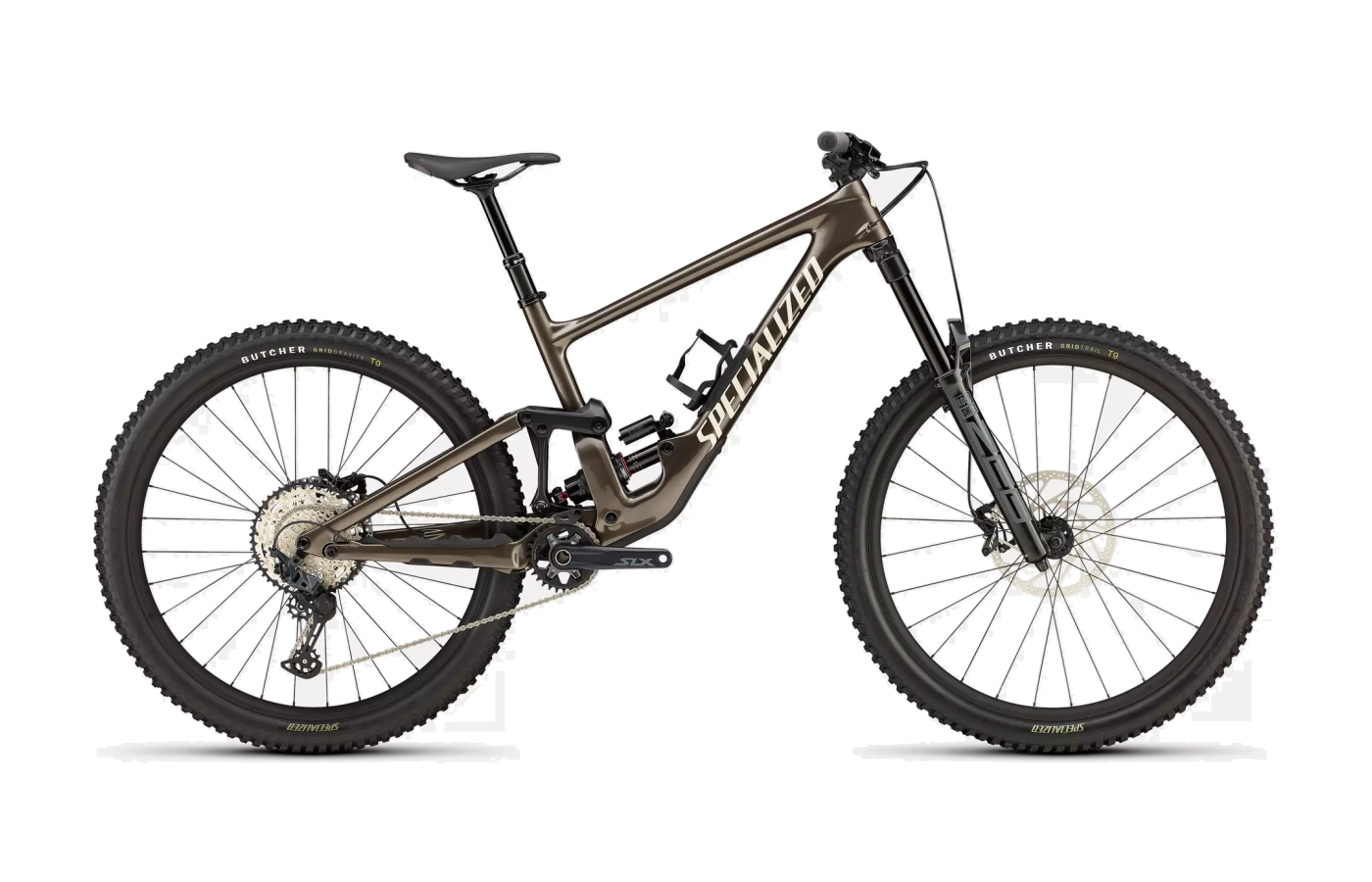
Enduro
If the Capra's all-rounder pitch lands but you want a bigger-brand dealer network and more proven race pedigree, the Specialized Enduro is the obvious cross-shop. Same enduro mission, more shop support, less spec-per-dollar.
Compare →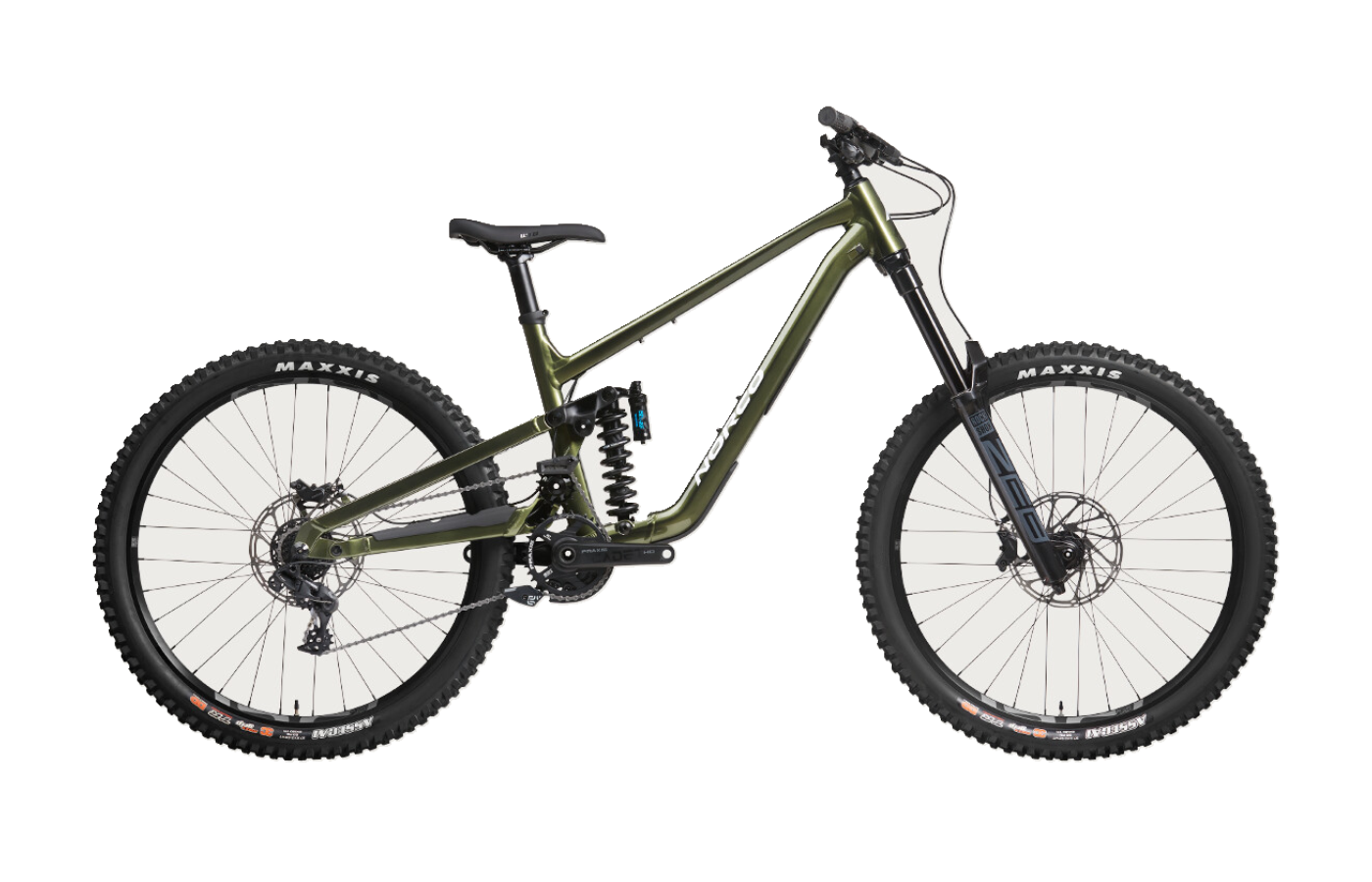
Shore
Even more freeride than the Slayer — the Norco Shore is a true bike-park machine with downhill-bike DNA that you can still pedal. Pick it if your weekends are 90% lift-served and 10% pedaling.
Compare →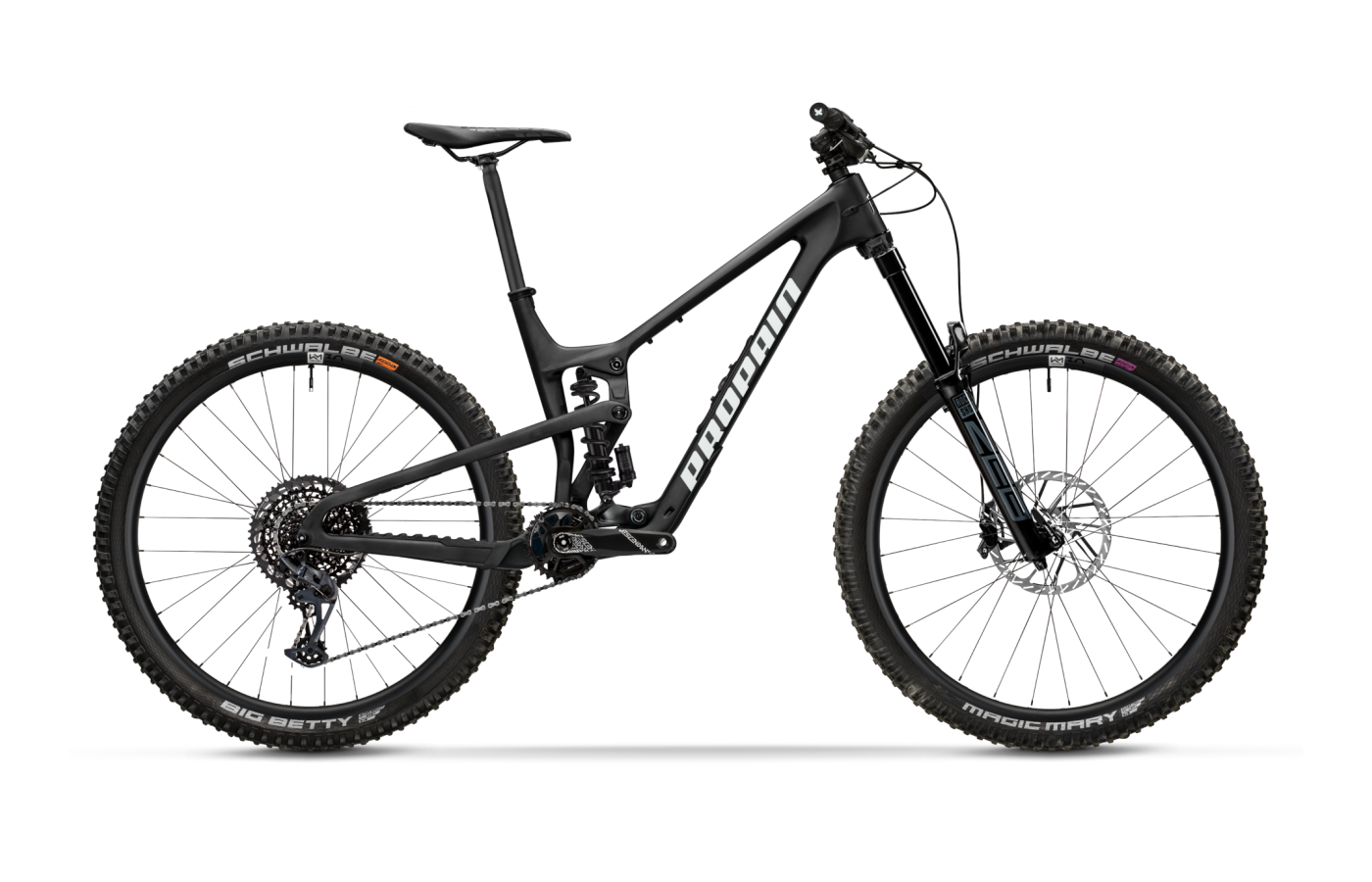
Spindrift
Propain's freeride/enduro hybrid built around the same direct-to-consumer model as YT, with a lively, big-hit-friendly chassis. A natural cross-shop for Capra buyers who want even more travel and more configurability.
Compare →