5010
vsNomad
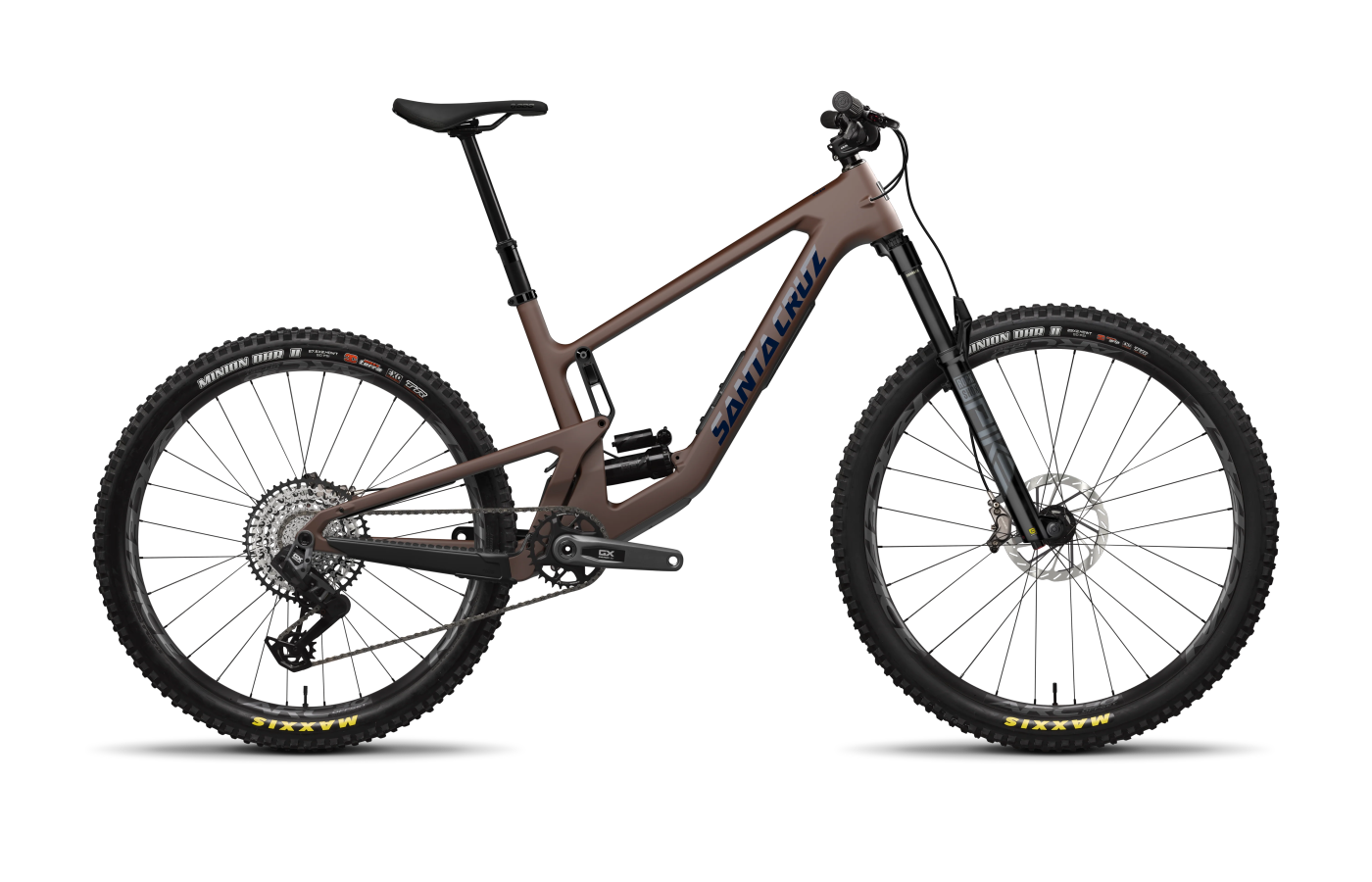
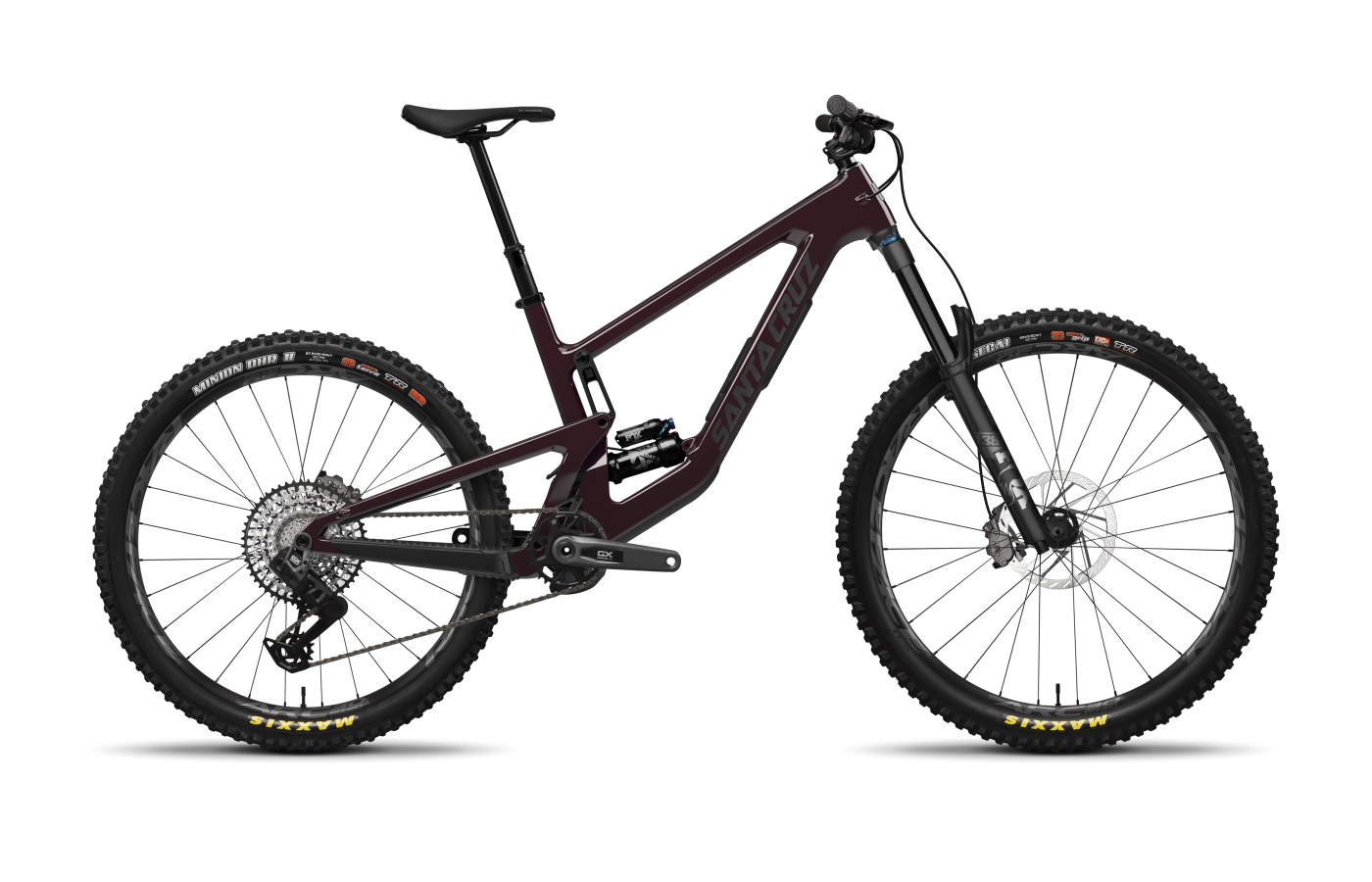
Same brand, same mullet, 40 mm of travel apart.
The 5010 is Santa Cruz's playful 130 mm trail bike. The Nomad is the 170 mm enduro bruiser that rides like a downhill bike with pedals.
5010
- Lighter and livelier — at 31.16 lb (GX AXS), 3.4 lb under the Nomad GX AXS. Climbs and accelerates noticeably better.
- Cheapest entry point — $4,799 for the R build vs $5,149 for the Nomad's cheapest. More steps in between, too.
- Playful by design — low BB, mixed wheels, and active VPP make every corner an event. 'Corner destroyer' is the consensus phrase.
- 140 mm Pike feels under-gunned on truly consequential terrain.
- Stock SRAM G2 brakes and EXO-casing tires are widely flagged as undersized for the bike's intent.
Nomad
- 170 mm of safety net — Fox 38 up front, 230x65 rear shock, and a 63.8-degree head angle. Holds lines on terrain that overwhelms most trail bikes.
- Longer chainstays for stability — 440 mm at size M (vs 433 mm on the 5010). Eliminates the twitchiness most mullet bikes have at speed.
- Climbs better than expected for a 170 mm bike. Steep 77.4-degree seat angle keeps you centered; reviewers call the calm pedaling platform 'efficient for the travel.'
- Heavier (34.55 lb on GX AXS) and slower to accelerate than any trail bike.
- Low 343 mm BB plus burly tires means frequent pedal strikes and slow rolling on flatter sections.
Editor’s analysis
Both bikes wear the same VPP linkage and the same 29/27.5 mullet wheels — but they're built for opposite ends of the trail.
The Santa Cruz 5010 is the playful, fun-first end of the trail-bike spectrum: 130 mm of rear travel, a 140 mm Pike up front, and a 65.2-degree head angle that's slack for a 130 mm bike but still steep enough to keep low-speed handling lively. Reviewers consistently call it a 'corner destroyer' and a 'jib machine' that has grown up — V5's 16% drop in peak anti-squat made the rear end more active and traction-rich, at the cost of some out-of-saddle climbing snap.
The Santa Cruz Nomad is the other end entirely: 170 mm front and rear, a 63.8-degree head angle, and a wheelbase that runs 27 mm longer at size M (1239 vs 1212). Vital MTB famously called its handling 'shifter-kart-like' for an enduro sled — credit the size-specific chainstays (440 mm on a M, growing to 450 mm on XXL) that prevent the small rear wheel from getting twitchy at speed. Reviewers describe it as composed when 'bombing a steep straightline' but light enough to flick through tight, technical sections.
Weight tells the rest of the story. The 5010 GX AXS comes in at 31.16 lb, the Nomad GX AXS at 34.55 lb — a 3.4 lb difference that you feel on every climb. The Nomad climbs better than its travel suggests, but it's still a 35 lb bike on a 63.8-degree head angle: 'spin and win,' as one tester put it, not race the summit. The 5010, conversely, feels lethargic only on smooth fire roads — when the climb gets technical, the active rear end and lighter chassis put it well ahead.
On the descent, the priorities flip. The Nomad's extra 40 mm of travel, slacker geometry, and DoubleDown-casing rear tire let it hold lines on terrain where the 5010 starts hunting for cleaner ones. Reviewers were unanimous that the 5010's 140 mm Pike feels under-gunned on consequential terrain — fine for trail riding, out of its depth on enduro tracks the Nomad eats for breakfast.
Where the builds differ.
Comparing our editor's-pick builds side-by-side. Winners highlighted row-by-row — lower price and weight, and the better-spec component, each mark a point.
Build variants & pricing
Both lineups span roughly $4.5k of range. The 5010 starts a step cheaper; both top out around $9.3-9.7k for the X0 AXS RSV flagship.
Prices are current US MSRP. Both bikes share Santa Cruz's lifetime frame warranty and free lifetime pivot-bearing replacement. We picked the GX AXS build on each side because it's the natural mid-tier sweet spot — same SRAM GX Eagle Transmission drivetrain, same Carbon C frame grade, and the prices land within $100 of each other for a clean apples-to-apples spec table.
How they fit, how they steer.
Both compared at size M. The Nomad sits 3 mm taller in stack with 4 mm less reach, but its real geometry story is a 1.4-degree slacker head angle and a 27 mm longer wheelbase — both pushed entirely toward stability at speed.
Which size should I buy?
Size recommendations based on stack, reach, and effective top tube. Both bikes share the M-fit zone closely; the 5010 also offers an XS, while the Nomad's smallest size is S.
→These are starting points. Flexibility, riding style, and preferred position all shift the answer — if you’re between sizes, a professional fit beats a chart.
What the magazines said.
Published reviews from trusted cycling outlets. Click through for the full write-up.
Which one should you buy?
If you want a playful trail bike that turns ordinary loops into a party, get the 5010. If you're pedaling up to drop into terrain that would punish a lesser bike, get the Nomad.
5010
If most of your riding is rolling singletrack with corners, hips, and roots — and you'd rather generate speed by pumping the trail than plowing through it — the 5010 is one of the most engaging trail bikes you can buy. It rewards an active style and turns mellow trails into something memorable.
Nomad
If your trails are steep, chunky, and the consequence of a missed line is real, the Nomad gives you a 170 mm safety net that climbs well enough to get you back to the top under your own power. Bike park days, alpine enduro, and 'consequential' terrain are home turf.
Questions buyers actually ask.
Short answers to the things we get emailed about most often.
01How much travel difference is there between the two?
40 mm front and 40 mm rear. The 5010 runs a 140 mm RockShox Pike fork and 130 mm of rear VPP travel. The Nomad runs a 170 mm Fox 38 (or RockShox ZEB) fork and 170 mm of rear travel.
That gap defines almost everything else about the bikes — geometry, weight, tire spec, and intended terrain all flow from the travel difference.
02Which one climbs better?
The 5010, but maybe by less than you'd guess. On the GX AXS builds, the 5010 weighs 31.16 lb vs the Nomad's 34.55 lb — about 3.4 lb. The 5010 also has a steeper 65.2-degree head angle that makes low-speed maneuvering easier on switchbacks.
That said, reviewers consistently note the Nomad climbs better than its 170 mm of travel suggests. Its 77.4-degree effective seat tube angle keeps you well-centered, and the calm VPP platform doesn't bob excessively when seated. The catch is the low 343 mm bottom bracket, which leads to frequent pedal strikes on chunky climbs.
03Which descends better?
The Nomad, on terrain that warrants it. The 170 mm of travel, 63.8-degree head angle, and 1239 mm wheelbase (size M) provide a level of high-speed composure the 5010 can't match. Reviewers describe it as 'composed when bombing a steep straightline' and 'shifter-kart-like' in corners despite the long-travel category.
The 5010 is no slouch on descents — it punches above its 130 mm of travel — but reviewers were clear that the 140 mm Pike fork starts to feel under-gunned on consequential, eroded terrain. The 5010 rewards line choice; the Nomad forgives it.
04Are they both mullet (mixed-wheel) bikes?
Yes. Both run a 29-inch front wheel and a 27.5-inch rear in their current generations (5010 V5 and Nomad V6). Santa Cruz has moved nearly its entire lineup to mixed wheels, citing the 29-inch front for traction and rollover and the 27.5-inch rear for agility and clearance.
Neither bike currently ships in a full-29 configuration.
05What's the geometry difference at size M?
Stack: 622 mm (5010) vs 625 mm (Nomad) — Nomad sits 3 mm taller.
Reach: 459 mm (5010) vs 455 mm (Nomad) — almost identical, 5010 is 4 mm longer.
Head tube angle: 65.2° (5010) vs 63.8° (Nomad) — the Nomad is 1.4° slacker.
Chainstay length: 433 mm (5010) vs 440 mm (Nomad) — Nomad runs longer for stability.
Wheelbase: 1212 mm (5010) vs 1239 mm (Nomad) — 27 mm longer on the Nomad.
Effective seat tube angle: 77.4° on both.
06Why pick GX AXS as the editor's pick on both sides?
The GX AXS build is the natural sweet spot in both lineups. It's the cheapest build with the wireless SRAM GX Eagle AXS Transmission drivetrain, both bikes use the Carbon C frame grade at this tier, and the prices land within $100 of each other ($7,149 vs $7,249) — making the spec comparison genuinely apples-to-apples.
Stepping up to the X0 AXS RSV (~$9,300-9,750) gets you the lighter Carbon CC frame and Reserve carbon wheels, but the ride character is the same. Most reviewers point to the GX AXS-tier builds as the value pick in both lineups.
07Are the stock tires and brakes good enough?
On the 5010, no — this is the loudest single complaint across reviews. Stock Maxxis EXO casings are widely reported as too thin for the bike's aggressive cornering ('lasted an hour before tearing,' per one reviewer), and SRAM G2 brakes are flagged as under-powered for sustained descents.
On the Nomad, the brake spec is generally adequate (SRAM Code or Maven on most builds), and the rear tire upgrades to a heavier DoubleDown casing. The front EXO+ casing on air-shock builds still draws complaints from reviewers who want full DH casings front and rear.
08How are they for serviceability and long-term ownership?
Both bikes share Santa Cruz's industry-leading support: a lifetime frame warranty to the original owner and free lifetime pivot-bearing replacement. Reviewers across both bikes consistently cite this as significant hidden value.
Both frames also share the 'Glovebox' internal storage, threaded bottom brackets, internal cable routing through tube-in-tube guides, and a sag window for setting up the rear shock. The Nomad's shock-tunnel design makes the rebound dial slightly harder to reach, but routine maintenance on both bikes is straightforward.
Similar bikes
If your priorities don’t map cleanly onto either of these, one of these adjacent bikes probably fits better.
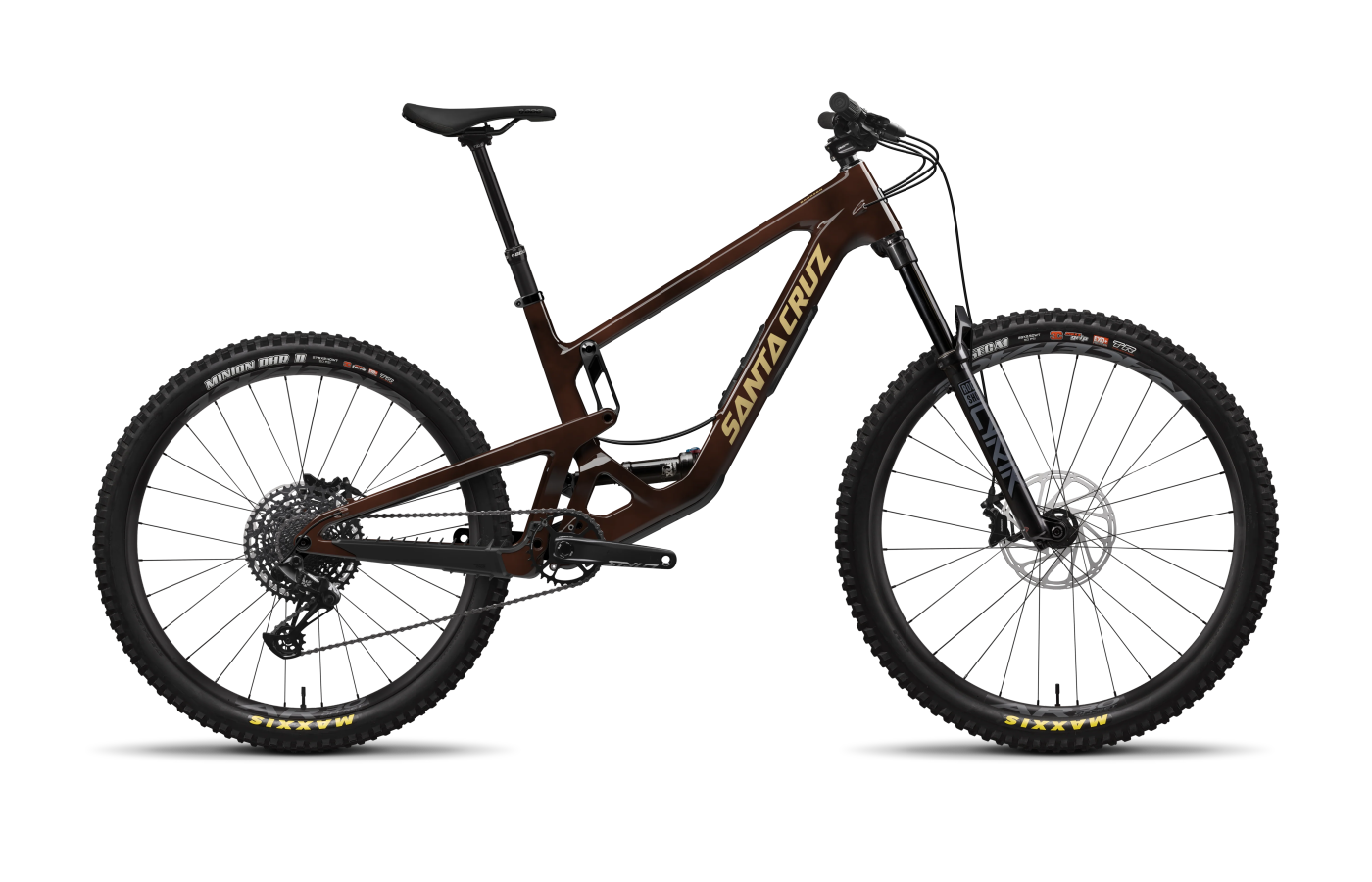
Bronson
The middle ground between these two — same brand, same mullet wheels, but with 150 mm of travel front and rear. The Bronson is what you'd buy if 130 mm feels timid and 170 mm feels like overkill.
Compare →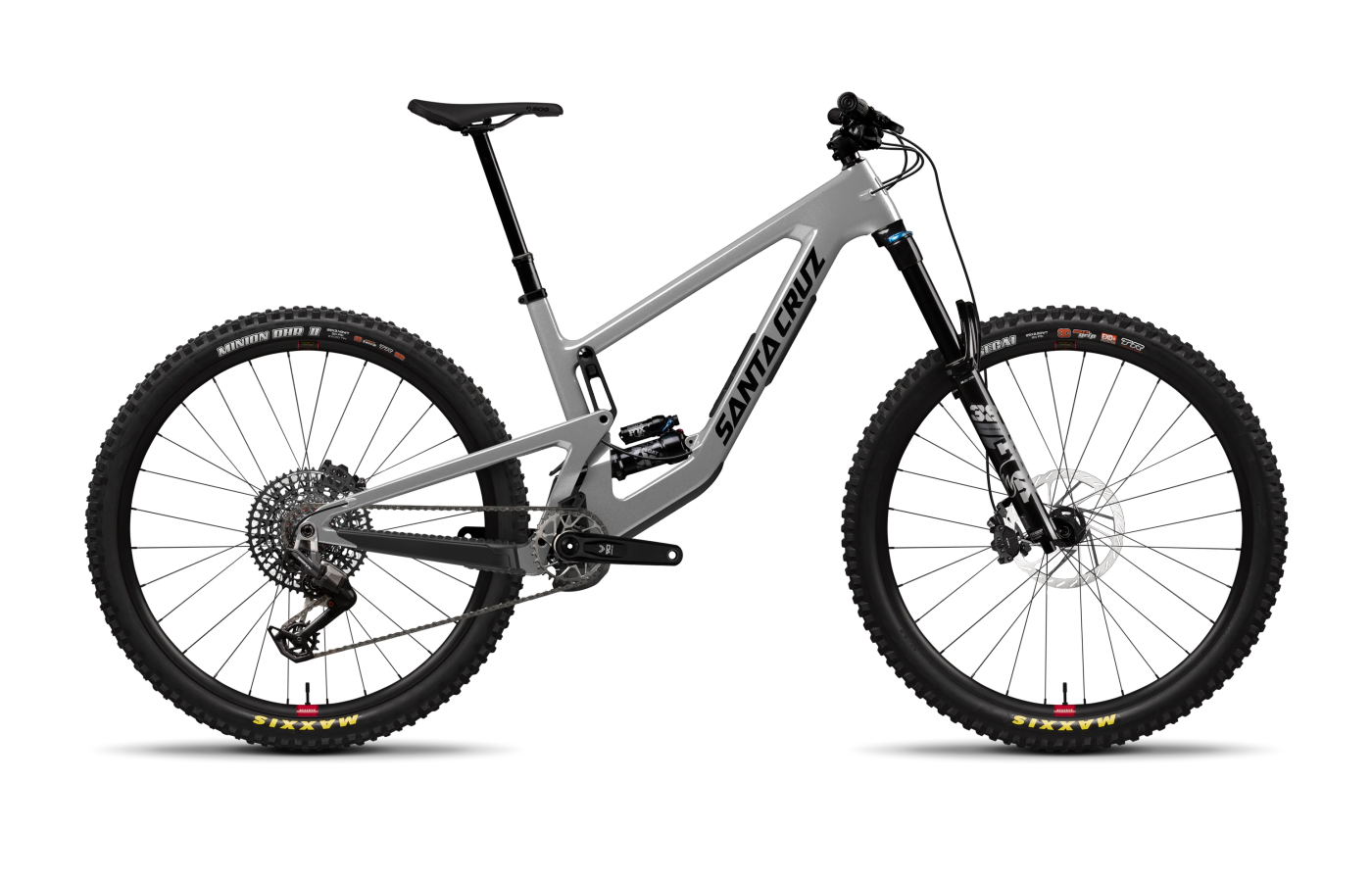
Megatower
Same 170 mm enduro mission as the Nomad, but with full 29-inch wheels for raw rollover and momentum. Pick this if you race enduro and want speed over the Nomad's playfulness.
Compare →Patrol
Transition's mixed-wheel enduro bike — matches the Nomad's gravity focus but uses a more linear, plush suspension character. Worth a look if you prefer a bike that sits deeper into its travel.
Compare →