Spartan
vsTroy
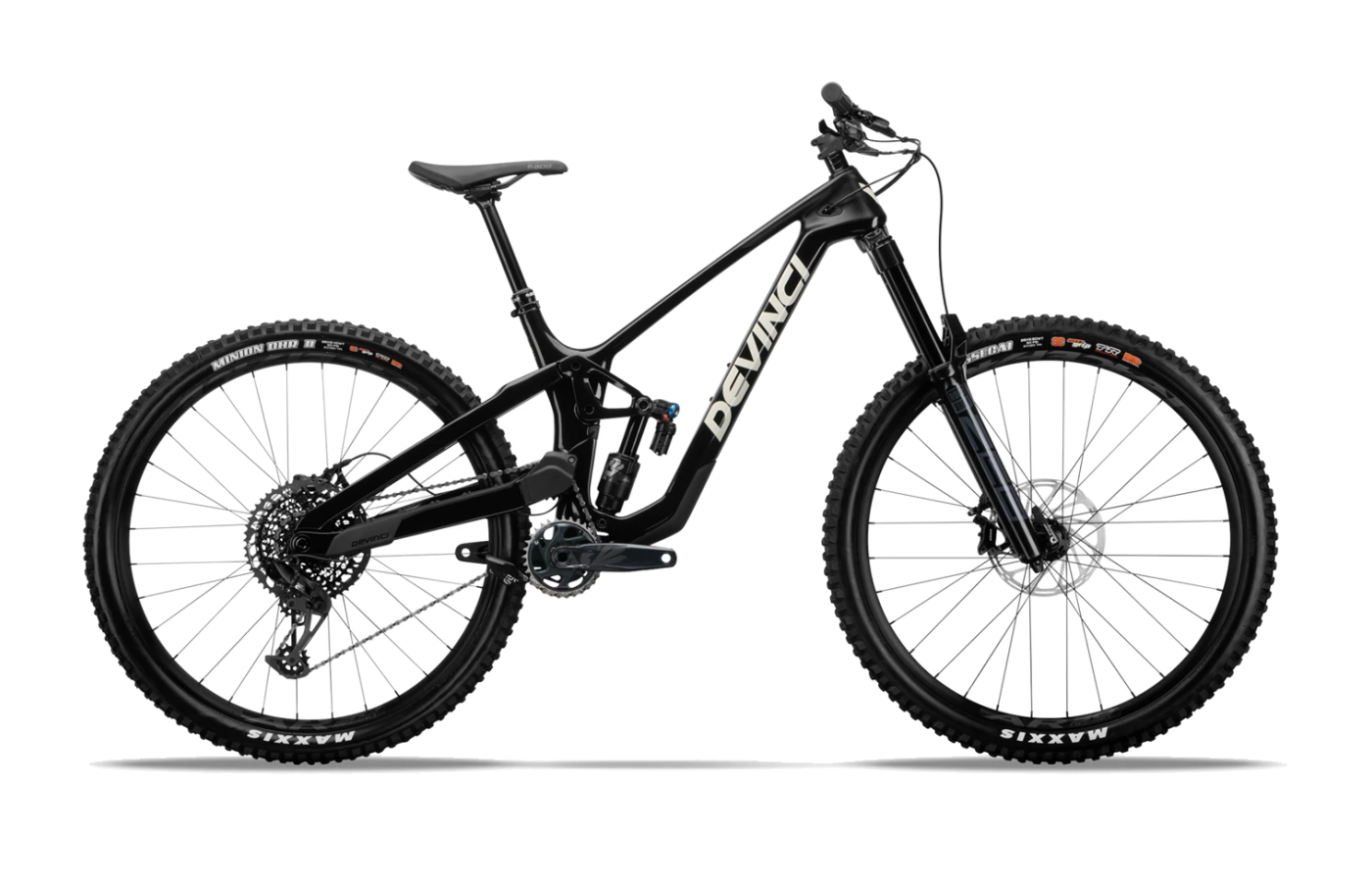
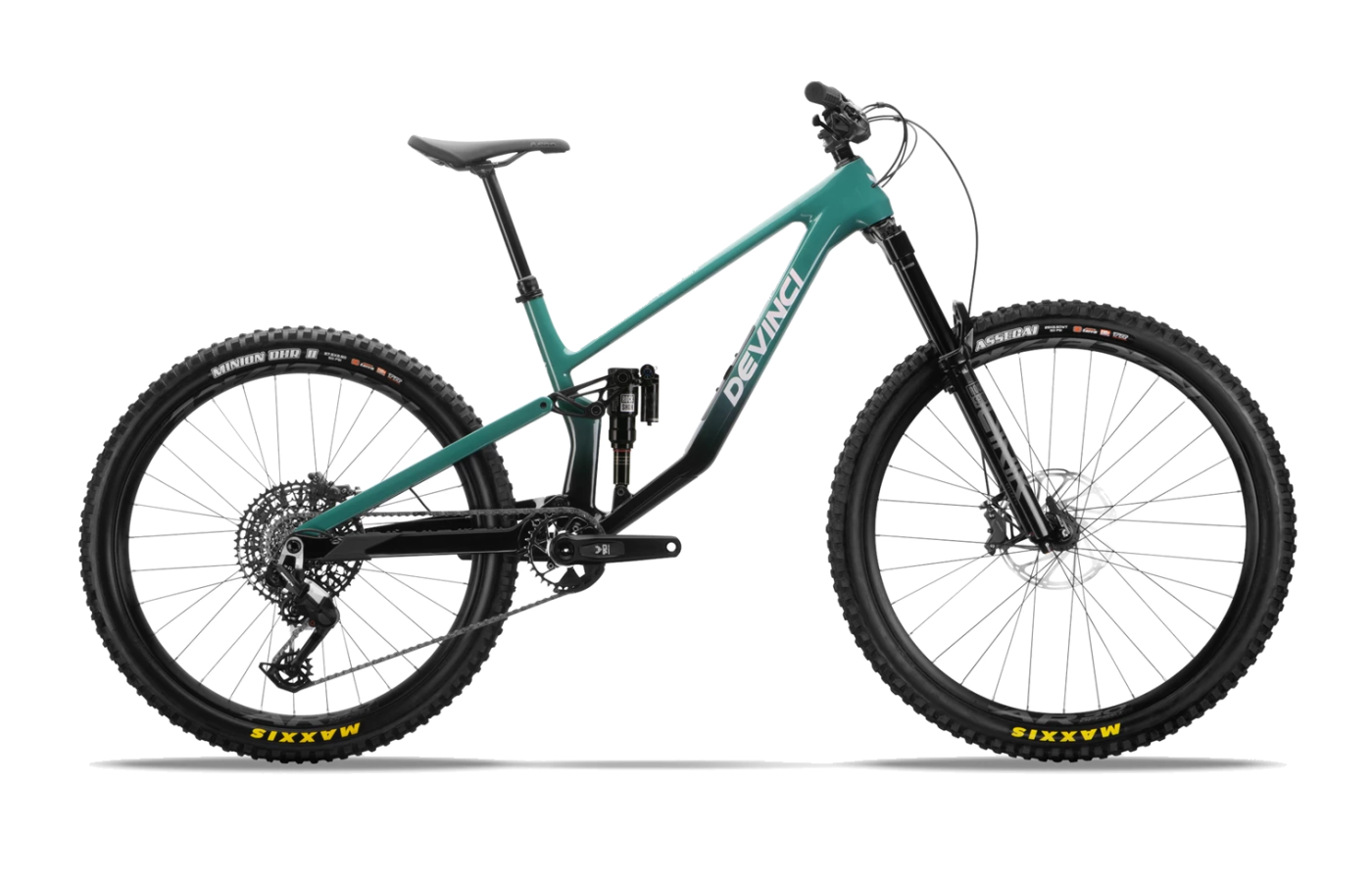
One brand, two answers to 'how rough is your trail?'
The Spartan is a high-pivot enduro plow built around an idler. The Troy is the do-everything trail bike that climbs back up the hill.
Spartan
- High-pivot composure — the rearward axle path lets the rear wheel move up and out of square-edged hits, devouring chatter where the Troy starts to dance.
- Race-ready spec out of the box — DoubleDown MaxxGrip tires on every build, Fox Float X2 Performance Elite shock at every price point.
- 180 mm fork option on the LTD build extends the bike's bias toward steep, gnarly terrain even further.
- Around 36 lb (16.3 kg) on the GX build — climbing is a project, not a pleasure.
- SuperBoost 157 rear spacing limits hub and wheelset compatibility down the road.
Troy
- Genuine all-day capability — 150/160 mm of well-tuned Split Pivot travel that climbs willingly and descends harder than the numbers suggest.
- Modern frame conveniences — SHED in-frame storage, threaded BB, UDH, standard 148 mm Boost spacing, MX-or-29 flip-chip.
- Made-in-Canada lifetime warranty on both alloy and carbon frames, with builds from $3,199 up to $7,499.
- Stock suspension tune runs linear — heavier or more aggressive riders will want a volume spacer to avoid harsh bottom-outs.
- Frame is rated for 160 mm forks only; running a 170 mm fork voids the warranty.
Editor’s analysis
Same Quebec factory, same Split Pivot DNA — radically different riding philosophies.
Both bikes wear the Devinci badge and use Dave Weagle's Split Pivot linkage, but the Spartan adds a high main pivot and an idler pulley to chase a rearward axle path. The Troy doesn't bother. It runs the simpler, lighter version of the same suspension and uses the saved weight to be a better climber. That single decision sets the entire tone of this comparison.
The Devinci Spartan is a 160 mm enduro race bike that asks you to commit. With 170 to 180 mm of fork, a 64.5-degree head angle, and SuperBoost 157 spacing, it's built to plow square-edged hits that would unsettle anything else. Reviewers consistently call it 'glued to the ground' through rock gardens and praise it for 'eating up the rough stuff.' The cost is heft — around 36 lb / 16.3 kg in size L — and a sloppier feel on mellow terrain. PinkBike said it 'can feel sluggish' on rolling trails; the bike wants gravity and rewards aggression.
The Devinci Troy is the Goldilocks counterpoint: 150 mm rear, 160 mm fork, a slacker 64-degree head angle, and a stock MX wheel setup with a flip-chip if you want full 29. The 5th-gen frame ships with SHED in-frame storage, a threaded BB, SRAM UDH dropouts, and a return to standard 148 mm Boost spacing — small things that make the bike easier to live with. Reviewers across Pinkbike, Freehub, Bike Rumor, and The Loam Wolf all reach for the same phrase: quiver killer.
Put another way: the Devinci Spartan is the bike you buy when your home trail is a chairlift descent and the climb is a tax. The Devinci Troy is the bike you buy when you ride the whole mountain — climb, descend, repeat — and want one rig that does all of it without complaint.
Where the builds differ.
Comparing our editor's-pick builds side-by-side. Winners highlighted row-by-row — lower price and weight, and the better-spec component, each mark a point.
Build variants & pricing
The Spartan starts at $6,199 and tops out at $8,399 — three carbon-only builds. The Troy spans $3,199 to $7,499 across seven builds, with both alloy and carbon frames in the mix.
Editor's picks compared here are the Spartan Carbon GX 12sp ($7,299) and the Troy Carbon Eagle 90 12s ($6,199) — both mechanical SRAM at a similar GX-class tier on full carbon. The ~$1.1k gap reflects platform pricing, not a spec downgrade on the Troy. Prices are current US MSRP.
How they fit, how they steer.
The fit algorithm sizes the Spartan a notch smaller (S, reach 445 mm) than the Troy (M, reach 460 mm) for the same rider — the Spartan runs a more generous reach within each size. Stack is comparable (621 vs 622 mm), and both share roughly 1207–1230 mm wheelbases.
Which size should I buy?
Both bikes are sized in S/M/L/XL with no overlap in label conventions, but the Troy reaches arrive ~5 mm shorter than the Spartan at every nominal size.
→These are starting points. Flexibility, riding style, and preferred position all shift the answer — if you’re between sizes, a professional fit beats a chart.
What the magazines said.
Published reviews from trusted cycling outlets. Click through for the full write-up.
Which one should you buy?
If your home trail is gnarly enough to justify an idler pulley, get the Spartan. If you want one bike to ride everything, get the Troy.
Spartan
If you spend weekends timing yourself on chunky technical descents and treat climbs as the price of admission, the Spartan is the sharper tool. The high-pivot composure and DoubleDown MaxxGrip rubber make it ready to race straight from the box.
Troy
If you ride the whole mountain in a day — pedaling up to descend, then doing it again — the Troy is the more complete bike. It climbs willingly, descends harder than its 150 mm suggests, and ships with conveniences (SHED storage, threaded BB, UDH) the Spartan doesn't bother with.
Questions buyers actually ask.
Short answers to the things we get emailed about most often.
01Which one climbs better?
The Devinci Troy, comfortably. The Troy carbon weighs around 33 lb / 15.05 kg in size M (GX AXS build), versus roughly 36 lb / 16.3 kg for the Spartan in size L. More importantly, the Troy doesn't carry an idler pulley — Devinci's own testing on the Spartan suggests idler drag is within the margin of error, but BikeRadar still reported it 'feels' draggier on long ascents thanks to noise and vibration.
The Troy also has a steeper effective seat tube angle (77.8° on a carbon medium versus 76.5–77.1° on the Spartan), which puts your weight over the cranks instead of out behind them on steep singletrack climbs.
02Which one descends harder?
The Devinci Spartan, by a meaningful margin. Its high-pivot Split Pivot layout creates a rearward axle path that lets the rear wheel get up and out of square-edged hits — the kind of feature you only really notice on full-commitment terrain. Pinkbike's Mike Kazimer described it as 'glued to the ground' on the North Shore.
The Troy is no slouch — reviewers found it 'planted' and 'sure-footed' on rough fast trails — but it's a 150 mm trail bike with a more conventional layout. On a sustained EWS-style descent, the Spartan is simply more bike.
03Why does the Spartan use SuperBoost 157, but the new Troy uses regular 148 Boost?
It's a generation thing. The Spartan HP launched in 2022 when SuperBoost was Devinci's preferred answer for stiffness on long-travel enduro frames. The 2025 Troy went the other way — back to standard Boost 148 mm — to improve hub and wheelset compatibility, since the SuperBoost ecosystem never really took off industry-wide.
For most buyers this matters at upgrade time. With the Troy you can swap in almost any modern Boost wheelset; with the Spartan, your options are narrower.
04Are the suspension setups easy to live with?
Spartan: The Fox Float X2 Performance Elite shock is praised for plushness, but several reviewers (BikeRadar in particular) found the factory Fox damper overdamped and ran both compression and rebound circuits fully open with extra sag. Setup rewards experimentation.
Troy: The stock RockShox tune runs linear — multiple reviewers noted it sits low in its travel and bottoms easily under harder riders. The fix is straightforward: add a volume spacer or run higher pressure. Once dialed, both bikes are excellent.
05What about wheel size?
The Spartan is full 29" only. The Troy ships in MX (29" front, 27.5" rear) but a flip-chip in the lower shock mount lets you convert to full 29" in either Hi or Lo geometry. With MX you're locked into Hi.
Mike Kazimer of Pinkbike specifically recommends running the full-29 setup on the Troy if you want a more all-rounder feel — the bigger rear wheel adds stability and helps the bike carry speed without much loss in maneuverability.
06Does the high-pivot idler on the Spartan need extra maintenance?
Yes. The idler runs on a bottom bracket-style bearing protected by a steel cover, and Devinci claims it'll outlast the front chainring by a factor of three — but BikeRadar emphasizes that 'keeping on top of drivetrain maintenance is crucial on any bike, but with an idler wheel system it's even more important.' Wet, muddy conditions especially demand regular cleaning and lubrication, otherwise the idler gets noisy and feels less free-spinning.
Nothing exotic — just a tighter drivetrain hygiene rhythm than the Troy needs.
07How are the warranties?
Both frames carry a lifetime warranty from Devinci on the original owner. One important caveat on the Troy: Devinci explicitly states the frame is rated for 160 mm forks only — running a 170 mm fork to push the bike toward enduro duty will void the warranty. The Spartan is the bike for that use case anyway.
08Which has better in-frame storage and modern frame features?
The Troy, easily. The 5th-gen frame includes Devinci's SHED in-frame storage compartment with a side-entry water bottle cage, a threaded BSA bottom bracket, SRAM UDH dropouts, and fully guided internal cable routing. The carbon Spartan also has a threaded BSA73 BB and frame protection, but no in-frame storage.
These aren't ride-feel features, but over years of ownership they add up.
Similar bikes
If your priorities don’t map cleanly onto either of these, one of these adjacent bikes probably fits better.
Altitude
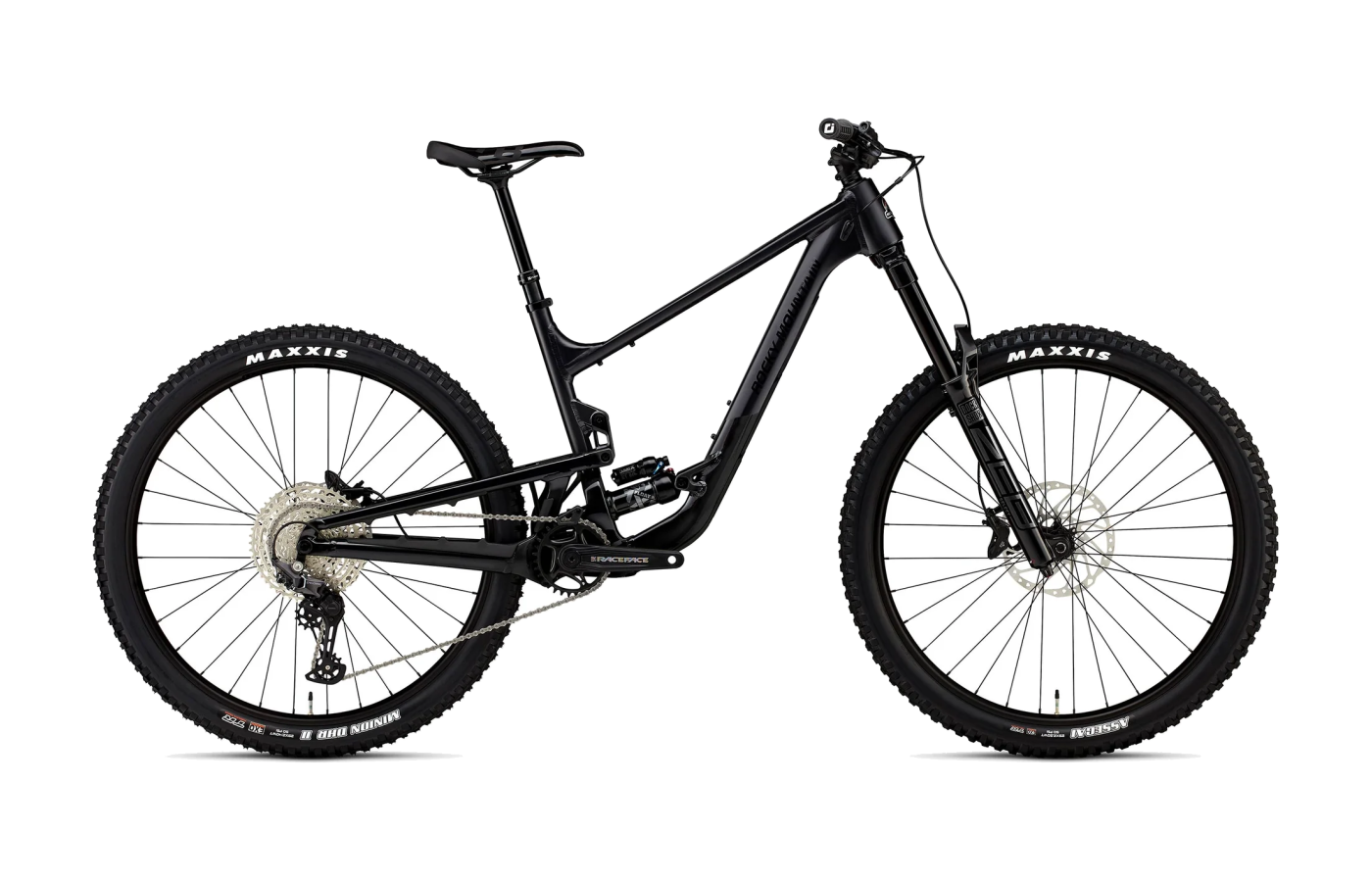
Rocky Mountain Altitude — the Spartan's most direct rival, with a similarly aggressive 160 mm enduro mission and the Ride-9 adjustable geometry system. If you want more dial-in than the Spartan's single flip-chip offers, this is the platform.
Compare →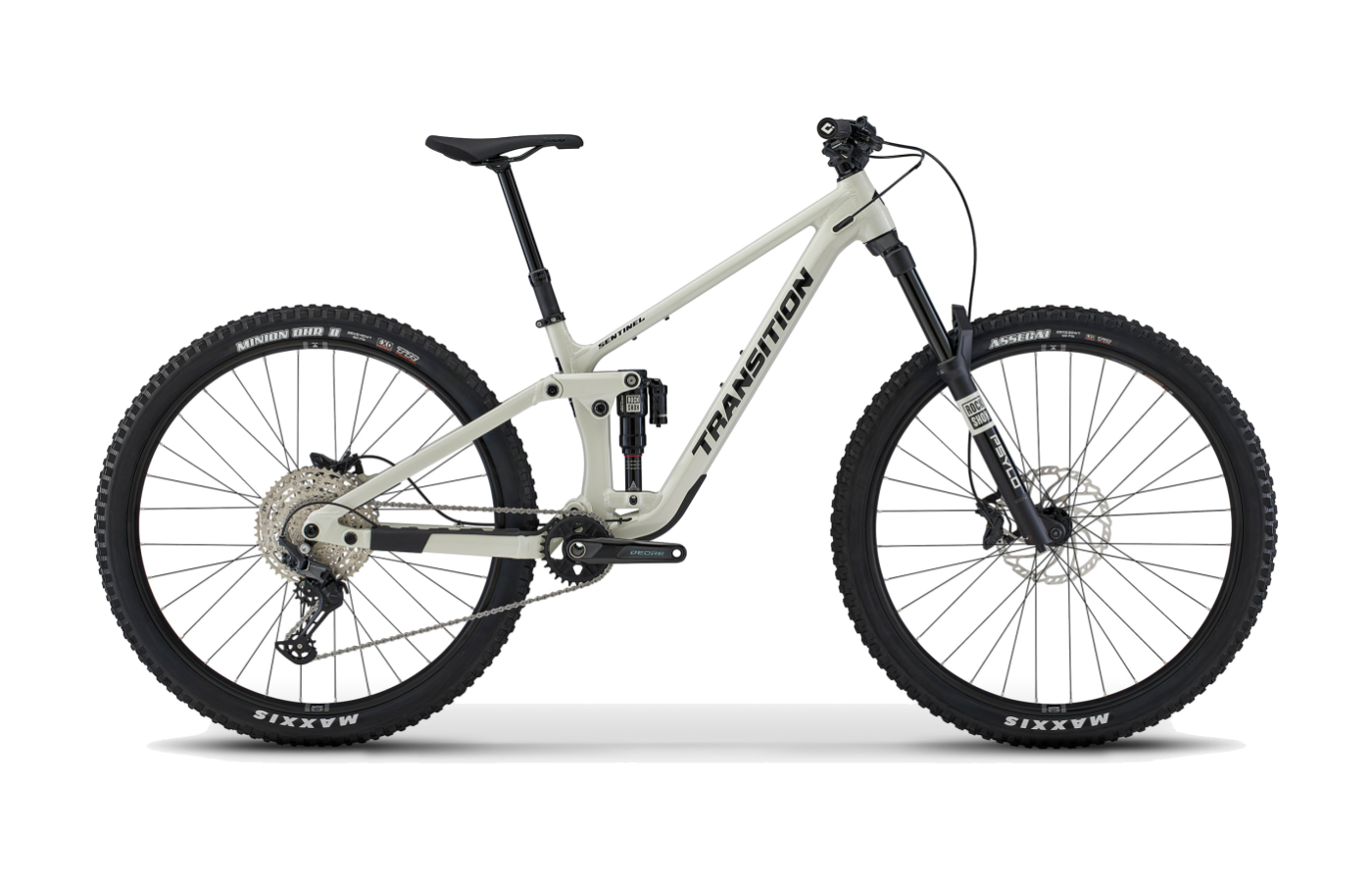
Sentinel
Transition Sentinel — a 150 mm trail-bike peer to the Troy with a similarly stable feel but a more traditional Horst Link layout and a full 29er setup. Easier to tune, fewer bells, equally capable.
Compare →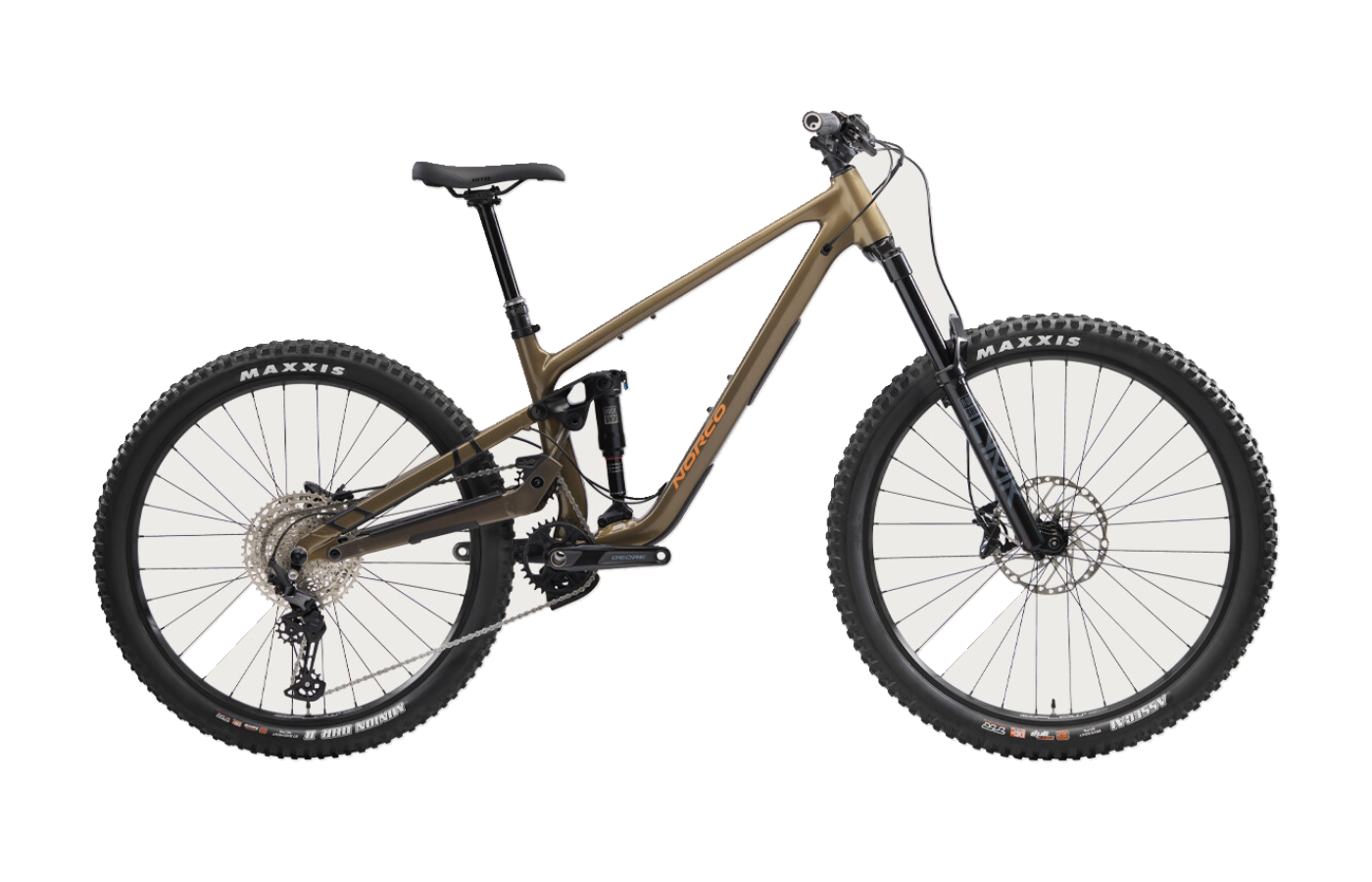
Sight
Norco Sight — another Canadian contender that uses a high-pivot design like the Spartan but in a 150 mm trail bracket closer to the Troy. A useful middle ground if you want high-pivot composure without the full enduro weight tax.
Compare →