Roadmachine
vsDogma X
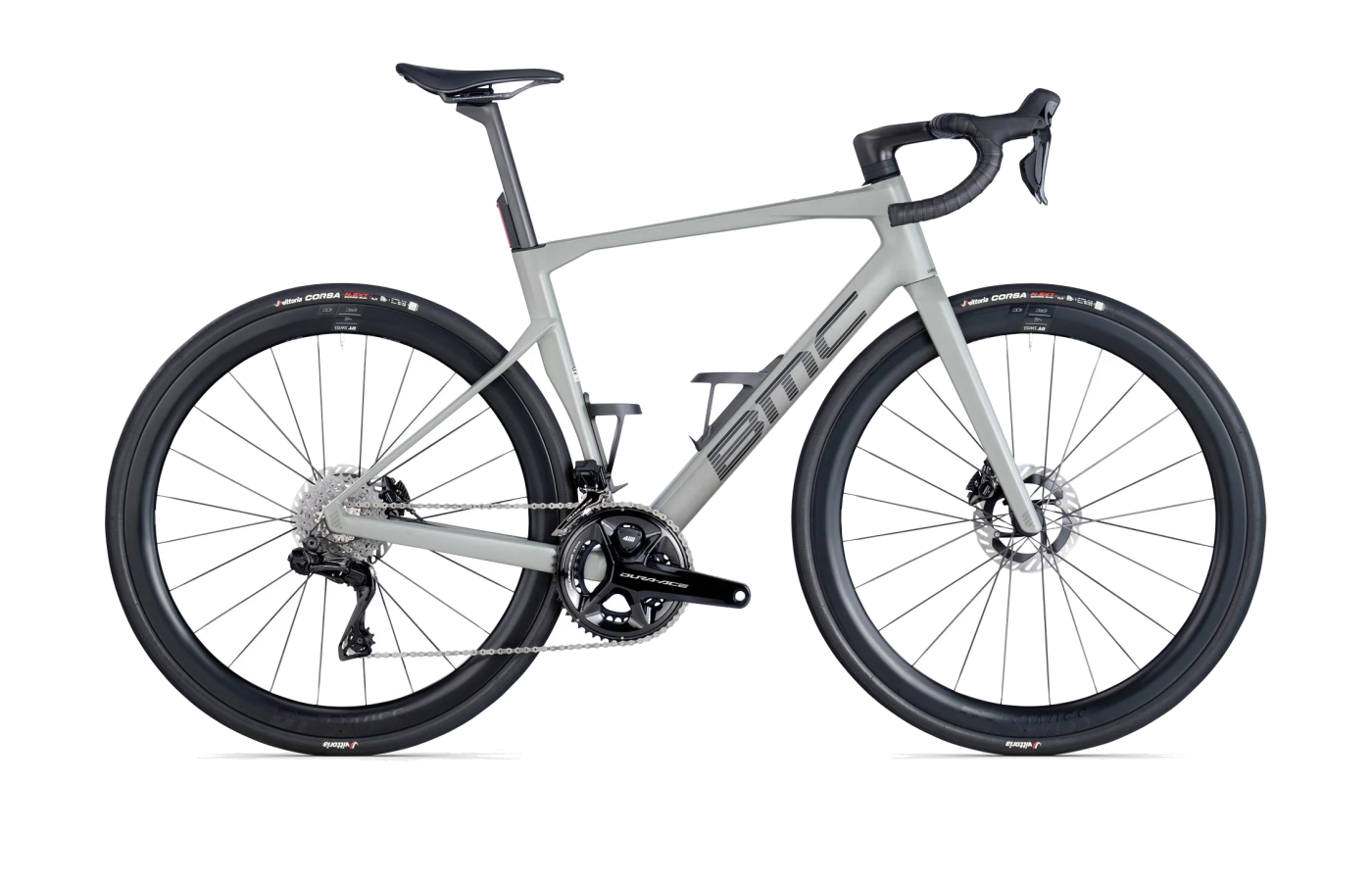
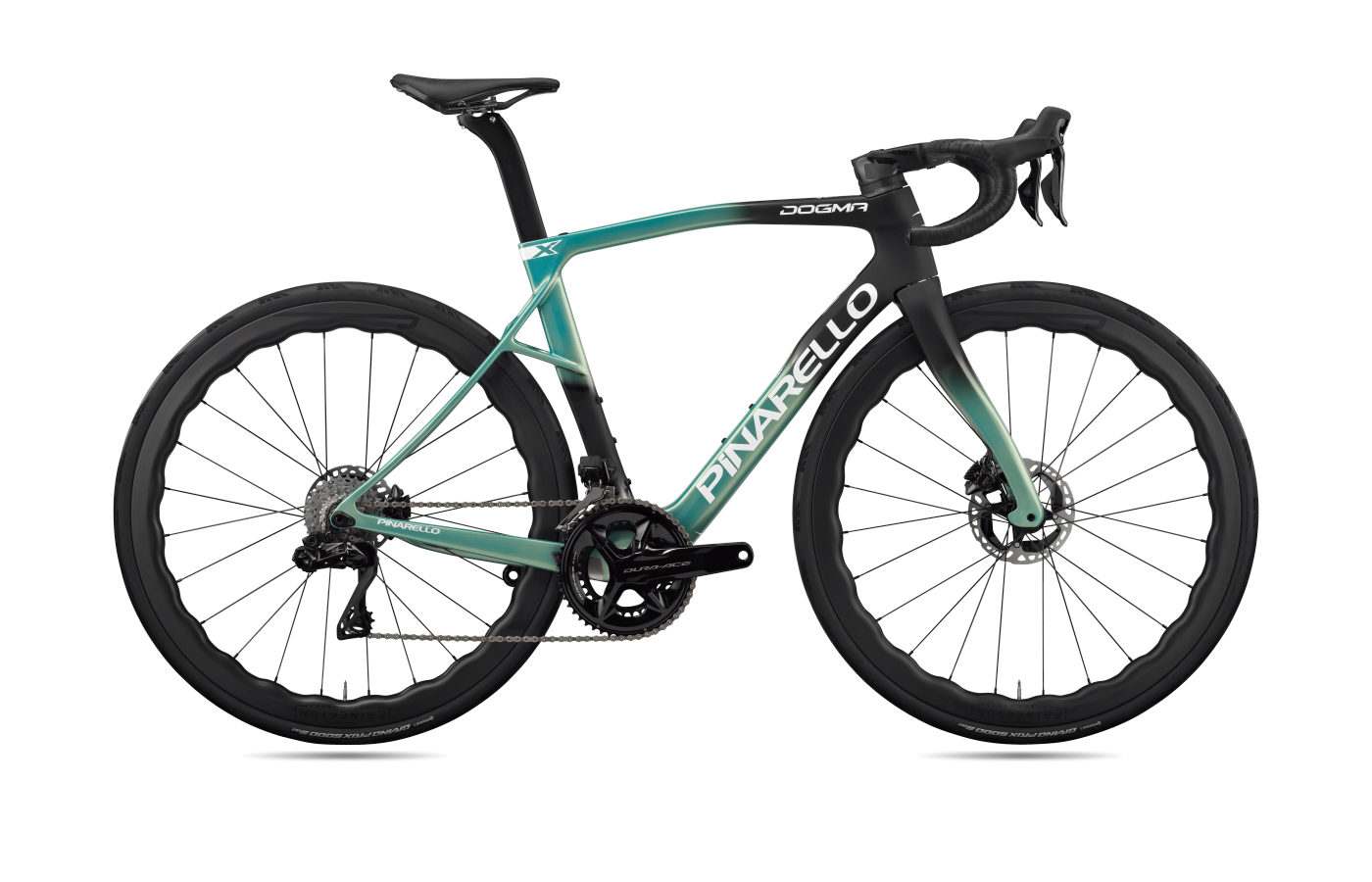
Two endurance bikes, two completely different price floors.
The Roadmachine starts at $3,299 and scales to a fully integrated flagship. The Dogma X only exists as a $15,500 superbike.
Roadmachine
- Wide build ladder — $3,299 entry up to $12,999 flagship, every drivetrain tier covered.
- 40 mm tire clearance — meaningfully wider than the Dogma X's 35 mm, opens up real all-road use.
- Integrated downtube storage and built-in StVZO rear light — practical features other endurance flagships skip.
- Frame weight (~963 g size 54) is heavier than the previous gen — not class-leading at the top of the range.
- Proprietary ICS Carbon Evo cockpit ships in one width per size; refit means a dealer swap.
Dogma X
- Toray T1100 1K carbon — the same flagship weave as the Dogma F race bike.
- Italian threaded bottom bracket — easier long-term maintenance than press-fit, no creak issues reported.
- Composed at speed — longer wheelbase and 422 mm chainstays make it exceptionally planted on fast descents.
- $15,500 floor with no mid-tier or budget builds — Dura-Ace Di2 or Red AXS only.
- Tire clearance caps at 35 mm; stiff Most Talon cockpit transmits more front-end buzz than the rear's compliance suggests.
Editor’s analysis
Both promise endurance comfort without race-bike punishment. One sells you the philosophy at every price point. The other only sells the top shelf.
The BMC Roadmachine is the rare endurance platform with a full price ladder — $3,299 with mechanical 105 at the bottom, $12,999 with Dura-Ace Di2 at the top, every drivetrain tier in between. The frame architecture is the same story on every rung: 40 mm tire clearance, kinked seatstays providing roughly 20 mm of seatpost deflection, integrated downtube storage, an integrated rear light. BMC's pitch is functional: comfort engineered into the carbon, not bolted on with elastomers, available at a price most serious riders can stretch to.
The Pinarello Dogma X is the opposite proposition. Two builds, both $15,500 — Dura-Ace Di2 or SRAM Red — and that's the platform. The frame is Toray T1100 1K carbon, the same weave as the WorldTour Dogma F race bike, with X-shaped seatstays designed to flex laterally while killing high-frequency buzz. Tire clearance tops out at 35 mm, five less than the BMC. There is no entry point. You buy the Dogma name, the Dogma carbon, and the Italian threaded BB — or you don't buy.
On the road they ride differently for reasons their geometries make plain. At our compared sizes, the BMC's 415 mm chainstays are 7 mm shorter than the Pinarello's 422 mm, and its seat tube angle is steeper (74.2° vs 73.7°) — the BMC puts you over the pedals with a tighter rear end, which translates to the responsive snap reviewers consistently note out of the saddle. The Dogma X sits you further back on a longer rear triangle, prioritizing planted high-speed stability over jump. Reviewers describe the Dogma X as a "slightly detuned race bike"; the Roadmachine reviewers describe as "magnificently balanced." Both are accurate.
Put another way: the Roadmachine is the bike you buy when you want endurance comfort and want options about what you spend on it. The Dogma X is the bike you buy when the brand and the look matter as much as the geometry — and when $15,500 doesn't end the conversation.
Where the builds differ.
Comparing our editor's-pick builds side-by-side. Winners highlighted row-by-row — lower price and weight, and the better-spec component, each mark a point.
Build variants & pricing
The Roadmachine spans nearly $10k of range across 7 builds. The Dogma X is two flagship builds, both at $15,500.
Prices are current US MSRP. Pinarello does not offer the Dogma X with anything below Dura-Ace Di2 / SRAM Red — if you want a sub-$10k endurance bike with this geometry pedigree, the BMC is the only entry to this comparison.
How they fit, how they steer.
Compared at the fit-picked sizes for each: BMC size 51, Pinarello size 500. Stack lands within 9 mm (550 vs 559), reach is nearly identical (379 vs 379.4). The differences live downstream — chainstays (415 vs 422 mm) and seat angle (74.2° vs 73.7°).
Which size should I buy?
Size recommendations based on stack, reach, and effective top tube. The Pinarello's 11-size range gives finer granularity than the BMC's 6 sizes.
→These are starting points. Flexibility, riding style, and preferred position all shift the answer — if you’re between sizes, a professional fit beats a chart.
What the magazines said.
Published reviews from trusted cycling outlets. Click through for the full write-up.
Which one should you buy?
If you want endurance comfort with a real price ladder and 40 mm clearance, get the BMC Roadmachine. If you want the Dogma name and the matching prestige, get the Dogma X.
Roadmachine
If your endurance riding includes back-road tarmac that turns to packed gravel without warning, and you'd rather not spend $15k to get there, this is the better tool. The 40 mm clearance, downtube storage, and full price ladder make it the more useful endurance platform — full stop.
Dogma X
If you've always wanted a Dogma but know you can't ride the Dogma F race position for six hours, this is your bike. You're paying for the brand, the carbon weave, and the planted high-speed feel — and you're paying with full intent. Composed, fast, and unmistakable.
Questions buyers actually ask.
Short answers to the things we get emailed about most often.
01Which is more comfortable?
Both are exceptionally compliant, but they get there differently. The BMC Roadmachine uses kinked seatstays and a D-shaped seatpost for roughly 20 mm of vertical seatpost travel, plus 40 mm tire clearance to drop pressures. Reviewers including BikeRadar called it "the most compliant endurance bike I have ever ridden."
The Pinarello Dogma X uses its X-Stays rear triangle and 35 mm tire clearance for a similar effect — though several reviewers (Cycling Weekly, Cyclingnews) noted the stiff Most Talon cockpit transmits more front-end buzz than the compliant rear suggests. Net: comparable rear comfort, slight edge to the BMC up front.
02What's the maximum tire clearance?
BMC Roadmachine: 40 mm officially — wide enough that BMC builds the gravel-spec Roadmachine X on the same frame with 34 mm WTB Byways.
Pinarello Dogma X: 35 mm officially. Most reviews tested 32 mm Pirelli P Zero or Continental GP5000s.
If you regularly ride packed gravel or rough chip-seal where 35 mm starts to feel underbiked, the BMC is the only choice between these two.
03Which climbs better?
Roughly even, with neither built as a pure climber. Reviewer-measured weights put the BMC Roadmachine 01 Two at 7.15–7.46 kg depending on size, and the Dogma X around 7.18–7.6 kg. The BMC's 415 mm chainstays and steeper 74.2° seat tube angle give it a slightly more responsive feel out of the saddle.
The Dogma X is, per its reviewers, surprisingly strong on long seated climbs — Cycling Weekly recorded a Strava PB on a 6.5 km shallow climb on rough surface, beating their record on a dedicated climber, attributing it to compliance reducing fatigue.
04Why is the Dogma X so much more expensive?
Pinarello sells the Dogma X exclusively in flagship trim — Dura-Ace Di2 or SRAM Red eTap AXS, both at $15,500 — with the same Toray T1100 1K carbon as the WorldTour Dogma F race bike. There is no Ultegra, 105, or Force AXS build of the Dogma X.
The BMC, by comparison, scales: the same frame architecture (with a slightly heavier non-01 carbon layup at lower tiers) is available from $3,299 with mechanical 105 up to $12,999 with Dura-Ace Di2. If you want this geometry pedigree without the flagship price, BMC is the only route.
05How serviceable are the integrated cockpits?
The BMC ICS Carbon Evo is a one-piece carbon cockpit with stealth internal routing. Stem length adjustments (10 mm) and one spacer of height change are possible without cutting hoses; up to 30 mm of hose can be stored to prevent rattles. BikeRadar called it "one of the easier systems to work on" among integrated designs. Bar width is fixed per frame size, though, so refit means a dealer swap.
The MOST Talon Ultra Light on the Dogma X is similarly proprietary and similarly integrated. Cycling News noted T20 Torx bolts and a recessed seatpost clamp require specific tools — adjustments are doable but plan ahead.
06Bottom bracket: press-fit or threaded?
BMC Roadmachine: press-fit (BB86 standard).
Pinarello Dogma X: Italian-threaded — and reviewers consistently flag this as a long-term ownership advantage. Threaded BBs are easier to service, less prone to creaking, and last longer between rebuilds. If you keep bikes for many years and do your own maintenance, this is a real point in the Dogma's favor.
07Does either include a power meter?
Yes on both, with caveats. The BMC Roadmachine 01 Two ships with a 4iiii Precision Gen3+ dual-side power meter integrated with the Dura-Ace cranks. The 01 One adds a SRAM Red AXS Power Meter on the SRAM build.
The Pinarello Dogma X Dura-Ace Di2 typically ships with a power meter on the Dura-Ace build, but Cycling Weekly noted the Campagnolo Super Record variant ($16k+) shipped without one — confirm with your dealer for the exact build year and configuration.
08Which is the better all-road bike?
The BMC, by a real margin. Its 40 mm clearance, integrated downtube storage, fender mounts on lower-tier frames, and the fact that the gravel-focused Roadmachine X uses the same frame all point to genuine all-road intent.
The Dogma X is, by Pinarello's own positioning, an endurance road bike — "more than capable of riding off-road" but not designed for it. Its 35 mm clearance and fully integrated road-bike geometry make it a fast tarmac bike with some compliance, not an all-road platform.
Similar bikes
If your priorities don’t map cleanly onto either of these, one of these adjacent bikes probably fits better.
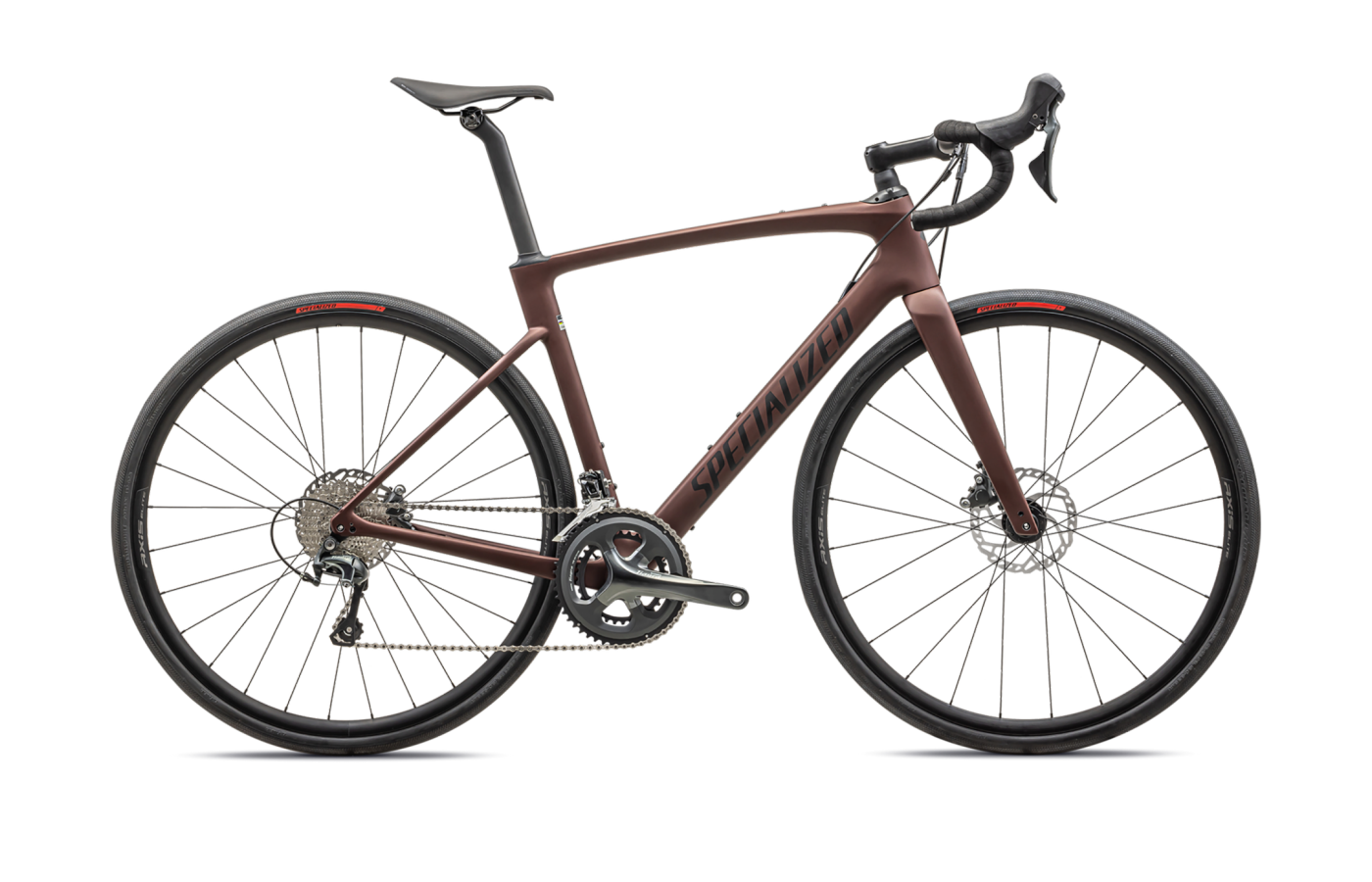
Roubaix
Specialized's endurance flagship pairs Future Shock active front-end suspension with an aero-endurance frame — more front-end damping than either of these bikes can match if your roads are genuinely punishing.
Compare →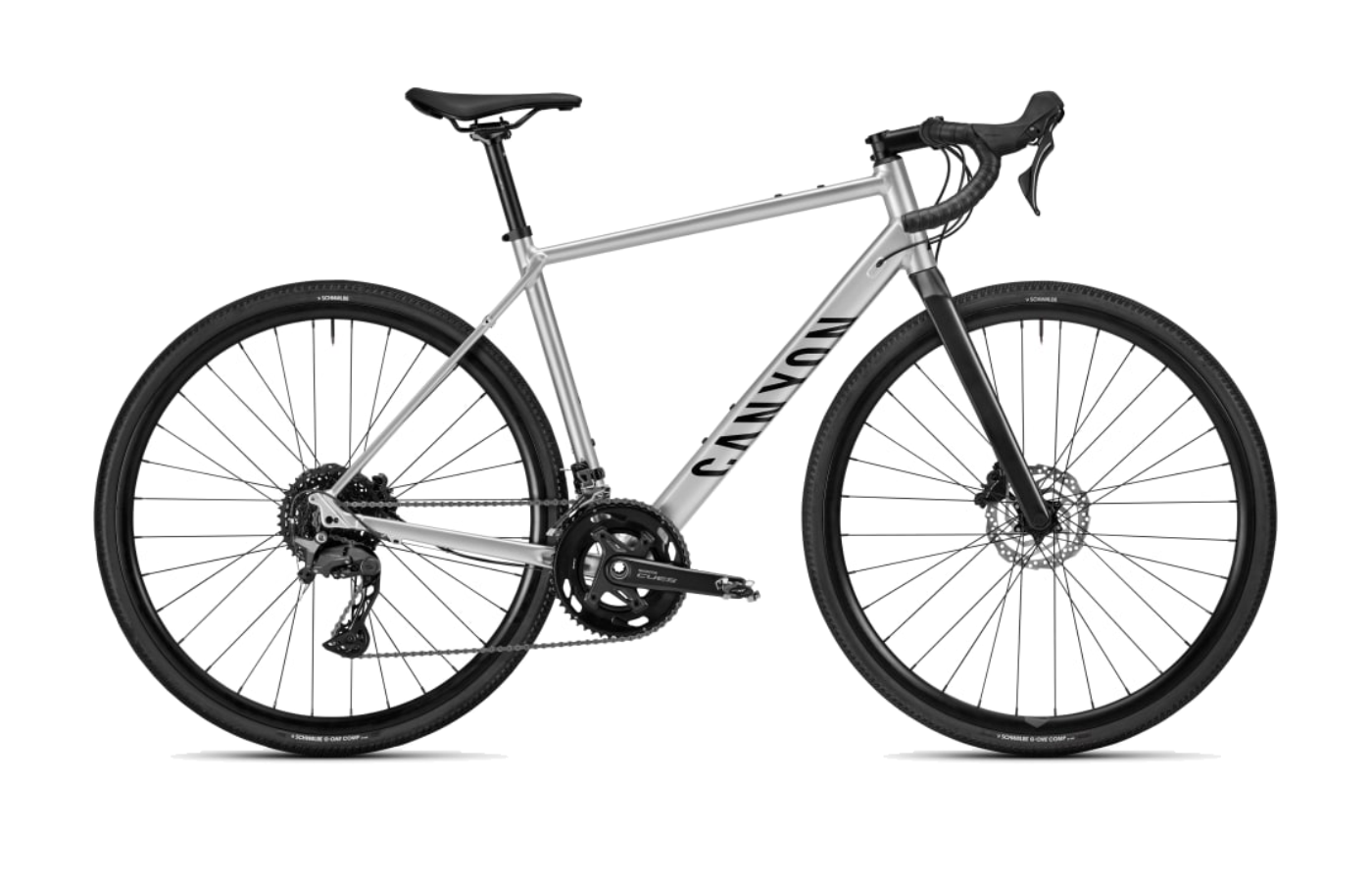
Endurace
Canyon's endurance platform delivers similar geometry and comfort intent at a fraction of the price — direct-to-consumer, no dealer demos. The pragmatic pick if the $13k+ price tags here feel absurd.
Compare →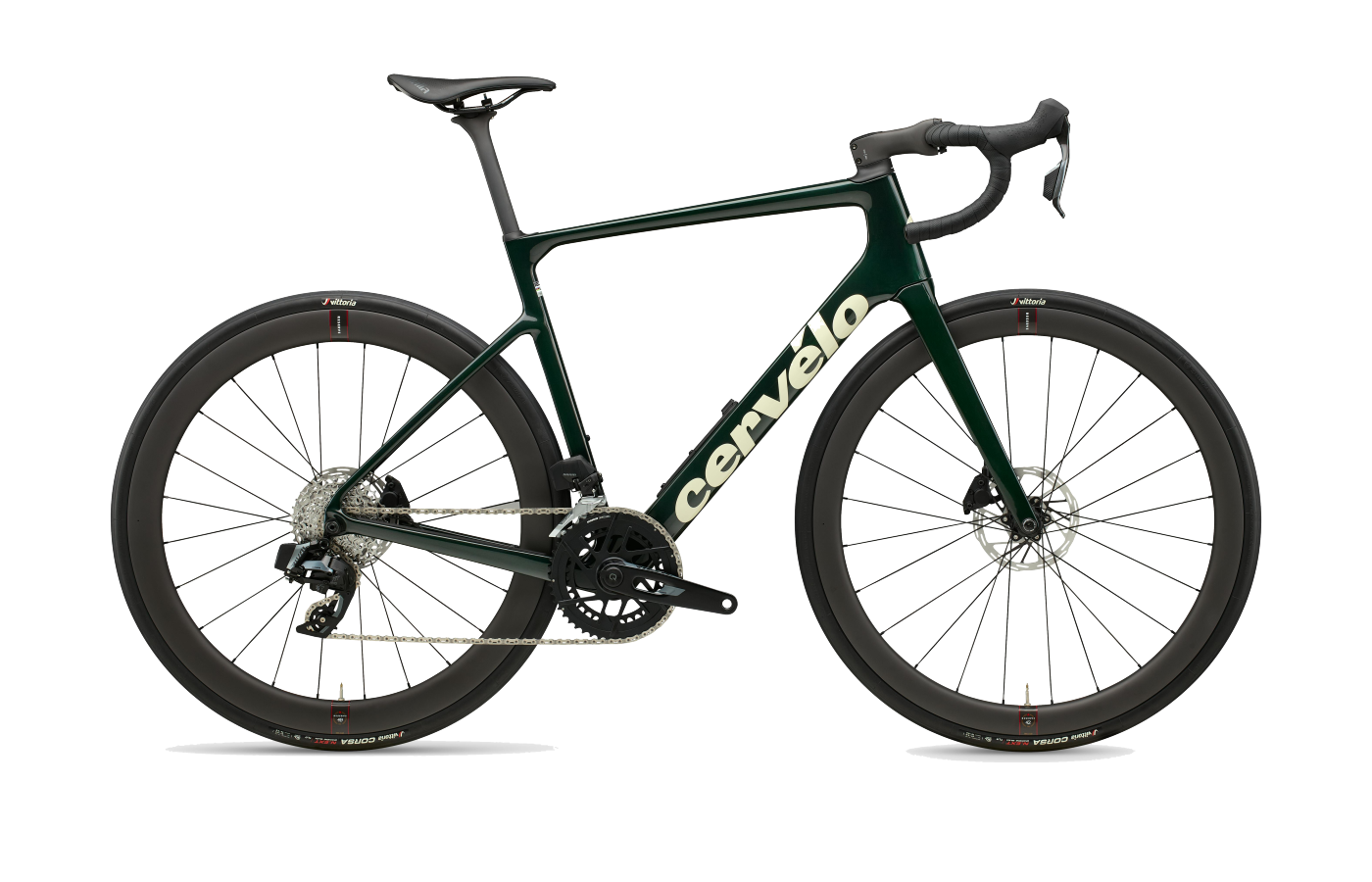
Caledonia-5
Cervélo's all-road race bike — sharper-edged than either the Roadmachine or Dogma X, with race-bike geometry plus 34 mm clearance. Buy it if you want all-road tire room without giving up the racy front end.
Compare →