Roadmachine
vsCaledonia-5
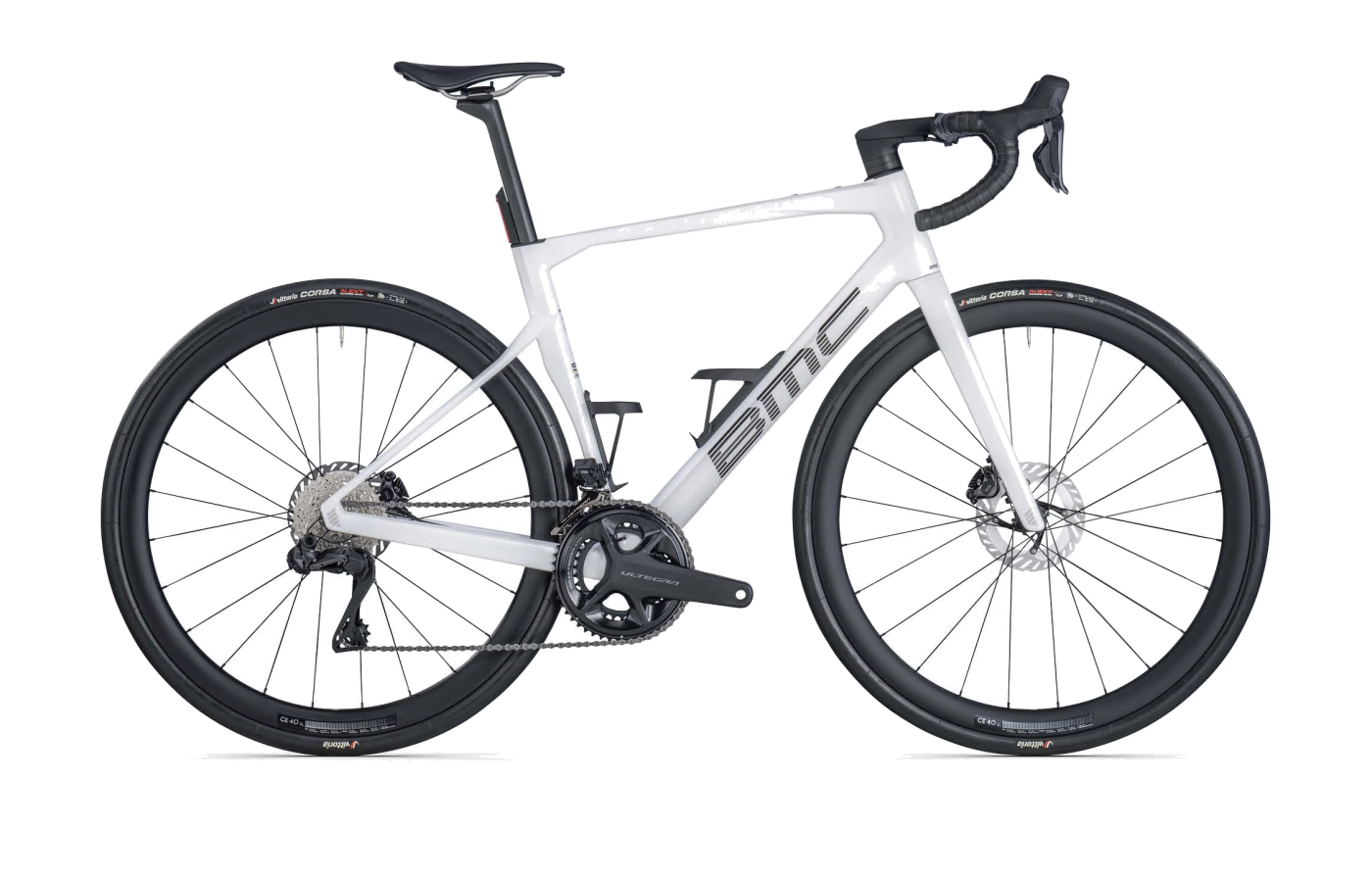
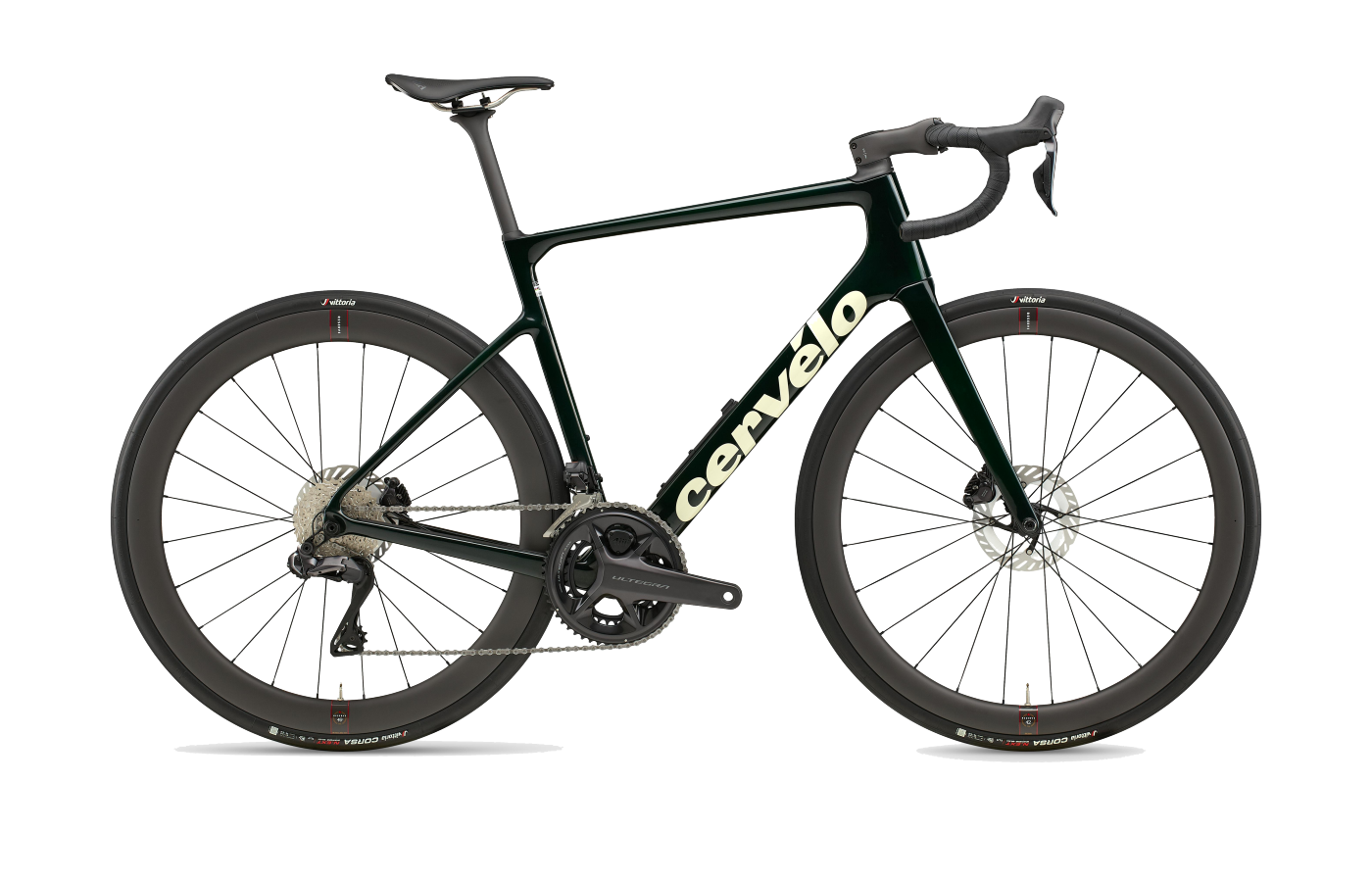
Two endurance bikes drawn from opposite ends of the category.
The BMC Roadmachine pushes endurance toward all-road. The Cervélo Caledonia-5 keeps it pinned to the pavement.
Roadmachine
- 40 mm tire clearance — widest in the category, with real range for light gravel and broken pavement.
- Class-leading rear compliance — BMC's redesigned seat tube delivers ~20 mm of seatpost deflection without a suspension gimmick.
- Wide build ladder starting at $3,299 with 105 — the cheapest path into a modern endurance carbon frame at this level.
- Frame isn't light at a claimed 963 g — pricier rivals weigh less for similar money.
- ICS Carbon Evo cockpit ships in one width per size; changing bar width means a dealer swap.
Caledonia-5
- Race-bike stiffness — stiffened downtube and BB transmit power without the BMC's softer feel under a sprint.
- Power meters standard across almost every SRAM AXS build, including the entry-level Rival.
- Two-piece carbon cockpit (ST31 stem + HB13 bar) — easier to swap stem length than the BMC's one-piece system.
- 36 mm tire clearance trails the BMC by 4 mm — less margin if you regularly ride beyond chip-seal.
- No 105 or sub-$7k build — the Caledonia-5 starts at $7,400 with Rival AXS.
Editor’s analysis
Both bikes carry a 5 in their model name and a downtube full of snacks — but they want very different rides out of you.
On paper they look like siblings: redesigned-for-2024 endurance carbon, integrated downtube storage, dropped seatstays, premium-tier groupsets across the range. Both even ship with Vittoria Corsa rubber and aim at the same mid-pack racer who's grown tired of being beaten up by aero bikes. Look closer and they're chasing different rides.
The Roadmachine is the more transformed bike. BMC bumped tire clearance from 33 mm to 40 mm, claims 27% more vertical compliance from a redesigned seat tube/seatstay junction, and added a full ICS Carbon Evo one-piece cockpit that reviewers repeatedly single out for soaking up road buzz. Multiple testers describe an initial "flat tire" sensation over rough pavement — that's the rear end doing its job. Pair it with the integrated rear light and 40 mm-friendly geometry and you get a bike that's two-thirds road, one-third light gravel.
The Caledonia-5 stayed truer to its 2020 brief. Tire clearance crept up from 34 mm to 36 mm — a real jump, but well short of the BMC's gravel-curious 40. The downtube got stiffer, not more compliant. The frame still leans on the aero tube shapes Cervélo borrows from the S5 and R5, and the geometry sits slightly more aggressive: 0.6° steeper head tube and ~5 mm less trail than the BMC at our compared sizes. It's the choice for a rider who wants endurance fit without endurance softness.
Put it bluntly: the Roadmachine wants to be the only road bike in your garage. The Caledonia-5 wants to be the bike you reach for on a fast group ride that might end on chip-seal. Same category, different center of gravity.
Where the builds differ.
Comparing our editor's-pick builds side-by-side. Winners highlighted row-by-row — lower price and weight, and the better-spec component, each mark a point.
Build variants & pricing
BMC stretches from $3,299 to $12,999 across two carbon grades; Cervélo runs $7,400–$12,750 on a single premium frame.
Editor's pick is the Ultegra Di2 build on each side — apples-to-apples drivetrain, both ~$8.5k. If your budget is under $7k, the Caledonia-5 isn't an option; the Roadmachine has 105 Di2 and 105 mechanical builds in that range.
How they fit, how they steer.
BMC sized 51 and Cervélo sized 54 are the fit-picked sizes for a 5'8" rider on each bike — different size labels, comparable cockpit. The Caledonia-5 sits 5 mm taller in stack with effectively identical reach; head tube is 0.6° steeper and trail is 5.2 mm shorter, making the Cervélo the quicker-steering of the two.
Which size should I buy?
Size suggestions are stack-, reach-, and effective-top-tube-driven. BMC labels its sizes in centimeters but uses a different break point than Cervélo — same rider, different number on the seat tube.
→These are starting points. Flexibility, riding style, and preferred position all shift the answer — if you’re between sizes, a professional fit beats a chart.
What the magazines said.
Published reviews from trusted cycling outlets. Click through for the full write-up.
Which one should you buy?
If you ride enough mixed surface to want 40 mm tires and a hyper-compliant rear end, get the BMC. If you want a stiffer, more pavement-focused endurance bike with race-bike DNA, get the Cervélo.
Roadmachine
If your weekend route is half good tarmac and half cracked back-road or hardpack, the Roadmachine is the more capable bike. The 40 mm clearance and class-leading rear compliance turn rough surfaces into background noise — and the integrated rear light and downtube storage are quietly useful on long days.
Caledonia-5
If you mostly ride pavement and want a bike that still feels eager when the group ride goes hard, the Caledonia-5 is the sharper tool. Stiffer under power, quicker steering, and easier to live with thanks to a two-piece cockpit — at the cost of less tire room and a higher floor price.
Questions buyers actually ask.
Short answers to the things we get emailed about most often.
01Which has more tire clearance?
The BMC Roadmachine, by a meaningful margin. BMC bumped the new generation to 40 mm of official clearance, up from 33 mm on the previous Roadmachine — that's gravel-bike territory and lets you drop in 35–38 mm tires without thinking about it.
The Cervélo Caledonia-5 moved to 36 mm for the second generation (up from 34 mm). It's enough for fast all-road tires and broken pavement, but the BMC's extra 4 mm matters once you actually leave the asphalt.
02Which is more comfortable on rough roads?
The Roadmachine, fairly clearly. BMC engineered the new rear triangle around a kinked-seatstay/D-shaped-seatpost combination that BMC R&D claims delivers up to ~20 mm of seatpost deflection — a 27% increase in compliance over the previous generation. Multiple reviewers describe an initial "flat tire" sensation when you first hit broken pavement; that's the rear end doing its job.
The Caledonia-5 is also comfortable for an endurance bike, but Cervélo explicitly stiffened the downtube and bottom bracket on the new generation to keep the bike feeling responsive. It'll smooth out chip-seal happily; it won't make 30 mm of broken back-road feel like fresh tarmac the way the BMC does.
03Which feels better for fast group rides?
The Caledonia-5. Cervélo borrows aero tube shapes from the S5 and R5 race platforms, and the stiffer downtube means power gets to the rear wheel without the slight "softness under attack" reviewers flag on the Roadmachine. At our compared sizes, the Cervélo also has a steeper head tube (72° vs 71.4°) and ~5 mm less trail, so it turns in a touch quicker.
The BMC isn't slow — multiple reviewers called it "surprisingly fast" — but BMC openly said weight and aero weren't priorities for this Roadmachine. If you race or sprint regularly, the Cervélo is the sharper instrument.
04How much does each weigh?
The Roadmachine 01 Two (top Shimano build) comes in around 7.37 kg in size 58 per Granfondo's measurements, with BMC's claimed frame weight at 963 g (size 54). Reviewers noted the frame got slightly heavier than the previous generation — a trade-off for the new compliance and storage.
The Caledonia-5 Red AXS lands at 7.54 kg in size 56 per Granfondo, with Cervélo's claimed frame weight at 995 g (size 56, painted). The two bikes are close enough on the scale that build choice (wheels especially) matters more than frame weight.
05Both have downtube storage — which one's better?
Both work, with mild gripes on each. BMC's door is a turn-dial that reviewers describe as "easy" and well-sealed; the cavity holds a multi-tool, tube, CO₂ and a snack bar.
Cervélo's flip-lock hatch holds the same kind of small kit but several reviewers noted it's fussier — it requires specific bottle cages to open properly and can be a hassle to repack with cold hands. Neither will fit a full-size mini-pump or a large gravel-sized tube.
06What about the integrated cockpits — are they a hassle?
BMC ships the high-end 01 builds with the ICS Carbon Evo one-piece cockpit. It's a favorite of reviewers for ergonomics and front-end damping, but it's offered in one bar width per size — changing width means a dealer swap and a new cockpit. Stem length adjustments within ±10 mm don't require re-cutting hoses.
Cervélo uses a two-piece carbon setup (ST31 stem + HB13 bar) on the Caledonia-5, even on the top builds. It's less sleek-looking but materially easier to live with — swapping stem length is a normal shop job.
07Can either take fenders?
Yes on both, with caveats. BMC's lower-tier Roadmachine builds (the non-01 frames — "One," "Two," "Three") have dedicated fender mounts. The 01 frames are tested compatible with clip-on fenders rather than carrying mounts.
Cervélo offers full-coverage mudguards as an accessory; with them fitted you can still run up to 34 mm tires on the Caledonia-5.
08Which is the better value?
Depends on your budget. Under $7,000 the BMC wins by default — it's the only one of the two with builds in that range, dropping all the way to $3,299 for the 105 mechanical "Three."
Around $8,500 the bikes line up almost exactly: Roadmachine 01 Four at $8,299 vs Caledonia-5 Ultegra Di2 at $8,950. Both Shimano Ultegra Di2, both premium-carbon frames. The Cervélo includes a power meter you'd otherwise add to the BMC, which closes most of the price gap.
At the flagship, the Roadmachine 01 Two ($12,999, Dura-Ace Di2) and Caledonia-5 Dura-Ace Di2 ($12,500) sit within $500 of each other — both expensive, both feature-loaded.
Similar bikes
If your priorities don’t map cleanly onto either of these, one of these adjacent bikes probably fits better.
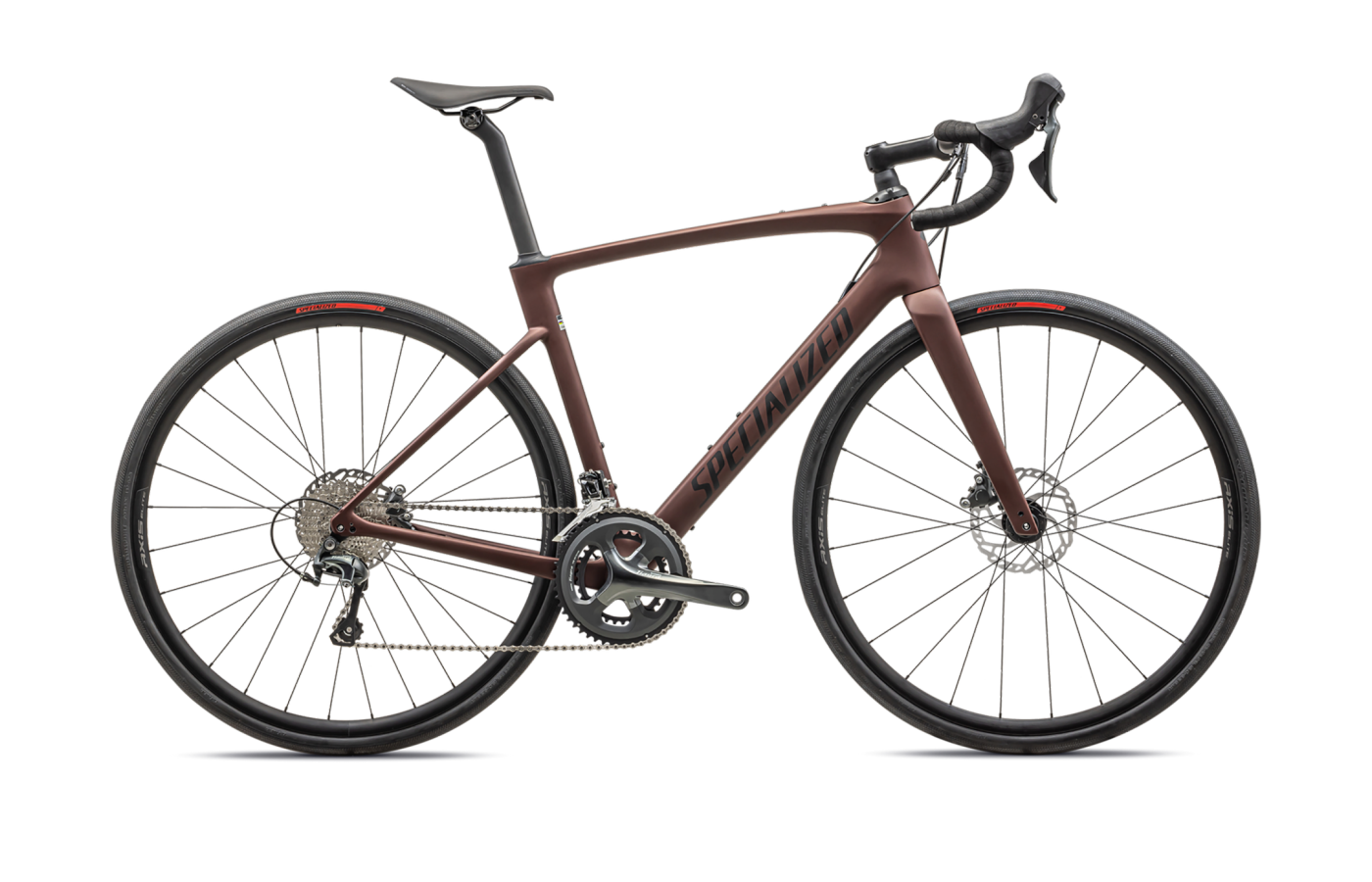
Roubaix
The Specialized Roubaix takes the comfort fight further with active Future Shock front-end suspension — more damping than either of these bikes can offer at the bars. If front-end vibration is what fatigues you most, it's the answer.
Compare →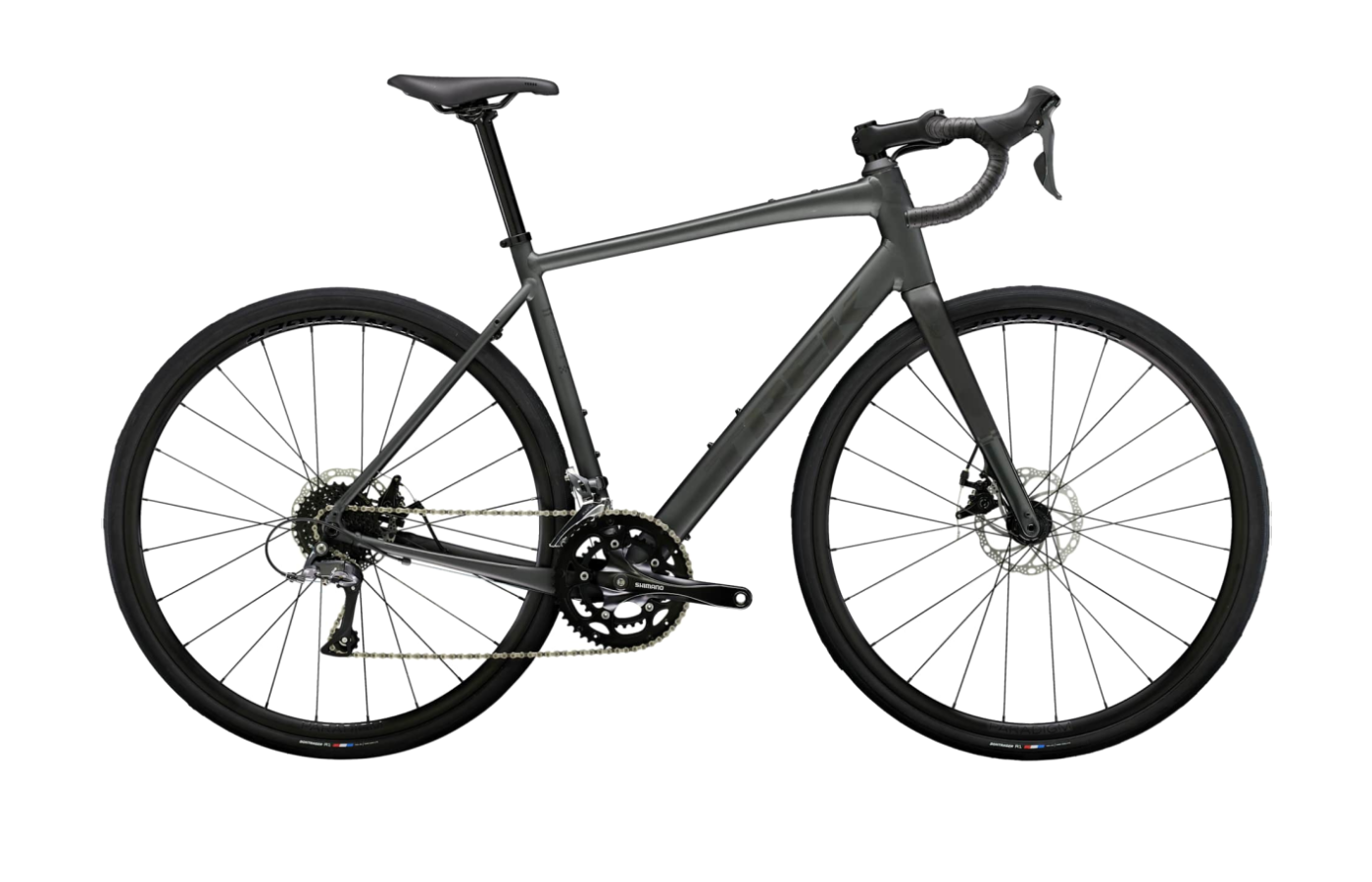
Domane
Trek Domane pioneered downtube storage in this segment and now opens to 38 mm of clearance with the IsoSpeed decoupler smoothing the rear. Less agile than the Caledonia-5, more conventional than the Roadmachine.
Compare →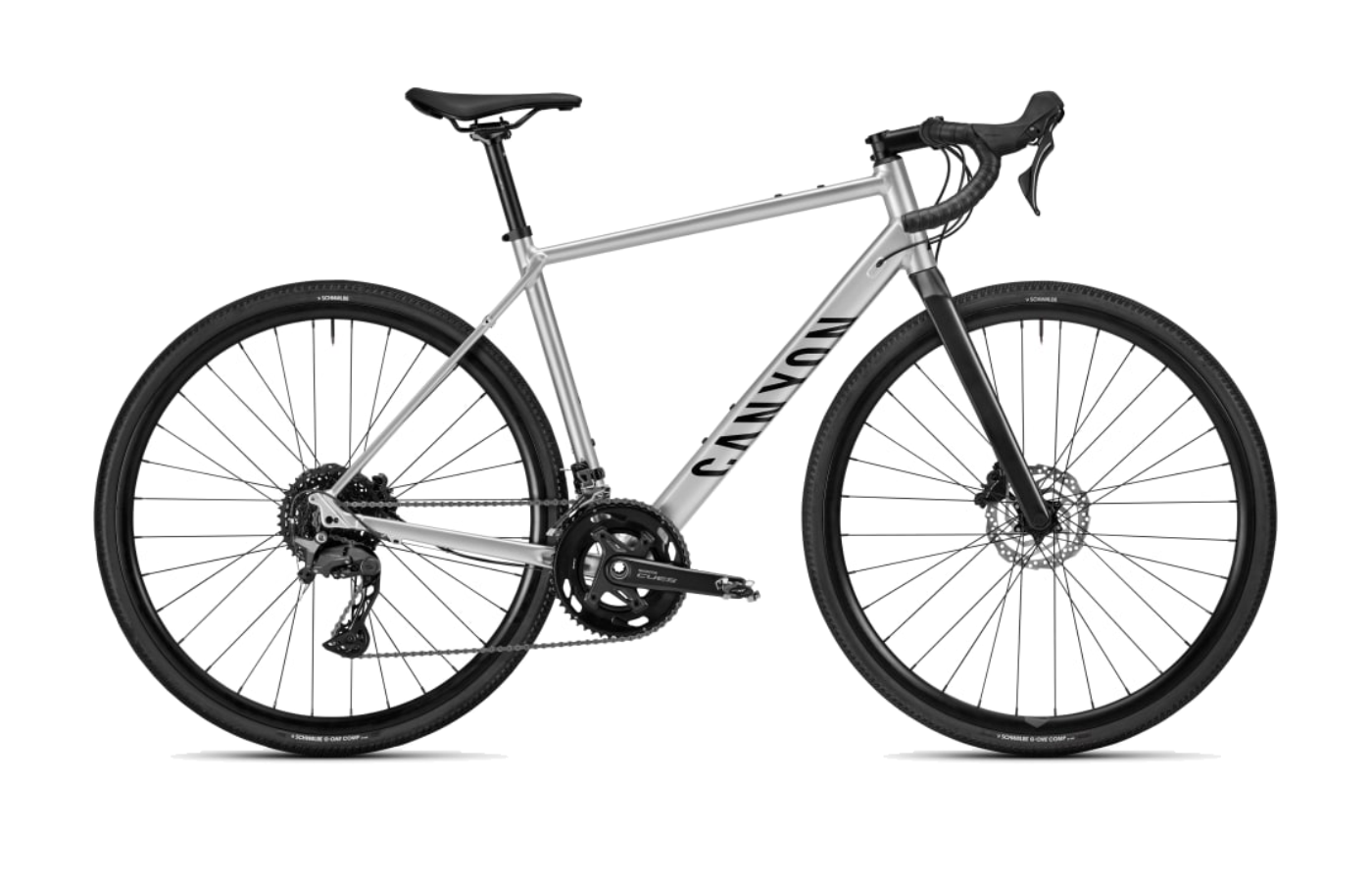
Endurace
Canyon Endurace is the value pick — similar high-stack endurance geometry and a leaf-spring seatpost that mimics the Roadmachine's compliance at roughly 30% less money. Direct-to-consumer means no dealer demos.
Compare →