Roadmachine
vsCaledonia
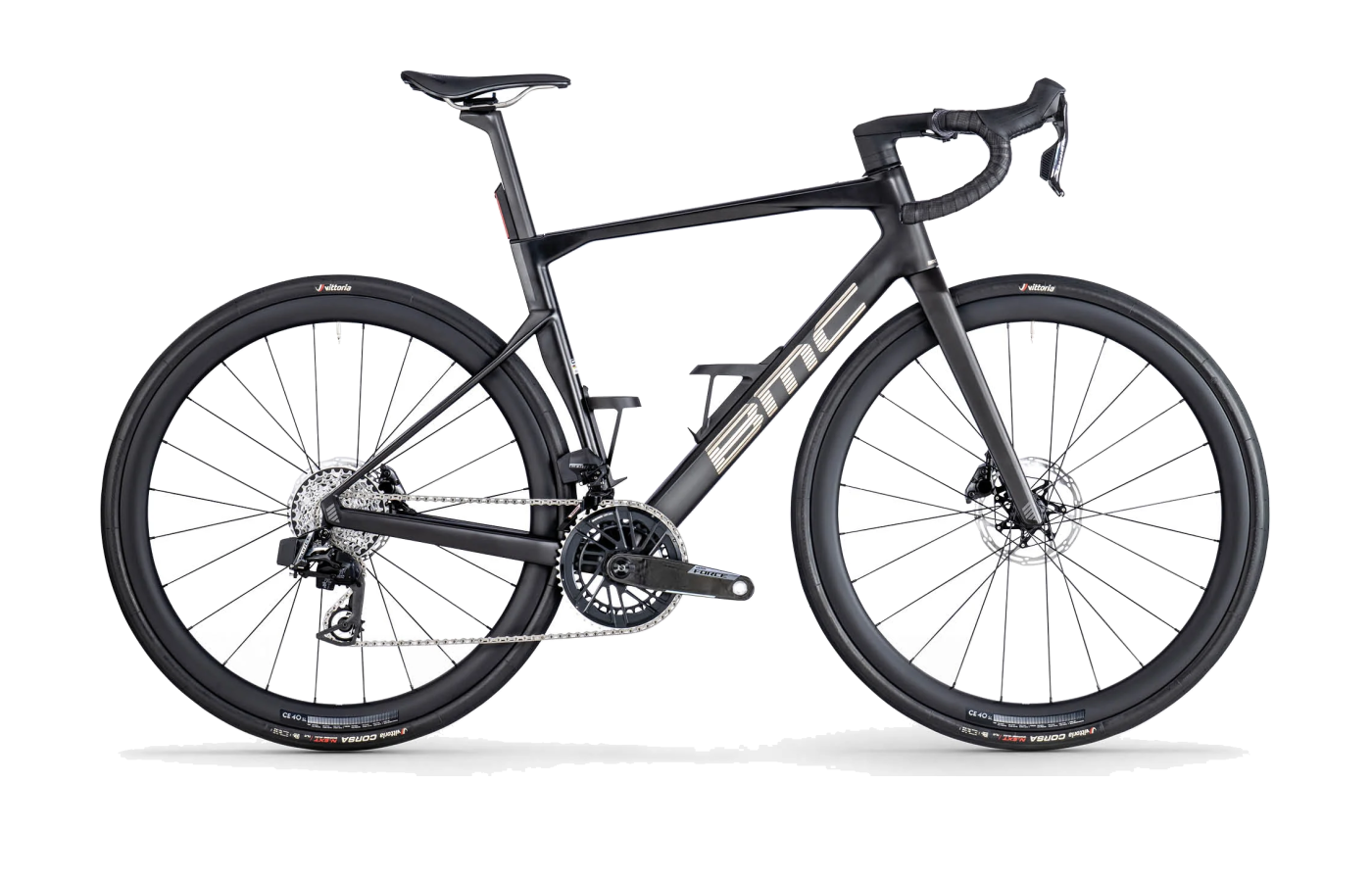
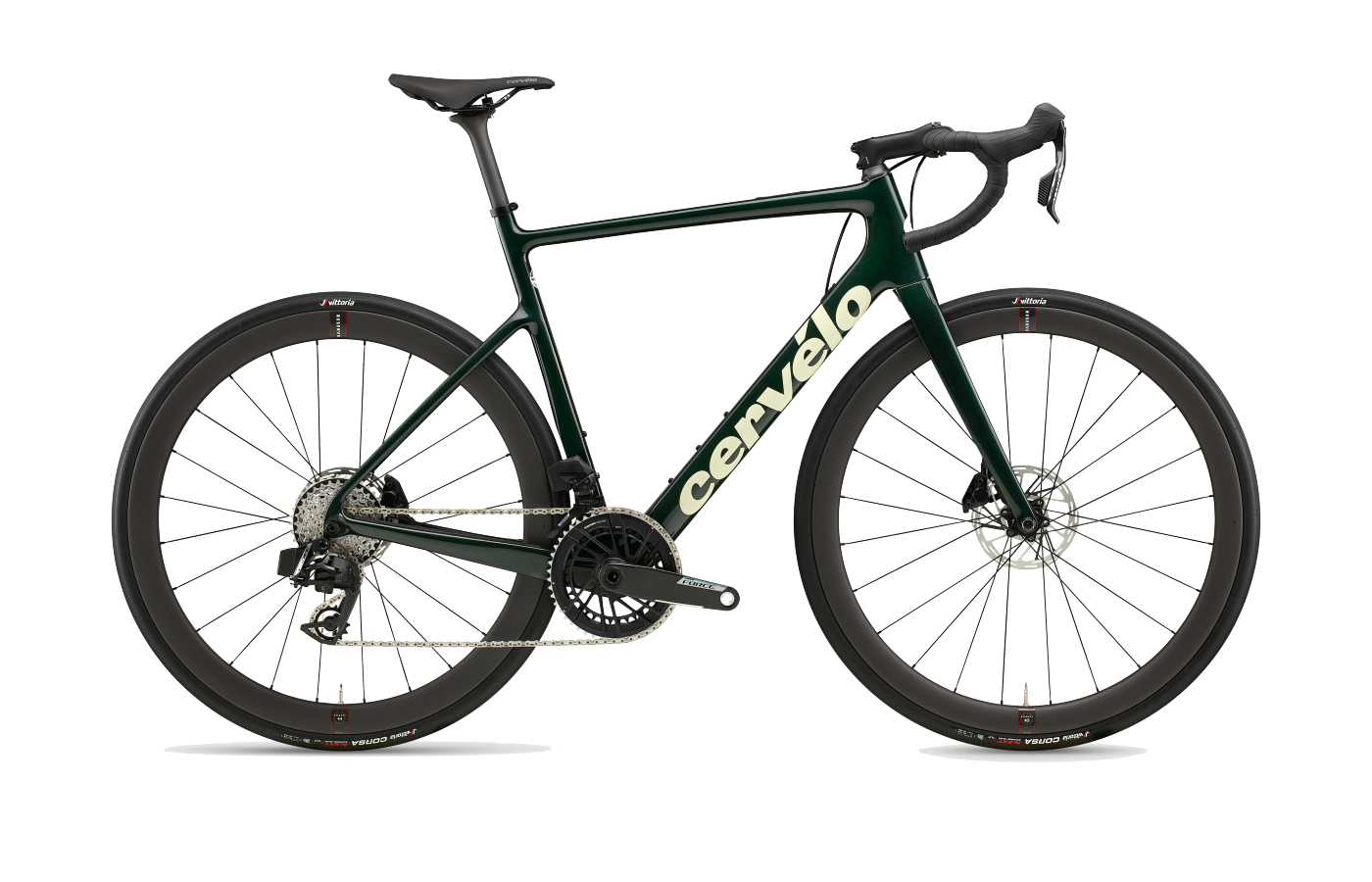
Two endurance bikes, two definitions of comfort.
The Roadmachine engineers compliance into the carbon. The Caledonia keeps the frame stiff and lets the tires do the soaking up.
Roadmachine
- 40 mm tire clearance — the widest in the endurance-road segment, opening the door to packed-gravel detours without a second bike.
- Frame-engineered compliance — kinked seatstays and a D-shaped seatpost give roughly 20 mm of vertical travel, no shock or elastomer required.
- Integrated downtube storage and a built-in rear light come standard on every build, top to bottom.
- Proprietary one-piece cockpit makes fit changes a dealer-level job — single bar width per frame size.
- Heavier and pricier than the Caledonia at every tier — the entry point still starts above $3,000.
Caledonia
- Workshop-friendly build — round 27.2 mm seatpost, standard stem, external cable routing means home maintenance and travel are easy.
- Sharper handling DNA — Cervelo borrowed the geometry from the R3 Mud Paris-Roubaix bike, so it feels racier than typical endurance fare.
- Sub-$3,500 entry point with a full Shimano 105 mechanical groupset, undercutting the BMC at every step.
- Tire clearance caps at 34 mm — less headroom for true gravel detours than the BMC.
- Stock alloy cockpit and basic wheels mean reviewers consistently recommend budgeting for upgrades.
Editor’s analysis
Both want to carry you a hundred miles without beating you up — but they get there from opposite directions.
On paper, the BMC Roadmachine and Cervelo Caledonia look like rivals in the same all-road class — endurance geometry, room for fat tires, disc brakes, drop bars. Spend any time with the spec sheets and the philosophies fork hard. The Roadmachine is BMC's third-gen rebuild, with kinked seatstays, a D-shaped seatpost claimed to deflect ~20 mm, and an integrated cockpit that filters road buzz. Reviewers call it the most compliant endurance bike on the market. The Caledonia, unchanged since 2021, takes the opposite tack: stiff frame, traditional 27.2 mm round seatpost, external cable routing, and a setup that asks the tires to do most of the comfort work.
The numbers tell the story. The Roadmachine clears tires up to 40 mm, has integrated downtube storage, an integrated rear light, and a 75 mm bottom-bracket drop — features more often associated with light-gravel rigs. The Caledonia caps clearance at 34 mm (31 mm with fenders), uses a removable fender mount and a removable front-derailleur hanger, and sticks to standard parts a home mechanic can actually swap. One bike is a sealed integrated system; the other is a workshop-friendly do-it-all.
Pricing follows the same divide. The Caledonia tops out at $6,500 for the SRAM Force AXS build — that's the priciest Caledonia you can buy. On the BMC side, $8,399 only gets you into the Force AXS-equipped 01 Three, and the lineup keeps climbing to $12,999 for the flagship 01 builds. BMC also offers a Shimano 105 entry-level Roadmachine at $3,299 that retains the 40 mm clearance and downtube storage, which is genuinely impressive value at the bottom of the range.
Put another way: the BMC Roadmachine is the bike you buy when you want one bike to do everything from Sunday centuries to packed-gravel detours, and you want the frame itself to do the work. The Cervelo Caledonia is the bike you buy when you want a fast endurance racer that's easy to live with, easy to travel with, and easy to maintain — and you're happy to upgrade tires or wheels later to get there.
Where the builds differ.
Comparing our editor's-pick builds side-by-side. Winners highlighted row-by-row — lower price and weight, and the better-spec component, each mark a point.
Build variants & pricing
BMC fields seven builds from $3,299 to $12,999. Cervelo offers four, topping out where BMC's mid-tier begins.
Both editor's-pick builds run SRAM Force AXS, but the BMC sits a full $1,899 above the Caledonia at this tier — that gap reflects the 01 Premium Carbon frame, integrated cockpit, and stock power meter. If component parity matters more than carbon grade, the Caledonia Force AXS is the better dollar.
How they fit, how they steer.
Sizes look different on the labels but fit the same rider — the BMC 51 and the Caledonia 54 both have ~378 mm reach and stack within 20 mm. The BMC runs a steeper 74.2 deg seat tube vs. the Cervelo's 73.5 deg, putting the rider further over the pedals.
Which size should I buy?
Size labels differ across the two brands' conventions, but both ranges cover the same rider population from short to tall.
→These are starting points. Flexibility, riding style, and preferred position all shift the answer — if you’re between sizes, a professional fit beats a chart.
What the magazines said.
Published reviews from trusted cycling outlets. Click through for the full write-up.
Which one should you buy?
If you want one bike that does road, all-road, and light gravel without compromise, get the Roadmachine. If you want a fast, simple, mechanic-friendly endurance racer that won't make you feel locked into a proprietary system, get the Caledonia.
Roadmachine
If you want one bike for centuries, group rides, fender-mounted winter miles, and the occasional packed-gravel shortcut — and you're willing to pay for engineered comfort and integrated features — the Roadmachine is the most polished endurance platform on the market.
Caledonia
If you want a fast, comfortable road bike that's easy to maintain, easy to travel with, and offers fender mounts and 34 mm tire room without locking you into a proprietary cockpit — the Caledonia is the smarter pragmatic buy. Plan for a wheel upgrade later.
Questions buyers actually ask.
Short answers to the things we get emailed about most often.
01Which is more comfortable on rough roads?
The BMC Roadmachine, by a clear margin in stock trim. BMC engineered roughly 20 mm of vertical deflection into the seatpost-and-seatstay junction, and the integrated ICS Carbon Evo cockpit on the 01 builds filters front-end buzz. Reviewers across BikeRadar, Granfondo, and Velo describe an initial "flat tire" sensation over bumps that disappears once you're moving.
The Caledonia relies on its tires for compliance — the stock 32 mm Vittoria Corsa N.EXT plus a stiff carbon frame. Reviewers note the alloy seatpost and bars on the standard Caledonia transmit more buzz than the more expensive Caledonia 5. Swapping in a carbon seatpost is a common first upgrade.
02What's the maximum tire clearance on each?
BMC Roadmachine: 40 mm officially. That's gravel-bike territory, and the bike ships with 32 mm Vittoria Corsa N.EXT tires with plenty of room to go wider for packed gravel.
Cervelo Caledonia: 34 mm officially, or 31 mm with fenders fitted. Comfortably handles light gravel and chip-seal but won't accommodate true gravel rubber.
If packed-gravel detours are part of your regular routine, the BMC's clearance gap is meaningful.
03Which is easier to live with and maintain?
The Caledonia, easily. It uses a standard round 27.2 mm seatpost, a traditional alloy stem with a 31.8 mm bar clamp, and external brake-hose routing from the bars to the frame. Bar swaps, stem changes, and travel disassembly are all home-mechanic jobs.
The Roadmachine 01 builds use the integrated ICS Carbon Evo one-piece cockpit, which offers a single bar width per frame size and requires dealer involvement for most fit changes. Hose routing is fully internal. The lower-tier Roadmachine builds use a less aggressively integrated ICS2 cockpit that's more forgiving but still proprietary.
04How do the editor's-pick builds compare on price?
The Caledonia Force AXS at $6,500 is the most expensive Caledonia you can buy. The Roadmachine 01 Three Force AXS at $8,399 is BMC's mid-range Force AXS build, with the lineup continuing up to $12,999.
Part of the $1,899 gap is real value — the BMC includes a SRAM Force AXS power meter, deeper carbon wheels, and the Premium Carbon 01 frame. The rest is the integrated cockpit and the price of admission to BMC's higher carbon grade. There is no Caledonia equivalent at the BMC's price point.
05How do the two bikes climb?
Both climb well for endurance bikes, but neither is a featherweight. The Roadmachine 01 Three comes in around 7.9 kg without pedals, and the lower-tier alloy-cockpit builds run heavier still. The Caledonia Force AXS lands around 8.2 kg in similar trim.
On the road, both reward seated steady-cadence climbing thanks to stiff bottom brackets and short 415 mm chainstays. Multiple Roadmachine reviewers noted it climbs better than its weight suggests, helped by the central balanced position. The Caledonia's reviewers consistently describe a "lively" out-of-the-saddle feel from the BBRight bottom bracket.
06Are these bikes good for light gravel?
The Roadmachine is the better light-gravel platform of the two. With 40 mm clearance, you can fit a real gravel tire and tackle hardpack or smooth dirt without thinking about it. There's also a Roadmachine X variant with an MTT suspension stem and 34 mm WTB Byways for riders who want to lean into the gravel angle.
The Caledonia handles light gravel with its stock 32 mm tires — Velo and Randombitsbytes both reported good experiences on dirt — but you'll be near the clearance ceiling at 34 mm. For chunkier surfaces, the BMC has the headroom; the Cervelo doesn't.
07Can I run fenders on either?
Yes, both. The Caledonia has hidden, removable fender mounts on the frame and fork — one of its standout features for year-round riders. Maximum tire size with fenders drops to 31 mm.
The Roadmachine has fender mounts on the lower-tier builds (Roadmachine One, Two, Three) but not on the integrated 01 carbon flagships, which use clip-on solutions instead. Check the build before you commit if winter mileage matters.
08Which is better for a first serious road bike?
If your budget tops out around $3,500 and you want easy maintenance and a frame you can grow into, the Caledonia 105 at $3,300 is the more sensible pick — standard parts, simple routing, room to upgrade wheels and finishing kit later.
If you can stretch to $4,000–$5,500, the Roadmachine Two or One ($4,299–$5,399) gives you the same compliance-engineered frame as the flagships, downtube storage, and the integrated rear light, with a Shimano 105 Di2 or Ultegra Di2 drivetrain. You're paying for features that ride at every price point.
Similar bikes
If your priorities don’t map cleanly onto either of these, one of these adjacent bikes probably fits better.
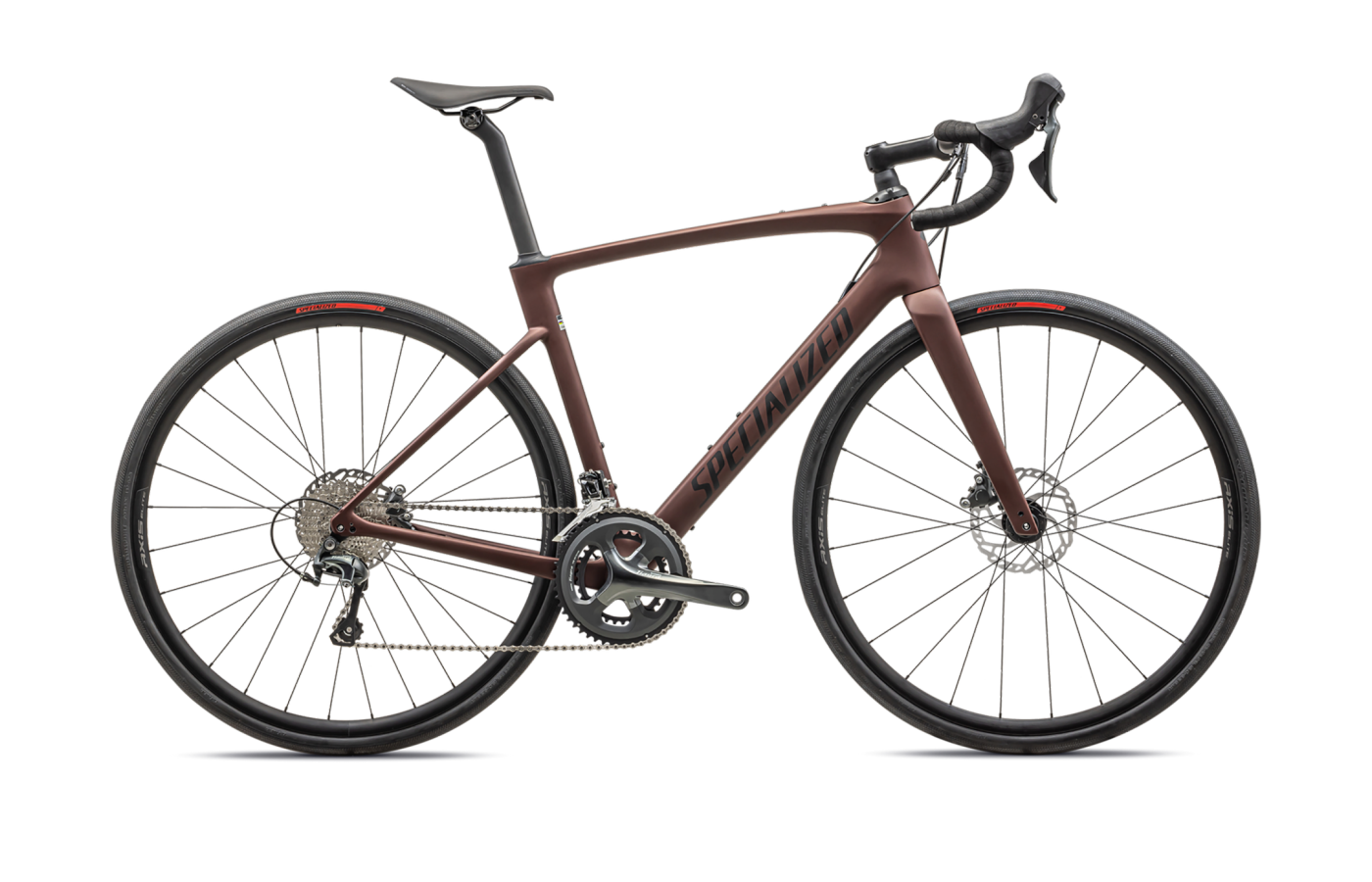
Roubaix
Specialized's endurance flagship matches the Roadmachine's 40 mm clearance but uses the mechanical Future Shock cartridge in the head tube for front-end compliance — a different answer to the same question.
Compare →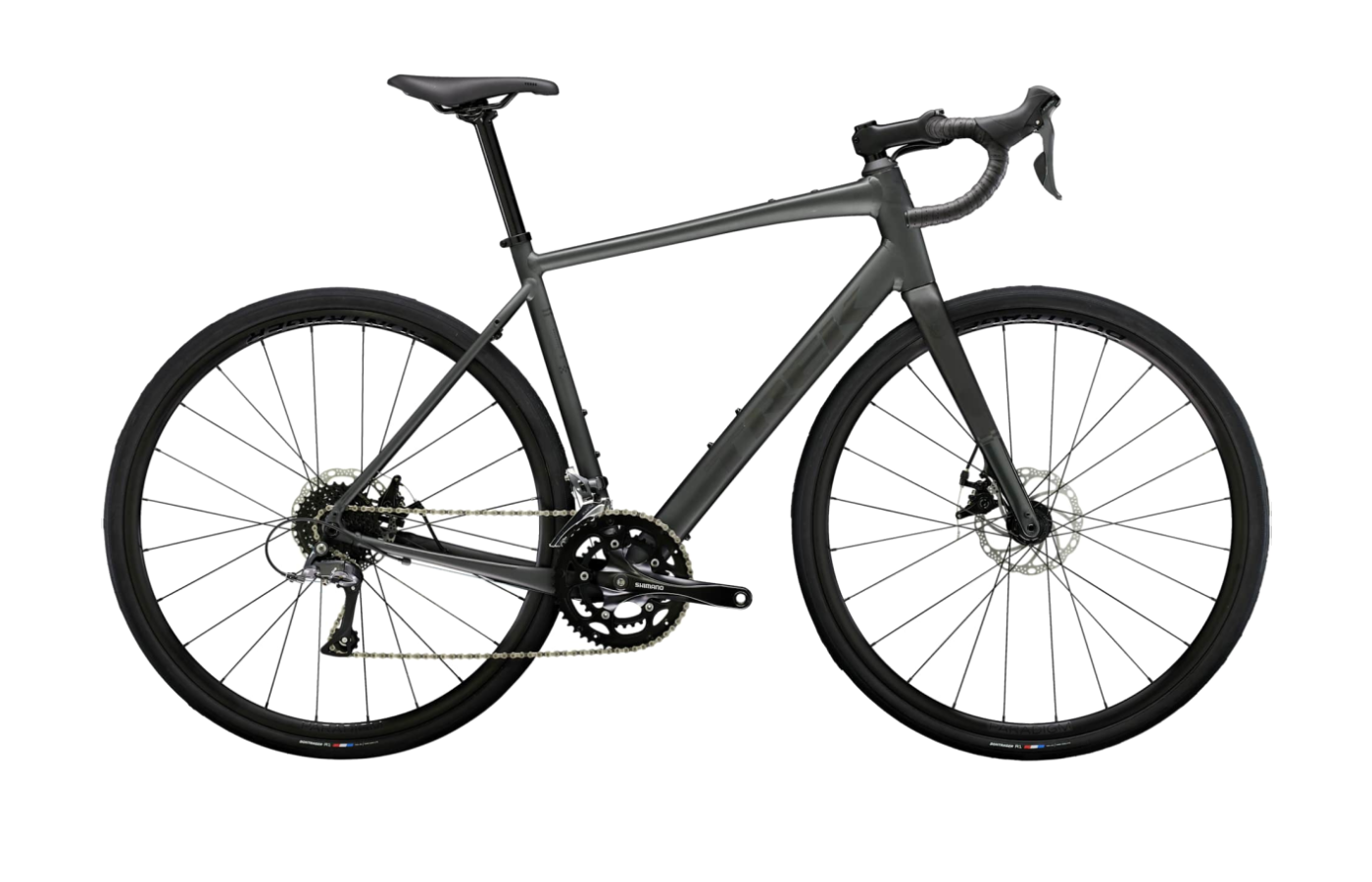
Domane
Trek's most comfort-focused road bike, with internal storage and the IsoSpeed decoupler for active rear-end compliance. The plushest of the three, but heavier and slower-handling than the Caledonia.
Compare →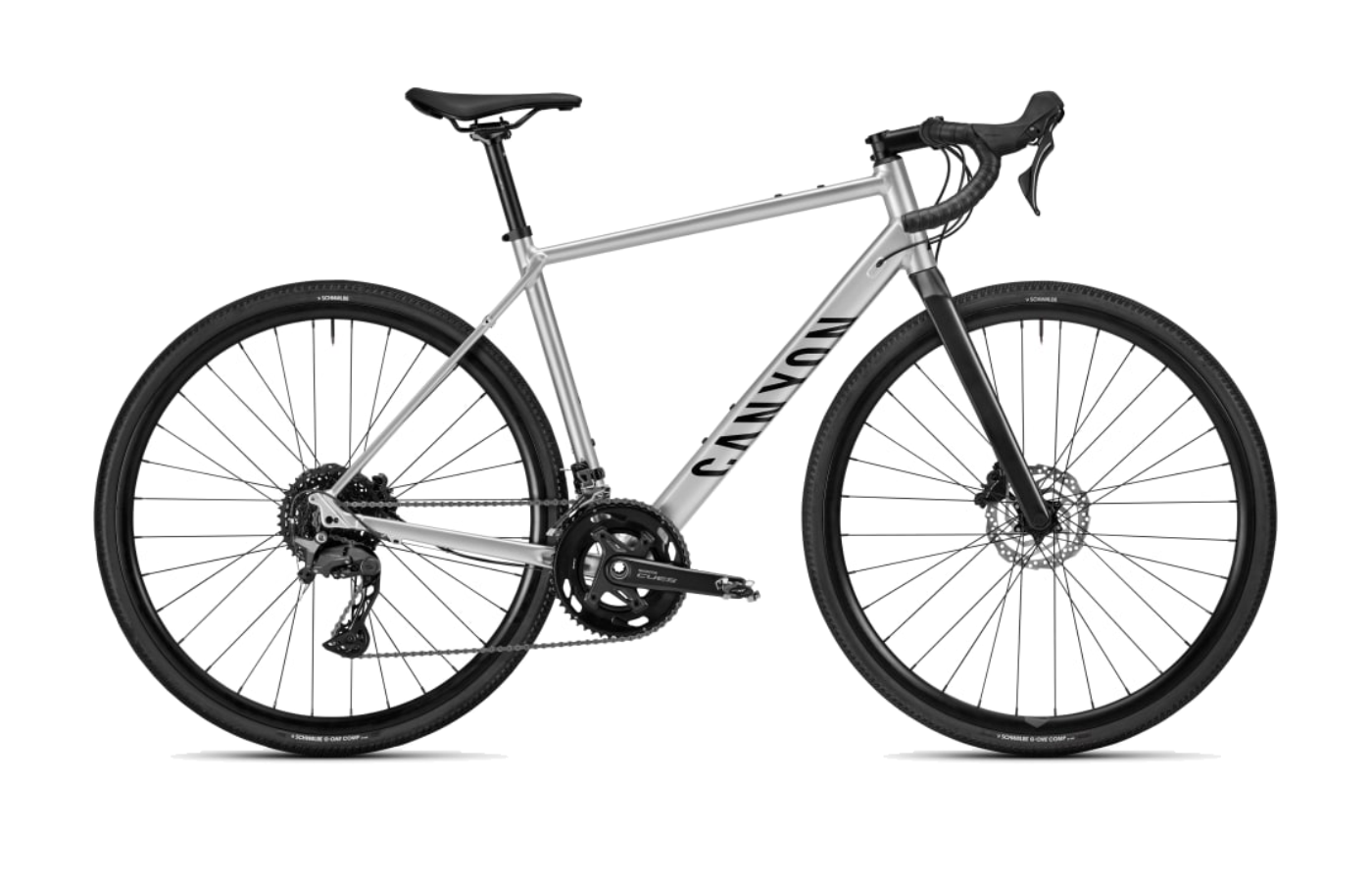
Endurace
The direct-to-consumer value play. The Endurace shares the Roadmachine's tall-stack, short-reach endurance posture at roughly 30% less money — the catch is no local dealer and no test ride.
Compare →