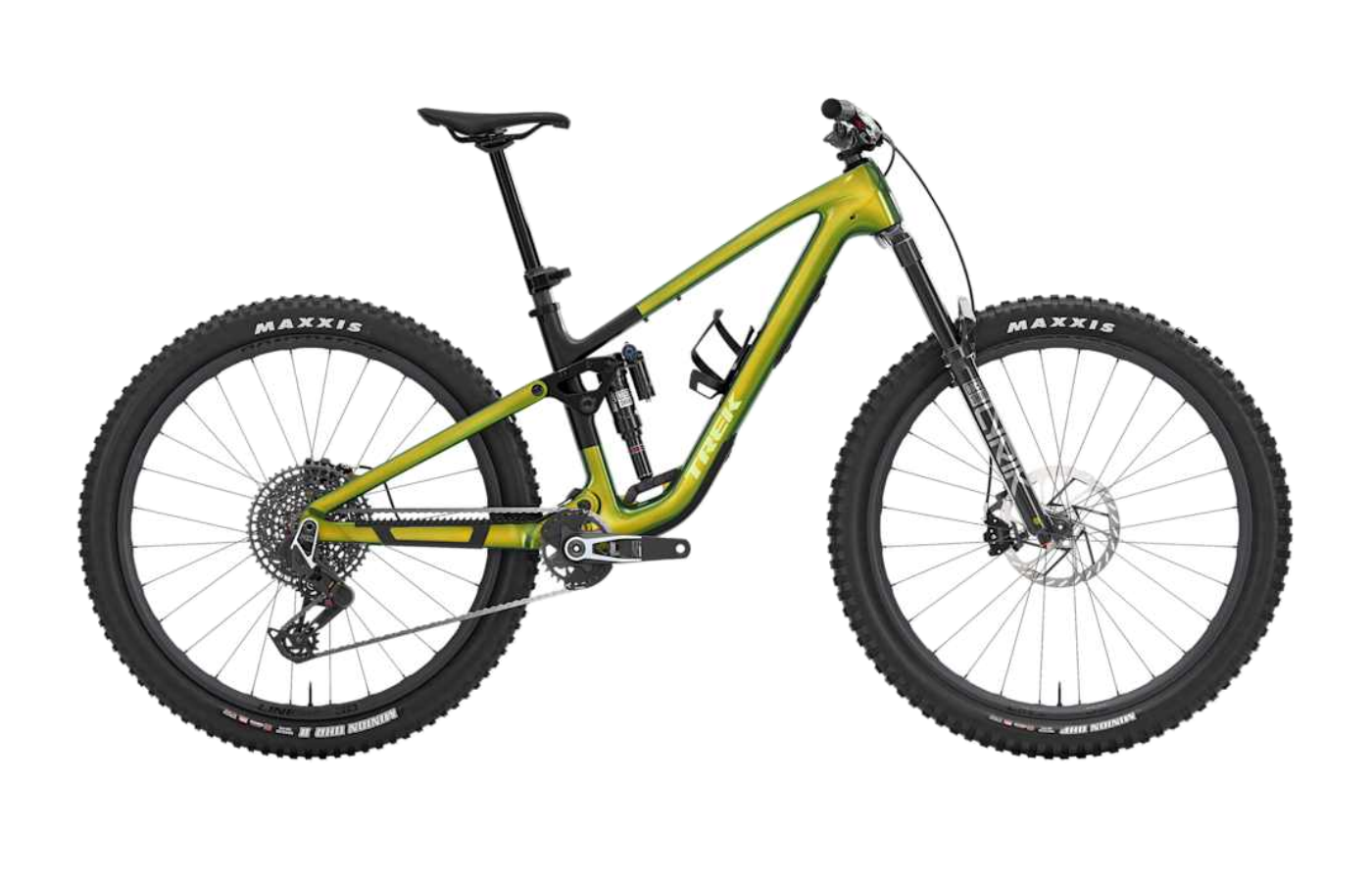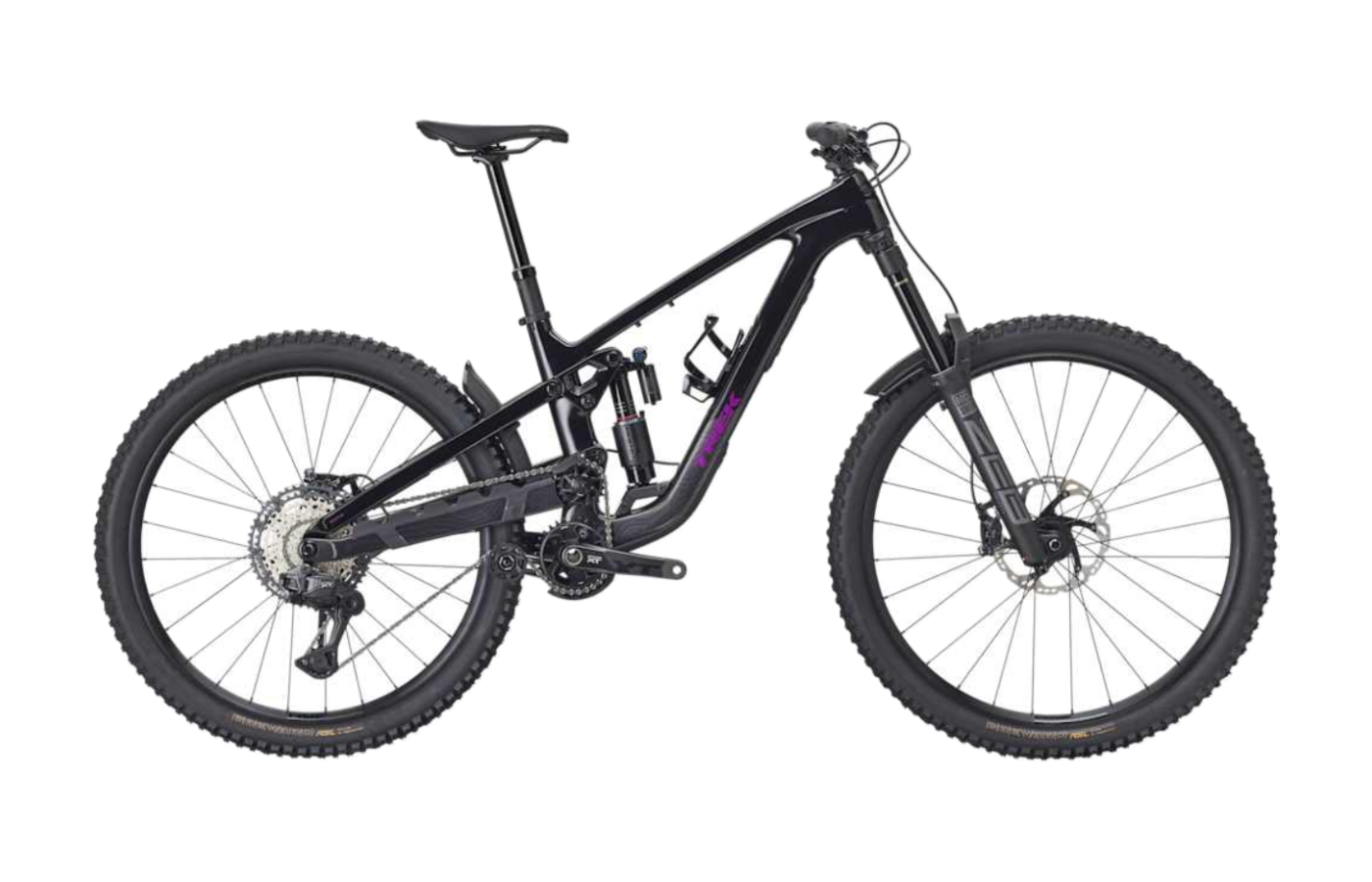
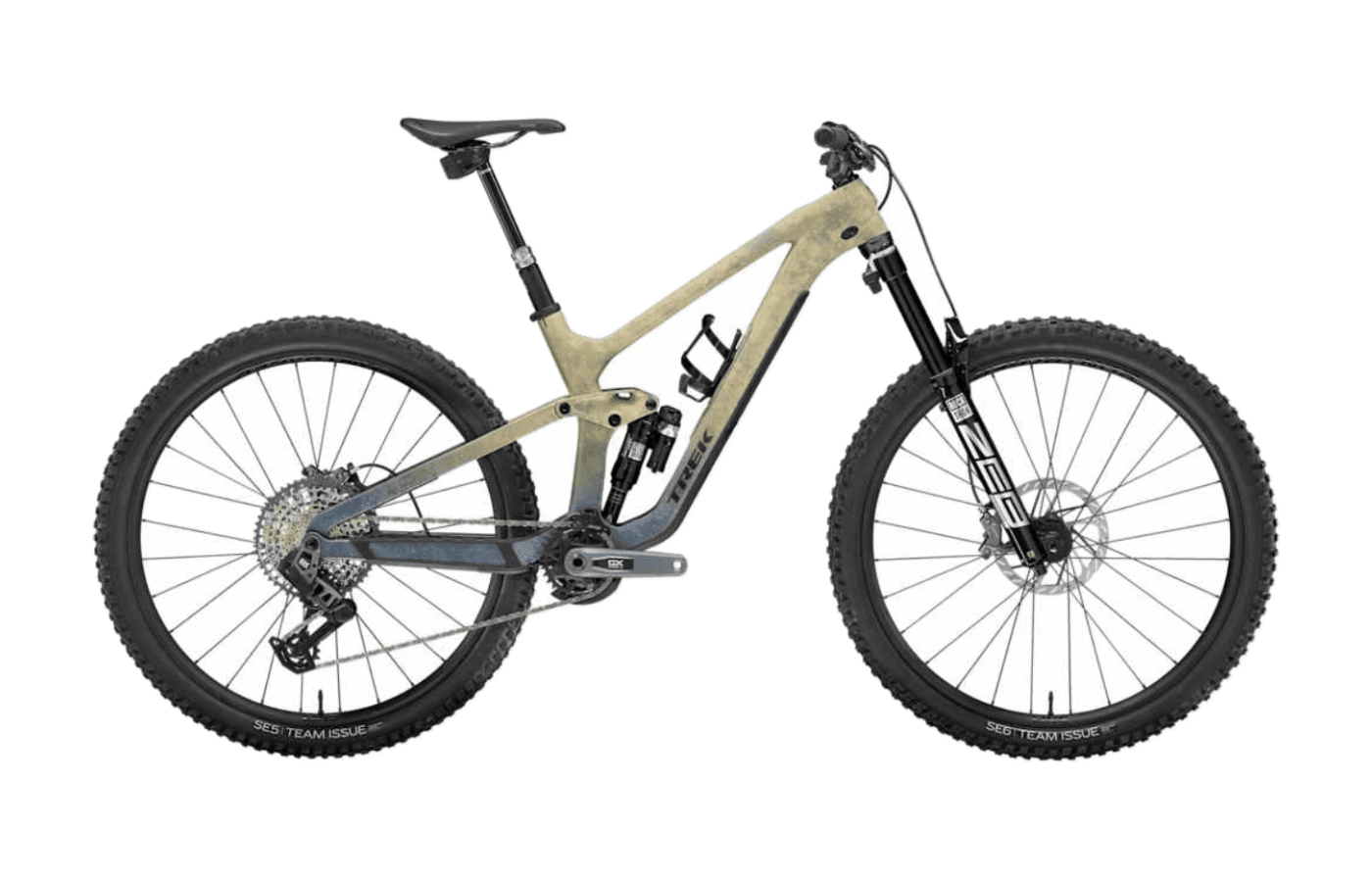
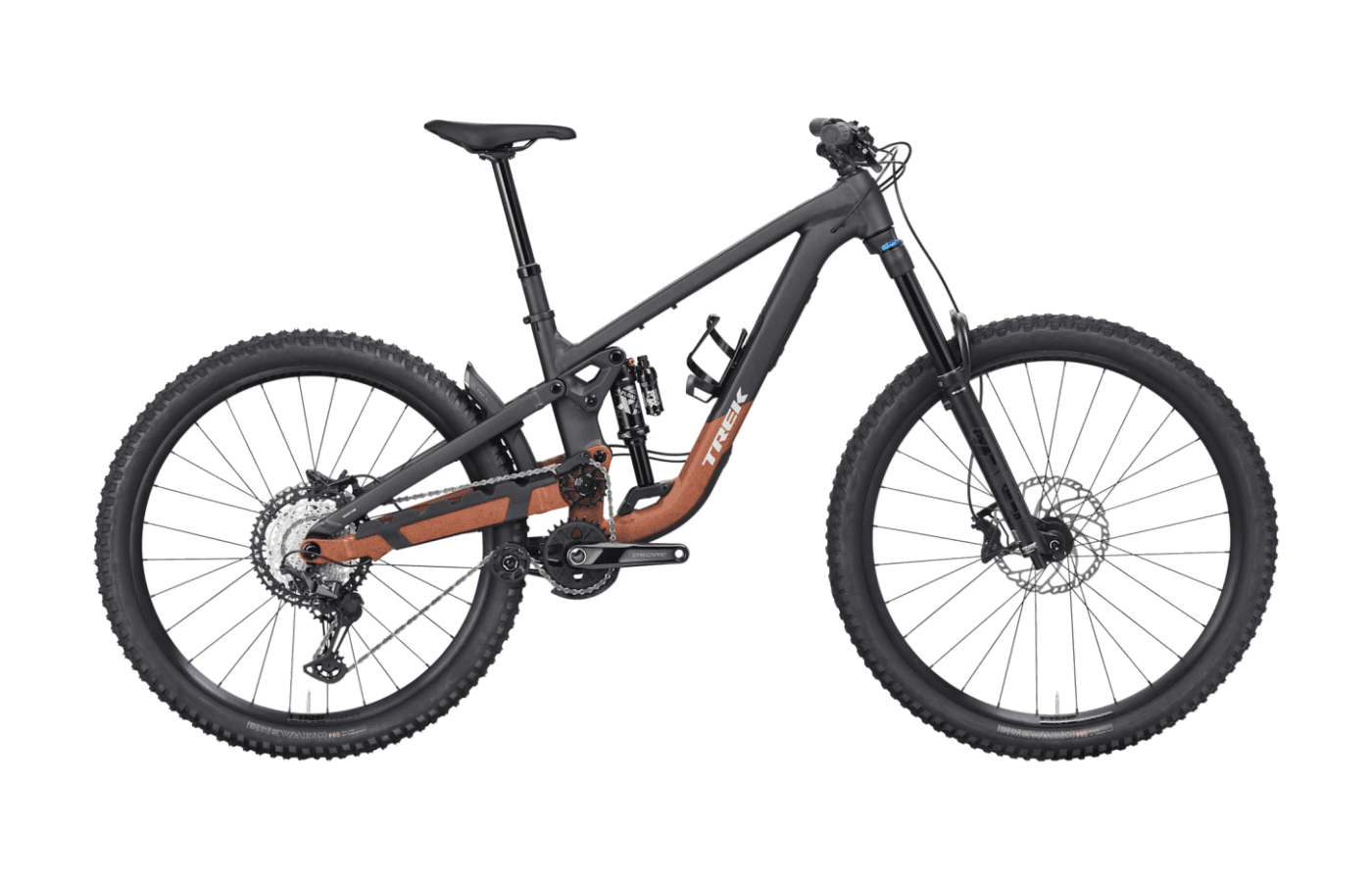
The sixth-generation Trek Slash marks a significant departure from its predecessor, transforming from a versatile all-mountain option into a dedicated gravity bruiser. Built around a new high-pivot suspension layout with 170mm of travel front and rear, this enduro sled is engineered specifically to maintain momentum through square-edged impacts and sustained, rugged descents. Trek pairs the rearward axle path with an idler pulley system to manage chain growth, aiming to isolate suspension performance from drivetrain forces. Out of the box, the Slash embraces a mixed-wheel configuration for most sizes, though riders can convert to a full 29-inch setup with an aftermarket shock mount. Available in both carbon and aluminum frames, it suits aggressive riders who prioritize downhill composure and high-speed stability over low-speed agility or climbing efficiency.
Where to get it.
1 retailer · size M.
Spec sheet.
Every component shipped with this build.
Geometry & fit.
5 sizes published.
The Slash utilizes a modern, aggressive geometry package that balances high-speed stability with the agility needed to navigate tight corners. A slack 63.3-degree head tube angle provides a steady front end, while the steep 77-degree effective seat tube angle keeps the rider in a comfortable, centered posture for winching up long climbs. Trek incorporates size-specific chainstays to maintain consistent handling across the size run, though riders should note that the high-pivot design causes the rear center to lengthen significantly as the suspension compresses.
To offset the lengthening wheelbase at sag, the stock mixed-wheel setup injects a degree of maneuverability, preventing the bike from feeling overly cumbersome in tight switchbacks. The bottom bracket sits notably low, allowing riders to lean deeply into turns. Because this low stance increases the risk of pedal strikes in technical terrain, Trek smartly equips most builds with short 165mm cranks to improve ground clearance. For riders seeking to fine-tune their setup, the frame accommodates aftermarket angle-adjust headset cups to steepen or slacken the front end.
Where the handlebar sits relative to the bottom bracket — the single most important fit pair.
01Fit geometry6 values
02Component geometry5 values
03Handling geometry8 values
Which size should I buy?
Slide your height to see the recommended size. GearWise's fit algorithm works from the published stack, reach, and ETT — the brand's own recommendation may differ.
→Calculated from GearWise's own stack / reach / ETT algorithm — the brand's size chart may recommend a different size, and a proper bike fit beats any calculator.
The lineup.
7 builds, ranging $4,400 – $8,700.
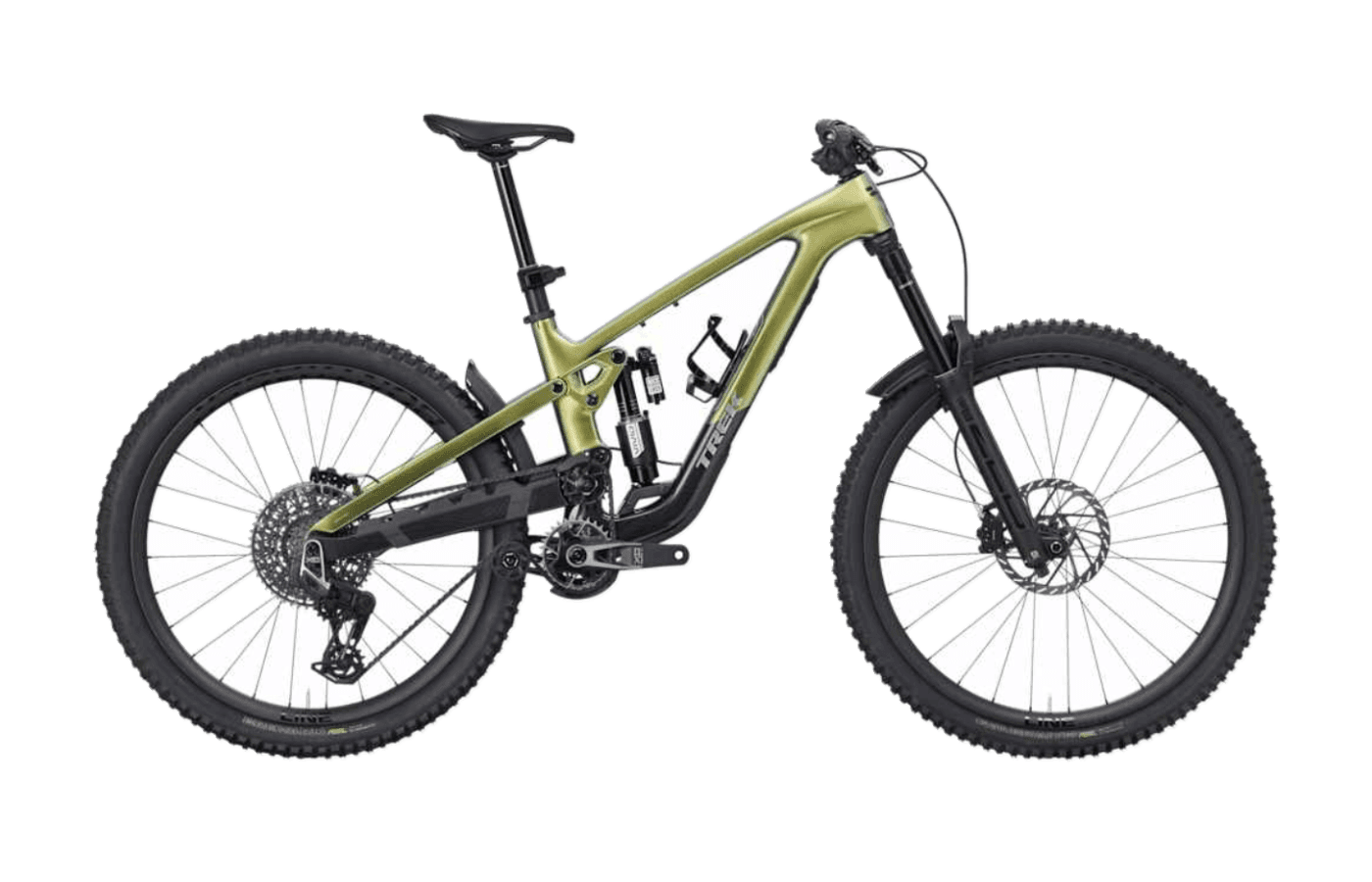
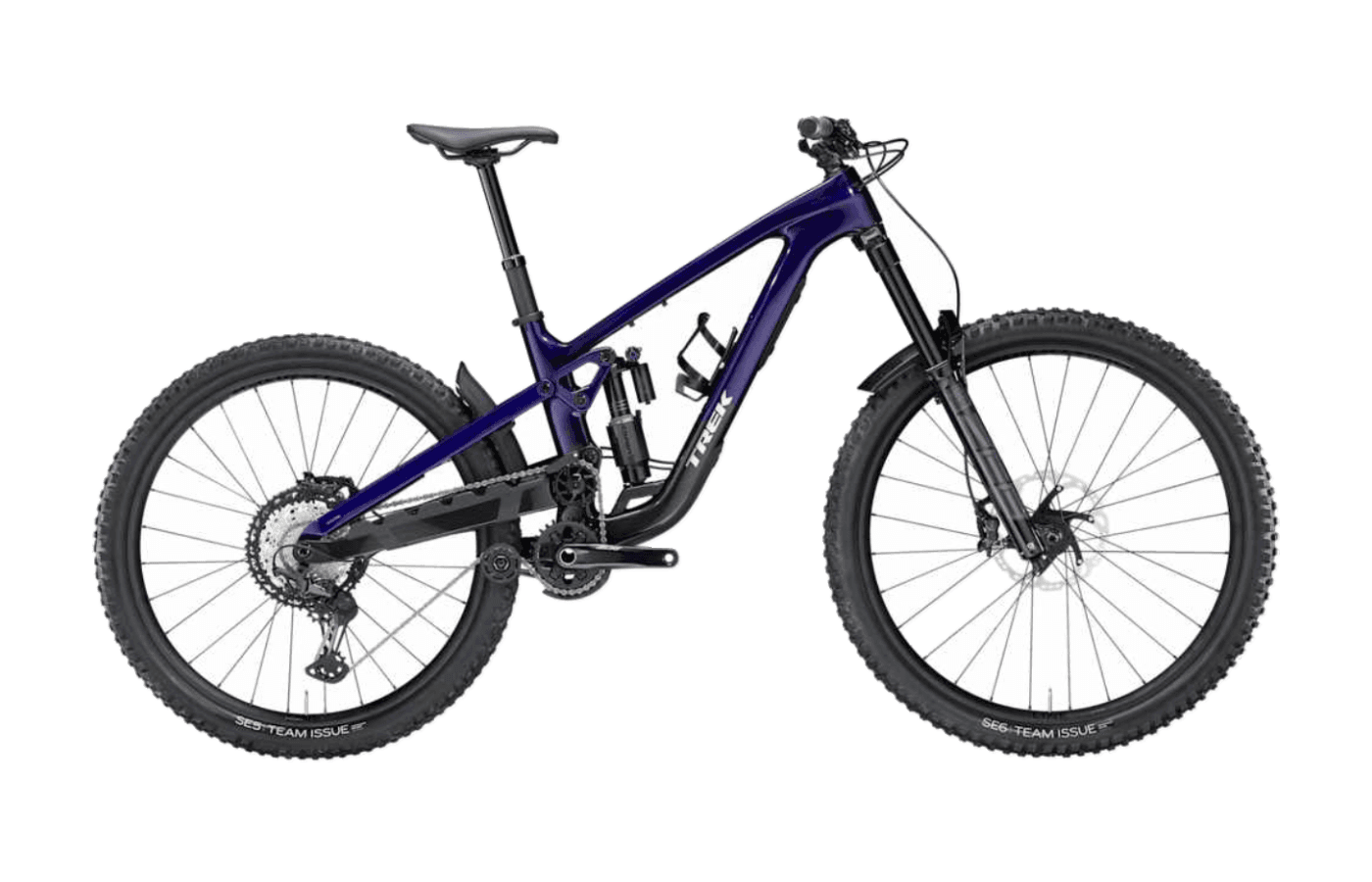
The Slash lineup spans a wide price range, offering both Alpha Platinum Aluminum and OCLV Mountain Carbon frames. The entry-level Slash 8 delivers the core high-pivot kinematics and a reliable Shimano XT drivetrain at a more accessible price, representing a strong value for riders willing to accept a heavier alloy chassis. Moving up the ladder, the carbon models introduce SRAM Transmission wireless drivetrains and upgraded RockShox Ultimate suspension, culminating in the flagship 9.9 X0 AXS T-Type build.
Across the range, reviewers frequently pointed out that the stock Bontrager SE5 and SE6 tires lack the casing durability and grip required for a 170mm enduro bike, making a tire swap an almost mandatory upgrade for aggressive riding. Additionally, the rigid Bontrager carbon wheels and integrated one-piece bar and stem found on upper-tier models drew criticism for transmitting harsh trail feedback. Consequently, the value sweet spot often sits in the mid-range alloy or entry-level carbon builds, leaving buyers with leftover budget to customize the cockpit and mount heavier-duty rubber suited to the bike's downhill capabilities.



From the press.
13 reviews from the cycling press.
Reviewers consistently characterize the Slash as a downhill specialist that excels in steep, chunky terrain. The high-pivot design and rearward axle path allow the rear wheel to move with impacts rather than hanging up on them, giving the bike an "uncanny ability to take the sting out of big drops and rough cases" (Cycling Magazine). Testers frequently praised the RockShox Vivid rear shock for delivering a supple, coil-like feel that mutes trail chatter while maintaining enough mid-stroke support to keep the bike from feeling entirely glued to the floor.
However, this downhill prowess comes with distinct tradeoffs. At lower speeds or on flatter trails, the bike can feel sluggish, and the substantial weight requires extra muscle to maneuver. While seated pedaling is surprisingly efficient, technical climbing drew mixed reactions. The rearward axle path can cause the rear wheel to momentarily hang up on square-edged climbing obstacles, which can "suck your energy and momentum" (Theloamwolf) when trying to muscle over roots.
Additionally, the complex drivetrain requires meticulous upkeep. Testers noted that if the idler pulleys and chain get dirty, the system becomes "noticeably less efficient" (Cycling Magazine) and audibly loud. Despite these maintenance demands, the consensus points to a highly capable machine that rewards riders willing to push hard. As one tester noted, the suspension platform is "seriously impressive for the cash" (BikeRadar) when pointed down the fall line.
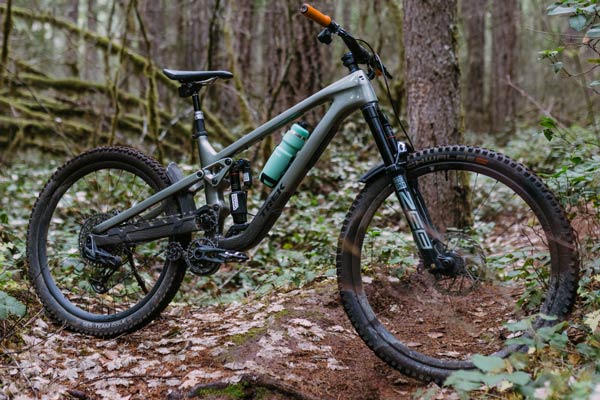
Trek Slash 9.9 Gen 6 Mountain Bike Review | The Loam Wolf
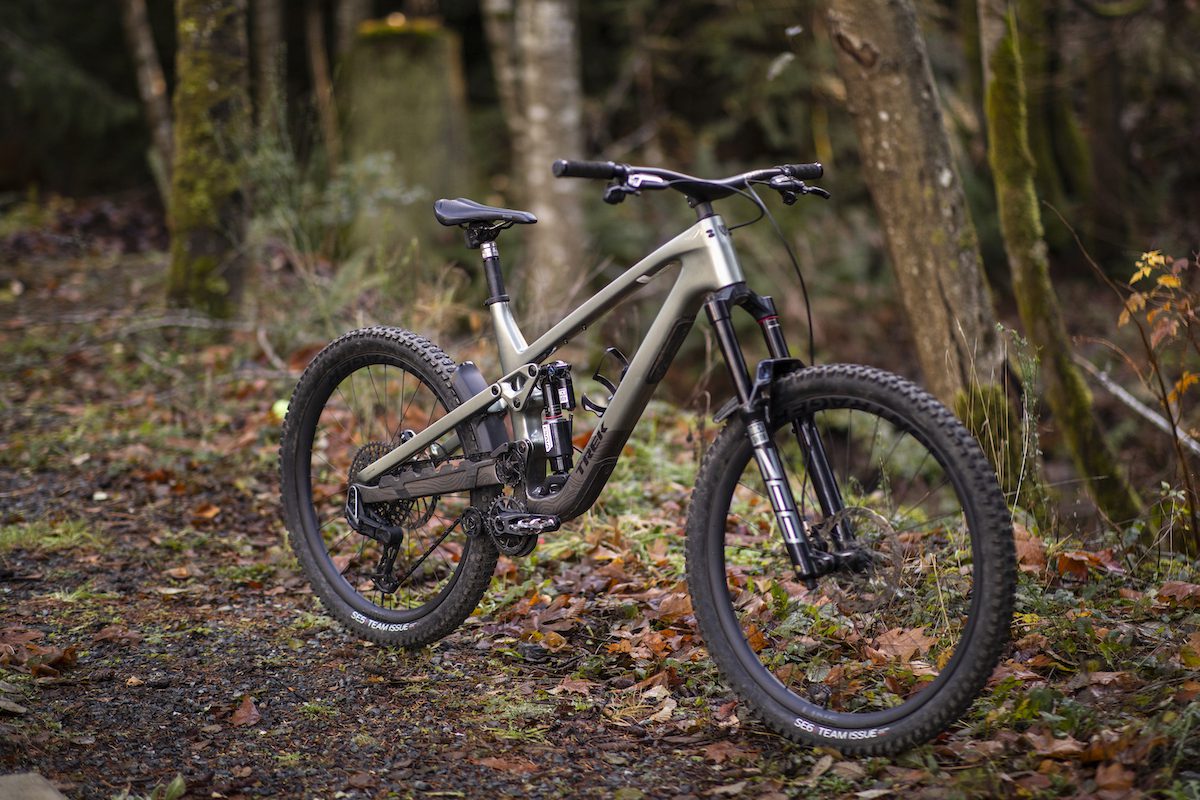
Trek Slash Gen. 6 long-term review Part 1: High pivot ...
Long Term Review: 6 Months on the Trek Slash - BikeMag
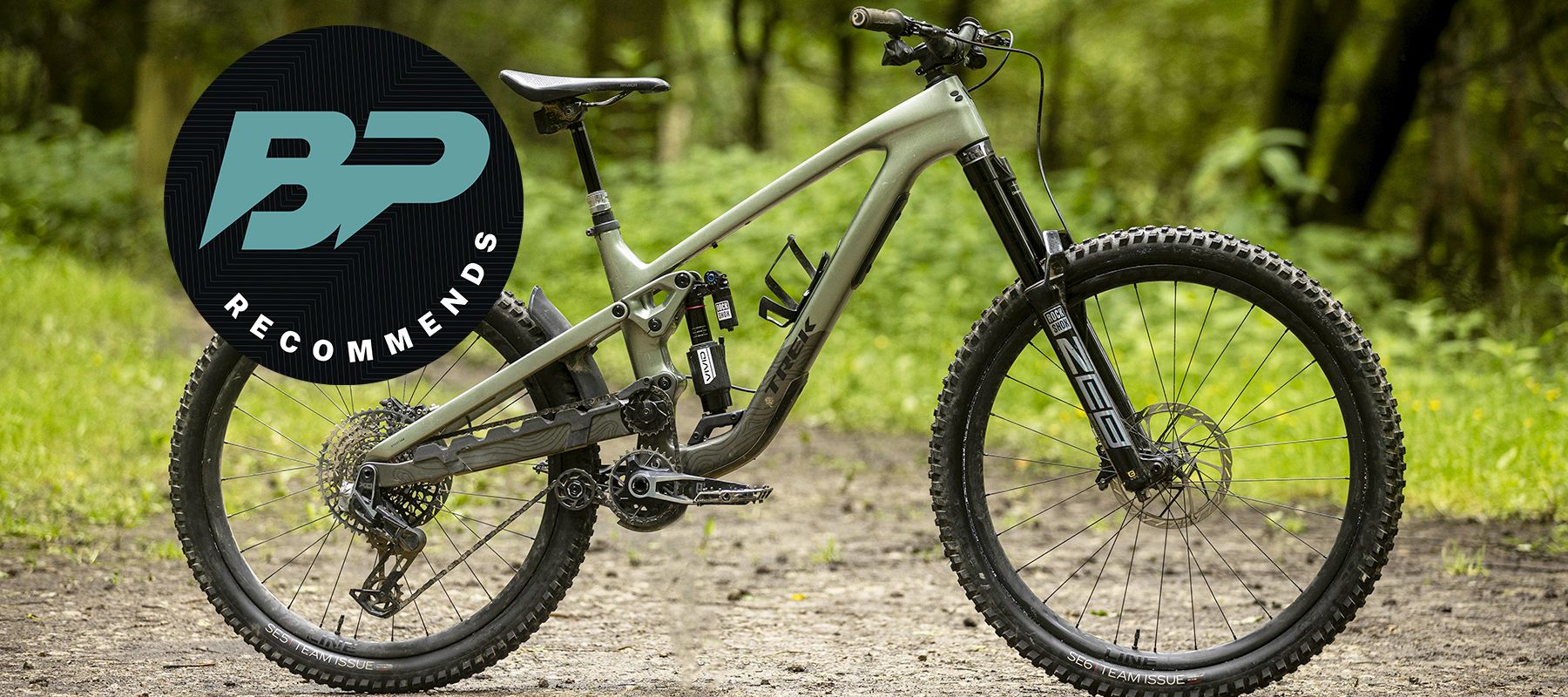
Trek Slash 9.9 Gen 6 review – a high pivot and idler suspension design, plus a completely new chassis
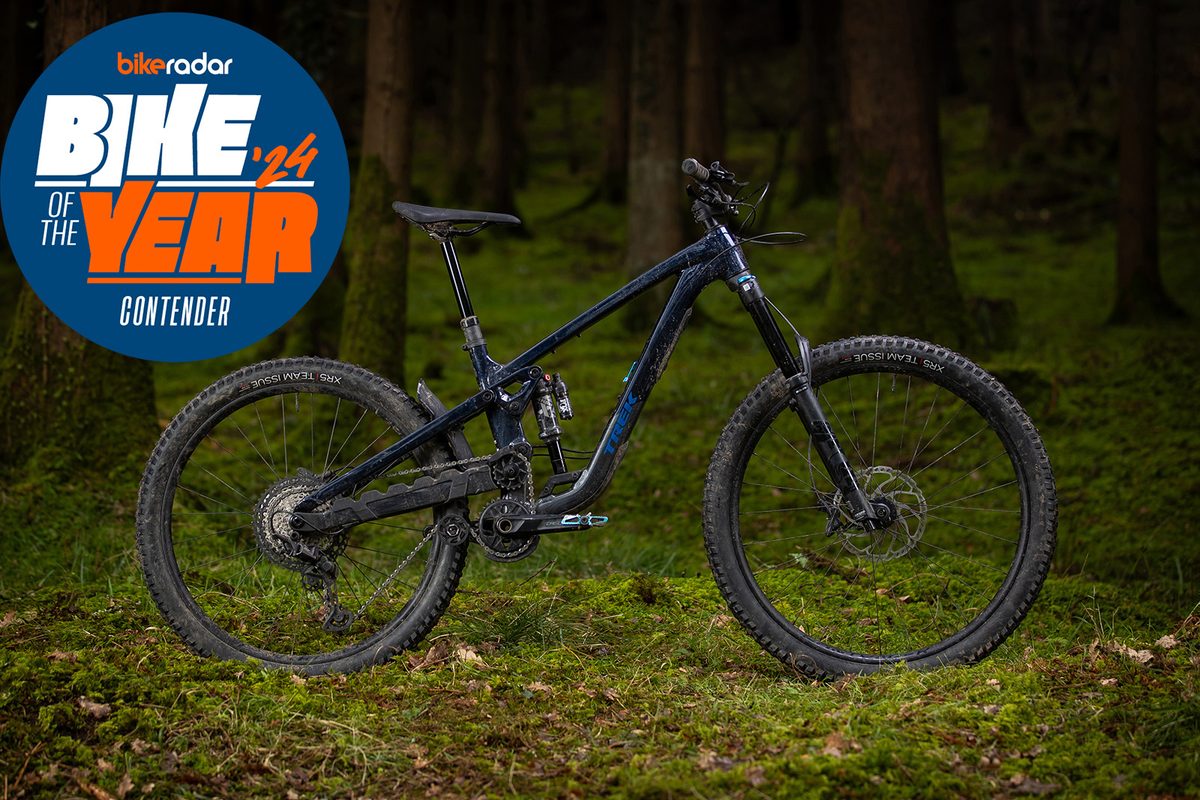
Trek Slash 8 Gen 6 review | Enduro Bike of the Year ...
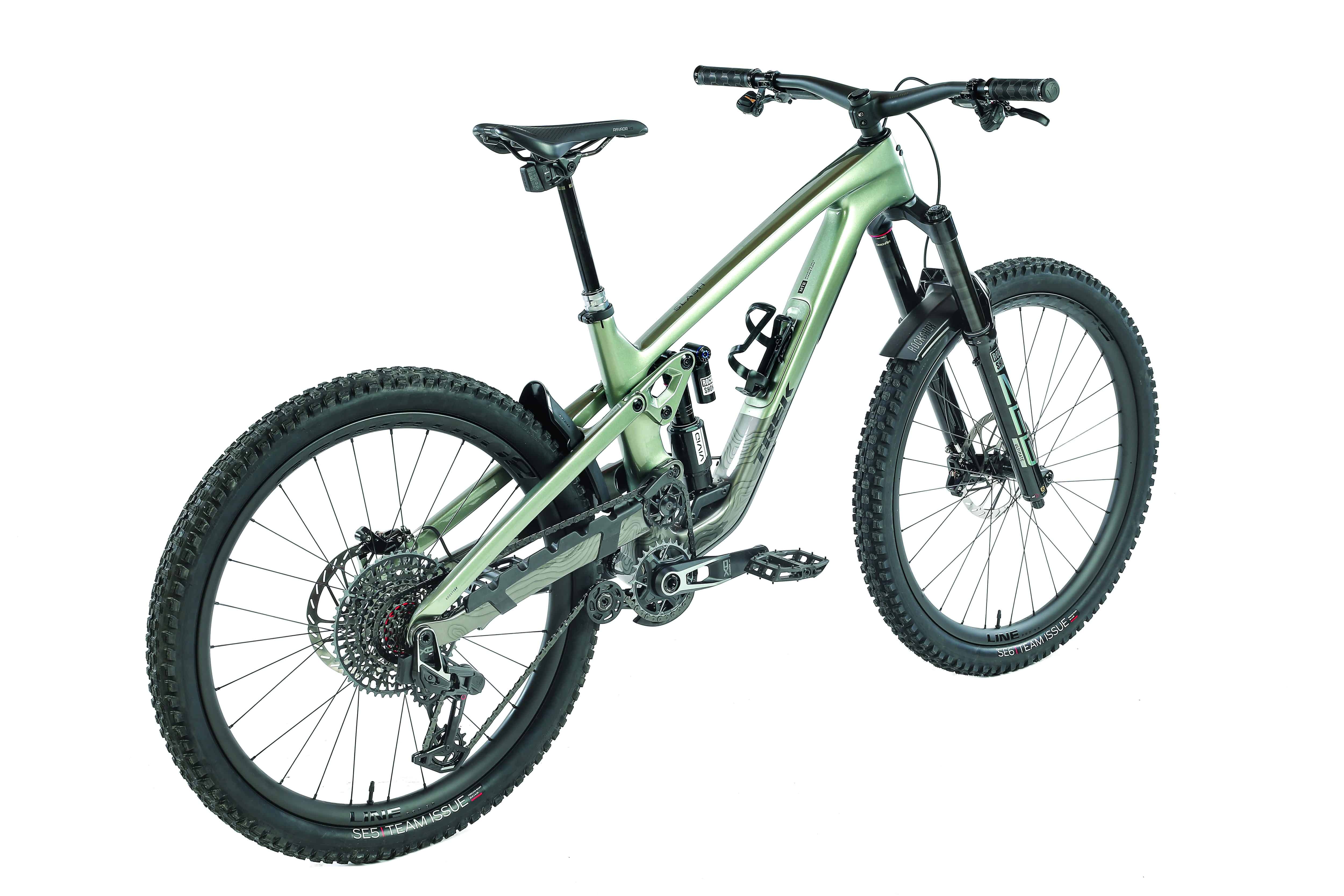
TREK SLASH GEN 6 REVIEW - A GENERATIONALLY ...

Tested: Trek Slash 9 Gen 6
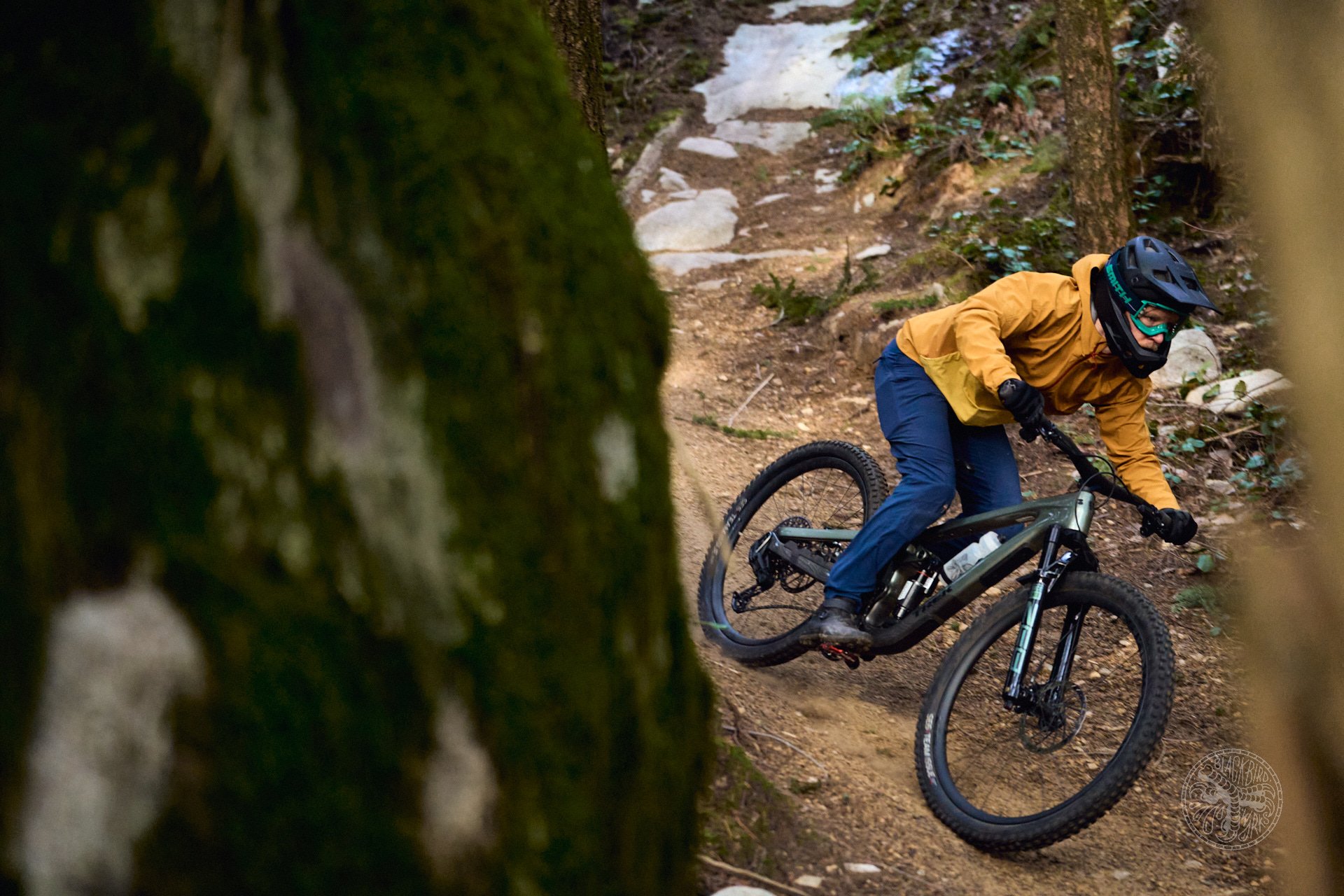
2024 Trek Slash Review

Gen 6 Trek Slash Review - High Pivot Pros / Cons and More ...
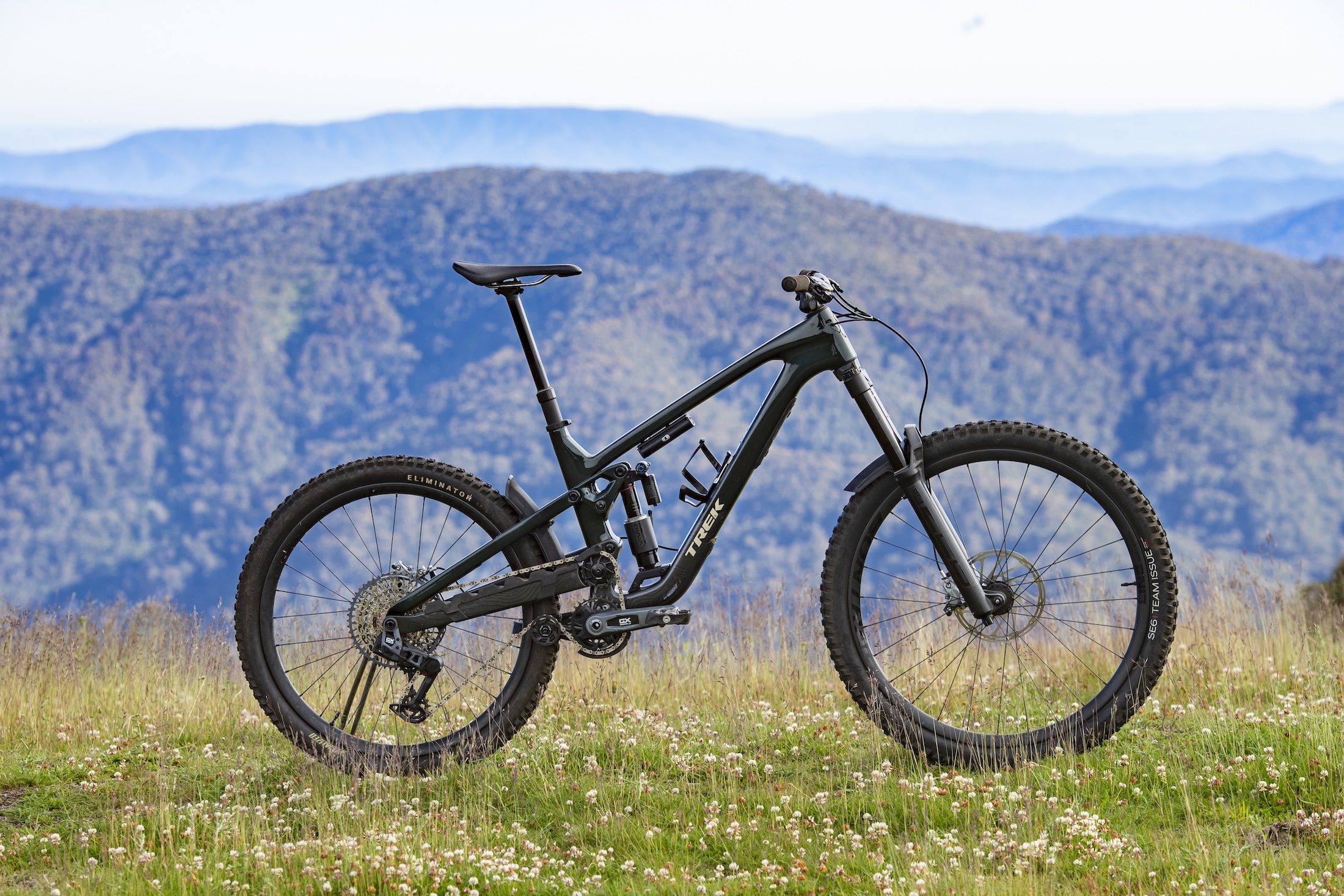
2024 Trek Slash Review | Could this be the new high-pivot ...
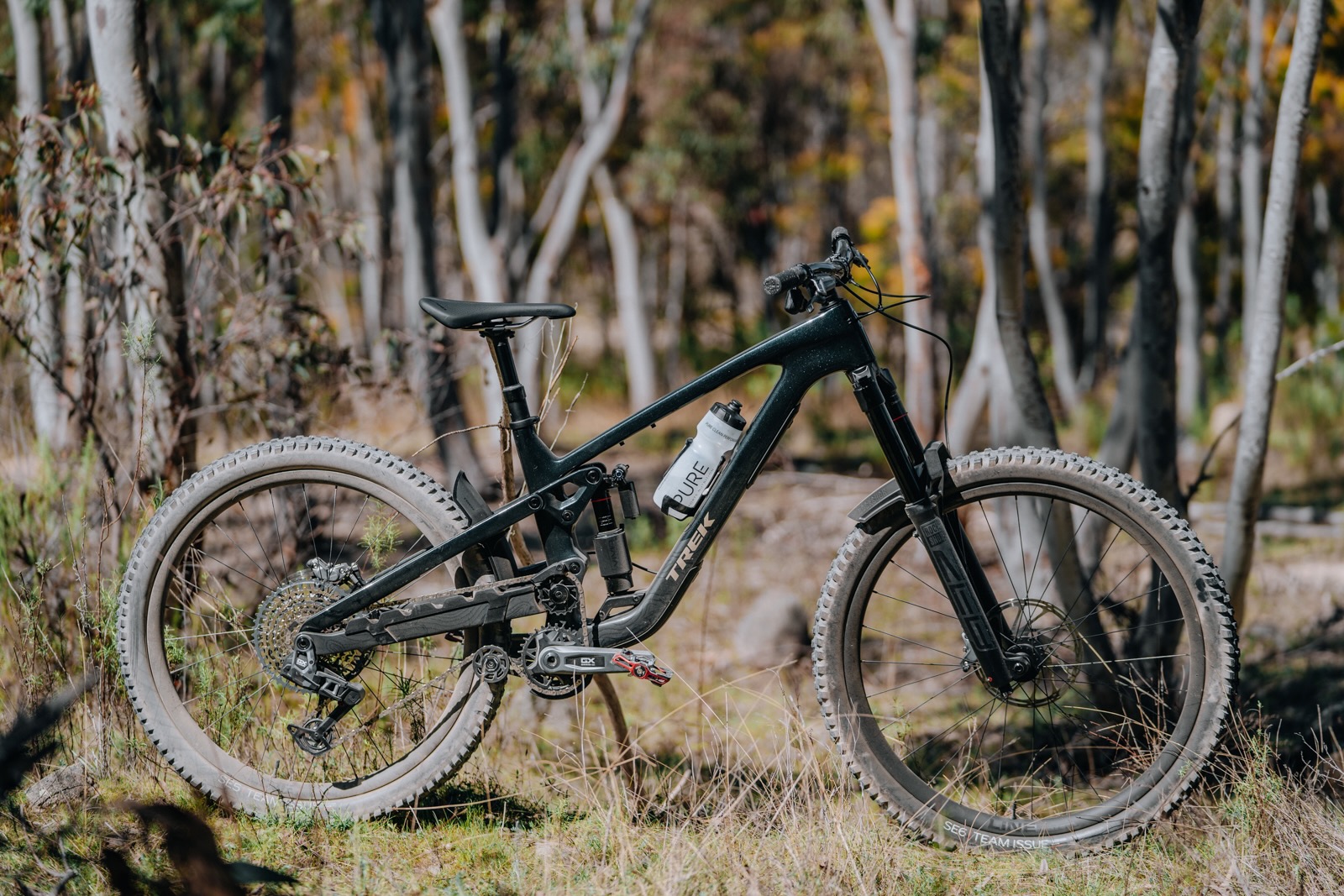
TESTED: 2024 Trek Slash 9.8 GX AXS - Australian Mountain Bike
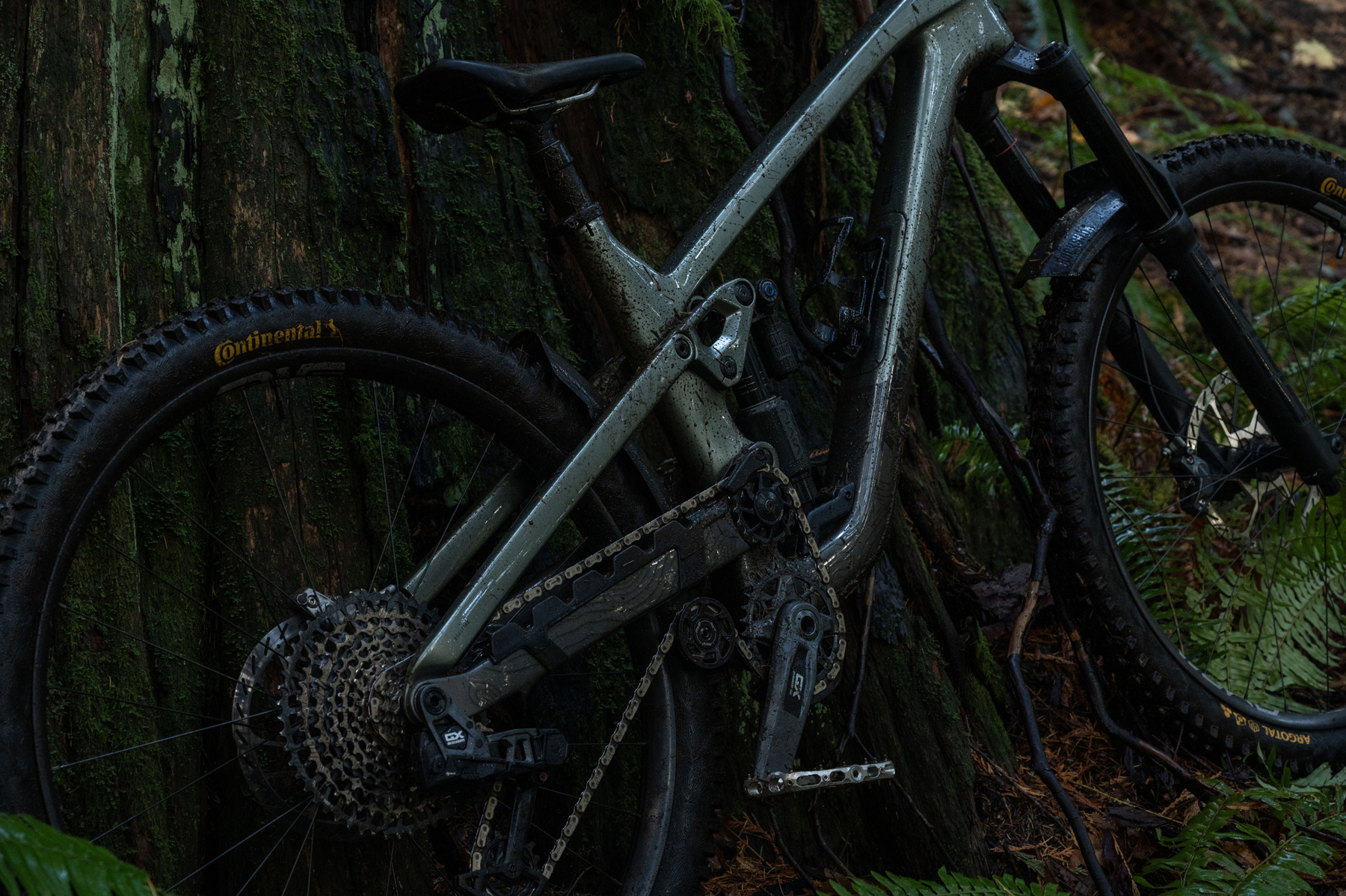
2024 Trek Slash
![The Latest Trek Slash Gets High Pivot Redesign and More Rear Travel [Test Ride Review]](https://paklmrfyhygqlkyhjcnf.supabase.co/storage/v1/object/public/storage/review-images/trek/slash/gen-6-2024/review-424b0b8c48fe.jpg)
The Latest Trek Slash Gets High Pivot Redesign and More Rear Travel [Test Ride Review]
Compared to.
Most-viewed comparisons.
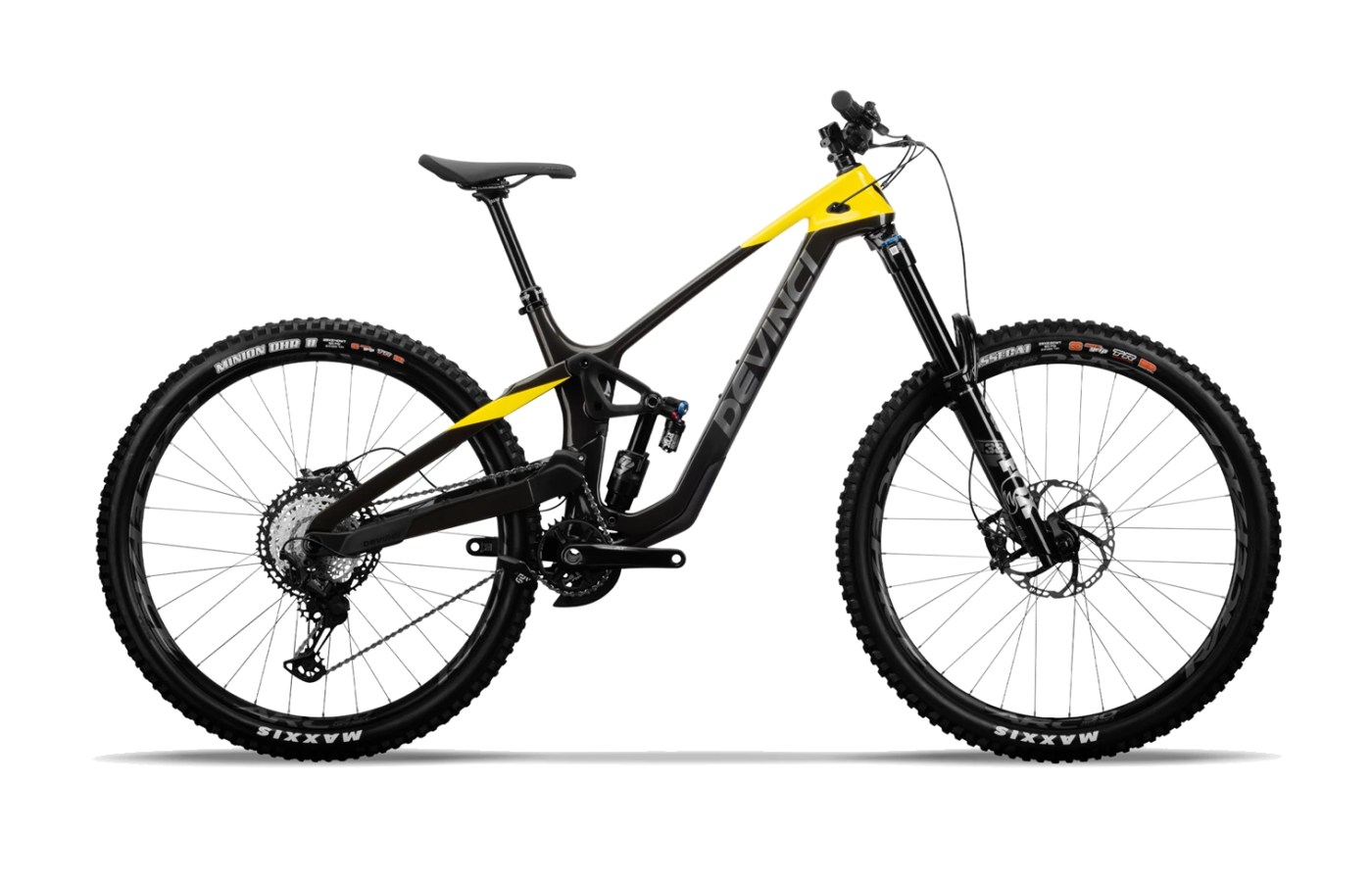
Devinci Spartan vs Trek Slash
Read comparison→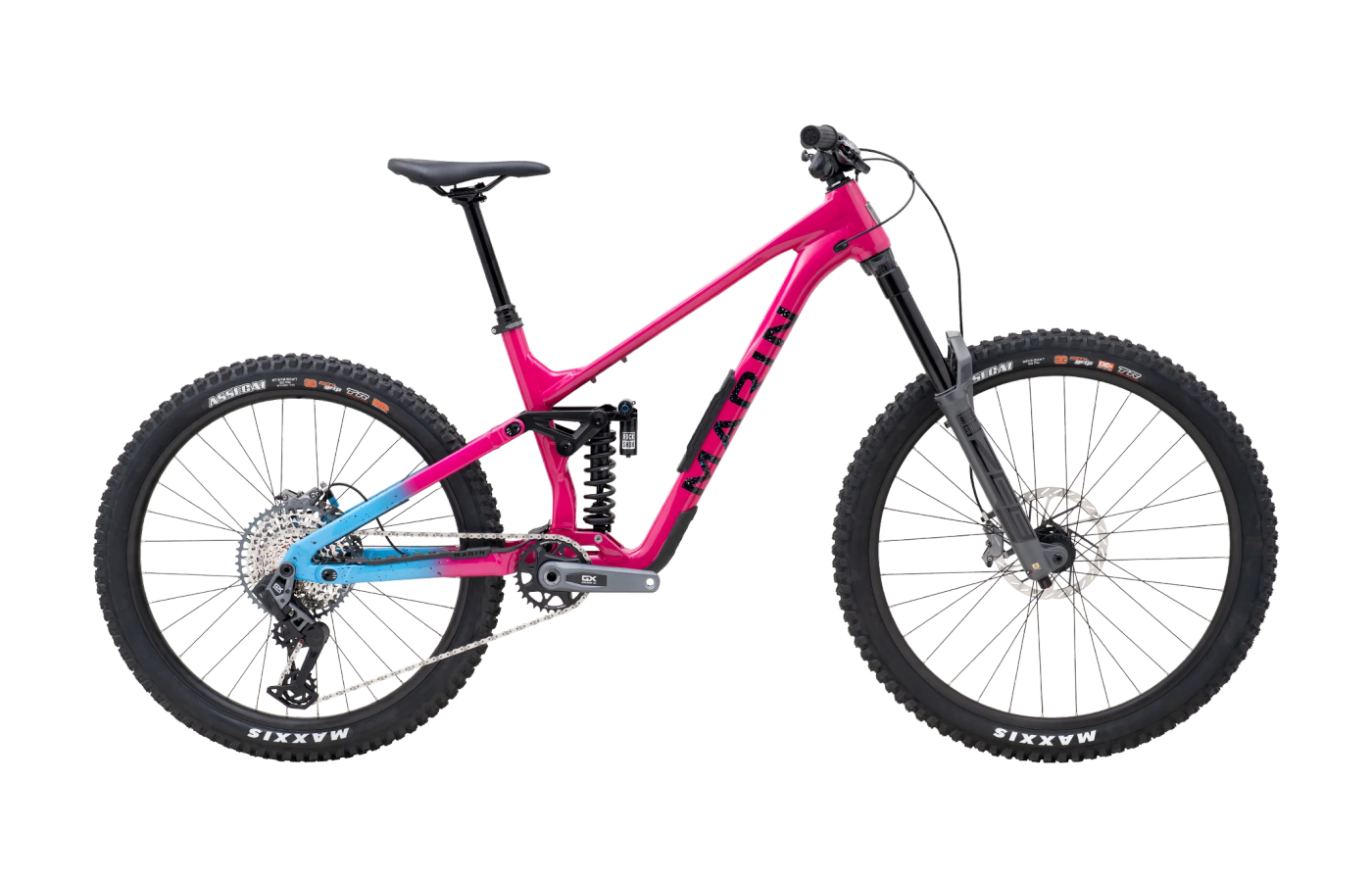
Marin Alpine Trail vs Trek Slash
Read comparison→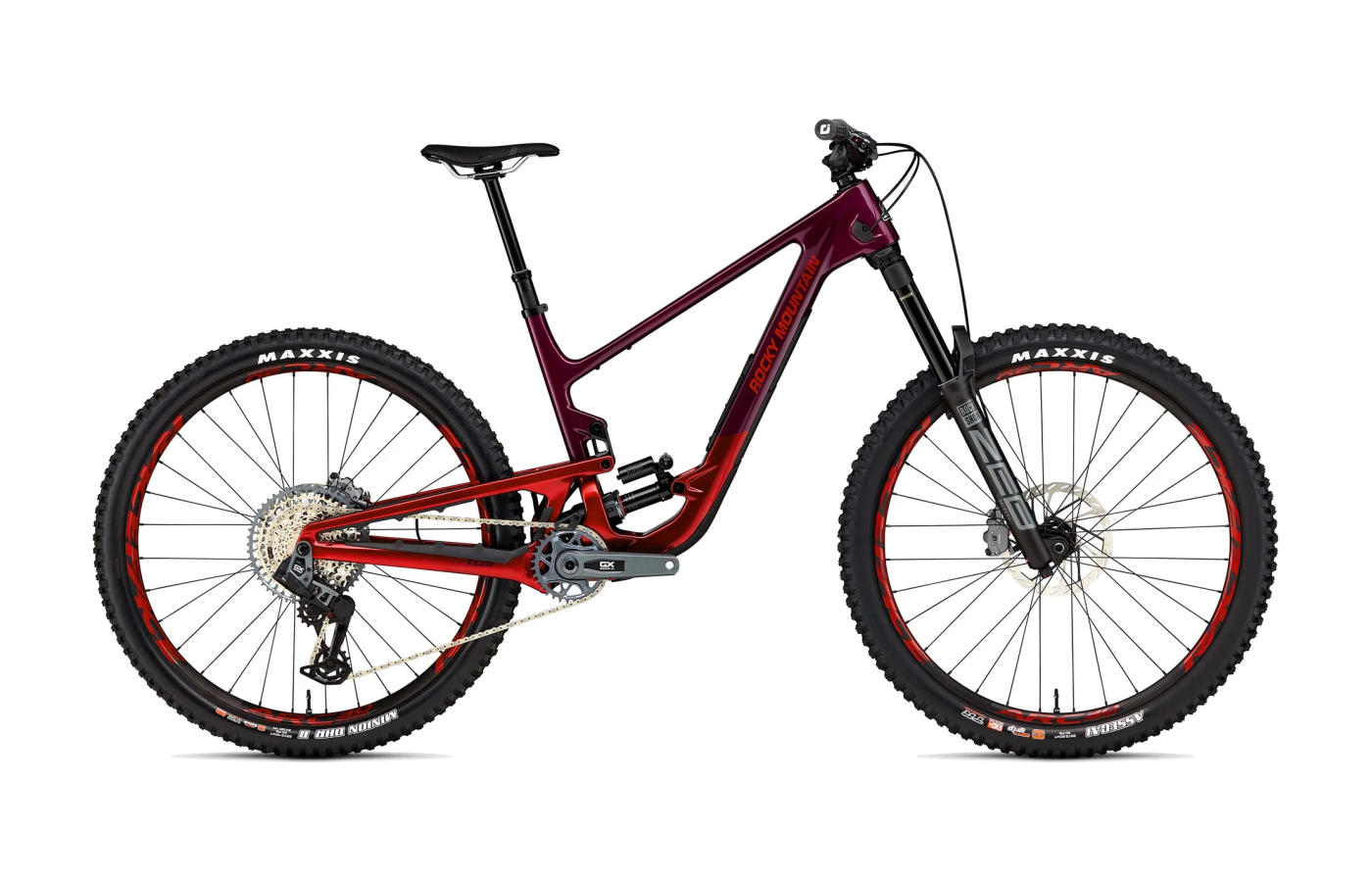
Rocky Mountain Altitude vs Trek Slash
Read comparison→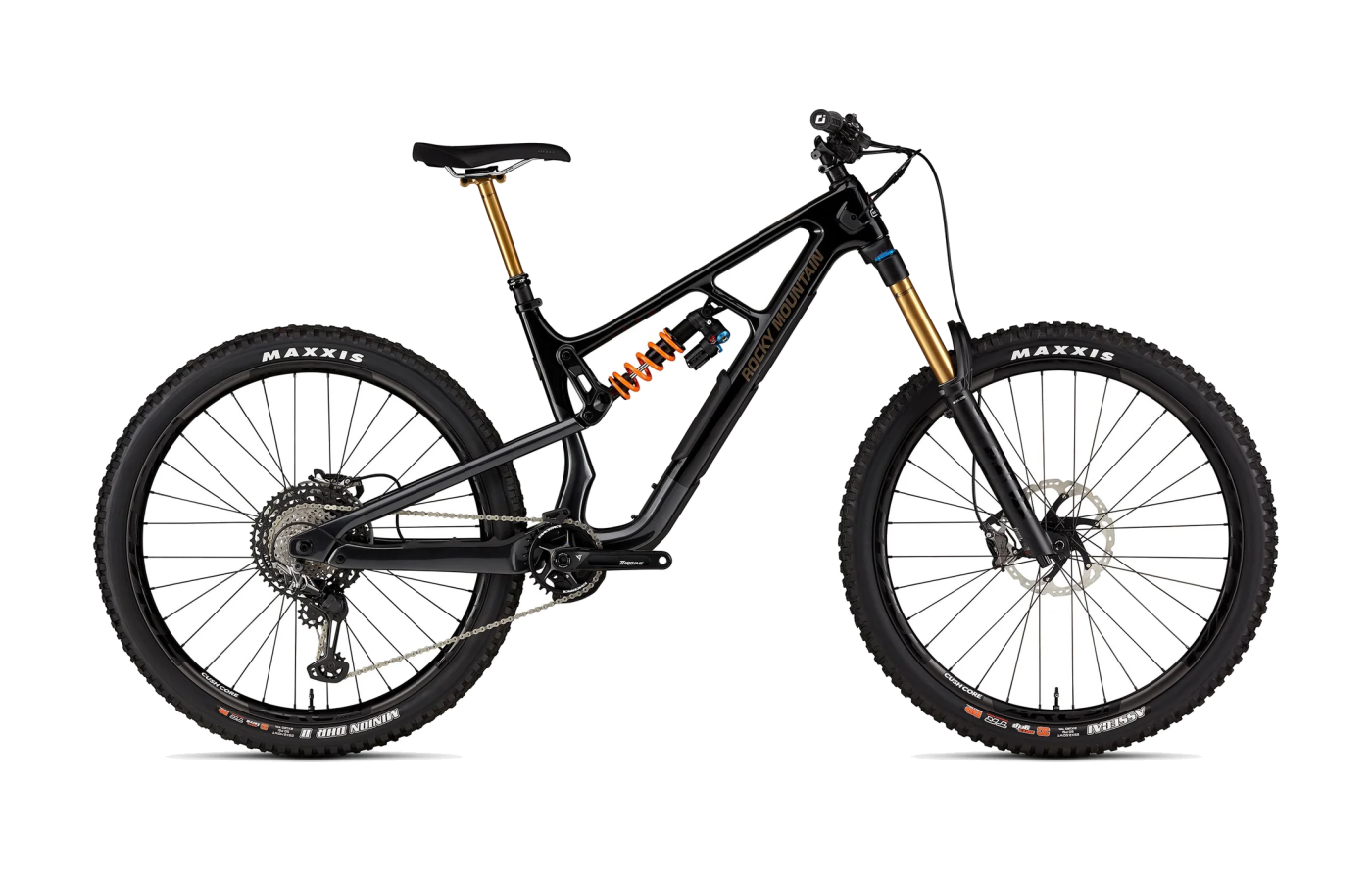
Rocky Mountain Slayer vs Trek Slash
Read comparison→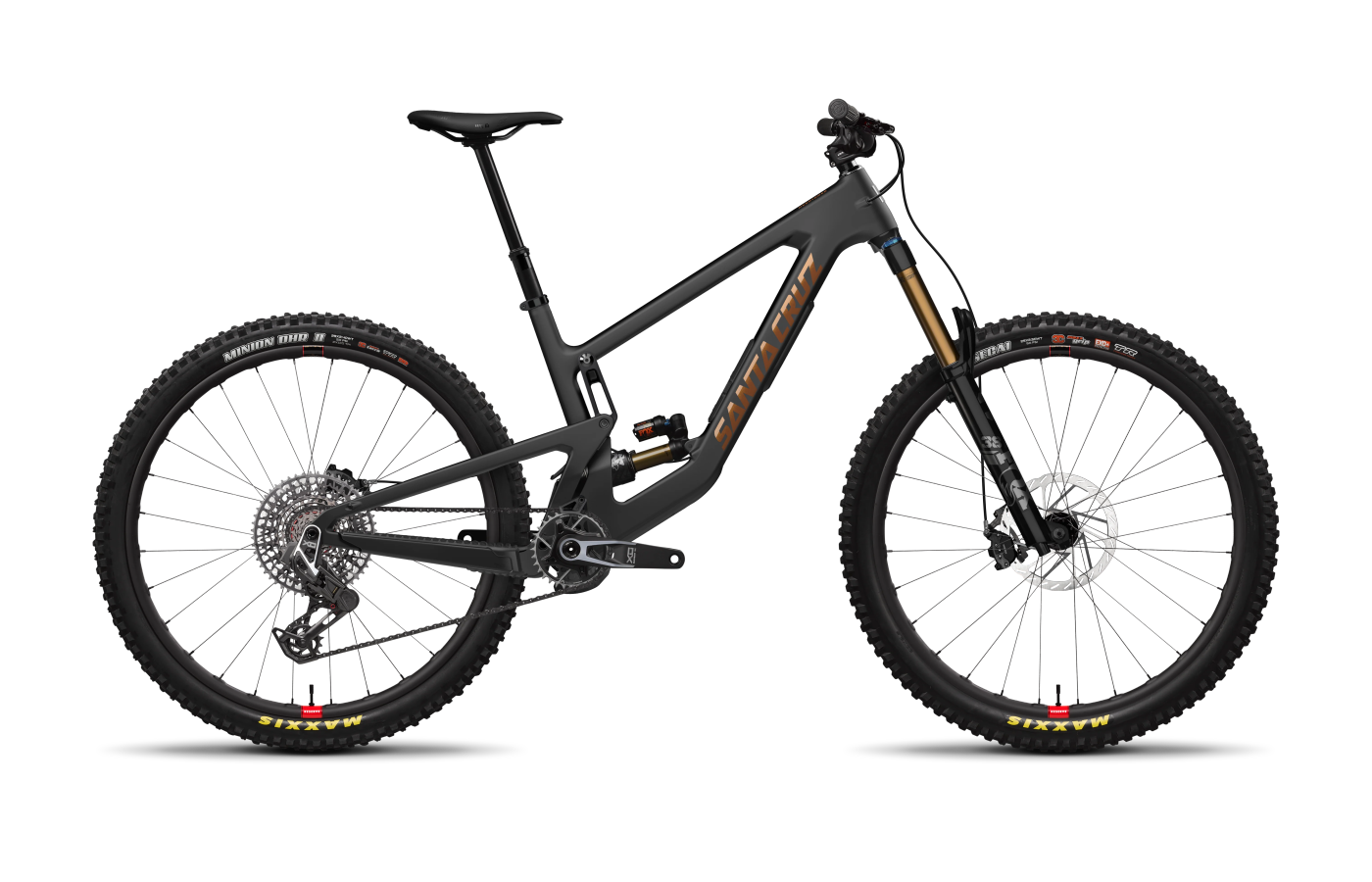
Santa Cruz Megatower vs Trek Slash
Read comparison→
Santa Cruz Nomad vs Trek Slash
Read comparison→
Specialized Enduro vs Trek Slash
Read comparison→Transition Spire vs Trek Slash
Read comparison→