Megatower
vsSlash
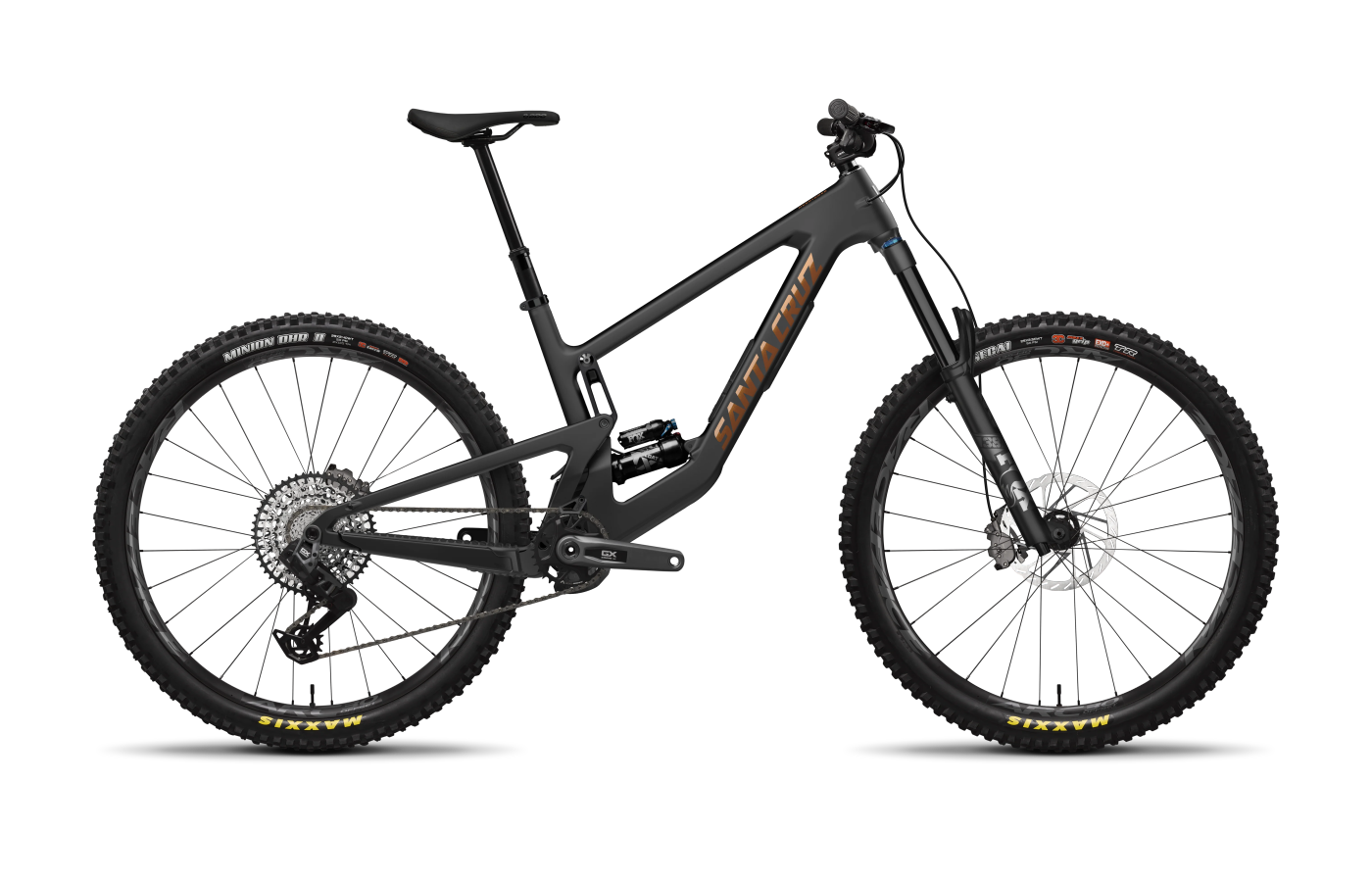
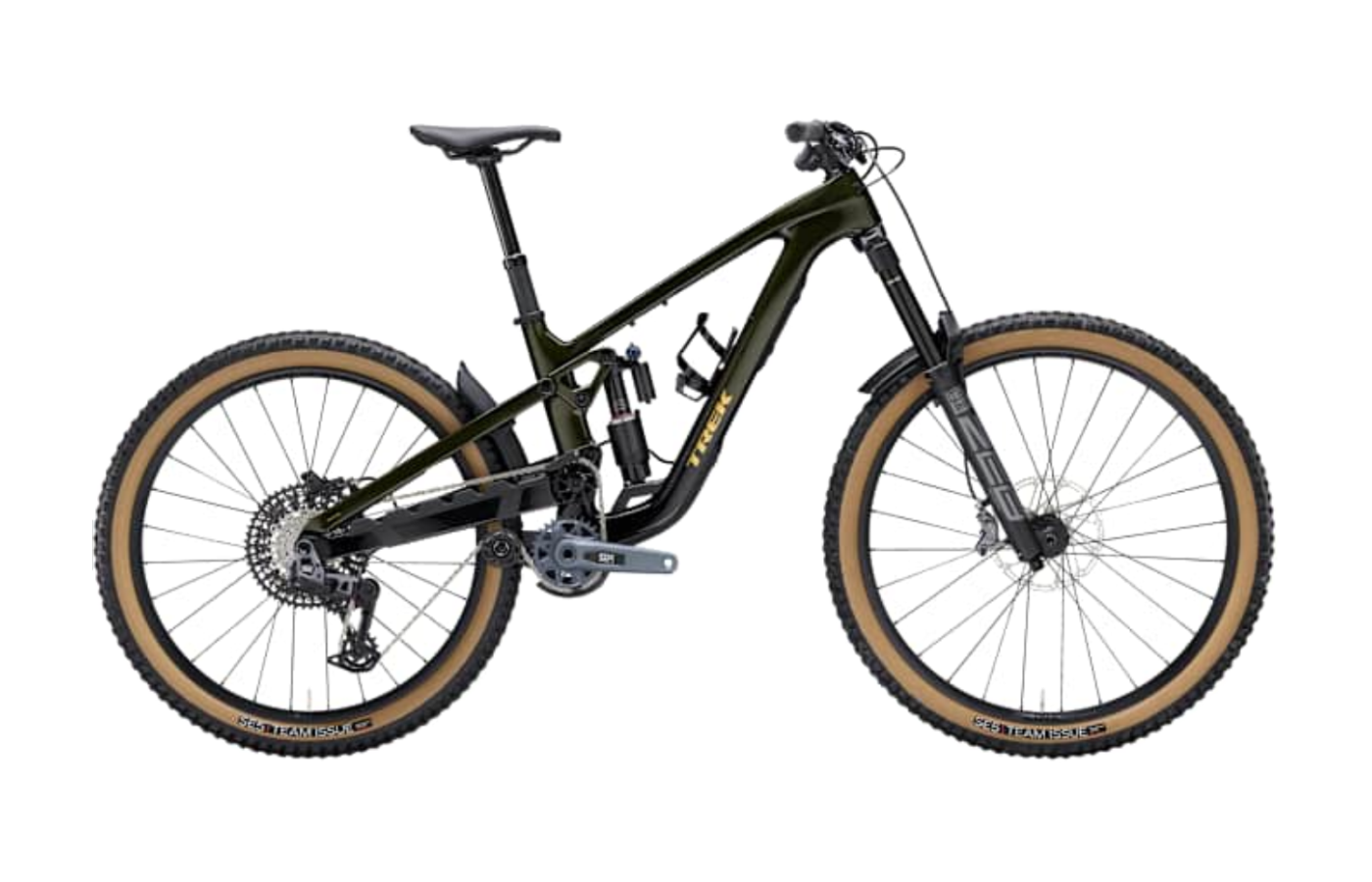
Two enduro bruisers, two suspension religions.
The Megatower refines Santa Cruz's VPP for high-speed precision. The Slash trades silence for a high-pivot, idler-driven plow.
Megatower
- More efficient climber — VPP holds traction without the idler drag that haunts the Slash on long backcountry days.
- Lighter, simpler chassis — no idler, no extra pulleys, fewer wear points to babysit over a season.
- Lifetime warranty on frame, bearings, and Reserve carbon rims — class-leading long-term ownership story.
- Carbon-only — no aluminum option means a $6,099 price floor.
- Stiff chassis can feel chattery on high-frequency trail noise versus a high-pivot bike.
Slash
- Plows through chunder — the high-pivot rearward axle path scalps square-edge hits the Megatower has to muscle through.
- Aluminum entry point — the Slash 8 starts at $4,399, putting modern high-pivot tech within reach without a carbon tax.
- Mullet agility — the 27.5 rear wheel keeps a 170/170 mm bike from feeling like a freight train in tight corners.
- Idler and extra pulleys add audible drag and meaningful drivetrain maintenance.
- Stalls on technical low-speed climbs — that rearward axle path works against you going up.
Editor’s analysis
On paper they look like the same bike — 170 mm forks, 63-degree head angles, 35-pound carbon enduro rigs. On the trail, they barely speak the same language.
The Santa Cruz Megatower runs a refined Virtual Pivot Point platform with 165 mm of rear travel, size-specific chainstays, and a full-29er wheel package. Reviewers consistently describe it as balanced, centered, and 'spritely' on the climbs — a bike that gives you back what you put in. The Trek Slash Gen 6 throws all of that out and adopts a high-pivot layout with an idler pulley, 170 mm of rear travel, and a mullet (29/27.5) wheel setup. Reviewers call it a 'mini-DH bike,' a 'security blanket,' a 'cheat code' for steep, chunky terrain.
The high-pivot is the whole story on the Slash. The rearward axle path means the rear wheel moves back as it absorbs square-edged hits — rocks, ledges, root steps — instead of getting hung up on them. Combined with the RockShox Vivid shock that comes on most builds, the result is an almost coil-like suppleness that erases trail chatter. The penalty: an extra idler, two extra pulleys, more chain, and a measurable 3-10% drag in real-world conditions. Reviewers are unanimous that it's noticeably noisier and slower at low speeds.
The Megatower keeps things mechanically simple and pays you back in pedaling efficiency. The VPP linkage tracks well on technical climbs and holds the rider centered between the wheels. With 5 mm less rear travel, a touch less wheelbase (1236 mm vs 1253 mm at the compared sizes), and full-29er rollover, it carries speed without the idler tax. The trade is clear at the bottom: the Megatower's stiff carbon chassis and Reserve wheels can feel 'harsh' or 'chattery' on high-frequency noise where the Slash just floats.
Put another way: the Megatower is the bike for the rider who climbs to descend and wants both halves to be enjoyable. The Slash is the bike for the rider who tolerates the climb to access the descent and wants the descent to feel like cheating.
Where the builds differ.
Comparing our editor's-pick builds side-by-side. Winners highlighted row-by-row — lower price and weight, and the better-spec component, each mark a point.
Build variants & pricing
Both lineups span roughly $4k–$10k of range, but the Slash starts $1,700 lower thanks to its aluminum builds. Santa Cruz is carbon-only.
Prices are current US MSRP. The Megatower is offered exclusively in carbon (C and CC layups), while the Slash offers two aluminum builds — the Slash 8 ($4,399) and 9 ($5,799) — that bring the high-pivot platform within reach for half the price of the carbon flagships.
How they fit, how they steer.
Both fit the same 5'8" rider but at different conventions — Medium on the Megatower, M/L on the Slash. The Slash is the slightly longer bike (1253 mm wheelbase vs 1236 mm) with a half-degree slacker head angle (63.3° vs 63.8°); the Megatower's chainstays are 3 mm longer for its size.
Which size should I buy?
Stack, reach, and effective top tube anchor each size. The Slash's M/L sits between the Megatower's M and L — pick by reach if you're between sizes.
→These are starting points. Flexibility, riding style, and preferred position all shift the answer — if you’re between sizes, a professional fit beats a chart.
What the magazines said.
Published reviews from trusted cycling outlets. Click through for the full write-up.
Which one should you buy?
If you climb to descend and want both halves to be fun, get the Megatower. If you tolerate the climb to access steep, ugly terrain, get the Slash.
Megatower
If your weekends look like 3,000-foot climbs to access a single committing descent, the Megatower's VPP platform and centered fit will repay every pedal stroke. It rewards aggressive, precise riders who want a balanced bike that climbs without compromise — and stays mechanically simple for the long haul.
Slash
If most of your riding is steep, loose, and consequence-rich — bike park laps, shuttle days, North Shore tech — the Slash's high-pivot suspension is a security blanket. The aluminum builds also make it the easiest path into modern enduro tech without a five-figure check.
Questions buyers actually ask.
Short answers to the things we get emailed about most often.
01Which one descends faster on rough, square-edged terrain?
The Trek Slash, decisively. Its high-pivot suspension layout moves the rear wheel rearward as it compresses, which lets it scalp through square-edge hits — rock ledges, braking bumps, root steps — that the Megatower's VPP linkage has to muscle through. Reviewers across Flow MTB, The Loam Wolf, and BikeRadar consistently describe the Slash as having a coil-like suppleness on chunky terrain that the Megatower can't match.
The Megatower is no slouch — it's still a 170/165 mm carbon enduro bike — but its character is 'precise and balanced' rather than 'plowing.' On smooth flow trails the gap shrinks to nothing.
02Which one climbs better?
The Santa Cruz Megatower, especially on technical climbs. Reviewers describe it as 'spritely' for its category — the VPP platform tracks well over baby-head rocks, and there's no idler drag eating watts. The Slash, despite roughly 100% anti-squat that keeps it surprisingly efficient on smooth fire roads, can stall on chunky technical climbs because that same rearward axle path that helps descending works against you going up.
The Loam Wolf estimated the Slash's idler system costs closer to 10% efficiency in real-world conditions versus Trek's claimed 3%, particularly when the chain and pulleys are dirty.
03Why does the Slash have an idler pulley and the Megatower doesn't?
The idler is what makes the high-pivot work. Moving the main pivot way up the frame creates the rearward axle path that's so good at absorbing square-edge hits — but it also massively increases chain growth as the suspension compresses. Without an idler to reroute the chain, you'd get severe pedal kickback. The Slash uses a 19-tooth upper idler plus a lower MRP guide.
The Megatower's VPP layout keeps the main pivot in a more conventional position, so chain growth stays reasonable and no idler is needed. Simpler, quieter, less to maintain — but no rearward axle path, so it doesn't plow square edges the same way.
04Aluminum or carbon — what's the difference, and is it worth it?
Only the Trek Slash offers an aluminum option. The Slash 8 ($4,399) and Slash 9 ($5,799) use Alpha Platinum aluminum frames; the carbon Slash 9.8/9.9 builds run from $6,699 to $8,699. The aluminum builds weigh roughly 39 lb — 3-4 lb heavier than the carbon — but they get the same high-pivot kinematics and the same 170 mm of travel. Bike Magazine called the alloy Slash 9 'a great excuse to make poor choices' in the bike park.
The Megatower is carbon-only. Santa Cruz offers two layups (C and CC) — the CC is roughly 300-400 g lighter for the same stiffness. There is no alloy entry point, which is why the Megatower starts at $6,099.
05How much maintenance does the Slash's idler system actually require?
More than a conventional bike, but not crippling. Reviewers consistently noted that the Slash is quiet and efficient when the chain and idler pulleys are clean and lubricated, but gets 'audibly loud' and noticeably draggier when neglected. Bike Magazine reported a top idler pulley seizing after several months of wet riding, requiring a teardown and regrease.
There's also the resolved chain-drop issue: early Slash Gen 6 builds shipped with incorrect MRP guide spacing, causing chain drops. Trek issued a service bulletin and ships updated parts to dealers at no cost. If you're buying a Slash, verify your shop has applied the spacer fix and the updated upper idler.
06Which has the more capable stock build at the editor's-pick price?
Compared apples-to-apples at the GX AXS Transmission tier, the Trek Slash 9.8 GX AXS T-Type ($7,699) carries a slight edge over the Santa Cruz Megatower GX AXS ($7,249) on suspension. The Slash gets the RockShox Vivid Select+ rear shock — widely praised as 'coil-like' — paired with a ZEB Select+ fork. The Megatower runs a Fox Float X Performance Elite shock and Fox 38 Performance Elite fork, also excellent but a tier below the Vivid in plushness reviews.
The Megatower fights back with size-specific Reserve aluminum wheels (lifetime warranty if you go RSV), Maxxis Assegai/DHR II rubber that most reviewers leave on, and the Burgtec Enduro stem. The Slash's stock Bontrager SE5 tires are nearly universally panned as 'too flimsy' for a 170 mm enduro bike — budget $100-150 for a tire swap day one.
07What's the maximum tire clearance on each?
Both frames clear up to roughly 63 mm (about 2.5") at the rear, which matches the stock spec on most builds — Maxxis DHR II 2.4 on the Megatower, Bontrager SE6 2.5 on the Slash. Neither bike is a 'mud bike' that swallows enormous tires, but both have plenty of room for the wider 2.5" enduro casings most aggressive riders prefer.
Worth noting: the Slash's mullet setup means the rear is a 27.5" wheel on Medium and up. If you want a full 29" rear on the Slash, Trek sells a separate shock mount (~$70) to convert it.
08What about warranty and long-term support?
Both brands offer a lifetime frame warranty to the original owner, plus crash-replacement programs. Santa Cruz extends its lifetime coverage to frame bearings and Reserve carbon wheels — meaning if you crack a Reserve rim on a rock, they replace it for free. That's a real differentiator for bike park use.
Trek's warranty covers the frame and offers a two-year crash-replacement on Bontrager carbon wheels. Trek has also been proactive on the Slash's idler issues, shipping updated parts to dealers at no cost to existing owners. Both companies have strong dealer networks; service experience will depend more on your local shop than the brand.
Similar bikes
If your priorities don’t map cleanly onto either of these, one of these adjacent bikes probably fits better.
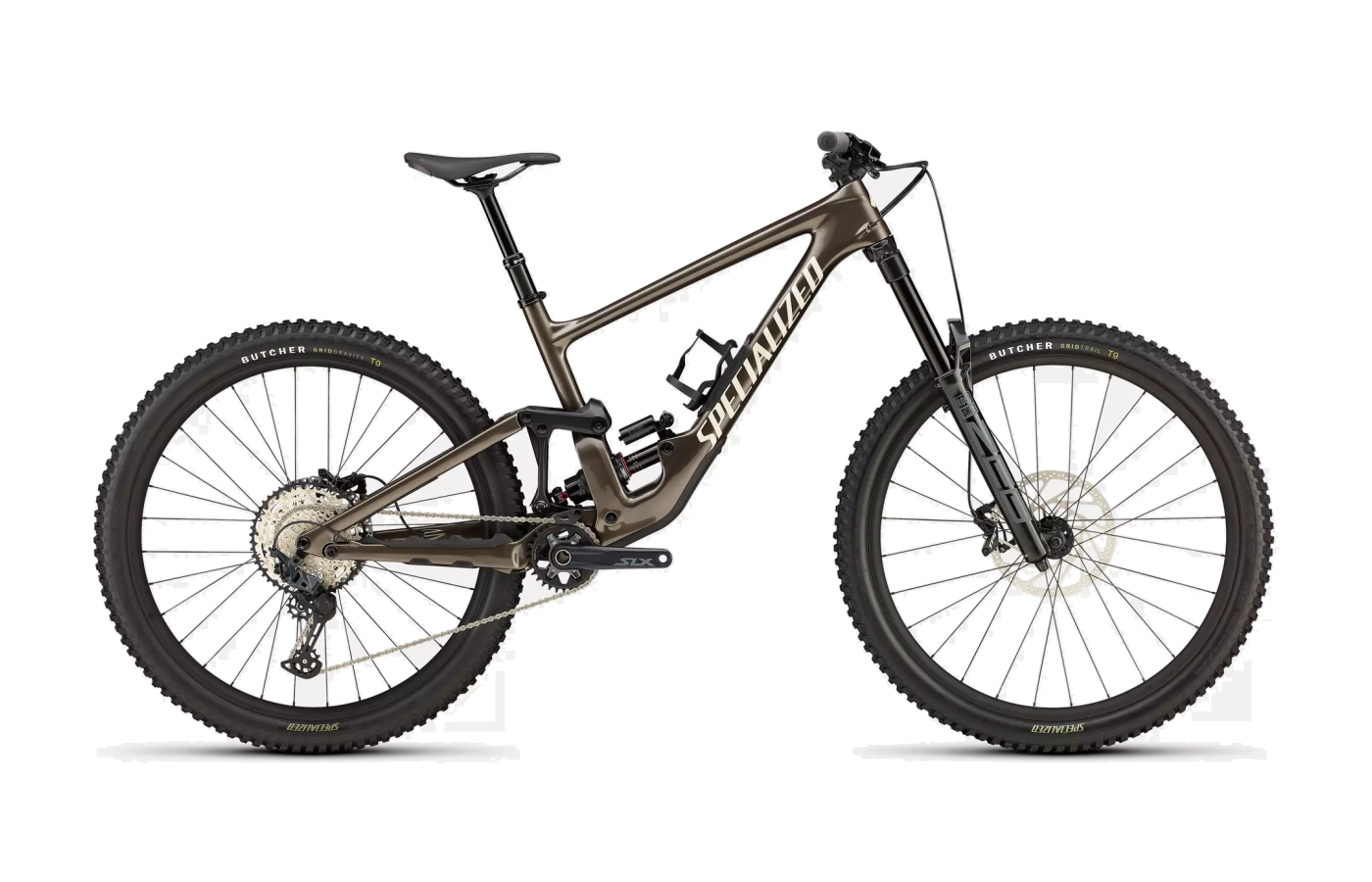
Enduro
The classic rival — similar travel, a more 'plow' suspension feel than the Megatower, and none of the idler complexity of the Slash. The bike for riders who want a third option that splits the difference.
Compare →Spire
Long, slack, alloy-friendly geometry like the Slash, but with a conventional Horst-link suspension that's lighter and easier to pedal all day. The pick for the rider who wants Slash-style attitude without the high-pivot tax.
Compare →Capra
The value-per-dollar king — direct-to-consumer pricing that significantly undercuts both Trek and Santa Cruz at every spec tier. The catch is no local dealer network and no demos; best if you already know your fit.
Compare →