Nomad
vsSlash
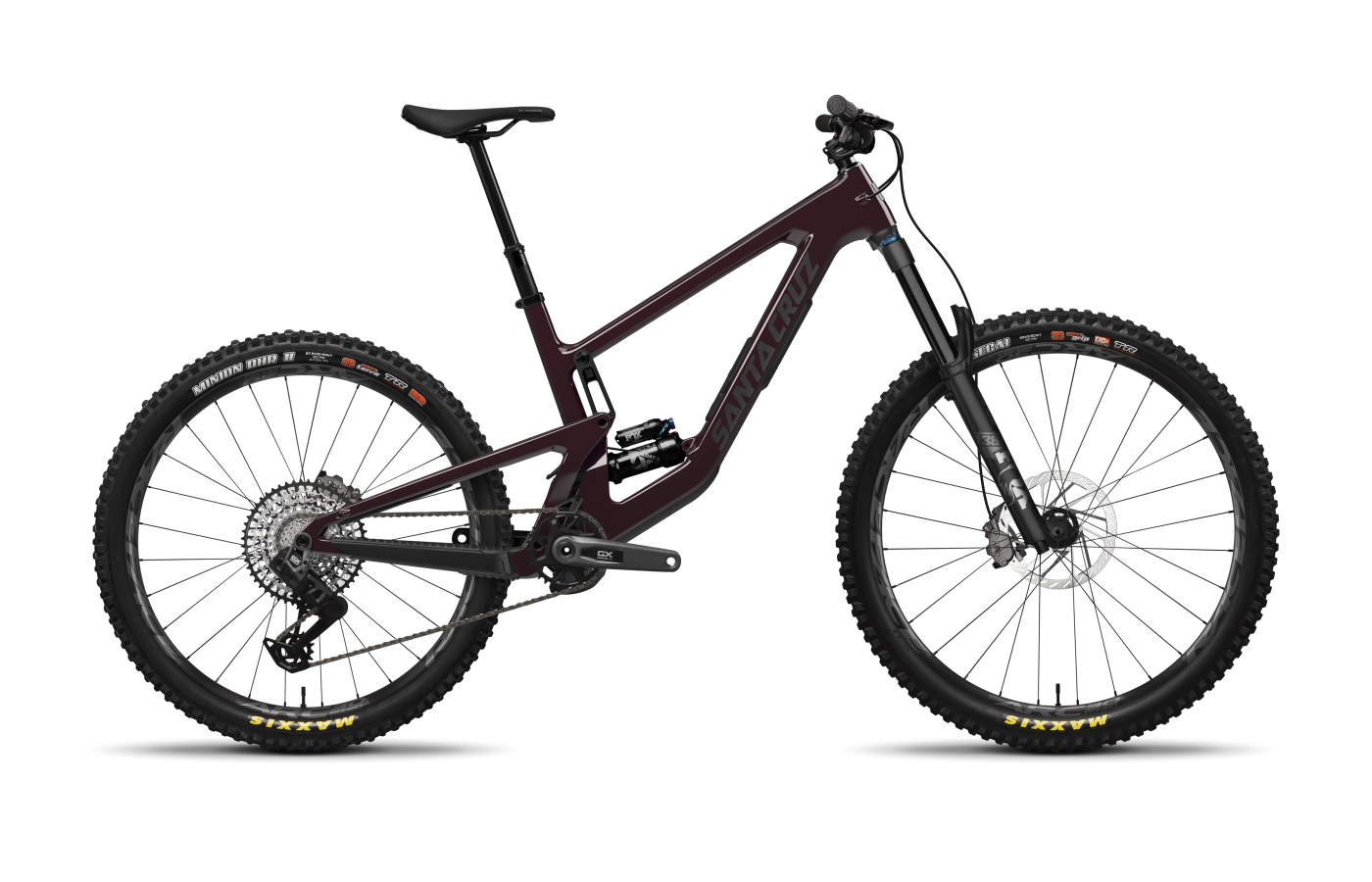
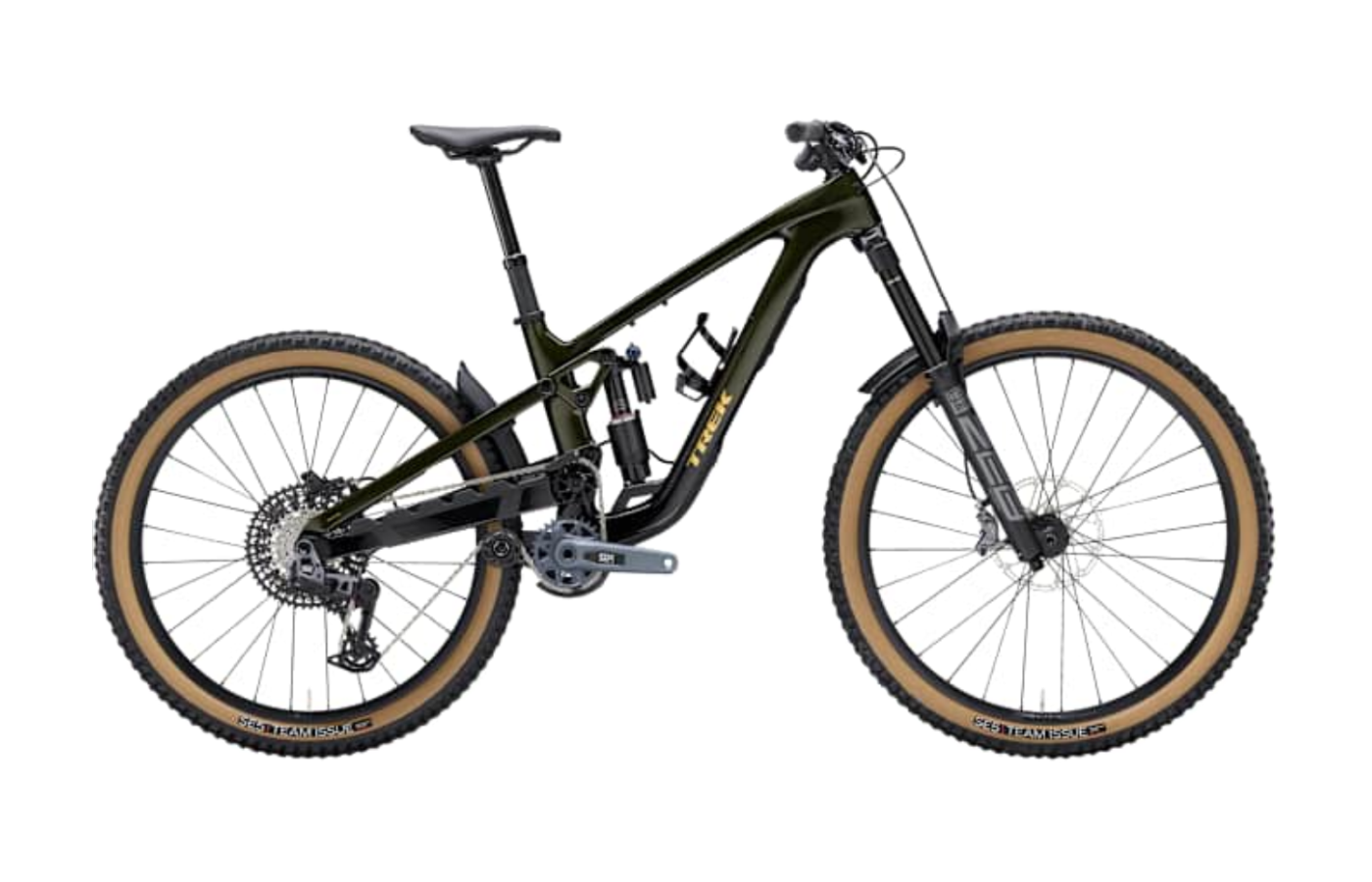
Two ways to survive a rock garden.
The Nomad is a 170 mm bruiser that still corners like a shifter-kart. The Slash is a high-pivot plow built to flatten everything in front of it.
Nomad
- Shifter-kart cornering — size-specific 440 mm chainstays plus the 27.5" rear initiate leans with almost zero rider input.
- Lighter on its feet — our editor's-pick GX AXS build comes in at 15.7 kg vs 16.6 kg-plus for the equivalent Slash.
- Lifetime bearings + warranty — Santa Cruz's long-term ownership program is the segment benchmark.
- Carbon-only — no alloy build means a $5,149 floor that's $750 above the entry Slash.
- EXO+ casing tires on air builds got panned by Blister and PinkBike — plan on a tire upgrade.
Slash
- High-pivot composure — the rearward axle path "scalps" square-edged hits in a way the VPP can't replicate.
- Alloy entry from $4,399 — the Slash 8 brings high-pivot suspension to a price the Nomad lineup never reaches.
- Rear-shock spec — the RockShox Vivid on most builds gets near-universal praise for coil-like suppleness.
- Idler drivetrain wants meticulous maintenance to stay quiet and efficient.
- Feels heavy and "sluggish" on flatter or low-speed terrain — it needs gradient to come alive.
Editor’s analysis
Same travel, same enduro intent — but the suspension architectures point at very different kinds of fast.
On the spec sheet these two look like twins. Both run 170 mm front and rear. Both ride mullet (29-inch front, 27.5-inch rear) out of the box. Both pair a slack 63-degree-ish head angle with a steep ~77-degree seat tube. Pull up images of either and you're looking at the modern enduro template. But the engineering philosophies sitting underneath are about as far apart as the category allows.
The Santa Cruz Nomad sticks with what Santa Cruz knows — the lower-link VPP layout, refined for a sixth iteration. The big move this generation is the mixed wheels and unusually long, size-specific chainstays (440 mm on the medium, scaling to 450 mm on the XXL). Reviewers from Vital and Blister keep using the same word: "shifter-kart." The bike initiates a lean with almost no input, holds a line through the chunk, and rewards a centered, upright body position. It is, by some distance, the more playful of the two.
The Trek Slash threw out its old four-bar and went full high-pivot with a 19-tooth idler. The point is the rearward axle path — the rear wheel actually moves backward on impact, so square-edged rocks get "scalped" rather than smashed into. Bike Perfect and Loam Wolf both note the bike feels calmer the faster you go, and noticeably less alive when you slow down. The trade is real: more drivetrain drag (Loam Wolf estimates 10% in the real world, Trek claims 3%), more stuff to maintain, and a chassis that wants gradient to feel like itself.
Put another way: if your favorite ride is a tight, technical descent where you have to make ten decisions a second, the Nomad gives you a lighter, quicker, more responsive tool. If your favorite ride is bombing a long, fall-line straightline where you'd rather not make any decisions at all, the Slash is the bike. The Trek also opens the door financially — it ships in alloy from $4,399, and there's no aluminum Nomad.
Where the builds differ.
Comparing our editor's-pick builds side-by-side. Winners highlighted row-by-row — lower price and weight, and the better-spec component, each mark a point.
Build variants & pricing
Both lineups span roughly $4.5k of range. The Slash starts $750 cheaper and offers two alloy builds; the Nomad is carbon-only and tops out higher.
Editor's picks are tier-matched at SRAM GX AXS T-Type — the Nomad GX AXS ($7,249, Carbon C frame) vs the Slash 9.8 GX AXS T-Type Gen 6 ($7,699, OCLV Mountain Carbon). Both ship with 170 mm forks and a Vivid- or Float X-class rear shock. Prices are current US MSRP.
How they fit, how they steer.
The fit-picked sizes for a 5'8" rider land on the Nomad M and Slash ML. Reach is close (455 mm vs 468 mm), but the Slash sits 7 mm taller in the stack and runs a slacker 63.3° head angle vs the Nomad's 63.8°. Static chainstays favor the Nomad's stability bias (440 vs 434 mm) — though the Slash grows its rear center as it cycles through travel.
Which size should I buy?
Trek sizes the Slash on a five-step S/M/ML/L/XL run; Santa Cruz uses S/M/L/XL/XXL. The ML slot is part of why the Slash often fits riders between traditional sizes more cleanly.
→These are starting points. Flexibility, riding style, and preferred position all shift the answer — if you’re between sizes, a professional fit beats a chart.
What the magazines said.
Published reviews from trusted cycling outlets. Click through for the full write-up.
Which one should you buy?
If you ride steep, tight, technical trails and want the bike to feel alive underneath you, get the Nomad. If you ride fast, rough, fall-line terrain and want a chassis that flattens it, get the Slash.
Nomad
If your home trails are tight, rooty, and full of corners — and you want a 170 mm bike that doesn't feel like a freight train when the speed drops — the Nomad is the more engaging tool. The long, size-specific chainstays make it stable, but the mullet rear and refined VPP keep it quick from turn to turn.
Slash
If most of your descending is high-speed, square-edged, and gravity-fed, the Slash's high-pivot kinematics give you a margin no traditional layout can match. The penalty is real — more weight, more drivetrain drag, more idler maintenance — but the bike rewards going faster, not slower.
Questions buyers actually ask.
Short answers to the things we get emailed about most often.
01Which one is faster on a real enduro descent?
It depends on the descent. On a long, fast, square-edged track — the kind of EWS-style stage where you're holding the brakes off through chunder — the Trek Slash has the structural advantage. The rearward axle path keeps the wheel from getting hung up on hits that stall a conventional design, and Loam Wolf, Flow, and Bike Perfect all use words like "composure" and "plow" to describe the result.
On a tighter, more sinuous track with lots of direction changes, the Santa Cruz Nomad is the quicker bike. It's nearly a kilogram lighter in tier-matched trim, the long chainstays plant it through corners, and Vital's "shifter-kart" line really does describe how it carves. Most riders are not racing EWS — most are riding the second kind of descent.
02Which climbs better?
The Nomad, but the gap is smaller than the suspension diagrams suggest. Both run a steep ~77° seat tube angle and both are described by reviewers as efficient "winch" climbers rather than spry ones. The Nomad's edge is structural: no idler, no extra drivetrain drag, and the GX AXS build is roughly 0.9 kg lighter than the Slash 9.8 GX AXS.
The Slash's idler system adds friction that Trek estimates at 3% and Loam Wolf put closer to 10% in fatigued, real-world conditions. On a long fire-road grind that's noticeable. On a 20-minute climb to a lift line, less so.
03How bad is the Slash's chain-drop / idler issue?
Real, well-documented, and largely addressed. Early Gen 6 owners reported chain drops traced to a factory spacing error on the lower MRP guide; Trek issued a service bulletin specifying a 7 mm spacer stack to align with SRAM Transmission's 55 mm chainline, and shipped an updated upper idler with a longer tooth profile to dealers at no cost.
If you're buying new in 2026, the bike should arrive with the corrected setup. If you're shopping used, check the spacer config and the idler generation before the test ride. Beyond the chain-retention fix, the high-pivot drivetrain still wants more cleaning than a conventional one — Cycling Magazine and Bike Perfect both flagged this.
04Are the bikes available in aluminum?
Trek yes, Santa Cruz no. The Slash 8 ($4,399) and Slash 9 ($5,799) use Trek's Alpha Platinum Aluminum frame, and the alloy frameset is sold separately. Bike Magazine measured the alloy Slash 9 at 39.4 lb — a hoss, but it's the same high-pivot frame as the carbon bikes for under half the price of the flagship.
The Nomad V6 is offered only in Carbon C and Carbon CC. The cheapest Nomad ($5,149, build "70") is still $750 above the entry Slash 8, and there's no Nomad below that.
05Can I run a coil shock on either?
Yes on both, with caveats. The Nomad ships with an air shock (Fox Float X or Float X2 depending on build), and Santa Cruz publishes coil-shock setup guidance — multiple reviewers (MBR, BikeRadar) preferred the coil for the bike's bike-park-leaning identity.
The Slash Gen 6 ships with the air-sprung RockShox Vivid (Select+ on the GX build, Ultimate on the X0 build), and reviewers consistently described it as "coil-like" already. A coil swap is straightforward but less of an obvious upgrade than on the Nomad.
06Which has better tire clearance?
Effectively a tie. The Slash is rated for slightly wider rubber (~63.5 mm clearance per the spec sheet), and the Nomad sits just behind at ~61 mm. Both ship with 2.5" front / 2.4" rear tires on the GX-tier builds, which is the sweet spot for a 170 mm enduro bike.
More relevant than the millimeter difference: stock tire choice. Santa Cruz's air builds ship with Maxxis EXO+ casings (Assegai/DHR II) that Blister and PinkBike both said were under-built for the bike's intent. Trek's Bontrager SE5/SE6 spec got even worse press — Flow reported seven punctures from a single tire. Whichever you buy, budget $150 for DoubleDown- or DH-casing tires.
07Which has the longer-term value story?
Both come with lifetime frame warranties. Santa Cruz adds free lifetime bearing replacements, which over five years of riding is a real, recurring saving — pivot bearings on a 170 mm bike are not free.
Trek's offer is different in shape: a lifetime frame warranty plus a two-year crash-replacement on Bontrager carbon wheels, and the company has been visibly proactive on the Gen 6 idler issues (free updated parts shipped to dealers). If you keep bikes for 5+ seasons, the Nomad's bearing program tilts the math. If you cycle through bikes every two years, it matters less.
08Which fits a 5'8" (173 cm) rider?
Nomad: size M (455 mm reach, 625 mm stack). Slash: size ML (468 mm reach, 632 mm stack).
The Slash's five-step S/M/ML/L/XL run is deliberately built for riders who fall between traditional sizes — a 5'8" rider lands cleanly on the ML rather than having to choose between an undersized M and an oversized L. The Nomad's M is the more conservative pick at the same height; if you prefer a longer cockpit and ride aggressively, the L (475 mm reach) is in range too.
Similar bikes
If your priorities don’t map cleanly onto either of these, one of these adjacent bikes probably fits better.
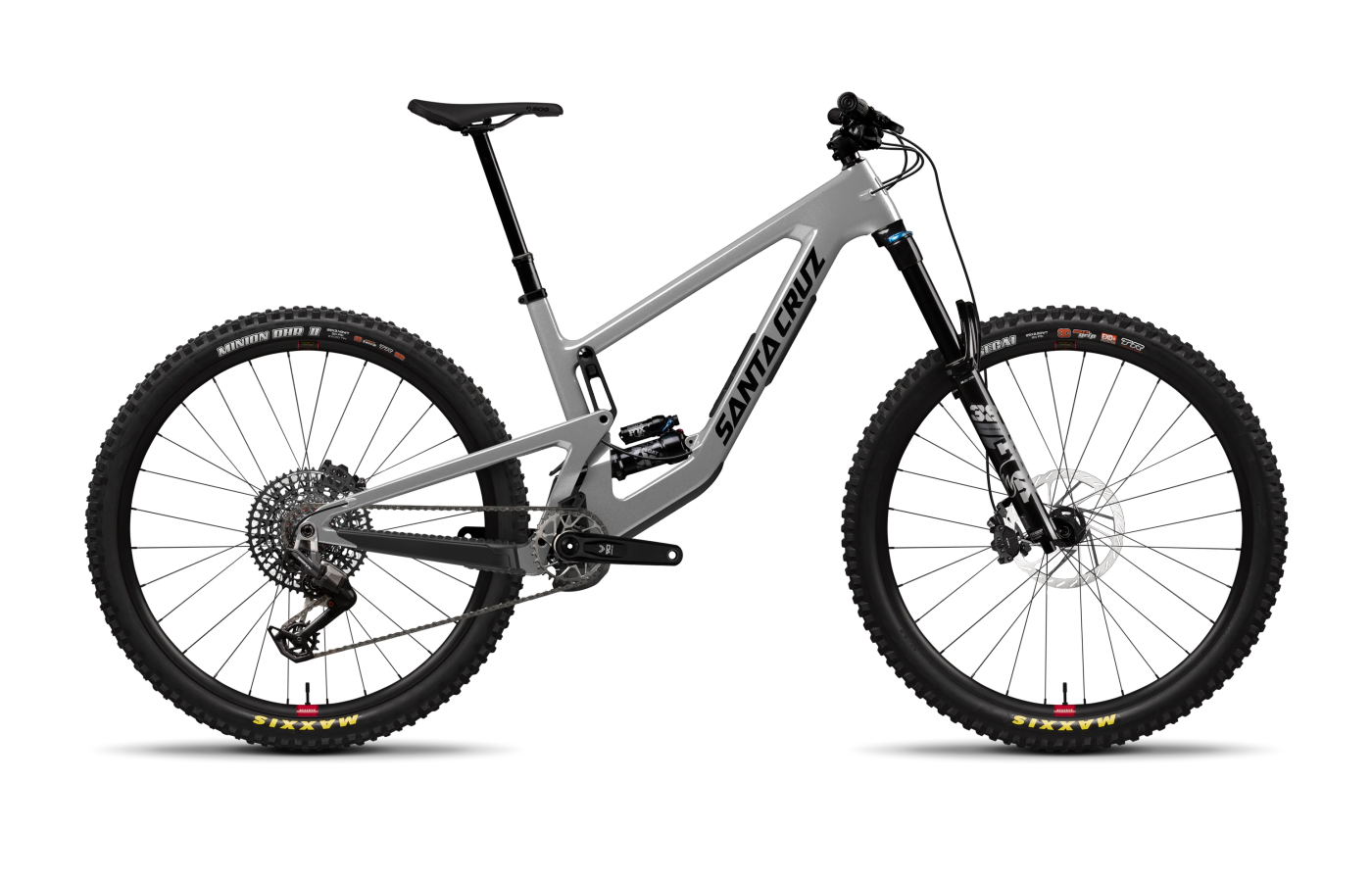
Megatower
Santa Cruz's full-29er enduro race sled — same VPP family as the Nomad but with twin big wheels and a more dedicated forward, race-oriented stance. Pick this if pure rollover and EWS posture matter more than the Nomad's mullet agility.
Compare →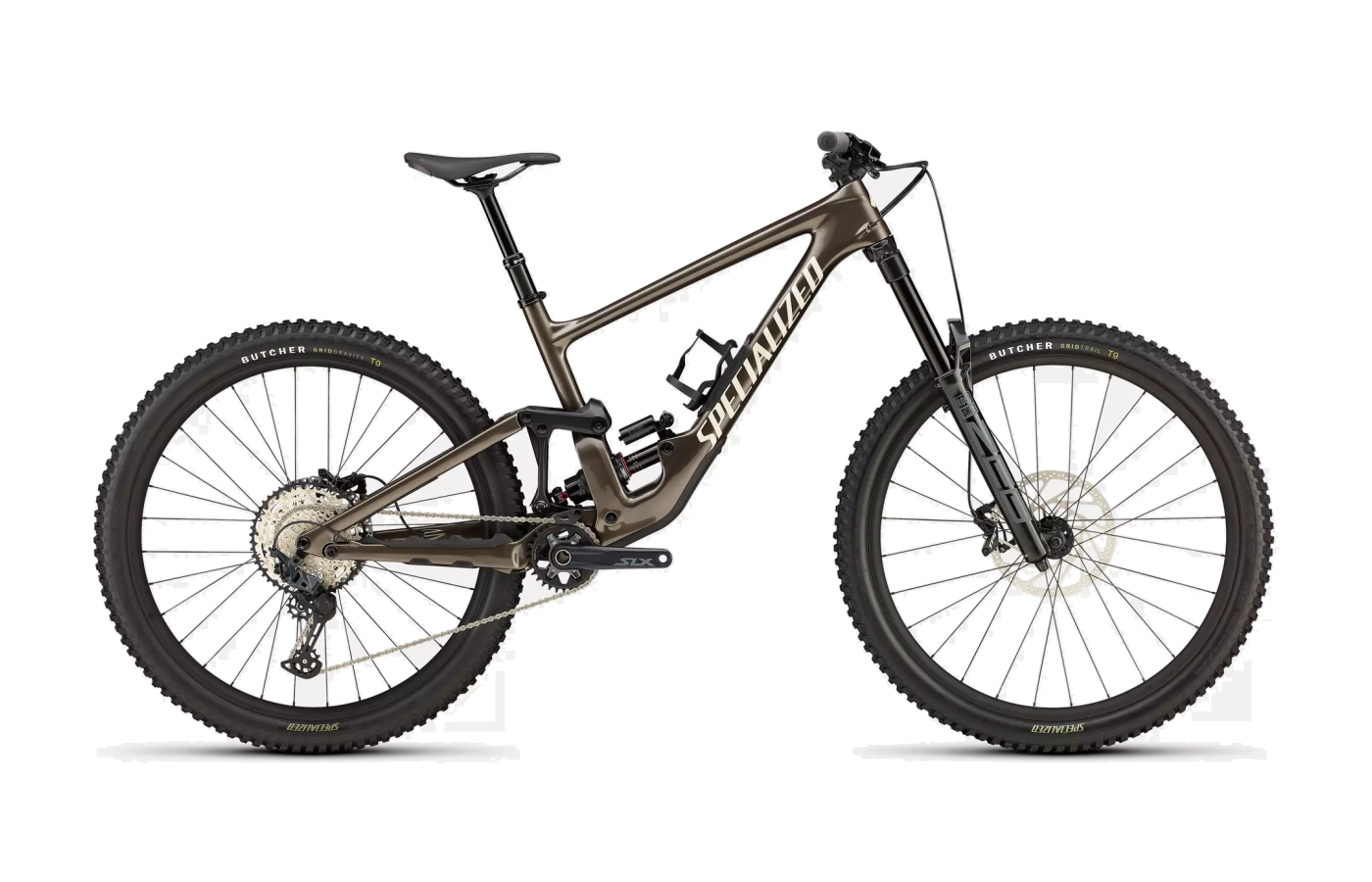
Enduro
The Specialized Enduro is the obvious 29er counter to the Slash — eats trail chatter with comparable composure but skips the idler complexity and the maintenance overhead that comes with it.
Compare →Spire
If the Slash 8's alloy proposition appeals but you'd rather skip the high-pivot drivetrain, the Transition Spire is the long, slack alloy 29er to look at — it punches above its price tag on steep, technical terrain.
Compare →