ARC
vsASR
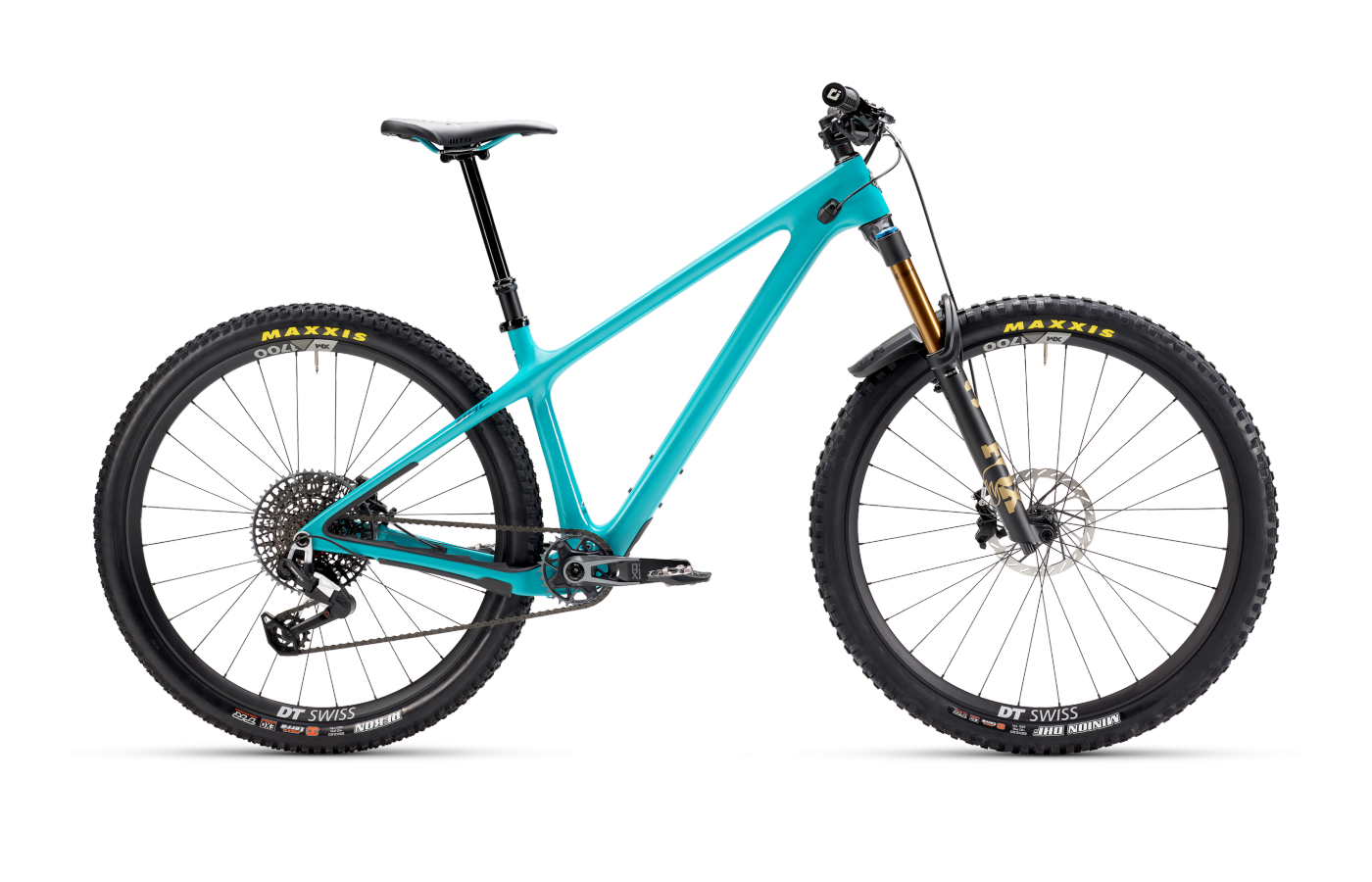
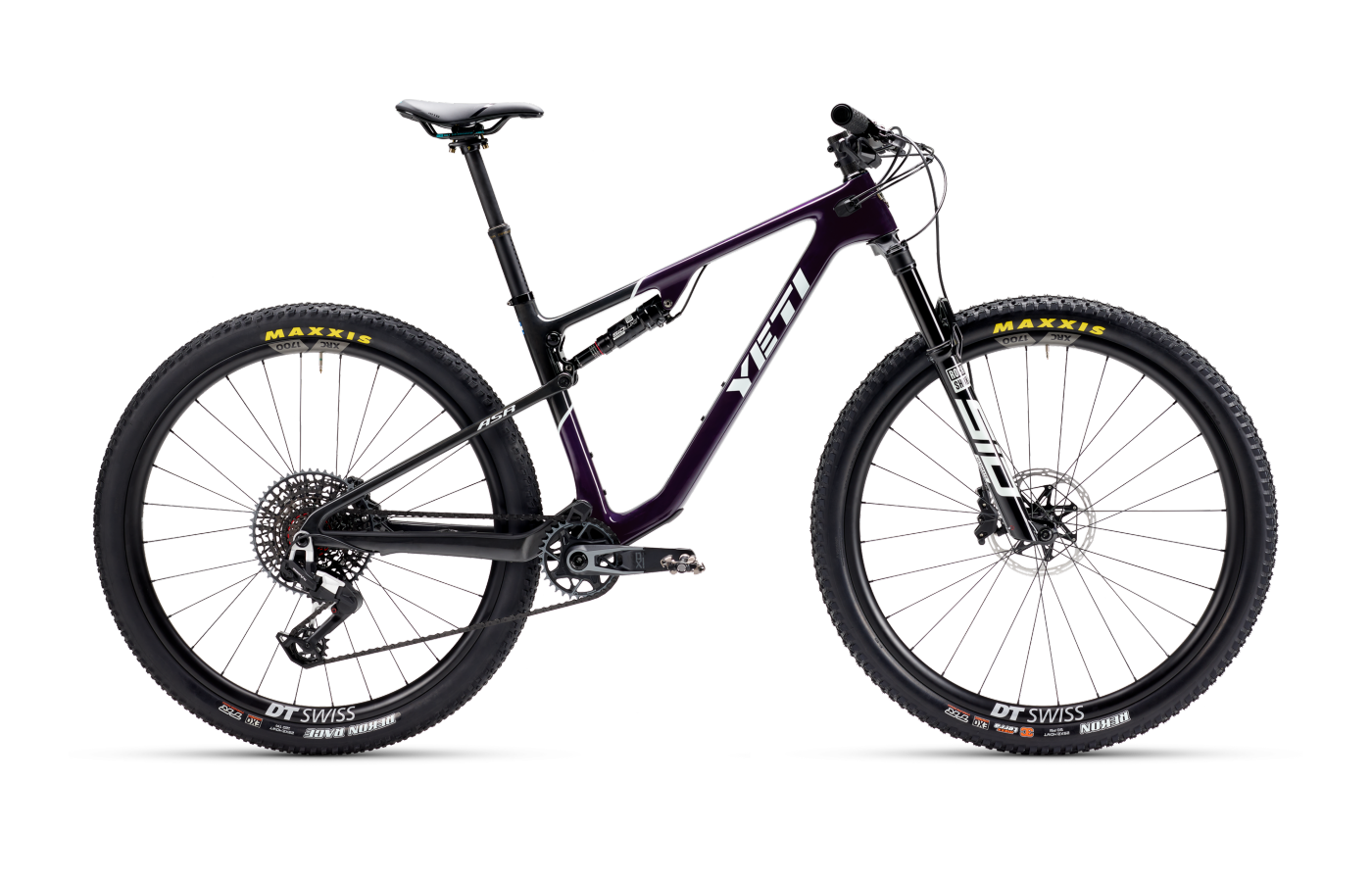
Same brand, opposite answers to the same trail.
The ARC is a 25-pound carbon hardtail that begs you to pedal harder. The ASR is Yeti's return to the World Cup with 115 mm of rear travel and a Switch-Infinity-free flex stay.
ARC
- Cheapest way in — C2 build starts at $4,500, well below any complete ASR.
- Snappy 25 lb chassis — light and direct; reviewers describe "instantaneous response" to pedal inputs.
- Silent ride — tube-in-tube internal routing eliminates the rattle that plagues most carbon hardtails.
- No rear suspension — testers say it can "break ankles" on rocky, ledgy terrain.
- Static 433 mm chainstays across every size — taller riders don't get a balanced rear-center.
ASR
- 115 mm of active travel — Yeti's 30% sag recommendation keeps the rear wheel hooked up on technical climbs.
- Size-specific chainstays (433–442 mm) keep weight balanced from XS to XL, instead of one length for everyone.
- Race geometry, trail comfort — 66.5° head angle and "healthy compliance" make 50-mile rough rides feel less like a meat grinder.
- Price floor of $6,000 — no sub-$5k entry, even on the C2 alloy-wheel build.
- Active rear end demands the TwistLoc lockout for sprints; "Open" mode bobs noticeably under power.
Editor’s analysis
Two Yetis, two ways to go fast — one moves you forward, the other gets out of your way.
On paper, the Yeti ARC and Yeti ASR sit close: same brand, both 29ers, both tuned for cross-country and downcountry trails, both running TURQ-series carbon and 30T-ish chainrings. But the answers they give to the same trail are basically opposite. The ARC has zero rear travel and a 130 mm Fox fork. The ASR has 115 mm of rear travel paired with a 120 mm RockShox SID. One is a sculpted hardtail; the other is a flex-stay race bike.
The Yeti ARC is the simpler, snappier, and substantially cheaper bike. Builds run $4,500 to $6,400 and the chassis weighs around 25 lb — light enough that reviewers describe it taking off like a "two-seater sports car" when you stomp the cranks. A 67-degree head angle and 76-degree seat tube put you in a centered, climb-friendly position; chainstays are a stubby 433 mm across every size. On flowy desert singletrack or punchy woodland loops it is, in MBR's words, "deliciously planted." On rocky, ledgy terrain it is honest about being a hardtail — testers warned it can "break ankles" if pushed too far into enduro country.
The Yeti ASR picks a different fight. It's purpose-built for modern XC racing, and the kinematics show it: a flex-stay single pivot with a linear leverage curve, Yeti's unconventional 30% recommended sag, and a 66.5-degree head angle that is actually a half-degree slacker than the ARC. The result, per Pinkbike and Escape Collective, is a bike that stays "glued to the ground" on technical climbs and "punches above its weight" on descents — at the cost of needing the 3-position TwistLoc lockout for hard sprints, and a price floor of $6,000 that climbs past $14,000 for the T5 Ultimate.
Put another way: the Yeti ARC is the bike for the rider who wants every pedal stroke to feel like progress and is happy to pick lines around the rough stuff. The Yeti ASR is the bike for the rider who treats a 50-mile technical race as the goal and wants the rear wheel to keep tracking when the trail gets ugly. They share a head badge, a paint scheme, and almost nothing else.
Where the builds differ.
Comparing our editor's-pick builds side-by-side. Winners highlighted row-by-row — lower price and weight, and the better-spec component, each mark a point.
Build variants & pricing
Both lineups are TURQ-carbon at the top and C-series carbon below, but the ASR scales a lot higher — to $14,300 — while the ARC tops out at $6,400.
Prices are current US MSRP. Both editor's picks (T2 X0/90 Transmission) run the same drivetrain tier and TURQ frame, so the spec table here is a clean apples-to-apples — the $2,000 ASR premium is what you pay for the rear suspension and shock.
How they fit, how they steer.
Both at size M, the fit-picked size for the default rider. Reach is identical at 444.5 mm; the ASR sits 41 mm lower in stack (race posture), runs a half-degree slacker head angle (66.5 vs 67), and adds ~4 mm to the chainstays.
Which size should I buy?
Size recommendations based on stack, reach, and effective top tube. The ASR offers an XS the ARC does not; both ranges otherwise track closely.
→These are starting points. Flexibility, riding style, and preferred position all shift the answer — if you’re between sizes, a professional fit beats a chart.
What the magazines said.
Published reviews from trusted cycling outlets. Click through for the full write-up.
Which one should you buy?
If you want a snappy, silent, sub-$6k carbon hardtail for fast singletrack, get the Yeti ARC. If you race XC or do all-day technical rides and need the traction of 115 mm of rear travel, get the Yeti ASR.
ARC
If your home trails are flowy, rolling singletrack and you'd rather feel every pedal stroke than smooth out every bump, the Yeti ARC delivers — a sculpted, silent 25 lb chassis that turns mellow trails into something exhilarating again.
ASR
If you race XC, log long technical days, or want a bike that stays composed when the trail turns chunky, the Yeti ASR's 115 mm of active travel and modern race geometry are the sharper tool — assuming you can stomach the price.
Questions buyers actually ask.
Short answers to the things we get emailed about most often.
01Which is faster on rough technical climbs?
The Yeti ASR, by a meaningful margin. Reviewers across Pinkbike, Escape Collective, and Bike Perfect highlighted that Yeti's recommended 30% rear sag — high for a 115 mm bike — keeps the rear wheel "in sync with the terrain" on rooty, rocky climbs where stiffer bikes skip and deflect.
On smooth fire-road climbs the gap shrinks. The ARC's static geometry doesn't sag under power, so the 76-degree seat tube stays steep and reviewers describe it as a "mountain goat" out of the saddle. If most of your climbing is buffed-out, the ARC's lighter chassis is competitive — even faster on short punchy efforts.
02What's the weight difference?
The Yeti ARC comes in around 25 lb across most builds (the T1 XT Di2 hits 25.41 lb stock). The lightest Yeti ASR complete — the T5 Ultimate at $14,300 — is 23.10 lb, but tier-matched builds tell a different story: the ARC T2 is 25.21 lb vs the ASR T2 at 23.91 lb.
So at the same drivetrain tier, the ASR is roughly 1.3 lb lighter despite carrying a rear shock and linkage. Yeti's flex-stay design and "no redundant carbon" philosophy got the bare frame down to 1,448 g for the wireless TURQ — among the lightest in the XC class.
03What's the maximum tire clearance?
Yeti ARC: designed around 2.6" tires and ships with a Maxxis Minion DHF / Rekon 2.6 combo. Reviewers consistently call out the high-volume rubber as essential — it's the bike's only real suspension and damps the carbon frame's feedback.
Yeti ASR: built around 2.4" tires (Maxxis Rekon 2.4 front / Rekon Race 2.4 rear stock). The race-leaning rubber rolls faster but offers less casing protection on rough terrain. Both bikes use a standard 148 mm Boost rear axle.
04Can the ARC handle the same terrain as a short-travel full-suspension bike?
Within limits, yes. On flowy, bermed, undulating singletrack, the Yeti ARC is genuinely more engaging than a full-suspension bike — Bike Magazine called it "unstoppable" on flow trails. The 130 mm Fox fork and 2.6" tires soak up most high-frequency chatter.
Where it stops keeping up is high-speed chunder and ledgy enduro-style descents. Mountain Flyer warned the ARC can "break ankles" if pushed too far into rocky terrain, and after a few minutes of sustained chatter, testers reported "feet aching" from the lack of rear support.
05Is the ASR still XC if it has a 66.5° head angle?
Yes — modern XC has shifted significantly. World Cup courses are more technical than they were a decade ago, and bikes have moved toward 66.5–67° head angles, 115–120 mm of travel, and 2.4" tires. The ASR is at the modern-XC end of that spectrum: race weight (sub-23 lb on the T5) but slacker than old-school XC.
That said, reviewers note it's not as stable at very high speed as longer trail bikes (or even Yeti's own SB120), and the svelte chassis can "twang" when pushed on truly black-graded tracks. It's a race bike that can descend, not a downcountry bike that can race.
06Why does the ASR need a remote lockout?
Because Yeti's recommended 30% sag is unusually deep for a 115 mm XC bike. That depth is what gives the ASR its category-leading climbing traction and "muted" descent comfort, but it also means the rear end visibly bobs under hard out-of-saddle pedaling.
The 3-position TwistLoc (Open / Pedal / Lock) on the SIDLuxe shock isn't optional — Pinkbike and Escape Collective both call it a "requirement" for sprints and smooth fire-road climbs. The top T5 Ultimate build automates this with RockShox Flight Attendant. The ARC sidesteps the whole question by having no rear shock to bob in the first place.
07Are the chainstays really the same length on every ARC size?
Yes — the Yeti ARC uses a static 431.8 mm chainstay length from S to XL. That's a stubby, agile rear-center on every size, but taller riders end up with their weight more rearward relative to the front wheel.
The Yeti ASR scales rear-center with frame size: 431.8 mm on XS, ~437 mm on M, 439 mm on L, 442 mm on XL. Reviewers cited this as one of the more thoughtful details on the ASR — XL riders don't feel like they're hanging off the back, and S riders keep the snappy feel.
08Which has the better warranty and long-term ownership story?
Both come with a Yeti frame warranty (multiple sources cite "lifetime" for the current ARC and a "5-year" frame warranty for the ASR — Yeti's policies vary by region and year, so verify with your dealer at point of purchase).
The ASR uses a threaded bottom bracket, a feature reviewers consistently praised as a long-term win for serviceability. The ARC still uses a press-fit BB92 — MBR called this out as a missed opportunity. Both bikes use the SRAM Universal Derailleur Hanger (UDH), so replacement hangers are easy to source globally.
Similar bikes
If your priorities don’t map cleanly onto either of these, one of these adjacent bikes probably fits better.
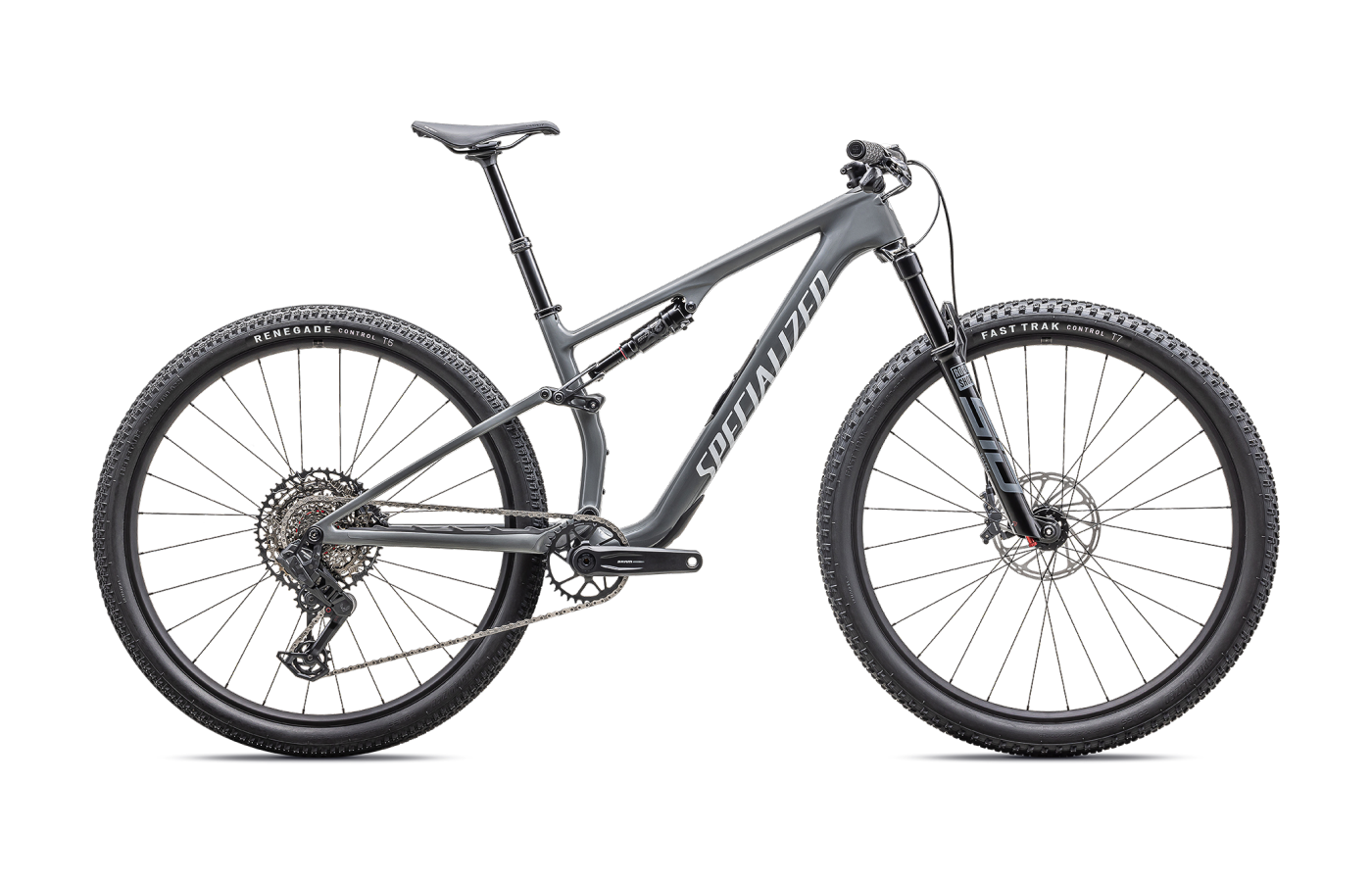
Epic
The benchmark for modern XC racing — slightly slacker head angle, integrated SWAT frame storage, and a deeper bench of build options than the ASR. The reference point if pure race performance is the goal.
Compare →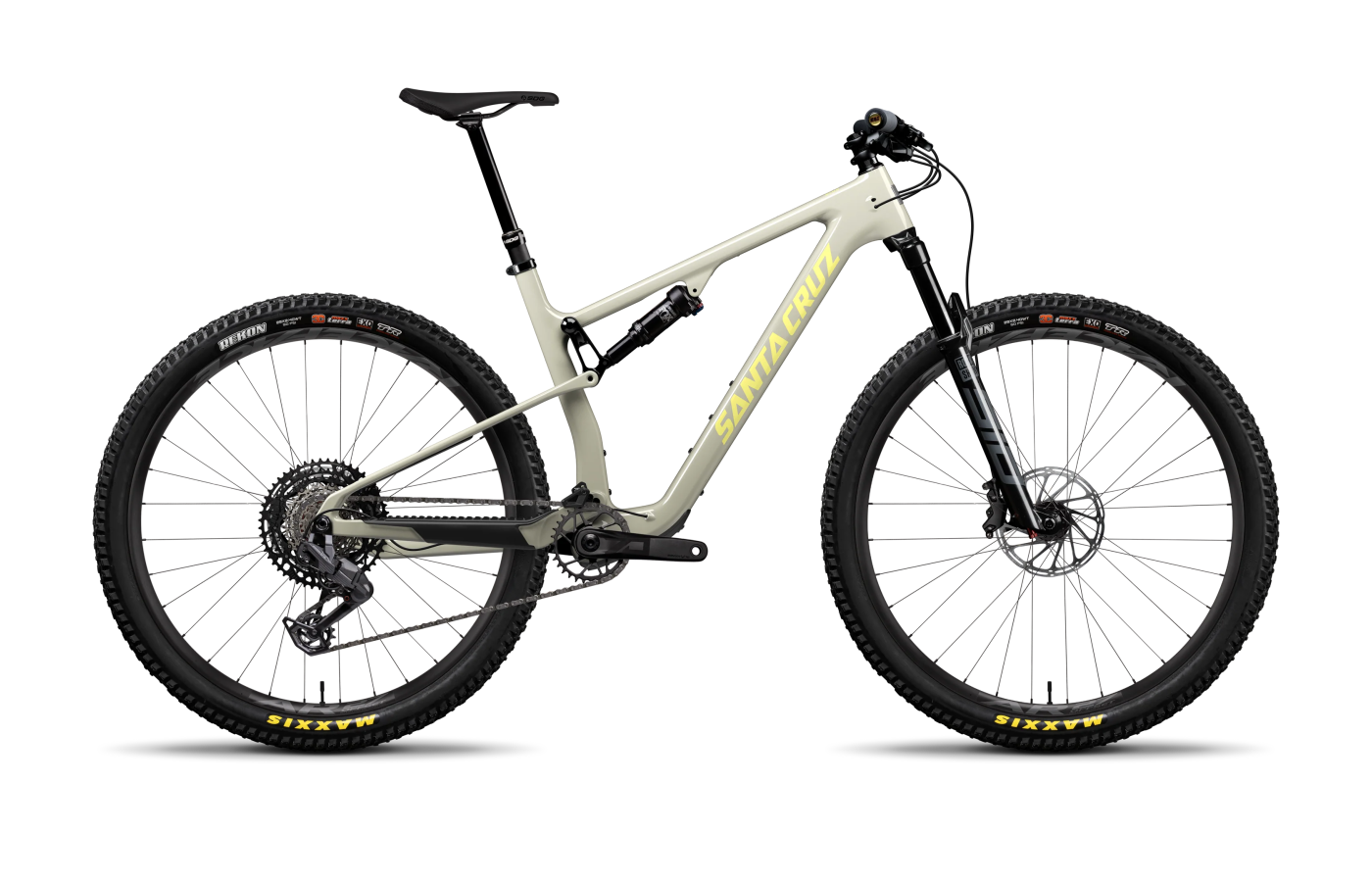
Blur
The ASR's most direct rival — a similar flex-stay short-travel race bike that reviewers describe as more active and slightly less firm under power. Worth the cross-shop if you're already considering the ASR.
Compare →DV9
If you like the ARC's hardtail philosophy but can't justify the boutique price, the DV9 delivers a similar carbon trail-hardtail formula with more progressive geometry at meaningfully better value.
Compare →