Checkmate
vsCheckpoint
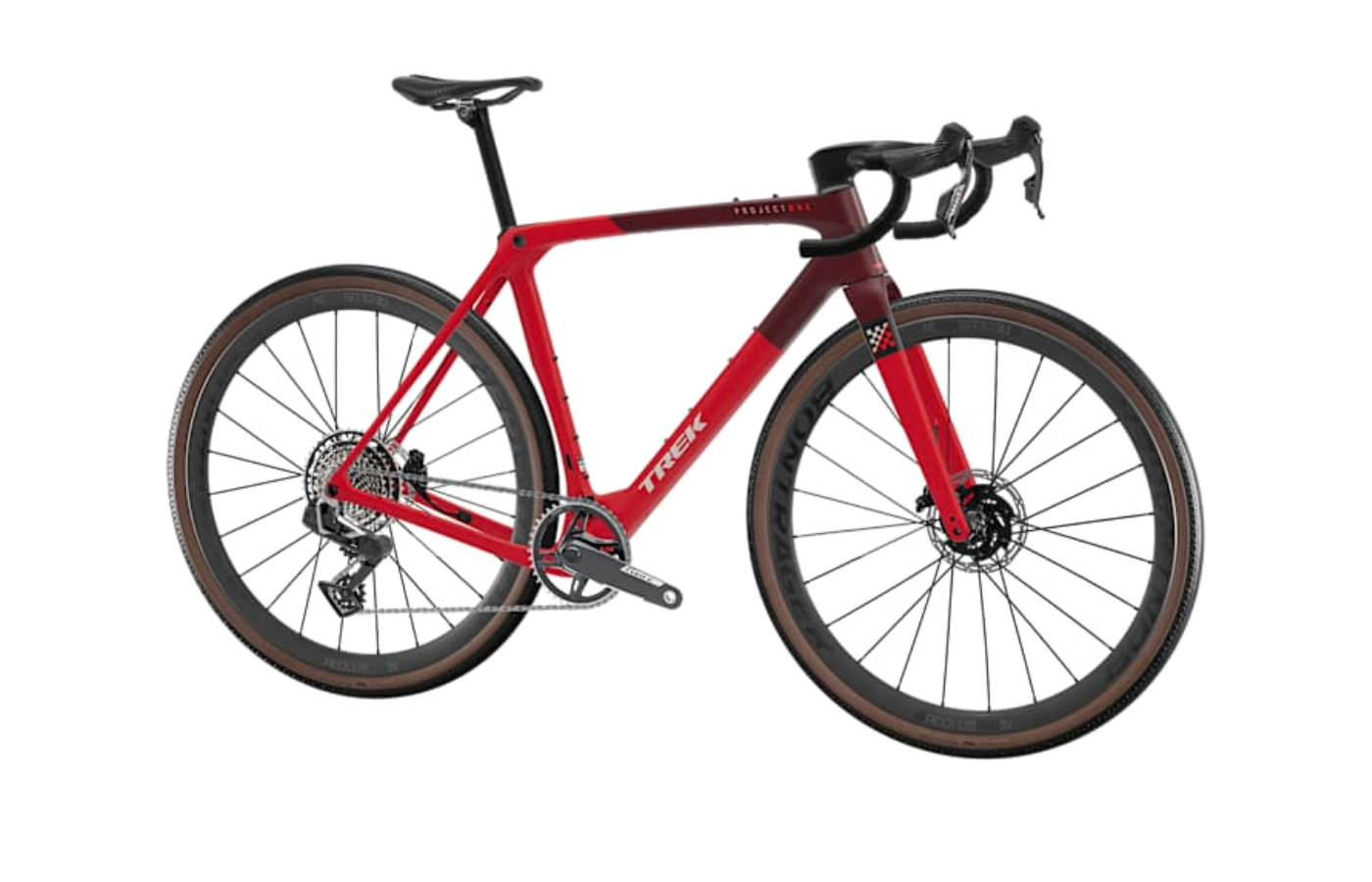
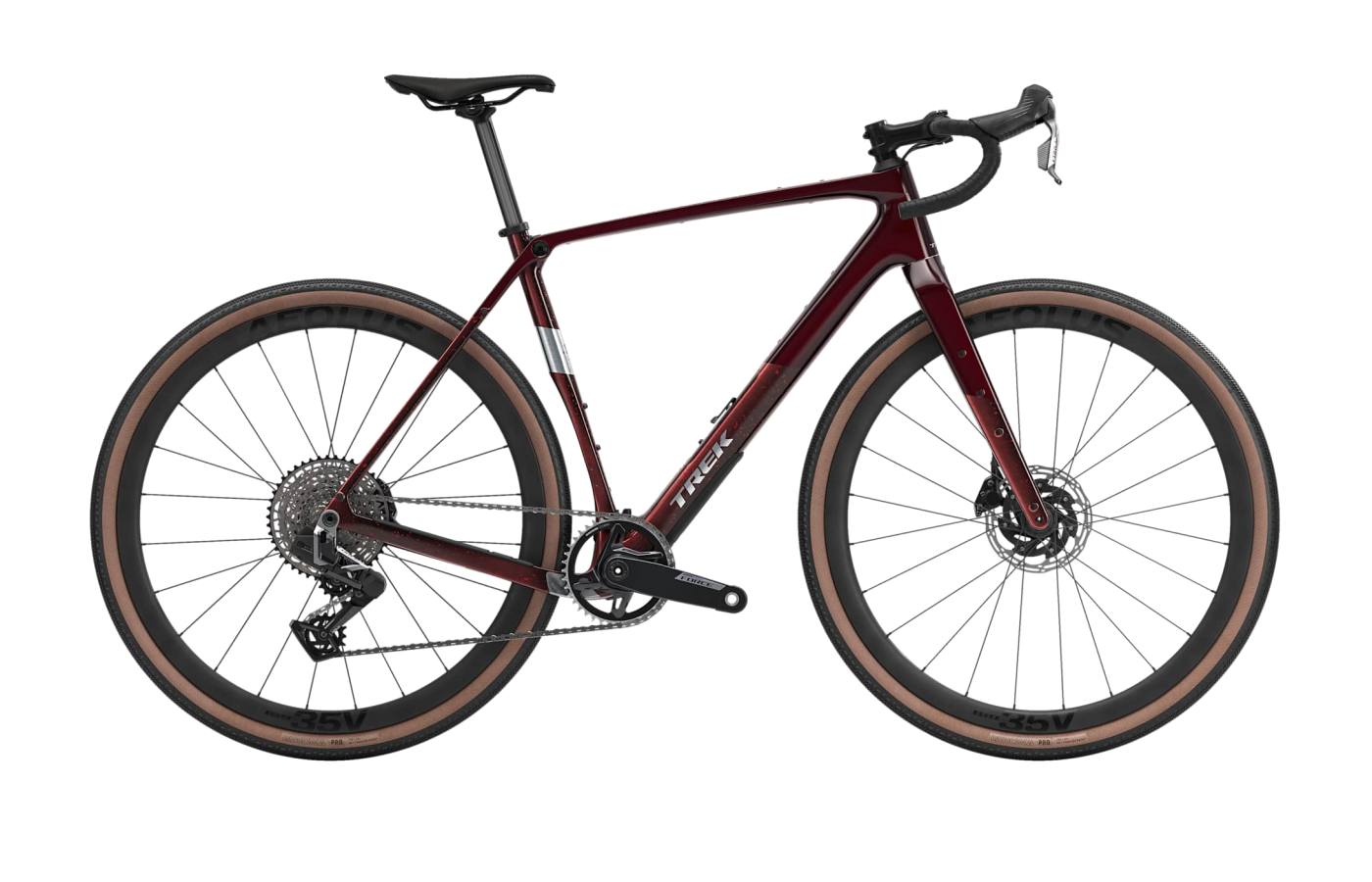
Same badge, two different bikes.
Trek split its gravel line in half: the Checkmate is the Madone-derived race weapon, the Checkpoint is the all-day adventure rig.
Checkmate
- Aero-road DNA — Madone-derived tube shaping and Aero RSL cockpit deliver measurable time savings on rolling, non-technical courses.
- Lighter build at 8.47 kg (SLR 7, size ML) — roughly 860 g less than the equivalent Checkpoint.
- IsoSpeed rear compliance — lets you stay seated and keep power on washboard where other race bikes force you out of the saddle.
- 45 mm tire ceiling — reviewers reported rubs with 50 mm Maxxis Ramblers; no room for the 2.1" tires winning Unbound.
- No storage, minimal mounts, carbon-only — $8,199 floor makes it a dedicated second bike for most buyers.
Checkpoint
- True do-it-all — 50 mm tire clearance, downtube storage, rack and fender mounts, dropper and 40 mm suspension fork compatibility.
- Wide build range — $1,599 alloy to $6,499 carbon with Force AXS; the ALR 5 is widely called the best sub-£2k gravel bike on sale.
- Endurance geometry — higher stack and shorter reach than Gen 2, with IsoSpeed and a two-piece cockpit keeping the front end kind on long days.
- Heavier across the range — the carbon SL 7 lands at 9.33 kg, not light for the money.
- Through-the-headset cable routing on mechanical builds means shift-cable changes can run $200 in shop labor.
Editor’s analysis
This isn't a generational update — it's a divorce. One bike chases podiums on hardpack, the other carries you past the horizon.
The Checkmate replaced the old Checkpoint SLR when Trek decided the "do-it-all" gravel bike couldn't win races anymore. It's built from 800 Series OCLV carbon, borrows the Aero RSL cockpit and Full System Foil tube shapes straight off the Madone Gen 8, and weighs roughly 1.5 lb less than the bike it replaced. Trek claims 5:54 faster over the Unbound 200 course at 200 watts — a number backed by reviewers who described it as "the best endurance road bike there ever was."
The Checkpoint Gen 3 moved the opposite direction. A shorter reach, taller stack, 76 mm BB drop (vs. the Checkmate's 80 mm), 50 mm tire clearance (vs. 45 mm), downtube storage, rack and fender mounts, dropper and short-travel suspension fork compatibility — this is the adventure tool. At our compared sizes, the Checkpoint's stack sits only 4 mm taller than the Checkmate's, but the bike's whole personality has shifted toward comfort over posture.
Where they overlap: both run Trek's IsoSpeed decoupler, both use T47 threaded BBs and UDH, both offer a sub-$10k Force XPLR AXS build that makes an apples-to-apples comparison possible. Where they diverge: the Checkmate starts at $8,199 with no carbon rung below it; the Checkpoint starts at $1,599 in alloy and tops out at $6,499. Five grand of range sits between these two platforms with zero overlap.
Put simply: the Checkmate is the bike you buy if your calendar has race numbers on it. The Checkpoint is the bike you buy if your calendar has overnight bags.
Where the builds differ.
Comparing our editor's-pick builds side-by-side. Winners highlighted row-by-row — lower price and weight, and the better-spec component, each mark a point.
Build variants & pricing
Tier-matched at Force XPLR AXS: Checkmate SLR 7 AXS at $8,199 vs. Checkpoint SL 7 AXS at $6,499. Same drivetrain, different frame missions.
Prices are current US MSRP. The Checkmate has no sub-$8k option — Trek only sells it in 800 Series carbon. If budget matters, the Checkpoint's $1,599 ALR 3 is the only entry point to the platform.
How they fit, how they steer.
The fit algorithm picks M on the Checkmate and S on the Checkpoint for a 5'8" rider — a quirk of the Checkpoint's taller-stack endurance geo. Stack is nearly matched (560 vs. 556 mm), but the Checkmate runs 6 mm more reach, a 4 mm deeper BB drop (80 vs. 76 mm), and 4 mm shorter chainstays. The Checkpoint's 74° seat tube is a half-degree steeper for better seated climbing.
Which size should I buy?
Size recommendations are based on stack, reach, and effective top tube. The Checkpoint's taller stack per size often makes riders size down one compared to the Checkmate.
→These are starting points. Flexibility, riding style, and preferred position all shift the answer — if you’re between sizes, a professional fit beats a chart.
What the magazines said.
Published reviews from trusted cycling outlets. Click through for the full write-up.
Which one should you buy?
If you race or ride fast rolling roads and mixed surfaces, get the Checkmate. If you bikepack, adventure, or want one versatile gravel bike, get the Checkpoint.
Checkmate
If your season has race numbers on it and most of your courses are champagne gravel or hardpack, the Checkmate is as fast as Trek builds. You'll want to max out the 45 mm clearance for anything rougher — but on smooth fast dirt, the aero system genuinely pulls you along.
Checkpoint
If you want one bike for gravel, bikepacking, light singletrack, and the occasional group road ride, the Checkpoint is hard to beat at any price. The ALR builds are a genuine steal; the SL 7 AXS hits a sweet spot of spec and comfort. Big tires, big mounts, big miles.
Questions buyers actually ask.
Short answers to the things we get emailed about most often.
01What's the biggest tire each bike fits?
Checkmate: 45 mm is the hard limit. Multiple reviewers tried 50 mm Maxxis Ramblers and 2.1" Thunderbirds — both rubbed the chainstays. Respect the 45, or risk abrading the carbon.
Checkpoint: 50 mm officially, and reviewers confirmed it. That's the same clearance as many modern adventure bikes, and enough to run high-volume gravel tires or narrow XC rubber.
02Which is faster on fast gravel?
The Checkmate, clearly. Trek's published number is 5:54 faster over the Unbound 200 course at a steady 200 watts vs. the previous Checkpoint SLR. That's roughly 3 km/h more average speed on smooth, rolling terrain.
The advantage comes from aero tube shaping borrowed from the Madone Gen 8, the integrated Aero RSL cockpit, and a lower, longer position. On chunky terrain or tight singletrack, the gap collapses — the Checkpoint's bigger tires and taller front end let you carry more speed through the rough.
03How much lighter is the Checkmate?
At equivalent Force AXS trim: the Checkmate SLR 7 AXS comes in at 8.47 kg (size ML, claimed) vs. the Checkpoint SL 7 AXS at 9.33 kg — about 860 g. Most of that delta comes from the frame (800 vs. 500 Series OCLV) and the integrated aero cockpit. On a 30-minute climb that's worth around 12–15 seconds for a 75 kg rider — small but real.
04Can the Checkpoint actually race?
Yes, and reviewers explicitly called it a "chameleon" that can "transition into a race bike for a few events a year." The SL 7 AXS is 9.33 kg with Force XPLR and carbon wheels — not race-light, but not slow. If you're doing two or three gravel events a year and the rest of your riding is mixed-surface or bikepacking, the Checkpoint is the smarter single bike.
If you're racing seriously enough to care about a 6-minute delta over 200 miles, that's where the Checkmate starts to earn its price.
05Do both have IsoSpeed?
Yes — both carry Trek's third-generation IsoSpeed rear decoupler. On both bikes, reviewers consistently praised it: "softens the ride without a bounce feel," lets you stay seated over washboard, and doesn't rob pedaling efficiency.
On the Checkmate, IsoSpeed is paired with a stiff integrated Aero RSL cockpit that some reviewers called "bordering on unforgiving" on rough terrain — compliance at the back, harsher at the front. On the Checkpoint, a two-piece Bontrager Pro bar/stem setup keeps the front end kinder to the hands.
06Can I add a suspension fork or dropper to either?
Checkpoint: Yes. The Gen 3 frame is designed to accept a short-travel suspension fork (up to 40 mm) with geometry that stays consistent, and it's dropper-compatible. A growing number of adventure riders are going this route.
Checkmate: No. No dropper post compatibility, and the frame isn't designed for a suspension fork — its geometry is built around a specific rigid-fork axle-to-crown.
07Why is the Checkmate so much more expensive?
The Checkmate is carbon-only and starts at $8,199 (SLR 7 AXS) with an $11,999 flagship (SLR 9 AXS with Red XPLR). Trek doesn't sell a lower-carbon or alloy Checkmate.
The Checkpoint spans $1,599 (ALR 3) to $6,499 (SL 7 AXS), with three carbon SL builds and three alloy ALR builds. That $5,000 floor gap isn't hidden — it reflects Trek deliberately using Checkmate as the premium race halo and Checkpoint as the volume platform.
08Which has more mounting points?
The Checkpoint, by a wide margin. It has front and rear rack mounts, fender mounts (including on the fork), top tube bento mounts, triple bosses on the fork legs, integrated frame bag mounts, and downtube internal storage.
The Checkmate has integrated frame bag mounts and hidden fender mounts — Trek added the fender mounts specifically for off-season training durability — but no rack mounts, no fork-leg mounts, and no downtube storage. If you plan to tour, commute, or bikepack with hard bags, it's the Checkpoint.
Similar bikes
If your priorities don’t map cleanly onto either of these, one of these adjacent bikes probably fits better.
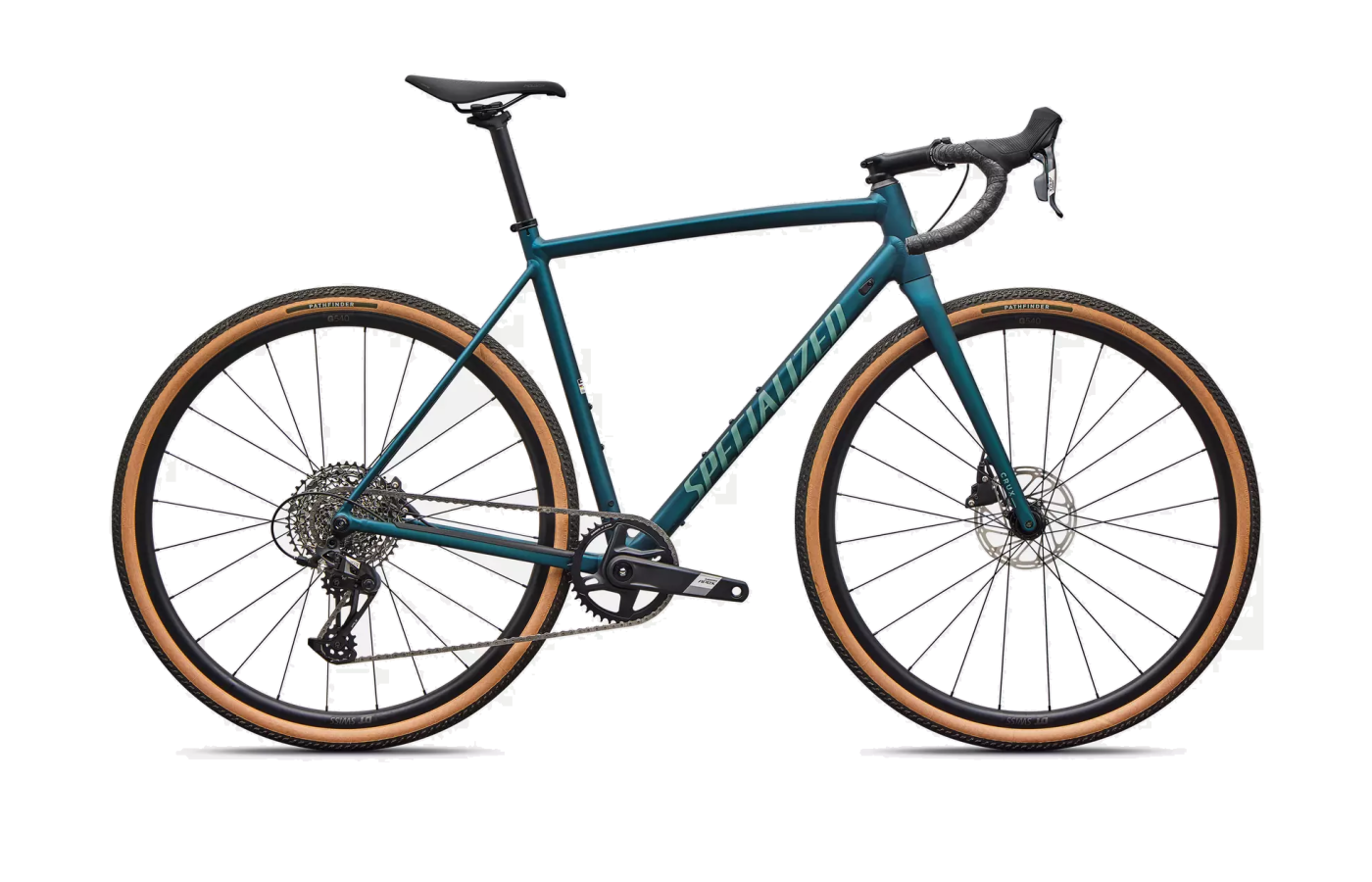
Crux
The Specialized Crux is the lightweight foil to the Checkmate's aero play — one of the lightest gravel bikes made, built around quick acceleration rather than low-drag tube shapes. If you'd rather save grams than watts, start here.
Compare →
Grail
The Canyon Grail chases the same aero-gravel-racer brief as the Checkmate at direct-to-consumer prices — similar speed focus, similar integrated cockpit, roughly 20–30% less money if you can live without a local dealer.
Compare →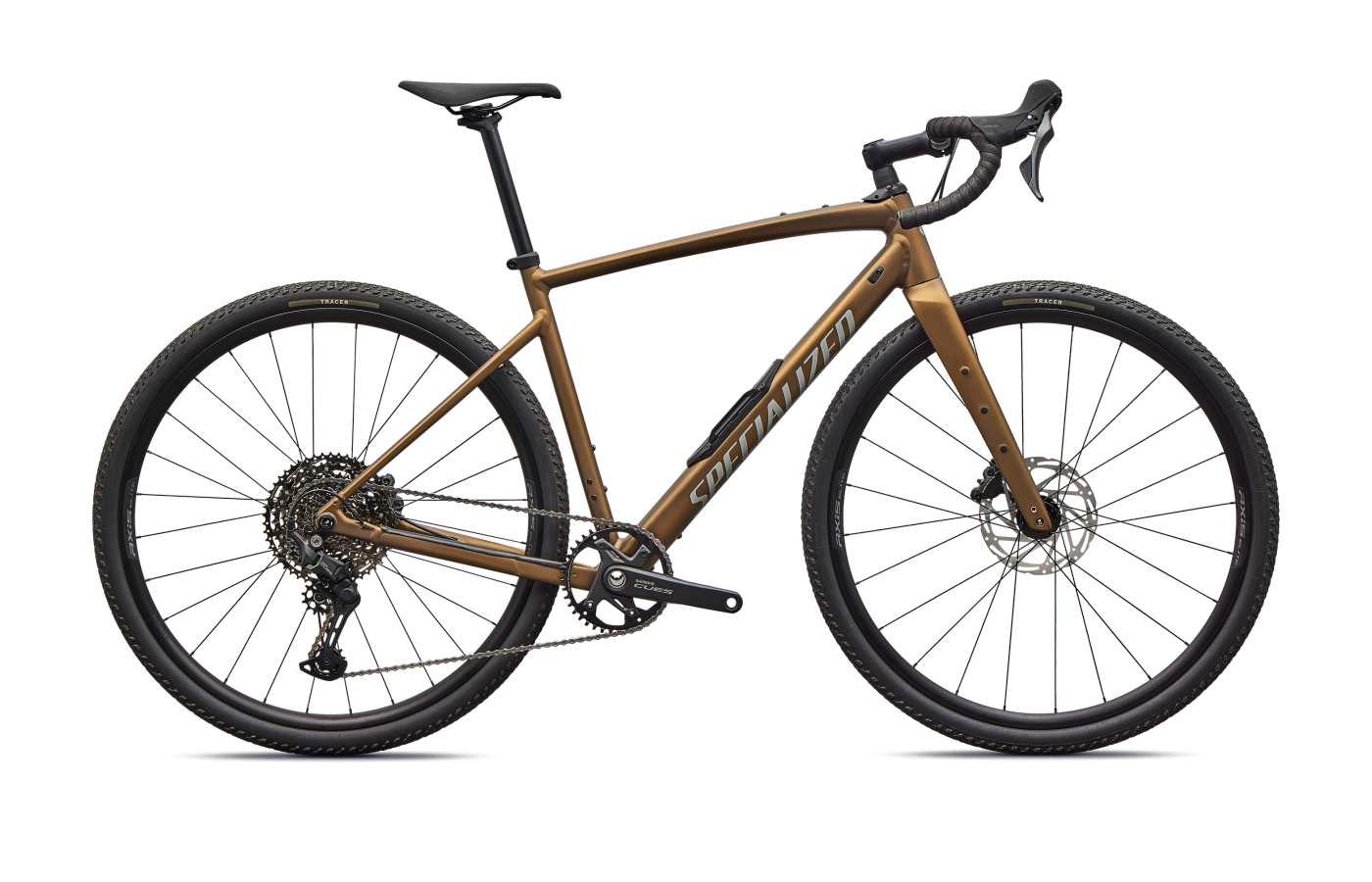
Diverge
The Specialized Diverge is the Checkpoint's most direct rival — another big-clearance, mount-laden adventure platform with compliance features (Future Shock on higher builds) and a similar do-it-all gravel ethos.
Compare →