Megatower
vsSB165
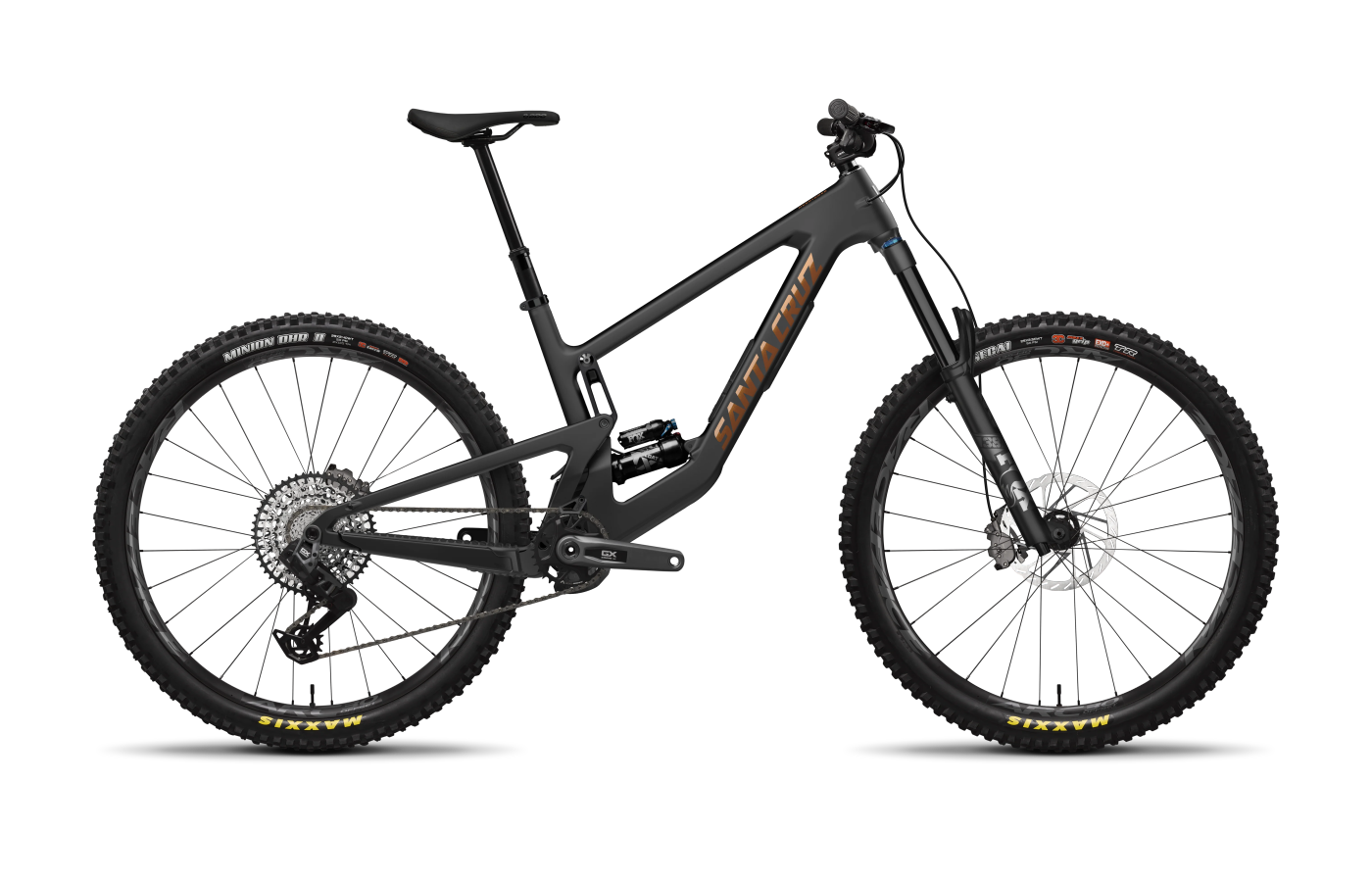
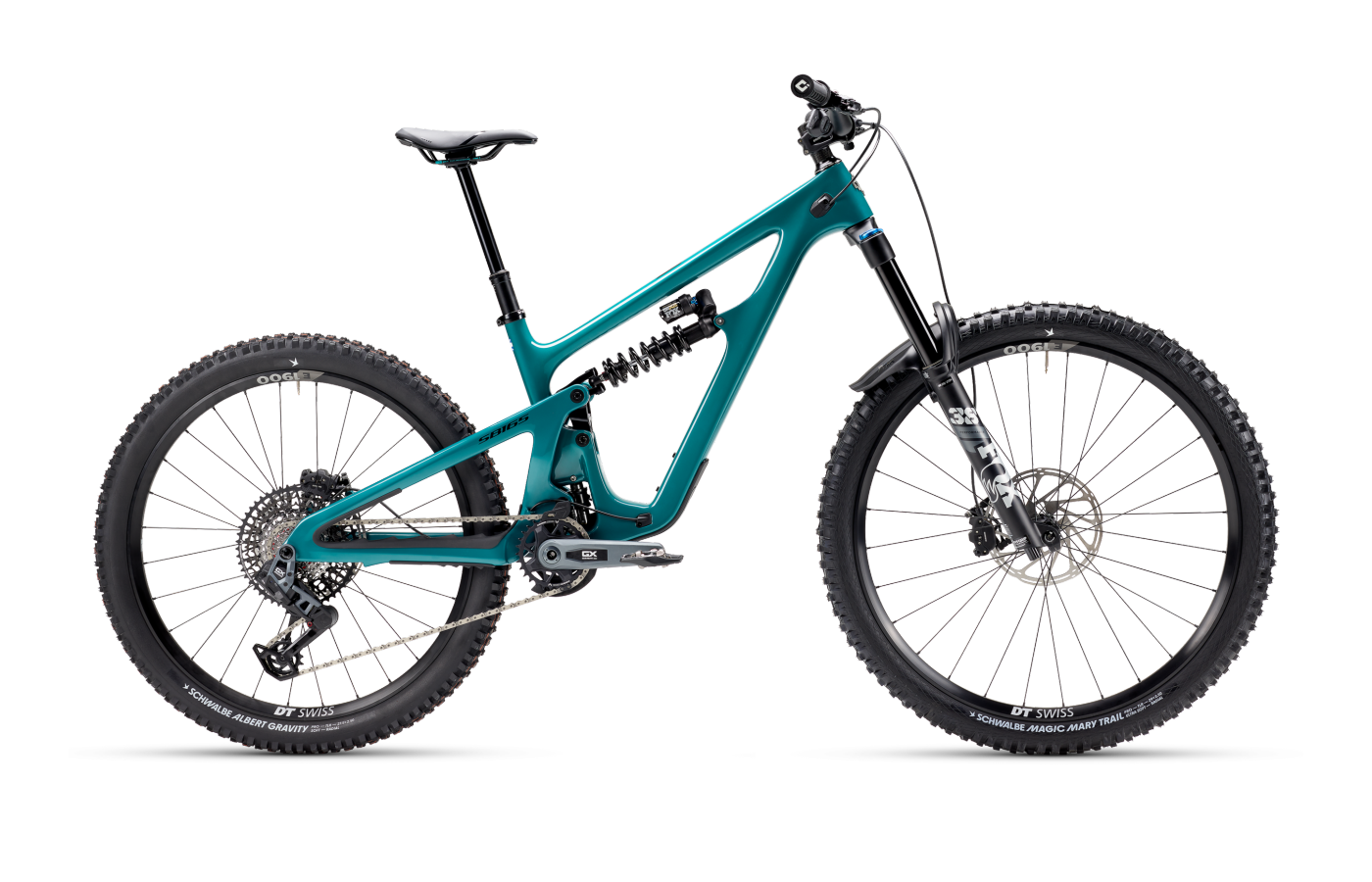
Two 165 mm bruisers, two very different jobs.
The Santa Cruz Megatower is a dual-29er enduro race tool. The Yeti SB165 is a mullet freeride bike that happens to pedal.
Megatower
- Steadier at warp speed — dual 29-inch wheels and a stiff C/CC chassis flatten rough, fast tracks.
- Glovebox internal storage with included tool wallet — Yeti's frame has nothing comparable.
- Lifetime frame and pivot-bearing warranty — one of the best ownership safety nets in the industry.
- Stiff carbon and Reserve wheels can feel chattery on high-frequency trail noise.
- No alloy frame option — entry into the platform starts at $6,099.
SB165
- Coil shock on every build — Fox Factory DHX2 standard from the $6,400 C2 up. No upgrade tax.
- Mullet agility — the 27.5 rear wheel makes it noticeably easier to manual, slash, and snap through berms.
- Quieter, damper feel — tube-in-tube routing and two-layer downtube guard keep it rattle-free over long descents.
- Low 345 mm BB invites pedal strikes on technical climbs.
- Stock EXO+ tires are widely flagged as undergunned for the bike's intent — plan to swap.
Editor’s analysis
Same travel, same head angle, same coil-or-air debate — but one was built to win an enduro stage, and the other was built to send the lap after.
On paper the Santa Cruz Megatower and Yeti SB165 look like twins: 170 mm forks, 165 mm of rear travel, slack 63°-ish head angles, mid-30s pounds, and price tags that start north of $6k. Spend any time reading the reviews, though, and the philosophies pull apart fast. The Megatower is a dual-29er aimed at the EWS-style racer who wants to bomb wide-open chunder. The SB165 is a mullet, runs a Fox DHX2 coil on every build, and is unapologetically built for park laps and freeride lines.
The Santa Cruz Megatower wins on raw stability. Two 29-inch wheels, a longer 437 mm chainstay at size m, and a stiff Carbon C/CC frame mean it skims through high-speed rock gardens and stays composed at warp speed. Reviewers from MBR and Pinkbike call it a 'mini-DH bike' that 'flattens the trail' — but that same stiffness shows up as harshness on high-frequency chatter, and the bike needs speed to wake up. Below 20 mph in tight switchbacks, it's described as 'too much bike.'
The Yeti SB165 trades a bit of that planted, plowing feel for personality. The 27.5 rear wheel, shorter 434 mm chainstays, and that always-coil rear shock make it 'slappy,' 'easy to manual,' and steered 'with the hips' rather than the feet (NSMB). It's lower at the bottom bracket (345 mm) — great for cornering, less great for pedal strikes on tech climbs. The Switch Infinity rear is buttery off the top, supportive in the mid-stroke, and ramps hard at the end for huck-to-flat protection.
Put another way: pick the Megatower if you race or shuttle EWS-style tracks and want the bike that feels biggest underneath you at speed. Pick the Yeti SB165 if your idea of a perfect day is bike-park laps with a tailgate beer waiting — and you'd rather slash a corner than rail it.
Where the builds differ.
Comparing our editor's-pick builds side-by-side. Winners highlighted row-by-row — lower price and weight, and the better-spec component, each mark a point.
Build variants & pricing
Both lineups are carbon-only and span roughly $6.1k to $9.7k. Tier-for-tier they sit within a few hundred dollars of each other.
Prices are current US MSRP. Neither brand offers an aluminum frame on these models. The Yeti specs a Fox Factory DHX2 coil shock on every build; the Santa Cruz mixes air and coil options across the range.
How they fit, how they steer.
Reach is close — 455 mm on the Megatower m versus 459.7 mm on the SB165 M — and stack is within a millimeter. The Yeti is 0.3 degrees slacker at the head tube (63.5 vs 63.8), the Santa Cruz is half a degree steeper at the seat tube (77.4 vs 76.9), and the Megatower's chainstays run about 3 mm longer.
Which size should I buy?
Both ranges overlap closely in the middle. The Megatower offers an XXL; the SB165 tops out at XL.
→These are starting points. Flexibility, riding style, and preferred position all shift the answer — if you’re between sizes, a professional fit beats a chart.
What the magazines said.
Published reviews from trusted cycling outlets. Click through for the full write-up.
Which one should you buy?
If you're chasing race times on big, fast, open trails, get the Megatower. If you're chasing park laps and side hits, get the SB165.
Megatower
If your weekends look like EWS stages — high-speed chunder, big G-outs, long descents where stability decides the result — the Megatower's dual-29 platform and stiffer chassis are the right tool. It's the bike to buy if 'fastest' matters more than 'most fun at 12 mph.'
SB165
If most of your riding is bike park laps, freeride lines, and steep, awkward descents that reward a flickable rear end, the SB165 is the more rewarding bike. The standard coil shock and mullet wheels make every build feel fully optimized out of the box.
Questions buyers actually ask.
Short answers to the things we get emailed about most often.
01Which one climbs better?
The Megatower, by a small margin. Its 77.4° effective seat tube angle at size m is half a degree steeper than the SB165's 76.9°, which keeps the rider more centered on long winches. Both are around 35 lbs in mid-tier carbon trim, so weight isn't the deciding factor.
Reviewers consistently call the Megatower 'spritely' for a 165 mm bike. The SB165 is impressively efficient for a coil-sprung mullet — Switch Infinity provides ~110% anti-squat at sag — but its slacker seat angle and lower 345 mm bottom bracket lead to more front-wheel wander on steep pitches and more pedal strikes in the rocks.
02Coil or air — which platform suits me?
Yeti makes the choice for you: every SB165 build ships with a Fox Factory DHX2 coil shock, even the entry-level $6,400 C2. That's a meaningful value play — the coil is what gives the SB165 its buttery off-the-top feel.
The Megatower runs an air shock (Fox Float X / X2) across the lineup. Air is lighter, easier to dial in for variable terrain, and ramps more naturally for jumps. If you mostly bomb park laps and want maximum suppleness, the Yeti's setup is hard to beat. If you want one bike for race tracks and trail rides, the Megatower's air spring is the more versatile choice.
03Mullet vs. dual-29 — which is better for steep tech?
Both work, but they feel different. The SB165's mullet setup (29 front, 27.5 rear) makes it easier to get the rear wheel out of the way on near-vertical rolls and steep ledge moves. NSMB describes it as 'steered with the hips' — flickable, drifty, willing to slash.
The Megatower's dual 29ers give a longer rear contact patch, more braking traction in steep loose stuff, and better roll-over on big square edges. It's the more composed plower; the SB165 is the more playful manualer.
04Which has better tire clearance and stock rubber?
Both ship with Maxxis Assegai / Minion DHR II 29x2.5/2.4 (Megatower) or Schwalbe Magic Mary / Albert 2.5 (SB165) at the editor's-pick build level — appropriate sizes for an enduro bike.
The consistent reviewer complaint on both bikes is the EXO+ casing on stock builds. Multiple reviewers reported flats almost immediately and recommend an immediate upgrade to DoubleDown or DH casings. Yeti has reportedly moved to a DD rear in newer running spec — confirm with your dealer.
05How is long-term reliability?
Santa Cruz has one of the strongest ownership stories in the segment: lifetime warranty on the frame, lifetime warranty on the pivot bearings, lifetime warranty on Reserve carbon rims (RSV builds), and grease ports on the lower VPP link for easy bearing flushes.
Yeti's Switch Infinity mechanism — two Kashima-coated rails the link slides on — is the headline durability question. The current iteration has improved seals and floating collet axles, but it requires a 40-hour lubrication interval. Reviewers describe it as trouble-free with that maintenance, but it is more service-intensive than a conventional pivot.
06Why GX AXS Transmission on both as the editor's pick?
We pick tier-matched builds so the spec table compares the platforms, not the parts. On the Megatower that's the GX AXS at $7,249 (Carbon C frame, Fox Performance Elite suspension); on the SB165 it's the C3 GX AXS Transmission at $6,900 (C-series frame, Fox Performance fork / Factory DHX2 coil).
Both get SRAM's GX Eagle Transmission — the practical sweet spot of the AXS lineup — and both use each brand's mid-tier carbon (the more expensive CC / Turq layups save a few hundred grams but ride essentially the same).
07Can either run a dual-crown fork?
Yeti officially approves a dual-crown fork on the SB165 as long as the axle-to-crown measurement is at or below 607 mm. That's unusual at this travel and reflects the freeride / park brief.
Santa Cruz does not publish a dual-crown approval for the Megatower V2; it's designed around a single-crown 170 mm fork and is treated as an enduro race chassis.
08Which holds a better resale value?
Both Santa Cruz and Yeti have strong used-market reputations and neither depreciates as fast as the broader carbon-MTB market. Santa Cruz's lifetime frame warranty and Reserve rim warranty both transfer to original-owner-only — that nudges resale value up because the second buyer knows the next service event isn't catastrophic.
Yeti benefits from smaller production runs and a more cult-like brand. In practice, condition and build kit matter more than the brand on these bikes — both will hold north of 60% of MSRP after one season if the frame is clean.
Similar bikes
If your priorities don’t map cleanly onto either of these, one of these adjacent bikes probably fits better.
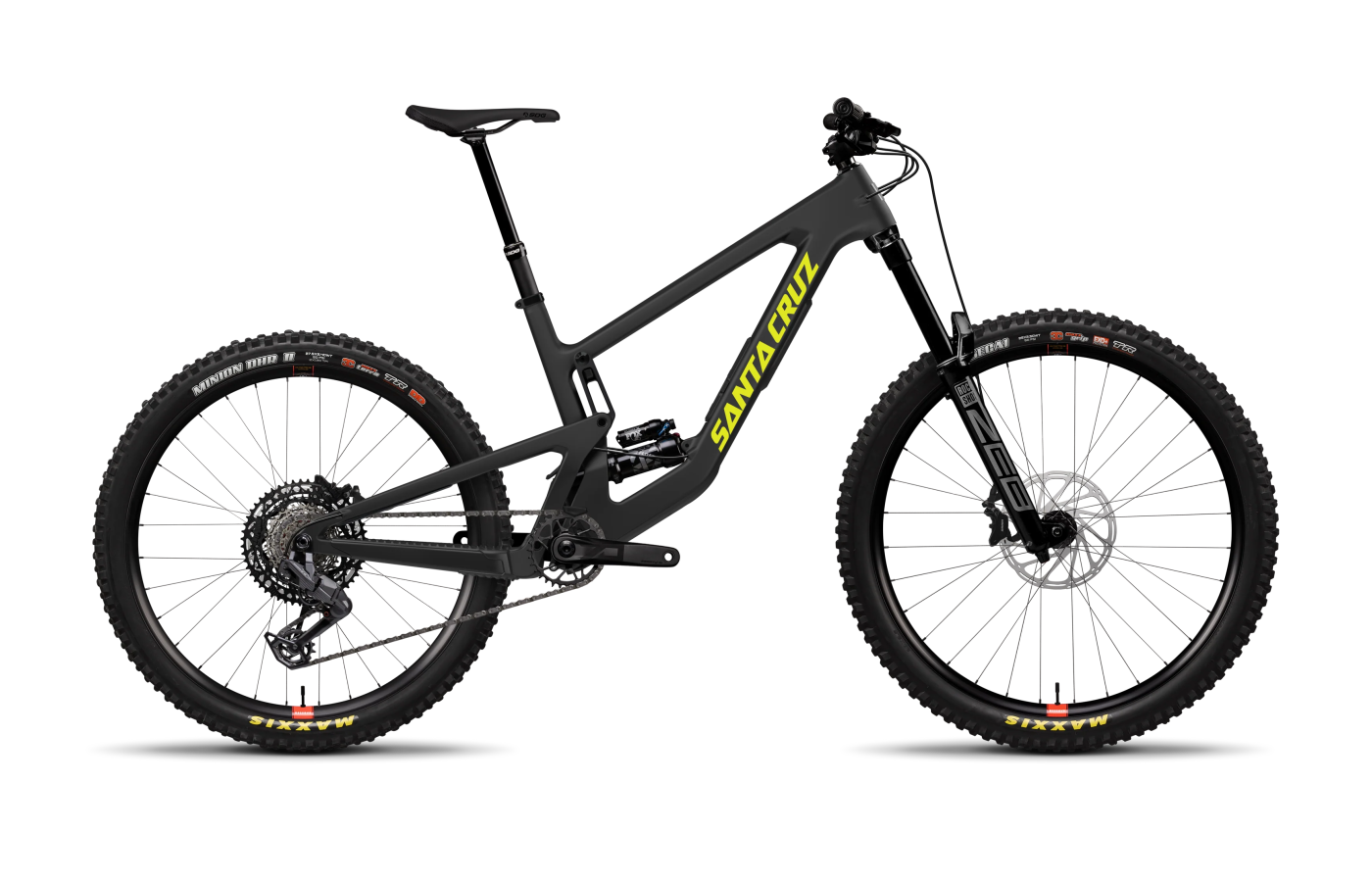
Nomad
The Santa Cruz Nomad is the SC mullet answer — same Glovebox storage and lifetime warranty as the Megatower, but with the more agile, slashy character that the SB165 specializes in.
Compare →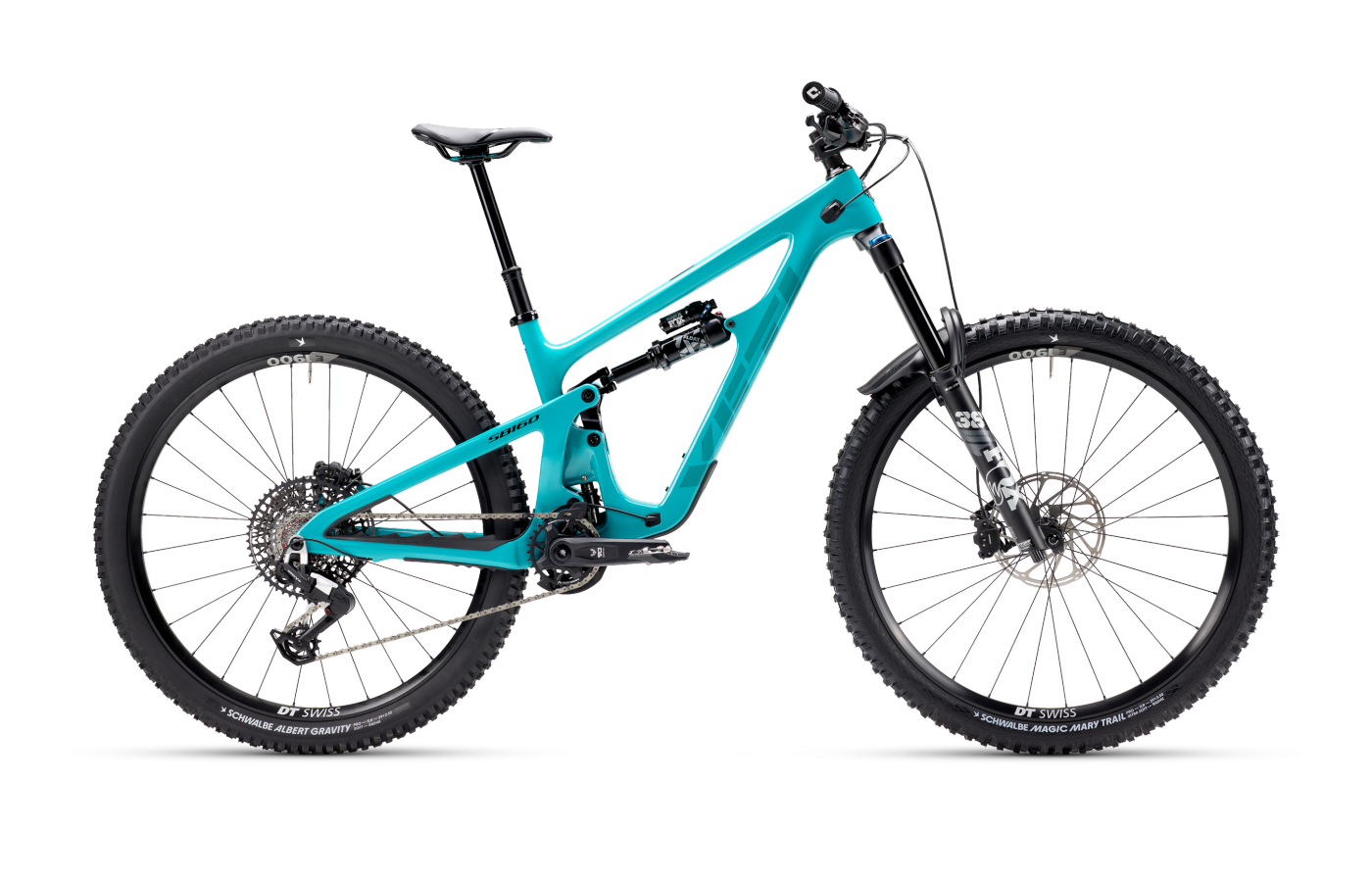
SB160
The Yeti SB160 is the racing sibling of the SB165 — full 29er, sharper geometry, built for the clock instead of side hits. Pick it if you want Yeti's Switch Infinity feel but plan to pin numbers on.
Compare →Spire
The Transition Spire takes the dual-29 enduro idea further — even longer wheelbase, even slacker, alloy and carbon options. Get it if you want the Megatower's plowing character at a more accessible entry price.
Compare →