Bronson
vsNomad
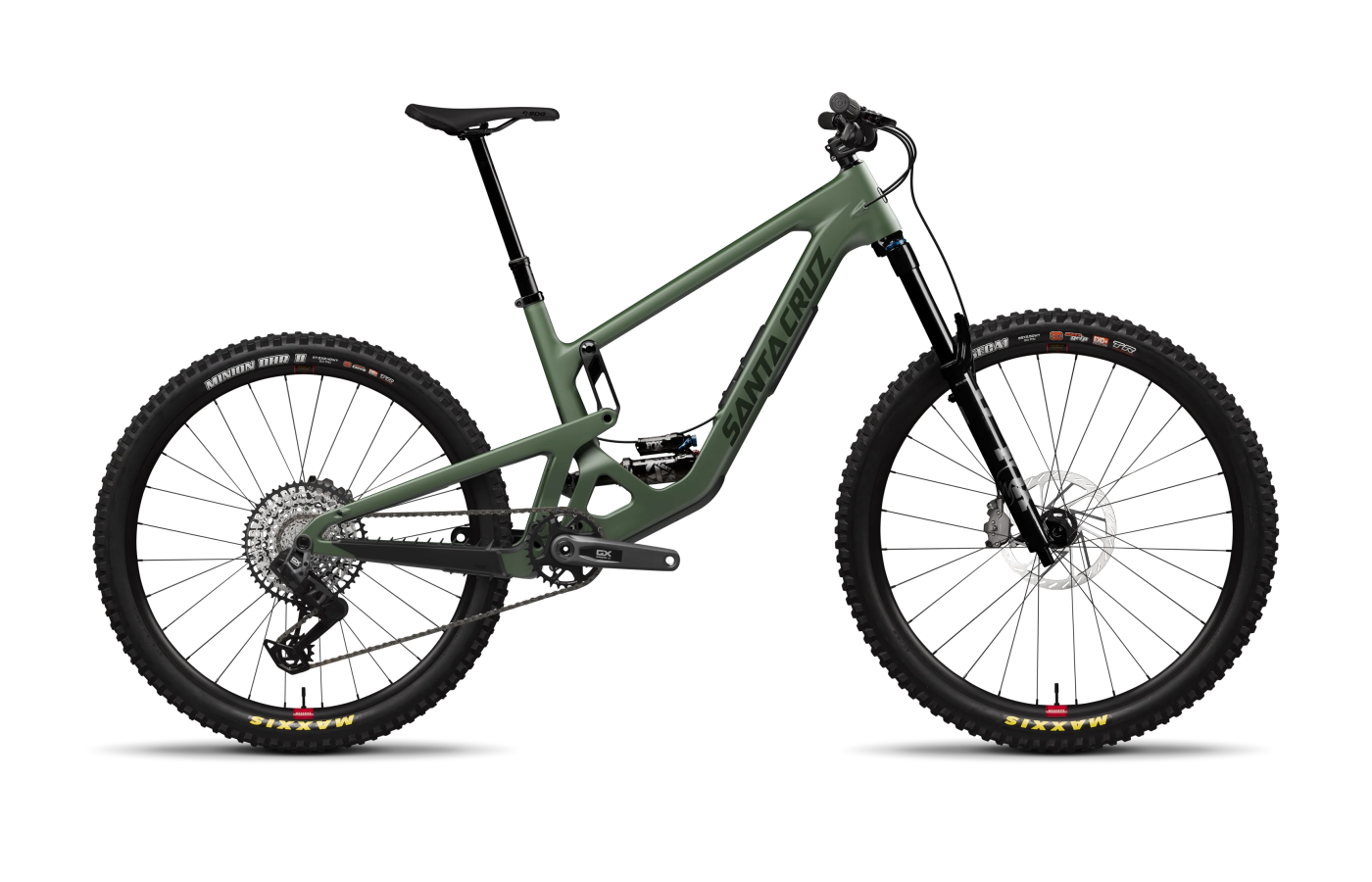
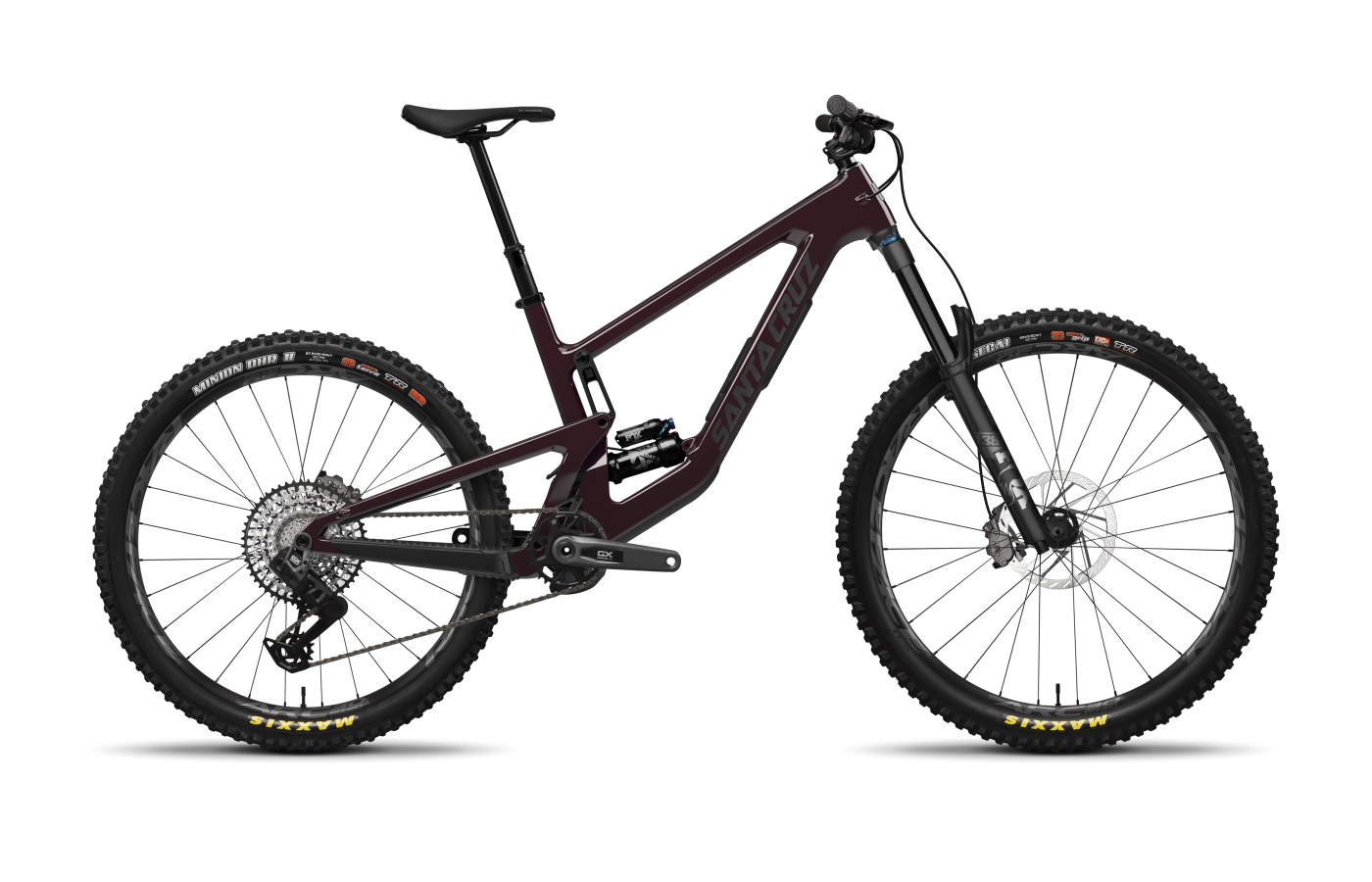
Same family, two different missions.
The Bronson is the do-it-all mullet trail bike. The Nomad is the 170mm winch-and-plummet enduro sibling that shares the silhouette but not the intent.
Bronson
- Lighter and snappier — ~15.06 kg in the GX AXS build vs. ~15.67 kg for the equivalent Nomad. Easier to flick, easier to manual.
- More efficient pedaler — testers say the climb switch is "essentially decorative." The 150mm VPP platform feels firm under power.
- Tighter steering geometry — 64.2-degree HTA and a 160mm fork keep the Bronson nimble in tight, twisty terrain where the Nomad feels long.
- 150mm rear gets overwhelmed in deep braking bumps and double-black tech.
- Towering front end (632mm stack at size m) can feel light on steep technical climbs.
Nomad
- 170mm of travel front and rear — a real safety net in steep, chunky, alpine terrain where the Bronson maxes out.
- Slacker, more stable at speed — 63.8-degree HTA and a FOX 38 fork keep it composed when the Bronson would feel busy.
- DoubleDown rear casings stock on most builds — fewer slashed sidewalls on day one than the Bronson's EXO+ rear.
- Heavier and slower-rolling — testers describe it as "stuck to the floor like glue" on flatter trails.
- Low 343mm bottom bracket leads to frequent pedal strikes in technical climbs.
Editor’s analysis
Both run VPP, both run mullet wheels, both share the Glovebox and the lifetime warranty — but one is built for the show-off, the other for the send-it.
On paper, the Santa Cruz Bronson and Santa Cruz Nomad look like cousins. Same brand, same VPP layout, same 29-front / 27.5-rear configuration, same carbon C/CC tiers, same lifetime frame and bearing warranties. The price ranges almost overlap — $4,999–$9,349 for the Bronson, $5,149–$9,749 for the Nomad. But the 20mm of extra travel on each end of the Nomad isn't a small change. It rewires the bike's whole personality.
The Santa Cruz Bronson is the lineup's middle child — 150mm rear / 160mm front, a 64.2-degree head angle, and a chassis that reviewers consistently call a "playbike." Vital MTB labeled it "hooligan," The Loam Wolf called it "party meets performance." It rewards riders who manual out of corners, hunt for side hits, and treat every root cluster as a launch ramp. The ceiling is real: at double-black speeds the 150mm rear can feel overwhelmed, and the small rear wheel occasionally hangs up on square edges where the big front wheel is writing checks the back can't cash.
The Santa Cruz Nomad pushes travel to 170mm front and rear, slacks the head angle to 63.8 degrees, and runs a longer-stay geometry (440mm at size m vs. 439mm on the Bronson — small on paper, but combined with the FOX 38 fork it's a different bike). Reviewers describe it as "shifter-kart-like" in corners and "composed when bombing a steep straightline." It needs gradient to come alive. On flat trails it feels heavier and stickier; pointed downhill on alpine chunder, it has a safety net the Bronson simply doesn't.
Put another way: the Bronson is the bike you buy when most of your riding is technical singletrack with the occasional bike park day. The Nomad is the bike you buy when most of your riding is the bike park, with the occasional pedal to the top of a 3,000-foot ridge.
Where the builds differ.
Comparing our editor's-pick builds side-by-side. Winners highlighted row-by-row — lower price and weight, and the better-spec component, each mark a point.
Build variants & pricing
Both lineups span ~$4.5k of range. The Bronson starts $150 cheaper and tops out $400 lower; the GX AXS build is the same $7,249 on both sides — a clean apples-to-apples pick.
Prices are current US MSRP. Neither bike is offered in aluminum — Carbon C is the floor for both. The Bronson R ($4,999) and Nomad 70 ($5,149) both ride NX/70-tier groupsets and basic dampers; reviewers consistently pointed at the GX AXS or 90 builds as the lineup sweet spots.
How they fit, how they steer.
Both at size m — the fit-picked size for a 5'8" rider. The Nomad sits 7mm lower (625mm vs. 632mm stack), 5mm shorter in reach (455 vs. 460), with a 0.4-degree slacker head angle and a 1mm longer chainstay. Small numbers; the FOX 38 fork and 20mm of extra travel do most of the personality work.
Which size should I buy?
Size recommendations based on stack, reach, and effective top tube. Both share the same size run (S–XXL) and overlap closely; the Bronson runs slightly more reach at every size.
→These are starting points. Flexibility, riding style, and preferred position all shift the answer — if you’re between sizes, a professional fit beats a chart.
What the magazines said.
Published reviews from trusted cycling outlets. Click through for the full write-up.
Which one should you buy?
If most of your riding is technical singletrack with the occasional park day, get the Bronson. If most of your riding is the park (or steep alpine descents) with the occasional pedal to the top, get the Nomad.
Bronson
If your local trails are flowy jump lines and technical singletrack — and you'd rather pop off every root than plow through it — the Bronson is the right Santa Cruz. Lighter, snappier, more efficient on the climbs, and ready for the occasional bike park day without feeling out of place.
Nomad
If most of your days are at the bike park — or you live near steep, loose alpine terrain — the Nomad's extra 20mm of travel and slacker geometry give you a safety net the Bronson can't match. It still pedals decently for a 170mm bike. It just really wants gravity.
Questions buyers actually ask.
Short answers to the things we get emailed about most often.
01Which is faster on the descents?
The Nomad, in steep and chunky terrain. It has 20mm more travel front and rear, a 0.4-degree slacker head angle, and the burlier FOX 38 fork. PinkBike said "the faster you go, the more alive the Nomad feels," while reviewers consistently noted that the Bronson's 150mm rear can get "overwhelmed" in double-black braking bumps.
On flowier, jumpier trails the picture flips — the Bronson's lower weight and quicker handling let you pump and pop where the Nomad just plows.
02Which climbs better?
The Bronson. The GX AXS Bronson weighs about 15.06 kg vs. ~15.67 kg for the equivalent Nomad — roughly 600g — and the firmer 150mm VPP platform pedals more efficiently. Vital MTB joked the Bronson's climb switch was "essentially for decorative purposes."
The Nomad isn't bad — reviewers called it a "calm, composed climber" for a 170mm bike — but it's slower, stickier, and the low 343mm bottom bracket leads to more pedal strikes in technical climbing.
03How much travel does each bike have?
Bronson: 150mm rear / 160mm front (FOX 36 or RockShox Lyrik fork depending on build).
Nomad: 170mm rear / 170mm front (FOX 38 or RockShox ZEB fork depending on build).
Both use Santa Cruz's lower-link VPP suspension layout and a mixed-wheel (29F / 27.5R) configuration.
04Are both bikes mullet?
Yes. Both the current Bronson (V4) and Nomad (V6) are mixed-wheel only — 29-inch front, 27.5-inch rear, across all sizes. Santa Cruz no longer sells a dual-29 or dual-27.5 version of either. If you want dual 29-inch wheels in the Santa Cruz lineup, look at the Hightower (trail) or Megatower (enduro).
05Can I get either in aluminum?
No. Santa Cruz dropped the alloy frame option for both bikes when these generations launched. The current floor is the Carbon C frame: $4,999 for the Bronson R and $5,149 for the Nomad 70. The lighter Carbon CC option appears on the upper builds (typically the X0 AXS and above).
06Which build is the sweet spot?
Reviewers and our editor's pick both land on the GX AXS build at $7,249 for either bike — same price, same drivetrain tier (SRAM GX Eagle AXS T-Type), same FOX Performance Elite suspension level. It's the cheapest build on either platform with a wireless electronic drivetrain, and it skips the polarizing NX/Lyrik Select spec on the entry-level R/70 builds.
The GX AXS is also the lowest tier where reviewers stopped complaining about "spec mismatched to capability." Below it, you're paying Santa Cruz prices for components other brands ship at $1,500 less.
07What about tire clearance?
Bronson: clears tires up to roughly 63.5mm wide.
Nomad: clears roughly 61mm.
Both ship with a 2.5" front (Maxxis Assegai) and a 2.4" rear (Maxxis Minion DHR II), so neither runs out of clearance with stock rubber. The Nomad's higher-end builds also include DoubleDown casings on the rear — a meaningful upgrade over the Bronson's EXO+ rear, which testers regularly slashed.
08What warranty do they come with?
Both come with Santa Cruz's lifetime frame warranty and lifetime free pivot bearing replacement to the original owner. The brand's "No Missed Rides" parts program covers most small-parts requests. Reviewers consistently cite the warranty package as a meaningful chunk of the value — and a real reason to pay the "Santa Cruz tax" if you plan to keep the bike for several seasons.
Similar bikes
If your priorities don’t map cleanly onto either of these, one of these adjacent bikes probably fits better.
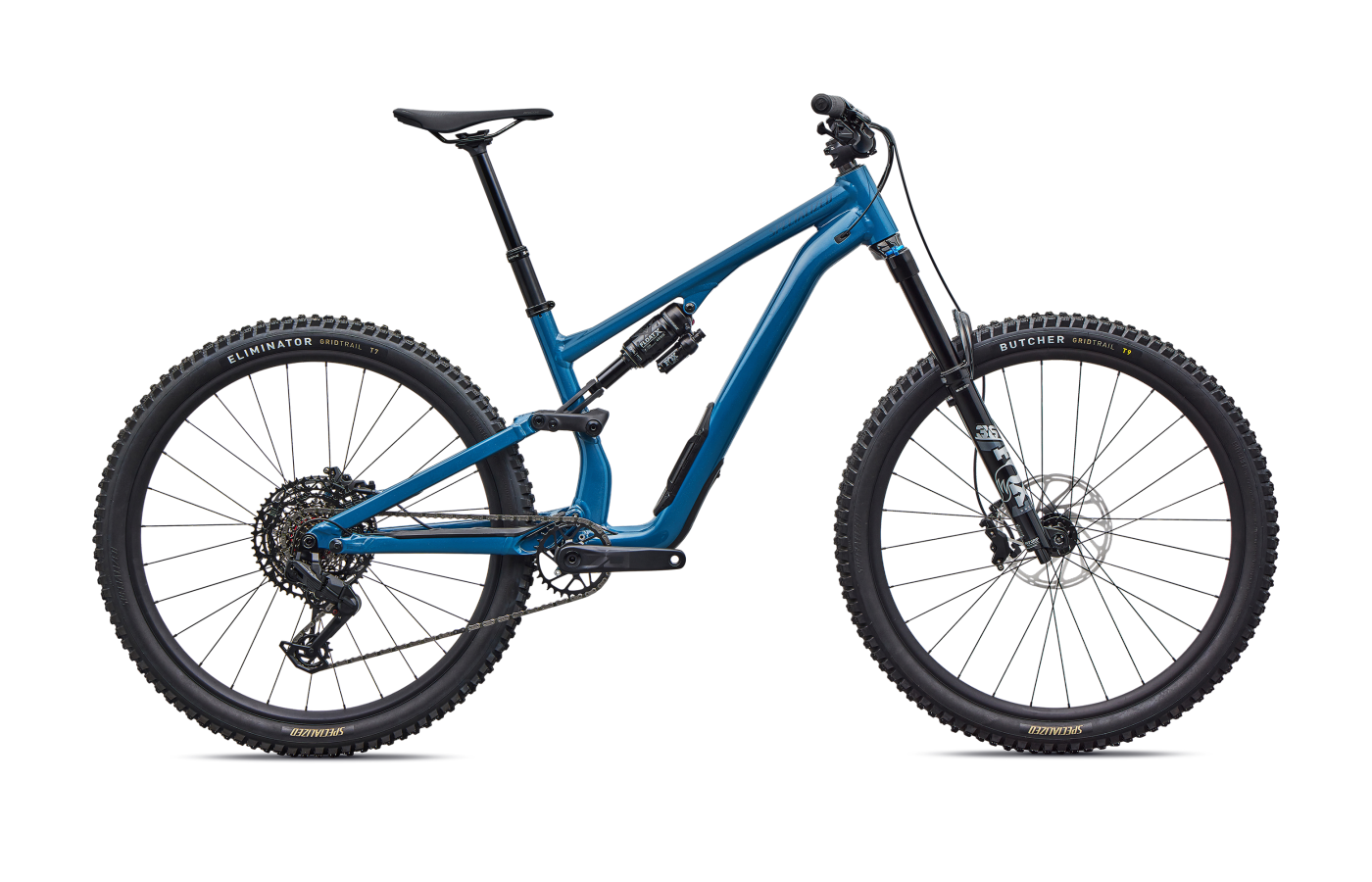
Stumpjumper Evo
Specialized Stumpjumper Evo — geometry close to the Bronson's, with adjustable head angle and BB drop via flip-chips. A softer, more torsionally forgiving feel in chunder, and a serious budget alternative if Santa Cruz's pricing stings.
Compare →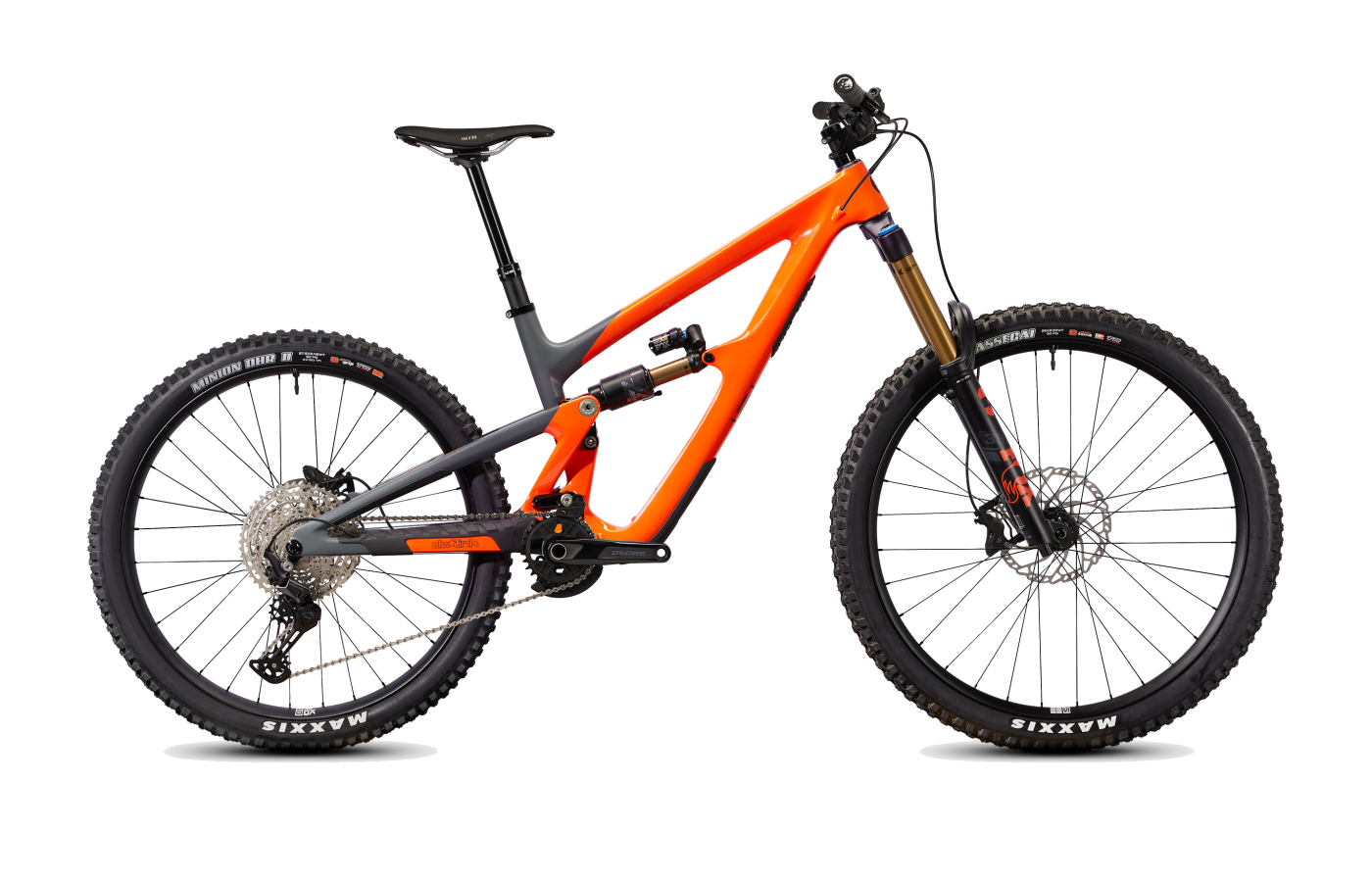
HD6
Ibis HD6 — a dedicated mixed-wheel enduro rival to the Nomad with a reputation for climbing more efficiently while keeping the same descending poise. The boutique pick if Santa Cruz feels too mainstream.
Compare →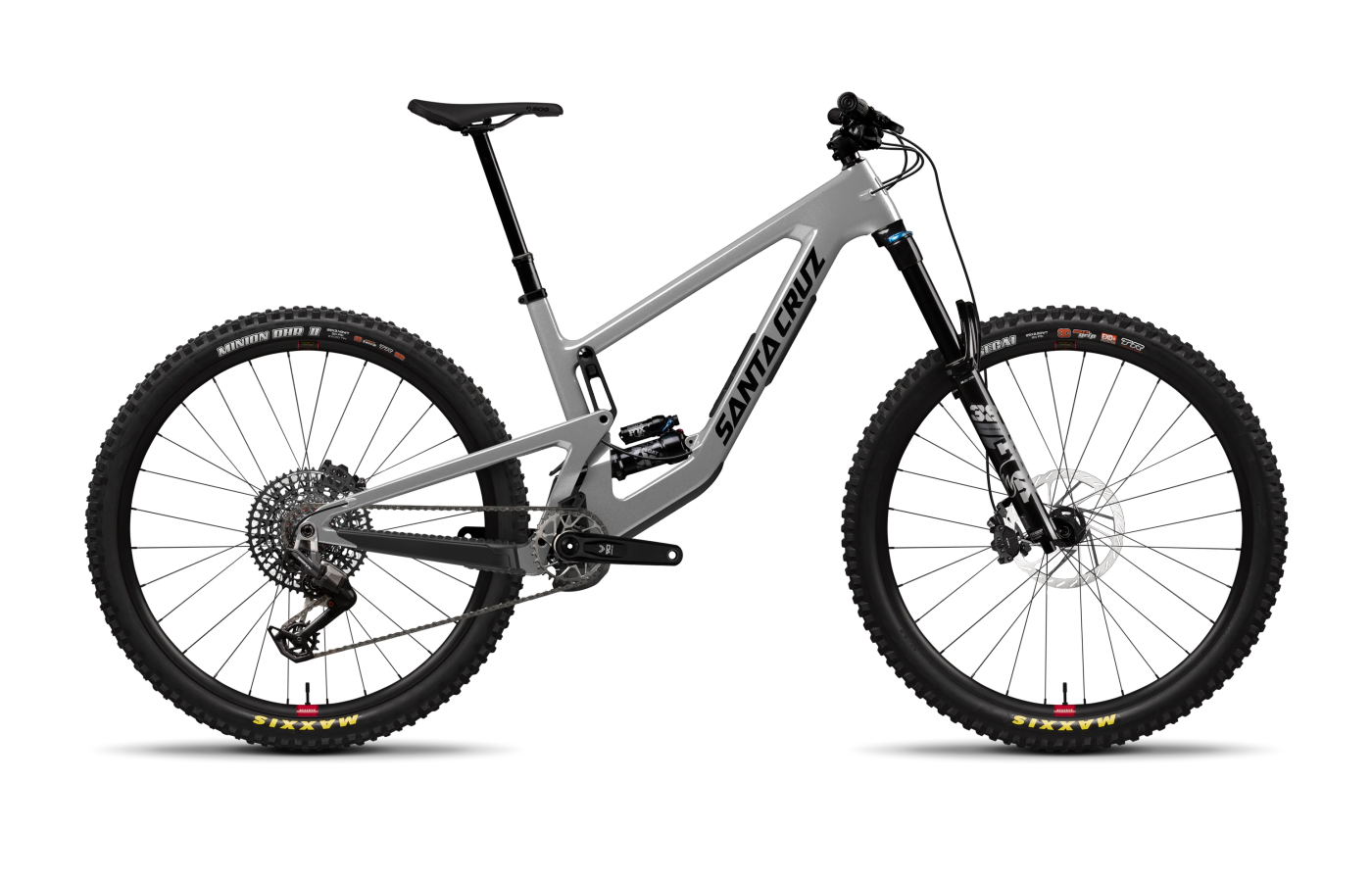
Megatower
Santa Cruz Megatower — the dual-29 sibling. If you find the Nomad's 27.5" rear hangs up too often on square edges, the Megatower's full 29er platform plows where the Nomad pops.
Compare →