5010
vsStumpjumper
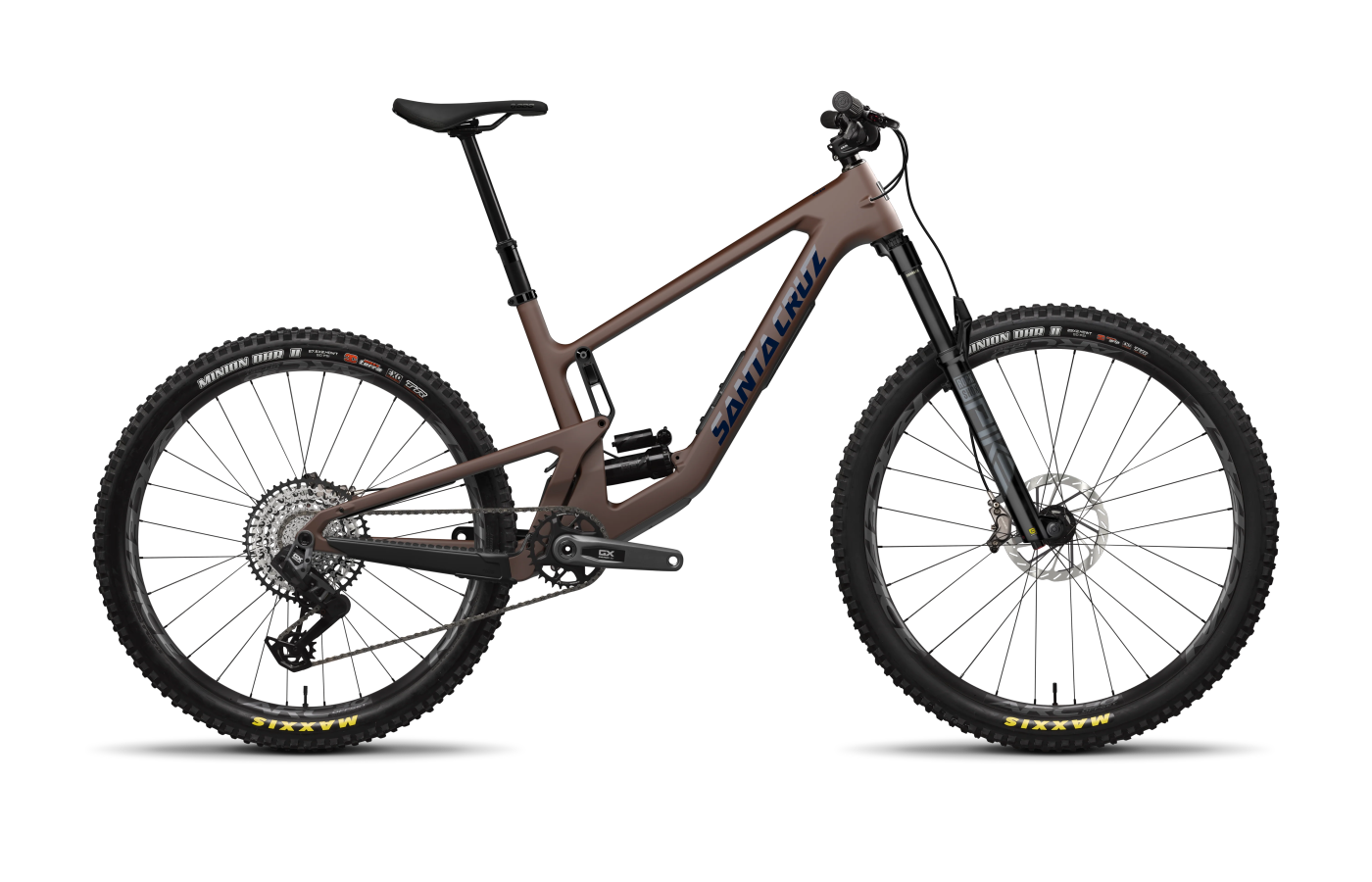
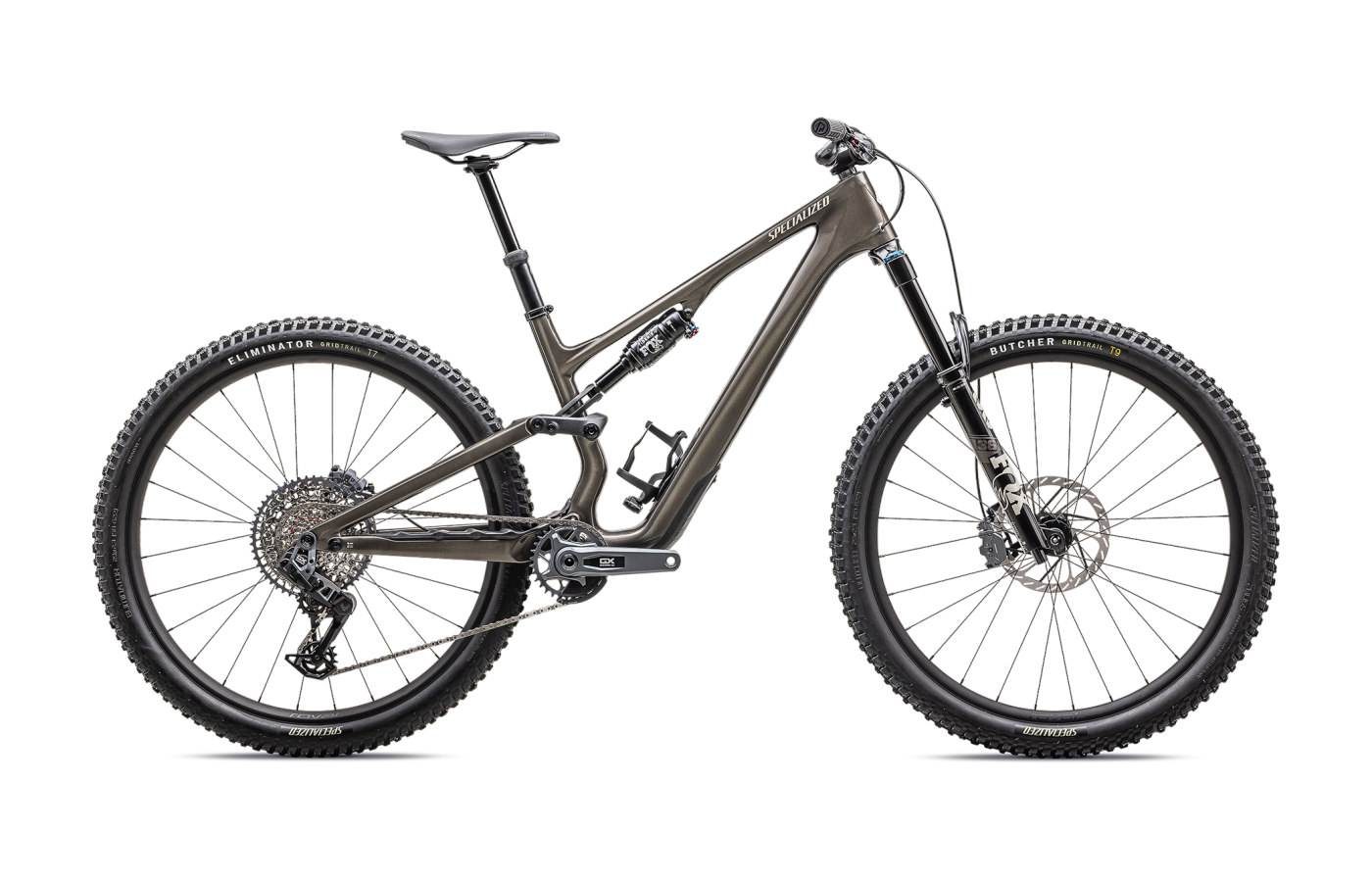
Two trail bikes, two attitudes.
The 5010 is a 130 mm mullet jib machine that punches above its travel. The Stumpjumper 15 is a 145 mm do-everything platform with a trick rear shock.
5010
- Mullet handling — 27.5" rear wheel makes it whip-fast through tight corners and berms.
- Size-specific chainstays (428-442 mm) keep the front-rear balance consistent from XS to XXL.
- Frame storage + threaded BB with a sag-window peephole — practical details usually missing on "playful" bikes.
- 130 mm rear / 140 mm fork runs out of travel on truly chunky, eroded descents.
- No alloy frame option — entry price is $4,799, vs. $2,999 for an alloy Stumpjumper.
Stumpjumper
- GENIE rear shock — supple early-stroke traction with hard end-stroke ramp; very hard to bottom out.
- Adjustable geometry — headset cups give a 63 / 64.5 / 65.5-degree HTA range without aftermarket parts.
- Wide price range ($2,999-$11,999) covers alloy commuters to S-Works race builds in one platform.
- Carbon frames are wireless-only — no mechanical-shifting option unless you go alloy.
- Heavier, longer wheelbase than the 5010; less playful at low speeds in tight terrain.
Editor’s analysis
Same trail-bike bracket, opposite design briefs — one is built to corner, the other is built to cover ground.
On paper the Santa Cruz 5010 and Specialized Stumpjumper 15 land in the same showroom — modern carbon trail bikes around 130-145 mm of travel, mixed-wheel-capable, both with internal frame storage. Spend any time reading the geometry and the spec sheets, though, and the design intents diverge sharply.
The Santa Cruz 5010 is the smaller, sharper of the two: 130 mm rear / 140 mm fork, full mullet (29" front, 27.5" rear) on every build, a 65.2-degree head angle, and size-specific chainstays from 428 mm on the XS to 442 mm on the XXL. Reviewers consistently call it a "corner destroyer" — the small rear wheel, low BB, and a 16% drop in peak anti-squat from the previous generation give it traction and pop on technical singletrack at the cost of fire-road climbing snap. It's the bike you buy when your trails are tight, twisty, and you want to play.
The Specialized Stumpjumper rolls in with 145 mm rear / 150 mm fork, an adjustable 63 / 64.5 / 65.5-degree head angle via headset cups, 29" wheels on S3 and up, and a Fox-built GENIE rear shock that runs supple for the first 70% of travel and then ramps hard on big hits. Reviewers describe a bike that climbs technical lines with "glued" rear-wheel traction, then refuses to bottom out on bike-park hits. It's a wider operating window than the 5010 — but at 145 mm of travel and ~14 kg in carbon Expert trim, it never feels as flickable as the smaller Santa Cruz.
Put another way: the Stumpjumper is the one bike you'd buy if you owned one bike. The 5010 is the bike you'd buy if you already owned a longer-travel rig and wanted something that makes home trails feel like a pump track.
Where the builds differ.
Comparing our editor's-pick builds side-by-side. Winners highlighted row-by-row — lower price and weight, and the better-spec component, each mark a point.
Build variants & pricing
Both span carbon mid-builds up through flagship pricing. Stumpjumper also offers alloy builds the 5010 doesn't have.
Prices are current US MSRP. The 5010 is carbon-only — Santa Cruz has discussed an alloy 5010 but it's not in the current lineup. If you need a sub-$5k trail bike, the alloy Stumpjumper is the only option here.
How they fit, how they steer.
The 5010 in M and the Stumpjumper in S3 — both fit-picked for a 5'8" rider. Reach is close (459 mm vs. 450 mm), but the Stumpjumper sits 5 mm taller in stack, runs a 0.7-degree slacker head angle, and stretches the wheelbase to 1213 mm vs. the 5010's 1212 mm — nearly identical, despite a wildly different design brief.
Which size should I buy?
Both ranges overlap in the middle; the 5010 offers a true XS at 410 mm reach, while the Stumpjumper's S-Sizing extends further at the long end with an S6 at 530 mm reach.
→These are starting points. Flexibility, riding style, and preferred position all shift the answer — if you’re between sizes, a professional fit beats a chart.
What the magazines said.
Published reviews from trusted cycling outlets. Click through for the full write-up.
Which one should you buy?
If your trails are tight and you want to play, get the 5010. If you want one bike that climbs technical lines and survives bike-park days, get the Stumpjumper.
5010
If you ride twisty, jumpy, mixed-feature trails and you'd rather slash a berm than monster-truck through chunder, the 5010 is the sharper tool. The mullet setup, 130 mm of pop-happy VPP, and size-specific chainstays make familiar loops feel new.
Stumpjumper
If one bike needs to handle technical climbs, all-day rides, and the occasional bike-park day, the Stumpjumper's longer travel, GENIE shock, and adjustable geometry give it a wider operating window than almost anything in the segment.
Questions buyers actually ask.
Short answers to the things we get emailed about most often.
01Which has more travel?
The Stumpjumper 15 has more — 145 mm rear and 150 mm fork on most builds (160 mm fork on the 15 Alloy coil). The 5010 runs 130 mm rear and 140 mm fork across the entire lineup.
The 15 mm rear-travel gap shows up on bigger hits and sustained chunder. On flow trails and technical climbs, the gap is much less noticeable than the numbers suggest.
02What wheel size do they use?
The 5010 is mullet-only — 29" front, 27.5" rear on every build, every size.
The Stumpjumper 15 runs full 29" on sizes S3 through S6, and mullet (29"/27.5") on the smaller S1 and S2 sizes. A mullet conversion link is available aftermarket if you want to mullet a larger size.
03Which climbs better?
Both are praised as strong technical climbers, but in different ways. The Stumpjumper 15's GENIE shock keeps the rear wheel "glued" to root- and rock-strewn climbs, with a 76.5-77 degree effective seat angle that puts you over the BB. Reviewers note it's not the firmest pedaller on smooth fire roads, but it cleans technical lines that other bikes spin out on.
The 5010 has a 77.4 degree effective seat angle on M (a touch steeper than the Stumpy), but its updated VPP is intentionally less efficient than the previous generation — multiple reviewers call it "soggy" or "lethargic" on smooth fire-road climbs. On technical, chunky climbs it tracks well; on long road approaches you'll want the climb switch.
04Are these bikes comparable in price?
Roughly, in their carbon mid-builds. The 5010 GX AXS is $7,149 and the Stumpjumper 15 Expert is $5,999 — both running SRAM GX Eagle AXS Transmission and FOX 36 Performance Elite-level forks.
At the entry end, they diverge sharply: the cheapest 5010 is $4,799 (carbon NX), while the cheapest Stumpjumper is $2,999 (alloy Deore). At the top, both flagships sit around $11k-$12k.
05How adjustable is the geometry?
The Stumpjumper 15 is the more adjustable of the two by a wide margin. Headset cups let you swap between 63°, 64.5°, and 65.5° head tube angles — that's a full 2.5-degree range without buying aftermarket parts. There's also a flip chip at the shock mount.
The 5010 has a single shock-mount flip chip that gives you roughly 0.3 degrees of HTA change between Hi and Lo — useful for fine tuning but not for changing the bike's character.
06What's the deal with the Stumpjumper's GENIE shock?
GENIE is a Specialized-Fox collaboration. It's an air shock with two air chambers — a large outer chamber that's open for the first ~70% of stroke (giving a coil-like supple feel and lots of small-bump traction), and a band that closes off the outer chamber late in the stroke for a steep ramp-up that prevents bottom-out.
Reviewers love how it rides; some are wary about long-term serviceability of a proprietary shock. The frame uses standard 210x55 mm shock dimensions, so you can swap to a regular Float or DHX if you want.
07Can I run mechanical shifting on the carbon Stumpjumper?
No. Specialized's FACT 11m carbon Stumpjumper 15 frames are wireless-only — there's no internal cable routing for mechanical derailleurs. Your options are SRAM AXS Transmission (S1000, GX, X0, or XX builds) or going to an alloy frame, which retains traditional cable routing for Shimano SLX or Deore.
The 5010 still routes for cables and ships with both wireless (X0/GX AXS) and mechanical (NX) builds depending on tier.
08Which has better long-term support?
Both brands are at the top of the industry here. Santa Cruz offers a lifetime frame warranty, lifetime pivot bearing replacement, and a lifetime Reserve wheel warranty to the original owner. Specialized matches this with a lifetime frame warranty, lifetime pivot bearing replacement, and a lifetime Roval wheel warranty.
Dealer networks are large for both. In practice, support is a wash — pick the bike, not the warranty.
Similar bikes
If your priorities don’t map cleanly onto either of these, one of these adjacent bikes probably fits better.
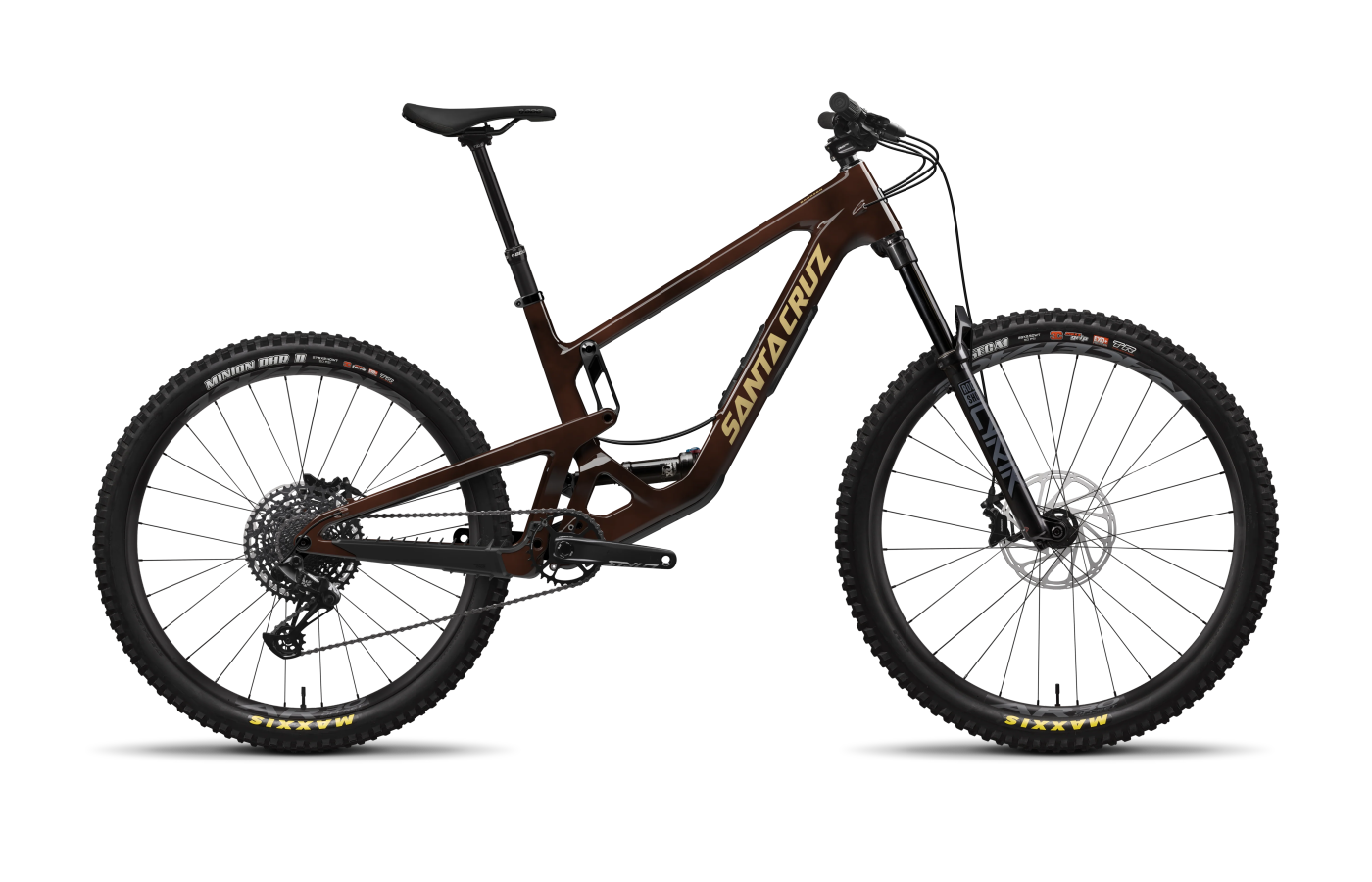
Bronson
Same Santa Cruz mullet handling DNA as the 5010, but with 150 mm of rear travel — the right pick if you love how the 5010 rides but your trails are too rough for 130 mm.
Compare →
Fuel EX
Trek's quiver-killer answer to the Stumpjumper — also has frame storage, also has flip-chip-adjustable geometry, also splits the difference between trail and enduro. Worth cross-shopping if the Stumpy appeals.
Compare →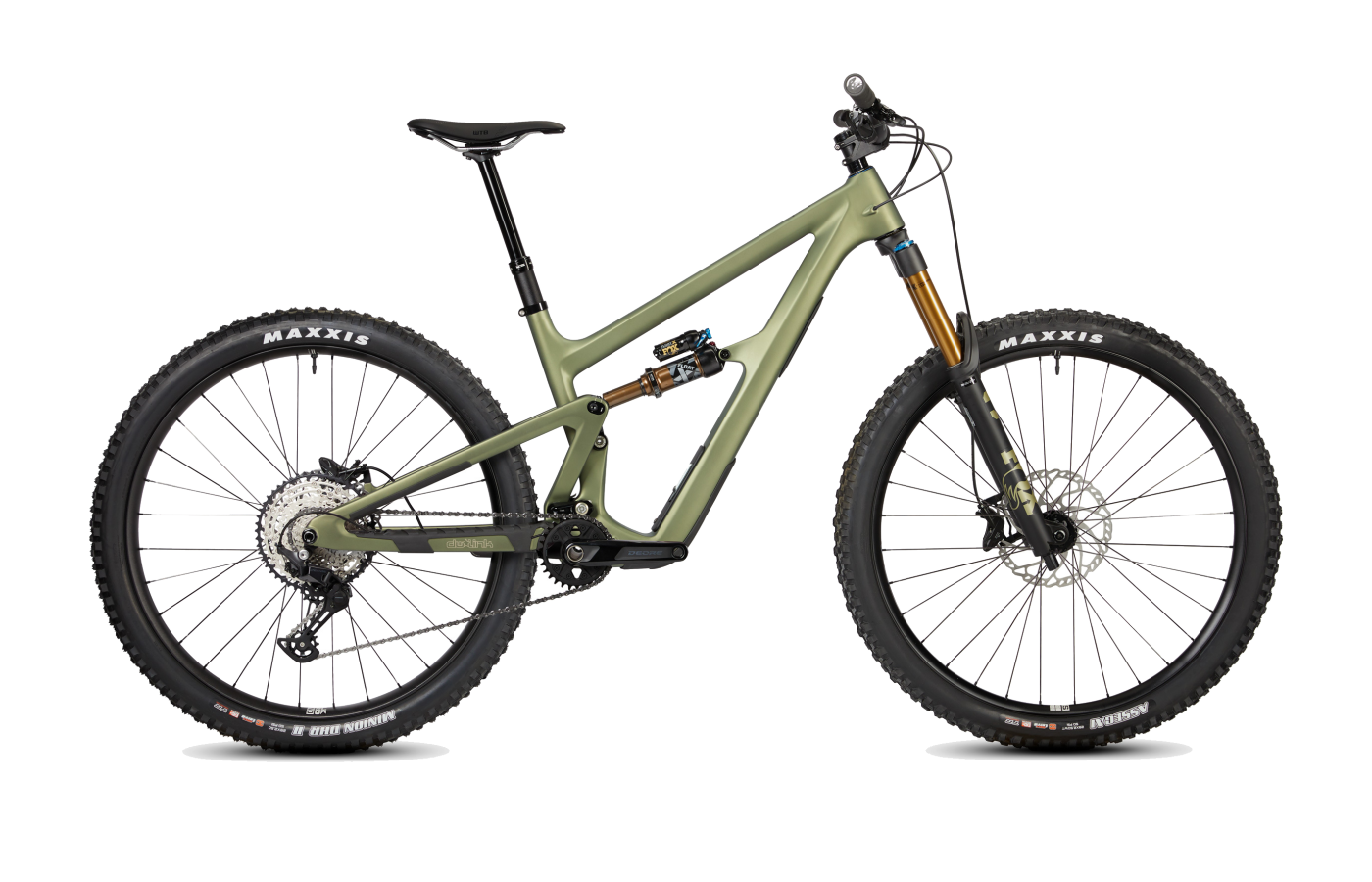
Ripmo
Ibis's all-around trail bike with a reputation for balanced pedaling efficiency and traction. A non-proprietary, non-electronic alternative if the Stumpjumper's GENIE shock and wireless-only carbon frame put you off.
Compare →