5010
vsBlur
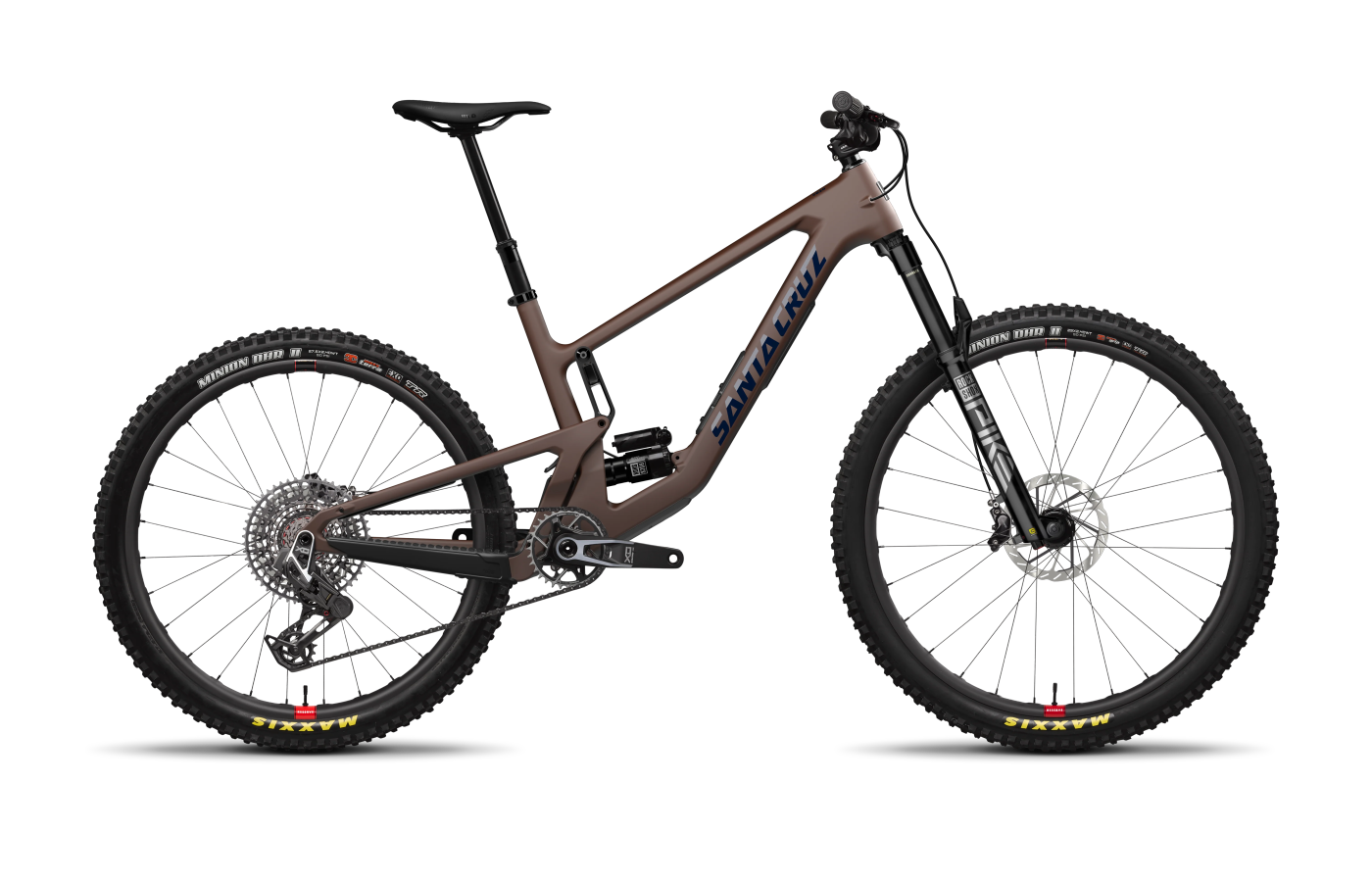
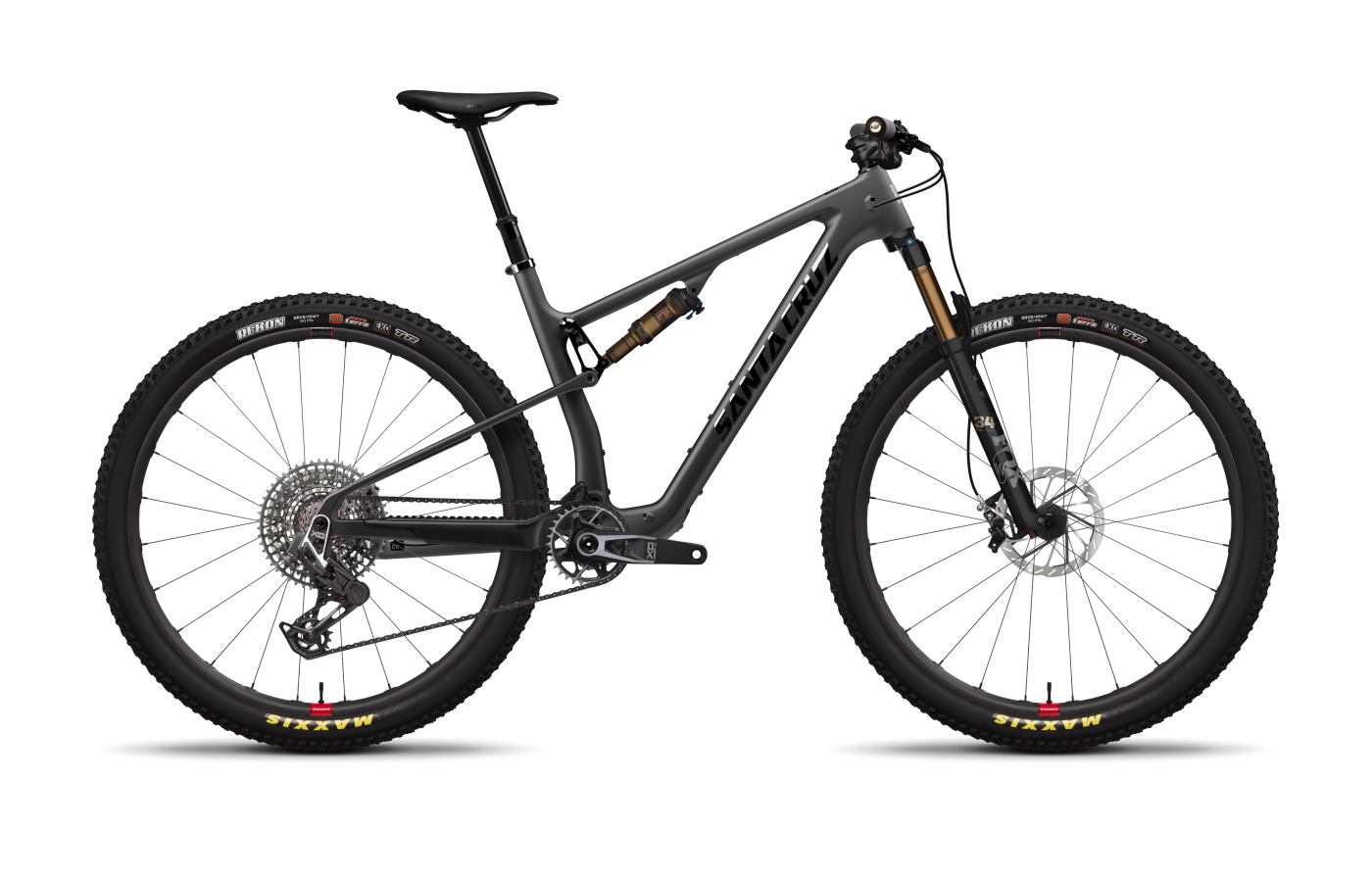
Same brand. Opposite trails.
The 5010 is Santa Cruz's fun-first mullet trail bike. The Blur is its XC race weapon. 130 mm of party versus 115 mm of business casual.
5010
- Drift-happy mullet geometry — 29 in front for rollover, 27.5 in rear for flickability. Reviewers unanimously call it a corner destroyer.
- Size-specific chainstays from 428 mm (XS) to 442 mm (XXL) keep the handling balanced across the size run.
- Plush VPP rear end — the 16% anti-squat reduction delivers traction and small-bump sensitivity that belies 130 mm of travel.
- At ~14 kg (size M, X0 build), noticeably heavier than any Blur spec — noticeable on sustained climbs.
- Stock SRAM G2/Code brakes and EXO-casing tires are universally flagged as under-spec for the chassis.
Blur
- Class-leading weight — 11.27 kg for the X0 AXS Trail RSV; under 11.4 kg for the flagship. 2.4 kg lighter than the equivalent 5010.
- Technical climbing prowess — the Superlight flex-stay design sucks the rear wheel into roots and rocks where stiffer bikes spin out.
- Sharper, more precise steering — a 67.1° head angle and lower 597 mm stack put the rider in a racing crouch.
- Active suspension bobs noticeably on smooth climbs without the lockout — not a crit-style pedaler.
- 75° effective seat tube angle is slacker than most modern XC rivals; some riders feel 'in the backseat' on sustained pitches.
Editor’s analysis
Both wear the Santa Cruz badge, but one is built to drift corners and the other is built to win marathons — and no amount of shared carbon layup closes that gap.
The Santa Cruz 5010 is a 130 mm VPP trail bike on a mixed 29/27.5 wheelset, with a 65.2° head angle and a commanding 622 mm stack in size M. Santa Cruz reduced peak anti-squat by about 16% over the V4 — the bike reviewers nicknamed 'Diet VPP' — so the rear end tracks chatter supply rather than riding high on chain tension. The result is a bike that reviewers at The Radavist and Bebikes called a 'corner destroyer': the 29 in front rolls over obstacles, the 27.5 in rear slashes berms, and the whole thing begs to get loose.
The Santa Cruz Blur is a completely different animal. It's a 115 mm (TR) or 100 mm (XC) full-29er with a 67.1° head angle, a lower 597 mm stack, and a Superlight flex-stay single-pivot suspension — no VPP links at all. Reviewers describe it as 'sucking itself to the ground' on technical climbs, winning singletrack ascents on traction alone. It's 2 kg lighter at the top end (11.27 kg vs 13.87 kg for comparable Reserve-wheel builds) and was purpose-built for World Cup XC racing.
Geometry tells the rest of the story. The 5010 sits 25 mm taller at the front (622 mm stack vs 597 mm) and 1.9° slacker at the head — it's unmistakably a descending bike with XC-bike travel numbers. The Blur's 75° seat tube angle puts the rider further back than modern XC bikes trend, but that's a deliberate Santa Cruz choice: active suspension and rider-weight balance over a firm pedaling platform. On a smooth fire road, the Blur will out-sprint the 5010 easily. On a chunky descent, the 5010 will out-handle it just as easily.
So the choice isn't about better or worse. It's about what you actually ride. If your weekend includes airtime, side hits, and leaning into berms — the 5010 is the better bike. If you're lining up for a marathon XC race or training for one — the Blur is the better bike. Picking wrong means fighting the geometry every ride.
Where the builds differ.
Comparing our editor's-pick builds side-by-side. Winners highlighted row-by-row — lower price and weight, and the better-spec component, each mark a point.
Build variants & pricing
Both span from a sub-$5k alloy-spec entry point up to a carbon-CC, Reserve-wheel, SRAM-Transmission flagship.
Prices are current US MSRP. The Blur's $13,449 ceiling is driven by the RockShox Flight Attendant electronic suspension on the XX AXS FA RSV — a racing-only feature the 5010 lineup doesn't offer.
How they fit, how they steer.
Sized M on each — the fit-picked size for a 5'8" rider. The 5010 sits 25 mm taller at the front (622 vs 597 mm stack), is 1.9° slacker at the head (65.2° vs 67.1°), and runs a 2.4° steeper seat tube (77.4° vs 75°). Chainstays are effectively identical at 433 mm; wheelbase runs 55 mm longer on the 5010 (1,212 vs 1,157 mm).
Which size should I buy?
Size recommendations based on stack, reach, and top tube length. The 5010's size range runs one slot larger (XS to XXL) than the Blur (S to XL).
→These are starting points. Flexibility, riding style, and preferred position all shift the answer — if you’re between sizes, a professional fit beats a chart.
What the magazines said.
Published reviews from trusted cycling outlets. Click through for the full write-up.
Which one should you buy?
If you're a trail rider who values airtime and cornering over stopwatch splits, get the 5010. If you line up at XC races — or wish you did — get the Blur.
5010
If your favorite trails have side hits, berms, and jumps — and you'd rather hang the rear wheel out than chase a KOM — the 5010 is one of the most intuitive trail bikes Santa Cruz has ever built. Plan to upgrade the stock tires and brakes to match the chassis.
Blur
If you race XC marathons, chase long mixed-terrain rides, or want the fastest Santa Cruz at the trailhead — the Blur is a World Cup-caliber platform with enough compliance to be fast for six hours, not just one. The TR build adds trail capability without losing the race edge.
Questions buyers actually ask.
Short answers to the things we get emailed about most often.
01Which Santa Cruz climbs faster — the 5010 or the Blur?
The Blur, and it's not particularly close. At comparable trim, the Blur X0 AXS Trail RSV is about 11.74 kg vs 13.87 kg for the 5010 X0 AXS RSV — roughly 2 kg, or about 3% of a 70 kg rider's system weight. On a 30-minute climb at threshold, that's worth somewhere around 30–40 seconds.
The Blur's Superlight flex-stay design also actively tracks roots and rocks in a way the 5010's VPP doesn't, which reviewers repeatedly called out as a 'technical climbing' advantage. The 5010's playful mullet geometry and heavier chassis are working against it on the way up.
02Which one is better for descending?
The 5010, by a clear margin within its travel class. A 65.2° head angle, 622 mm stack (size M), and 130 mm of VPP rear travel put it in a fundamentally different descending zone than the Blur's 67.1° / 597 mm / 115 mm package.
Reviewers at BikeRadar and The Radavist described the 5010 as riding 'a tiny bit bigger than the numbers suggest' — able to handle enduro-level terrain as long as you don't need enduro-level speeds. The Blur descends well for an XC bike, but reviewers consistently called it 'flighty' when pushed at high speeds, where the 5010 stays composed.
03Why does the 5010 come in a mullet and the Blur is full 29?
Different goals. The Blur's 29-in rear maintains momentum over chatter and flattens rolling resistance — everything a marathon racer wants. The 5010's 27.5-in rear has lower rotational inertia and a shorter rear-center, which makes the bike flickable, easy to manual, and more eager to drift in corners — what a trail rider wants.
Santa Cruz used to sell the 5010 as a full 27.5. The V5 added the 29-in front in 2022 to improve front-wheel rollover without sacrificing the rear-end agility that's always defined the model.
04What's the tire clearance on each?
5010: 63.5 mm (about 2.5 in) at both wheels. It ships with 2.4 in Maxxis Minion DHR II tires and has room to run wider if you stick to MX.
Blur: 61 mm (about 2.4 in) at both wheels. Stock builds run 2.4 in Maxxis Rekon Race (XC versions) or Maxxis Rekon (TR versions). That's the practical ceiling — the Blur is not designed around plus-size tire experiments.
05Is the Blur TR the same as a downcountry bike?
Santa Cruz says no. Reviewers say kind of. The Blur TR runs 115 mm rear / 120 mm front and a 67.1° head angle, which puts it in the same numerical neighborhood as the Transition Spur and Specialized Epic Evo.
But the Blur's cockpit is shorter when you step up to the TR (the longer fork actually reduces reach by raising the front end), and the bars, saddle, and brakes are still XC-spec. It's a marathon-race bike with a bit of extra travel — not a trail bike that happens to be light. If you want a true short-travel trail bike from Santa Cruz, the 5010 or the Tallboy is the honest answer.
06Which Santa Cruz is better for long-distance riding?
For long-distance XC or marathon events, the Blur wins comfortably — lighter weight, more efficient suspension on smooth terrain, and a flex-stay design that reviewers said 'took the edge off' over multi-hour efforts.
For long days with significant technical descents — think backcountry epics — the 5010 is the more capable tool even if you pay for it on the climbs. One tester with 3,000+ miles on the Blur called it 'a comfortable place to be' for endurance riding, which is the simpler summary.
07Do both frames have internal storage?
5010 V5: yes — the 'Glovebox' down-tube storage arrived with this generation, and it ships with Santa Cruz's Tool Wallet and Tube Purse sleeves.
Blur V4: no down-tube storage, but three bottle positions inside the frame for hydration flexibility on long XC efforts. Reviewers at Bike Perfect flagged the three-bottle layout as a marathon-friendly touch.
08How do the warranties compare?
Identical. Both frames come with Santa Cruz's lifetime frame warranty, lifetime pivot bearing replacement, and a lifetime wheel warranty on Reserve carbon rims (included on RSV-spec builds). That's part of why the premium price is palatable to long-term owners — the support keeps delivering years after purchase.
Similar bikes
If your priorities don’t map cleanly onto either of these, one of these adjacent bikes probably fits better.
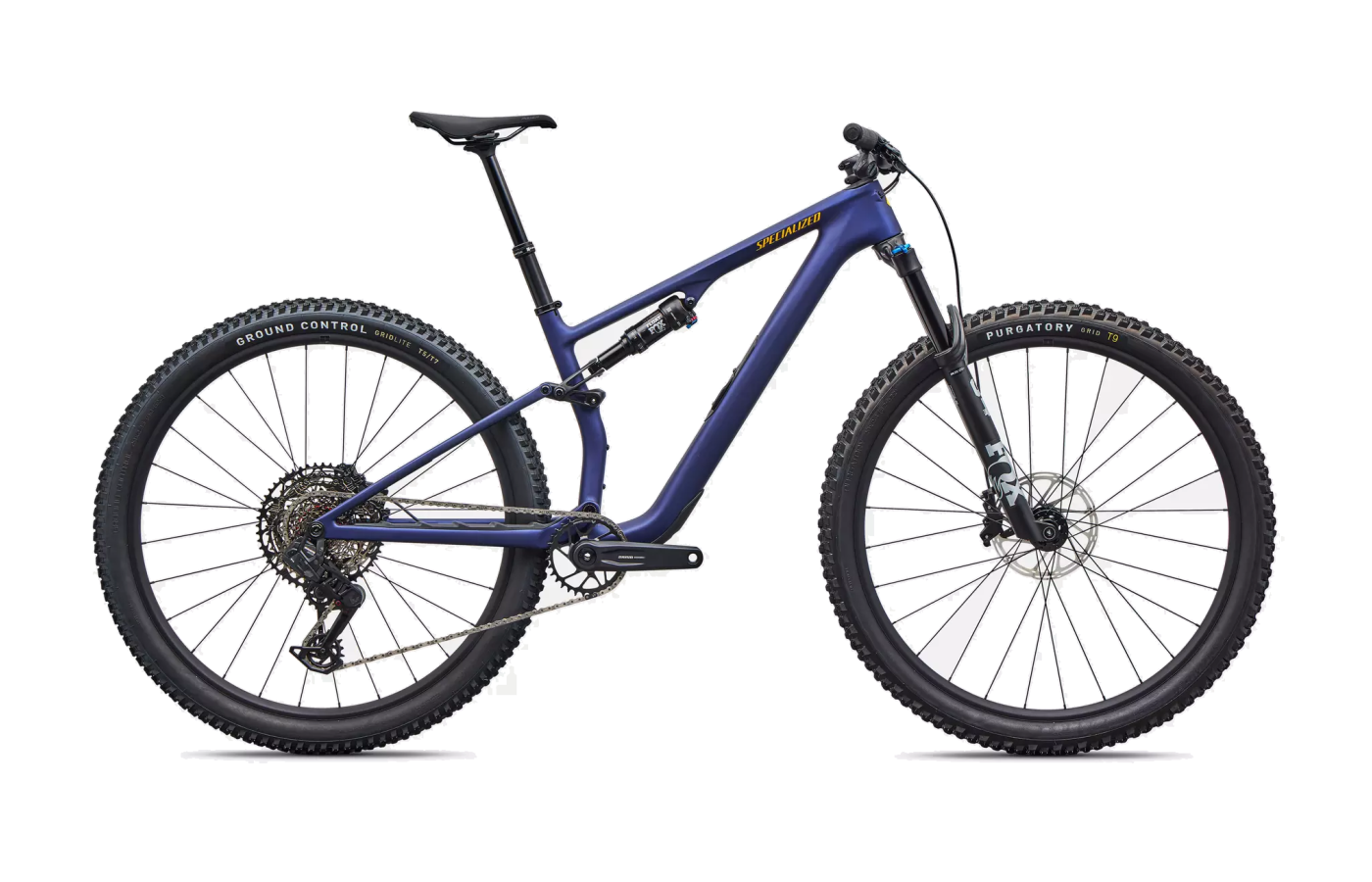
Epic Evo
The closest thing to a Blur with more attitude — 120 mm rear, slacker geometry, and Specialized's Brain or Genie suspension. The downcountry pick when the Blur feels too XC-focused.
Compare →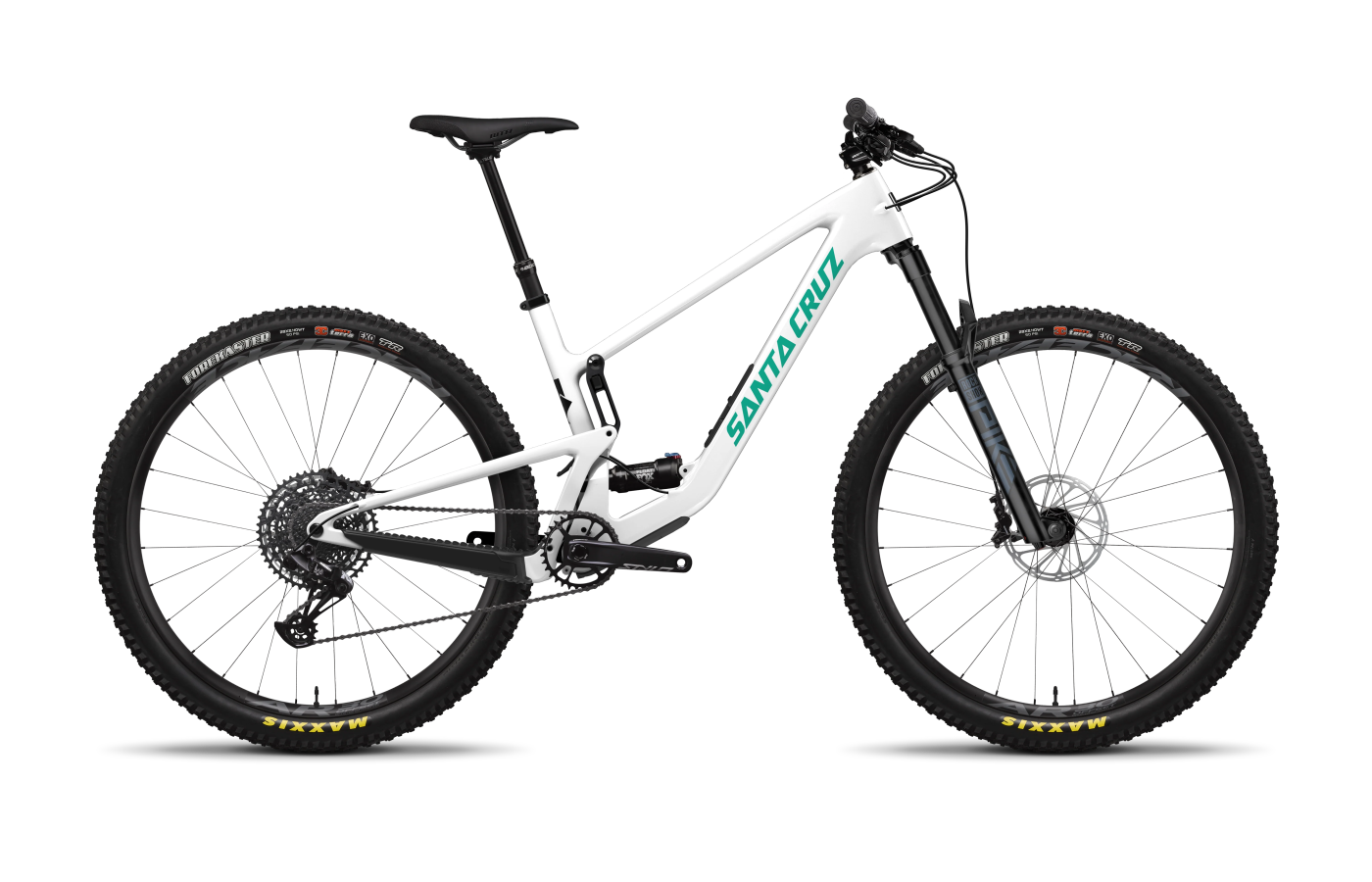
Tallboy
The 5010's full-29 sibling at Santa Cruz — same playful DNA, but the larger rear wheel trades some flickability for stability and rollover. Pick this if you want the 5010's intent without the mullet.
Compare →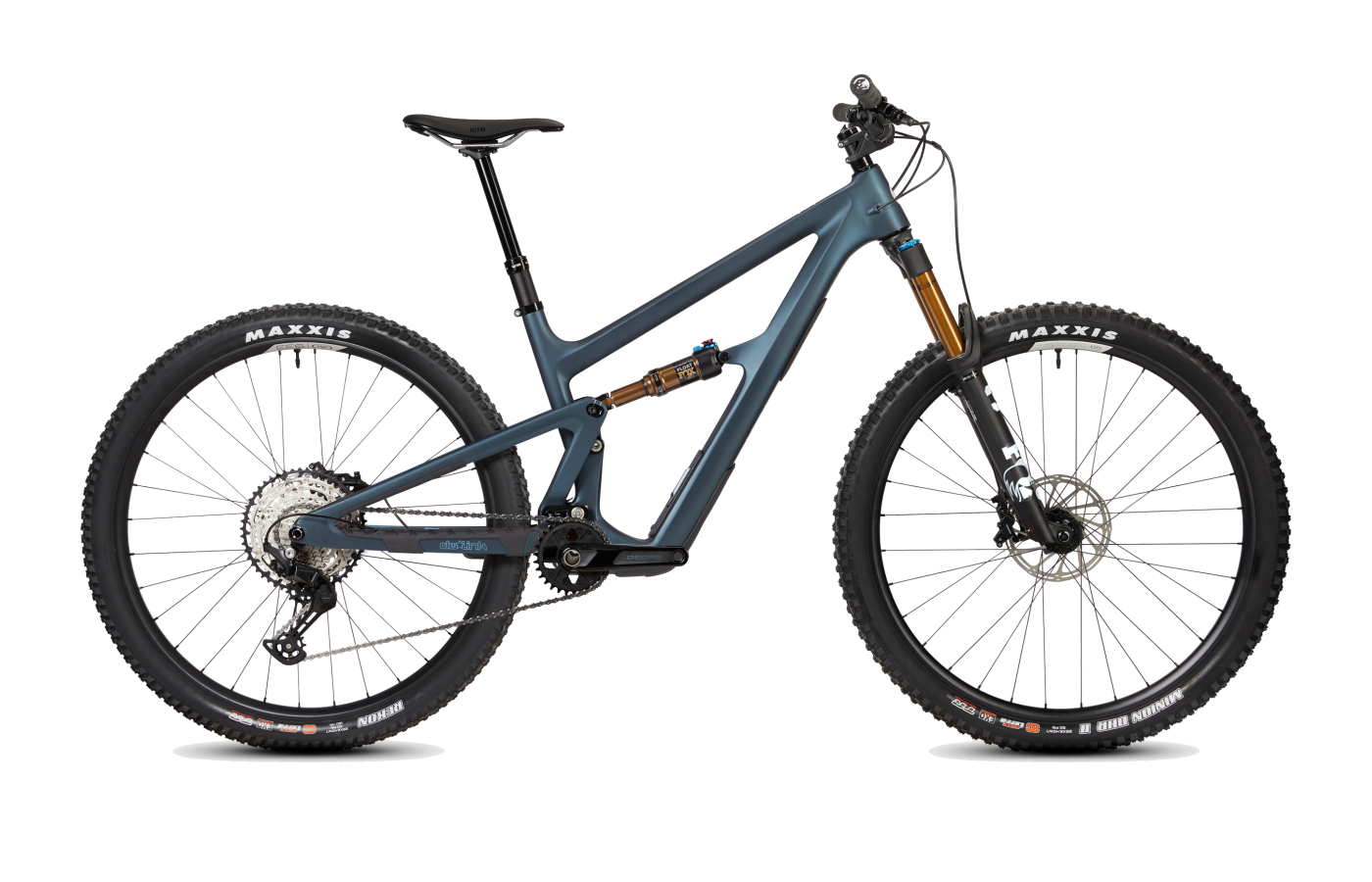
Ripley
Ibis's 120 mm DW-link short-travel 29er — legendary for a quiet, efficient rear end and a frame that rewards precision. A strong alternative to either Santa Cruz for riders who prize DW-link suspension feel.
Compare →