Warbird
vsStigmata
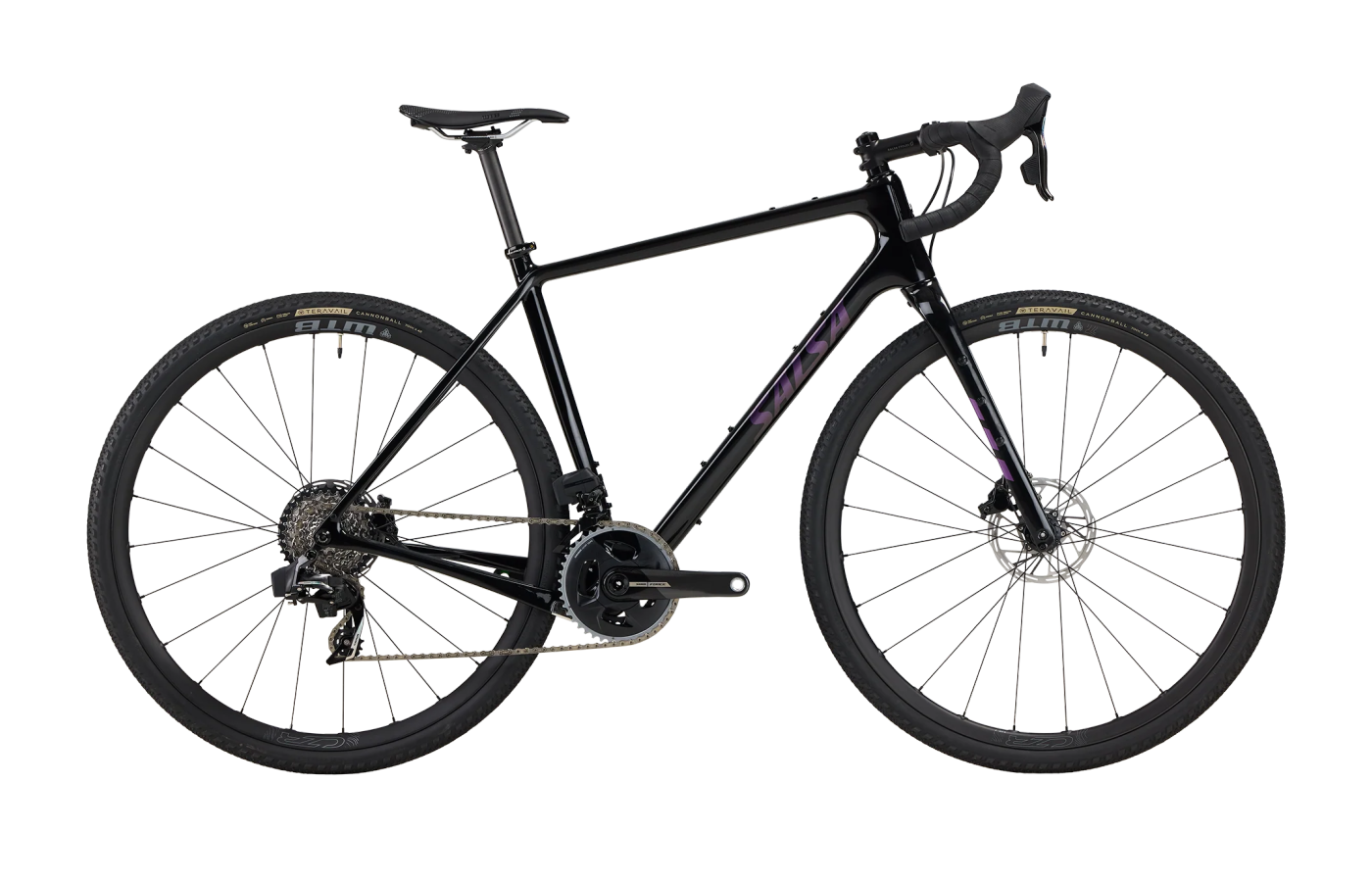
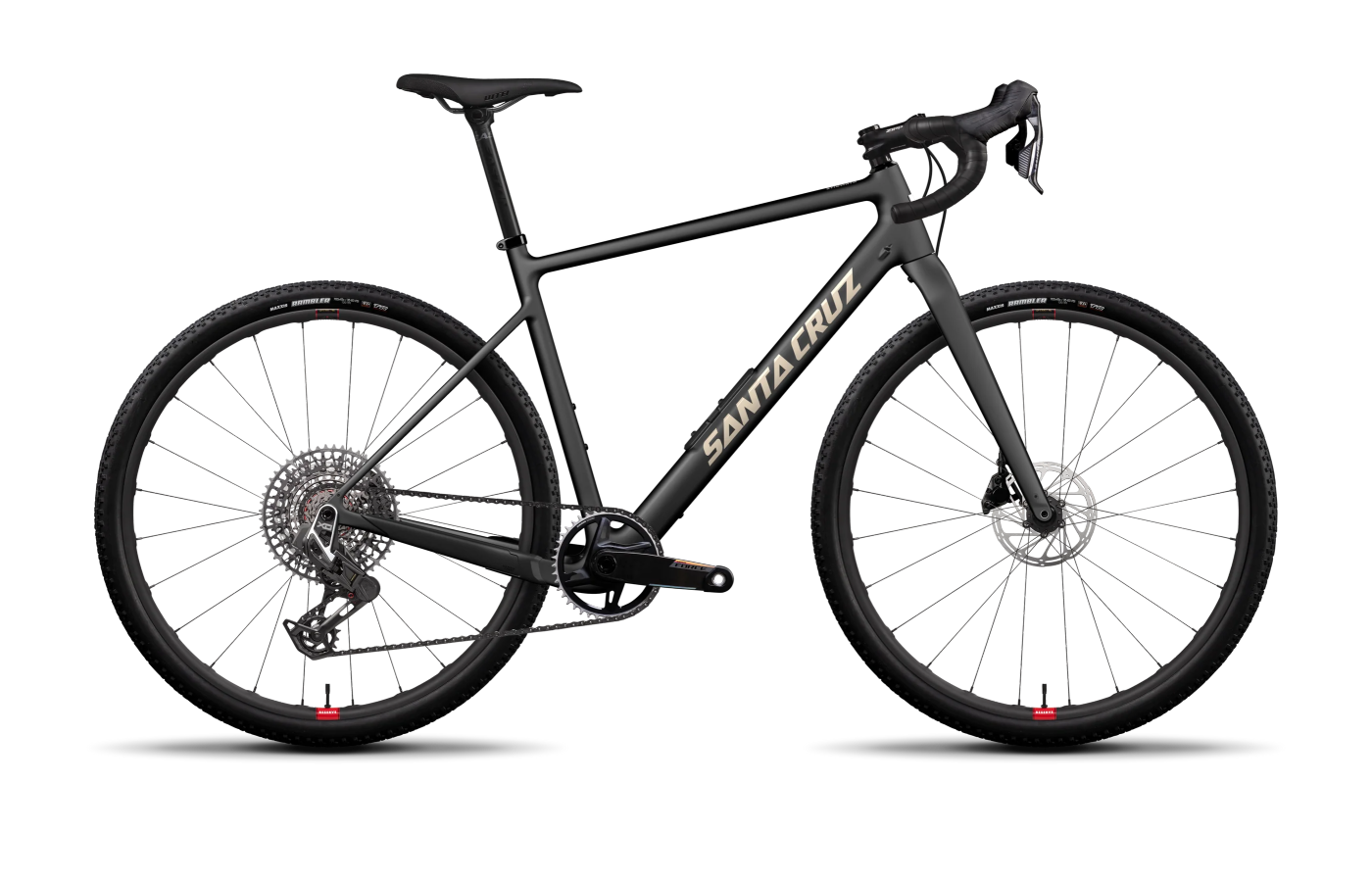
Two gravel bikes, two definitions of fast.
The Salsa Warbird is the original gravel race bike, refined for long mixed-surface days. The Santa Cruz Stigmata 4 is a mountain biker's gravel bike — slacker, longer, suspension-corrected.
Warbird
- Cheaper entry point — $2,799 for a full carbon GRX build versus the Stigmata's $4,149 floor.
- Wider build range — seven builds from GRX 600 up to Force AXS, covering 1x and 2x.
- Bikepacking-ready — three-bottle frame mounts, top-tube mount, triple fork mounts, fender mounts, dropper-compatible 27.2 mm post.
- Less tire clearance (45 mm vs 50 mm) caps how rowdy you can go.
- Stock builds get flak from reviewers for spec compromises — wheels and saddles get singled out at the top of the range.
Stigmata
- Suspension-corrected geometry — add a 40 mm RockShox Rudy without ruining the handling.
- 50 mm tire clearance — the most off-road-capable of the two by a clear margin.
- Top-tier CC carbon across the range — and a lifetime warranty on frame and Reserve wheels.
- Heavier frame (~1,380 g claimed) — pure pavement speed isn't the point.
- Range starts at $4,149 — no budget builds, and no 2x Shimano option.
Editor’s analysis
Both wear the gravel-race label, but they're aimed at different gravel — the Warbird at long, fast American fire roads; the Stigmata at the singletrack you'd usually ride on a hardtail.
On paper they share a category. Both run carbon frames, both spec SRAM Force AXS at the top, both clear over 40 mm tires. But the Salsa Warbird and Santa Cruz Stigmata diverge almost immediately on geometry — and that geometry tells the whole story.
The Salsa Warbird leans on a 70.75-degree head tube angle, 430 mm chainstays, and Salsa's Class 5 VRS — bowed seat stays and flattened chainstays designed to flex vertically and absorb chatter passively. The result is a stable, planted ride that reviewers consistently call a 'mile muncher.' Reviewers at BikeRadar and Cycling Weekly praise its road manners; Bikepacking calls the V4 'much more confident' than the previous generation on rough stuff. Tire clearance tops out at 45 mm. It's a true all-rounder built around 700c (or 650b up to 2.1"), and the lineup runs from a $2,799 GRX 600 1x build all the way to the $6,999 C Force AXS Wide.
The Santa Cruz Stigmata is the more radical bike. The Stigmata 4 went 2.5 degrees slacker than its predecessor — 69.5° at the head tube — added 30 mm of reach across all sizes, and is suspension-corrected for a 40 mm RockShox Rudy fork. Tire clearance is 50 mm. The frame is intentionally 10–12% less stiff than Gen 3, and Santa Cruz built it around a stubby 70 mm stem at every size. As Escape Collective's Dave Rome put it, 'less stiff, heavier, and as aero as a Jeep. Yeah, it's brilliant.' This is a bike that reviewers describe as 'effortlessly stable' on chunky descents and that won Keegan Swenson's Unbound 200.
Put another way: the Warbird is the bike you buy for Unbound, DK200-style fast gravel, road-blended commutes, and bikepacking. The Stigmata is the bike you buy when your gravel routes link singletrack, when you 'underbike' on purpose, and when you'd happily run a suspension fork and dropper post on a drop-bar bike.
Where the builds differ.
Comparing our editor's-pick builds side-by-side. Winners highlighted row-by-row — lower price and weight, and the better-spec component, each mark a point.
Build variants & pricing
Both top out around $7k. The Warbird starts $1,350 cheaper and offers Shimano GRX builds; the Stigmata is SRAM-only with one Apex mechanical entry point.
Prices are current US MSRP. The Warbird C Force AXS Wide runs a 2x drivetrain (43/30T crank, 10-36T cassette) for tighter cadence steps; the Stigmata Force 1x AXS RSV runs a 1x setup (42T + 10-44T XPLR) that trades top-end speed for simpler shifting and a wider climbing range.
How they fit, how they steer.
Warbird 56cm vs Stigmata SM — fit-picked for a 5'8" rider on each bike. The Stigmata sits 21 mm lower in stack but 9 mm longer in reach, and 1.25° slacker at the head tube — that's the bigger story than the numbers suggest.
Which size should I buy?
Size recommendations based on stack, reach, and effective top tube. The Warbird offers seven sizes (49–61 cm) — finer steps and a smaller bottom end. The Stigmata's six sizes (XS–XXL) cover a wider overall range.
→These are starting points. Flexibility, riding style, and preferred position all shift the answer — if you’re between sizes, a professional fit beats a chart.
What the magazines said.
Published reviews from trusted cycling outlets. Click through for the full write-up.
Which one should you buy?
If you race long American gravel and want a do-everything carbon bike, get the Warbird. If your gravel routes touch singletrack and you'd happily run suspension up front, get the Stigmata.
Warbird
If your gravel is long, fast, and mostly non-technical — Unbound-style fire roads, mixed-surface centuries, multi-day bikepacking — the Warbird earns its 'original gravel race bike' title. Stable, comfortable, lighter, cheaper to get into, and ready to carry a load.
Stigmata
If your gravel rides include singletrack connectors, chunky descents, or any route where a 40 mm fork would make you faster — the Stigmata is the more capable tool. It's heavier and more expensive, but the geometry and tire clearance let you go places a traditional gravel bike can't.
Questions buyers actually ask.
Short answers to the things we get emailed about most often.
01Which is faster on smooth gravel and pavement?
The Salsa Warbird, in most reviewers' hands. It's lighter, has a tighter 2x gear range on the Force AXS Wide build (43/30T + 10-36T), and reviewers consistently describe it as 'fast, consistent and smooth' on tarmac. Cycling Weekly's Charlie Kohlmeier was '6 minutes faster to work on the Warbird' than his usual setup.
The Stigmata is heavier and Escape Collective's Dave Rome called it 'as aero as a Jeep' — Santa Cruz makes zero aero claims. On smooth surfaces, the Warbird is the quicker bike.
02Which handles technical terrain better?
The Stigmata, comfortably. Its 69.5° head tube angle (1.25° slacker than the Warbird), 70 mm stem, longer wheelbase, and 50 mm tire clearance are all aimed at chunky, technical riding. Add the optional 40 mm RockShox Rudy fork and reviewers describe it as a 'trail surfer' that lets you 'brake later and harder' into rough corners.
The Warbird has been improved over its predecessor for technical work — Bikepacking's Logan Watts called the V4 'much more confident' descending rough gravel — but it's still a gravel race bike at heart. Without suspension and capped at 45 mm tires, it's outclassed when the route turns rocky.
03What's the maximum tire clearance?
Salsa Warbird: 45 mm in 700c (or up to 650b x 2.1").
Santa Cruz Stigmata: 50 mm in 700c, 1x setups. The Stigmata is 700c-only.
That 5 mm difference matters more than it sounds. The Stigmata can run a true mountain-bike-width gravel tire for technical singletrack, while the Warbird tops out at what most riders consider a fast-but-burly gravel size. If you want to run chunky rubber, the Stigmata wins.
04Can I run a suspension fork on either?
The Stigmata is explicitly designed for it. The frame is suspension-corrected around a 430 mm axle-to-crown height, so swapping in a RockShox Rudy XPLR or Fox 32 Taper-Cast 40 mm fork doesn't change the geometry. Two of the five stock Stigmata builds ship with the Rudy.
The Warbird has no factory suspension option, but the frame's internal routing accommodates dropper posts (with 1x or Di2 setups). Bolting a suspension fork onto the Warbird isn't supported — the frame wasn't designed around it, and it would slacken the geometry in ways Salsa hasn't engineered for.
05Which is better for bikepacking and loaded rides?
The Warbird has the edge. Salsa designed the V4 with bikepacking in mind — three bottle mounts on frames 56 cm and up, top-tube bag mounts, triple fork-leg mounts, fender mounts, and rack compatibility (with an adapter). The 27.2 mm round seatpost accepts a dropper or a more compliant carbon post.
The Stigmata has frame-bag-friendly real estate and the 'Glovebox' internal down-tube storage with included neoprene tool/tube wallets. But it lacks dedicated rack mounts — riders have to rely on strap-on bags. For self-supported multi-day rides, the Warbird is the more purpose-built choice.
06How do the Force AXS builds compare on price and spec?
Warbird C Force AXS Wide ($6,999): SRAM Force AXS 2x with a 43/30T crank and 10-36T cassette, WTB CZR i25 carbon wheels, Salsa Cowbell carbon bar, Salsa Waxwing Deluxe V2 carbon fork (rigid). Claimed weight 19 lb 1 oz at 56 cm.
Stigmata Force 1x AXS RSV ($6,849): SRAM Force XPLR 1x with a 42T crank and SRAM X0 Eagle AXS T-Type 12-speed cassette, Reserve 25|GR carbon wheels, Zipp Service Course alloy bar, rigid carbon fork. Claimed weight 19.14 lb.
Within $150 of each other, near-identical weight, both top-tier carbon — but the Warbird gives you tighter 2x cadence steps, while the Stigmata gives you mountain-bike-style climbing range and the option to add a Rudy fork later.
07Is the Stigmata's lifetime warranty meaningful?
Yes — it covers both the frame and the Reserve carbon wheels for the original owner, against manufacturing defects. Reviewers consistently flag this as a real value-add given the bike's premium price.
Salsa's warranty on the Warbird is a more standard limited frame warranty, not lifetime. If you plan to keep the bike for five-plus years and ride it hard, the Santa Cruz coverage is a genuine ownership-cost advantage.
08Is the Stigmata good as a road bike too?
It's possible, but it's not what the bike's optimized for. Reviewers note the Stigmata's slack 69.5° head tube and stubby 70 mm stem require 'a fair bit of work' to navigate fast pavement — you have to weight the front wheel deliberately to initiate turns. Combined with the draggy stock 45 mm Maxxis Rambler tires, it's not a quick road bike with knobbies.
The Warbird is the more dual-purpose option here. Cycling Weekly's Josh Ross was 'extremely impressed' with how it rides on tarmac, and Charlie Kohlmeier ran it as a commuter without complaint. If a meaningful share of your riding is paved, the Warbird is the better one-bike answer.
Similar bikes
If your priorities don’t map cleanly onto either of these, one of these adjacent bikes probably fits better.
Aspero
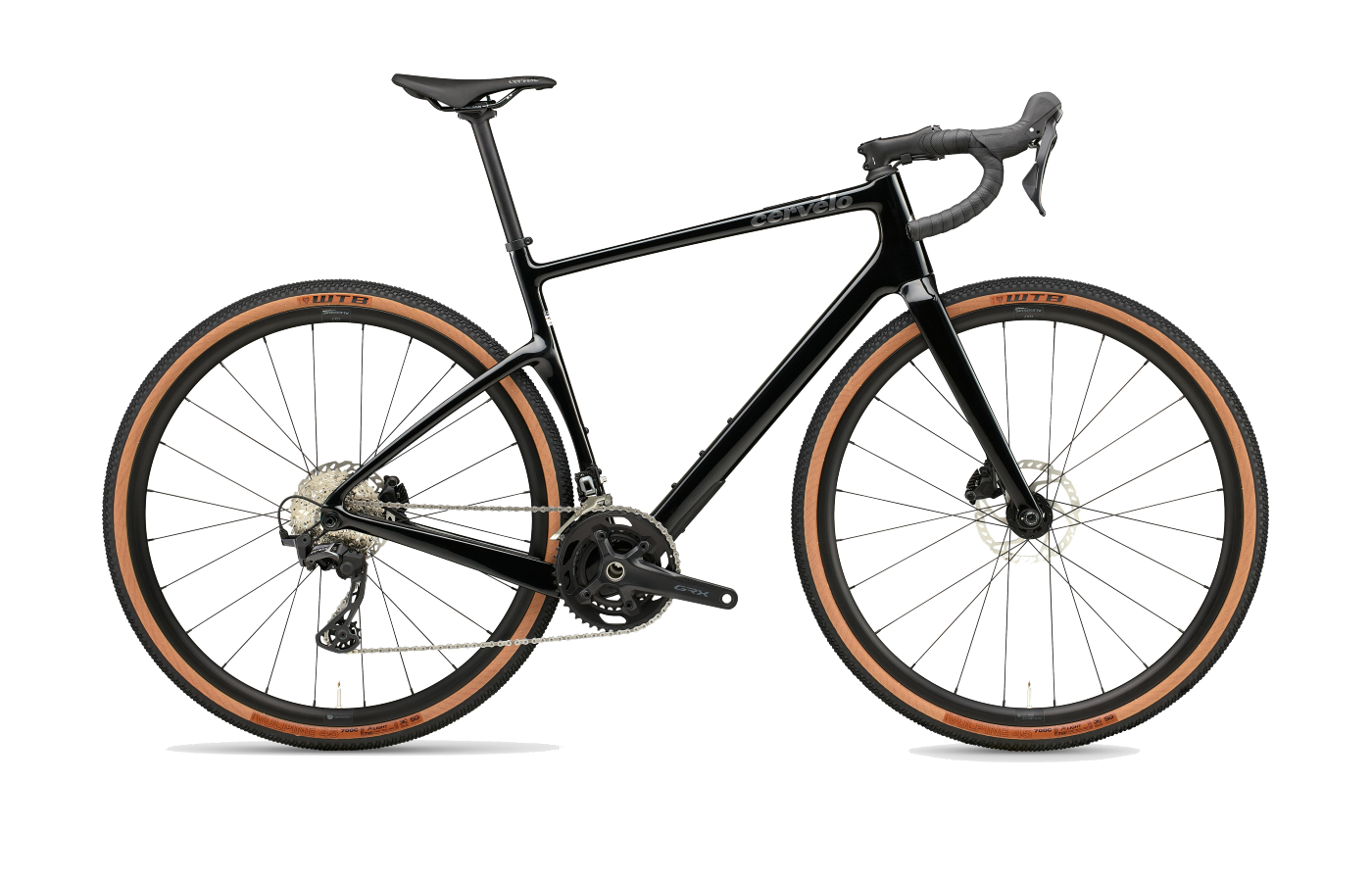
The Cervélo Áspero is the aero-race answer to the Warbird's all-road approach — sharper geometry, less compliance, built to win flat-and-fast events. If your gravel is shorter, faster, and less technical, the Áspero is the more focused racing tool.
Compare →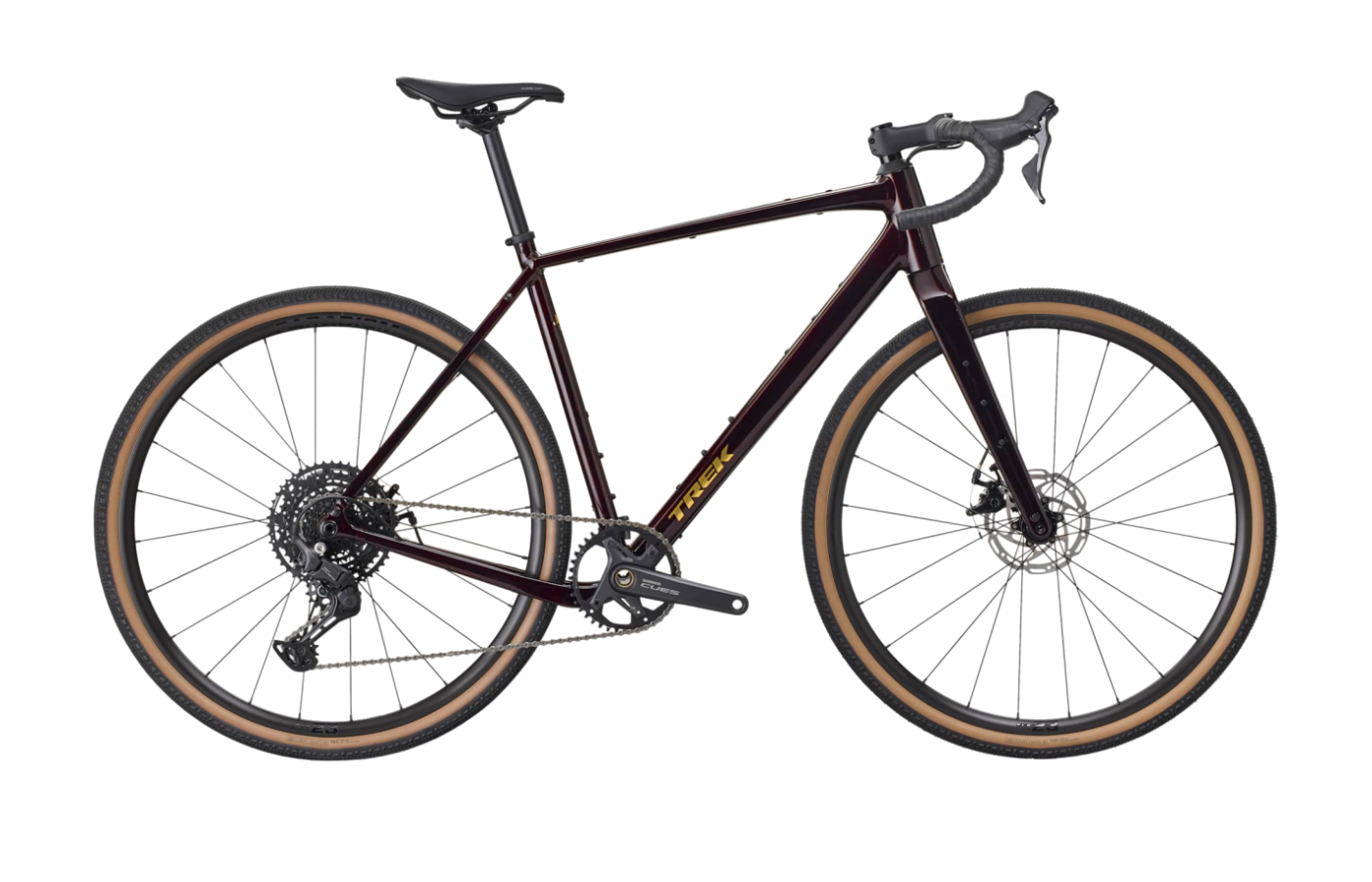
Checkpoint
Trek's Checkpoint covers similar ground to the Warbird with its own compliance trick — IsoSpeed at the seat cluster — and a deeper bench of mid-priced builds. Worth a look if you want bikepacking-friendly mounts plus active rear compliance.
Compare →Szepter
If the Stigmata's MTB-inspired direction appeals but you want it dialed up further, the YT Szepter ships with a suspension fork and dropper post as standard — and at direct-to-consumer prices that undercut Santa Cruz on raw components.
Compare →