Rage
vsTues
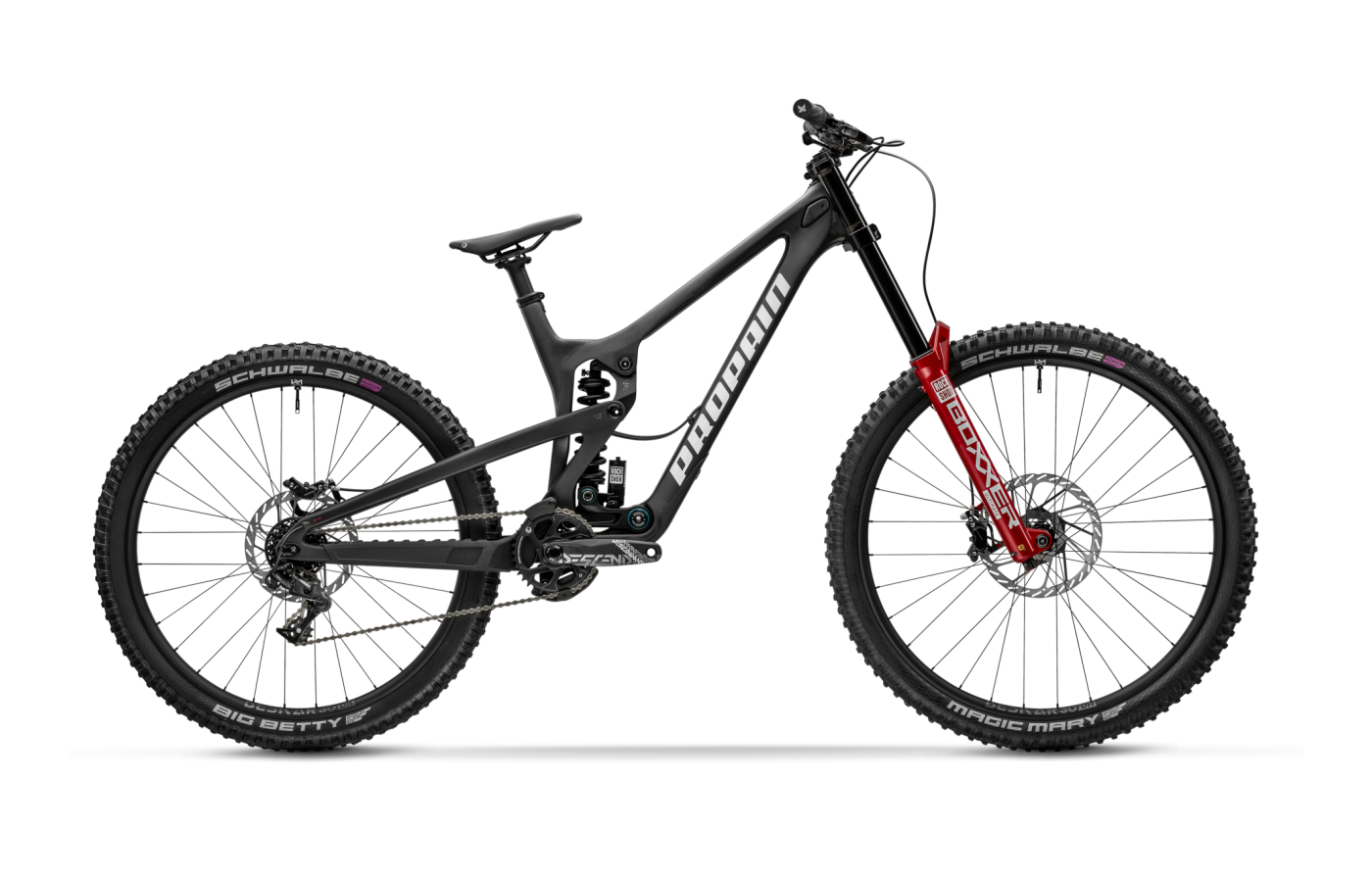
Two direct-to-consumer DH bikes, two personalities.
The Propain Rage is the playful, forgiving park bike with 215 mm out back. The YT Tues is the sharp, lively racer that wants to be ridden hard.
Rage
- More travel, deeper forgiveness — 215 mm rear with 38% progression eats casings and bad jump landings without complaint.
- Exceptional pop on jumps — mid-stroke support that reviewers say lets them "reach record heights" on familiar lips.
- Deep adjustability — mullet or full-29, 445/460 mm chainstay flip chip, 1.5" head tube takes aftermarket angle/reach kits.
- Less composed than the Tues at full-chat speed in rough rock gardens — "skittery" was the word.
- Reviewers consistently flag it as "not a quiet bike" — rattling on rock gardens and heavy landings.
Tues
- Sharper, more energetic ride — rides "steeper and pointier" than its 63.2° HTA suggests; comes alive at lower speeds.
- Lighter and quieter — Core 4 weighs 16.1 kg vs the Rage's 17.2 kg, and the frame is praised for the absence of cable rattle.
- Massive 220 mm brake rotors — TRP DH-R EVO front and rear, the biggest in its class for serious heat management.
- Noticeable pedal feedback through the feet in high-frequency chatter — testers suggested an O-chain upgrade.
- Only three sizes (S, M, L based on Core 3 CF) — less of a fit ladder than the Rage's full M-XL range.
Editor’s analysis
Both German, both carbon, both sold direct — but one wants to float over the chunder and the other wants you to attack it.
The Propain Rage and YT Tues sit in almost identical territory on paper: carbon frames, 200 mm forks, four-bar suspension, 63-degree head angles, and direct-to-consumer pricing that undercuts the boutique competition by a wide margin. Both have World Cup pedigree. Both run mullet or full-29, with flip chips for chainstay length and head angle. From the spec sheet, you'd struggle to call a winner.
Then you ride them and the philosophies separate. The Propain Rage runs 215 mm of rear travel through its PRO10 linkage with a 38% progression rate — translation: deep, forgiving, and very hard to bottom out. Reviewers consistently use words like "playful," "forgiving," and "pops very well." It's the bike that lets you over-jump to flat without bucking you off, and it absorbs cased landings with grace. The trade-off is a slightly less composed feel at flat-out race speed in rough rock gardens, where some testers found it "almost skittery."
The YT Tues commits the other direction. With 200 mm rear and a more supportive, lower-progression tune, it's described as "sharp," "lively," and "more like a long-travel enduro bike" in its agility. Mid-stroke support is the priority — pumping rollers, sprinting between corners, popping off lips. The penalty is a stiffer initial stroke and more pedal feedback through the feet on high-frequency chatter. It rewards an active rider who wants to generate speed rather than coast on travel.
Put another way: the Rage is the bike park bike that can race. The Tues is the race bike that's fun in the bike park. Both work on Whistler's A-Line; only one of them will let you cruise it half-asleep.
Where the builds differ.
Comparing our editor's-pick builds side-by-side. Winners highlighted row-by-row — lower price and weight, and the better-spec component, each mark a point.
Build variants & pricing
Both span roughly $3.4k of range. Tier-for-tier, the two GX DH builds are the cleanest head-to-head — same drivetrain, top-shelf suspension, $180 apart.
Prices are current US MSRP. The Rage's lineup goes deeper at the top with a Shimano Saint "Swedish Gold" build at $6,379 and a $7,389 Fox 40 Factory "Factory" build that includes an Ochain pedal-feedback damper as standard — a tell that Propain knows exactly which complaint they're answering.
How they fit, how they steer.
Fit-picked for a 5'8" rider — Rage in L (465 mm reach), Tues in M (446 mm reach). Both at ~63° HTA, but the Tues sits 2 mm taller in stack despite the smaller frame, and rides "sharper and steeper" than the chart implies.
Which size should I buy?
Size choice is biggest fit difference: the Rage L runs a long cockpit while the Tues M stays compact. Cross-shop sizes carefully — the Rage L feels closer in reach to the Tues L (450 mm) than the Tues M.
→These are starting points. Flexibility, riding style, and preferred position all shift the answer — if you’re between sizes, a professional fit beats a chart.
What the magazines said.
Published reviews from trusted cycling outlets. Click through for the full write-up.
Which one should you buy?
If you ride the bike park more than you race, get the Rage. If you race the bike park more than you ride it, get the Tues.
Rage
If your weekends are jump lines, drops, and the occasional cased landing you'd rather not pay for, the Rage's 215 mm of forgiving travel and high progression rate make every airtime mistake survivable. It pops, it pumps, and it forgives — exactly what you want when the goal is fun, not fastest.
Tues
If you're chasing podiums on tracks that mix sprinting, jumping, and quick direction changes — Leogang, Fort William's flatter bits, regional DH series — the Tues rewards aggression. It's lighter, sharper, and demands input, but gives you measurable speed back. The cheapest way into a current World Cup-spec frame.
Questions buyers actually ask.
Short answers to the things we get emailed about most often.
01Which has more rear-wheel travel?
The Propain Rage at 215 mm vs the YT Tues at 200 mm. Both pair with 200 mm forks. The 15 mm of extra rear travel on the Rage, combined with its 38% progression rate, is the single biggest reason reviewers describe it as more forgiving on hard landings and casings.
In practice, the Tues uses its travel more supportively — it doesn't dive as deep mid-stroke, which is why it pumps and jumps so well, but also why it transmits more through the feet on high-frequency chatter.
02Which is faster on a race track?
Track-dependent. On flatter, jump-heavy tracks like Leogang, the YT Tues has the edge — it accelerates harder out of corners, pumps better, and rewards an aggressive rider. Vali Höll has won World Cups on it.
On steep, chunky, square-edge tracks like Garbanzo or Mont-Sainte-Anne, the Propain Rage's deeper, more forgiving travel becomes the asset — fewer expensive mistakes, more grip on repeated impacts. Neither bike is a clear overall winner; it's a track-character match.
03Which is better for the bike park?
The Propain Rage, by most reviewer accounts. Its 38% progression and supportive PRO10 linkage make it "reach record heights on jumps we'd normally just cruise through," with enough forgiveness to absorb the casings that follow. The chainstay flip chip lets you run 445 mm for playful park days or 460 mm for stability on rougher trails.
The YT Tues is no slouch in the park — its mid-stroke support makes it excellent on pump tracks and jump lines — but it demands more rider input and gives less margin for error.
04What about pedal feedback?
This is one of the bigger ride-feel differences. The YT Tues is consistently flagged as "noisy through the feet," with reviewers suggesting an aftermarket O-chain to mute the feedback in high-frequency chatter.
The Propain Rage Factory build (the $7,389 flagship) ships with an Ochain Active Spider stock — Propain solved the same problem at the factory rather than leaving it as an upgrade. The cheaper Rage builds don't include it, so this advantage only applies at the top of the range.
05Which has better adjustability?
Roughly tied, with different strengths.
Propain Rage: mullet or full-29 via linkage flip chip, 445/460 mm chainstay flip chip, and a 1.5" straight head tube that accepts aftermarket angle and reach adjusters from any third-party headset maker. The widest aftermarket adjustment ceiling.
YT Tues: mullet or full-29 via the elegant "Flip Link" wing system at the seat stay (no extra parts needed), +/- 5 mm chainstay adjustment, and a lower shock-mount flip chip that toggles HTA between 63.2° and 63.5° while raising/lowering BB by 5 mm. More built-in, less aftermarket-dependent.
06Are these bikes good value compared to Specialized or Santa Cruz?
Yes, dramatically. Both Propain and YT are direct-to-consumer brands without dealer markup. The Rage's $5,679 Ultimate build (RockShox Boxxer Ultimate fork, Vivid Coil Ultimate shock, NEWMEN DH wheels) and the Tues's $5,499 Core 3 CF (Öhlins DH38 fork and TTX22 shock, DT Swiss FR 1500 wheels) both deliver true World Cup-spec suspension at a price point where Specialized or Santa Cruz typically sell their cheapest DH builds.
The trade-off is no demos, no local dealer support, and you assemble the bike from a box.
07Which weighs less?
The YT Tues, by a meaningful margin. The Tues Core 4 is reported at 16.1 kg in size L; the Rage CF Start 29 is listed at 17.2 kg in the same trim. That's about 1.1 kg — noticeable when shuttling, lifting onto a rack, or accelerating out of a corner.
Downhill bikes don't generally win or lose races on weight, but the Tues's lower mass is part of why reviewers call it "lively" — it's easier to manhandle into the line you want.
08What's the warranty situation?
Propain offers a 5-year frame warranty, which is on the longer end of the industry. Multiple reviewers specifically call this out as a confidence-builder for long-term ownership.
YT has not had its MK4 warranty terms widely covered in reviews — historically YT offers a 2-year frame warranty with crash-replacement pricing for the original owner. Verify current terms on YT's site before buying. If long-term frame coverage matters to you, the Rage is the safer bet on paper.
Similar bikes
If your priorities don’t map cleanly onto either of these, one of these adjacent bikes probably fits better.
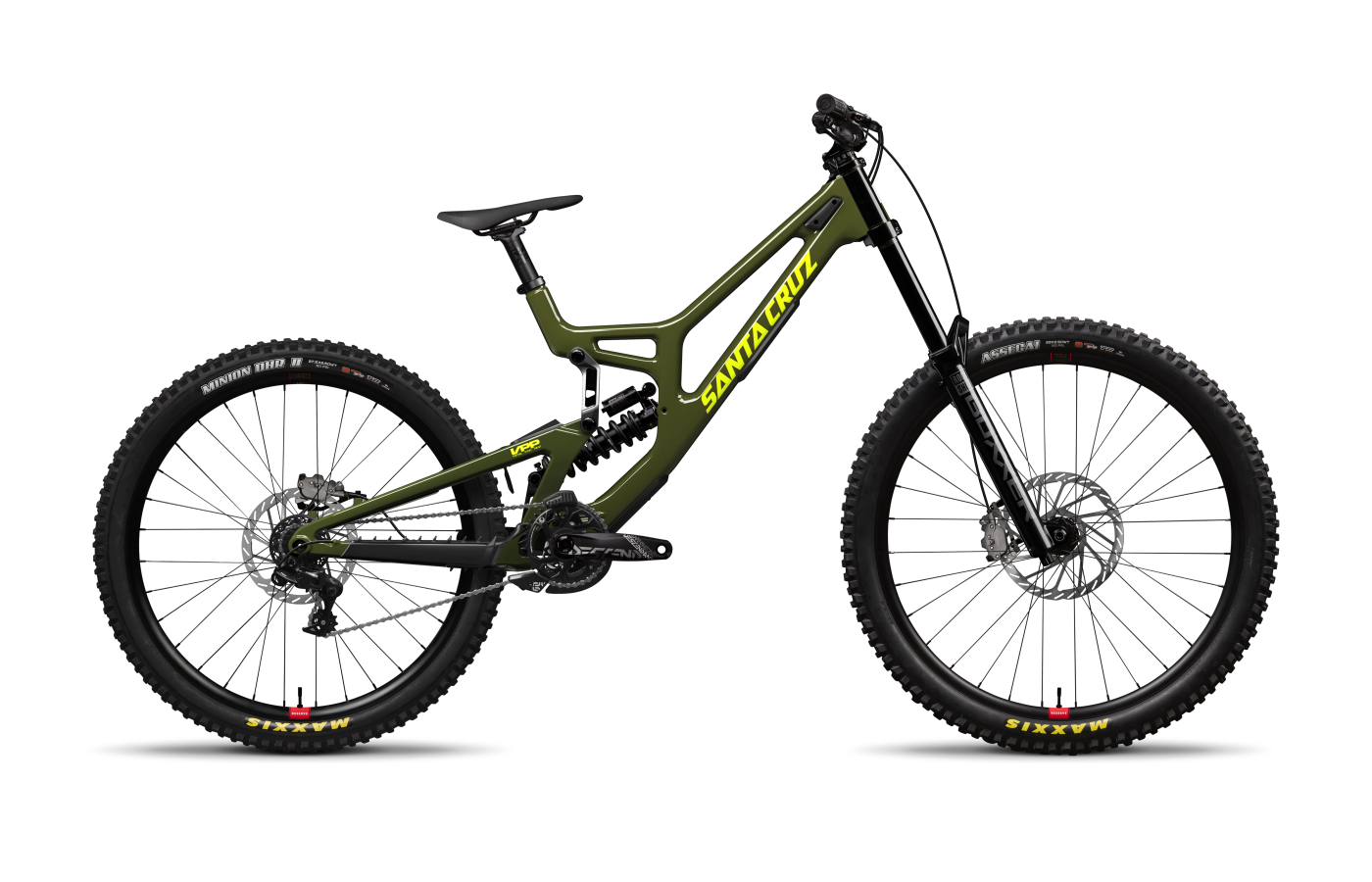
V10
The benchmark. Santa Cruz's V10 is the bike most reviewers measure others against — VPP suspension, composed at race speed, and the kind of dealer-supported pedigree neither Propain nor YT offers. You pay for it.
Compare →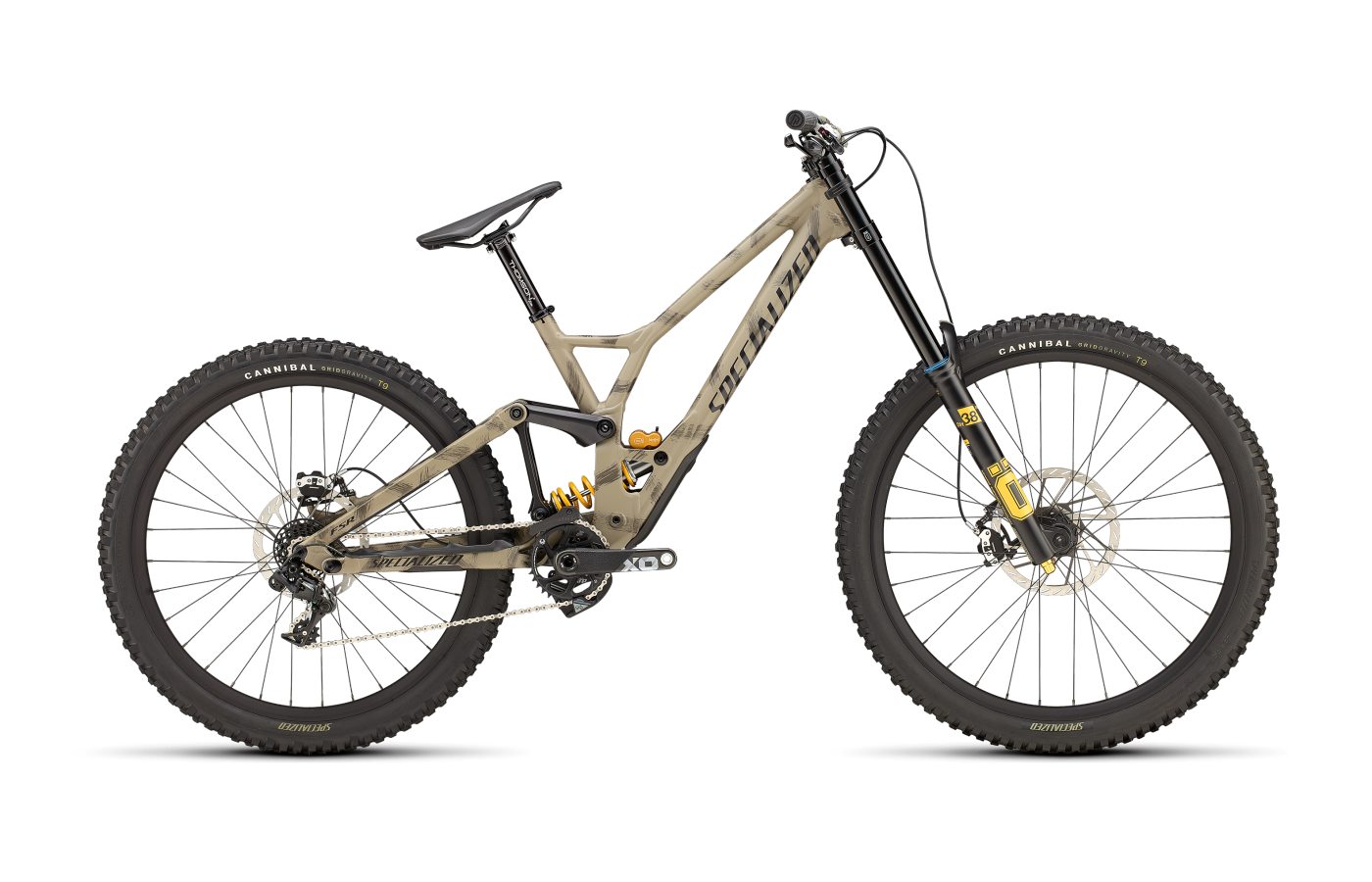
Demo
If you want the opposite of the Tues — a true "bulldozer" that smooths terrain rather than rewarding rider input — the Specialized Demo is the one. Heavier, planted, and built around stability over agility.
Compare →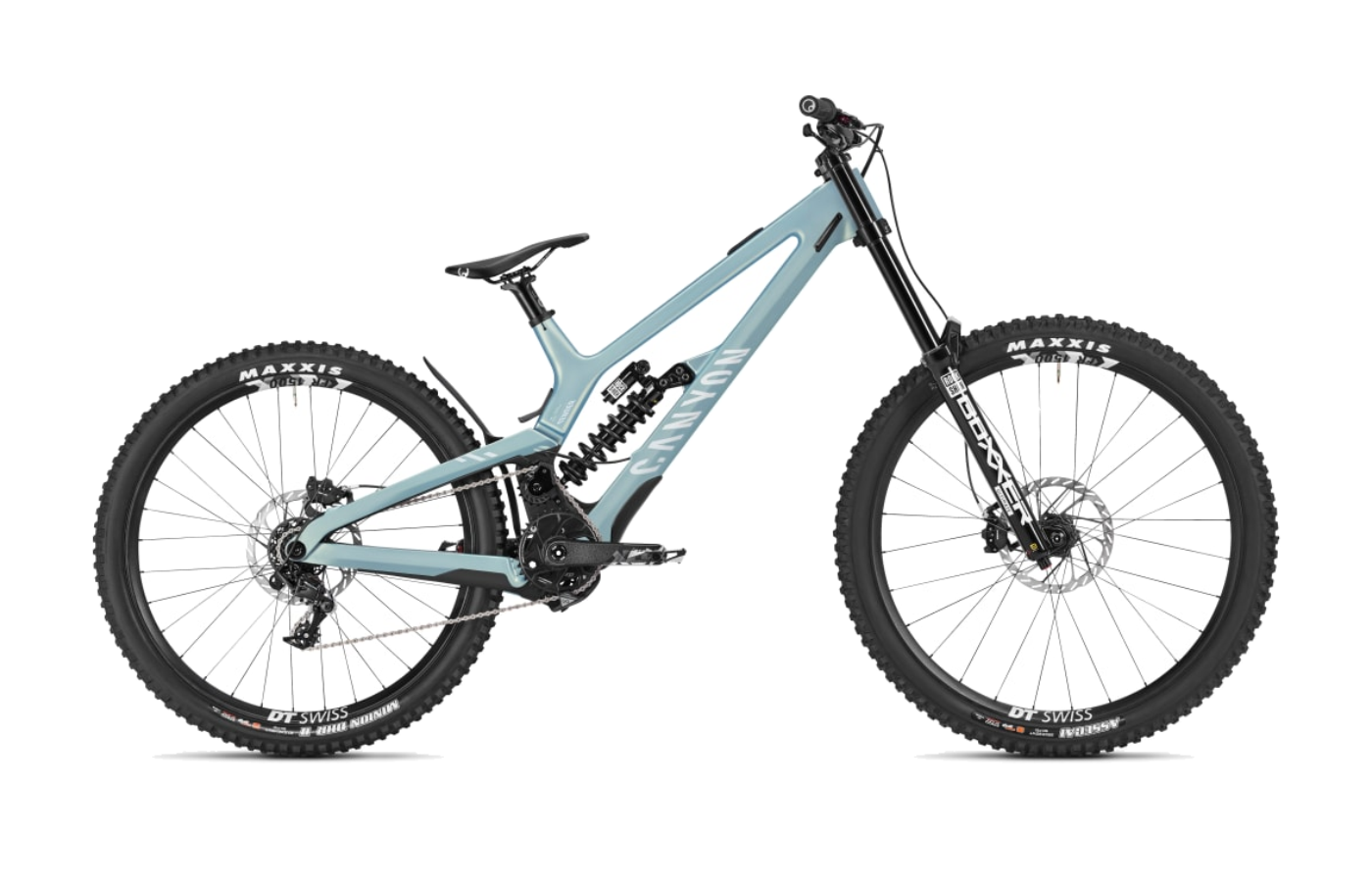
Sender
Same direct-to-consumer, World Cup-pedigree pitch as the Tues, with Canyon's typically aggressive pricing and Fabio Wibmer's freeride influence on the platform's character.
Compare →