Hugene
vsSmuggler
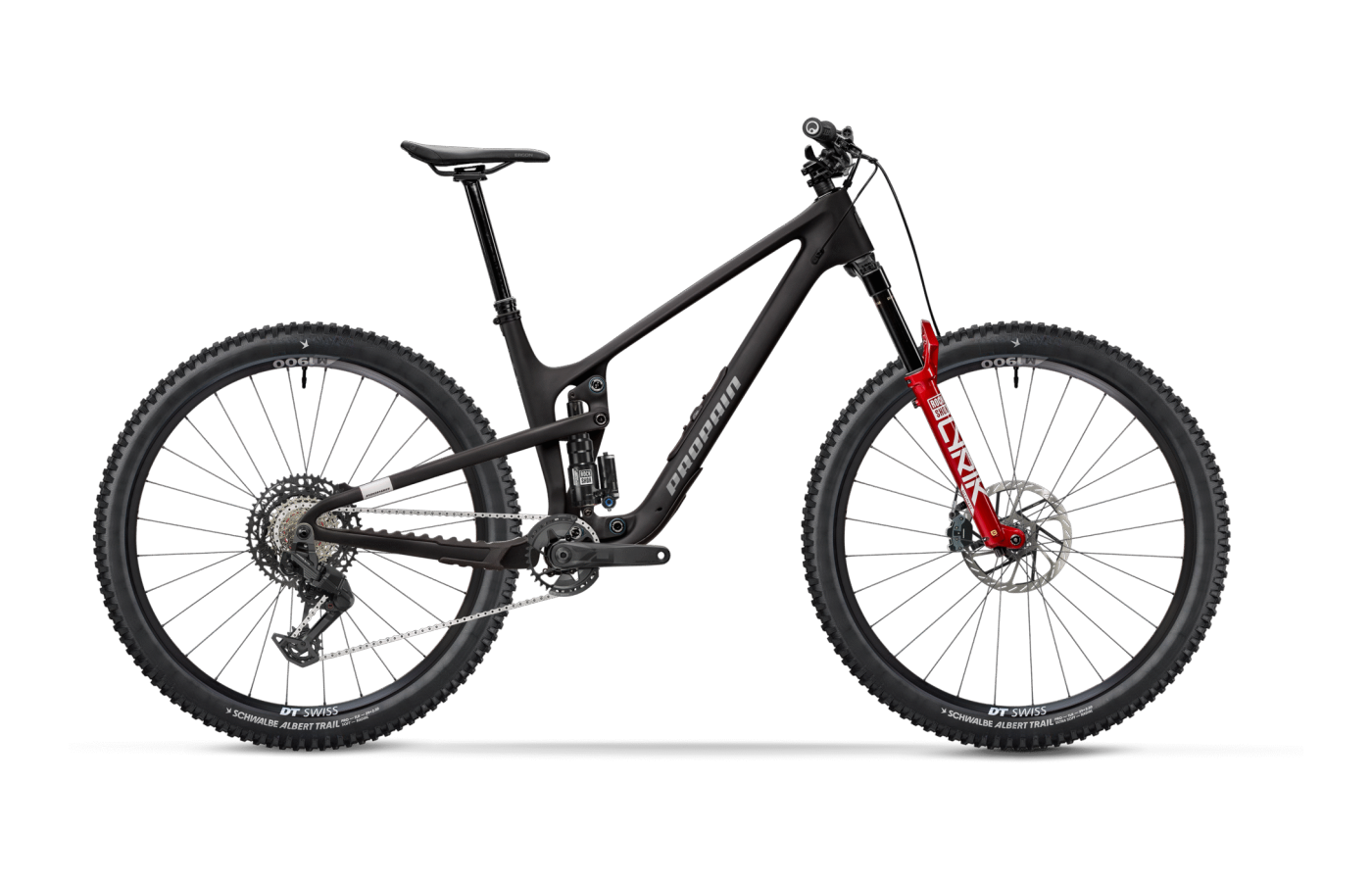
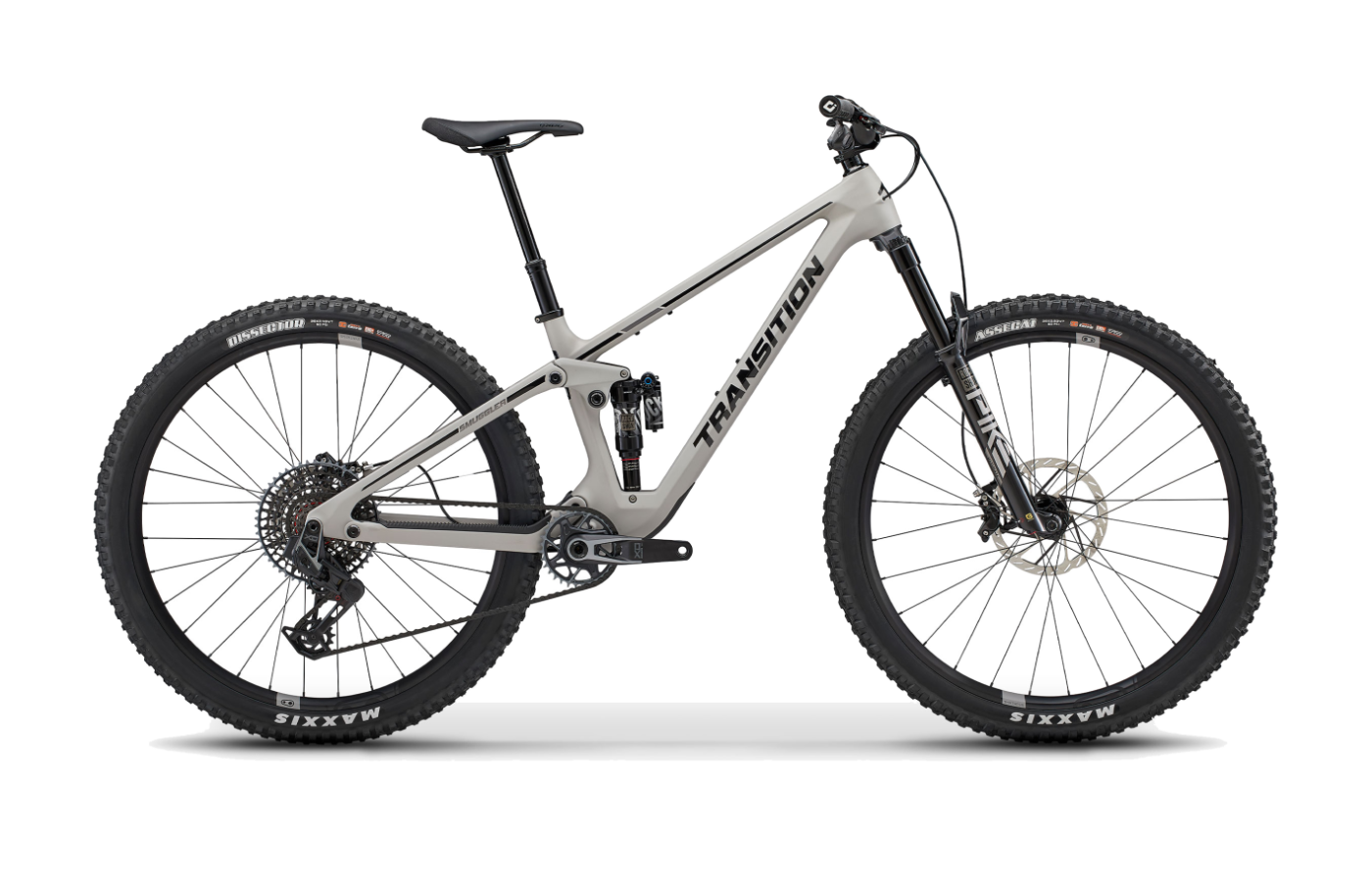
Two short-travel 29ers, two attitudes.
The Hugene is the lively configurator-built trail ripper. The Smuggler is the burlier mini-Sentinel that punches into enduro territory.
Hugene
- Snappy PRO10 suspension — high anti-squat plus solidly progressive curve makes it pop hard on flow trails and pump well.
- Direct-to-consumer configurator lets you tune fork, shock, drivetrain, and brakes per-build instead of swallowing a fixed spec.
- Lower entry price — Signature Spec 1 starts at $3,999 with a full carbon frame and a RockShox Pike fork.
- High anti-squat can feel "juddery" on bumpy seated climbs.
- Only two complete builds in the US lineup — limited if you want a wireless flagship without the configurator detour.
Smuggler
- Mini-Sentinel composure — size-specific chainstays and SBG geometry make it feel more stable than its 130 mm rear suggests.
- Wider build range from a $3,499 Alloy Deore to a $7,799 Carbon XO AXS — the deepest spec ladder in the segment.
- Confidence on rough descents — reviewers consistently rank its plowability above other 130 mm bikes in the category.
- Heavier in the test configurations (around 30 lb / 13.6 kg on the carbon XO build).
- Known weak points: the "Loam Cupboard" funnels grit toward the BB, and pivot bearings have shown short service intervals.
Editor’s analysis
Both run 130 mm rear / 140 mm front. From there, almost every choice diverges — who you are between the trailhead and the descent decides the answer.
On paper the Propain Hugene and Transition Smuggler are siblings: 130 mm rear, 140 mm fork, 29-inch wheels, head angles within 0.2 degrees of each other. Both are short-travel carbon trail bikes that reviewers consistently say punch above their travel. But ride either one for a day and the personalities pull apart fast.
The Hugene is the snappier, more efficiency-minded of the two. Propain's PRO10 platform layers high anti-squat onto a solidly progressive curve — NSMB calls it "dynamic and snappy," Enduro MTB calls it a "trail ripper." The 64.8-degree head angle and 445 mm chainstays (consistent across all sizes) keep it stable, but the firm-under-power feel means the bike rewards riders who pump and pop terrain. Reviewers note a "juddery" feel on bumpy seated climbs and a front end that can feel low when things get steep — this is a bike for the active rider, not the passenger.
The Smuggler picks a different lane. Transition's GiddyUp Horst-link layout and 27% progression give it more of a "smash with conviction" character — multiple reviewers call it a "mini-Sentinel" or "the littlest sledgehammer." Size-specific 435/440 mm chainstays, a steeper 78.1-degree seat angle, and a longer wheelbase produce what Bikepacking.com calls an "illusion of traveling at a lower speed." It runs out of travel later than its 130 mm spec implies, but it's heavier, noisier (the "Loam Cupboard" cable-routing area is a known debris trap), and the GX-spec parts kit gets dinged by reviewers as not-quite-the-deal.
Put another way: the Propain Hugene is the bike for the rider who wants short travel to feel short — light, snappy, configurable through Propain's direct-to-consumer site. The Transition Smuggler is the bike for the rider who wants short travel to feel long — stable, plowing, ready to follow you onto a double-black.
Where the builds differ.
Comparing our editor's-pick builds side-by-side. Winners highlighted row-by-row — lower price and weight, and the better-spec component, each mark a point.
Build variants & pricing
Two complete Hugene builds vs. five Smuggler builds — the Smuggler covers a much wider price range, the Hugene leans on its configurator instead of pre-built variants.
Prices are current US MSRP. Propain's configurator lets you swap suspension, drivetrain, brakes, and wheels at each build tier; Transition sells fixed pre-built specs. The Hugene has no wireless-AXS pre-build option in the US — if that matters, you'll need to use the configurator or look elsewhere.
How they fit, how they steer.
Hugene M vs. Smuggler MD — the fit-picked sizes for a 5'8" rider on each. Reach is within 2 mm (458 vs. 460), the Hugene sits 5 mm taller in stack (621 vs. 616), and the Smuggler's seat angle is roughly 1 degree steeper (78.6 vs. 77.5).
Which size should I buy?
Size recommendations driven by stack, reach, and effective top tube. Both ranges overlap closely in the middle; the Smuggler extends a size further at the large end with its XXL.
→These are starting points. Flexibility, riding style, and preferred position all shift the answer — if you’re between sizes, a professional fit beats a chart.
What the magazines said.
Published reviews from trusted cycling outlets. Click through for the full write-up.
Which one should you buy?
If you ride flowy singletrack and want a snappy, configurable trail bike, get the Hugene. If you ride rough, want one bike to handle everything up to a double-black, get the Smuggler.
Hugene
If your trails reward pumping, popping, and an active body — flow lines, berms, jumps, the occasional tech section — the Hugene's PRO10 platform feels electric. The configurator is a real edge: you can build exactly the bike you want at a price that undercuts most boutique rivals.
Smuggler
If you want a single bike that climbs efficiently and then plows down terrain that 130 mm bikes shouldn't survive, the Smuggler is the answer. The plowability and stability come at a cost in weight and in some niggles around the cable routing — but for the rider who wants short travel to feel long, nothing else in the category matches it.
Questions buyers actually ask.
Short answers to the things we get emailed about most often.
01Which is the more efficient climber?
The Hugene, on smoother climbs. Propain's PRO10 layout runs high anti-squat — well above 100% across most of the travel — so the bike feels firm under power and rewards seated efforts on fire roads and smoother singletrack. NSMB and Enduro MTB both note you rarely reach for a climb switch.
The trade-off shows up on bumpy seated climbs: PinkBike calls the Hugene "juddery" in those situations, where the suspension stays tense under chain load and transmits more through the pedals. The Smuggler's GiddyUp suspension feels more active and tractive on those technical climbs, even if it gives up a touch of pure pedaling efficiency.
02Which descends harder?
The Smuggler, by a clear margin. Reviewers from NSMB, Blister, and Bikepacking.com consistently describe it as a "mini-Sentinel" — a 130 mm bike that feels closer to a 150 mm enduro rig when the trail gets rough. The size-specific chainstays (435 mm S/M, 440 mm L-XXL) and the SBG geometry produce a bike that's stable at speed and forgiving on chunder.
The Hugene is more capable than its travel suggests too — NSMB notes it "swallows high speed chunder as well as many bikes with 10-15 mm more travel" — but Mtb-news and PinkBike both flag a "low front end" and a frame that feels "a bit stiff" on long, rough descents, which can lead to hand fatigue.
03How do the geometries actually compare?
At the fit-picked sizes (Hugene M vs. Smuggler MD), reach is essentially identical: 458 mm vs. 460 mm. Stack is 621 mm on the Hugene vs. 616 mm on the Smuggler — the Hugene sits 5 mm taller. Head angles are within 0.2 degrees (64.8 Hugene, 65.0 Smuggler).
The biggest divergence is the seat angle: 78.6° on the Smuggler MD vs. 77.5° on the Hugene M — the Smuggler puts you more directly over the bottom bracket, which reviewers credit for its centered seated climbing position. Chainstays are 445 mm consistent on the Hugene; the Smuggler runs size-specific stays (435 mm in S/M, 440 mm in L and up).
04What about frame weight and overall bike weight?
Propain claims 2.8 kg for the Hugene's carbon frame in size M (per Mtb-news). Complete bike test weights cluster around 15.3 kg / 33.7 lb in size L on heavily-built configurations (per Enduro MTB).
Transition's published weight for the Smuggler Carbon XO AXS is 13.61 kg / 30.0 lb in size MD, and the Carbon GX AXS comes in at 13.91 kg / 30.7 lb. Bikes-to-bike, the Smuggler is roughly comparable to a similarly-built Hugene — both are noticeably heavier than "downcountry" rivals like the Transition Spur or Ibis Ripley, a side effect of being built for actual trail abuse rather than the gram count.
05Is the Smuggler's "Loam Cupboard" really a problem?
It's a real maintenance consideration. The "Loam Cupboard" is the open cavity near the bottom bracket where internal cables exit the front triangle — PinkBike, Bike Mag, and Vital MTB all reported finding packed dirt or trapped water there after a few months of riding. It accelerates BB and lower-pivot bearing wear if you don't clean it periodically.
PinkBike specifically reported their main pivot bearings only lasted 2-3 months in dry conditions before needing replacement. The Hugene avoids this geometry entirely — the cable ports are cleaner — and Propain ships stainless bearings with secondary "Dirtshield" seals that reviewers haven't flagged for premature wear.
06Can I get either with wireless AXS shifting?
Smuggler: yes — the Carbon GX AXS ($6,699) and Carbon XO AXS ($7,799) both ship with SRAM Eagle Transmission wireless drivetrains.
Hugene: not as a pre-built complete bike in the US lineup. Both Signature Spec builds run cabled SRAM Eagle 70 Transmission. To get wireless on the Hugene, you'd either need to spec it through Propain's configurator (which does offer GX/XO AXS upgrades) or buy frame-only and build it up. If you want a turn-key wireless build off the shelf, the Smuggler is the simpler answer.
07How well does the Hugene's configurator work?
It's the strongest part of Propain's value pitch. Every Hugene build is a starting point — you can swap fork, shock, drivetrain tier, brakes, wheels, bar, stem, and even decals before checkout. NSMB's reviewer noted that swapping the stock Marzocchi shock for a RockShox Super Deluxe Ultimate cost only $125 USD as a configurator upcharge and was "worth every penny."
The trade-off is that you're buying direct from Germany — no local dealer, no demo rides, no in-shop fitting. If that's a dealbreaker, Transition's traditional dealer network is the safer route.
08Which is the better long-term ownership bet?
The Hugene has fewer flagged maintenance concerns — no "Loam Cupboard" debris trap, sealed Dirtshield bearings, threaded BB, and the pre-production rear-disc-rub issue Propain has confirmed was fixed in series production.
The Smuggler has a stronger US dealer footprint and a robust lifetime frame warranty, but expect to budget for more frequent pivot servicing — multiple reviewers reported short bearing life — and to spend a few minutes after each muddy ride clearing the Loam Cupboard. Both bikes use SRAM UDH and threaded bottom brackets, so future drivetrain compatibility is a non-issue on either.
Similar bikes
If your priorities don’t map cleanly onto either of these, one of these adjacent bikes probably fits better.
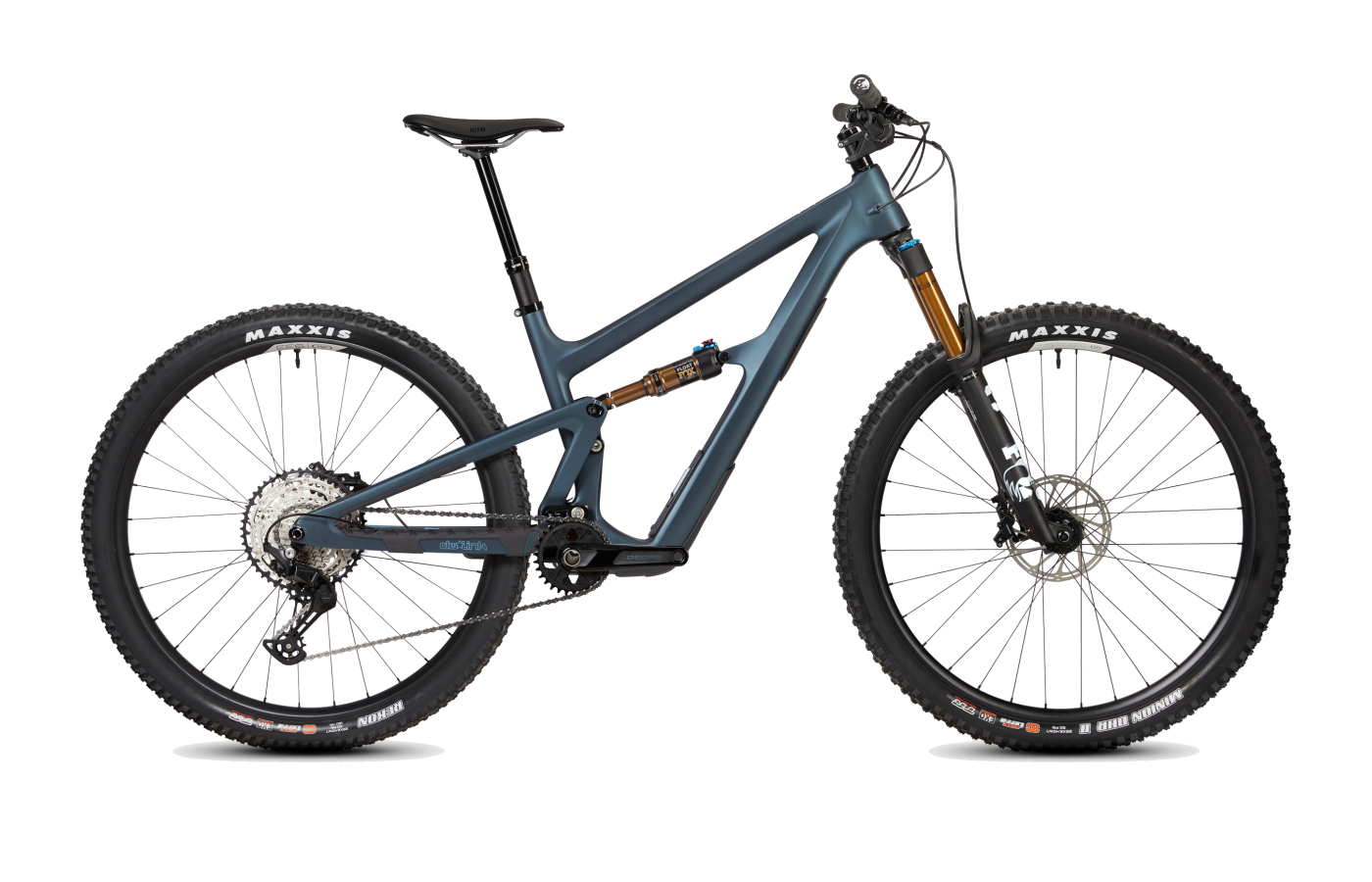
Ripley
The plusher, more refined alternative — 120 mm rear, DW-link suspension, often cited for a more polished ride feel and a competitive parts-per-dollar ratio than either the Hugene or Smuggler.
Compare →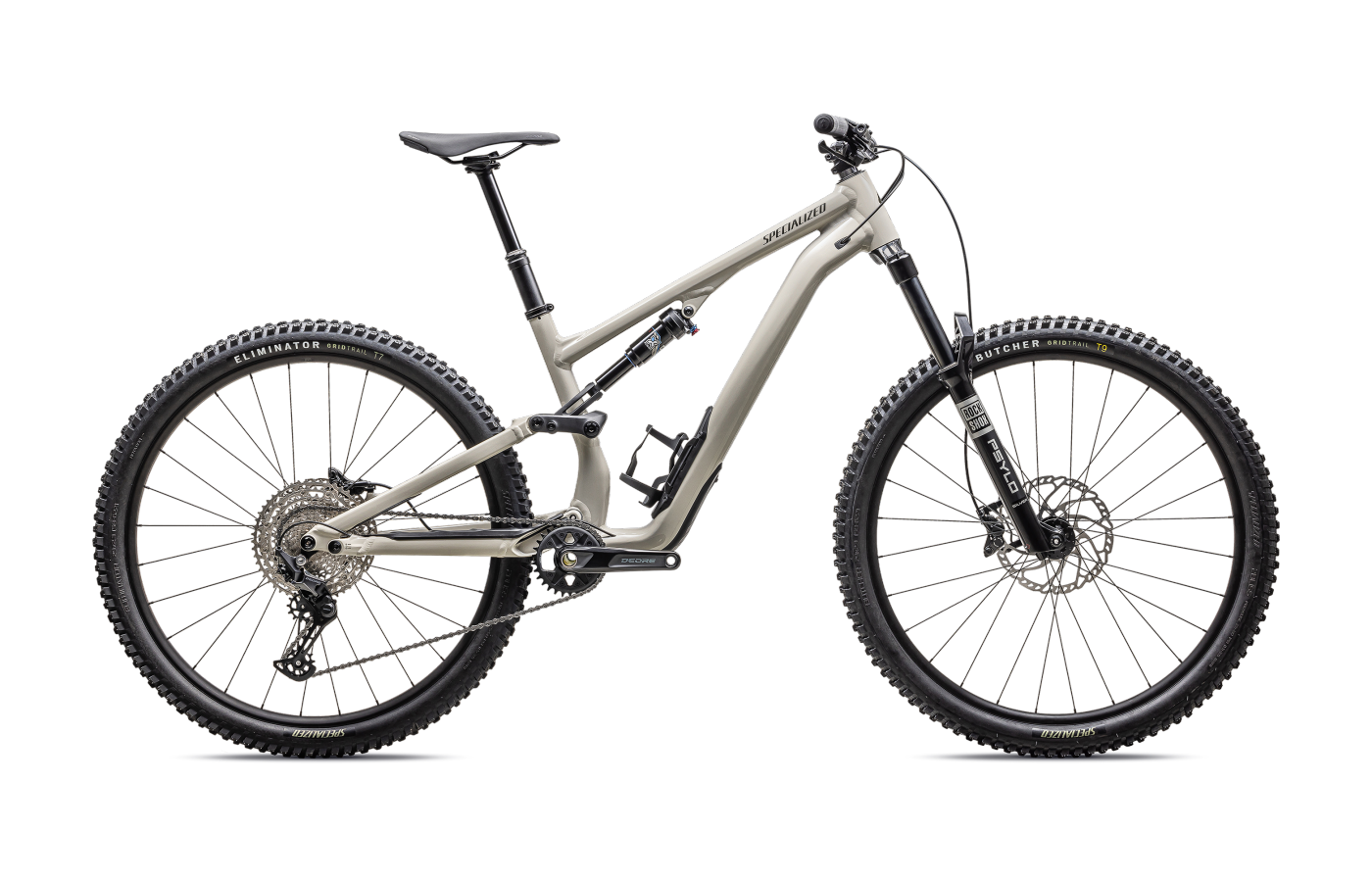
Stumpjumper
Specialized's mainstream trail benchmark — adds the integrated SWAT downtube storage and a flip-chip geometry adjustment that neither the Hugene nor Smuggler offers. Pick this one if frame storage or in-shop service matters.
Compare →Jeffsy
The other direct-to-consumer answer — 150 mm of trail-bike travel at aggressive pricing. Heavier and longer-travel than the Hugene, but the price-per-spec ratio is the closest thing to Propain's configurator pitch.
Compare →