Charger
vsTorrent
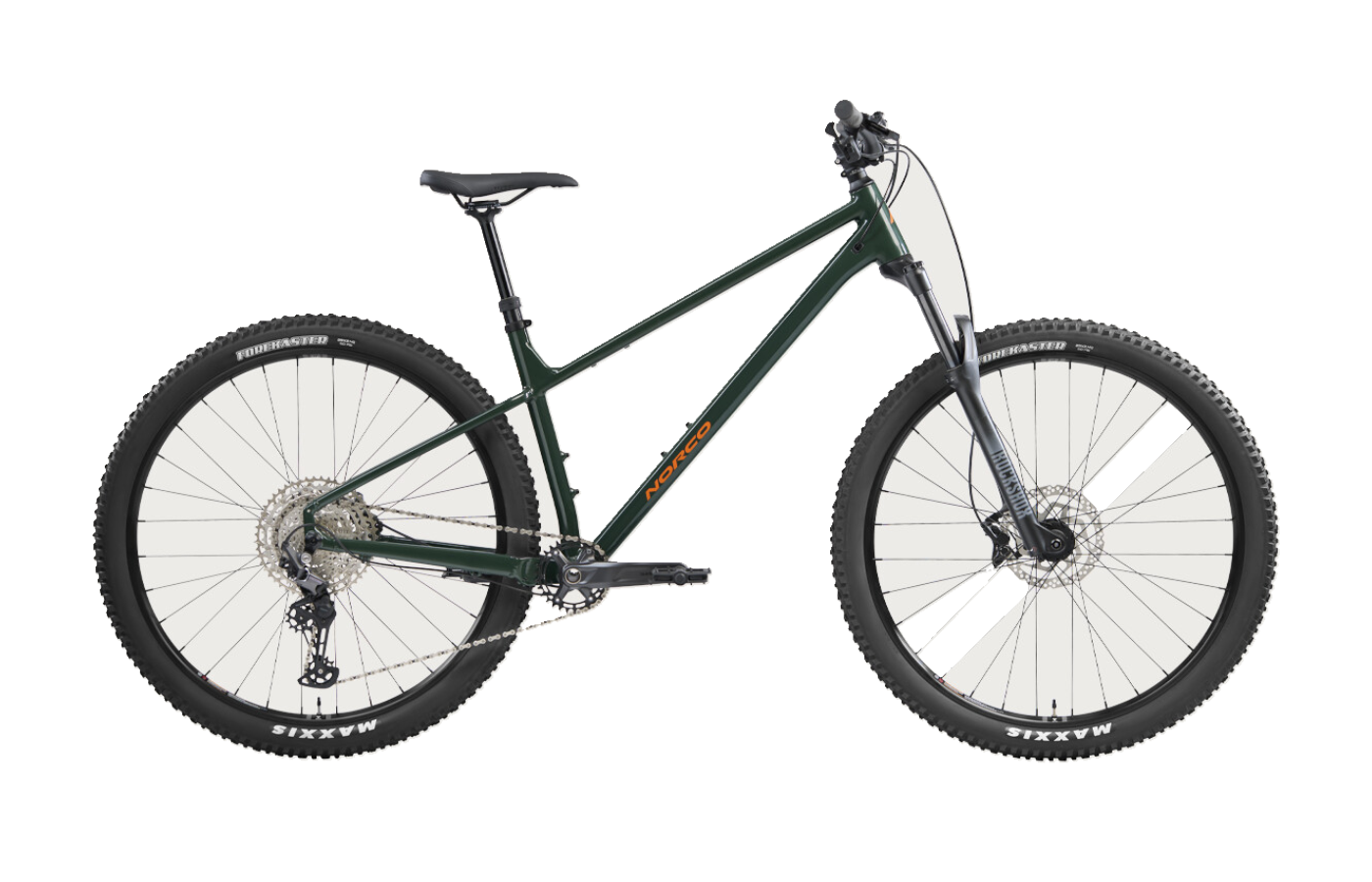
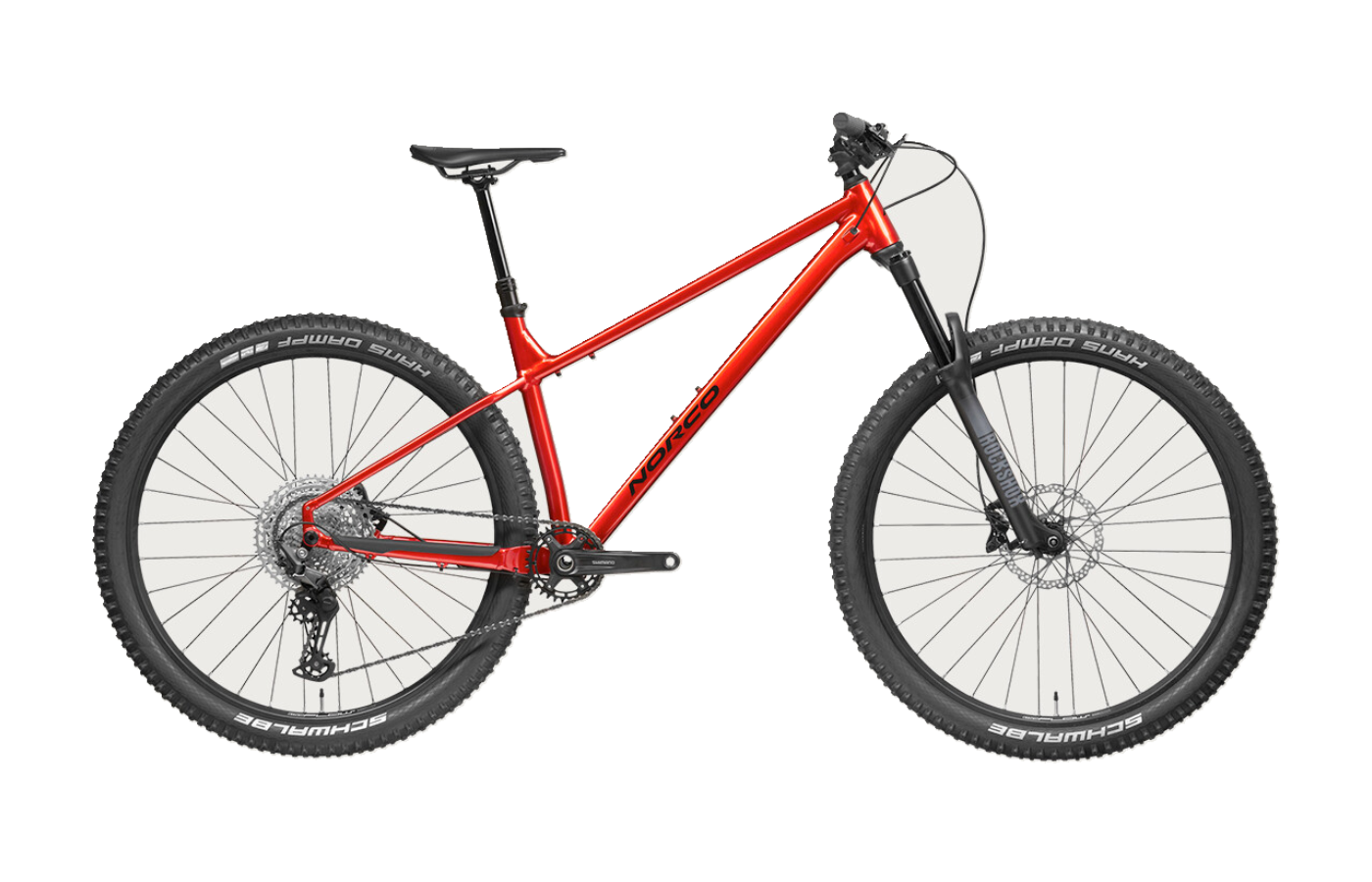
Two Norco hardtails, two completely different missions.
The Charger is the entry-level trail hardtail that gets you off the department-store treadmill. The Torrent is a 64-degree, 150 mm sled built to be thrown down black-diamond descents.
Charger
- Cheapest path into a real bike-shop hardtail — entry build at $1,249, top build at $1,549.
- Tunable air fork — 130 mm RockShox Judy Silver air spring is the standout vs. the coil forks at this price.
- Trail-friendly geometry — 65-degree HTA, 633 mm stack on size 29" hits a forgiving, neutral handling balance.
- 2-piston Deore brakes and 130 mm travel cap your descending headroom — not the bike for steep black trails.
- Heavy Judy Silver fork and entry-tier wheels mean it climbs without sparkle compared to lighter XC hardtails.
Torrent
- All-mountain geometry on a hardtail — 64-degree HTA and 138 mm trail give Sight-like stability for dramatically less money than a full-sus.
- Real descending kit — TRP Slate 4-piston brakes, 2.35" Hans Dampfs, 150 mm fork all chosen for steep terrain.
- Short 420 mm chainstays — surprisingly playful for the wheelbase; reviewers consistently note it carves and pops despite the heft.
- RockShox 35 Gold RL fork is the consensus weak point — most A1-HT owners eventually swap it.
- Heavy and slow-rolling on climbs and mellow trails — "too much bike" for blue-square singletrack.
Editor’s analysis
Same brand, same wheel size, same Deore drivetrain — and almost nothing else in common. One bike is the first "real" mountain bike you'll ever own. The other is the bike you graduate to.
Norco builds the Charger and the Torrent for two riders who barely overlap. The Charger sits in Norco's cross-country line at $1,249–$1,549; the Torrent sits in the trail line at $1,519–$1,879 and explicitly borrows its geometry from Norco's full-suspension all-mountain Sight. Side-by-side they share a brand, a wheel size, and a 1x12 Shimano Deore drivetrain. After that the diverging lines get steep fast.
Start with the front end. The Charger runs a 130 mm fork at a 65-degree head tube angle with 121 mm of trail — quick-handling, neutral, the kind of geometry that doesn't punish a new rider on mellow blue trails. The Torrent runs a 150 mm fork at 64 degrees with 138 mm of trail. That single degree slacker plus 17 mm more trail is the difference between a bike that turns when you ask and a bike that wants to plow straight at speed. The Torrent's bottom bracket sits lower, the wheelbase stretches, and the whole platform locks into a line on a steep descent the way a full-suspension enduro bike does.
The component story tracks the geometry. The Charger A1 ships with Shimano Deore 2-piston brakes, 27 mm-internal WTB ST rims, and Maxxis Forekaster 2.4s — a fast, light, all-around trail tire. The Torrent A1 HT moves to TRP Slate EVO 4-piston brakes, Stan's Flow D rims, and Schwalbe Hans Dampf 2.35s — burlier, grippier, slower-rolling, built for riders who actually need stopping power on long descents. Reviewers have universally praised the Torrent's chassis and just as universally complained that the RockShox 35 Gold fork on the A1 HT is the spec's weak link, prone to diving on big hits. Worth budgeting a fork upgrade if you ride the steep stuff often.
Put another way: the Charger is the bike you buy when you're moving up from a department-store hardtail and want one capable trail bike. The Torrent is the bike you buy when you already know you want to ride hardtail down terrain most people would only touch on a 160 mm full-suspension rig. Trying to use one for the other's job will leave you frustrated either way.
Where the builds differ.
Comparing our editor's-pick builds side-by-side. Winners highlighted row-by-row — lower price and weight, and the better-spec component, each mark a point.
Build variants & pricing
Charger spans $1,249–$1,549 across two trims; Torrent spans $1,519–$1,879. The ranges nearly meet at the middle but never overlap in mission.
Editor's picks compared above are the top trims on each side — both Shimano Deore 12-speed, both aluminum, both around the $1.5–1.9k mark. Going down a build on either side mostly costs you fork quality.
How they fit, how they steer.
Both compared at the fit-picked size for a 5'8" rider — Charger at the 450 mm-reach 29", Torrent at size M (also 450 mm reach). Same reach, but the Torrent stacks 5 mm shorter, sits 1 degree slacker (64° vs 65°), and runs 17 mm more trail. Chainstays come in 5 mm shorter on the Torrent (420 vs 425) too — long-and-slack out front, tight at the rear.
Which size should I buy?
Size recommendations based on stack, reach, and effective top tube. Use these as a starting point — both bikes want a real test ride, especially the long, slack Torrent.
→These are starting points. Flexibility, riding style, and preferred position all shift the answer — if you’re between sizes, a professional fit beats a chart.
What the magazines said.
Published reviews from trusted cycling outlets. Click through for the full write-up.
Which one should you buy?
If this is your first bike-shop hardtail and you ride mostly blue trails, get the Charger. If you ride black-diamond descents and want a hardtail that can keep up, get the Torrent.
Charger
If you're stepping up from a department-store bike to your first proper trail hardtail — varied singletrack, some roots and rocks, the occasional cheeky descent — the Charger is built exactly for you. The 130 mm air fork, 1x12 Deore, and modern trail geometry land cheaper than almost any equivalent here, and there's room to grow into it before the bike holds you back.
Torrent
If you regularly ride steep, chunky, technical trails — the kind of stuff people normally take a 150 mm full-suspension bike on — and want the direct, skill-rewarding feedback of a hardtail, the Torrent is the move. It will crush descents the Charger has no business near. Just budget a fork swap if you're going hard on the A1 HT build.
Questions buyers actually ask.
Short answers to the things we get emailed about most often.
01Which Norco hardtail is better for a beginner?
The Charger, by a wide margin. Its 65-degree head tube angle, 130 mm fork, and lighter overall build forgive newer riders learning bike handling on varied singletrack. The Torrent's 64-degree HTA, long wheelbase, and 150 mm travel are designed for committed descending — at low speeds and on mellow trails it feels heavy, slow, and reluctant to turn.
Reviewers consistently call the Torrent "too much bike" for blue and green trails. If you don't already know you want hardcore-hardtail geometry, you don't.
02Why is the Torrent only $300 more than the Charger when it's so much more capable?
Because both are entry-tier builds in their respective lines, and Norco hits the price points by spec'ing the same Shimano Deore drivetrain on both. The Torrent's premium goes to a longer-travel fork, 4-piston TRP brakes, burlier Schwalbe Hans Dampf tires, and the more aggressive frame — not to a higher drivetrain tier.
That said, the Torrent A1 HT's RockShox 35 Gold fork is the consensus weak link. To unlock the frame's real potential many owners eventually swap to a Lyrik or Pike, which adds another $700–$1,000+. Counted that way, a fully-sorted Torrent costs meaningfully more than the sticker.
03How does the geometry actually differ between the two?
At the fit-picked sizes for a 5'8" rider — 29" Charger and size M Torrent — both bikes happen to share a 450 mm reach. Beyond that they diverge:
- Head tube angle: Charger 65° vs Torrent 64° (1° slacker on the Torrent)
- Trail: Charger 121 mm vs Torrent 138 mm (17 mm more on the Torrent — much more stable at speed, less reactive at low speed)
- Chainstays: Charger 425 mm vs Torrent 420 mm (Torrent is shorter, helping it stay playful)
- Stack: Charger 633 mm vs Torrent 628 mm (Torrent slightly lower)
- Seat tube angle: Charger 75.25° vs Torrent 76° (Torrent's steeper STA helps offset the slack front for seated climbing)
The Torrent's geometry is borrowed almost directly from Norco's full-suspension Sight all-mountain bike.
04Can either bike handle a bike park or shuttle laps?
Torrent: yes, with caveats. Reviewers describe it as a "speed demon" and a "sled" that "craves high speeds and steep, aggressive terrain." It's been shuttled and lapped at parks. The 150 mm fork, 4-piston brakes, and slack geometry are all park-appropriate; the limitation is the lack of rear suspension on big repeated hits, which fatigues the rider and the wheels faster than a full-sus would.
Charger: no. 130 mm of travel, 2-piston brakes, and lighter trail-cross-country tires aren't built for that kind of abuse. Push it there and you'll be in the market for a new bike inside a season.
05How do they climb?
Charger: It's a hardtail with a 1x12 Deore range and a tunable air fork — direct power transfer, manageable weight (around 13.5 kg / 29.8 lb on the A1), and a forgiving geometry that doesn't fight you on fire-road grinds.
Torrent: Reviewers across the board call it "slow on the climbs" and "not a zippy bike," with weights in the 14–15 kg / 31–34 lb range across the lineup. The 76-degree seat tube angle puts you well-positioned over the cranks for seated climbing efficiency, but the heft and aggressive tires mean you grind, you don't dance. It's a winch-and-plummet bike — you climb so you can descend.
06How important is the fork on the Torrent A1 HT specifically?
Important enough that almost every published review of the A1 HT mentions it. The RockShox 35 Gold RL is repeatedly described as "unrefined and poorly damped" with a "tendency to dive" through its travel — the rider response is to run high pressures, which costs small-bump sensitivity.
The frame is genuinely capable; the fork holds it back. If you ride aggressively, plan on swapping to a 35 mm-stanchion air fork (RockShox Lyrik, Fox 36) at some point. The top-tier S1 build of the Torrent ships with a Lyrik Ultimate stock — that's the build reviewers single out as needing zero upgrades.
07Are these tubeless-ready?
Both, yes. The Charger's WTB ST i27 rims are explicitly tubeless-ready out of the box; the Torrent's Stan's Flow D rims are designed around tubeless from the ground up (Stan's invented the modern tubeless system). On either bike, swapping in sealant and tubeless valves is a one-evening job that pays off in fewer flats and lower run pressures for grip.
Hans Dampf and Forekaster tires are both tubeless-compatible casings — no tire change needed.
08Which one will hold its value better?
Realistically, neither. At this price tier you're buying entry-level builds where most depreciation comes from component wear rather than badge prestige. Aggressive-hardtail demand keeps the Torrent steel-frame S-models trading well used, but the aluminum A1 HT and the Charger A1 don't carry that same secondhand premium.
If resale matters, the better strategy on either bike is to ride it hard, maintain it well, and replace consumables (chain, cassette, brake pads) so it presents clean when you sell. The frames themselves are the durable part.
Similar bikes
If your priorities don’t map cleanly onto either of these, one of these adjacent bikes probably fits better.
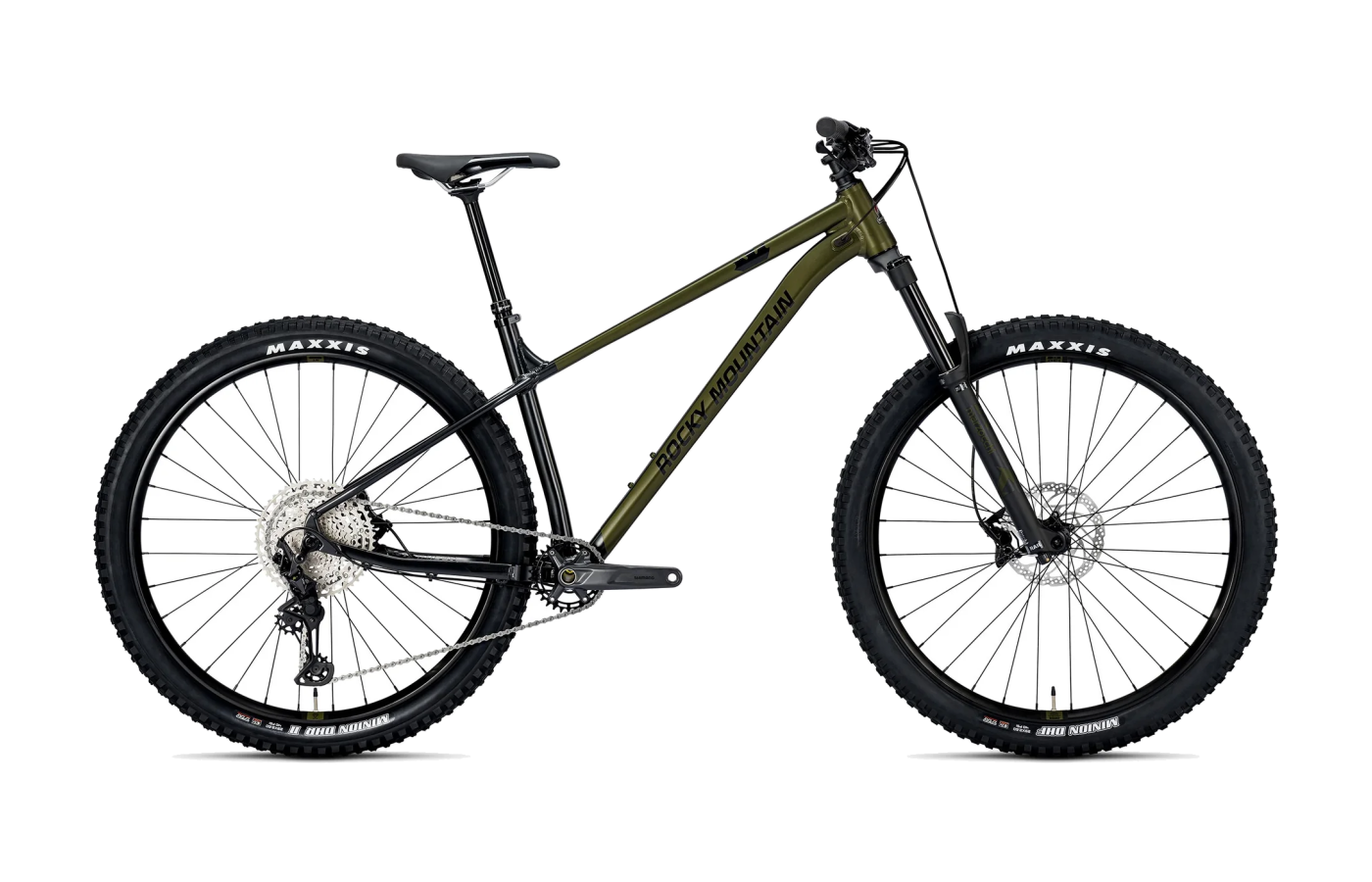
Growler
The Rocky Mountain Growler is the Torrent's most-cited direct rival — same hardcore-hardtail mission, similarly slack geometry, similarly oriented at chunky descents. Cross-shop it if you want the Torrent's character but the Norco doesn't fit you.
Compare →Roscoe
The Trek Roscoe sits between the Charger and the Torrent — modern aggressive trail geometry, but a more accessible build philosophy that doesn't demand a fork upgrade out of the box. A good fit for a rider torn between the two Norcos.
Compare →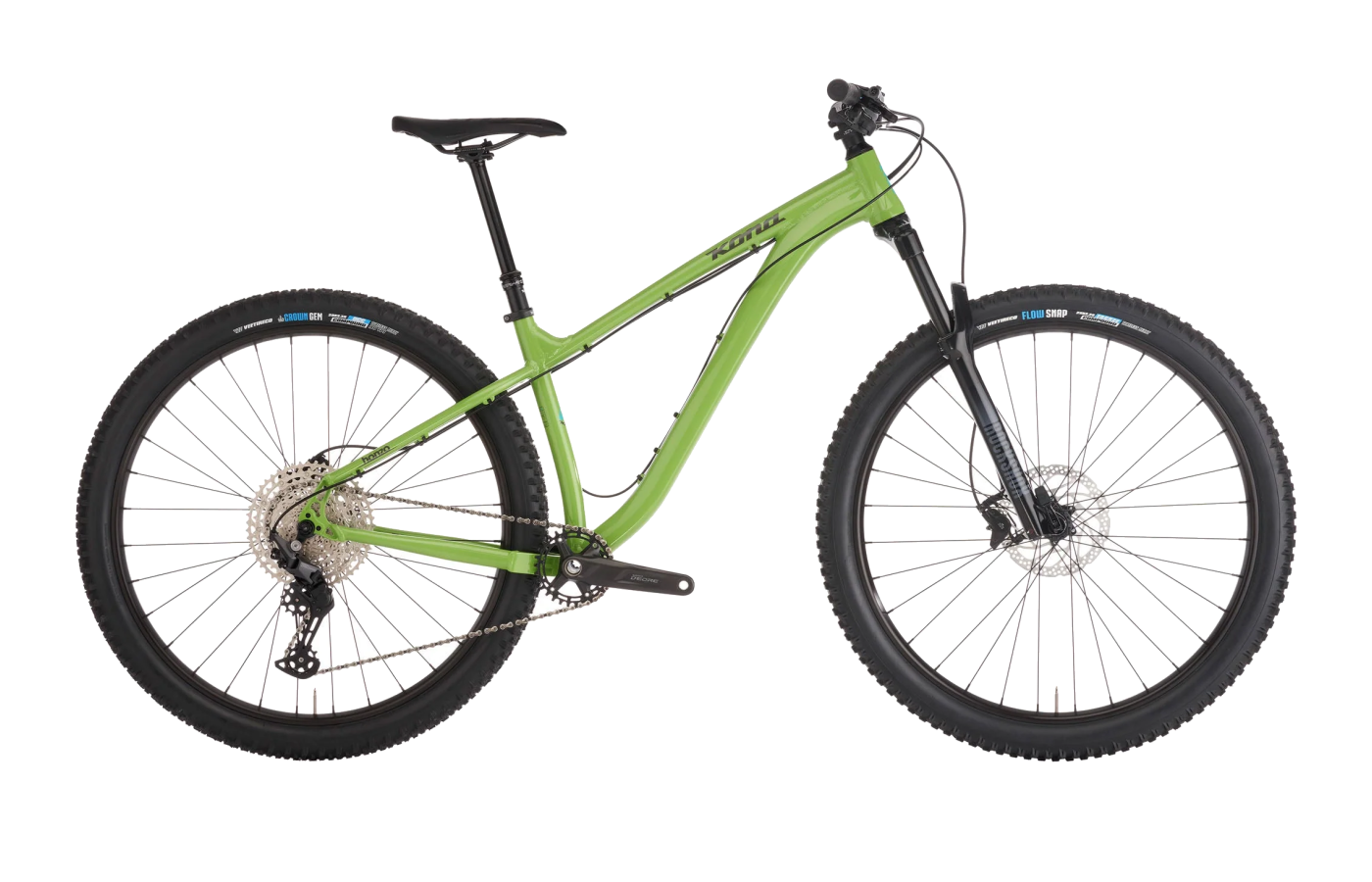
Honzo
The Kona Honzo is the playful counterpoint — less radically slack than the Torrent, lighter and more eager to climb, with a long-running reputation as one of the most engaging trail hardtails on the market.
Compare →