Charger
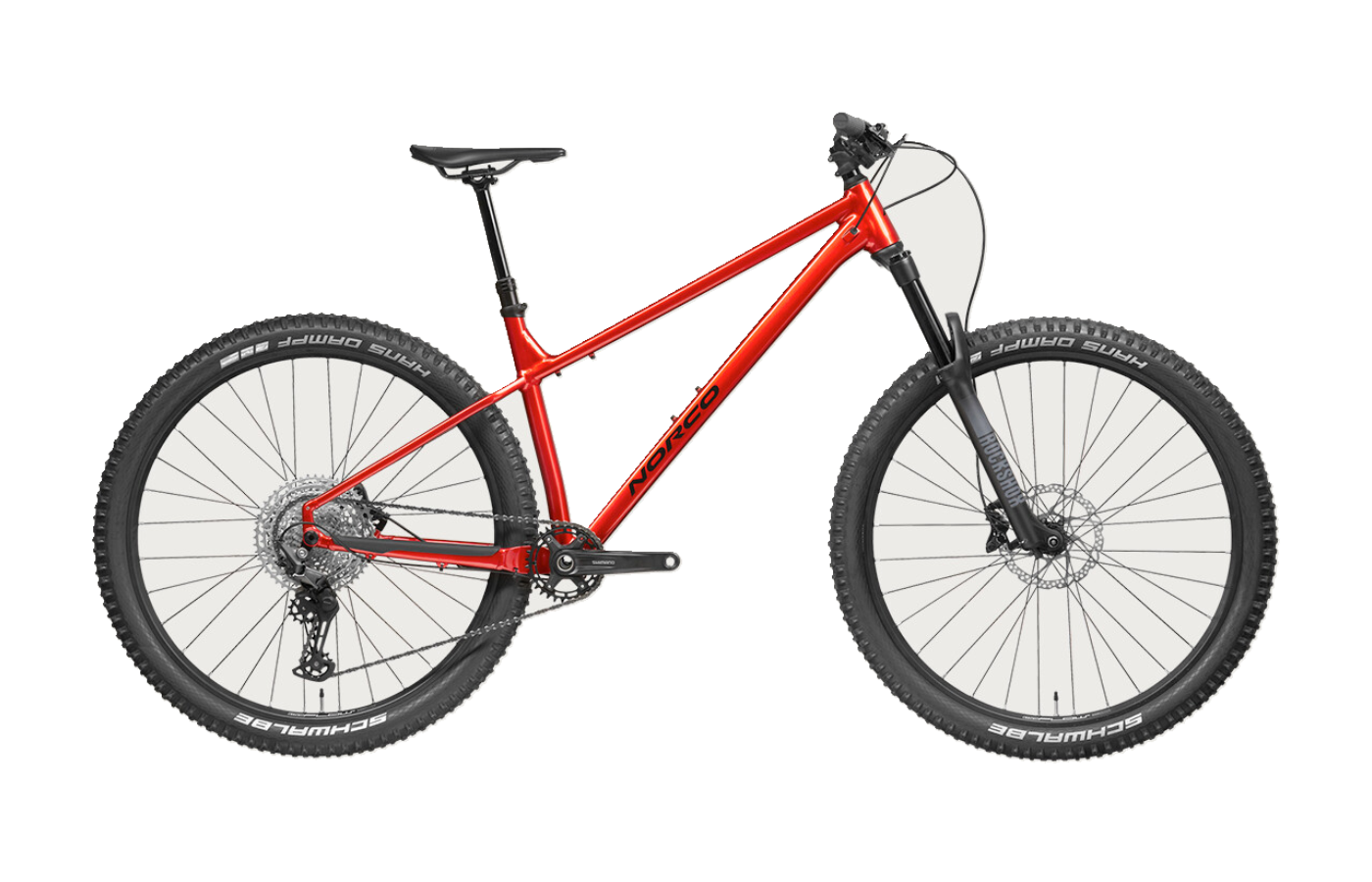
The Norco Charger is an aluminum hardtail that has evolved from its cross-country roots into a dedicated trail platform. Redesigned around a longer-travel fork and thoroughly modernized frame standards, it serves riders looking to progress their off-road skills on a capable, straightforward chassis. Norco updated the frame to include current mainstream mountain bike standards, moving away from quick-release axles and older derailleur hangers to ensure the bike remains relevant for future upgrades.
The platform is built to handle rougher terrain and higher speeds than previous iterations, prioritizing stability over pure pedaling efficiency. It suits newer mountain bikers stepping up to their first serious trail bike, as well as experienced riders who want a reliable, aggressive hardtail for local singletrack.
Geometry & fit.
2 sizes published.
The Charger’s geometry reflects its shift toward aggressive trail riding, moving away from the steep angles of traditional cross-country hardtails. A slack head tube angle pushes the front wheel further out, providing a stable steering platform when descending steep or rough terrain. To maintain climbing traction and keep the rider centered over the bottom bracket, Norco pairs this with a steep effective seat tube angle that grows progressively steeper on larger frame sizes.
Reach measurements are generous across the size run, encouraging a modern, centered riding posture. This long front center is balanced by short stems and wide handlebars, ensuring steering remains responsive despite the slack front end. The frame utilizes size-specific wheel diameters, equipping the smallest frame with smaller wheels to maintain proportional handling and standover clearance, while the rest of the range rolls on larger hoops. Dropper post travel also scales with frame size, allowing taller riders to get the saddle completely out of the way on descents while ensuring shorter riders still achieve optimal saddle height.
Where the handlebar sits relative to the bottom bracket — the single most important fit pair.
01Fit geometry6 values
03Handling geometry8 values
Which size should I buy?
Slide your height to see the recommended size. GearWise's fit algorithm works from the published stack, reach, and ETT — the brand's own recommendation may differ.
→Calculated from GearWise's own stack / reach / ETT algorithm — the brand's size chart may recommend a different size, and a proper bike fit beats any calculator.
The lineup.
2 builds, ranging $1,249 – $1,549.
The Charger lineup is concise, offering two aluminum builds that share the same trail-focused frame. Both models utilize a Universal Derailleur Hanger, Boost rear spacing, and a threaded bottom bracket, establishing a reliable foundation that is easy to service and upgrade.
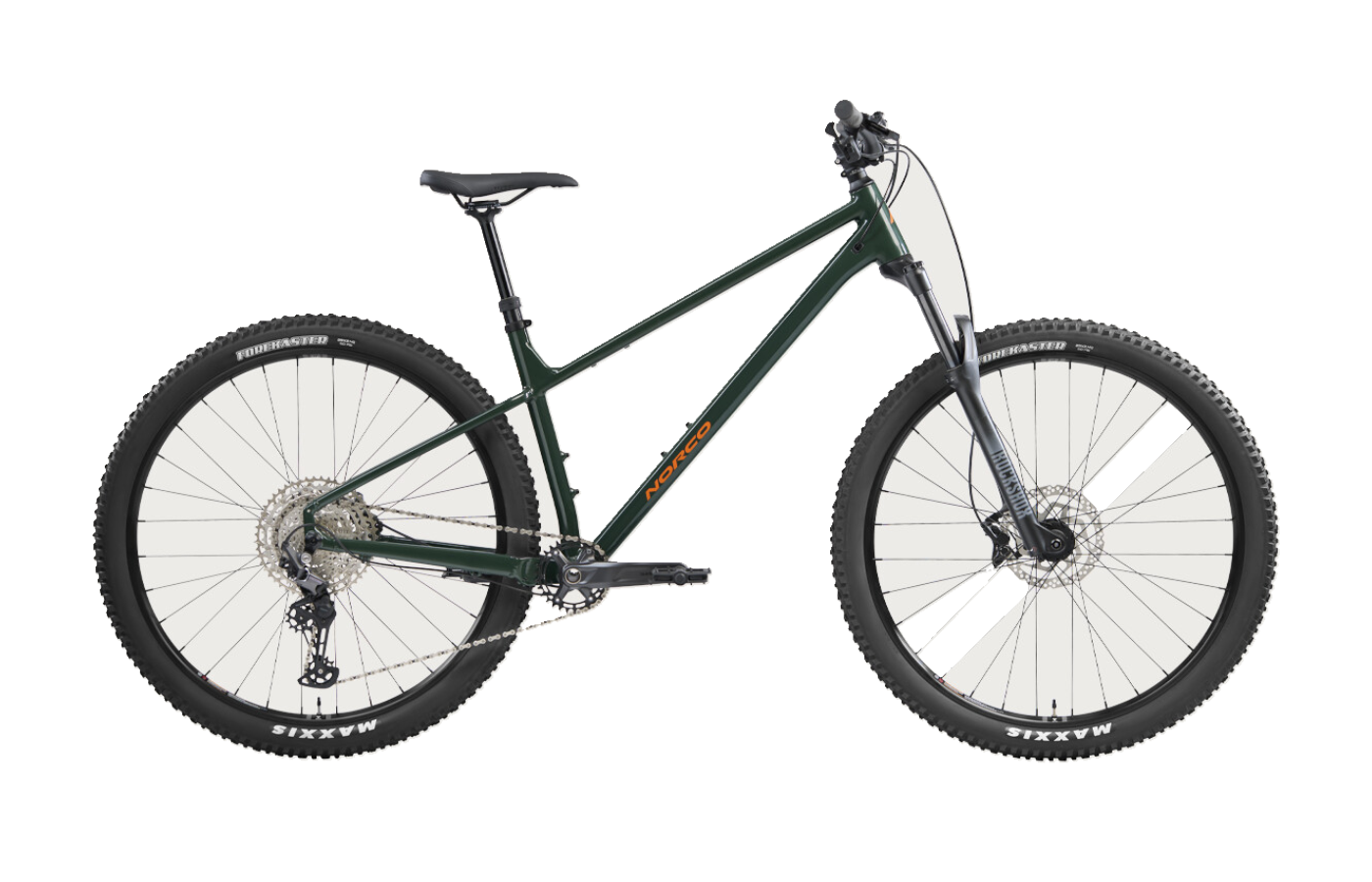
The A2 build features an X-Fusion air fork, a Shimano Deore twelve-speed drivetrain, and Tektro hydraulic disc brakes. Stepping up to the A1 maintains the same Deore drivetrain but upgrades the suspension and braking systems. The A1 swaps the X-Fusion fork for a RockShox Judy Silver TK Air and replaces the Tektro brakes with Shimano hydraulic calipers and larger front rotors for increased stopping power.
Both builds roll on tubeless-ready WTB rims laced to sealed-bearing hubs, wrapped in wide Maxxis Forekaster tires for consistent grip in mixed conditions. They also share the same size-specific dropper posts and cockpit components. The value in the A1 lies in its refined suspension and braking, while the A2 delivers the exact same gearing and frame features at a lower price.


From the press.
1 review from the cycling press.
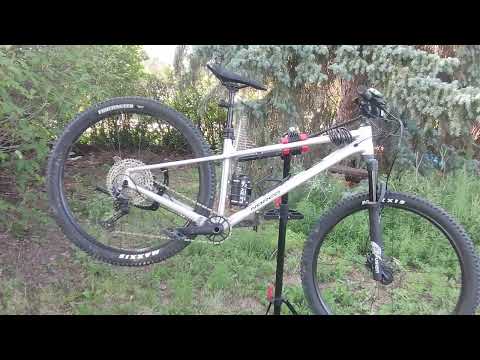
Reviewers position the modern Charger as a substantial upgrade over entry-level or general-purpose mountain bikes, noting its clear bias toward dedicated singletrack. The transition to a longer-travel air suspension platform is frequently highlighted as the bike's defining characteristic. One rider emphasized that the air fork is "very tunable" (YouTube), allowing for precise adjustments that significantly improve front-end traction and impact absorption compared to basic coil alternatives.
On the dirt, the updated geometry and component selection translate to a highly capable ride. The inclusion of a dropper post and high-volume tires helps riders maintain momentum and stability through technical sections. One reviewer noted the distinct improvement in overall control, stating that "this thing handles like a beaut on the trail" (YouTube).
While the Charger is praised for its trail competence, it is not positioned as a lightweight cross-country racer. The robust frame and aggressive tires prioritize grip and durability over explosive acceleration. However, the value proposition remains strong for those focused on skill progression. Reviewers appreciate the modern frame details, such as sealed bearings and tubeless-ready rims, which make the platform a "step up and a half" (YouTube) for riders transitioning to a serious trail hardtail.
Compared to.
Most-viewed comparisons.