Summum
vsV10
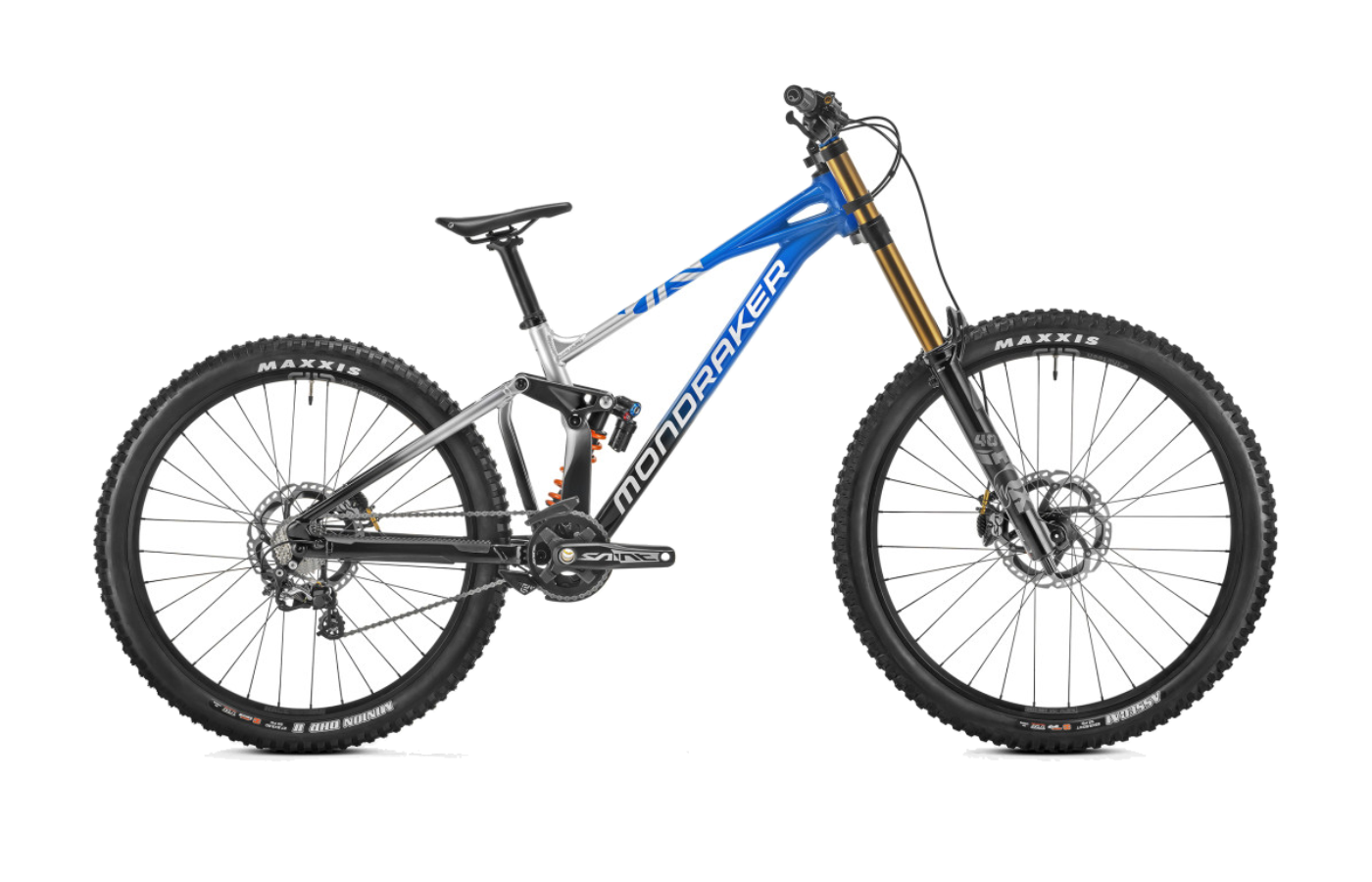
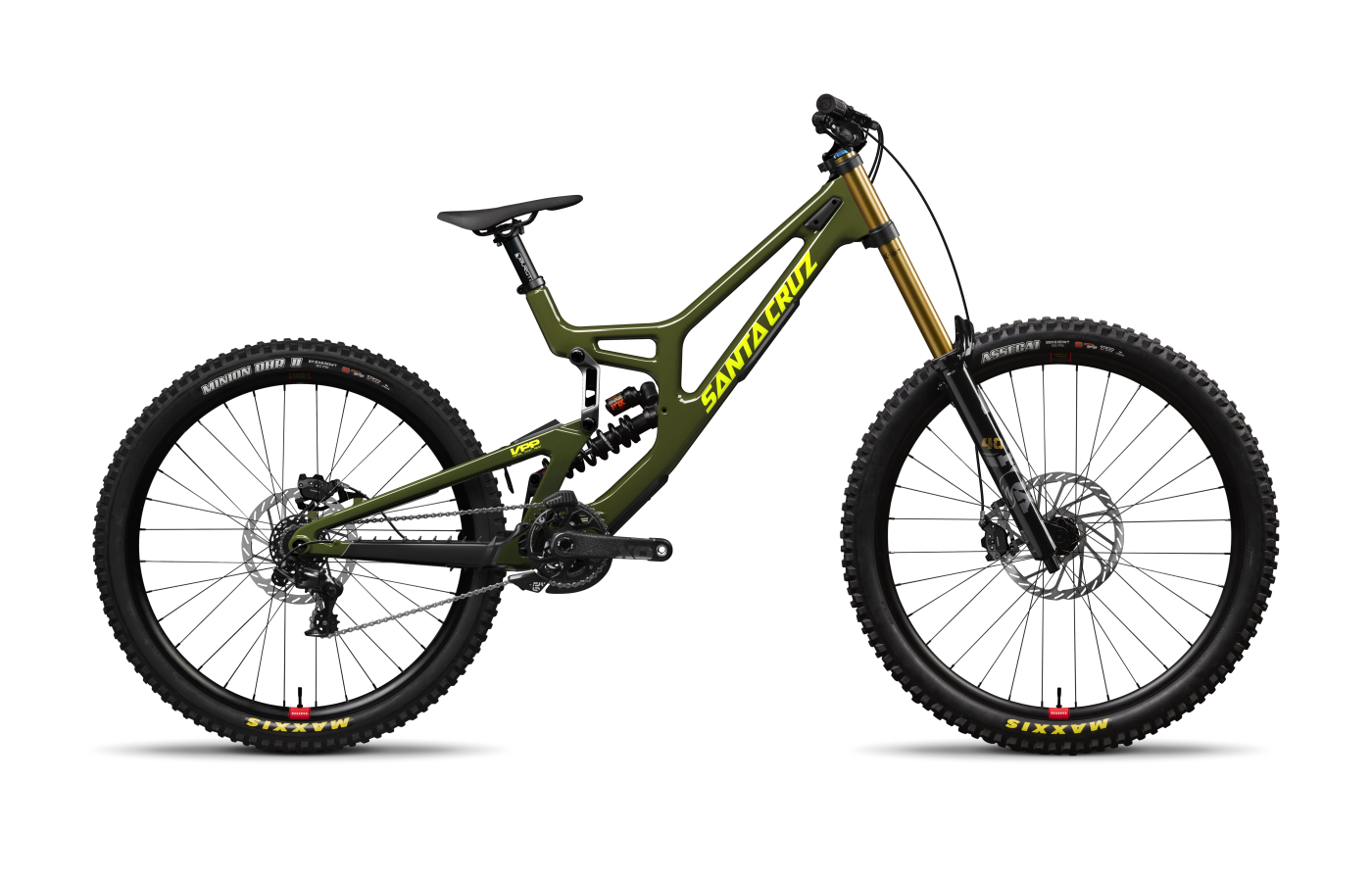
Two World Cup downhill bikes, two philosophies.
The Summum is a Forward-Geometry plow built around stability above all. The V10.8 is a modular VPP thoroughbred that swaps personalities on demand.
Summum
- Unmatched high-speed stability — Forward Geometry and a long wheelbase (1270 mm at size M) let you 'let off the brakes' in terrain most bikes won't.
- Zero Suspension kinematics isolate the shock between two links, giving minimal pedal kickback and a supple feel under braking.
- 25-year frame warranty — best-in-class coverage on a World Cup-proven chassis.
- Alloy frame across the whole range — no carbon option below the top RR build, and even that's a single spec.
- Plowing character resists pumping for speed in low-angle rock gardens; less lively than the V10 between sections.
V10
- Three-way geometry adjustment — reach (±8 mm), chainstay length (±5 mm), and shock flip-chip, all hardware included in the box.
- CC carbon frame, 208 mm of VPP travel — the DH X01 comes in at 16.15 kg claimed, lighter than the alloy Summum.
- Lifetime frame + Reserve wheel warranty with free pivot bearings for life — one of the most complete support packages in the industry.
- Second-most-expensive bike in recent group tests; the entry-level DH S build still starts above $7k.
- Headset-cup reach adjustment is prone to creaking in dusty conditions — some reviewers needed weekly cleaning.
Editor’s analysis
Same race pedigree, same 200 mm of rear travel, same flagship price bracket — but the way each bike wants to be ridden couldn't be further apart.
On paper, the Mondraker Summum and Santa Cruz V10 sit in the same pro-level downhill bracket. Both have carried World Cup riders onto the top step, both run 200 mm+ of rear travel, and both top out near $8,800 with Fox Factory suspension. Spend any time on the numbers and the philosophies diverge almost immediately — one bike asks you to aim and hold on, the other asks you what kind of ride you want today.
The Mondraker Summum is the single-minded specialist. Forward Geometry pushes the front wheel way out front, paired with an ultra-short 30 mm integrated stem and a 63.5-degree head angle (size M: 450 mm reach, 1270 mm wheelbase). The Zero Suspension System floats the shock between two links — reviewers at Vital MTB universally praise its minimal pedal kickback and its ability to 'plow through gnarly sections' and 'charge into rock gardens unphased.' The RR Mullet ships in a 6061 alloy frame — not carbon — which is part of why it comes in 'a bit heavy' at a claimed 17.5 kg on R-level builds. It's a bike that trades flick for unshakable high-speed composure.
The Santa Cruz V10.8 is the chameleon. Carbon CC frame (Santa Cruz's only layup for this bike), a slightly slacker 63-degree head angle, and three-way adjustability — reach via drop-in headset cups (±8 mm), chainstay length (±5 mm), and a shock flip-chip for BB height and HTA. Pinkbike's Matt Beer moved the chainstay from short to middle (~456 mm) mid-test to shift weight onto the front wheel. The refined VPP kinematics generate 208 mm of travel that Enduro MTB called a 'flying carpet' — supple off the top, firm through the mid-stroke, 'poppy' rather than wallowing. The DH X01 build comes in at a claimed 16.15 kg, nearly 1.5 kg under the Summum's alloy R.
Put another way: the Summum is the bike you buy when you've already decided how you like to ride downhill and you want the fastest possible version of that. The V10 is the bike you buy when you want a race frame that will also play nicely in a bike park on a Sunday — and you're willing to spend a weekend with the headset cups to find your setup.
Where the builds differ.
Comparing our editor's-pick builds side-by-side. Winners highlighted row-by-row — lower price and weight, and the better-spec component, each mark a point.
Build variants & pricing
Both lineups are just two builds deep. Mondraker runs an alloy-only range; Santa Cruz builds every V10.8 in its top CC carbon layup.
Prices are current US MSRP. The Summum RR Mullet and V10 DH X01 are the natural apples-to-apples pick here — near-identical price, both on Fox Factory suspension, both the top build of their respective lineup. The lower rungs (Summum R Mullet at $6,499; V10 DH S at $7,049) drop to Performance-tier suspension and lower-end groupsets.
How they fit, how they steer.
Compared at the fit-picked size for each bike. Nearly identical stack (632 vs 633 mm), but the Summum runs a 450 mm reach vs the V10's 447 mm with a half-degree steeper head angle (63.5° vs 63°) and 5 mm longer chainstays — more wheelbase, more 'plow.'
Which size should I buy?
Size recommendations based on stack, reach, and effective top tube. Both bikes run four sizes; the V10's XL is full 29 while S/M/L are mullet.
→These are starting points. Flexibility, riding style, and preferred position all shift the answer — if you’re between sizes, a professional fit beats a chart.
What the magazines said.
Published reviews from trusted cycling outlets. Click through for the full write-up.
Which one should you buy?
If you want the most stable, set-your-line-and-hold-on downhill bike money can buy, get the Summum. If you want a World Cup frame you can also dial in for bike park days, get the V10.
Summum
If your idea of a good downhill bike is one that rewards commitment — point it, trust it, stay off the brakes — the Summum's Forward Geometry and Zero suspension will feel like home. It's a specialist's tool, and the 25-year warranty on the alloy frame means you can put it through anything without flinching.
V10
If you want one downhill bike that can be tuned from race-plow to jump-line shredder without buying extra parts, the V10.8 is unmatched. It also happens to be lighter, quieter, and more forgiving on rough days — the 'Goldilocks' of the category, as reviewers keep calling it.
Questions buyers actually ask.
Short answers to the things we get emailed about most often.
01Which is faster in a straight-line rock garden?
The Mondraker Summum, most of the time. Its Forward Geometry — long wheelbase (1270 mm at size M, 1301 mm at L), slack 63.5° head angle, and a 30 mm integrated stem — produces a 'plow' character that Vital MTB testers repeatedly described as letting you 'charge into rock gardens unphased' and 'haul ass' with confidence.
The V10 isn't far behind — its 208 mm VPP rear end and slightly slacker 63° HTA absorb square-edge hits well — but its refined mid-stroke support means it sits higher in the travel, which favors pumping and pop over pure plow. On a straight, chundery World Cup section, the Summum's extra wheelbase usually wins.
02Which is more playful in a bike park?
The Santa Cruz V10.8, clearly. Reviewers at Enduro MTB and Pinkbike both highlight that the V10 'doesn't mush into its travel' when pumping rollers or boosting jumps — the revised VPP kinematics give it noticeable mid-stroke support and a 'poppy' feel unusual for a 208 mm bike. With the chainstay in the short setting and the lower shock flip-chip, it happily turns into a jump-line machine.
The Summum is more surprising than you'd expect for its wheelbase, with some Vital MTB testers calling the Carbon MX 'very light and playful.' But 'playful' here is relative to other DH bikes — its plowing mentality still resists quick line changes in low-angle sections.
03Alloy vs carbon — does the frame material really matter at this level?
Yes, in three ways. First, weight: the V10 DH X01 comes in at a claimed 16.15 kg; the Summum's alloy builds are typically quoted at 17.5–18 kg in reviews. About 1.5 kg on a DH bike shows up most when shuttling and when boosting off jumps.
Second, ride feel: reviewers consistently describe Santa Cruz's CC carbon as quieter and better at damping high-frequency chatter than alloy at this price. Mondraker does make a Summum Carbon (in the Summum Carbon R and Carbon RR trims elsewhere in its lineup), but the current US RR Mullet we're pricing here ships with the 6061 Alloy Stealth Evo frame.
Third, warranty: Mondraker's 25 years is class-leading for alloy; Santa Cruz's lifetime covers both the carbon frame and the Reserve wheels. Both are strong — just different structures.
04How adjustable is each bike's geometry?
The V10 is the clear winner here. It offers three independent adjustments out of the box: reach via drop-in headset cups (±8 mm), chainstay length via flip-chips (±5 mm), and a lower shock flip-chip that changes BB height and head tube angle. All necessary hardware ships in the box — you don't pay extra.
The Summum offers chainstay-length adjustment (450/455/460 mm on the carbon models) and optional aftermarket headset cups for ±1° of HTA change. Meaningful, but narrower in scope and not all included in the box. If you like tinkering, the V10 gives you more room to play.
05Can I actually pedal these between descents?
Both are dedicated downhill rigs, not enduro bikes — you're shuttling or taking a lift. That said, both pedal surprisingly well for 200 mm+ platforms. Mondraker's Zero Suspension design is praised for minimal pedal kickback; Santa Cruz explicitly rejected a high-pivot layout in favor of VPP precisely to preserve acceleration and maneuverability, per Pinkbike.
Neither is efficient in any trail-bike sense. But for flat pedals out of the start gate or a short push-up, both are better than you'd guess from the travel figures.
06What's the real-world tire clearance?
Santa Cruz V10: our build data shows roughly 63 mm / 2.5" of rear tire clearance on the mullet S/M/L frames, which is plenty for any DH tire short of a moto-spec option. The stock Maxxis Minion DHR II 27.5x2.5 fits with headroom.
Mondraker Summum: clearance isn't published in the same way, but the RR Mullet ships with a Maxxis Dissector 27.5x2.4WT DH-casing rear and reviewers have run 2.5s without issue. Both bikes are effectively limited by tire availability in DH casing, not by chassis clearance.
07Which has better component spec for the money?
The V10 DH X01, marginally. For $8,899 you get a SRAM X01 DH 7-speed drivetrain, SRAM Code or Maven brakes (depending on sub-spec), Fox 40 Factory + DHX2 Factory, and Reserve alloy wheels backed by a lifetime warranty.
The Summum RR Mullet at $8,799 is loaded too: Fox 40 Factory Kashima, DHX2 Factory Kashima, Shimano Saint drivetrain and brakes, e*thirteen Grappler Race DH wheels. Saint is a 10-speed platform, which is dated compared to modern 7-speed DH groupsets but famously bombproof. The tighter shift ratios mostly don't matter on a DH track.
The practical difference is warranty and service: Santa Cruz's lifetime-plus-bearings package narrowly edges the Mondraker value equation at this price.
08Which holds up better long-term?
The Summum frame is effectively bulletproof, backed by a 25-year warranty. The main reliability flag in reviews is on the mid-range Performance-tier suspension that ships on the lower R builds, not on the Factory kit that comes on the RR.
The V10 frame carries a lifetime warranty with free replacement pivot bearings for life — a big long-term win. The main reported issues are a recurring headset-creak from the drop-in cup interface (cleaned weekly in dusty conditions, per some long-term reviews) and mixed reports on the Reserve alloy wheels — 'rock solid' for some, cracked rims for others. Santa Cruz warranties those too.
Neither bike is fragile. The V10's support network is the more expansive one.
Similar bikes
If your priorities don’t map cleanly onto either of these, one of these adjacent bikes probably fits better.
Tues
YT's World Cup-proven downhill platform, consistently benchmarked against both the Summum and V10. Direct-to-consumer pricing makes it the value pick in a category where nobody else is offering one.
Compare →Session
Trek's long-running DH stalwart — high-pivot layout, idler pulley, and a distinctly different suspension character than the VPP or Zero-link bikes here. Worth a look if you value rearward axle path over acceleration.
Compare →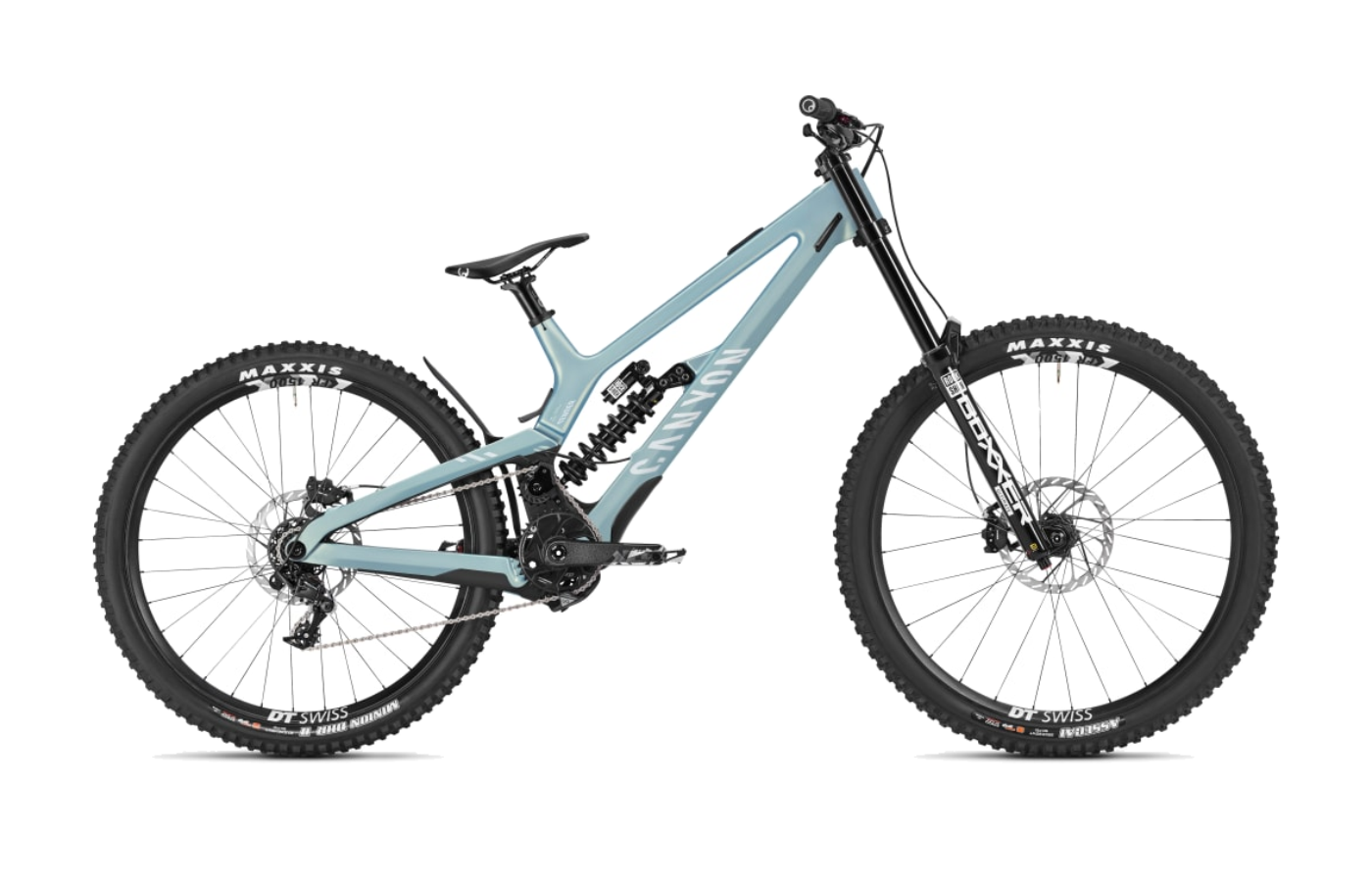
Sender
Canyon's World Cup winner at direct-to-consumer pricing — similar philosophy to the V10 at a meaningfully lower entry point. The catch is no dealer network and no demos.
Compare →