San Quentin
vsTimberjack
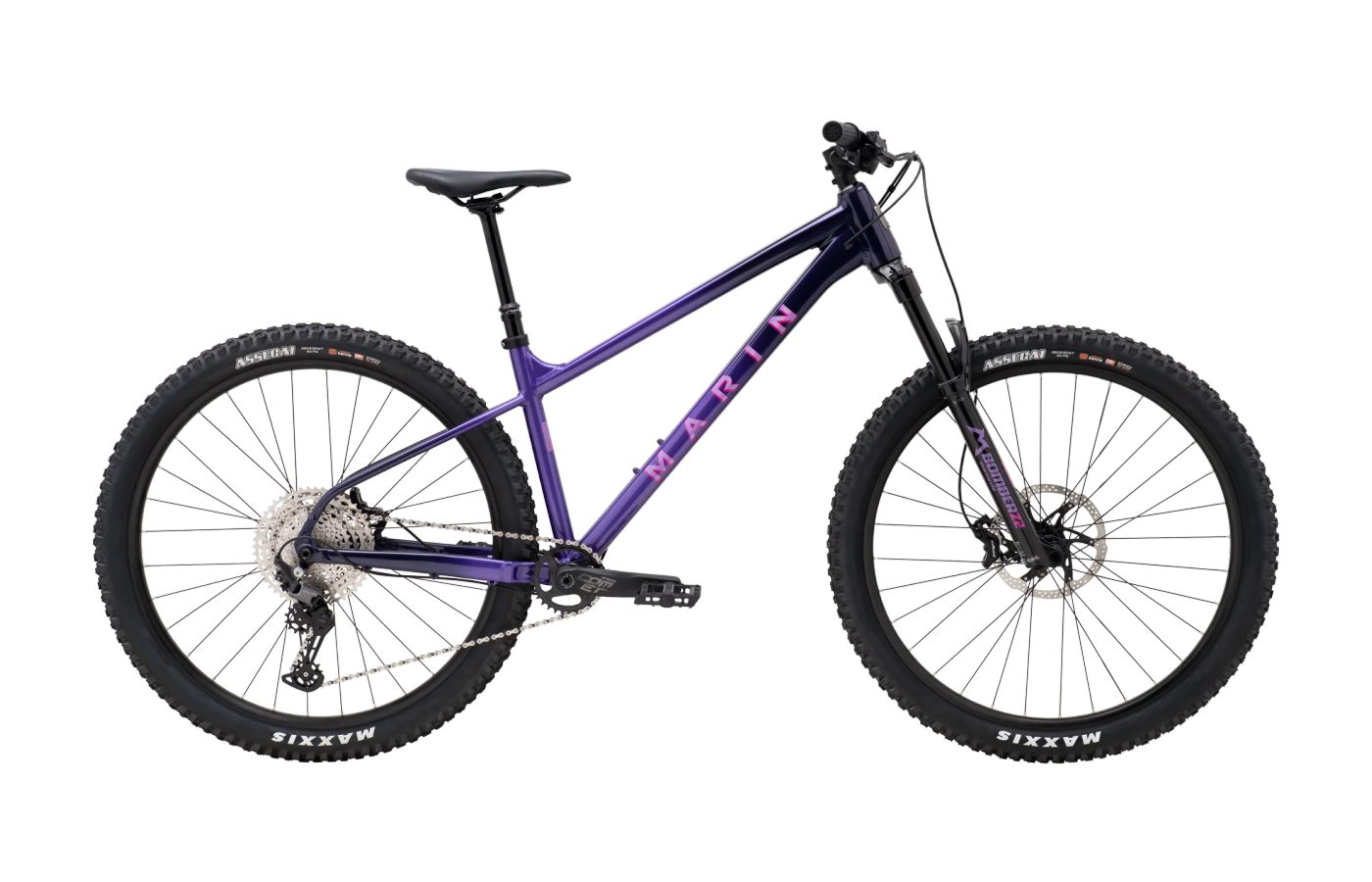
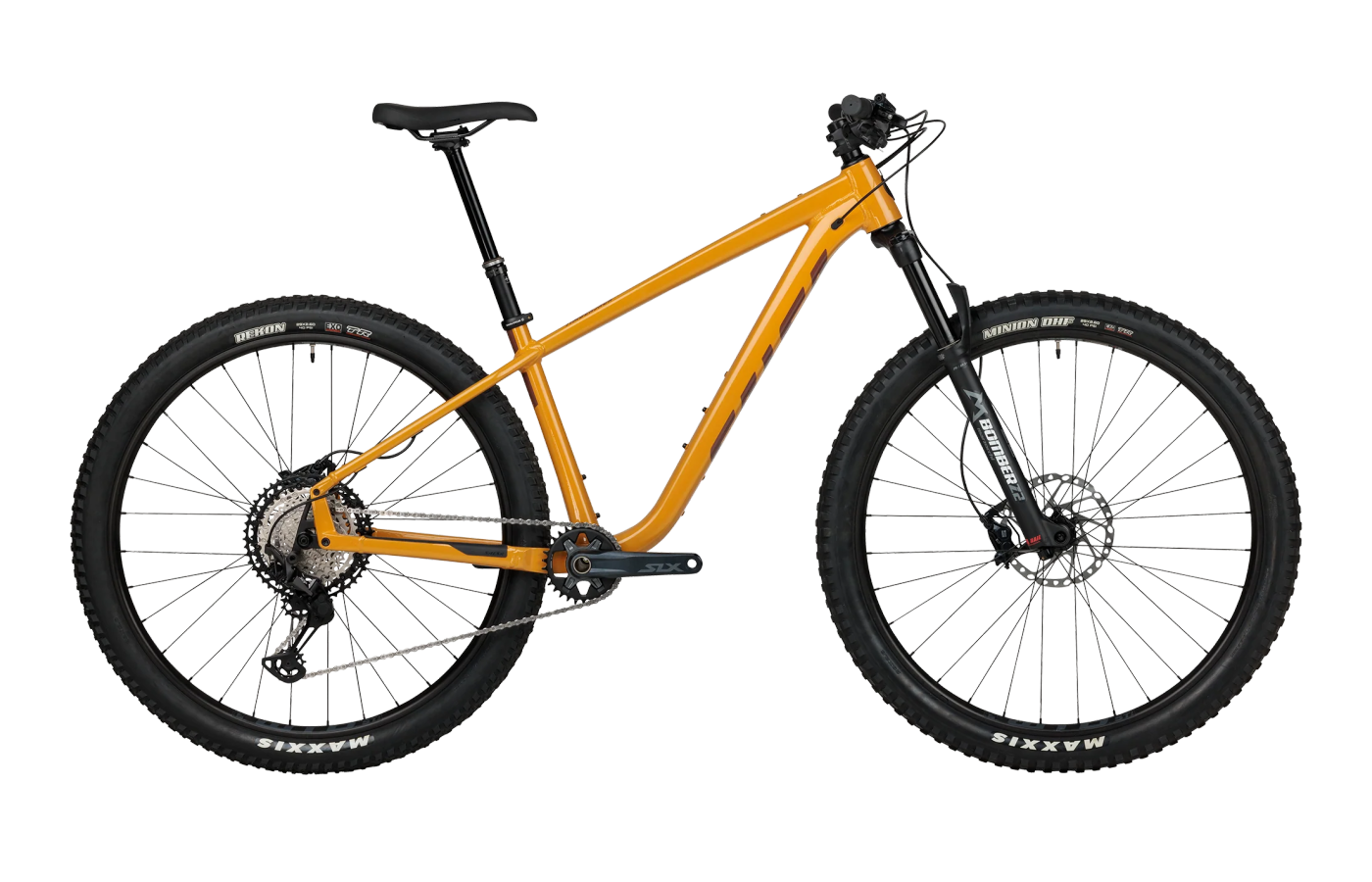
Two hardtails, two missions.
The San Quentin is a dirt-jumper-bred descender that begs to be thrown around. The Timberjack is a do-it-all platform with bikepacking bones and adjustable chainstays.
San Quentin
- Properly slack 64° HTA — a full 2.4° slacker than the Timberjack, with confidence to match on steep descents.
- Surprising frame compliance — thin seat stays make it "much, much less harsh" than typical alloy hardtails (PinkBike).
- Playful by design — short chainstays and dirt-jumper geo make it easy to manual, hop, and pump.
- Slack front end can feel "wandery" on flatter, XC-style climbs.
- Aggressive Maxxis Assegai tires on the SQ3 are slow-rolling — riders chasing distance often swap the rear.
Timberjack
- Adjustable chainstays (420 mm or 437 mm via Alternator 2.0 dropouts) let you tune for stability or playfulness.
- Bikepacking-ready frame — top-tube, downtube three-pack, under-downtube, and rear-rack mounts; threaded BB; full internal routing.
- Versatile across wheel sizes — frame accepts 29×2.6 or 27.5×2.8 with up to 71 mm tire clearance.
- Frame stiffness can feel jarring on rugged terrain — several reviewers flagged hand fatigue.
- Stock RockShox 35 forks on lower builds get overwhelmed on bigger hits and have shown bushing play out of the box (PinkBike Value Field Test).
Editor’s analysis
Same wheel size, same materials, same money — but one is a playground bike with a seatpost, and the other is a quiver-killer with rack mounts.
On paper the Marin San Quentin and Salsa Timberjack land in the same alloy-hardtail aisle: 29-inch wheels, double-butted aluminum frames, sub-$2,200 ceilings, and modern progressive geometry. Both are pitched as fun, capable trail bikes with serious downhill chops. But pull up the geo charts and the two diverge sharply — they're built around different ideas of what a hardtail is for.
The Marin San Quentin is the more committed descender. A 64-degree head tube angle is properly slack — 2.4 degrees slacker than the Timberjack's 66.4 — and combined with a 77-degree seat tube and short 425 mm chainstays, it puts the rider in the center of a bike that wants to drop in, manual, and pop off everything in sight. Reviewers describe it as having "dirt jumper DNA," and it shows: the frame is engineered to feel playful, with thin seat stays and a low standover that make it surprisingly compliant for an aluminum hardtail.
The Salsa Timberjack is the more versatile platform. A steeper 66.4-degree head angle, longer 453.6 mm reach (vs. 450 mm on the Marin), and Alternator 2.0 dropouts that swap chainstay length between 420 and 437 mm make it adapt to the rider's mood. Add multiple bottle mounts, rear-rack compatibility via the Rack-Lock seat collar, and a 71 mm tire clearance, and the Timberjack reads as a bike that can race a XC loop on Saturday and disappear into the backcountry on Sunday.
Put another way: the San Quentin is the bike you buy when you want a hardtail to make boring trails fun. The Timberjack is the bike you buy when one rack-equipped frame has to do everything from after-work shred to overnighters.
Where the builds differ.
Comparing our editor's-pick builds side-by-side. Winners highlighted row-by-row — lower price and weight, and the better-spec component, each mark a point.
Build variants & pricing
Both platforms top out around $2,000 and are alloy-only — no carbon option on either side. The Timberjack offers more build variants (six vs. three) including 27.5+ wheelsets.
Prices are current US MSRP. The San Quentin lineup is leaner — three builds — while the Timberjack splits into 29-inch and 27.5+ versions across the same price ladder. The Timberjack XT Z2 29 ($1,999) and San Quentin 3 ($1,999) compared here both run a 130–140 mm Marzocchi Z2 fork, which is the editor pick on each side.
How they fit, how they steer.
Compared at size M / Medium — the fit-picked size for a 5'8" rider on each bike. The Timberjack runs roughly 15 mm shorter stack with a slightly longer reach (453.6 vs. 450 mm); the San Quentin is markedly slacker (64° vs. 66.4° HTA) and steeper-seated (77° vs. 75.1°).
Which size should I buy?
Size recommendations based on stack, reach, and effective top tube. Both ranges overlap closely; the Timberjack adds an X-Small for shorter riders that the San Quentin doesn't offer.
→These are starting points. Flexibility, riding style, and preferred position all shift the answer — if you’re between sizes, a professional fit beats a chart.
What the magazines said.
Published reviews from trusted cycling outlets. Click through for the full write-up.
Which one should you buy?
If you want a hardtail that turns easy trails into a playground, get the San Quentin. If you want one alloy frame that can race, ride, and bikepack, get the Timberjack.
San Quentin
If your favorite riding is technical and gravity-fed — and you want a bike that begs you to manual, jump, and pop off side hits — the San Quentin's slack geometry and dirt-jumper roots are still the benchmark in this price bracket. Best as a "second" bike to keep the full-suspension fresh, or as a skill-sharpener for a developing rider.
Timberjack
If one alloy hardtail has to handle aggressive trail rides, weekday commutes, and overnight bikepacking trips, the Timberjack's mounting points, adjustable chainstays, and balanced geometry make it the more flexible tool. Less playful than the Marin on the descent, but a measurably better climber and a vastly better load-hauler.
Questions buyers actually ask.
Short answers to the things we get emailed about most often.
01Which descends better?
The Marin San Quentin, by a clear margin. Its 64° head tube angle is 2.4° slacker than the Timberjack's 66.4°, and the SQ3's 140 mm Marzocchi Z2 fork has 10 mm more travel than the Timberjack's stock 130 mm forks. Reviewers consistently describe the San Quentin as "surprisingly planted at speed" and praise its dirt-jumper-derived playfulness on technical descents.
The Timberjack still descends well for a 130 mm hardtail — it "wants to charge" per Hardtail Party — but the geometry and travel are tuned for trail riding, not gravity sessions.
02Which climbs better?
The Salsa Timberjack, on most terrain. Its steeper 66.4° head angle and lower stack (607.4 mm vs. 622.5 mm at size M) make it easier to keep the front wheel weighted on long fire-road climbs, where the San Quentin's slack front end can feel like it wants to wander.
The San Quentin's 77° seat tube (vs. the Timberjack's 75.1°) does put you in a more efficient position over the cranks, and reviewers praised it for steep technical climbs. But on sustained, less-steep ascents, the Timberjack is the more efficient choice. Both bikes weigh in around 31–32 lbs in their mid-spec builds.
03What's the maximum tire clearance?
Salsa Timberjack: 71 mm officially, which translates to 29×2.6 or 27.5×2.8 stock. The frame happily runs either wheel size thanks to the Alternator 2.0 dropouts.
Marin San Quentin: Marin doesn't publish an official clearance number, but the SQ3 ships with 29×2.5 Maxxis Assegai tires and the SQ2 ships with 27.5×2.6. There's no stated wider headroom — assume the stock spec is near the limit.
If running 29×2.6+ or 27.5+ rubber matters to you, the Timberjack is the safer bet.
04Can I bikepack on either?
The Timberjack is purpose-built for it. Salsa includes top-tube mounts, a downtube three-pack, an under-downtube cargo mount, and rear-rack compatibility via a Rack-Lock seat collar. The threaded bottom bracket and full internal routing add long-term reliability on the road.
The San Quentin is not. It has standard bottle mounts and ISCG tabs but no rack provisions, no extra cargo bosses, and a more aggressive geometry that's less comfortable in a seated, fully-loaded position. You can strap soft bags to it, but if loaded touring is on the menu, the Timberjack is the right tool.
05Are the fork specs really that different?
Yes — and the gap closes if you spend up. The base San Quentin 1 runs an SR Suntour XCM34 130 mm coil fork that reviewers (Mountain Bike Rider) called "clunky" and "divey." The SQ3 jumps to a 140 mm Marzocchi Z2 air fork that's universally praised.
The Timberjack SLX 27.5+ at $1,364 runs a RockShox 35 Silver TK; the XT 29 at $2,199 has a 35 Gold RL — both 130 mm. PinkBike's Value Field Test specifically flagged "bushing play" out of the box on the 35 Gold. The XT Z2 builds at $1,999 swap in the same Marzocchi Z2 found on the SQ3 — that's the build to pick if you want fork parity between platforms.
06Which is faster on flow trails?
The Timberjack, in most cases. Its 66.4° head angle and longer wheelbase make it more composed at speed in berms and on rolling terrain, and the stock Maxxis Minion DHF/Rekon 2.6 combo is faster-rolling than the San Quentin 3's Maxxis Assegai 2.5 front and rear (which reviewers compared to riding through "tar").
The San Quentin will feel more playful on tighter, rollier flow sections — easier to pump and pop — but it pays for that playfulness in rolling speed.
07Can I single-speed either of them?
The Timberjack, yes — that's the explicit purpose of the Alternator 2.0 dropouts. You buy a separate single-speed plate and tension the chain via the dropout slide. Salsa designed the bike to swap freely between geared and SS setups.
The San Quentin, no. It uses a fixed 12×148 mm thru-axle dropout (or 141 mm QR on the SQ1) with no chain tensioning provision. You'd need a chain tensioner or eccentric BB conversion to make it work.
08Which holds up better long-term?
Both frames are 6061-grade aluminum (Series 3 on the Marin, 6066-T6 on the Salsa) and both come with lifetime frame warranties to the original owner. Reviewers report the Timberjack's frame as notably stiff — likely overbuilt to handle bikepacking loads — while the San Quentin's thinner seat stays trade some durability headroom for compliance.
Component reliability tracks the build tier on both. The SQ1 has known issues (chainsuck, square-taper cranks); the SQ3 "doesn't need any upgrades out of the box" per PinkBike. On the Timberjack, the stock RockShox forks are the consistent weak point — the Z2 builds resolve it.
Similar bikes
If your priorities don’t map cleanly onto either of these, one of these adjacent bikes probably fits better.
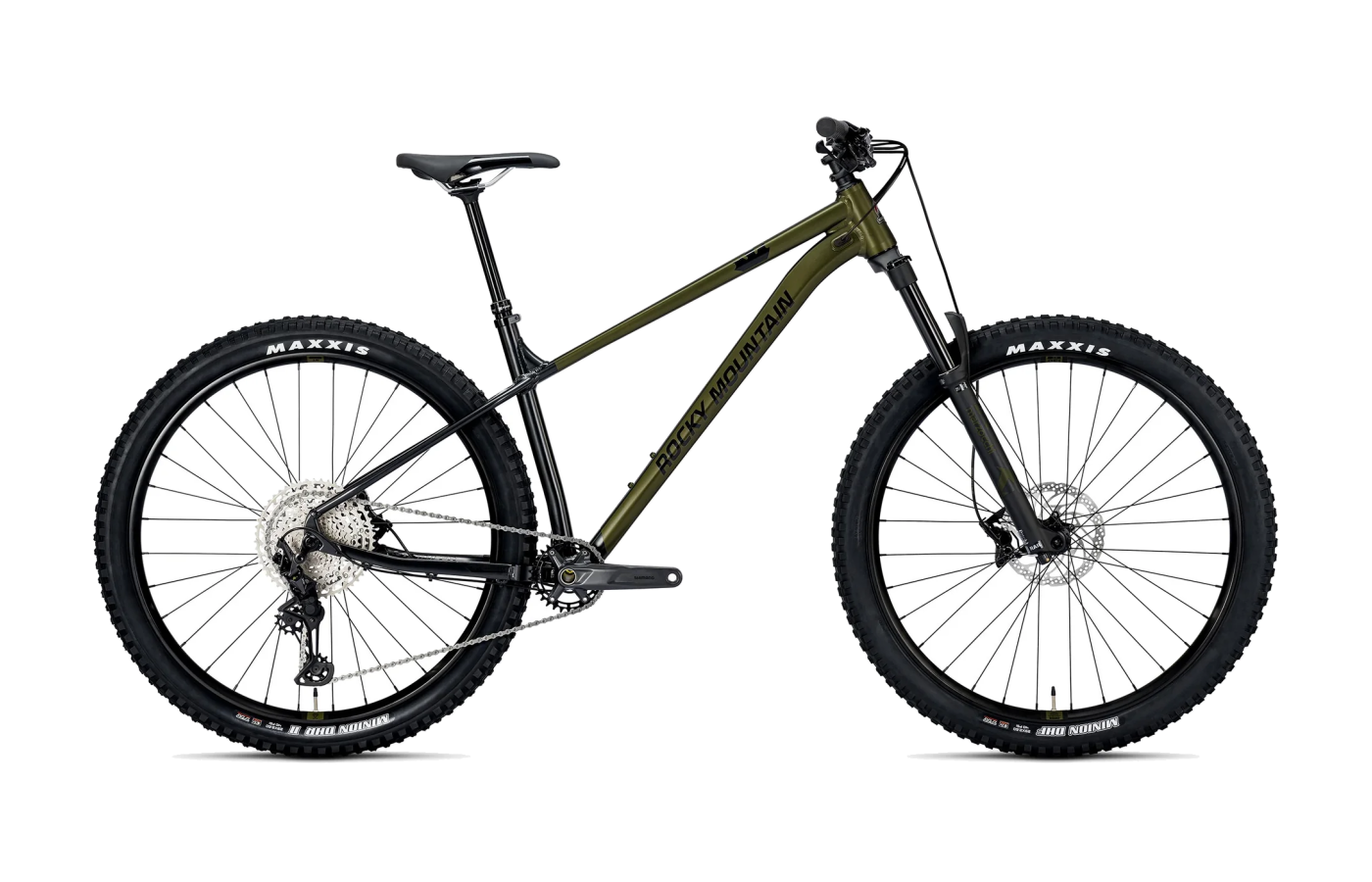
Growler
Like the San Quentin, the Rocky Mountain Growler is a hardcore alloy hardtail — but slacker and more planted at speed, with less of the Marin's playful flick. The pick if you'd rather charge straight lines than session jumps.
Compare →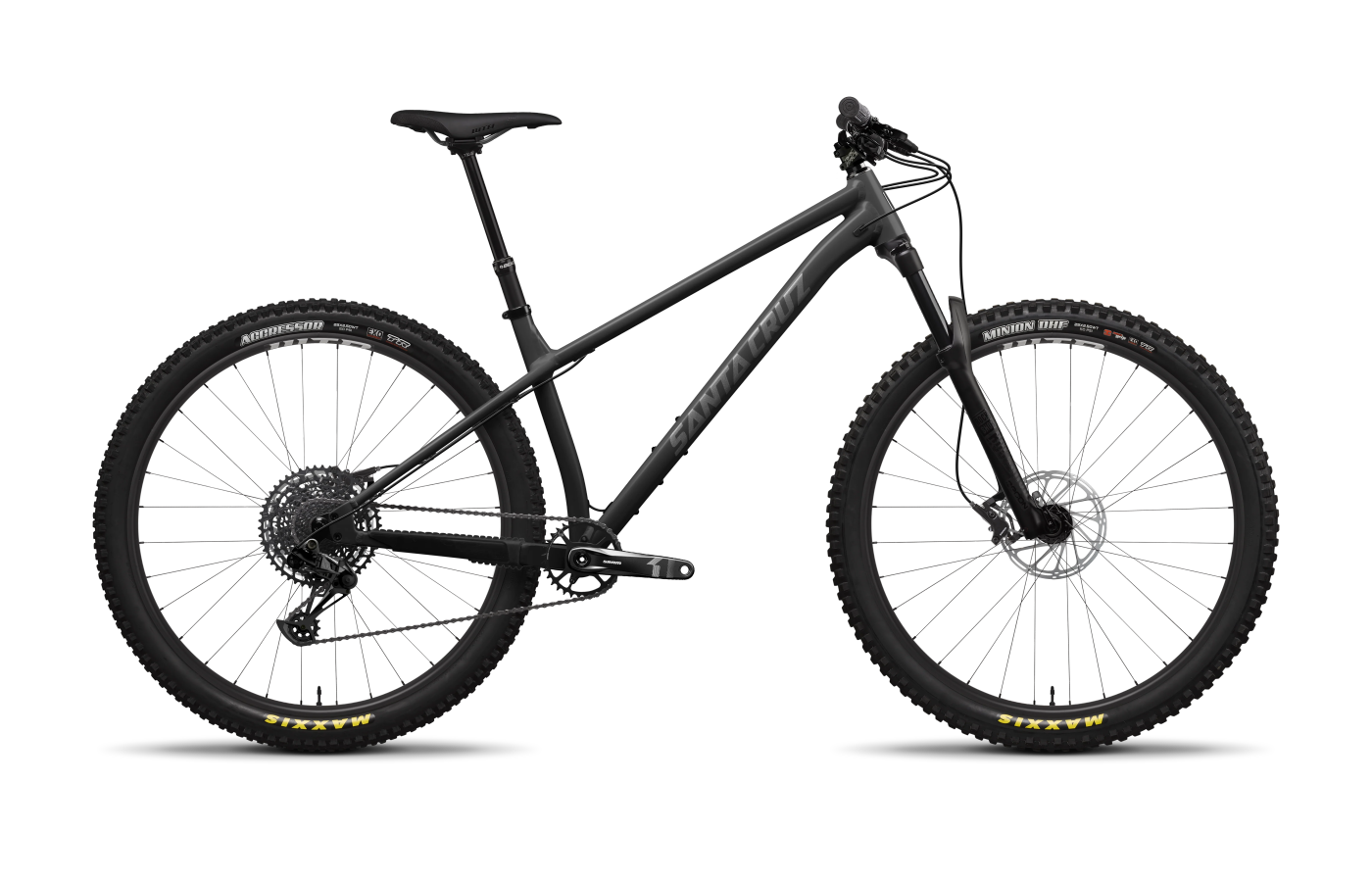
Chameleon
The Santa Cruz Chameleon shares the Timberjack's do-it-all DNA but with a more compliant frame — one bikepacking review explicitly preferred it over the Salsa for multi-day comfort. Worth a look if you'll spend more days loaded than ripping.
Compare →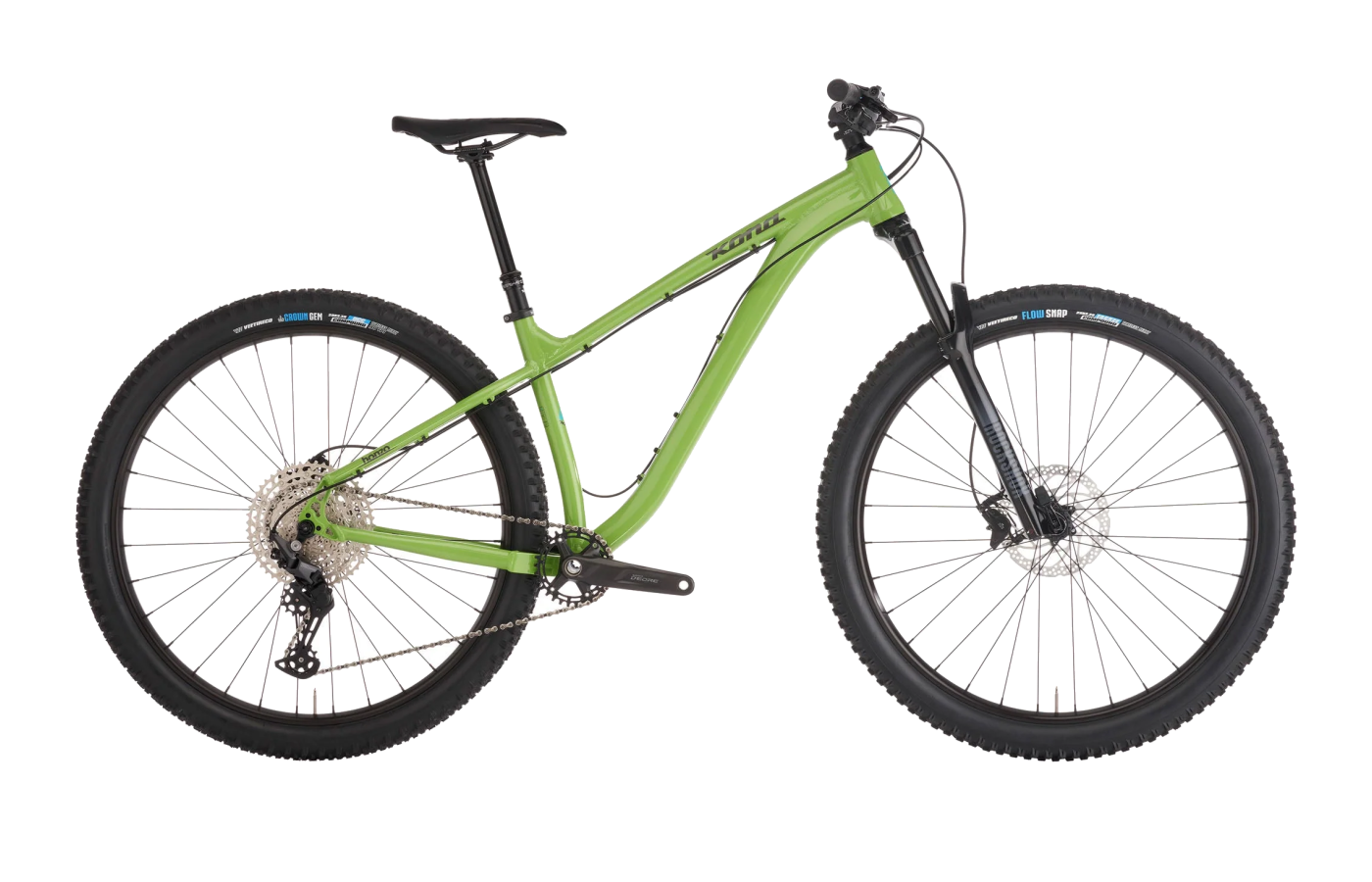
Honzo
The Kona Honzo splits the difference — playful enough to hang with the San Quentin, versatile enough to challenge the Timberjack, and a perennial value pick in the aggressive-trail-hardtail bracket.
Compare →