San Quentin
vsGrowler
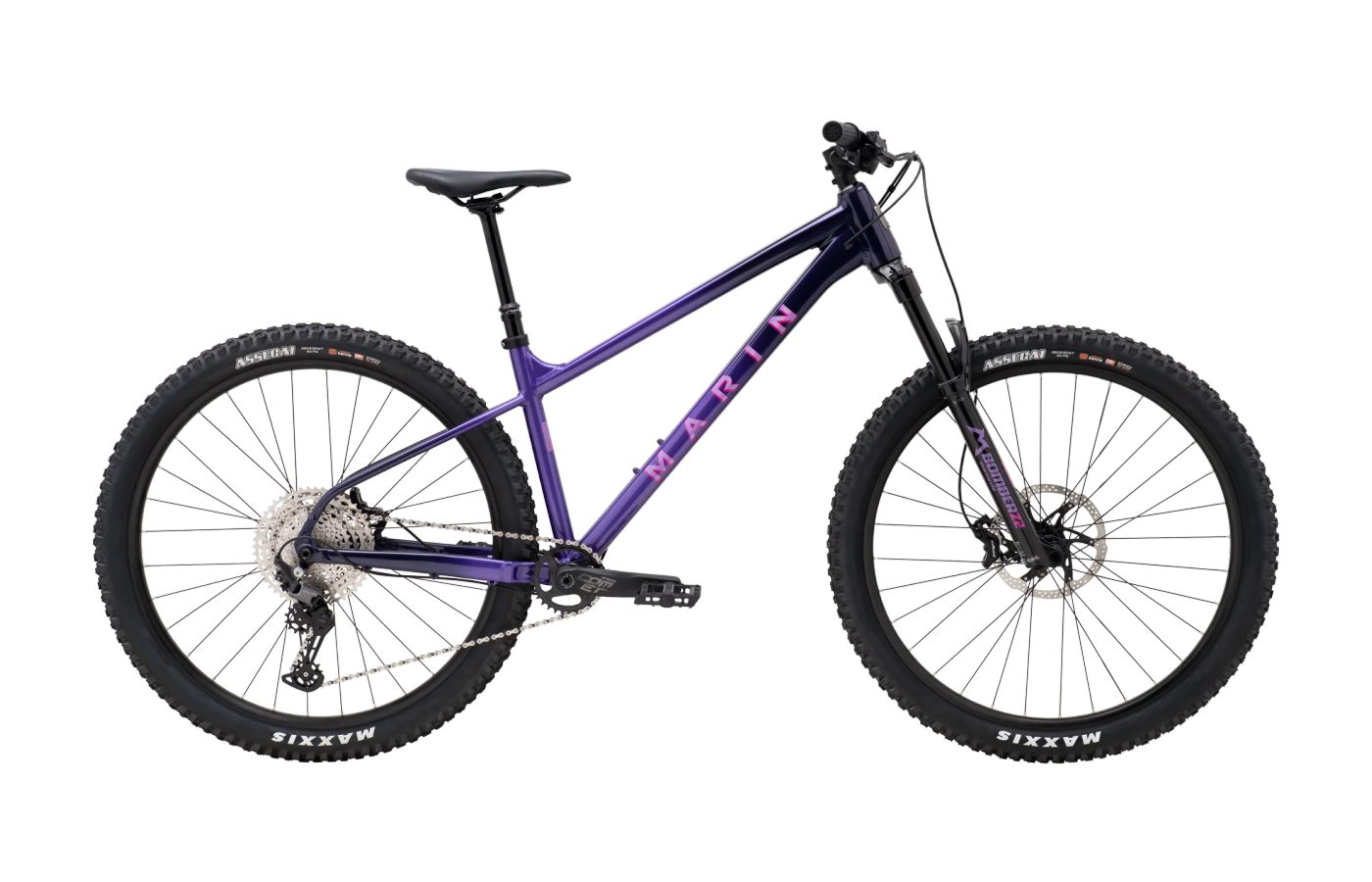
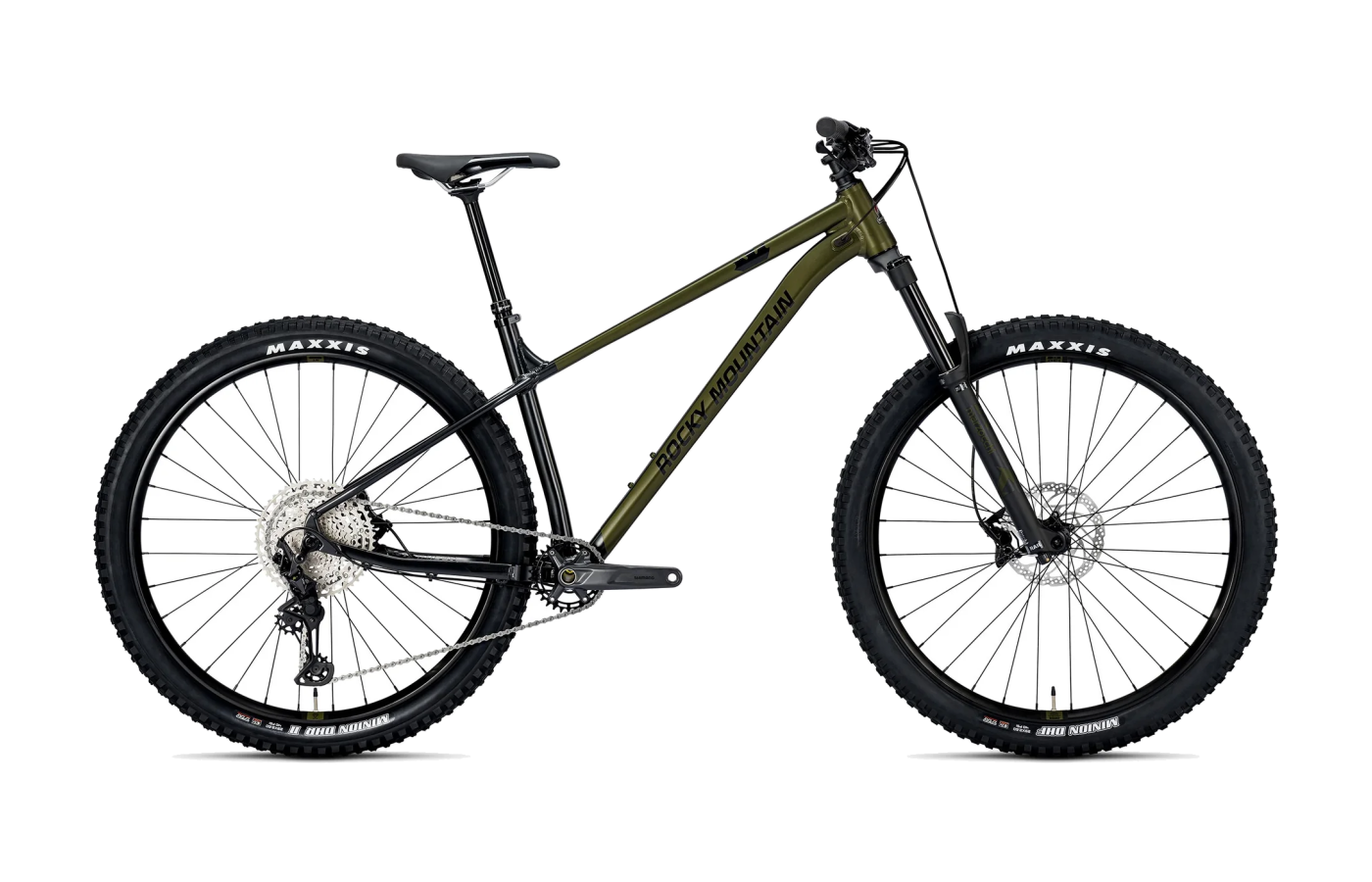
Two aggressive hardtails, two different missions.
The San Quentin channels dirt-jump DNA into a playful, poppy trail bike. The Growler is a long, slack descender that wants to be ridden like a full-suspension enduro bike.
San Quentin
- Playful, poppy character — 425 mm chainstays and dirt-jumper DNA make manuals and jumps effortless.
- Steeper 77° seat angle puts you upright and forward — climbs feel surprisingly efficient for a slack hardtail.
- Deeper build range — three tiers from $1,049 to $1,999 let you pick your compromise; Growler only sells at the top.
- Low bottom bracket on the 27.5-inch SQ1/SQ2 builds causes pedal strikes on technical terrain.
- Entry-level SQ1 has documented drivetrain and fork compromises — the frame deserves better parts.
Growler
- Unflappable at high speed — 1,210 mm wheelbase (size md) and 150 mm fork feel closer to an enduro bike than a hardtail.
- Bigger 2.6-inch tires (Maxxis Minion DHF/DHR II) add real damping on a rigid frame — reviewers call them "all the suspension you got."
- Better drivetrain mix — Shimano XT rear derailleur on the Deore-spec Growler 50 is a nice tier bump at the price.
- Long wheelbase and stiff frame feel sluggish in tight, low-speed terrain.
- Single $1,999 build only — no cheaper entry point if the price is a stretch.
Editor’s analysis
Same 64-degree head angle, same $1,999 top builds, same Marzocchi Z2 up front — but the two bikes read the trail in completely different voices.
On paper these look almost identical: aluminum hardtails, 64-degree head angles, threaded BBs, Boost spacing, tops of their ranges priced within a dollar of each other. Both ship with the Marzocchi Z2 Float EVOL — 140 mm on the Marin San Quentin, 150 mm on the Rocky Mountain Growler — and both run Shimano Deore 12-speed drivetrains. So far, so similar. The personalities diverge the moment you ride them.
The Marin San Quentin is a dirt-jumper pretending to be a trail bike, and it barely bothers hiding it. Shorter 425 mm chainstays (on size M) and a 77-degree seat tube angle make it eager to manual, easy to pop off rollers, and upright enough to actually enjoy climbs. Reviewers consistently describe it as "chuckable" and "surprisingly compliant" for aluminum — MTB Party called the seat-stay tuning "almost as smooth as a Banshee Paradox." It rewards active riding, not passive plowing.
The Rocky Mountain Growler is the opposite philosophy. Longer 435 mm chainstays, a slacker 75-degree seat tube angle, a 10 mm longer fork, and 2.6-inch Maxxis Minion tires all push the bike toward high-speed composure over low-speed agility. Multiple reviewers flat-out said they rode it "like a full-suspension bike," taking lines they wouldn't on any other hardtail. The trade-off is real: at slow speeds it feels sluggish, technical climbs get awkward, and the stiff frame doesn't reward wheelies or dance moves.
Put simply: the Marin San Quentin wants you to generate the speed. The Rocky Mountain Growler wants you to survive it.
Where the builds differ.
Comparing our editor's-pick builds side-by-side. Winners highlighted row-by-row — lower price and weight, and the better-spec component, each mark a point.
Build variants & pricing
Same $1,999 top-spec price, but very different lineups below it.
Prices are current US MSRP. Marin sells three tiers of the San Quentin ($1,049 / $1,599 / $1,999); Rocky Mountain only offers the Growler at the $1,999 price point, so if your budget is tight, the Marin is the only option here.
How they fit, how they steer.
San Quentin M vs. Growler md — the fit-picked sizes for a 5'8" rider. The Marin sits 20.5 mm lower at the stack, has 10 mm shorter chainstays (425 vs. 435), and a 2-degree steeper seat tube. Same 64° head angle on both.
Which size should I buy?
Both brands use alpha (S/M/L) sizing. Pick based on reach and seat-tube length — the Marin's low-slung top tube gives more standover clearance within the same size.
→These are starting points. Flexibility, riding style, and preferred position all shift the answer — if you’re between sizes, a professional fit beats a chart.
What the magazines said.
Published reviews from trusted cycling outlets. Click through for the full write-up.
Which one should you buy?
If you want to play with the trail, get the San Quentin. If you want to plow through it, get the Growler.
San Quentin
If your home loops mix rooty descents with flow lines, rollers, and the occasional jump, the San Quentin is the livelier tool. It rewards active riding — manuals, pops, corners — and climbs more comfortably than the numbers suggest thanks to the steep seat angle.
Growler
If you ride steep, rough, gnarly trails and want a hardtail that holds a line like a full-suspension bike, the Growler is built for it. Meatier tires, a longer fork, and a longer wheelbase all push the envelope of what a rigid rear end can do on a descent.
Questions buyers actually ask.
Short answers to the things we get emailed about most often.
01Which is the better climber?
The Marin San Quentin, mostly because of geometry. Its 77-degree seat tube angle (vs. 75 on the Growler) puts you further forward over the cranks, which keeps the front wheel planted on steep pitches. Both bikes share the slack 64-degree head angle, so both can feel a bit wandery on fire-road climbs — but the Marin's shorter wheelbase (1,203 mm vs. 1,210 mm at the compared sizes) also helps in tight switchbacks.
Neither is a cross-country bike. Reviewers consistently describe both as "fine" on climbs, not fast — the aggressive tire choices (Maxxis Assegai on the Marin, Minion DHF/DHR II on the Rocky) cost you real rolling speed.
02Which is more stable on fast, rough descents?
The Rocky Mountain Growler — it's the whole point of the bike. The combination of 150 mm of fork travel (vs. 140 on the Marin), a longer 435 mm chainstay, and 2.6-inch tires creates what Bike Magazine called a bike you can "charge through chunk more recklessly than I ever have on a hardtail."
The San Quentin is no slouch at speed — reviewers called it "surprisingly planted" — but it's tuned to stay lively, not to feel glued to the ground. On genuinely steep, high-speed terrain, the Growler's composure advantage is real.
03What's the fork travel on each?
San Quentin 3: 140 mm Marzocchi Bomber Z2, air sprung.
Growler 50: 150 mm Marzocchi Z2 Float EVOL Rail, air sprung.
Same fork family, 10 mm more travel on the Rocky. The lower-tier San Quentin 2 ($1,599) uses an X-Fusion Slide at 140 mm; the entry San Quentin 1 ($1,049) drops to a 130 mm SR Suntour XCM34 coil fork, which reviewers have been consistently critical of.
04Do they run the same tires?
No — and the tire choice tells you a lot about each bike's intent.
Marin San Quentin 3: Maxxis Assegai 2.5-inch front and rear, MaxxTerra, EXO casing. Aggressive tread for grip, but slow-rolling — multiple reviewers mentioned feeling like they had "tar on their tires."
Rocky Mountain Growler 50: Maxxis Minion DHF 2.6 front, DHR II 2.6 rear, EXO casing. Slightly narrower-spaced tread, wider volume — more damping from the bigger air chamber, which matters on a stiff hardtail.
05Which has the better brakes?
The Marin wins here at the top builds. The San Quentin 3 comes with TRP Slate 4-piston hydraulic discs, which reviewers consistently praise as "strong and consistent." The Growler 50 ships with 2-piston Shimano brakes, which PinkBike and others noted "lack initial bite and overall power," typically recommending an upgrade to metallic pads and larger rotors.
If you're a bigger rider or ride steep terrain on the Growler, budget for a brake upgrade — or the Marin already has you covered.
06Are either compatible with a dropper post?
Yes, both. The San Quentin 3 and Growler 50 ship with dropper posts included. The San Quentin 1 does not include a dropper but the frame is dropper-ready — Marin has a routing port at the base of the seat tube. Both frames have short seat tubes designed for modern long-drop droppers.
07Which is quieter on the trail?
The Marin, largely because of one small spec detail. Multiple reviewers called out the Growler's lack of chainstay protection — chain slap produces paint chips and noise unless you wrap the stay yourself (Mike Levy's trick: an old tube). The San Quentin is a similar story at the stays (reviewers noted minimal protection on the SQ3), but the Growler is the one consistently flagged.
Both bikes otherwise have clean internal cable routing; neither is a rattly frame.
08Which rider should pick which?
Pick the San Quentin if you want a hardtail you can actually play on — flow lines, jumps, manuals, punchy tech. It's also the only option here under $1,999 if the budget matters.
Pick the Growler if your local trails are steep and rough and you want the closest thing to full-suspension descending performance on a rigid frame. It's a narrower tool, but within its lane it's one of the most capable hardtails on the market.
Similar bikes
If your priorities don’t map cleanly onto either of these, one of these adjacent bikes probably fits better.
Roscoe
Trek's answer in the aggressive-hardtail genre, with similarly slack geometry and a strong component spec at the price. Splits the difference between the San Quentin's playfulness and the Growler's stability.
Compare →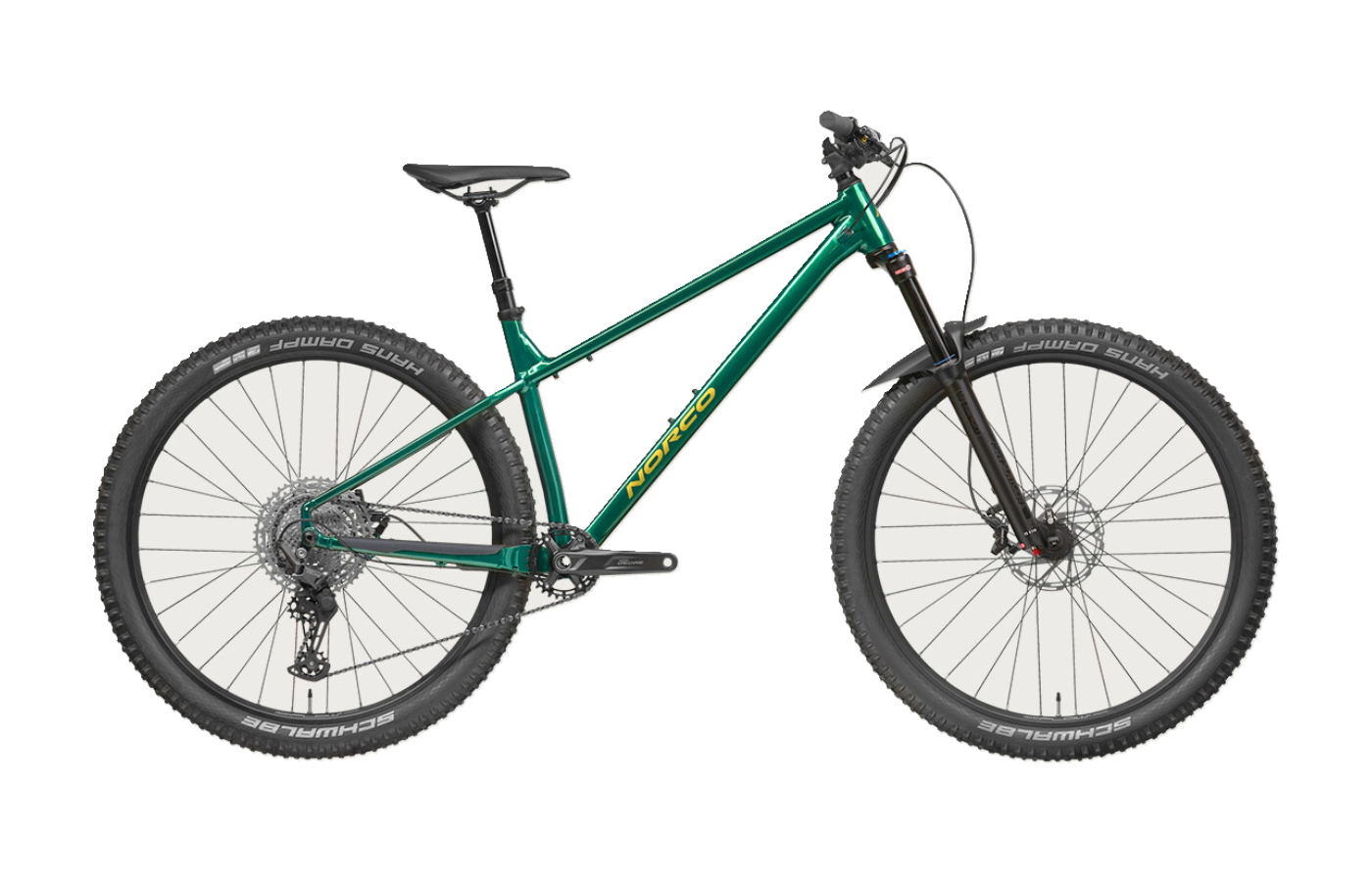
Torrent
Norco's take on the long, slack hardtail — closer in spirit to the Growler than the San Quentin. A touch heavier and more muted, but still built to plow steep terrain.
Compare →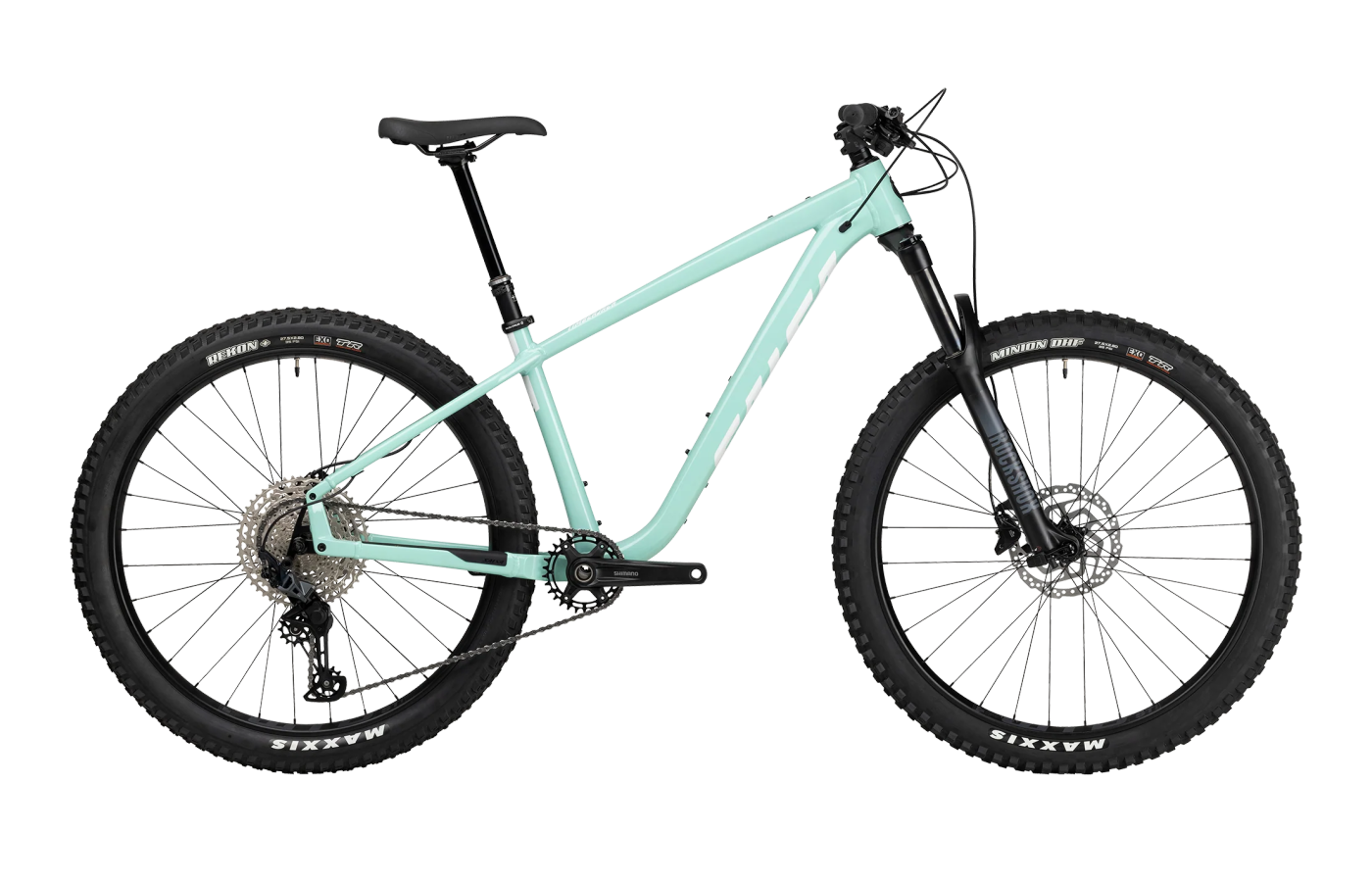
Timberjack
Salsa's do-it-all aggressive hardtail with balanced geometry that works for both trail riding and loaded bikepacking. Less extreme than either of these, but more versatile.
Compare →