Rift Zone
vsStumpjumper
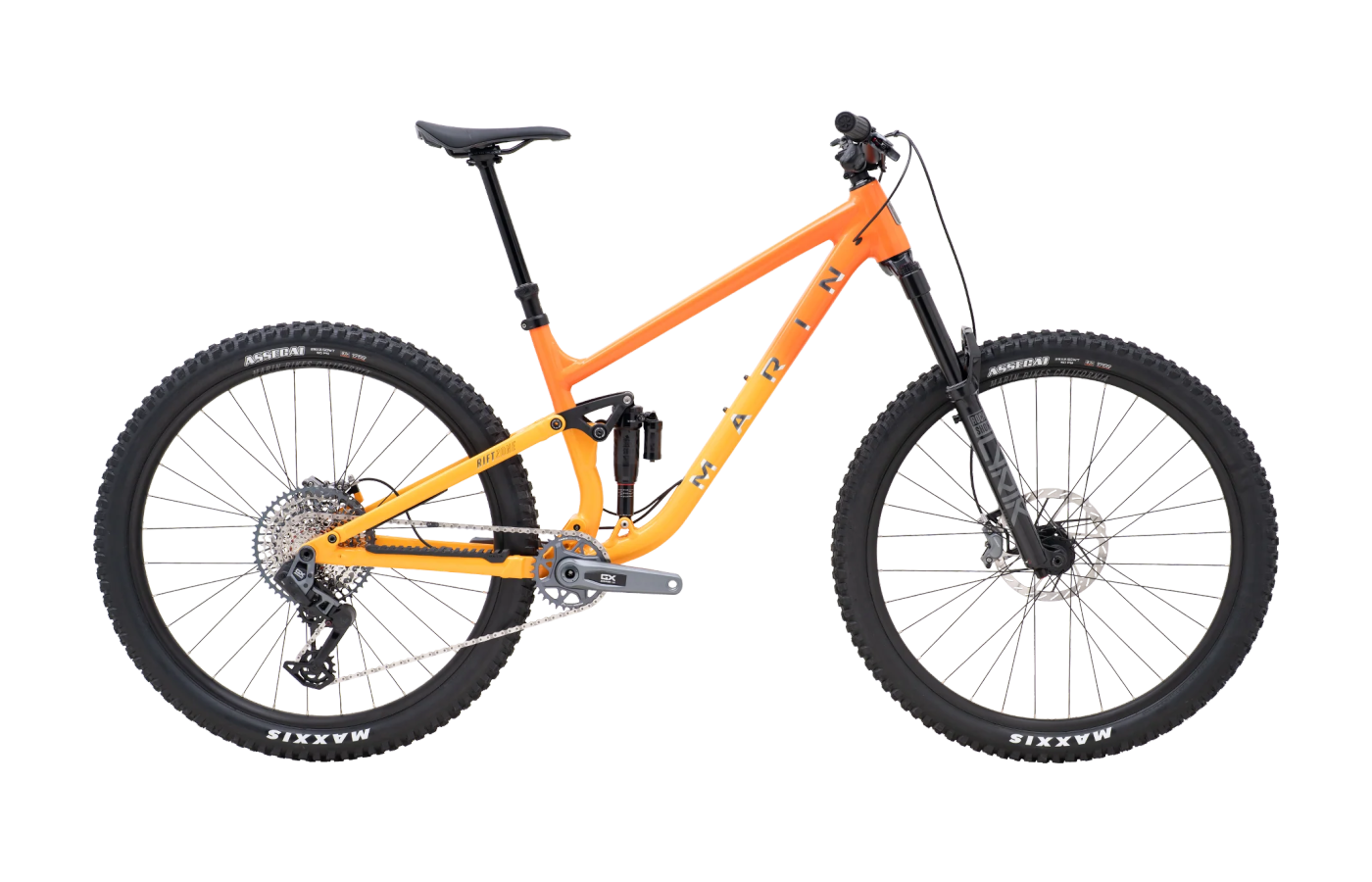
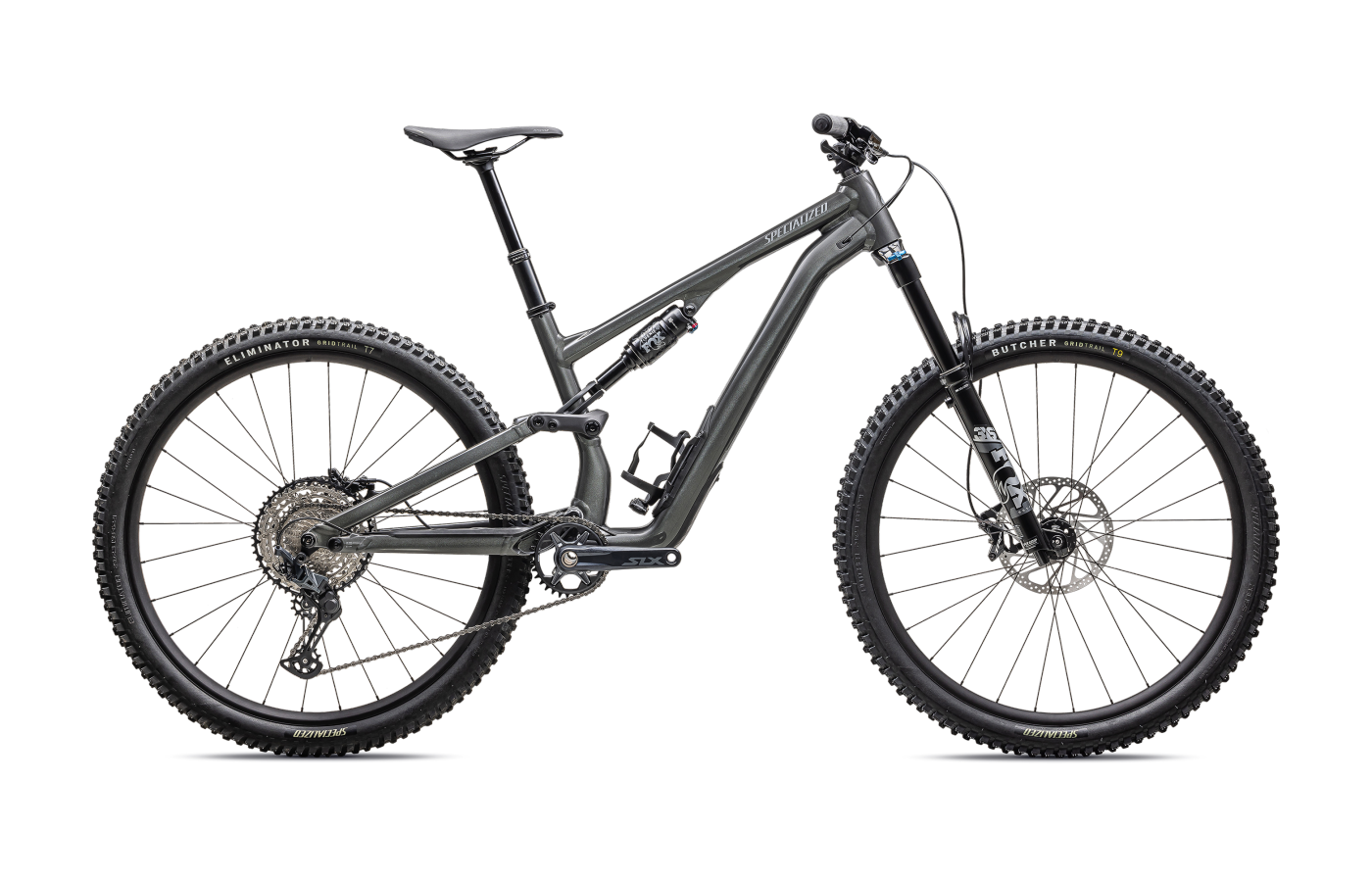
Two trail bikes, two budgets.
The Rift Zone is alloy-only and tops out under $5k. The Stumpjumper spans alloy to S-Works carbon, with proprietary suspension tech in the middle.
Rift Zone
- Aggressive value — a 150mm Lyrik Select+ fork and Super Deluxe Select+ shock for $4,699, undercutting the closest carbon Stumpjumper by thousands.
- Mini-enduro chassis — a slack 65.1 degree HTA, 430mm chainstays, and progressive MultiTrac kinematics that reviewers say "deliver a ride feel well in excess of its numbers."
- Upgrade-friendly frame — UDH, threaded BB, ISCG05 tabs, and a chassis reviewers describe as "an excellent platform to build off of."
- Heavy for the travel — reviewers measured the alloy XR at 15.8 kg / 34.8 lb, with stock Maxxis Assegai tires that drag.
- No carbon option and no high-end build path — once you're past the XR AXS, there's nowhere to go inside the Rift Zone line.
Stumpjumper
- GENIE rear shock — the dual-chamber air spring is described as "coil-like" in the first 70% and "outrageously good" at preventing bottom-outs in the last 30%.
- Adjustable geometry — headset cups offer three head-tube angles (63 to 65.5 degrees) and a flip chip adjusts BB height and chainstay length.
- Full-range lineup — nine builds from $2,999 alloy to $11,999 S-Works carbon, plus SWAT downtube storage and a lifetime frame + pivot-bearing warranty.
- Carbon frames are wireless-electronic-only — no Shimano mechanical compatibility on FACT 11m models.
- Alloy versions are heavy — the Comp Alloy weighs 16.17 kg / 35.6 lb (S4), with reviewers calling the frame's 9.5 lb weight "egregious" for a trail bike.
Editor’s analysis
One brand built a single bike — robust, alloy, and unapologetically under $5k. The other built a nine-build platform stretching to $12k of S-Works carbon.
On paper, the Marin Rift Zone and Specialized Stumpjumper share a category — modern 130–145mm trail bikes designed to climb, descend, and survive a season of abuse. Both run a 64–65 degree head tube angle, a 77 degree seat tube, and 430-435mm chainstays. Both are repeatedly described by reviewers as punching above their travel.
Past that, the platforms barely overlap. The Rift Zone is alloy-only, four builds, $1,899 to $4,699. Marin's pitch is straightforward: a Series 3 6061 chassis with modern geometry, paired with whatever spec your budget can absorb. The XR AXS — its flagship — costs less than Specialized's mid-tier carbon Comp. There is no carbon Rift Zone, no GENIE shock equivalent, no factory Live Valve option. What you see in the catalog is what Marin sells.
The Stumpjumper 15 stretches from a $2,999 Deore alloy build to a $11,999 S-Works LTD with FOX DHX Live Valve NEO. It carries 145mm of rear travel through a proprietary GENIE dual-chamber air shock that reviewers call "hyper-sensitive" off the top and "outrageously good" at controlling bottom-outs. The frame has flip-chip and headset-cup geometry adjustment, SWAT downtube storage, and a lifetime warranty with lifetime pivot bearings. The carbon builds are wireless-electronic-only — no mechanical routing on the FACT 11m frames.
Read another way: Marin is a one-shape, one-material, four-spec catalog aimed at the rider who wants a capable trail bike for under $5k. Specialized is a platform aimed at every trail-rider price point, with the proprietary tech and the geometry adjustability that come with that ambition. The comparison below picks the alloy Comp Alloy Stumpjumper and the top-spec Marin XR AXS — the closest the two lineups get to each other.
Where the builds differ.
Comparing our editor's-pick builds side-by-side. Winners highlighted row-by-row — lower price and weight, and the better-spec component, each mark a point.
Build variants & pricing
Four alloy Marin builds from $1,899 to $4,699 versus nine Stumpjumper builds — alloy and carbon — from $2,999 to $11,999.
Prices are current US MSRP. Marin sells direct in some regions, which keeps the Rift Zone aggressively priced. The Rift Zone has no carbon option — if you want carbon at this travel from this comparison, you're buying a Stumpjumper.
How they fit, how they steer.
Rift Zone size M against Stumpjumper S3. The Stumpjumper sits 1.4 mm taller in stack with a 10 mm shorter reach in this pairing, runs a 0.6 degree slacker head tube angle (64.5 vs 65.1), 5 mm longer chainstays (435 vs 430), and an 8 mm longer wheelbase. The Marin is the more compact, lower-slung bike at this size.
Which size should I buy?
Marin runs S/M/L/XL; Specialized uses size-by-fit S1–S6. Both ranges cover roughly the same height window in the middle, but Specialized extends further at both ends.
→These are starting points. Flexibility, riding style, and preferred position all shift the answer — if you’re between sizes, a professional fit beats a chart.
What the magazines said.
Published reviews from trusted cycling outlets. Click through for the full write-up.
Which one should you buy?
If you want a capable alloy trail bike under $5k and don't need carbon, get the Rift Zone. If you want range, adjustability, and the GENIE shock — and have the budget for carbon — get the Stumpjumper.
Rift Zone
If your budget tops out around $4,700 and you'd rather have a mini-enduro chassis with a real Lyrik fork than a stripped-down version of someone else's carbon flagship, the Rift Zone is the smarter spend. Reviewers consistently rate it as the best value in the 130mm class — even the second-from-top XR at $3,699 is enough bike for most riders.
Stumpjumper
If you want one bike that climbs technical terrain on its supple GENIE traction, descends like a longer-travel rig with the flip chip slacked out, and lasts forever on a lifetime frame and pivot-bearing warranty, the Stumpjumper 15 is the more refined platform. The carbon Pro at $7,999 is the consensus sweet spot among reviewers.
Questions buyers actually ask.
Short answers to the things we get emailed about most often.
01Which bike has more travel?
The Stumpjumper, by 15 mm at the rear and a variable amount up front. The Stumpjumper 15 runs 145 mm rear / 150 mm fork on most builds (160 mm fork on the alloy and base 15 carbon).
The Rift Zone runs 130 mm rear / 140-150 mm fork depending on spec — the XR and XR AXS get a 150 mm Lyrik Select+, the lower builds run 140 mm forks.
Both bikes are routinely described by reviewers as feeling like they have more travel than the spec sheet suggests.
02Which climbs better?
The Stumpjumper, especially in carbon trim. The GENIE shock's supple initial 70% gives it standout traction on technical climbs — reviewers note it "hugs the ground" and finds grip where other bikes spin out. Specialized claims a 57% increase in climbing traction from the design.
The Rift Zone's MultiTrac suspension is praised as "surprisingly efficient" and the 77 degree seat tube angle puts you in a strong climbing position, but the bike's weight (around 15.8 kg for the XR) and aggressive Maxxis Assegai stock tires make it "sluggish" on long ascents per multiple reviewers.
If climbing matters, the carbon Stumpjumper wins. The alloy Stumpjumper Comp Alloy at 16.17 kg isn't dramatically lighter than the Rift Zone.
03Which descends better?
Closer than you'd think — both punch above their travel. The Stumpjumper has more rear travel (145 vs 130 mm), a slacker head angle (64.5 vs 65.1 degrees), longer chainstays (435 vs 430 mm), and a longer wheelbase, which translates to more high-speed composure on rough, steep terrain. The GENIE's progressive bottom-out resistance is genuinely impressive.
The Rift Zone is the playful, agile one — short chainstays and a compact rear end make it "easy to throw around" and quick to change direction. Several reviewers describe it as a "mini-enduro rig."
For flat-out fast and technical, the Stumpjumper. For poppy, jumpy, jib-style descending, the Rift Zone.
04How much does each weigh?
Reviewers measured the Marin Rift Zone XR at 15.8 kg / 34.8 lb (PinkBike) and the Rift Zone 29 2 at 15.62 kg (Flow Mountain Bike).
The Stumpjumper 15 spans a wider weight range. Specialized publishes 13.56 kg / 29 lb 14 oz for the S-Works 15 (carbon), 13.99 kg for the 15 Pro, 14.47 kg for the 15 Expert, 14.87 kg for the 15 Comp, and 16.17 kg / 35.6 lb for the Comp Alloy.
The carbon Stumpjumpers are meaningfully lighter than the alloy Marin. Compared alloy-to-alloy, they're within a kilogram of each other.
05Can I run a coil shock?
Yes on both. The Rift Zone's progressive MultiTrac kinematic is explicitly designed to be coil-compatible — Marin notes the late-stroke ramp prevents bottom-outs even with a coil's linear spring rate.
The Stumpjumper 15 ships with the Öhlins TTX 22 M Coil on the carbon 15 build at $7,999, and the alloy 15 Alloy at $5,499 ships with a FOX DHX Factory coil. The frame uses a standard 210x55mm shock, so swapping in any aftermarket coil is straightforward.
06Is the Stumpjumper's GENIE shock proprietary?
Yes. The GENIE is a Specialized + Fox collaboration with a dual-chamber air spring — a large outer sleeve gives the supple initial stroke, and a band closes off the outer chamber at ~70% of travel to ramp up bottom-out resistance.
Specialized says the shock uses "mostly standard Fox internals," requiring only one extra seal beyond a normal Fox Float, so most suspension shops can service it. Long-term parts availability is the open question — there's some lingering skepticism among reviewers and commenters who remember Specialized's earlier proprietary shocks (Brain, Autosag).
If the GENIE worries you, the frame accepts any standard 210x55mm shock — the Öhlins TTX 22 M coil ships stock on the $7,999 "15" build.
07Are the frames durable?
Both are well-regarded. The Rift Zone's Series 3 6061 alloy frame is described by reviewers as "burly" and "sturdy," with a UDH derailleur hanger, threaded BB, and ample chainstay protection. A small number of users on PinkBike reported chainstay breakages on the previous-generation Rift Zone near the drive-side yoke — Marin's warranty was reported as "great" and replaced affected frames.
The Stumpjumper 15 comes with a lifetime frame warranty + lifetime pivot bearing replacement to the original owner. The carbon FACT 11m chassis is praised for refined construction; the M5 alloy frame is heavy (Pinkbike called the 9.5 lb frameset "egregious") but built to absorb abuse.
08Which is the better upgrade platform?
The Rift Zone is explicitly designed to be upgraded — UDH, threaded BB, ISCG05, and a frame that reviewers say is identical across spec levels ("can be made into anything you want with time").
The Stumpjumper is upgrade-friendly on the alloy frames (mechanical and electronic both work) but wireless-only on the carbon FACT 11m frames — no mechanical Shimano shifting, full stop. If you want to roll your own component spec from the frame up, the alloy Stumpjumper or any Rift Zone is the friendlier choice. The carbon Stumpjumper locks you into SRAM Transmission.
Similar bikes
If your priorities don’t map cleanly onto either of these, one of these adjacent bikes probably fits better.
Jeffsy
YT's direct-to-consumer trail bike — aggressive geometry and component spec for the money, with a similar mini-enduro attitude to the Rift Zone. The catch is no dealer network, so home-mechanic comfort matters.
Compare →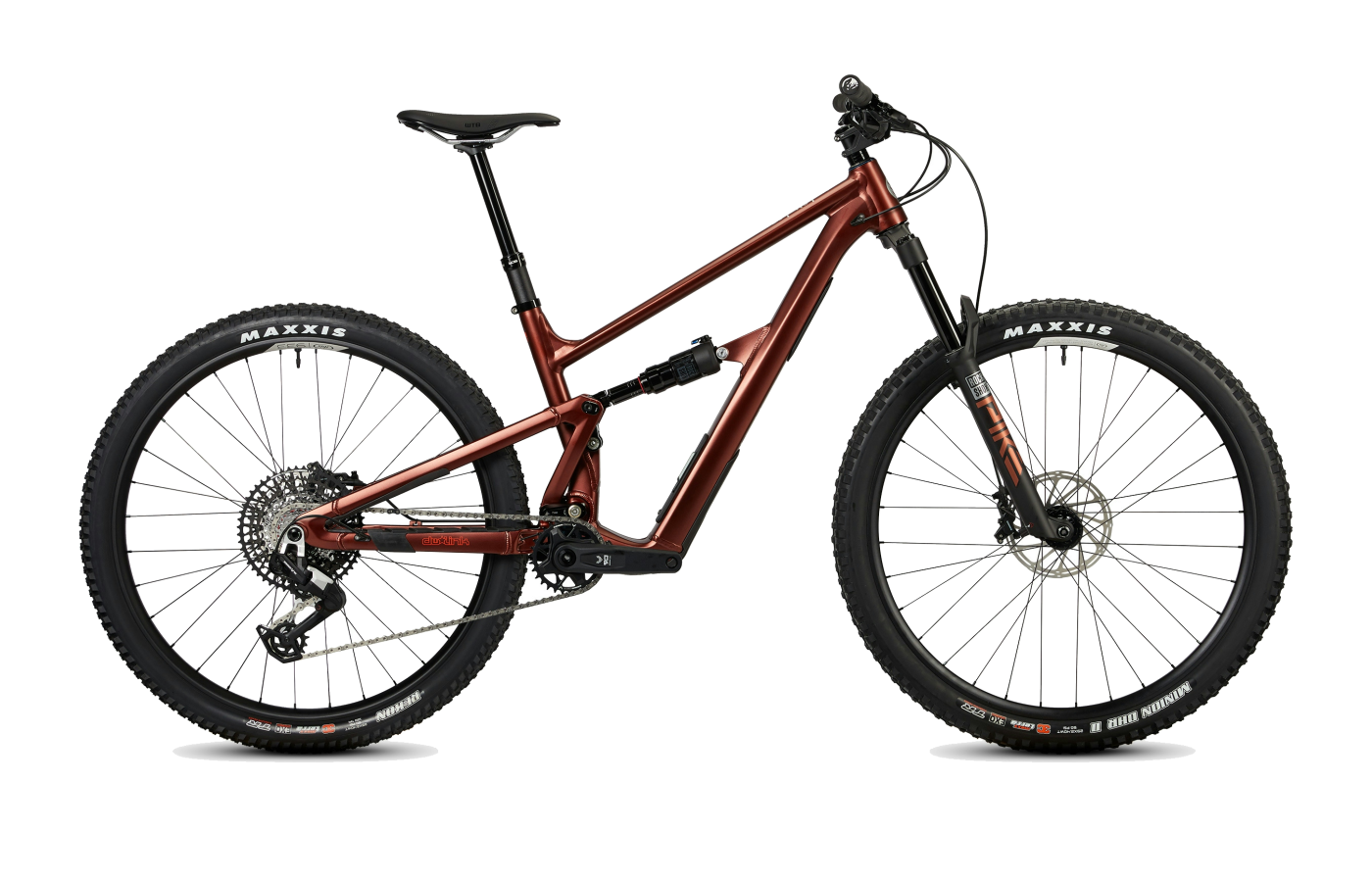
Ripley AF
Ibis's alloy take on the Ripley platform — DW-link suspension known for pedaling efficiency, and a more lively, balanced feel than the Rift Zone's playful-and-burly tune. A different flavor of the value-alloy trail bike.
Compare →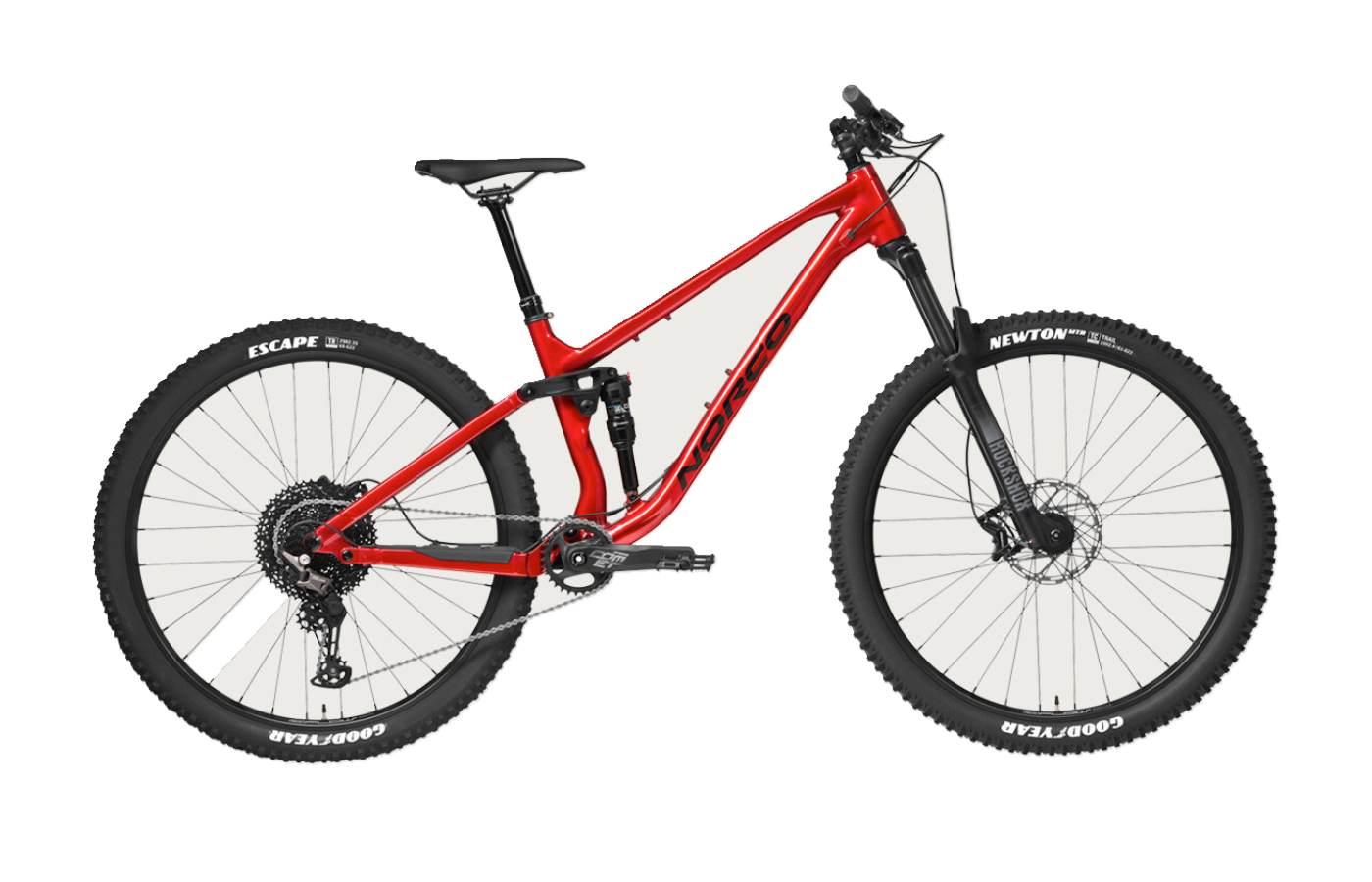
Fluid FS
Norco's value trail bike — directly cross-shopped with the Rift Zone and routinely praised for the same mini-enduro character at a budget price. Slightly more conservative geometry and a more linear suspension feel.
Compare →