Cinder Cone
vsHonzo
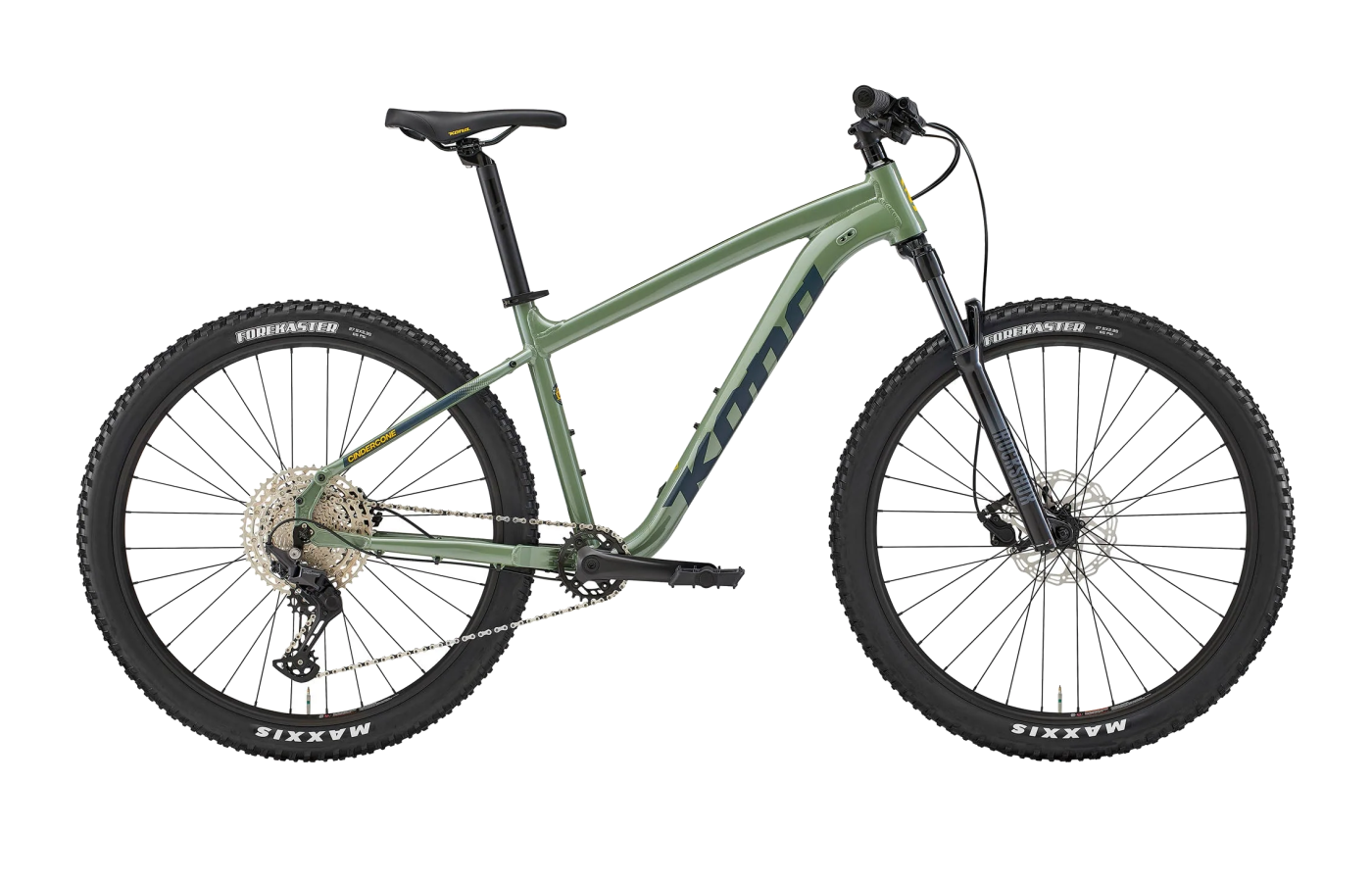
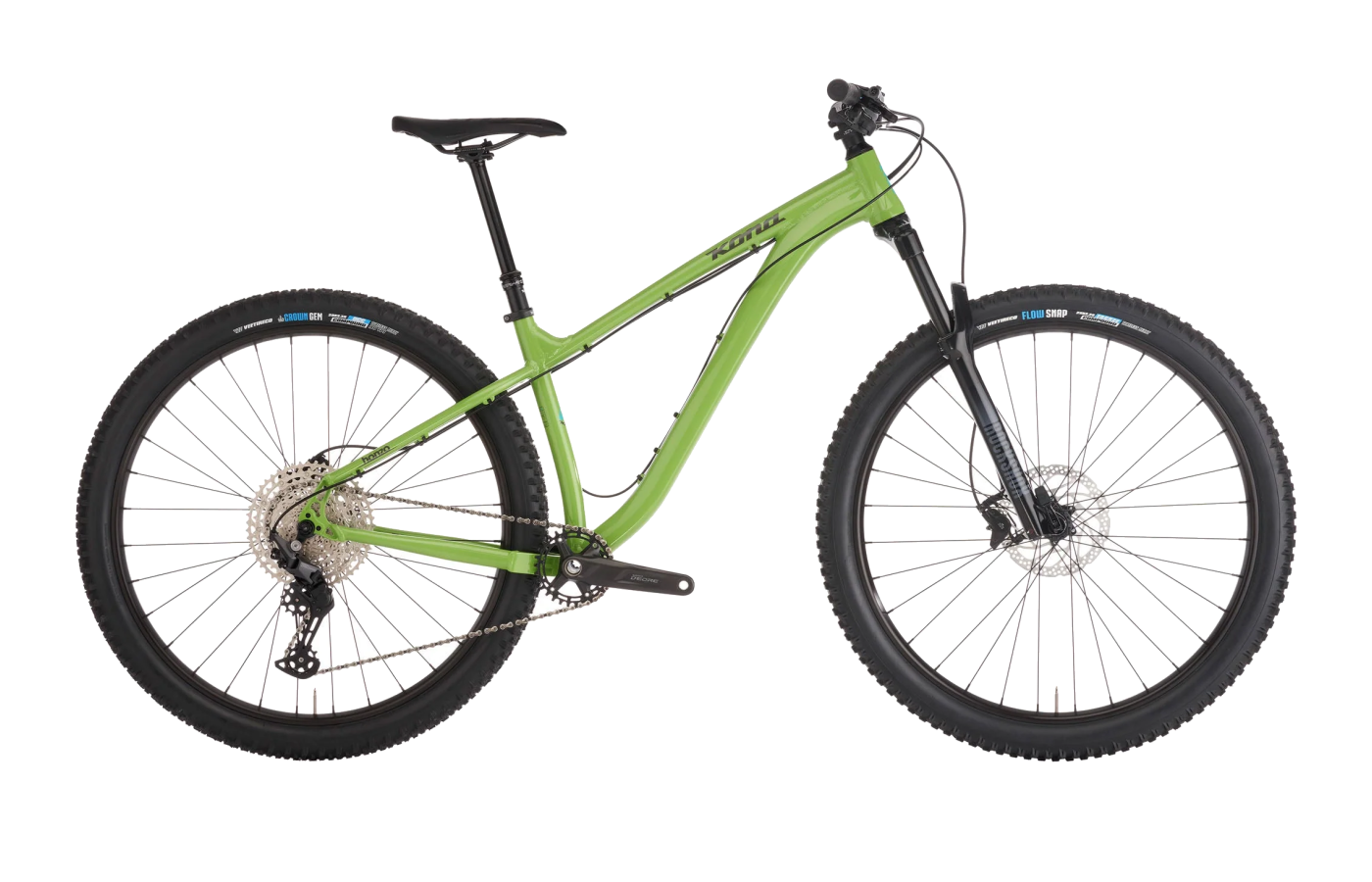
Two Kona hardtails, two very different missions.
The Cinder Cone is an $899 cross-country starter on 27.5-inch wheels. The Honzo is a slack, 29er trail hardtail built to get rowdy.
Cinder Cone
- Lowest price of entry at $899 — among the cheapest air-sprung, Shimano-Deore-equipped hardtails on the market.
- Sporty, playful geometry — 68° head angle and 435mm chainstays are beginner-friendly without feeling sluggish.
- 25-year frame warranty — rare at this price, and a real reason to buy-and-upgrade over years.
- 100mm fork and 27.5-inch wheels cap its ceiling on technical descents.
- Stock setup lacks a dropper post — a near-mandatory upgrade for trail riding.
Honzo
- Slack, trail-ready geometry — 66.5° head angle, 29-inch wheels, and 425mm chainstays give it a proper descending bike feel.
- Four builds from $1,299 to $2,399 — scales from aluminum Deore to a steel-framed, GX Eagle-equipped ESD 36SR.
- Tire clearance up to 61mm — real room for aggressive trail rubber front and rear.
- Aluminum frame is widely called 'stiff' and 'harsh' on chunky terrain, especially for lighter riders.
- Base fork (RockShox Recon RL) is a budget unit — capable but flexy under aggressive riders.
Editor’s analysis
Same badge, same aluminum welds, same Shimano Deore — but these two hardtails aren't actually competing with each other.
The Cinder Cone is Kona's entry point. $899 buys you a 6061 aluminum frame, 100mm RockShox Judy Silver fork, 27.5-inch wheels, and a Shimano Deore 1x11 drivetrain with an 11-51T cassette. Reviewers call it a 'race hardtail' with 'superb geometry in this price range' — the 68-degree head angle, 75-degree seat tube, and 435mm chainstays make for a sporty, playful bike that climbs efficiently and descends with more confidence than the price suggests.
The Honzo is a different animal. At its base trim, a RockShox Recon air fork gains you 30mm more travel (130mm vs. 100mm), the head angle slackens 1.5 degrees to 66.5°, wheels grow to 29 inches, and chainstays shrink to 425mm. The reach at size M jumps from 440mm to 455mm, and the stack climbs 47mm — a stretchier, slacker, more descent-oriented cockpit. Up the lineup, the Honzo DL adds a 140mm Revelation; the steel ESD models push to 150mm Marzocchi Z1 forks and aggressive Maxxis Assegai / Minion DHR II rubber.
The philosophies diverge where the trails do. The Cinder Cone assumes you'll spend most of your time on XC loops, fire roads, mellow singletrack, with occasional descents mixed in. The Honzo assumes you want to point downhill at speed, manual over features, and be okay with a harsh ride on rough stuff in exchange for an aggressive hardtail feel. Reviewers describe the aluminum Honzo as 'stiff,' 'bouncy,' and 'harsh' on chunky terrain — a known tradeoff, not a defect.
Price says the rest: $899 for one Cinder Cone build vs. $1,299–$2,399 across four Honzo builds. If you're shopping at $899, the Honzo isn't on the table. If you've budgeted $1,300 or more, the Cinder Cone is probably overmatched by the trails you plan to ride.
Where the builds differ.
Comparing our editor's-pick builds side-by-side. Winners highlighted row-by-row — lower price and weight, and the better-spec component, each mark a point.
Build variants & pricing
The Cinder Cone ships in a single $899 trim. The Honzo spans four builds from $1,299 base aluminum to the $2,399 steel ESD 36SR.
Prices are current US MSRP. The Cinder Cone's single-build lineup is its most honest feature: it is what it is, at one price. The Honzo's four-trim ladder lets you pick your commitment level — entry aluminum, upgraded aluminum DL, or steel ESD.
How they fit, how they steer.
Both at size M. The Honzo sits 47mm taller (646 vs 599), reaches 15mm longer (455 vs 440), runs a 1.5° slacker head angle (66.5° vs 68°), and shortens the chainstays by 10mm (425 vs 435). Same 75° seat tube on both — Kona's climbing position carries over.
Which size should I buy?
Size recommendations based on stack, reach, and effective top tube. Both run four sizes (S–XL); the fit algorithm picks M for a 5'8" rider on each.
→These are starting points. Flexibility, riding style, and preferred position all shift the answer — if you’re between sizes, a professional fit beats a chart.
What the magazines said.
Published reviews from trusted cycling outlets. Click through for the full write-up.
Which one should you buy?
If you're just getting into mountain biking or need a reliable XC hardtail under $1,000, get the Cinder Cone. If you want a proper trail hardtail and can spend $1,300+, get the Honzo.
Cinder Cone
If you're starting out or want a fun, cheap hardtail for local XC loops and moderate singletrack, this is still one of the best-value bikes Kona sells. It climbs well, descends better than it should, and the 25-year frame warranty means you can upgrade it piece-by-piece for years.
Honzo
If your trails are proper trails — loose, rocky, fast, occasionally gnarly — the Honzo's slack head angle, 29-inch wheels, and up-to-150mm fork options put it in a different league. Pick the Base for budget trail duty, the DL for a front-end upgrade, or step up to the steel ESD if you want real compliance.
Questions buyers actually ask.
Short answers to the things we get emailed about most often.
01Which one should a total beginner buy?
The Cinder Cone, almost always. At $899 it's significantly cheaper than any Honzo build, the 100mm fork and 27.5-inch wheels are easier to handle for new riders, and the 68-degree head angle feels stable without being overly slack.
The Honzo's aggressive geometry, 29-inch wheels, and harsher frame are more bike than most beginners need — and the entry price of $1,299 is 45% more than the Cinder Cone.
02What's the travel difference?
Cinder Cone: 100mm front, 0mm rear (hardtail). RockShox Judy Silver TK Solo Air, air-sprung with lockout.
Honzo: depends on trim. The Base runs a 130mm RockShox Recon RL. The DL steps up to a 140mm RockShox Revelation. The ESD and ESD 36SR both run 150mm Marzocchi Bomber Z1 forks. All hardtails.
For most trail riding, the Honzo's extra 30–50mm of travel and burlier chassis is what justifies the price step.
03Why is one 27.5" and the other 29"?
Different design briefs. The Cinder Cone uses 27.5-inch wheels across all four sizes — quicker to accelerate, more agile in tight terrain, and a lower standover that's friendly for newer or shorter riders.
The Honzo is 29-inch only. Bigger wheels roll over obstacles more smoothly, maintain speed better on rough ground, and pair well with the Honzo's slacker, descent-oriented geometry.
04Is the aluminum Honzo really that harsh?
Reviewers consistently say yes, especially for lighter riders on chunky terrain. The NSMB and MTB Party reviewers describe the aluminum Honzo frame as 'stiff,' 'bouncy,' and potentially fatiguing on three-to-four-hour rides in rocky terrain. Heavier riders (200+ lbs) often prefer the stiffness; lighter riders (under 180 lbs) tend to feel beaten up.
If that's a concern and your budget stretches, the steel-framed Honzo ESD is the compliance-focused answer within the same family.
05Can I race the Cinder Cone?
Yes — it's literally classified as a 'race hardtail' by European test outlets like Bike-test, and there's a long-term review on YouTube of a young rider racing one successfully. The 75-degree seat tube angle, efficient climbing position, and 11-51T cassette give it a proper XC gearing spread.
It's not a World Cup XC bike — the 14.4kg weight and budget components show up under hard efforts — but for beginner and intermediate XC racing, it works.
06How much tire clearance do they have?
Honzo: 61mm confirmed clearance — room for aggressive 2.5"–2.6" trail tires front and rear. It ships with Maxxis Minion DHF / Dissector (or Assegai / Minion DHR II on the ESDs).
Cinder Cone: no published clearance number, but it ships with Maxxis Forekaster 27.5x2.35" tires and reviewers don't flag clearance issues at that width. Treat 2.35"–2.4" as the practical ceiling.
07Do either come with a dropper post?
Not on the Cinder Cone Standard — reviewers universally flag the dropper as the first upgrade to make (figure $150–$300 for a decent one).
The Honzo Base also ships without a dropper. The Honzo DL, ESD, and ESD 36SR all include dropper posts stock. If a factory-fitted dropper matters to your budget, step up to the Honzo DL at minimum.
08Which is better for upgrading over time?
Both are designed as upgradable platforms — this is a long-standing Kona virtue. The Cinder Cone's 25-year frame warranty and simple 1x11 Deore drivetrain make it especially well-suited to a slow, piece-by-piece upgrade path (dropper first, then brakes, then tires/wheels tubeless).
The Honzo's bigger advantage is that its geometry can accept much burlier parts — longer-travel forks, beefier wheels, aggressive tires — without being outpaced by them. You can turn a Base Honzo into something closer to a DL or ESD spec without swapping the frame.
Similar bikes
If your priorities don’t map cleanly onto either of these, one of these adjacent bikes probably fits better.
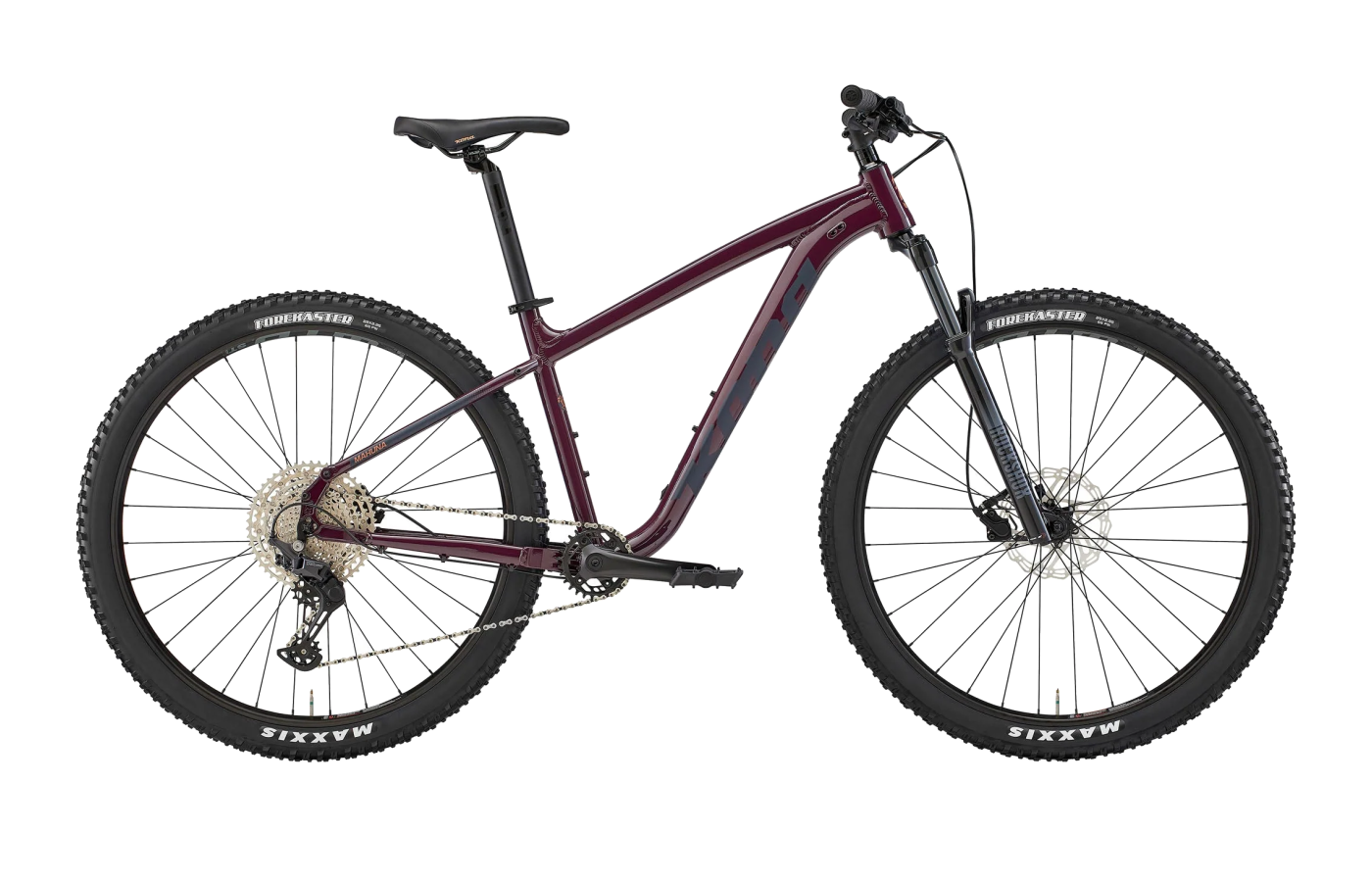
Mahuna
Kona's natural step up from the Cinder Cone — larger 29-inch wheels and slightly more trail-capable geometry without the Honzo's aggressive slackness or its price jump.
Compare →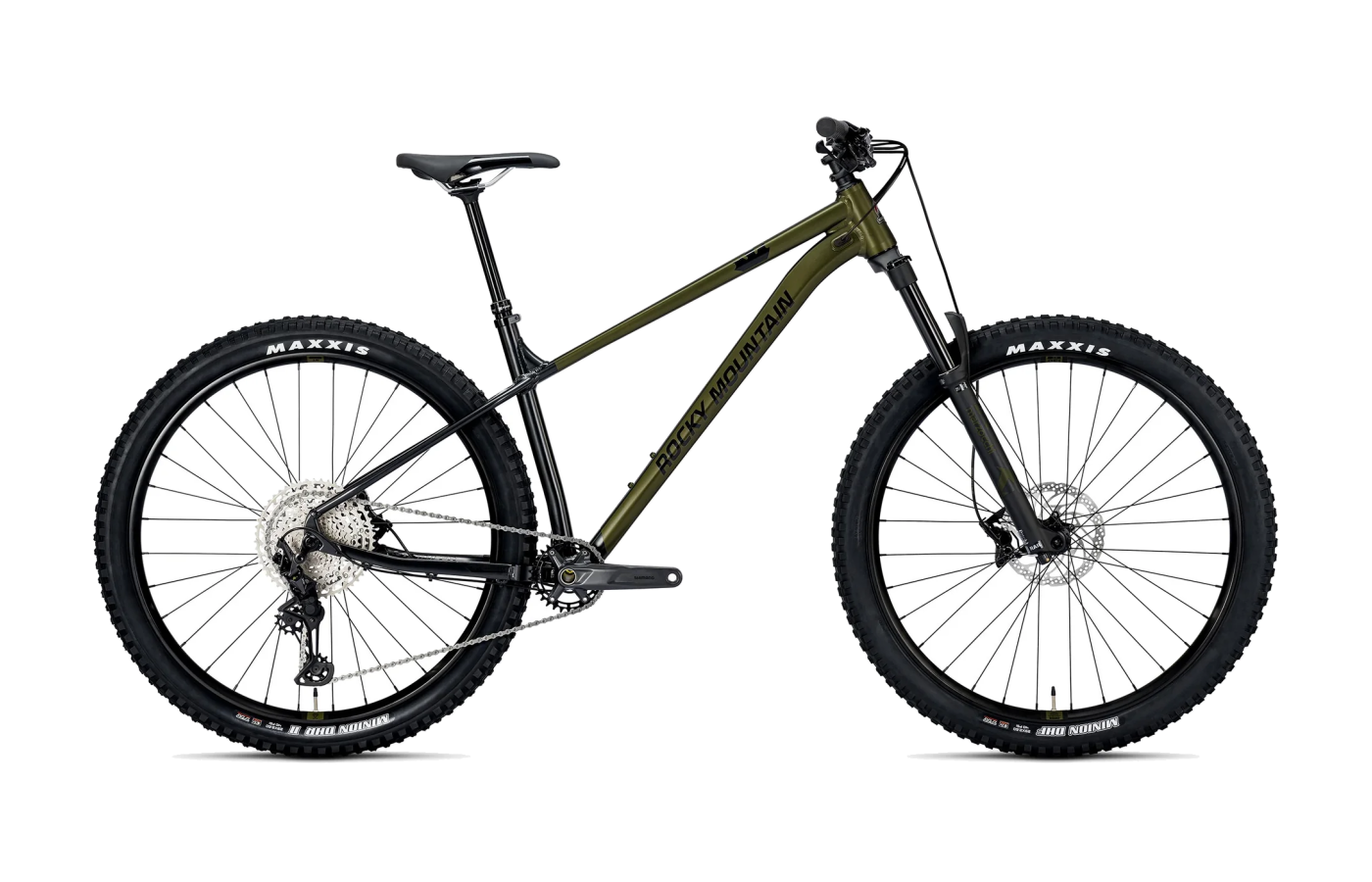
Growler
A direct Honzo rival in the aggressive aluminum trail-hardtail class. Known for excellent geometry and strong value, it's the bike most often cross-shopped with the Honzo.
Compare →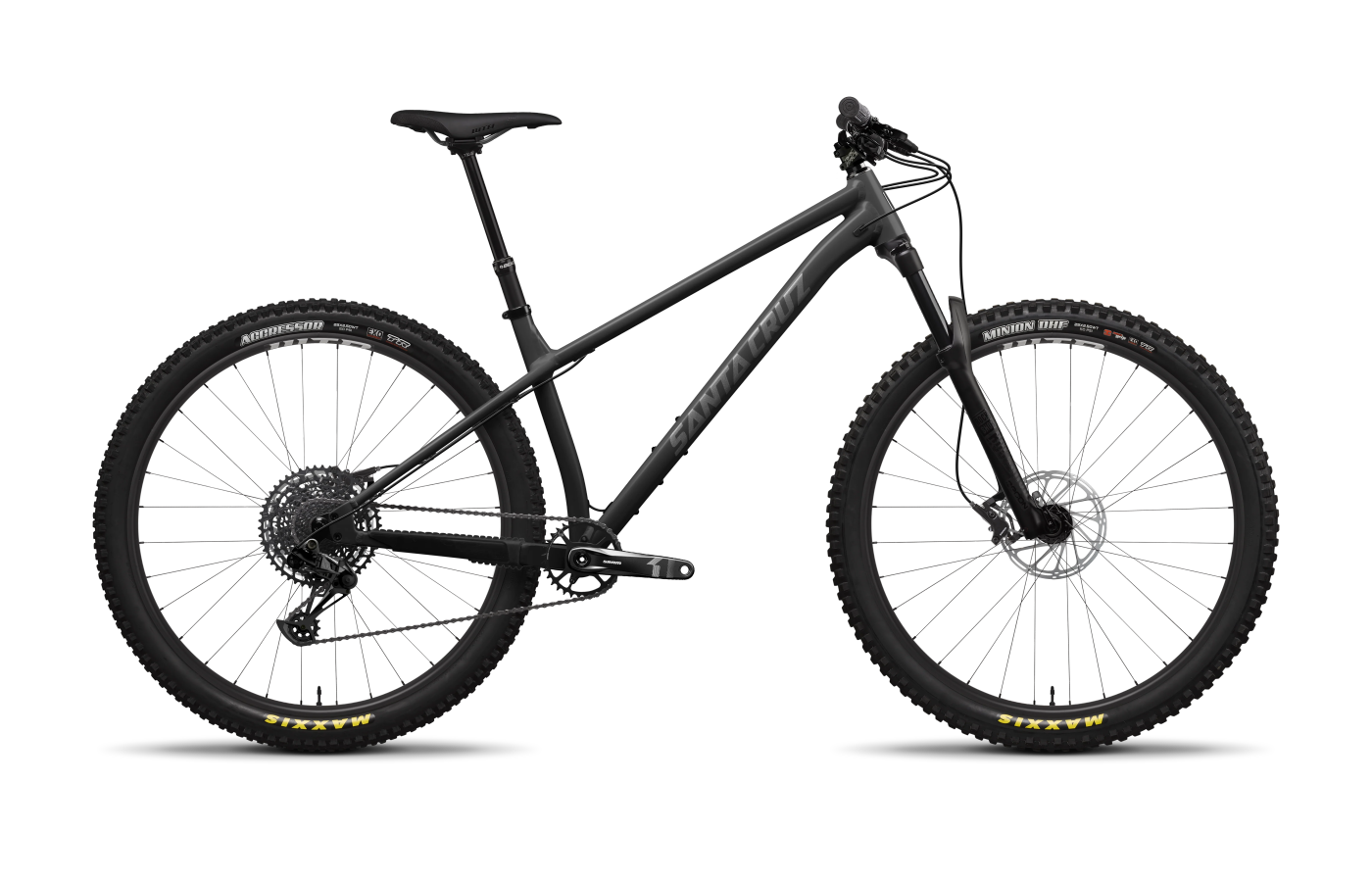
Chameleon
A premium, versatile trail hardtail available in aluminum or carbon — more refined than the Honzo, and appealing to riders who want the same playful intent in a lighter or stiffer package.
Compare →