Cinder Cone
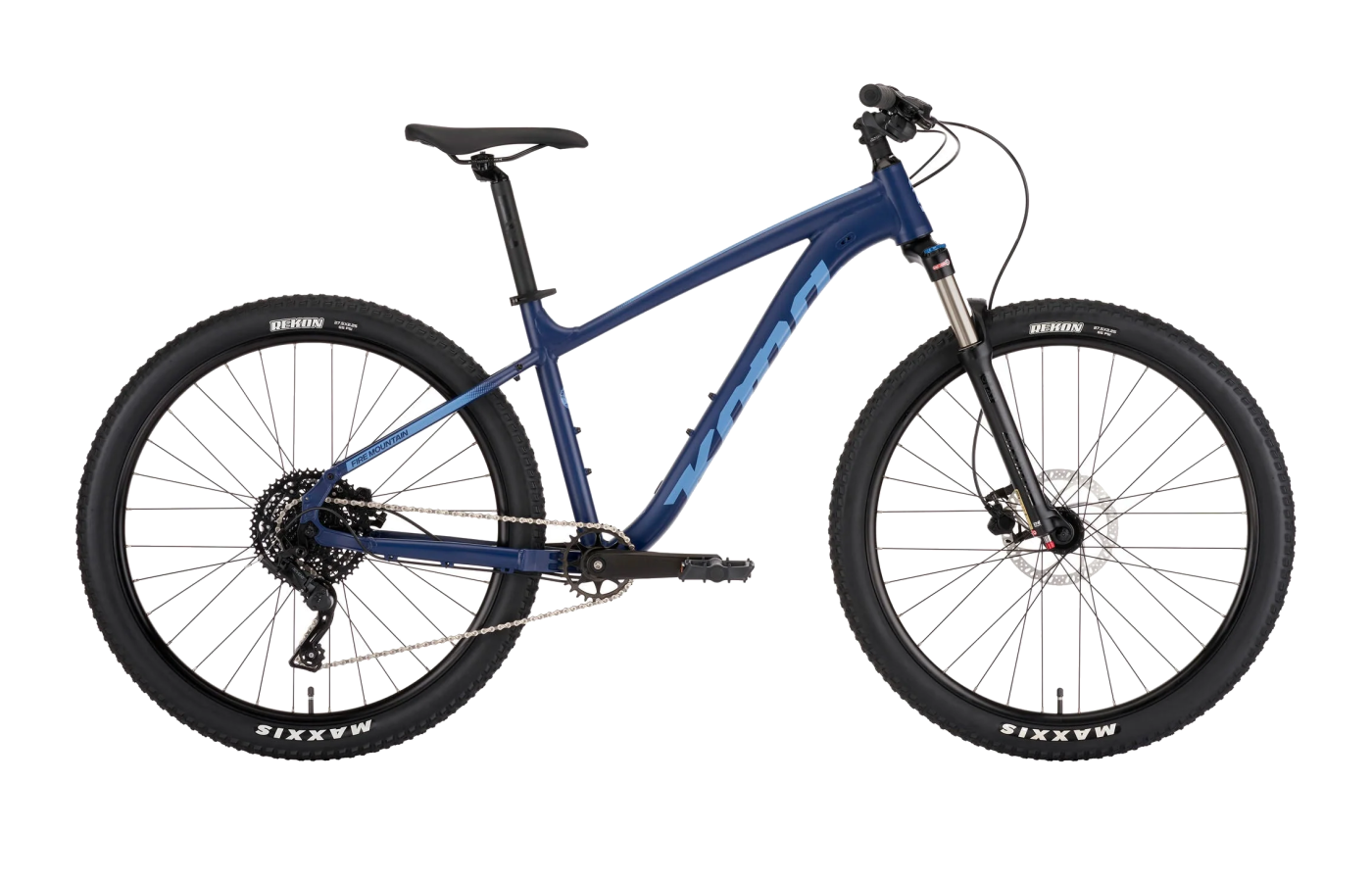
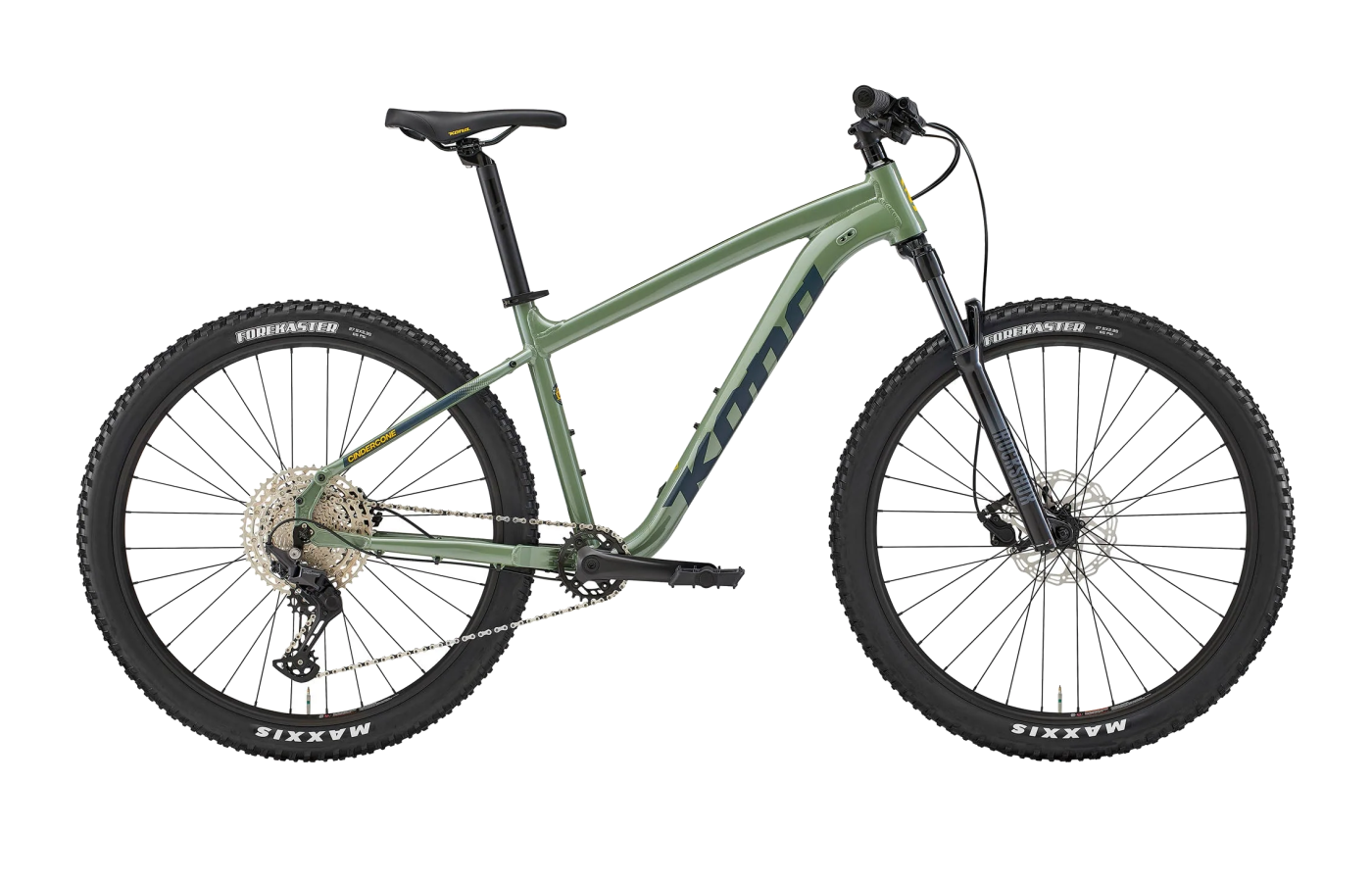
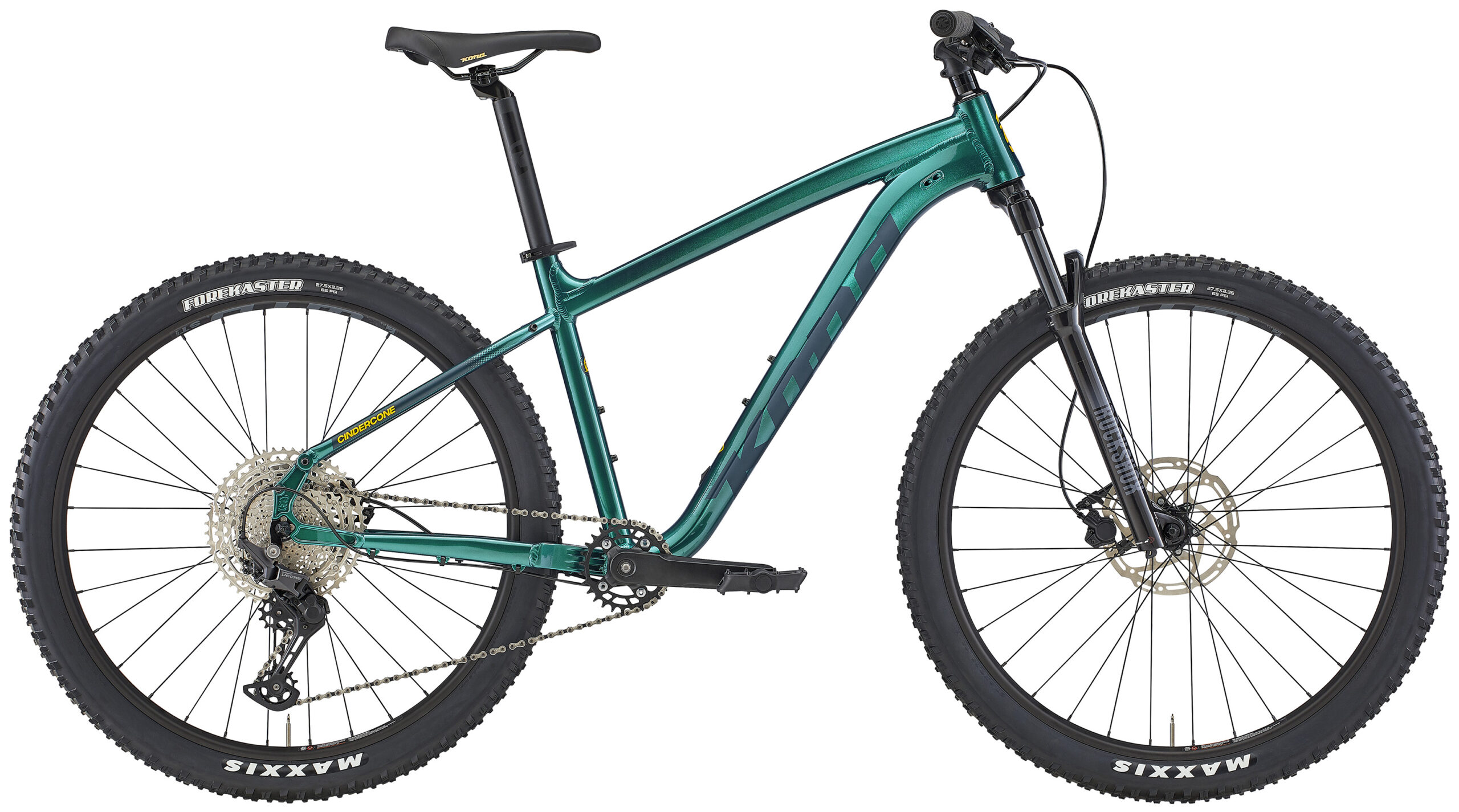
The Kona Cinder Cone is an aluminum hardtail positioned for riders entering the sport or looking for a reliable, straightforward trail platform. Updated for the 2020 model year and carrying forward since, this generation moves away from traditional cross-country shapes toward a more capable trail geometry. Built around 27.5-inch wheels and a 100mm suspension fork, it balances pedaling efficiency with enough stability to handle varied singletrack. Kona designed the frame to accommodate high-volume rubber, offering clearance for up to 2.8-inch plus-sized tires, though it ships with standard trail treads. It relies on traditional 135mm quick-release rear hub spacing rather than a modern Boost thru-axle, which keeps the price accessible but limits future wheel upgrade options. Ultimately, the Cinder Cone serves as a versatile, value-oriented entry point that works well for general trail riding, skill progression, and light bikepacking.
Geometry & fit.
4 sizes published.
The current Cinder Cone frame utilizes a modern trail hardtail geometry that significantly updates its handling compared to previous iterations. A 68-degree head tube angle provides a stable steering feel that resists twitchiness on descents without feeling sluggish at low speeds. This is paired with a steep 75-degree seat tube angle, which shifts the rider’s weight forward to keep the front wheel grounded during steep climbs and creates a highly efficient pedaling posture.
Reach numbers are generous across the size run, measuring 440mm on a size medium and stretching to 500mm on the extra-large. This longer front center gives the rider plenty of room to move around the cockpit and maintain balance over rough terrain. Out back, the chainstays are kept relatively short at 435mm across all sizes. Combined with the 27.5-inch wheels, this compact rear end makes the bike eager to change direction and easy to maneuver through tight switchbacks. The stock cockpit features a 760mm riser bar and a short stem, prioritizing steering leverage and control.
Where the handlebar sits relative to the bottom bracket — the single most important fit pair.
01Fit geometry6 values
03Handling geometry8 values
Which size should I buy?
Slide your height to see the recommended size. GearWise's fit algorithm works from the published stack, reach, and ETT — the brand's own recommendation may differ.
→Calculated from GearWise's own stack / reach / ETT algorithm — the brand's size chart may recommend a different size, and a proper bike fit beats any calculator.
The lineup.
1 build, ranging $899.
Kona offers the Cinder Cone in a single, value-focused build designed to deliver reliable trail performance at an accessible price point. The foundation of the spec is a 100mm RockShox Judy Silver TK Solo Air fork. Unlike the heavy coil forks often found in this category, the air spring allows riders to easily adjust the suspension pressure to match their body weight, and it includes a lockout for efficient climbing on smooth surfaces.
The drivetrain relies on a Shimano Deore 11-speed rear derailleur and shifter, paired with an 11-51T cassette and a 28-tooth front chainring. This setup provides a massive gear range capable of winching up steep, technical climbs. Braking is handled by entry-level hydraulic discs—specced as Alhonga HT472 on current sheets, though some riders report receiving Shimano or Tektro units depending on supply. The bike rolls on WTB ST i27 TCS 2.0 rims wrapped in aggressive Maxxis Forekaster 27.5x2.35-inch tires. While the rims are taped for tubeless use, the bike ships with tubes installed. Notably, the frame lacks a dropper post out of the box, though it includes internal routing for riders who want to add one later.
From the press.
4 reviews from the cycling press.
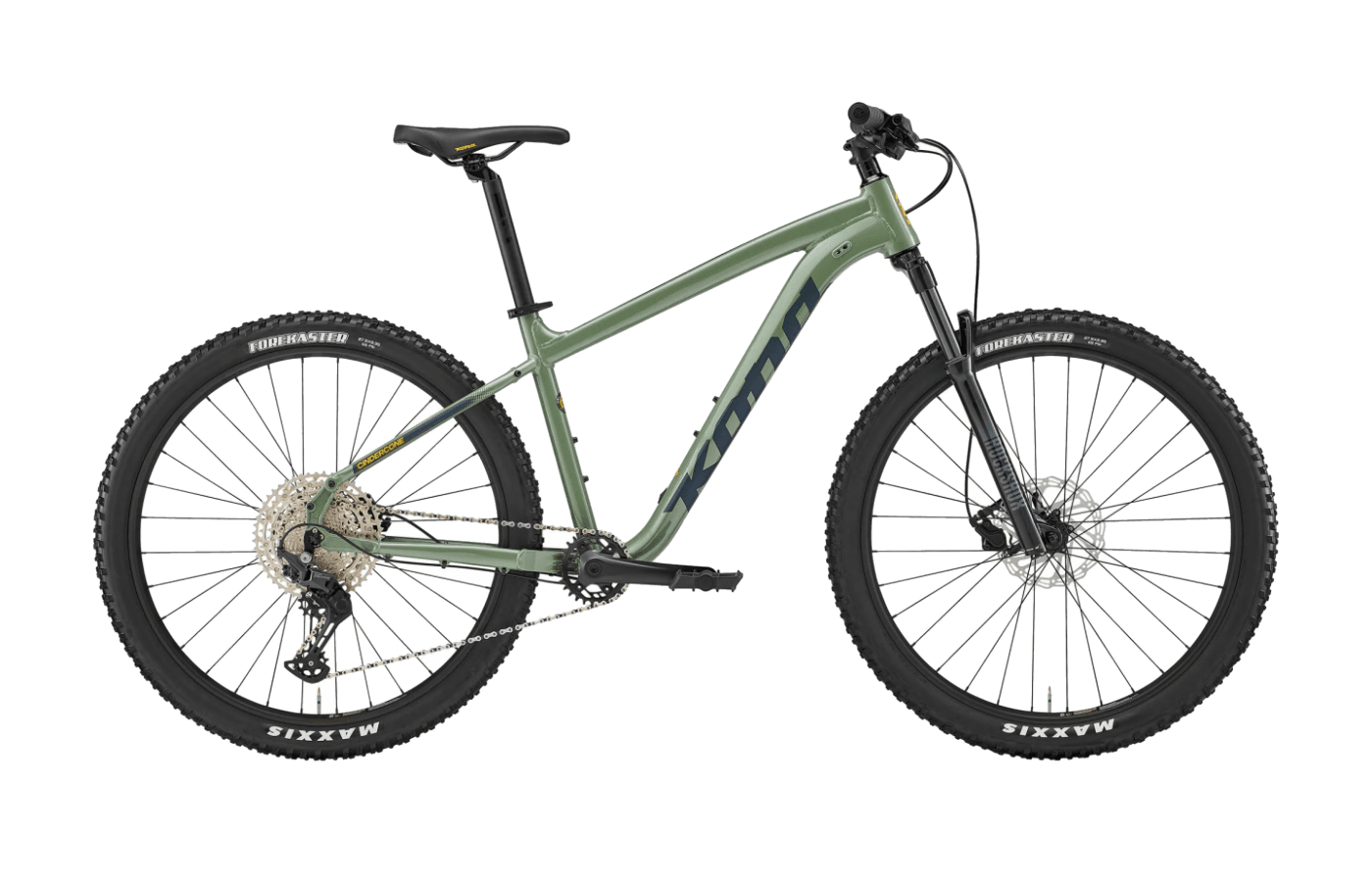
Reviewers consistently praise the Cinder Cone for its engaging ride quality, noting that the geometry feels highly capable on the trail. The bike earns high marks for its descending composure, with testers finding that the "harmonious geometry and the grippy tires cause you to smile from top to bottom in the descent" (Bike-test). Despite its budget-friendly component package, the frame itself feels solid and remarkably quiet over rough ground. One long-term tester highlighted the lack of distracting noise, stating there is "no internal frame cable rattle at all" (YouTube), which elevates the overall ride experience.
On climbs and flat sections, the bike benefits from a steep seat tube angle that puts the rider in a "sporty seating position" (Bike-test) for efficient power transfer. However, testers note that the bike carries some extra weight, which can be felt on sustained ascents. The 100mm air fork is widely viewed as adequate for light to moderate trails, though aggressive riders may find its limits quickly. One reviewer observed a lighter rider "using about 95% of his travel" (YouTube) on typical trail features, suggesting that heavier adults pushing hard on technical descents might eventually want to increase the fork's travel. Overall, the consensus points to a durable, highly enjoyable hardtail that encourages skill progression.
Compared to.
Most-viewed comparisons.