V4Rs
vs795 Blade RS
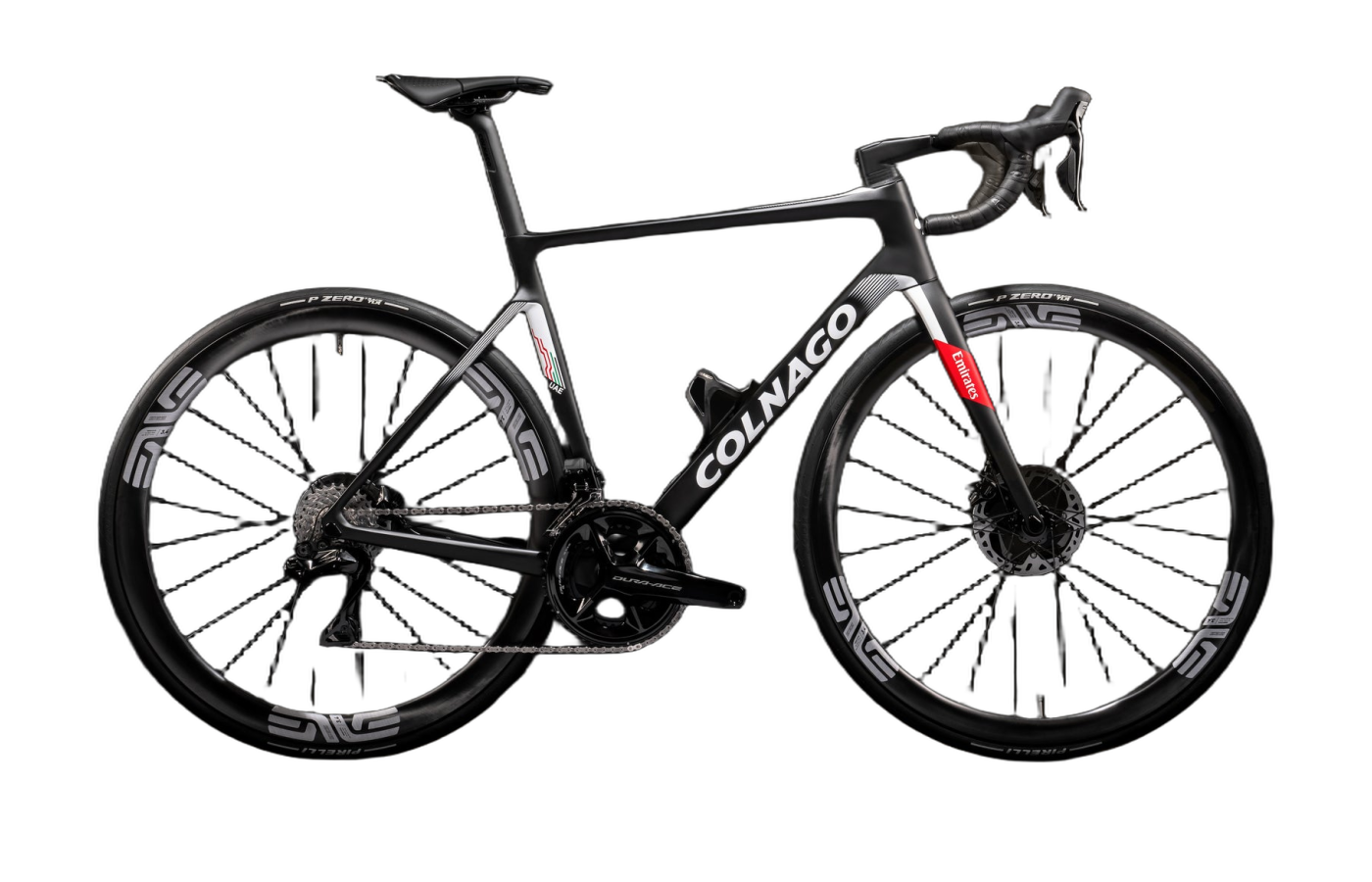
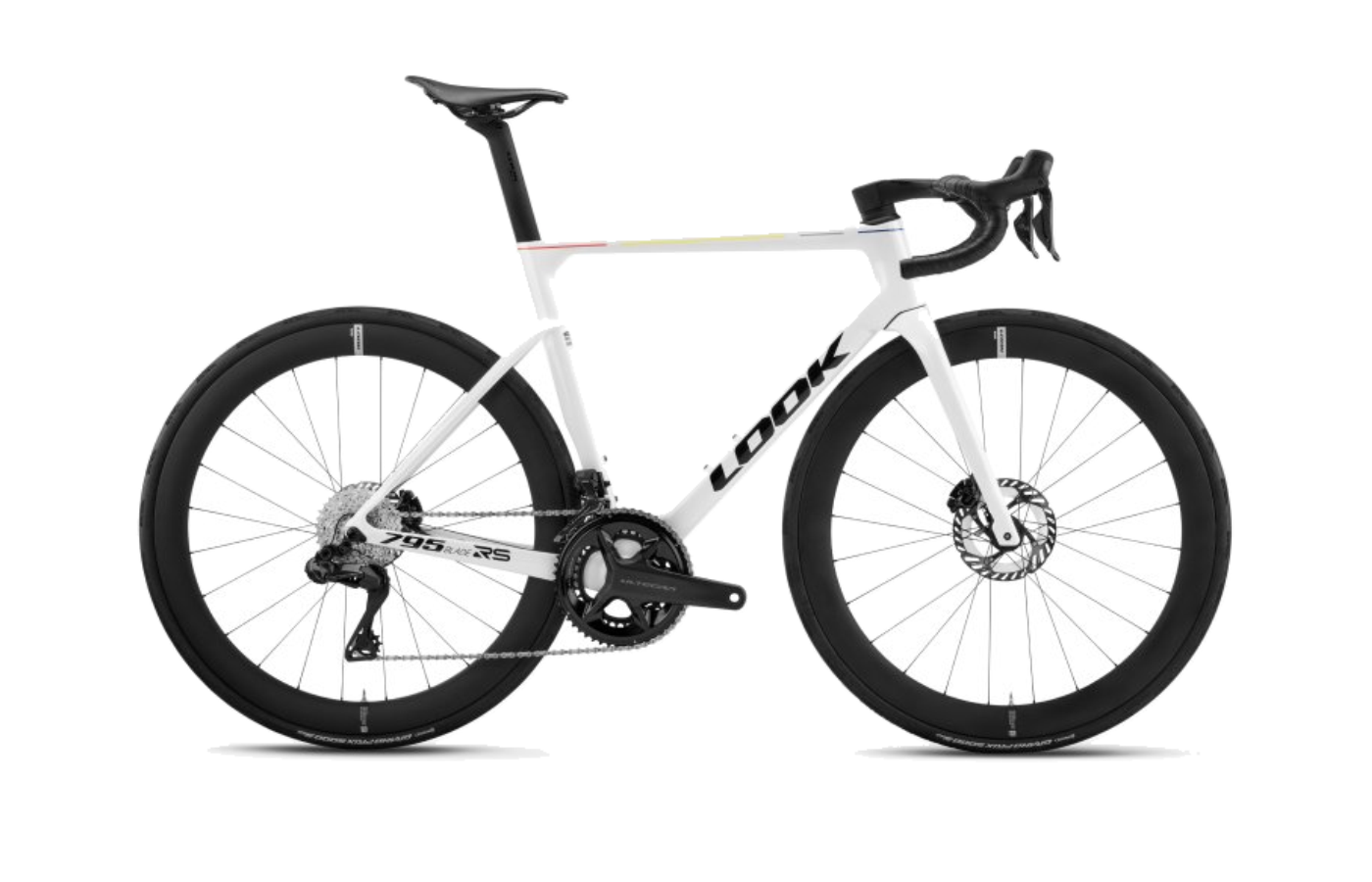
Two race bikes, two definitions of fast.
The Colnago V4Rs is a stiff Tour-winning all-rounder that comes alive on descents. The Look 795 Blade RS is an aero bike that climbs — uncompromisingly stiff and built for smooth tarmac.
V4Rs
- Descending composure — a slacker 71.5-degree head angle and ~63 mm trail make it 'unerringly poised' at speed (BikeRadar).
- Stiffness without harshness — Colnago tuned the seatstays and seatpost to take the edge off road buzz despite a sprint-ready frame.
- Lower entry price — complete builds start at $7,000 with Force AXS, $8,500 with Ultegra Di2.
- Ride is 'underwhelming' at low speeds per Cycling News — needs to be ridden hard to come alive.
- Long, low geometry is pro-spec; reach figures may not suit less-flexible riders without a stem swap.
795 Blade RS
- Whip-crack stiffness — Cycling Weekly measured a 7% bottom-bracket stiffness gain over the previous 795; sprints feel 'instantaneous.'
- Two-piece modular cockpit — bar and stem separate, so length swaps don't require re-routing hoses.
- Climbs better than its weight suggests — a steep 74.5-degree seat tube and direct power transfer let it 'hide its weight on the climbs' (Cycling Weekly).
- Harsh on rough roads — multiple reviewers flag fatigue on broken tarmac.
- No power meter on Shimano builds, even at $10,700+, while many rivals include one.
Editor’s analysis
Both bikes are Tour-tested race weapons. They get there with completely different priorities — stability and balance on one side, raw stiffness on the other.
The Colnago V4Rs and Look 795 Blade RS sit in the same WorldTour bracket and compete for the same buyer: the rider who wants a no-compromises race bike. Pogačar wins on the V4Rs; Cofidis races the 795 Blade RS. Both retail well into five figures. Both run integrated cockpits and T47 bottom brackets. From there, the philosophies diverge.
Colnago's pitch is balance. The V4Rs frame is stiff — Colnago claims 4–5% stiffer than the V3Rs in sprint and seated efforts — but the brand tuned that stiffness around real-world rider feedback. Reviewers consistently call out the bike's 'surprisingly comfortable' ride and its descending composure: a slacker head angle (71.5 degrees on a 485) and roughly 63 mm of trail give the V4Rs the kind of high-speed stability that lets you actually use its power. It's a stiff bike that doesn't punish you on a four-hour day.
The Look 795 Blade RS picks a lane and does not deviate. Reviewers describe the bottom bracket as 'rock-solid' and the ride as 'whip-crack sharp,' but on broken pavement that same rigidity becomes a liability — BikeRadar called the ride 'unforgivingly rigid.' Geometry is steep across the board: a 73-degree head angle on the M, 59.3 mm of trail, agile and light. It's an aero bike Cycling News calls 'a climber's aero bike,' but it is also a bike that demands smooth roads and a rider willing to trade compliance for instant power transfer.
Put another way: the Colnago V4Rs is the bike you take to the Alps because the descents are as long as the climbs. The Look 795 Blade RS is the bike you take to a closed-circuit crit on freshly paved tarmac, where every watt counts and there are no potholes to absorb.
Where the builds differ.
Comparing our editor's-pick builds side-by-side. Winners highlighted row-by-row — lower price and weight, and the better-spec component, each mark a point.
Build variants & pricing
Both run from one-down Ultegra Di2 up through Dura-Ace, Red AXS, and Campagnolo Super Record flagships. The Look starts $2,200 above the Colnago at every comparable tier.
Prices are current US MSRP. The Colnago entry build (Force AXS at $7,000) lacks fully-published spec sheets — buyers should confirm the build sheet with their dealer. The Look's Shimano builds notably ship without a power meter.
How they fit, how they steer.
Comparing the V4Rs in 485 against the 795 Blade RS in M: the Look sits 10 mm taller (stack 549 vs 539) and 8 mm longer (reach 391 vs 383). The Colnago's 71.5-degree head angle is 1.5 degrees slacker — that's where its descending stability comes from.
Which size should I buy?
Size picks come from stack, reach, and effective top tube. The Look's M and the Colnago's 485 are the closest match for this rider profile, but the Colnago range extends further at the small end (down to 420).
→These are starting points. Flexibility, riding style, and preferred position all shift the answer — if you’re between sizes, a professional fit beats a chart.
What the magazines said.
Published reviews from trusted cycling outlets. Click through for the full write-up.
Which one should you buy?
If you live for long descents and varied roads, get the V4Rs. If your riding is flat, fast, and on smooth tarmac, get the 795 Blade RS.
V4Rs
If you want a Tour-winning frame that handles a four-hour ride on imperfect roads as confidently as it handles a sprint — and you want the option of a sub-$10k build — the V4Rs is the more versatile pick. Its descending composure is the closer's argument.
795 Blade RS
If most of your riding is on well-paved European-style roads and you want a bike that translates every watt into forward motion with zero flex, the 795 Blade RS is the sharper instrument. Just be honest about your road quality before you buy.
Questions buyers actually ask.
Short answers to the things we get emailed about most often.
01Which is the more comfortable bike?
The Colnago V4Rs, by a clear margin. Reviewers consistently describe the V4Rs as 'surprisingly comfortable' for a race bike, attributing it to seatstay and seatpost tuning that takes the edge off road buzz.
The Look 795 Blade RS, by contrast, is widely flagged as harsh on broken pavement — BikeRadar called the ride 'unforgivingly rigid' and noted increased rider fatigue on longer rides over rough surfaces. Both are stiff race bikes; the Colnago hides it better.
02Which descends better?
The V4Rs, and it's not particularly close. Colnago specced a slacker 71.5-degree head angle (on size 485) than is typical for a modern race bike, producing roughly 63 mm of trail with 28 mm tires.
Reviewers from BikeRadar to Just Ride Bikes single out descending as the V4Rs's standout feature, calling it 'unerringly poised.' The Look's 73-degree head angle and 59.3 mm trail prioritize sharper turn-in over high-speed stability — fine on a closed crit course, less reassuring on a long alpine descent.
03What's the maximum tire clearance?
Both frames are listed at 30 mm in the catalog data. Some Colnago marketing materials cite 32 mm; verify with your dealer if maximum clearance matters to you.
Neither bike is designed for gravel or chip-seal — both are pure-road race frames optimized for 28 mm tires on smooth pavement.
04Why does the Look cost so much more?
Look's entry price ($10,700 for Ultegra Di2) sits roughly $2,200 above the Colnago's equivalent build ($8,500). Part of it is brand and production scale; part of it is that Look bundles its proprietary Combo Aero cockpit and LOOK R50D wheels at every level.
Critically, the Shimano-equipped Look builds do not include a power meter — multiple reviewers flag this as a value miss given the price. The Colnago Ultegra build typically ships without one too, but at a noticeably lower starting cost.
05Which is better for climbing?
Roughly even — but for different reasons.
The Look has a steeper 74.5-degree seat tube angle that opens the hip angle and improves out-of-saddle leverage; reviewers say it 'screams for standing climbs at max heart rate' (Cycling News) despite the frame not being class-leading on weight.
The Colnago also has a 74.5-degree seat tube angle and sheds noticeable grams over the Look at most build levels, with reviewers calling it an 'excellent climber.' If you climb seated, the V4Rs has the edge; if you climb out of the saddle, the Look's stiffness is hard to beat.
06How serviceable are the integrated cockpits?
The V4Rs uses Colnago's CC.01 one-piece integrated cockpit. Changing bar width or stem length means buying a new unit, and bleeds require partial disassembly through the headset.
The Look 795 Blade RS runs a two-piece Combo Aero — separate bar and stem with internal routing through both. The two-piece design lets you swap stem length without re-routing hoses, which Cycling Weekly calls a meaningful practicality win and one of the bike's better design decisions.
07Are these compatible with mechanical drivetrains?
No. Both frames are designed for electronic groupsets only — fully internal routing through the cockpit and headset means there's no sensible way to run mechanical cables. If you want Shimano 105 mechanical or Campagnolo cable-shift, neither of these bikes is for you.
08Which has better resale value?
Both are limited-production European premium brands, so they hold value better than mass-market platforms. The Colnago brand cachet (and Pogačar association) tends to command stronger asking prices on the used market.
The Look is rarer in North America, which cuts both ways — fewer comparable listings on the used market makes pricing harder, but the scarcity supports prices for buyers who specifically want one.
Similar bikes
If your priorities don’t map cleanly onto either of these, one of these adjacent bikes probably fits better.
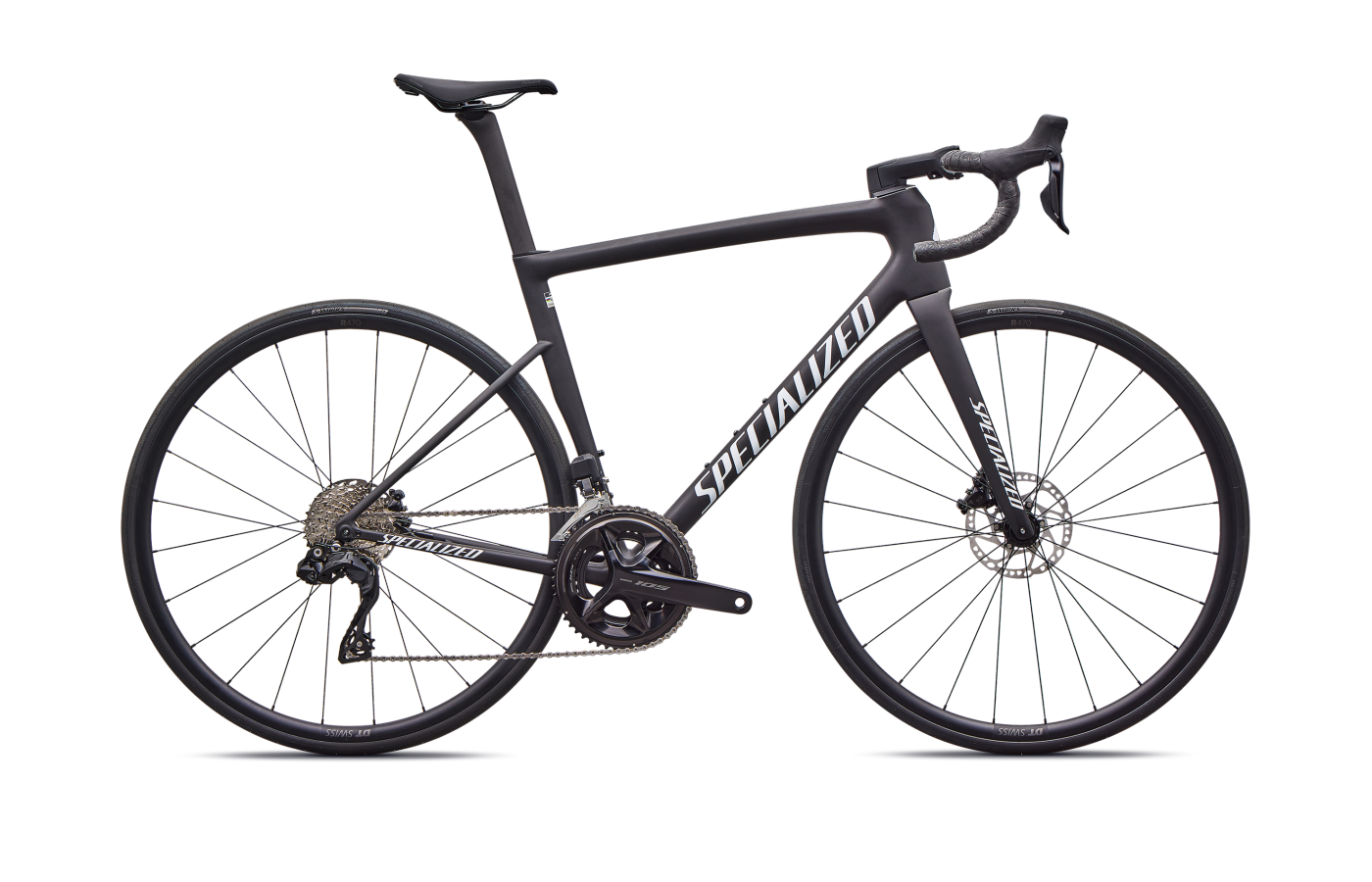
Tarmac
The standard-bearer all-rounder. Lighter and more refined on rough roads than the Look, with a more balanced weight-to-aero ratio than the V4Rs — and a deeper build range that extends below $5k.
Compare →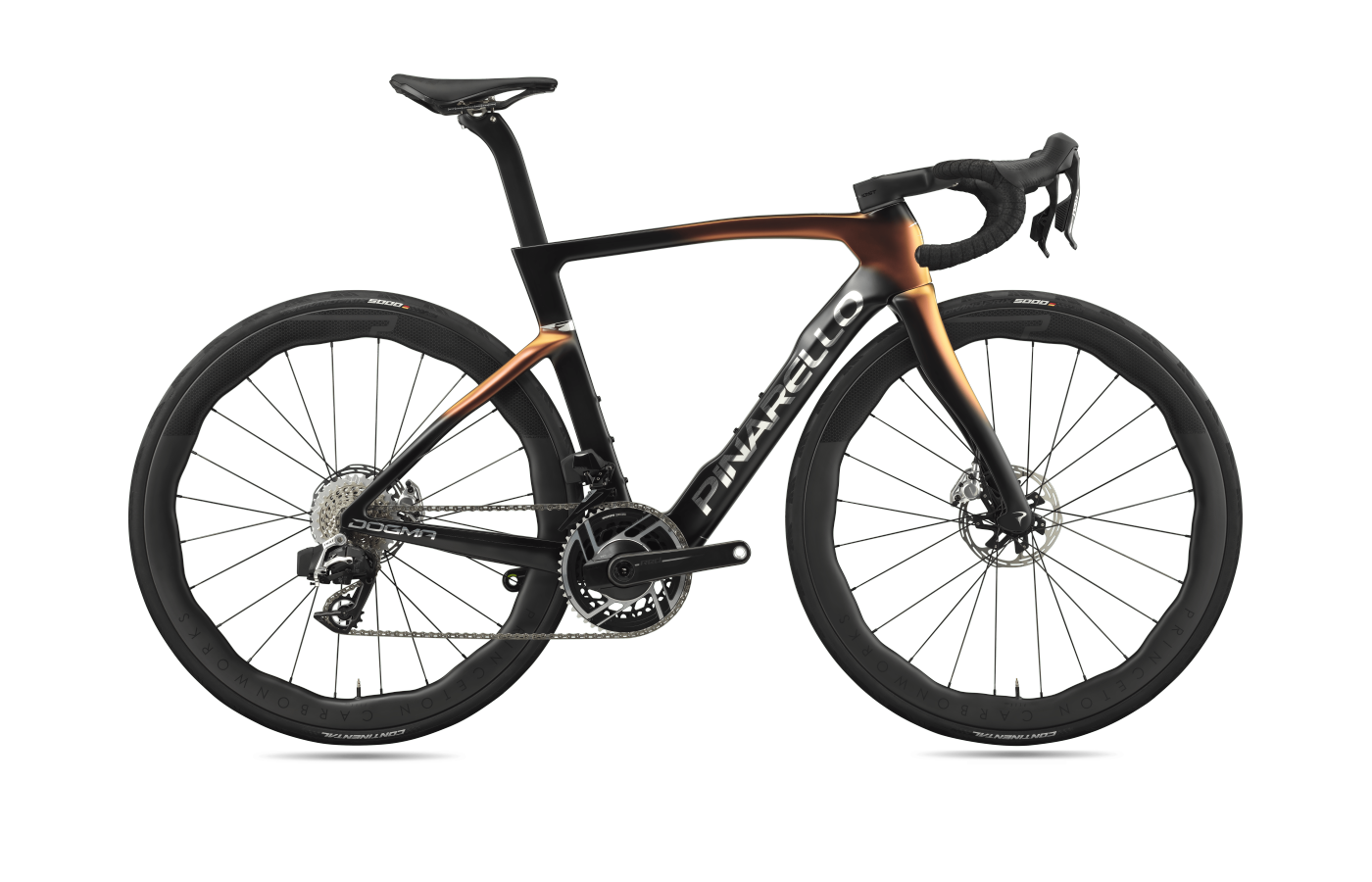
Dogma F
The Colnago's most direct rival in pedigree and price. Sculpted aero tube shapes and Ineos pedigree, with a similarly versatile race-bike character to the V4Rs.
Compare →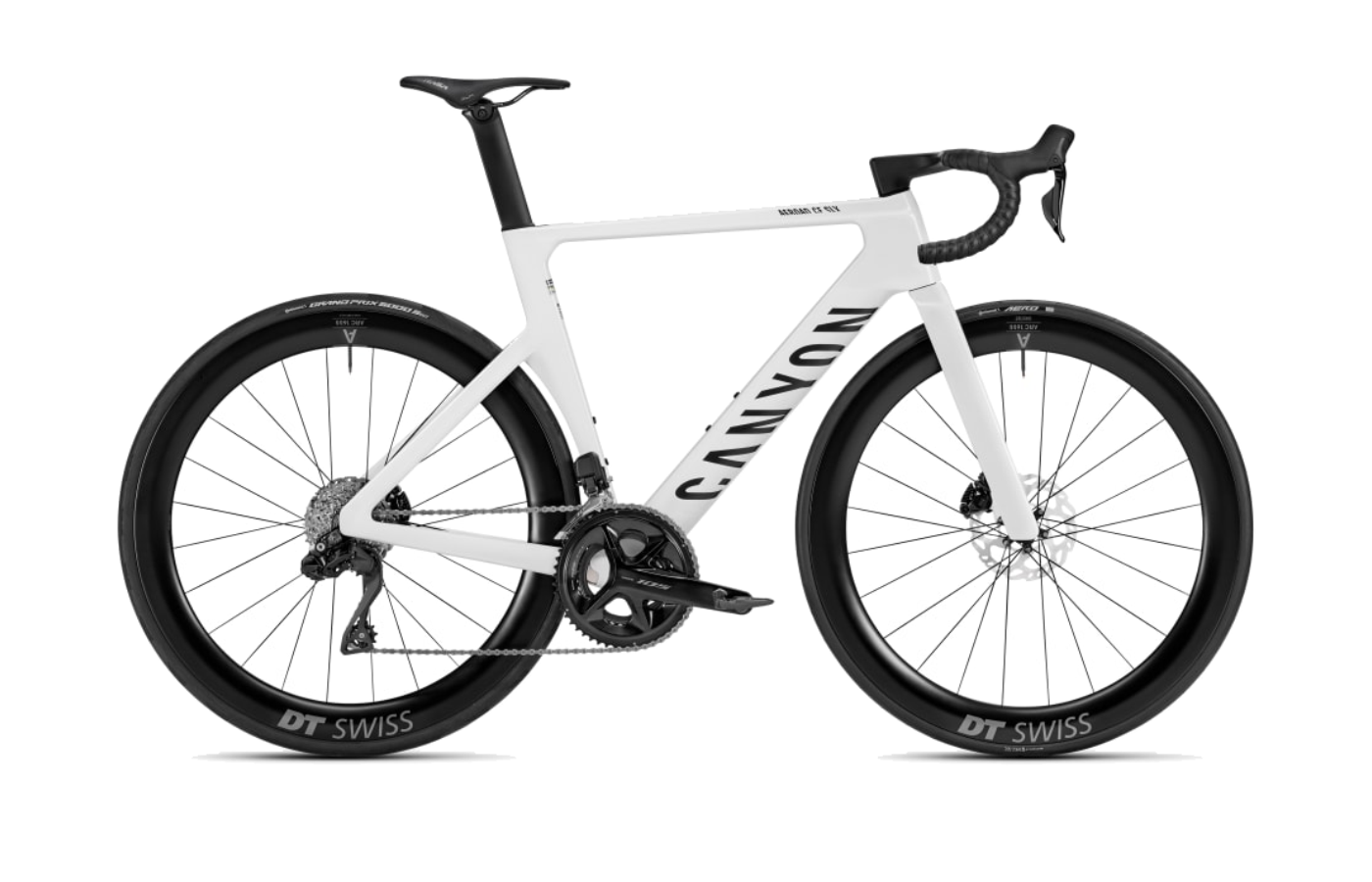
Aeroad
Same aero-flagship ambition as the Look at a fraction of the cost — power meter included on most builds, deep wheels stock, but no two-piece modular cockpit and no local dealer.
Compare →