C68 Allroad
vsDogma X
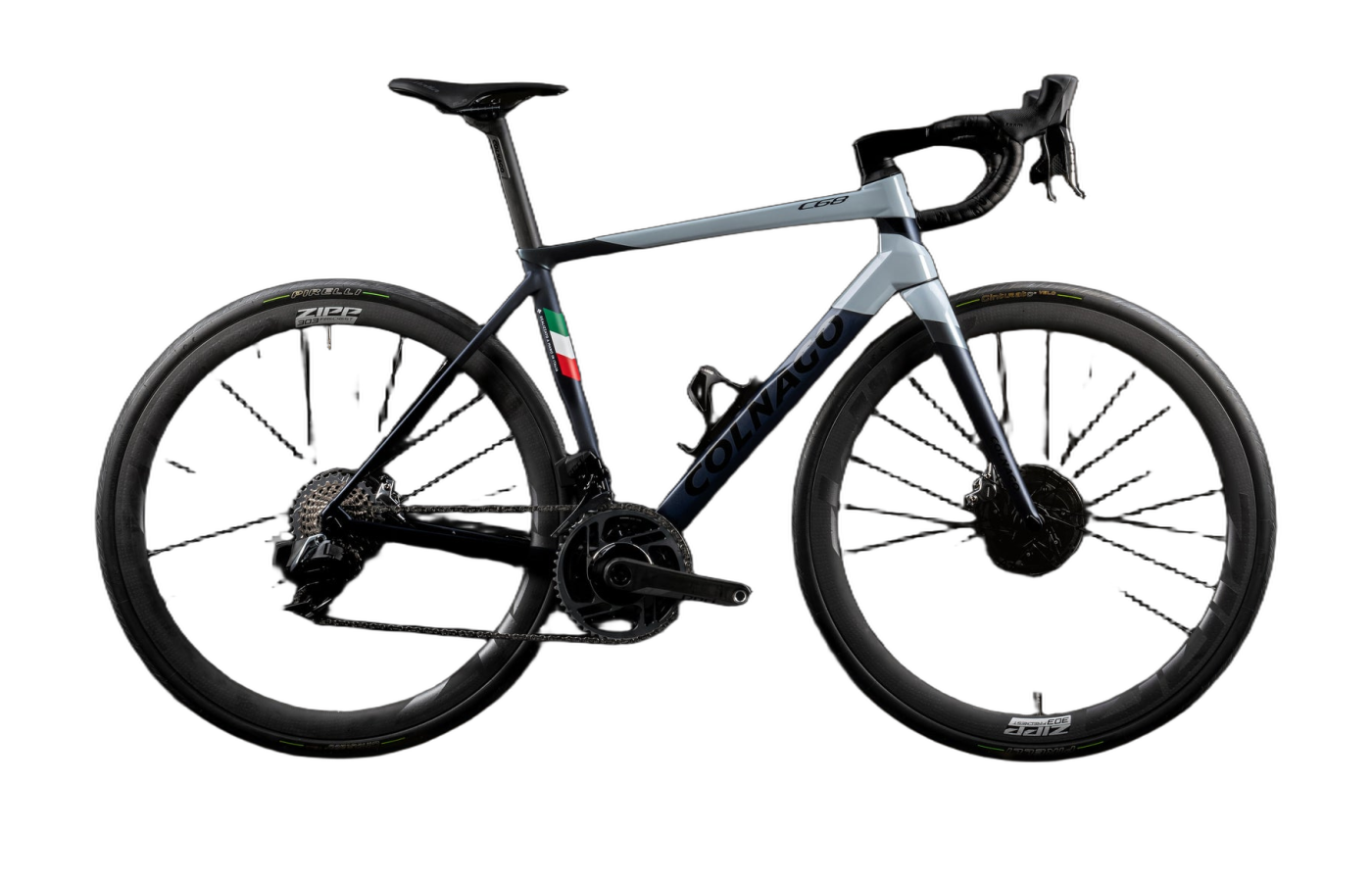
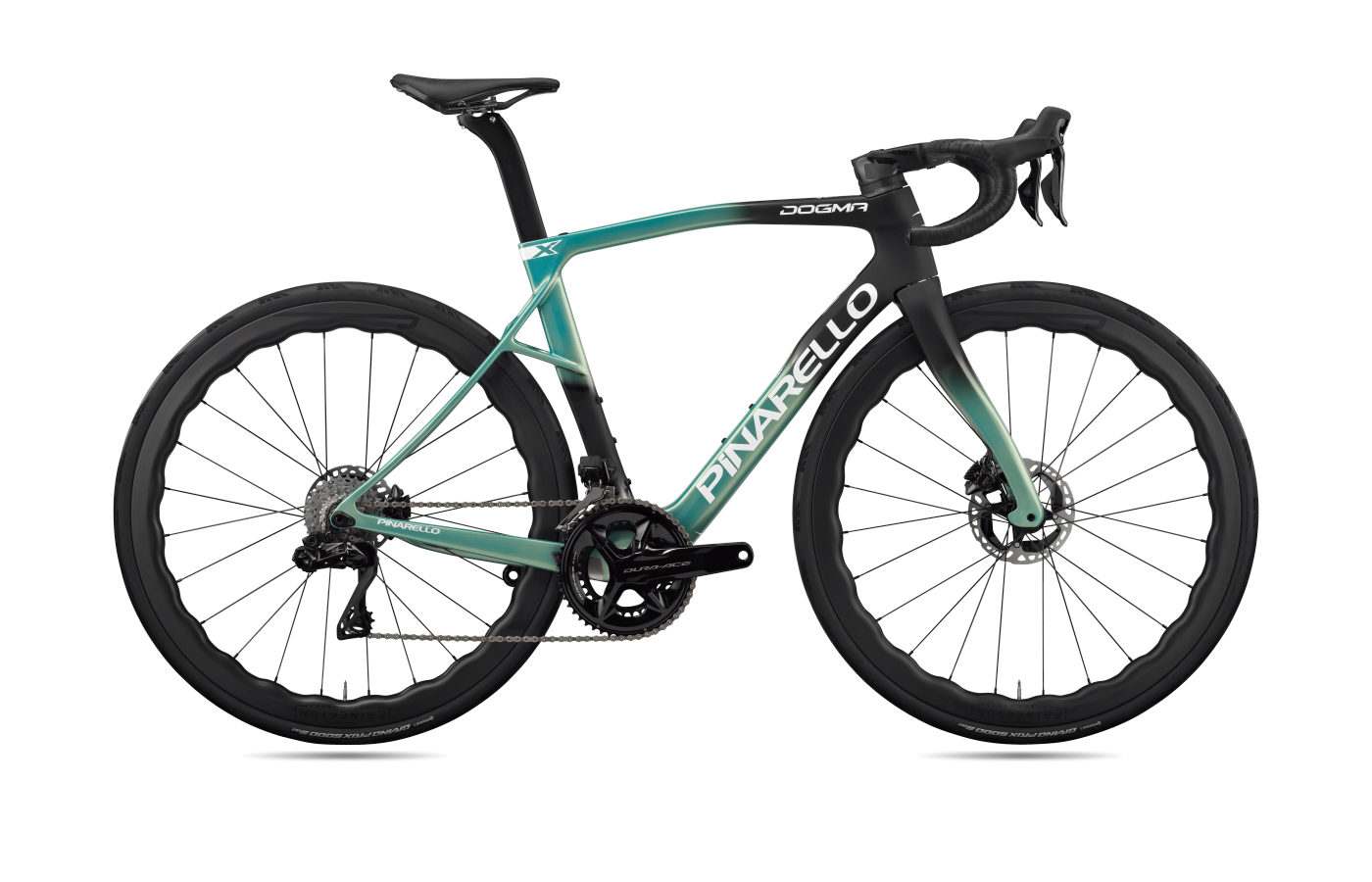
Two Italian icons, two takes on "endurance."
The C68 Allroad is a handmade modular C-series with the edges sanded off. The Dogma X is a race bike that finally agreed to fit 35 mm tires.
C68 Allroad
- Handmade modular frame — eight carbon parts bonded in Cambiago, the only modern superbike still built this way.
- Wider build range — five builds from $9.5k Force AXS to $15.5k Super Record, far broader than the Dogma X's two-build menu.
- Roomier 460 fit for the same fit-picked rider — 543 mm stack and 375 mm reach versus 559 / 379 on the Dogma X 500.
- Geometry data is missing trail and wheelbase numbers, so cornering character has to be inferred from reviews rather than the spec sheet.
- Lugged construction is more expensive to repair after a crash than a monocoque frame.
Dogma X
- Stunning descender — testers across Road.cc, Cycling Weekly, Cyclonline and Pez all single out high-speed stability and cornering composure.
- X-Stays vibration damping — a doubled seatstay junction reviewers describe as 'absorbing the chatter' on chip-seal.
- 11 frame sizes from 425 to 600, the broadest fit range of any premium endurance bike on the market.
- Only two builds, both at $15,500 — no Ultegra or Force-tier entry point.
- MOST Talon integrated cockpit is widely flagged as too stiff at the bars, transmitting more buzz than the rear end would suggest.
Editor’s analysis
Both pitch the same fantasy — a Dogma or a C68 you can ride for five hours without filing a chiropractor claim. The execution couldn't be more different.
The Colnago C68 Allroad and the Pinarello Dogma X share a postcode — Italian heritage, $15k+ flagships, 35 mm tire clearance, full integration — but almost nothing else. Colnago's pitch is craftsmanship: the C68 is a modular lugged frame, eight separate carbon parts bonded by hand in Cambiago. Pinarello's pitch is engineering: the Dogma X borrows TorayCa T1100 1K Dream Carbon from the WorldTour-winning Dogma F and bolts on its X-Stays — a doubled, forked seatstay junction designed to kill road buzz without softening the bottom bracket.
On paper the Pinarello Dogma X is the more capable speed tool. Reviewers describe descending it as 'a train on the tracks' and a 'motorbike with pedals,' helped by 422 mm chainstays and a near-one-meter wheelbase at the size tested. Pinarello claims only 5% aero penalty versus the Dogma F, and most testers report it feels every bit as fast on the flat. The 7.46 kg medium isn't featherweight, but it isn't a Roubaix-class plush bike either — it's a slightly detuned race bike.
The Colnago C68 Allroad goes the other way. It's lighter (7.6 kg in a size 550, which is roughly two sizes up from where the Dogma X sits at 7.46 kg), the stays are tubes-and-lugs rather than a structural feature, and the position is more conservatively endurance — taller stack, shorter reach, calmer steering. Cycling Plus called it 'the sportier end of sportive-ready endurance machines,' which is exactly right. The C68 cossets through tire volume and frame compliance; it doesn't try to dazzle with a damping system.
Put another way: if a friend asks what these two bikes feel like, the honest answer is that the Colnago C68 Allroad feels like a really, really nice C-series Colnago you can fit 32 mm tires on. The Pinarello Dogma X feels like a Dogma F that grew up. Pick the personality you want.
Where the builds differ.
Comparing our editor's-pick builds side-by-side. Winners highlighted row-by-row — lower price and weight, and the better-spec component, each mark a point.
Build variants & pricing
Apples-to-apples at the Dura-Ace tier — but Colnago's lineup runs $6k deeper, with Force AXS and Ultegra Di2 entry points the Dogma X simply doesn't have.
Prices are current US MSRP. The Pinarello Dogma X is sold in only two configurations, both at $15,500; if Dura-Ace or Red AXS isn't your groupset, the C68 Allroad is the only one of these two with mid-tier options.
How they fit, how they steer.
Compared at the fit-picked sizes for the same rider: Colnago 460 vs. Pinarello 500. The Colnago sits 16 mm lower in stack and 4 mm shorter in reach with a slightly slacker 71° head tube; the Dogma X has 10 mm longer chainstays (422 vs 412) for the descender stability reviewers rave about.
Which size should I buy?
Pinarello offers 11 sizes vs. Colnago's 6 — if you're between sizes, the Dogma X almost certainly has one that fits dead-on.
→These are starting points. Flexibility, riding style, and preferred position all shift the answer — if you’re between sizes, a professional fit beats a chart.
What the magazines said.
Published reviews from trusted cycling outlets. Click through for the full write-up.
Which one should you buy?
If you want the heirloom and a genuinely broad build range, get the Colnago. If you want the descender and the widest fit menu in endurance, get the Pinarello.
C68 Allroad
If the words 'handmade in Cambiago' move you, and your weekly ride is four hours of fast tarmac that occasionally drifts onto neglected farm road, the C68 Allroad is the bike. It's the only modern superbike still built modularly — and the build range is wide enough to actually meet a budget.
Dogma X
If you want a Dogma but your back can't take the F's slammed stem, and most of your riding is fast endurance on choppy real-world roads, the Dogma X is the answer. The X-Stays plus 32–35 mm tires deliver descending confidence and chatter-killing comfort that the C68 doesn't try to match.
Questions buyers actually ask.
Short answers to the things we get emailed about most often.
01Which is more comfortable on rough roads?
The Pinarello Dogma X, by most accounts. Road.cc's reviewer called it 'the most comfortable bike I've ever ridden' on 32 mm GP5000s, and multiple testers credit the X-Stays junction with absorbing chip-seal chatter that a Dogma F transmits straight to the rider.
The Colnago C68 Allroad is also a comfortable endurance bike — taller and shorter than the C68 Road by 10 mm in each direction — but it gets there through frame compliance and tire volume, not a dedicated damping feature. Both run 32 mm Pirelli P Zero stock, both clear 35 mm.
02Which descends better?
The Pinarello Dogma X, clearly. Reviewers across Road.cc, Cycling Weekly, Cyclonline, and Pez singled out descending as the bike's standout trait — 'impeccable stability,' 'train on the tracks,' 'surefooted and composed.' The 422 mm chainstays and near-one-meter wheelbase at the tested size are doing the work.
The Colnago C68 Allroad isn't a bad descender, but it's a more traditional endurance-bike feel — predictable rather than scalpel-precise. If your local roads include long descents you actually look forward to, that's a Dogma X argument.
03What's the maximum tire clearance?
Both are 35 mm officially. Both ship stock with 32 mm Pirelli P Zero Race TLR tires — Colnago uses 32 mm across all builds, Pinarello specs 35 mm on its Dura-Ace and Red AXS builds.
Neither is a gravel bike. They're 'allroad' / 'endurance' machines designed for chip-seal, neglected pavement, and the occasional smooth dirt section. For anything rougher, look at a true gravel bike.
04Why does the Colnago come in five builds and the Pinarello only two?
Because Pinarello positions the Dogma X strictly as a flagship — both builds (Dura-Ace Di2 and SRAM Red eTap AXS) are at $15,500, with no Ultegra, Force, or 105 trim available. Custom builds are possible via Pinarello's My Way configurator, but the catalog is intentionally narrow.
Colnago goes wider: Force AXS at $9,500, Ultegra Di2 at $10,500, Red AXS at $12,000, Dura-Ace Di2 at $13,000, and Super Record WRL at $15,500. If your budget is closer to $10k than $15k, the C68 Allroad is the only one of these two in the conversation.
05Which has better fit options?
The Pinarello Dogma X, by a wide margin — 11 sizes from 425 to 600. Cycling News specifically noted that going one size smaller produced a noticeably livelier ride, and a size larger felt smoother but less exciting, so the granular size range actually matters here.
The Colnago C68 Allroad runs six sizes (430 to 580), the more typical road-bike sizing convention. Both bikes fit a 173 cm rider well; the difference shows up at the size extremes.
06How does the X-Stays design actually work?
The Pinarello Dogma X uses a doubled, forked seatstay-to-seat-tube junction — two attachment points instead of one. Pinarello claims it improves lateral stiffness while dissipating vertical vibrations, and reviewers generally agree the rear end feels noticeably more compliant than the Dogma F's.
The caveat: several reviewers (Cycling Weekly, Cyclingnews) said it's hard to isolate how much of the comfort comes from the X-Stays versus simply running 32 mm tires at lower pressures. The MOST integrated cockpit also stays stiff at the front, so the comfort is asymmetric — softer at the saddle, firmer at the bars.
07Are the integrated cockpits serviceable?
Both use proprietary one-piece cockpits with fully internal cable routing — the Colnago CC.01 and the MOST Talon Ultra Light — and both make adjustments harder than a traditional two-piece setup.
Changing stem length or bar width on either means buying a new cockpit unit. Hose bleeds and headset service require partial disassembly. Cycling News specifically calls out needing a long T20 Torx for the Pinarello's seatpost clamp and aero spacers. None of this is unusual for a modern superbike — but if you swap stems regularly, it's a real friction point.
08Which holds resale value better?
Both depreciate slowly compared to mass-market carbon, helped by limited production and strong brand cachet. Cyclonline specifically noted the Dogma X has 'a good hold on the used market.'
Colnago C-series bikes also tend to hold well — the modular construction and 'handmade in Cambiago' identity keep them desirable second-hand. Buying a one-season-old example of either is one of the better ways to get into the platform without paying full MSRP.
Similar bikes
If your priorities don’t map cleanly onto either of these, one of these adjacent bikes probably fits better.
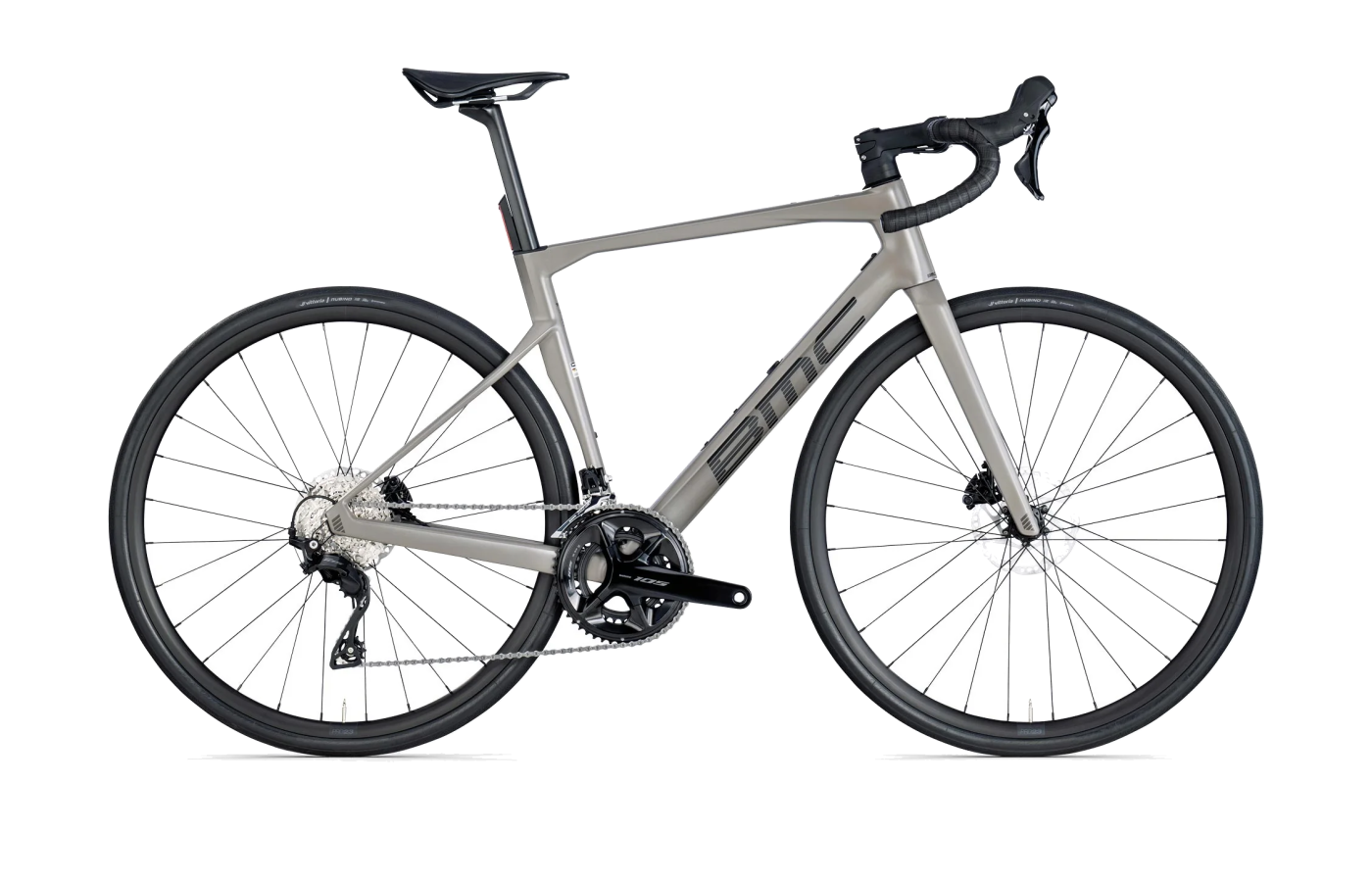
Roadmachine
BMC's premium endurance flagship — similarly integrated look, refined carbon layup, and typically a more accessible price than either the Colnago or the Pinarello. The pragmatist's pick if you want the same category without the Italian heritage premium.
Compare →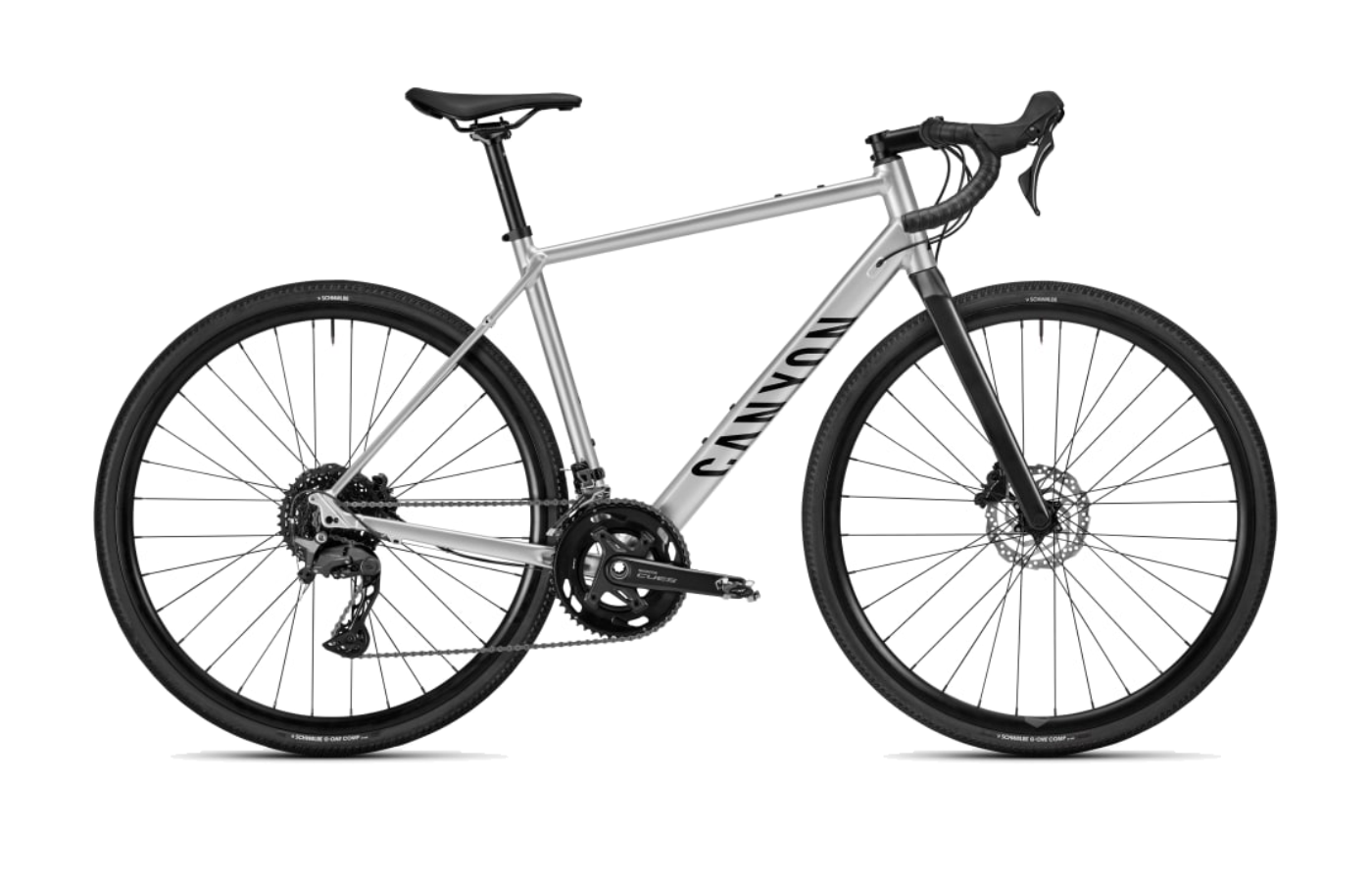
Endurace
Spec-sheet-per-dollar champion. Comfort tricks like the VCLS flex seatpost approximate the Dogma X's compliance for a fraction of the price — direct-to-consumer catch is no local dealer and no demos.
Compare →
Domane
The pure-isolation play. Trek's IsoSpeed decoupler delivers more vertical movement than either of these Italians — pick the Domane if maximum vibration damping matters more than raw speed.
Compare →