Aspero
vsCheckpoint
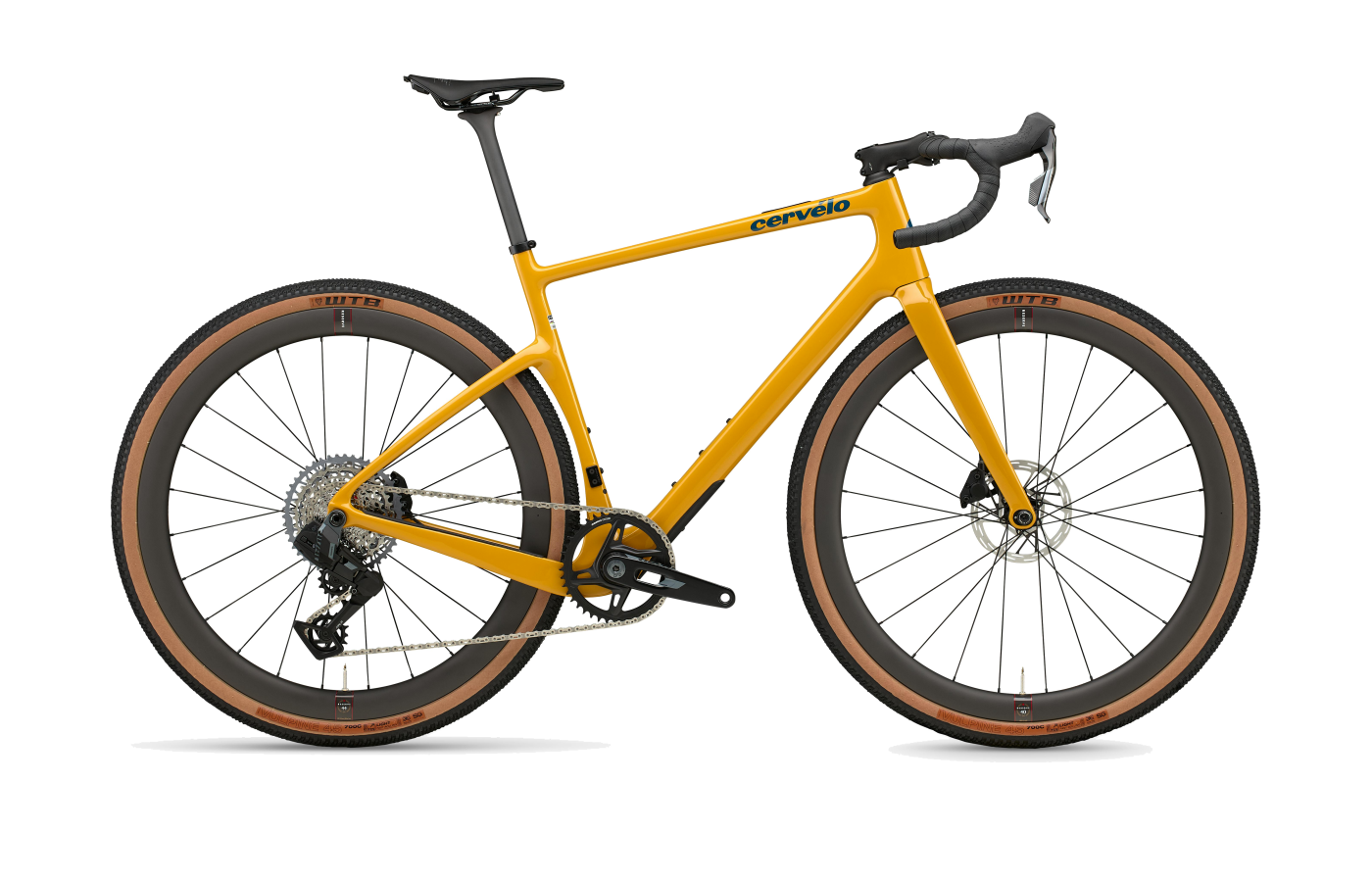
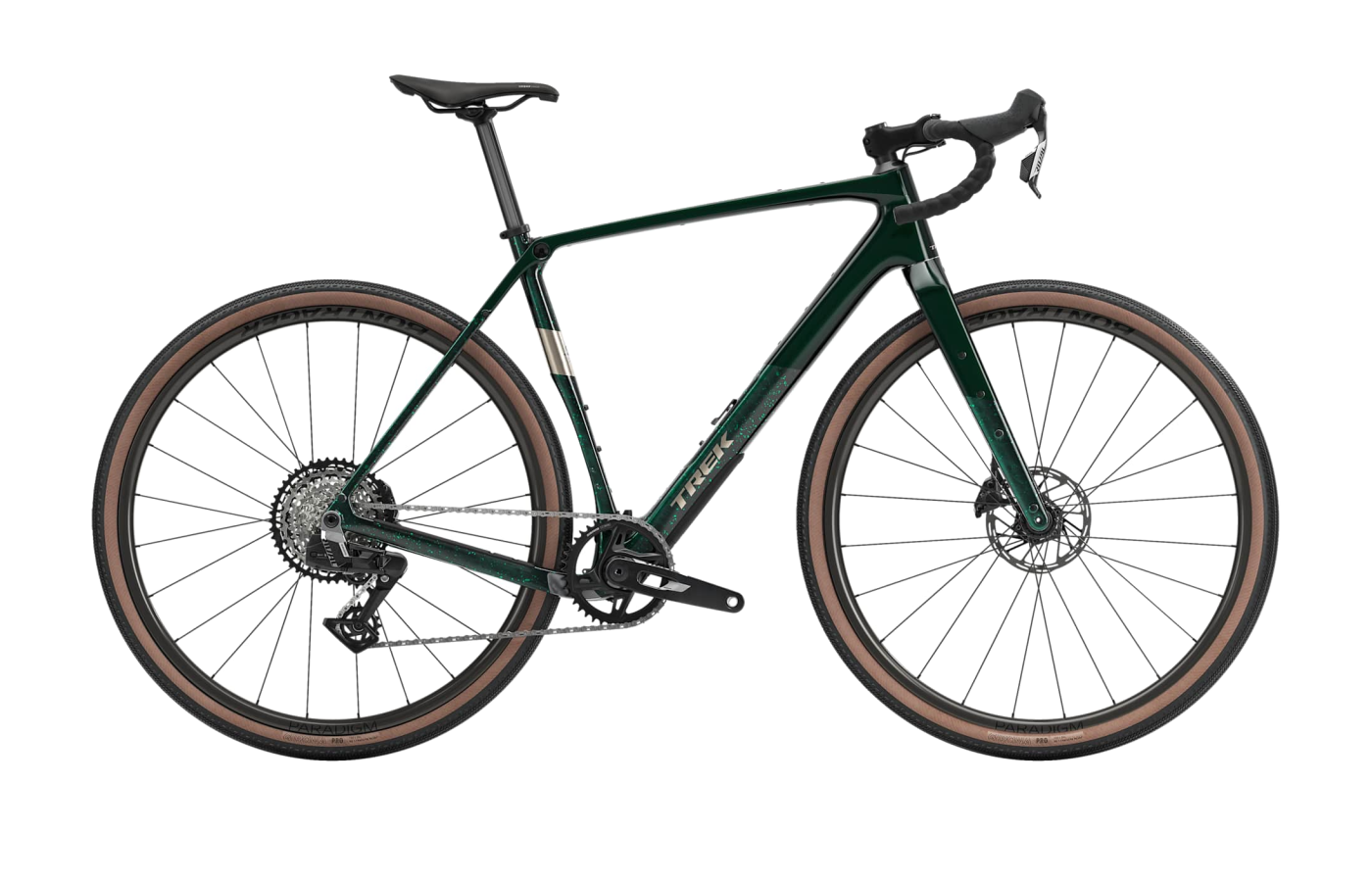
Two takes on gravel, pulling hard in opposite directions.
The Cervelo Aspero is a road racer with fatter tires. The Trek Checkpoint is a bikepacker that still knows how to sprint.
Aspero
- Sharper handling — 72° head angle, 62 mm trail, and 425 mm chainstays add up to a road-racer reflex set on dirt.
- Reserve carbon wheels spec'd even on the mid-tier Rival AXS build — reviewers flagged them as outperforming the wheelsets on similarly priced rivals.
- Refined compliance — dropped seatstays, a flexy 27.2 mm seatpost, and a softened front end give noticeably more comfort than Gen 1.
- 45 mm max tire clearance — narrow by 2025 standards, and a dealbreaker if your gravel gets chunky.
- No rack, fender, or frame-bag provisions beyond three bottle cages and a top-tube bag mount.
Checkpoint
- 50 mm tire clearance — room for genuine adventure rubber, with 6 mm of mud clearance to spare.
- IsoSpeed decoupler on SL models — a subtle passive compliance system that reviewers credit with keeping riders fresh on 4-hour-plus days.
- Mounts everywhere — racks, fenders, frame bags, top-tube bag, downtube storage door on SL — one bike for commuting, racing, and bikepacking.
- Heavier than the Aspero at every tier — the SL 7 AXS comes in around 9.33 kg vs sub-8.8 kg for mid-tier Asperos.
- Endurance geometry gives up some attack — a taller stack and shorter reach trade edge for comfort.
Editor’s analysis
Same category on paper, opposite briefs in practice — the Cervelo Aspero chases a stopwatch, the Trek Checkpoint chases a horizon.
Both bikes wear the 'gravel' label, but the design philosophies couldn't be further apart. Cervelo stuck to its guns on the Gen 2 Aspero: a 72-degree head angle, 425 mm chainstays, and a 'haul ass, not cargo' ethos that leaves off fender and rack mounts entirely. Trek took the opposite fork in the road — Gen 3 Checkpoint cedes racing to the new Checkmate and leans into 'Gravel Endurance' geometry, internal downtube storage, and mounts for racks, fenders, and a full line of bikepacking bags.
Tire clearance is the clearest tell. The Cervelo Aspero tops out at 45 mm in 700c; the Trek Checkpoint clears a full 50 mm — enough to float over the kind of chunk that would have the Aspero hunting for a cleaner line. It's not a small gap: that's the difference between 'fast gravel, hardpack, and the occasional double-track shortcut' and 'I don't really know what's coming, and that's fine.'
Front-end geometry tells the same story. At equivalent fit-picked sizes, the Trek Checkpoint sits with a 71.4-degree head angle and a generous 68 mm of trail; the Cervelo Aspero holds 72 degrees and 62 mm. Six millimeters of trail is large — the Trek feels planted and autopilot-stable at speed, and the Cervelo feels sharper and more reactive to input. Reviewers consistently describe the Aspero as steering like a road bike that happens to have 45s on it, while the Checkpoint reads more like an endurance road frame with MTB-ish composure.
Put another way: if most of your gravel rides are on maintained fire roads with a group chasing KOMs, the Cervelo Aspero is built for that specific fight. If you ride unmaintained backroads, load up for weekends, or just want one bike that shrugs at surprises, the Trek Checkpoint is the broader tool — at materially lower money at every build tier.
Where the builds differ.
Comparing our editor's-pick builds side-by-side. Winners highlighted row-by-row — lower price and weight, and the better-spec component, each mark a point.
Build variants & pricing
Both share the Rival AXS sweet spot — but the Cervelo carries carbon wheels where the Trek brings alloy, and the Trek leaves ~$1,600 in your pocket.
Prices are current US MSRP. The Trek Checkpoint range extends much further down — alloy ALR builds from $1,599 — while the Cervelo Aspero floor sits at $3,550. If a sub-$3k carbon gravel bike matters to your budget, the Cervelo Aspero isn't in that conversation.
How they fit, how they steer.
Fit-picked at size 54 (Aspero) and size S (Checkpoint). Stack is effectively identical (~555 mm both), but the Checkpoint runs a 0.6° slacker head angle, 6 mm more trail, and 5 mm longer chainstays — calmer in a straight line, less reflexive under steering input.
Which size should I buy?
Size recommendations based on stack, reach, and effective top tube. The Aspero runs a six-size range (48–61) while the Checkpoint uses a six-size T-shirt lineup (XS–XL).
→These are starting points. Flexibility, riding style, and preferred position all shift the answer — if you’re between sizes, a professional fit beats a chart.
What the magazines said.
Published reviews from trusted cycling outlets. Click through for the full write-up.
Which one should you buy?
If you race or sprint on hardpack, get the Cervelo Aspero. If you ride everything and want one gravel bike that takes a beating, get the Trek Checkpoint.
Aspero
If your typical Saturday is a fast group ride on hardpack and your typical Sunday is a lumpy tarmac loop, the Cervelo Aspero is still the purist's pick. Roadie-adjacent geometry, Reserve carbon wheels on the mid-tier build, and a frame that rewards aggressive inputs.
Checkpoint
If you want one bike that commutes, bikepacks, and handles whatever Saturday throws at you — the Trek Checkpoint is the more versatile tool. Bigger tire clearance, IsoSpeed compliance on the SL, and mounts for everything you might want to strap on.
Questions buyers actually ask.
Short answers to the things we get emailed about most often.
01Which has more tire clearance?
The Trek Checkpoint, by a meaningful margin. Trek spec'd the Gen 3 Checkpoint for 700c x 50 mm with 6 mm of mud clearance — large enough to step into true adventure-tire territory. The Cervelo Aspero tops out at 45 mm in 700c (47–48 mm in 650b).
If you ride mostly hardpack and fire roads, 45 mm is plenty. If you run into mud, chunk, or want the option of a 2.1" MTB-light tire, the Checkpoint gives you room the Aspero doesn't.
02Which one handles technical terrain better?
The Trek Checkpoint. Reviewers consistently flagged the Aspero's 72° head angle and slammed riding position as exposing you on chunky or slow-speed terrain — 'wheel flop is noticeable,' per Flow Mountain Bike. The Checkpoint's slacker 71.4° head angle (size S), longer 430 mm chainstays, and 68 mm of trail produce a more planted, forgiving feel when the surface gets loose.
That said, one Off.road.cc tester called very steep, technical descents 'hair-raising' on the Checkpoint — the shorter reach puts weight forward. Neither is a drop-bar mountain bike.
03Which one climbs better?
The Cervelo Aspero, if you're chasing times. It's the lighter bike at equivalent tiers — roughly 8.6–8.8 kg for a mid-tier AXS build vs 9.33 kg for the Checkpoint SL 7 AXS — and the steep 72° head angle plus shorter 425 mm chainstays put your weight over the cranks in a more aggressive climbing posture.
The Checkpoint isn't a bad climber — reviewers described the SL as 'zesty and sprightly' on climbs and noted the reduced wheel flop helps on steep, loose pitches — but the Aspero's geometry and weight advantage compound on sustained efforts.
04Can either bike carry bikepacking gear?
The Trek Checkpoint is purpose-built for it. Frame mounts for racks, fenders, and integrated frame bags; an internal downtube storage door on the SL models; compatibility with Trek's Adventure Bags line. It's designed around multi-day loading.
The Cervelo Aspero was explicitly designed against it — Cervelo's 'haul ass, not cargo' tagline isn't a joke. You get three bottle cages and a top-tube bag mount. No rack mounts, no fender mounts. You can strap on soft bags, but the frame isn't optimized for loaded riding.
05How do the mid-tier builds compare?
Both settle on SRAM Rival XPLR AXS 1x13 — so shifting and brake quality are equivalent. The Cervelo Aspero Rival XPLR AXS ($5,800) comes with Reserve 40|44 TA GR carbon wheels, Cervélo AB09 carbon handlebar, and Cervélo SP19 carbon seatpost. The Trek Checkpoint SL 6 AXS ($4,199) comes in at ~$1,600 less but runs Bontrager Paradigm Comp 25 alloy wheels and an alloy handlebar.
If all-in value matters most, the Checkpoint SL 6 gives you the IsoSpeed frame, bigger tire clearance, and downtube storage for a grand-and-a-half less. If wheel quality matters most, the Aspero's Reserve carbon wheels are a serious upgrade that would cost you $1,500+ to add to the Trek.
06Is the IsoSpeed decoupler worth it?
Reviewers describe it as 'subtle' but effective — a passive compliance system that decouples the seat tube to absorb high-frequency vibration without the bob of active suspension. Testers universally credited it with reducing fatigue on 4-hour-plus rides, and GearJunkie specifically called out that it 'didn't take away from lateral frame stiffness.'
It's not a Future Shock — you won't feel it moving. But on back-to-back long days, riders reported feeling notably fresher. The ALR models skip IsoSpeed entirely; if that's your pick, plan to run wider tires to compensate.
07Which has the better cable routing for home maintenance?
The Cervelo Aspero wins here for home wrenchers. Cables run externally under the ST36 stem before entering the frame — reviewers called it 'refreshingly easy to maintain' and noted stem swaps don't require a hose re-route.
The Trek Checkpoint uses through-the-headset routing. For electronic builds (AXS) this is mostly cosmetic. For mechanical builds like the Checkpoint ALR 4, one reviewer flagged that a simple shift cable replacement could run ~$200 in labor at a shop vs $25 for an externally routed bike. Pick the groupset accordingly.
08Are these 1x or 2x?
Both current top SRAM builds run 1x13 — SRAM's Rival or Force XPLR with a 10–46T cassette and a 40T chainring. That gearing is comfortable for most gravel use; some reviewers noted spin-out on fast descents and suggested a 42–44T ring for riders who push top speed on tarmac sections.
The Aspero's top Shimano build (GRX RX825 Di2, $7,050) is 2x (46/30T). The Checkpoint does not offer a 2x build in the current Gen 3 lineup — if you want 2x gearing on a Checkpoint, you're retrofitting.
Similar bikes
If your priorities don’t map cleanly onto either of these, one of these adjacent bikes probably fits better.
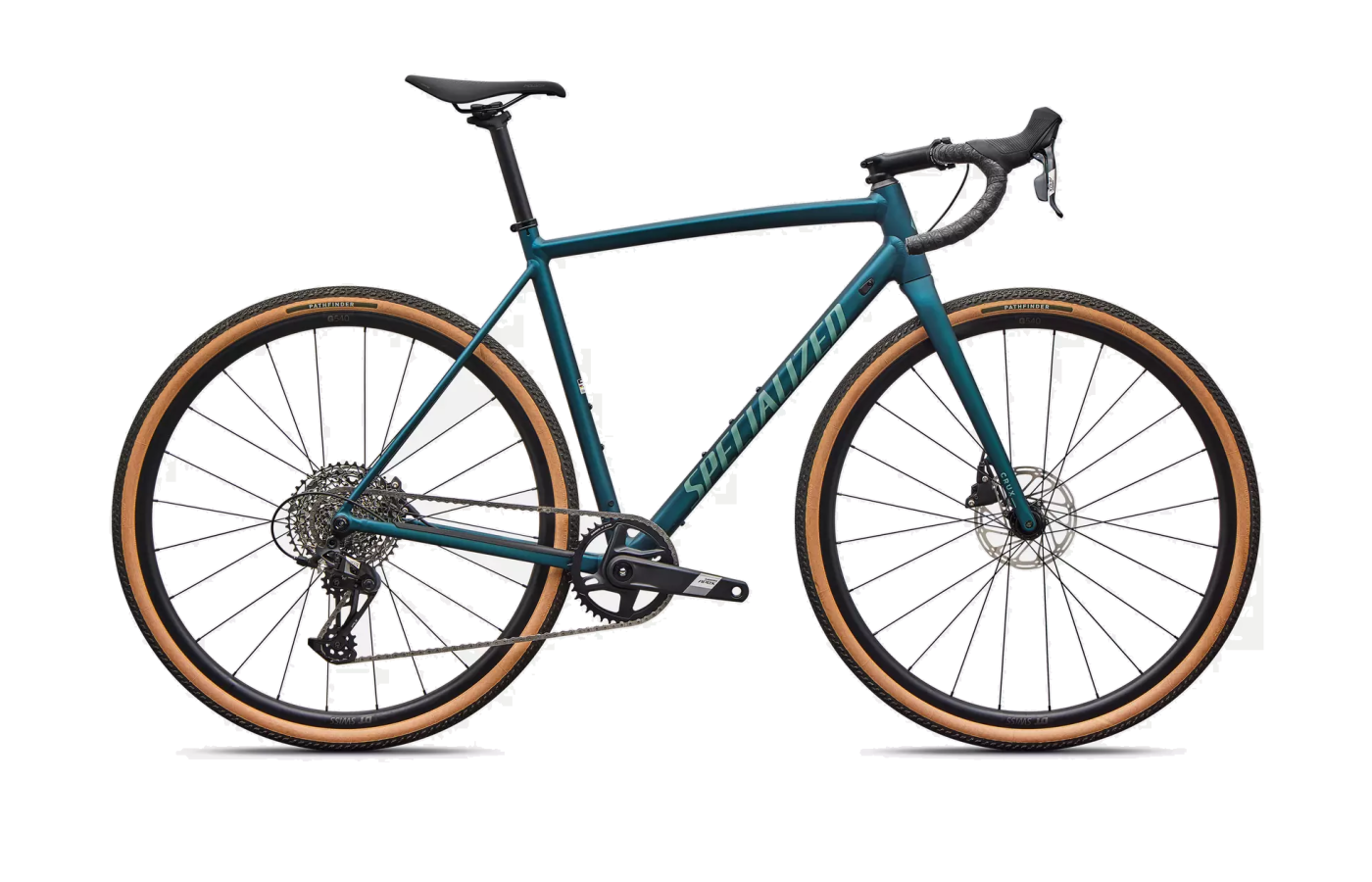
Crux
The anti-aero Aspero — the Specialized Crux trades frame tubing for grams and is among the lightest production gravel frames made. If the Aspero is a fast-gravel tool, the Crux is the climbing one.
Compare →
Grail
The direct-to-consumer equivalent of the Aspero's race-gravel brief — the Canyon Grail brings comparable aero features and geometry for materially less money, at the cost of no local dealer and no demos.
Compare →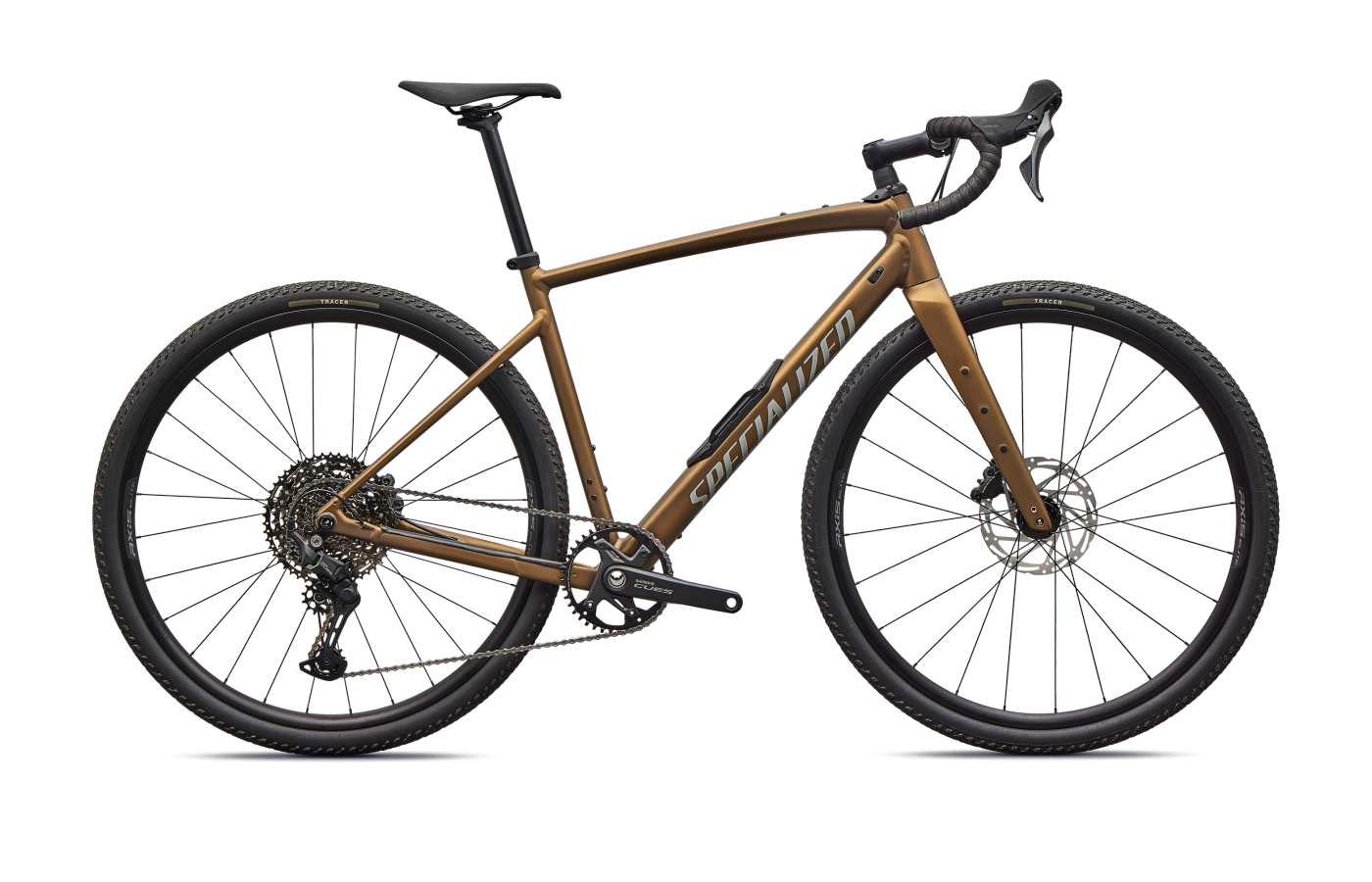
Diverge
The Checkpoint's sibling-rival — the Specialized Diverge swaps IsoSpeed for Future Shock, a more active front-end compliance system. Pick it if you want something more than subtle on rough terrain.
Compare →