Aspero
vsCrux
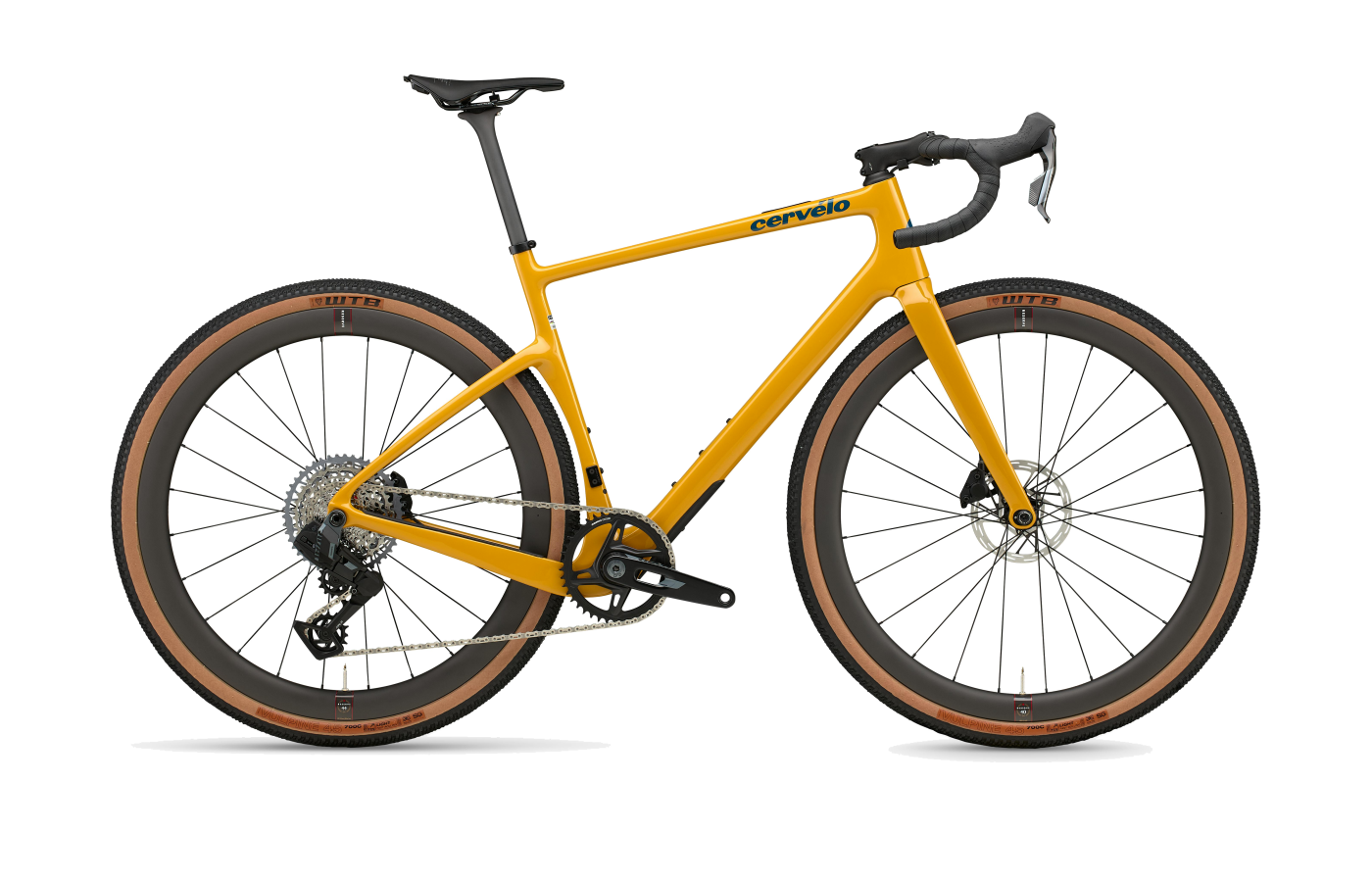
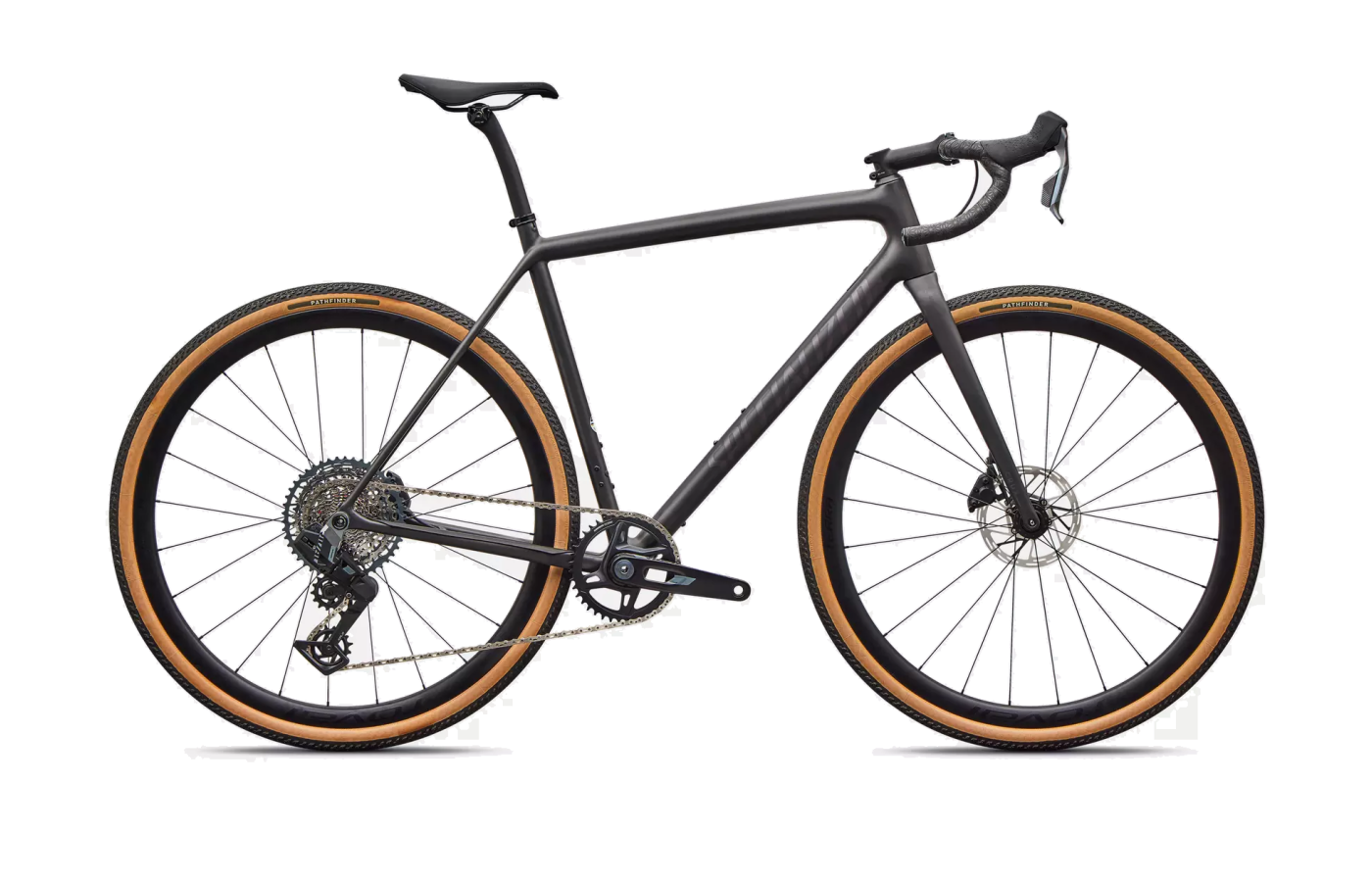
Two gravel racers, two routes to fast.
The Aspero is a road bike with a gravel license. The Crux is the lightest carbon frame in the segment with cyclocross DNA underneath.
Aspero
- Better wheels per dollar — Reserve 40|44 carbon with Zipp ZR1 hubs at the $5,800 Rival build, where Crux gives you Roval Terra C.
- Refined long-day comfort — dropped seatstays, exposed 27.2 mm post, and 10% softer front end take the edge off chunky gravel.
- Roadie geometry, gravel grip — a steep 72 HTA at size 54 with the Trail Mixer fork chip lets you tune steering feel.
- 45 mm tire clearance lags the modern 47–50 mm benchmark — limits muddy or chunky-gravel runs.
- No fender mounts and minimal bikepacking provisions — explicitly a haul-ass-not-cargo platform.
Crux
- Lightest gravel frame in class — 725 g claimed S-Works frame, 825 g for Pro/Expert/Comp; complete S-Works builds land around 6.94 kg.
- 47 mm tire clearance — wider than the Aspero, plus 650b x 2.1 inch options for true off-road volume.
- Hassle-free standards — threaded BSA bottom bracket, round 27.2 mm seatpost, two-piece cockpit. No proprietary headaches.
- Components on mid-tier builds get criticized for not matching the price — frame quality outpaces the spec.
- Ride can feel 'nervous' or 'under-biked' on rough singletrack — this is a fast bike, not a forgiving one.
Editor’s analysis
Both want to win gravel races. One does it by hiding from the wind; the other does it by weighing nothing.
The Cervelo Aspero and Specialized Crux pick opposite engineering levers. Cervelo went after watts — slimmer tube shapes, hidden cable routing, a claimed 4.2-watt aero gain over the previous Aspero. Specialized went after grams: Aethos-derived round tubes, no aero shaping, an S-Works frame at a claimed 725 g and a Pro/Expert shell at 825 g. Two answers to the same question, both defensible, neither universal.
On the trail, the difference shows up under power and into corners. The Specialized Crux feels lighter under acceleration — reviewers consistently call it 'lightning-fast' and 'an absolute rocket' over smoother gravel, with road-bike levels of power transfer from the aggressive layup. The Cervelo Aspero feels more planted at sustained speed: a stiff threaded T47a bottom bracket, beefed-up chainstays, and frame-led compliance via dropped seatstays and a flexier 27.2 mm post. Cervelo softened the front end 10% from gen one, and it shows — the new Aspero no longer punishes you on chunky gravel.
Geometry at the fit-picked size 54 actually inverts what you might expect. The Aspero runs a steeper 72 head tube angle with just 62 mm of trail; the Crux is slacker at 71.5 with 67 mm of trail. Both share 425 mm chainstays and a 388 mm reach. Translation: at this size the Aspero has the quicker, more roadie steering feel, while the Crux sits more relaxed up front and lets its low weight do the agility work. Tire clearance favors the Crux too — 47 mm versus the Aspero's 45 mm — which is small on paper but real if you live in mud or chunk.
The pricing tells the rest of the story. Both lineups start in the high $3k range, but the Crux ceiling reaches $11,999 for the S-Works build that no Aspero variant tries to chase. The Aspero tops out at $7,050 for the GRX Di2 build. If you want a sub-7-kg gravel bike straight from the showroom, only one of these two offers it; if you want better wheels per dollar in the middle of the lineup, Cervelo's Reserve carbon hoops on the Rival build outclass the Roval Terra C set on the equivalent Crux Expert at the same price.
Where the builds differ.
Comparing our editor's-pick builds side-by-side. Winners highlighted row-by-row — lower price and weight, and the better-spec component, each mark a point.
Build variants & pricing
Both lineups span roughly $3.5k to $8k of carbon range; only the Crux pushes into S-Works territory at $11,999.
Prices are current US MSRP. The Aspero Rival XPLR AXS and Crux Expert (Rival) land within $1 of each other — a clean apples-to-apples comparison at the same drivetrain tier. Step up to the Crux S-Works and you leave the Aspero lineup entirely; Cervelo reserves its lightest, fully integrated frame for the separate Aspero-5 platform.
How they fit, how they steer.
Both at size 54 — the fit-picked size for a 5'8" rider on each bike. Reach matches at 388 mm, but the Cervélo Aspero runs a steeper 72 HTA with 62 mm of trail; the Specialized Crux is slacker at 71.5 with 67 mm of trail — opposite of what you'd guess from the marketing.
Which size should I buy?
Size recommendations based on stack, reach, and effective top tube. Both run six sizes from 48/49 up to 61, with comparable spacing in the middle of the range.
→These are starting points. Flexibility, riding style, and preferred position all shift the answer — if you’re between sizes, a professional fit beats a chart.
What the magazines said.
Published reviews from trusted cycling outlets. Click through for the full write-up.
Which one should you buy?
If you want the most refined aero-adjacent gravel racer with great wheels per dollar, get the Aspero. If you want the lightest carbon frame in the segment and don't flinch at the price, get the Crux.
Aspero
If your weekends are 80-mile mixed-surface loops where pace matters more than rough-trail comfort, and you want a bike that rolls fast on tarmac without feeling like a compromise on hardpack, the Aspero is the sharper tool. Cervelo's wheel and cockpit choices at the Rival price point are genuinely hard to beat.
Crux
If you're the rider who hunts steep dirt climbs, races cyclocross in the off-season, and would happily trade aero watts for grams every time, the Crux is unmatched. The 47 mm clearance and hassle-free standards mean it'll still go almost anywhere — you just need to bring the skill on chunky terrain.
Questions buyers actually ask.
Short answers to the things we get emailed about most often.
01Which is lighter?
The Specialized Crux, by a meaningful margin. The S-Works Crux is around 6.94 kg complete (size 56), with the FACT 10r Pro at 7.64 kg and Expert builds at 7.95–8.1 kg. The Cervelo Aspero comes in around 8.6–8.8 kg for its mid-tier Rival/Apex builds (Road.cc measured 8.77 kg on the Apex AXS).
In equivalent Rival-tier trim, the Crux Expert undercuts the Aspero Rival XPLR by roughly 600–800 g — about 1% of system weight for a 70 kg rider, or somewhere around 8–10 seconds on a 30-minute climb.
02Which has more tire clearance?
Specialized Crux: 47 mm with 700c, or 2.1 inch with 650b.
Cervélo Aspero: 45 mm with 700c, or 47–48 mm with 650b.
Both ship with 700x40 tires (Pathfinder on the Crux, WTB Vulpine on the Aspero), so out of the box the difference is invisible. It only matters if you plan to push to wider rubber — and several reviewers have flagged the Aspero's 45 mm ceiling as the modern floor rather than the ceiling.
03Which handles better on technical terrain?
Mixed. At the fit-picked size 54, the Cervélo Aspero has a steeper 72 head tube angle and tighter 62 mm of trail — quicker, more roadie steering feel. The Specialized Crux is slacker at 71.5 with 67 mm of trail, which gives it more straight-line stability on loose descents.
In practice, reviewers describe the Crux as 'snappy and nimble' but 'almost a hair nervous' at speed compared to the Diverge, and the Aspero as 'reassuringly in control' at pace but 'not quite as nimble' on slow technical sections. Neither is a singletrack tool — for true rough off-road, look at a Stigmata or Diverge.
04Which is faster on flat roads?
The Cervelo Aspero, marginally. Cervelo claims a 3–4.2-watt aero saving over the previous Aspero from slimmer tube shapes and hidden cable routing. The Specialized Crux doesn't try to compete on aero — its frame is Aethos-derived, with round tubes and an external-routing-friendly two-piece cockpit.
At social-ride pace below 30 km/h, you won't feel the gap. At sustained 35+ km/h on tarmac, the Aspero will roll a touch easier. But the Crux's lower weight closes most of that back on rolling terrain.
05Which has better stock components for the money?
At the Rival AXS tier (Aspero Rival XPLR AXS at $5,800 vs Crux Expert Rival at $5,799), Cervelo wins on wheels and cockpit. The Aspero gets Reserve 40|44 carbon hoops with Zipp ZR1 hubs and a Cervélo AB09 carbon handlebar; the Crux Expert ships with Roval Terra C carbon wheels (DT 370 hub) and an alloy Specialized Pro SL stem with Adventure Gear bar.
Reviewers have explicitly called this out — BikeRadar noted the Reserves 'vastly outperform' Specialized's Roval Terra wheelset at this price.
06Are these bikes good for bikepacking?
Not really, on either. Both are explicitly race-oriented platforms — the Aspero's 'haul ass, not cargo' tagline and the Crux's minimalist Aethos-inspired frame both reject the bikepacking use case.
Both offer three bottle cage mounts and a top tube bag mount. Neither has fender or rack mounts. If you want a Specialized that bikepacks, look at the Diverge; if you want a Cervelo that does, there isn't really one — the Aspero is their only gravel platform.
07How serviceable are they?
Both are unusually friendly for premium carbon bikes. The Crux uses an English-threaded BSA bottom bracket, a round 27.2 mm seatpost with external clamp, and a non-integrated two-piece cockpit. Reviewers repeatedly call it 'refreshingly hassle-free.'
The Aspero uses a threaded T47a bottom bracket (a serviceability win over press-fit), SRAM UDH for easy hanger swaps, and a 27.2 mm round post. Cable routing is semi-integrated — under the stem and into the headset — which is cleaner than the Crux's exposed setup but still home-mechanic friendly.
Neither will trap you in proprietary-part hell.
08Can I use a 2x drivetrain?
Aspero: Yes — the GRX RX825 Di2 ($7,050) and GRX RX610 ($3,550) builds both ship 2x, and the frame is designed for 1x or 2x.
Crux: Electronic 2x only. The frame's cable routing doesn't accommodate a mechanical front derailleur, so 2x mechanical is off the table. All current factory builds are 1x. If you want 2x on the Crux, you're committing to electronic shifting.
Similar bikes
If your priorities don’t map cleanly onto either of these, one of these adjacent bikes probably fits better.
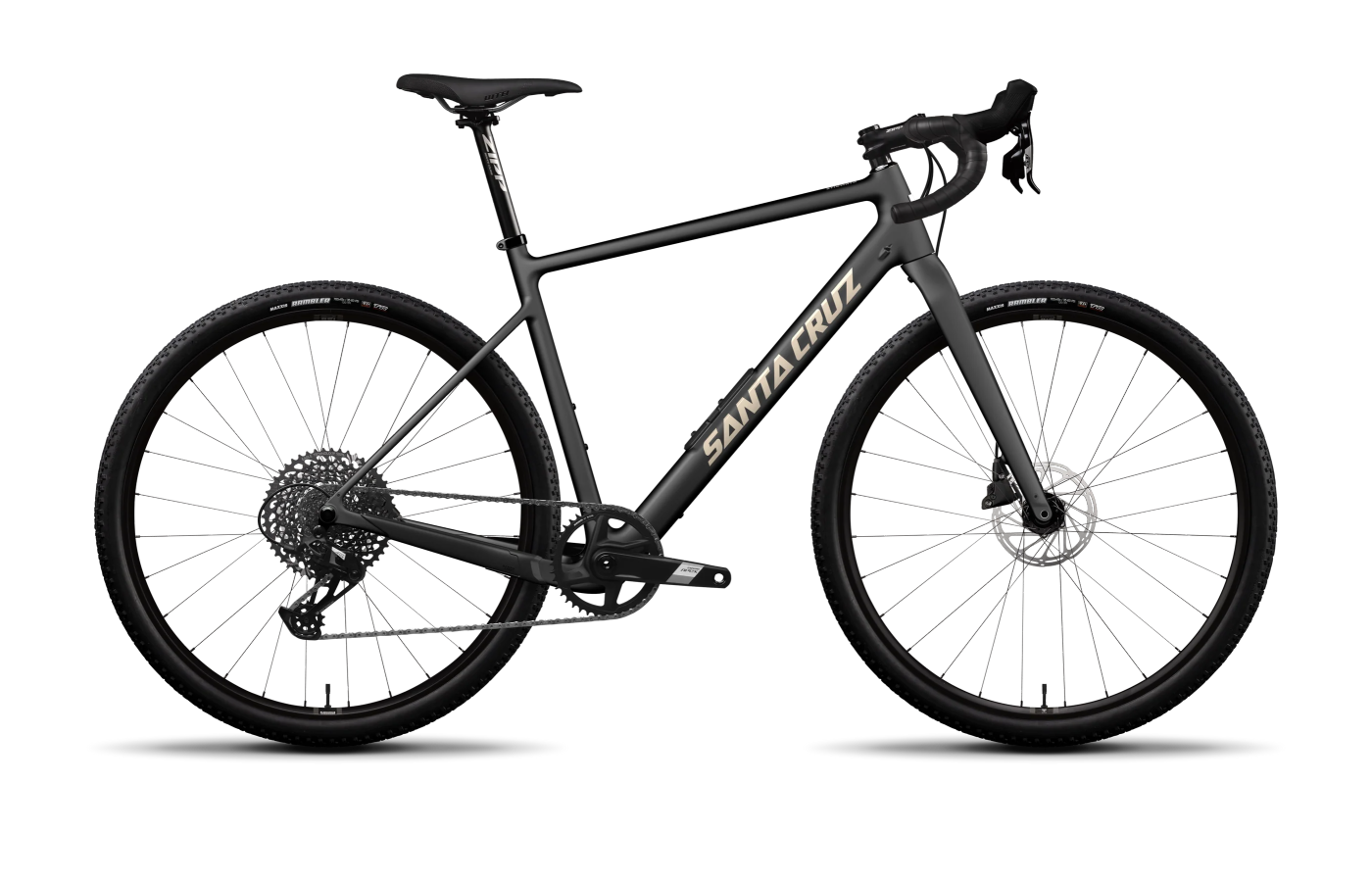
Stigmata
More progressive, MTB-inspired geometry and 50 mm of tire clearance for riders who find both the Aspero and Crux too twitchy on rough singletrack. Same parent company as Cervelo, very different design philosophy.
Compare →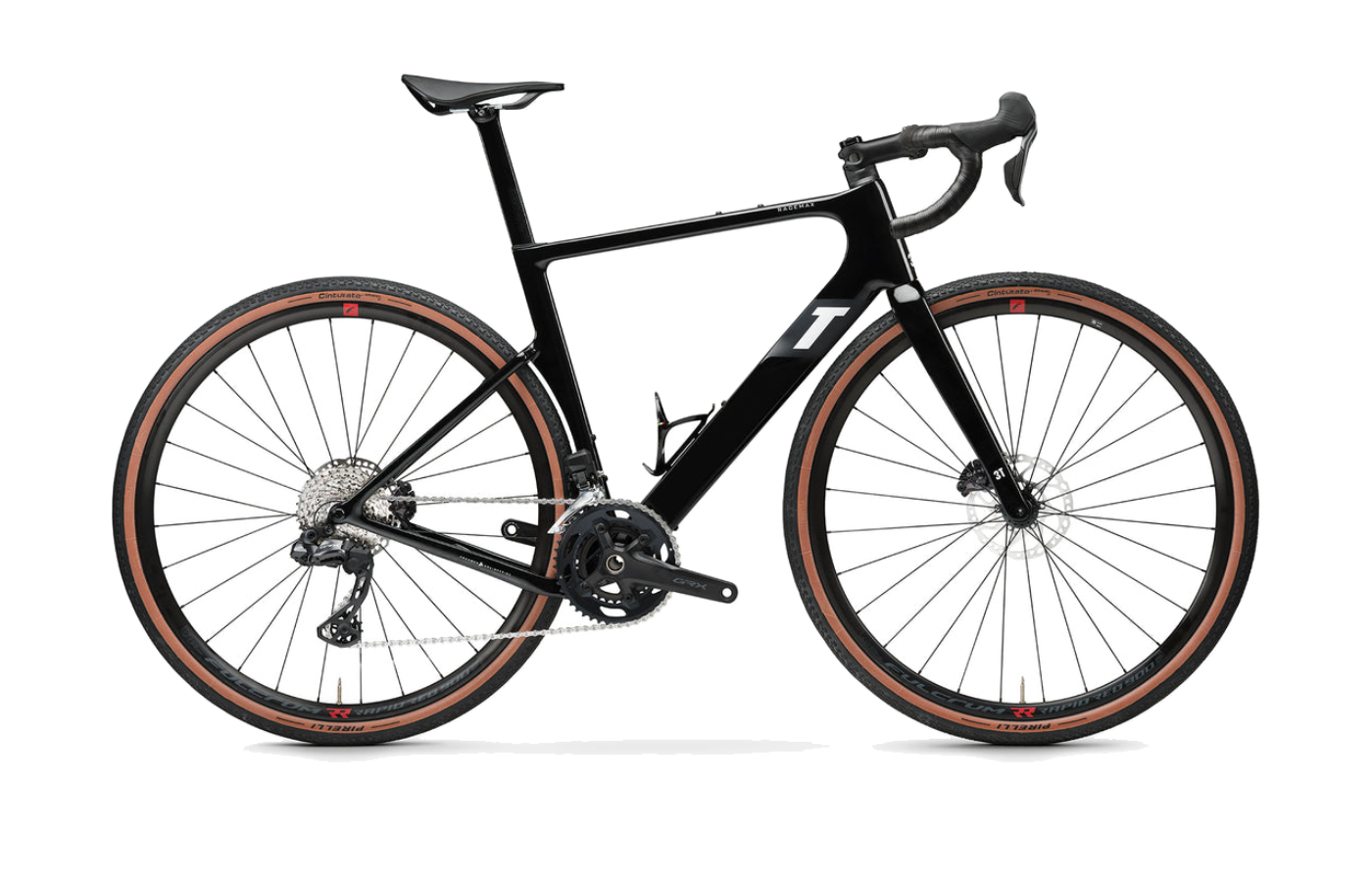
RaceMax
Pushes the Aspero's 'road bike on gravel' ethos further — frame designed specifically around the aerodynamics of 35–42 mm tires. The bike for riders who think the Aspero didn't go far enough on aero.
Compare →
Grail
Direct-to-consumer rival with comparable racing performance and integrated storage, typically at meaningfully lower money than the equivalent Crux Expert. The catch is no local dealer and no demos.
Compare →