RaceMax
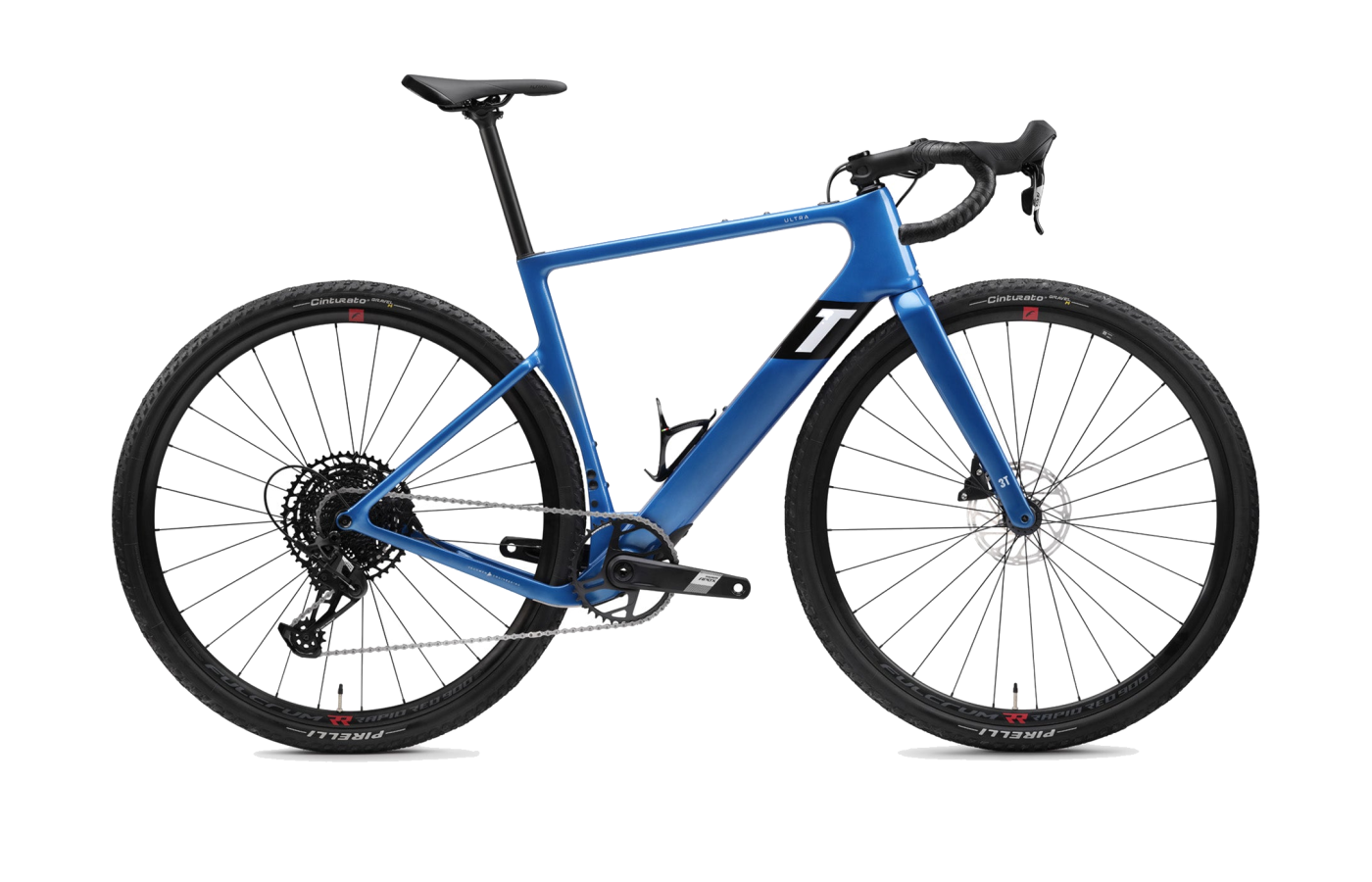
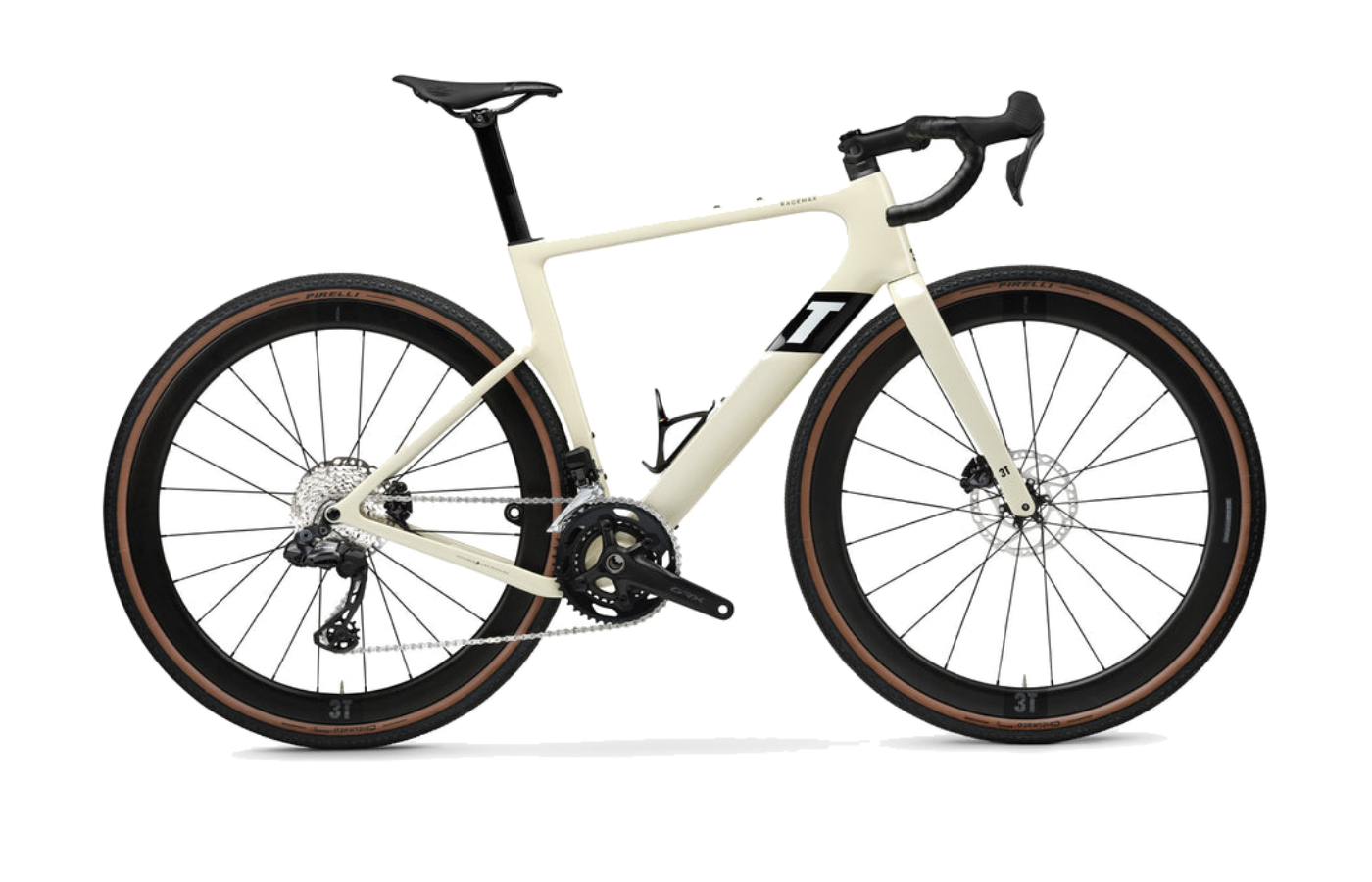
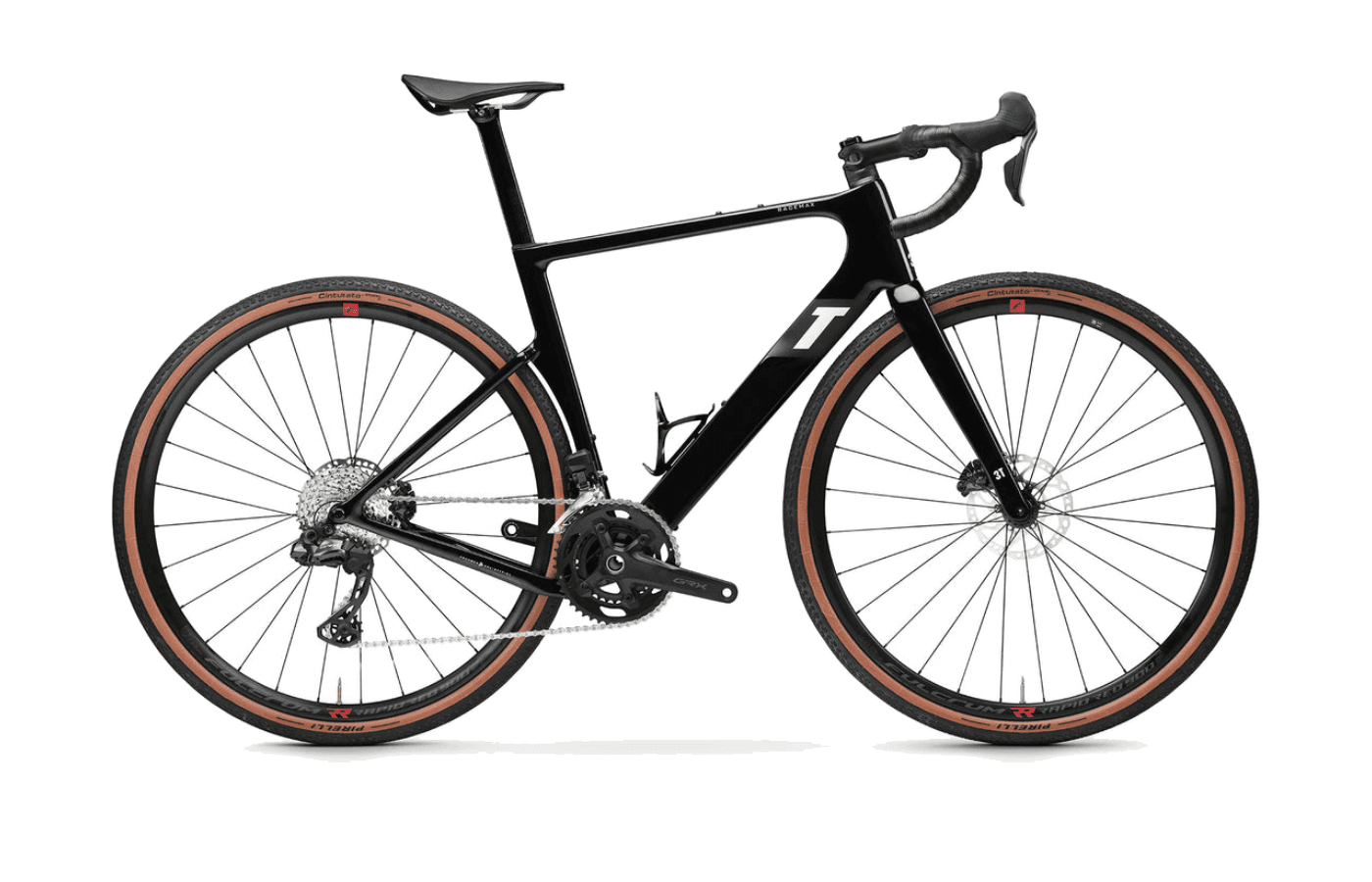
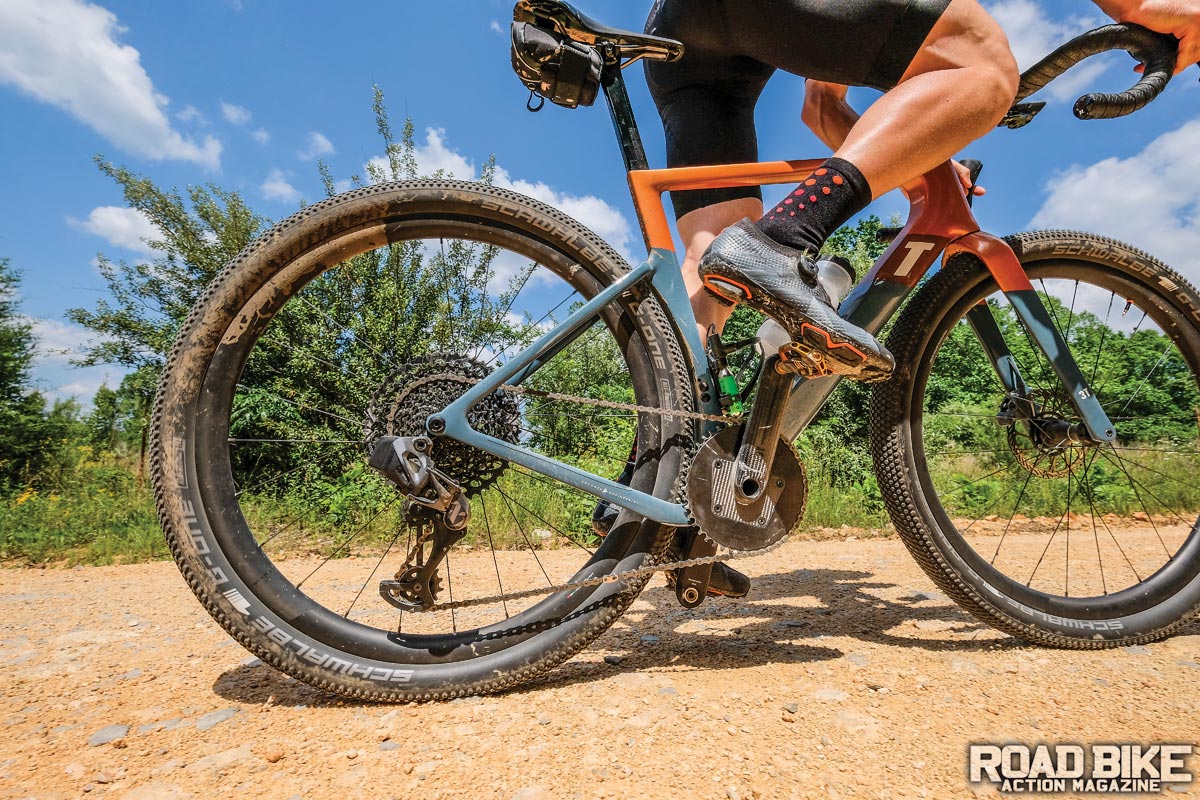
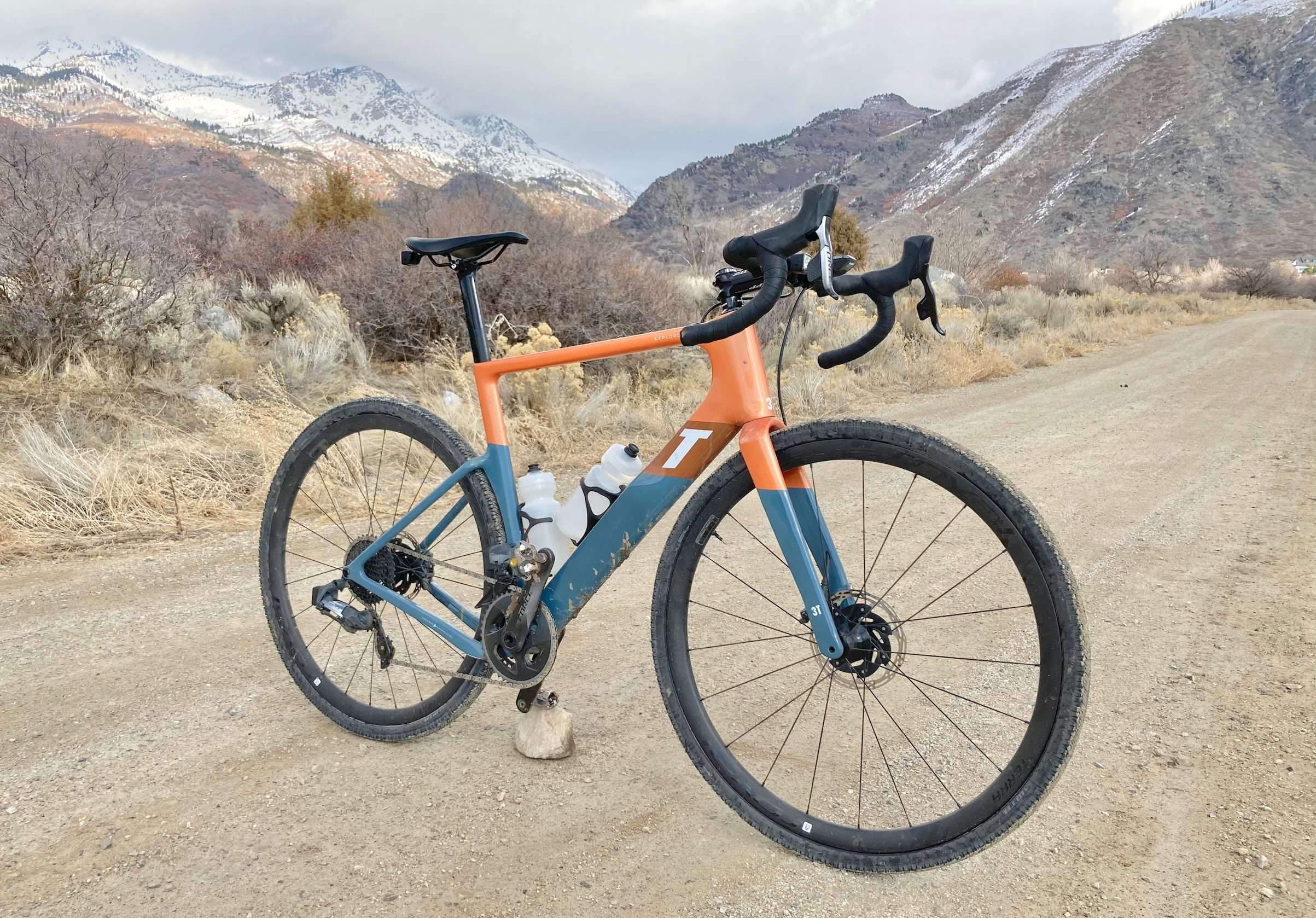
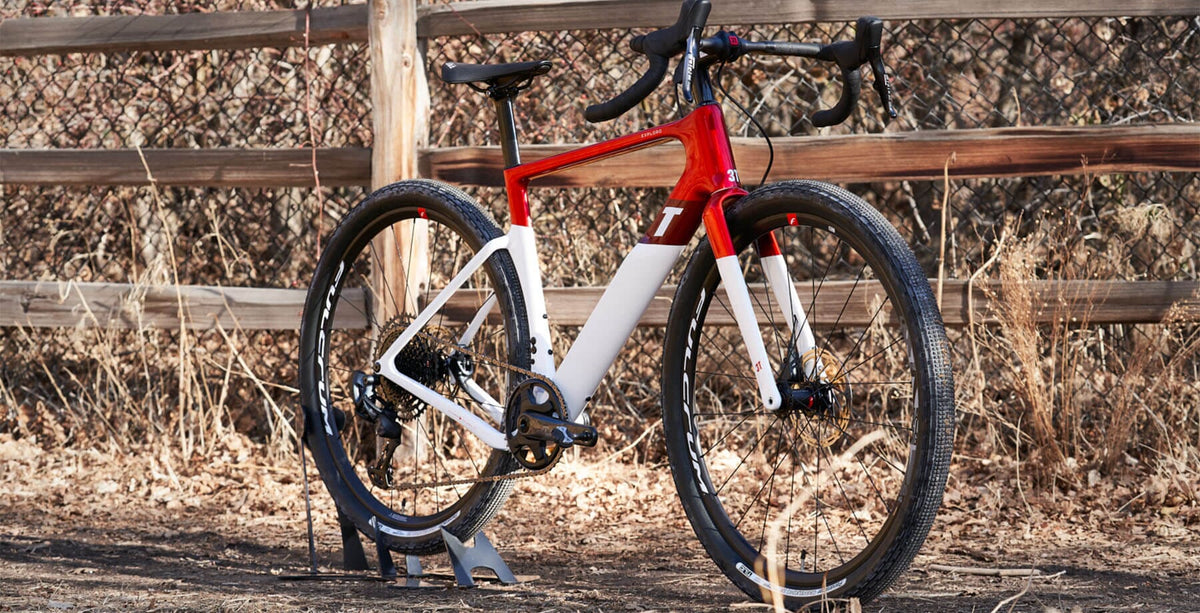
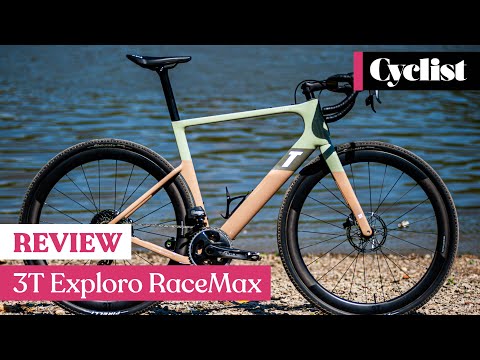
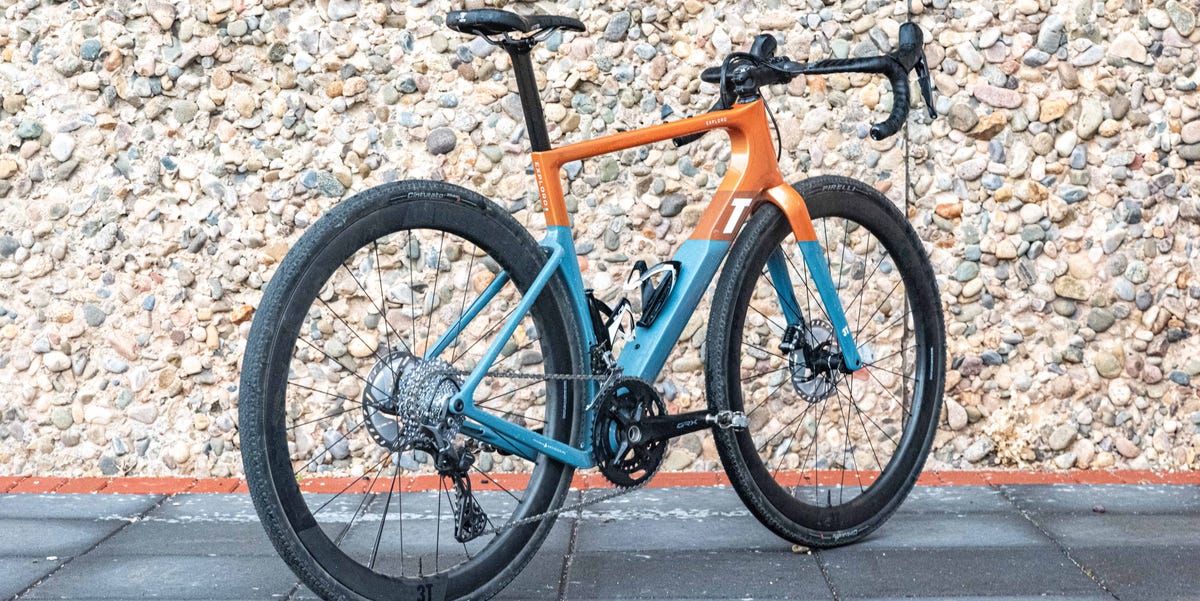
Introduced in 2020, the first-generation 3T RaceMax established the brand’s template for aerodynamic gravel racing. Designed around a massive truncated airfoil downtube and a close-fitting rear wheel cutout, the frame prioritizes outright speed over rugged utility. 3T built the platform around its WAM (Width As Measured) and RAM (Radius As Measured) concepts, intending riders to swap between 700c wheels for fast dirt and 650b wheels for rougher terrain.
Over its lifespan, the RaceMax solidified its position as 3T’s dedicated race bike. The platform saw a few key revisions without changing the underlying frame generation. In mid-2023, the Racemax 418 update expanded 700c tire clearance from roughly 42mm to 46mm WAM. Later, in 2024, 3T introduced Integrale versions featuring fully hidden cable routing. It suits riders who want a highly efficient, road-like chassis that maintains momentum across mixed surfaces.
Geometry & fit.
6 sizes published.
The RaceMax geometry closely mirrors an endurance road bike, placing the rider in a forward, aerodynamic posture rather than an upright touring position. 3T utilizes a short 370mm axle-to-crown fork and tight 418mm chainstays to keep the wheelbase compact, resulting in quick, road-like steering inputs.
To maintain consistent handling across the six-size run, 3T varies the bottom bracket drop from 77mm on the smallest frames to 73mm on the largest, equalizing pedal clearance. The fork offset also shifts between 53mm, 54mm, and 61mm depending on the size, keeping trail figures relatively low to preserve agility. The resulting fit is aggressive for a gravel bike, demanding a bit more core engagement than slacker, off-road-focused alternatives.
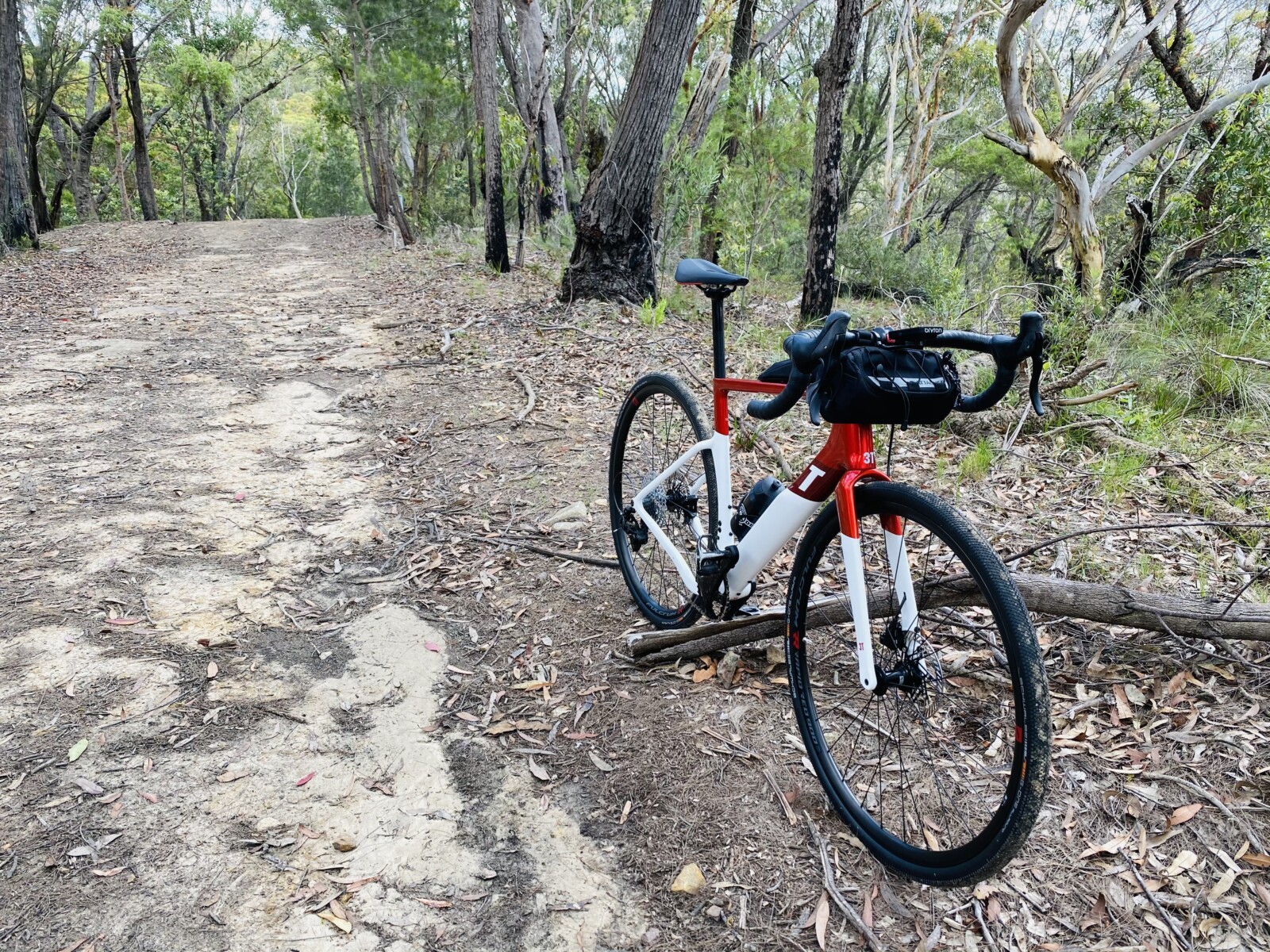
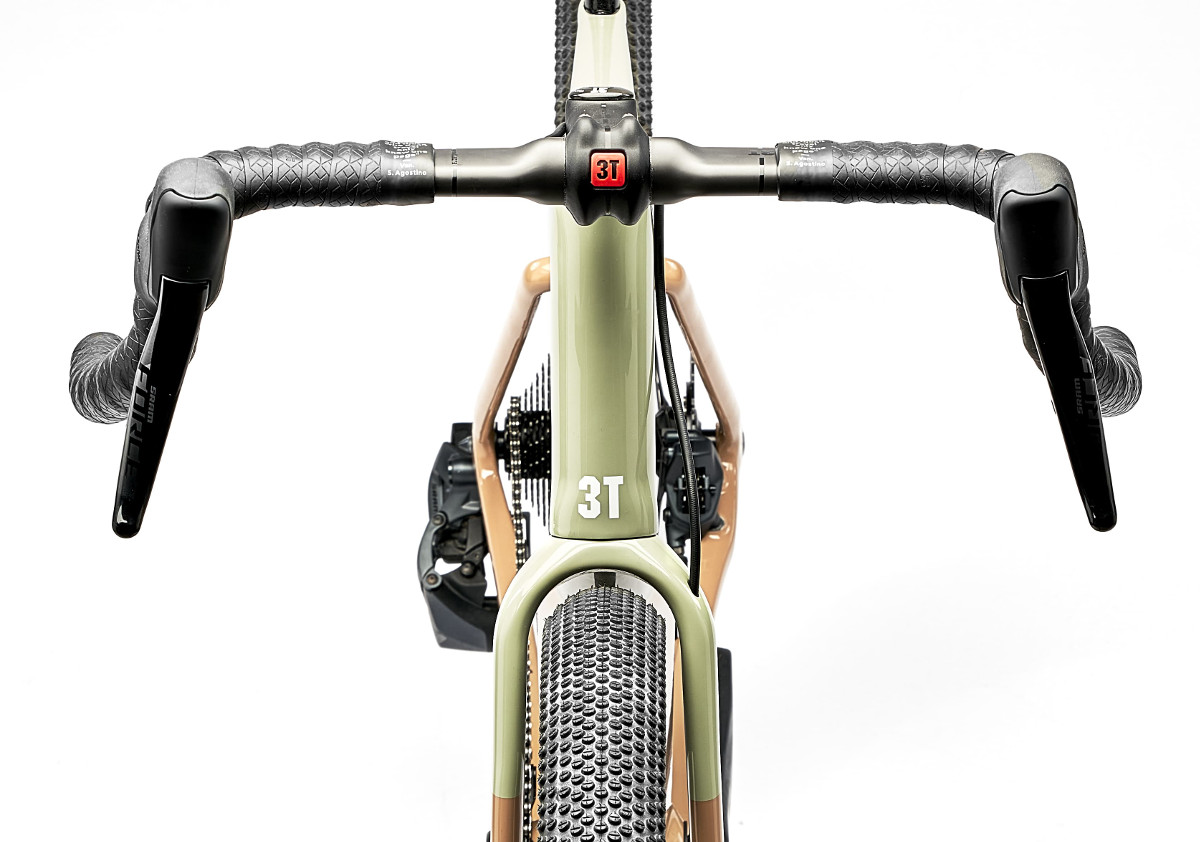
Cockpit setups emphasize aerodynamics, with most builds featuring 3T’s Aeroghiaia or Superergo carbon handlebars. Later Integrale models route cables entirely through the stem and headtube, cleaning up the front end but complicating fit adjustments. The proprietary aero seatpost uses a zero-offset Ritchey clamp, which limits fore-aft saddle positioning for riders who prefer a pronounced setback.
Where the handlebar sits relative to the bottom bracket — the single most important fit pair.
01Fit geometry5 values
03Handling geometry9 values
Which size should I buy?
Slide your height to see the recommended size. GearWise's fit algorithm works from the published stack, reach, and ETT — the brand's own recommendation may differ.
→Calculated from GearWise's own stack / reach / ETT algorithm — the brand's size chart may recommend a different size, and a proper bike fit beats any calculator.
The lineup.
4 builds, ranging $6,799 – $9,199.
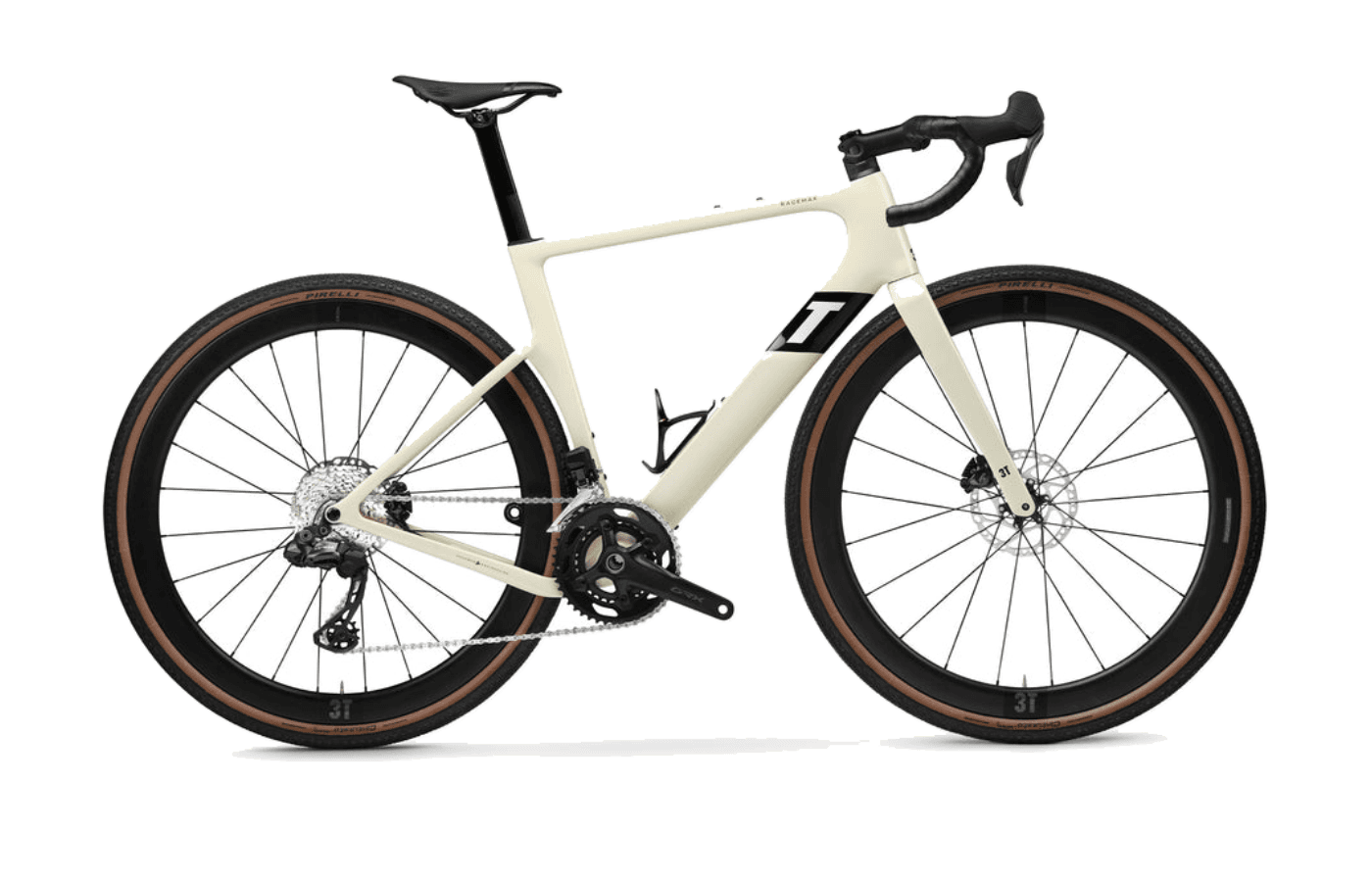
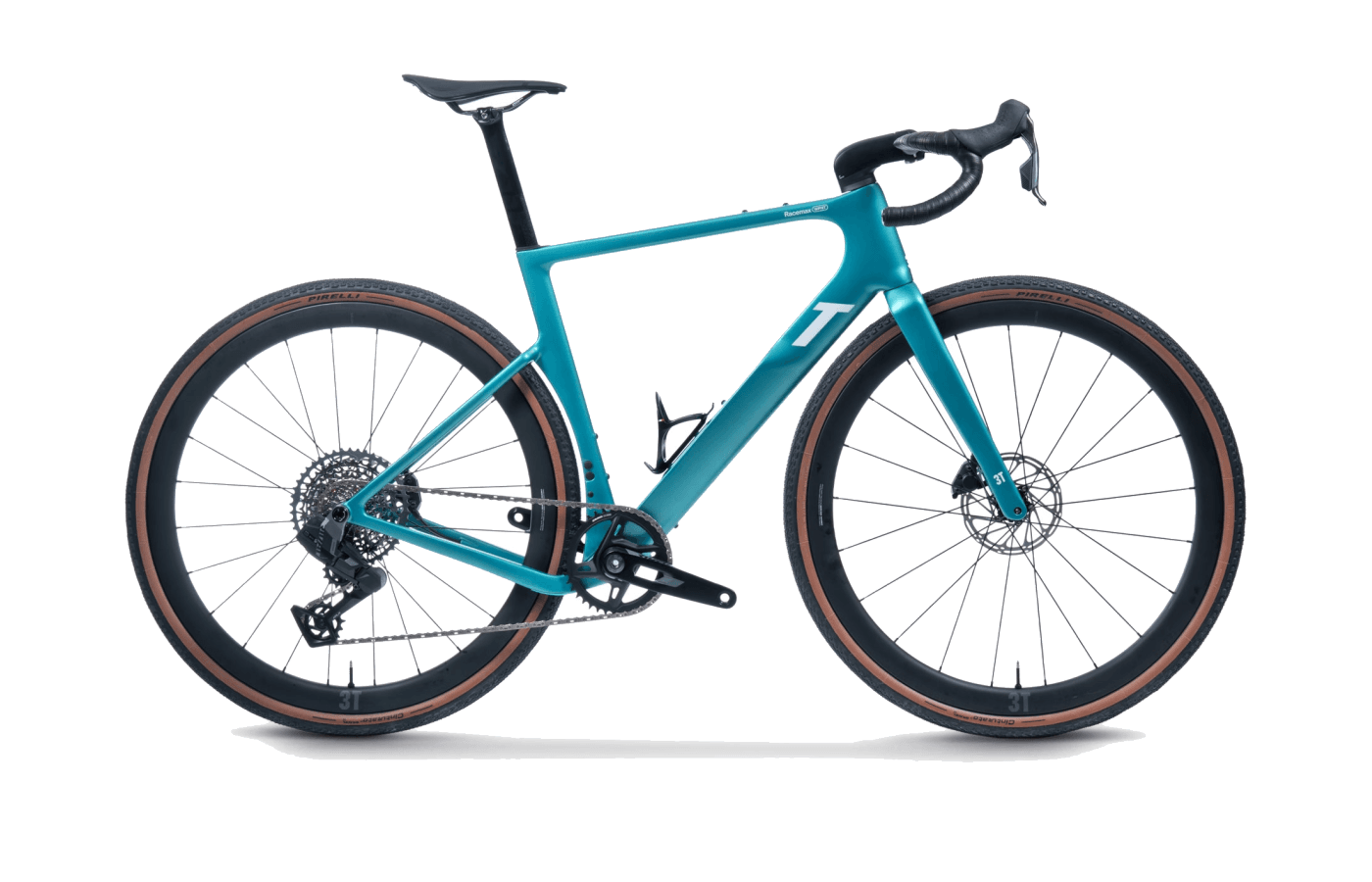
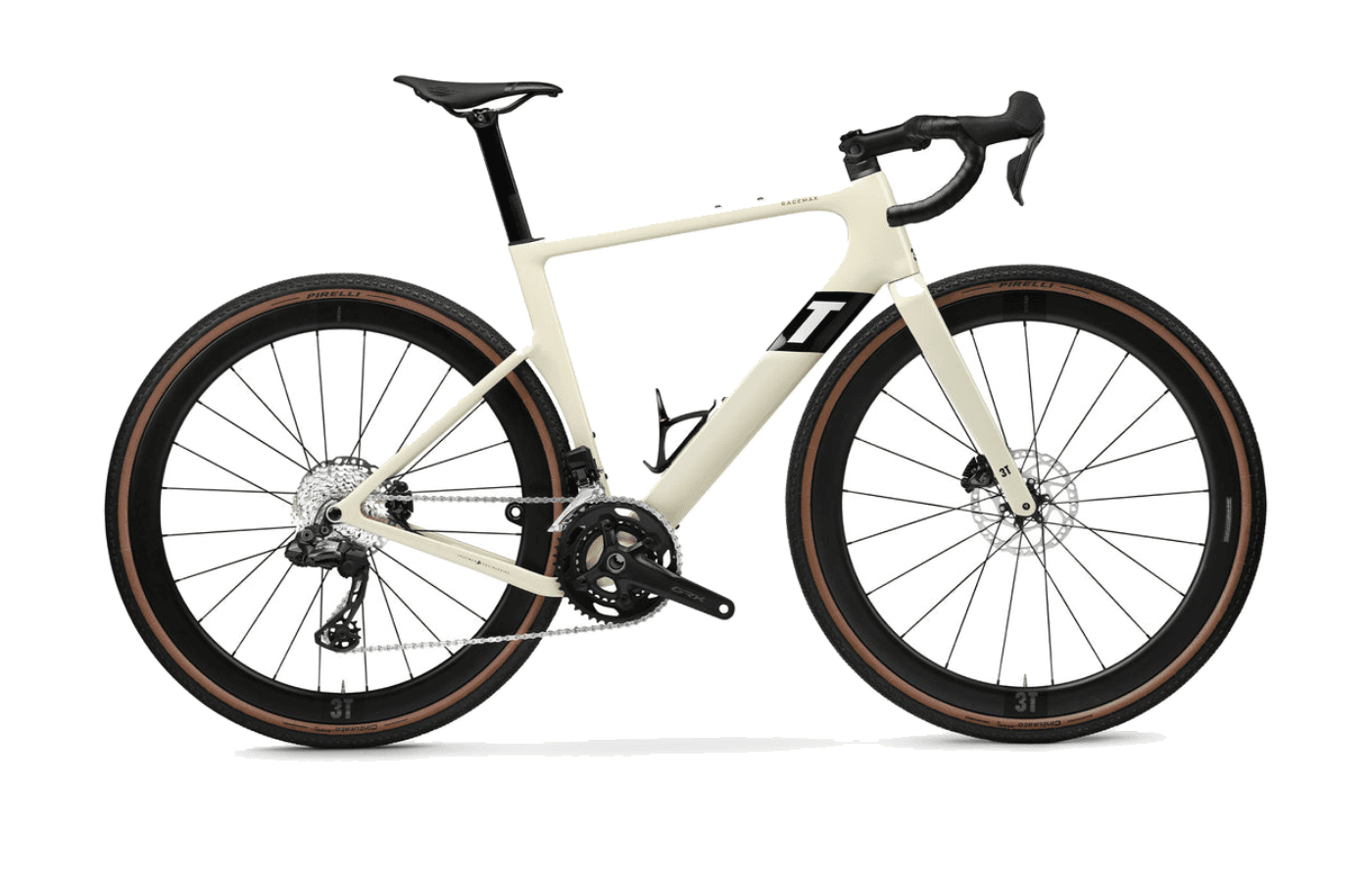
The RaceMax build ladder spans from $6,799 to $9,199, focusing entirely on premium electronic drivetrains. The lineup splits between Shimano GRX Di2 2x12 setups for tighter gear steps and a SRAM Rival XPLR AXS 1x13 build for wide-range simplicity.
The entry point is the Integrale GRX Di2 700c model, which pairs the carbon frame with alloy Fulcrum wheels and a standard 3T Superergo handlebar. Moving up the range introduces significant material upgrades. The Integrale WPNT GRX Di2 build swaps in 3T’s Discus 40|30 carbon wheels, which better complement the frame’s aerodynamic profile.
At the top end, the WPNT builds feature the updated UDH-compatible frame and the Aeroghiaia Integrale LTD carbon handlebar. These premium models also utilize the Discus 40|30 carbon wheelset wrapped in 40mm Pirelli Cinturato Gravel H tires. Because the RaceMax relies heavily on aerodynamics, the base alloy wheels are often viewed as a limiting factor for outright speed. Consequently, the higher-tier builds with deep-section carbon wheels represent the clearest realization of the bike’s intended design.
From the press.
16 reviews from the cycling press.
Reviewers consistently characterize the RaceMax as a rigid, highly efficient chassis that relies almost entirely on tire volume for compliance. On smooth dirt and pavement, the stiff frame and aerodynamic tube shapes help riders maintain momentum. The bike "glides along at speed with ease" (Bicycling), and testers frequently praised its ability to "bomb down paved roads at high-speed" (Bike Rumor). Power transfer is immediate, delivering a "spritely response to any injections of power" (Cyclist Magazine) when sprinting or climbing out of the saddle.
However, this unyielding stiffness creates distinct tradeoffs. With narrower 700c tires, the ride can feel harsh on rough terrain, with one reviewer finding the pedaling efficiency came at the cost of a "dull and lifeless" (Velo) sensation over extended washboard. Handling also draws mixed reactions depending on the wheel setup and speed. While stable on fast, open gravel, the aggressive geometry requires an active rider in technical sections. At lower speeds with 700c wheels, the steering can feel "oddly twitchy immediately off-center" (Velo), though swapping to wider 650b tires generally smooths out both the ride quality and the handling quirks.

3T Exploro Racemax Review — Boundless
3T Exploro RaceMax review | BikeRadar
2021 3T Exploro RaceMax Review: The Fastest Gravel Bike in ...
3T EXPLORO RACEMAX GRAVEL BIKE TEST

3T Exploro RaceMax Review: A Numbers Game in the Gravel Bike World
3T Exploro RaceMax 1x and 2x Review
Bike & New Groupset Review: 3T Exploro RaceMax With Campagnolo EKAR

3T Exploro RaceMax review: A one-bike solution with one big downside
3T Exploro RaceMax Review - A Numbers Game
Gravel Bike Test: 3T Exploro RaceMax

3T Exploro RaceMax review
3T Exploro RaceMax Review
3T Exploro RaceMax Review | Best Gravel Bikes
First Ride: 3T Exploro Race Max

Review: The new 3T Exploro RaceMax is every bit ...
Compared to.
Most-viewed comparisons.