Grizl
vsCrux
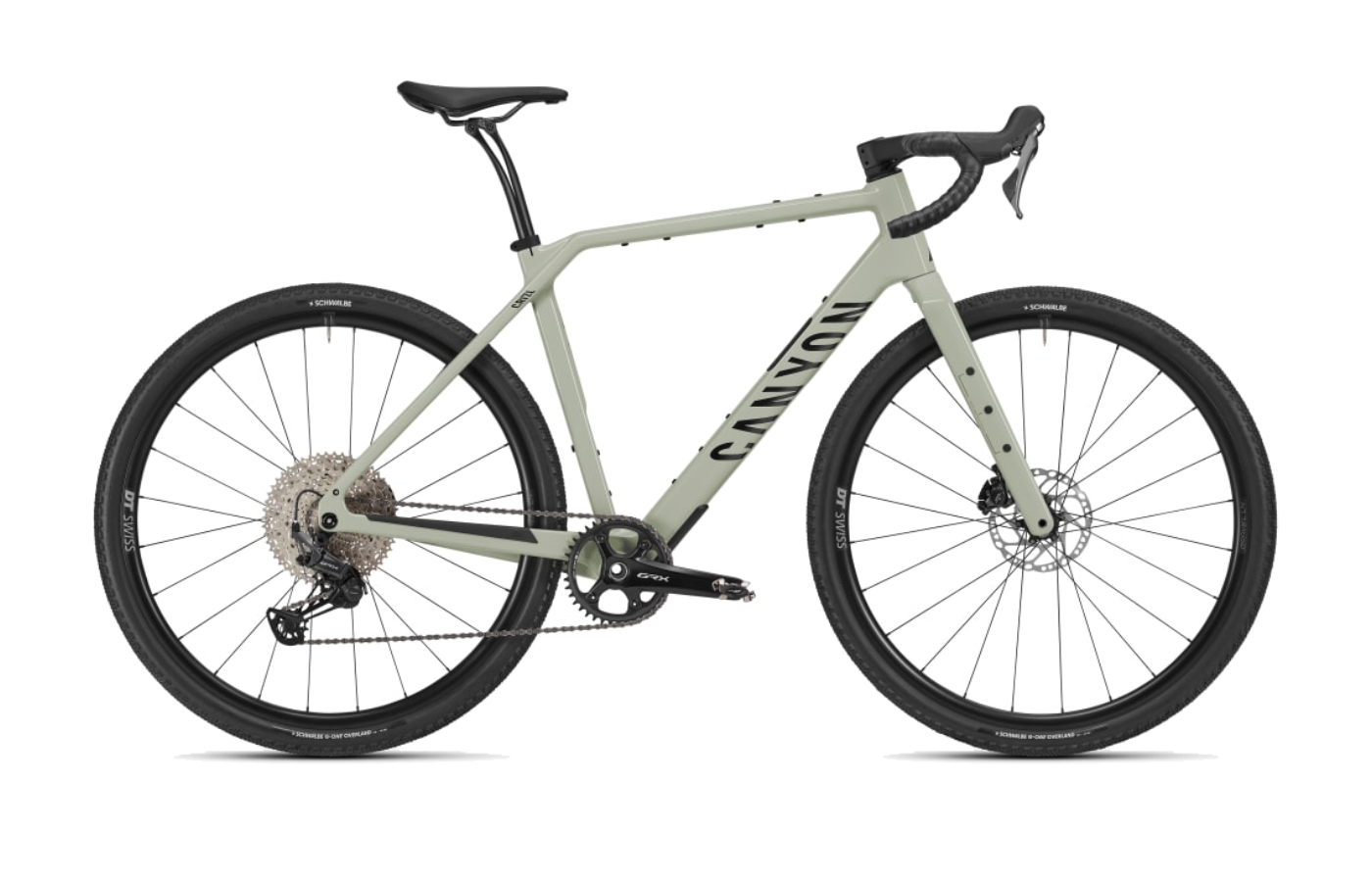
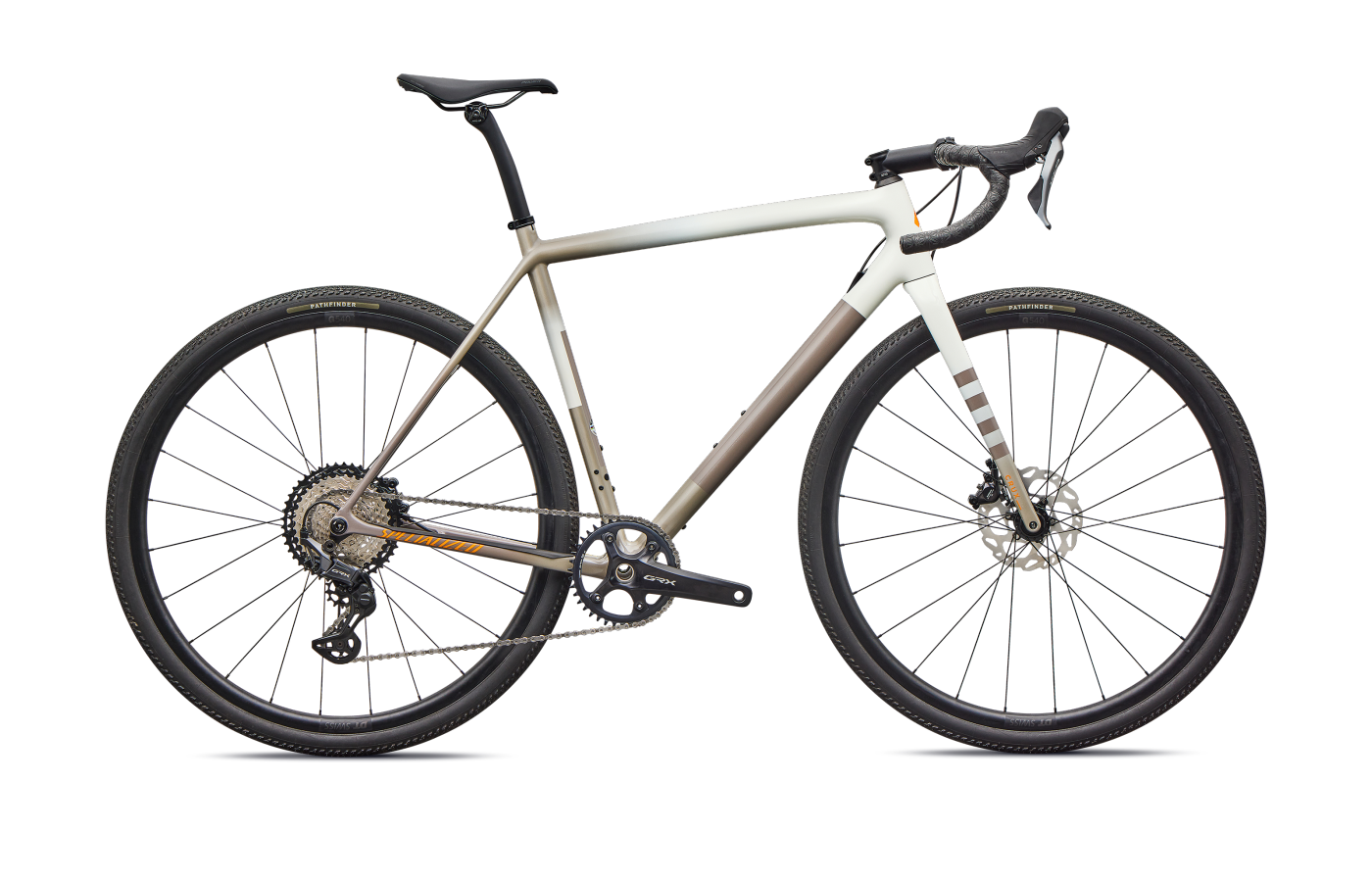
Two gravel bikes, two opposite priorities.
The Grizl is built for self-supported adventure with 54 mm clearance and integrated dynamo lighting. The Crux chases the lightest, sharpest gravel race bike in the segment.
Grizl
- Class-leading 54 mm tire clearance — bigger than most "adventure" gravel rivals, opening the door to 2.1" mountain bike rubber.
- DTC value — $3,399 buys a full carbon frame and fork with GRX 12sp mechanical; competitors charge ~$5,000 for the same spec.
- Bikepacking-ready out of the box — VCLS compliance seatpost, LOAD downtube storage, dozens of mounts, and the optional ECLIPS dynamo lighting package.
- Stable but slow-steering — reviewers describe it as "more of a boat" than racier gravel bikes.
- Heavy: even the carbon CF 8 weighs in around 10.6 kg with racks, well above any equivalent Crux.
Crux
- Astonishingly light — 725 g claimed S-Works frame, 6.94 kg complete bike. Climbs and accelerates like a road race bike.
- Race-bred handling — sharper 72-degree HTA and 425 mm chainstays across all sizes deliver the snappiest steering in the category.
- Refreshingly serviceable — threaded BSA bottom bracket, round 27.2 mm seatpost, two-piece cockpit. No proprietary headaches.
- 47 mm tire clearance and almost no mounts make it a poor bikepacking choice.
- Mid-tier builds (Comp, Expert) attract criticism for spec-to-price ratio versus DTC competitors.
Editor’s analysis
This isn't a fight over which is the better gravel bike — it's a question of whether you want to carry stuff and finish or show up first.
On paper they share a category, but the design briefs barely overlap. The Canyon Grizl is built around long days, loaded bags, and 54 mm tires — a slacker 71-degree head angle, 435 mm chainstays, and a wheelbase that stretches past 1040 mm even in size S. The Specialized Crux is a stripped-down race chassis borrowed from the Aethos road platform, with a 725 g S-Works frame, sharper 72-degree steering, and 425 mm chainstays across every size.
The Grizl wins the value and capability conversation outright. Canyon's CF 7 build pairs a full carbon frame and fork with mechanical GRX 12-speed for $3,399 — the equivalent Crux Comp is $3,999 and gives up clearance (47 mm vs 54 mm) and a long list of bikepacking mounts. Add the ECLIPS dynamo system on the $4,699 CF 8 ESC and Canyon ships a complete dynamo-hub-plus-Lupine-lights package that would cost over $1,200 to assemble aftermarket.
The Specialized Crux wins the moment the road tilts up or the timing chip goes on. The S-Works build hits 6.94 kg complete; even the mid-tier Expert is under 8 kg. Reviewers consistently call it "lighter than many road bikes" and praise its road-bike-grade lateral stiffness. It accelerates, climbs, and carves like nothing else in the segment — and the 47 mm clearance is enough for any race course you'll line up on.
Put another way: the Canyon Grizl is the bike you buy when the route involves a sleeping bag. The Specialized Crux is the bike you buy when the route involves a number plate. Stretch either one too far outside its lane and the other one starts looking awfully appealing.
Where the builds differ.
Comparing our editor's-pick builds side-by-side. Winners highlighted row-by-row — lower price and weight, and the better-spec component, each mark a point.
Build variants & pricing
Both lineups span ~$3k. Canyon caps out at $4,699 with the ECLIPS dynamo build; Specialized scales all the way to a $11,999 S-Works.
Prices are current US MSRP. The Grizl tops out where the Crux is just hitting the middle of its range — buy a Crux if the upper builds matter to you, buy a Grizl if you'd rather spend the difference on bags and a trip.
How they fit, how they steer.
Grizl size S vs Crux 54 — the closest fit-picked match for a 5'8" rider on each platform. The Grizl sits 4 mm taller in stack with 9 mm more reach, a 1.25-degree slacker head angle, and 10 mm more chainstay. It's the calmer, more upright bike by design.
Which size should I buy?
Size recommendations based on stack, reach, and effective top tube. The Crux runs numeric road-bike sizing (49–61); the Grizl uses alpha sizing (3XS–2XL) with a notably wider range at the small end.
→These are starting points. Flexibility, riding style, and preferred position all shift the answer — if you’re between sizes, a professional fit beats a chart.
What the magazines said.
Published reviews from trusted cycling outlets. Click through for the full write-up.
Which one should you buy?
If you want one bike for bikepacking, mixed-surface exploration, and loaded touring, get the Grizl. If you want to race gravel or treat it as a fast second road bike, get the Crux.
Grizl
If your riding involves multi-day routes, frame bags, and the occasional patch of singletrack, the Grizl is purpose-built for it. The 54 mm clearance, VCLS seatpost, and ECLIPS dynamo option give you genuine self-supported capability — and Canyon's DTC pricing means you'll have budget left over for the trip itself.
Crux
If you race or ride gravel for the speed of it, the Crux is the lightest, sharpest tool in the segment. It climbs like a road bike, accelerates out of corners with no hesitation, and doubles as a credible road bike with a tire swap. Just don't expect it to like loaded touring.
Questions buyers actually ask.
Short answers to the things we get emailed about most often.
01Which is faster on smooth gravel and pavement?
The Specialized Crux, by a wide margin. The S-Works build comes in at 6.94 kg — lighter than most carbon road bikes — and reviewers consistently call it the "most road-capable gravel bike" they've ridden. On a flat road segment it'll hang with a roadie group; the Grizl, even in carbon CF 8 trim, weighs in around 10.6 kg and is built for stability over speed.
The gap shrinks once the surface gets rough. On chunky terrain the Crux's race-firm fork transmits feedback to the hands, while the Grizl just rolls through it.
02Which one is better for bikepacking?
The Canyon Grizl, with no real argument. It has 54 mm tire clearance vs the Crux's 47 mm, a downtube storage compartment, more mounting points than most riders will ever use, and the optional ECLIPS dynamo system that integrates a SON hub, a Lupine battery, and bar-mounted lights with USB-C charging.
Specialized explicitly designed the Crux without rack and fender mounts to save weight. You can strap-on bag it for a credit-card overnighter, but for genuinely loaded multi-day trips the Grizl is the right tool.
03What's the maximum tire clearance?
Canyon Grizl: 54 mm officially across all carbon and alloy frames. That's enough for a true 2.1" mountain bike tire — Flow Mountain Bike noted reviewers were "remarkably composed" on singletrack at this width.
Specialized Crux: 47 mm with 700c wheels, or 2.1" with 650b. Plenty for racing or fast mixed-surface riding, but a noticeable step down from the Grizl when the trail gets technical.
04How does the gearing compare?
Both editor's-pick builds run Shimano GRX 12-speed mechanical with a 1x 40-tooth chainring, which keeps the comparison clean. Cassette ranges and total weight differ but the shifting feel is essentially identical.
Further up each lineup the philosophies diverge: Canyon offers ECLIPS-equipped builds with mullet-style mountain bike cassettes (10–51T) for loaded climbing, while Specialized's Pro and S-Works scale into SRAM Force and Red XPLR with a tighter 10–44T spread tuned for racing.
05Why is the Crux so much more expensive at the top?
Two reasons. First, Specialized sells through dealers; Canyon sells direct. That alone explains roughly a 25–30% sticker premium across the lineup at equivalent spec.
Second, the Crux frame is genuinely a halo product — the FACT 12r S-Works frame is claimed at 725 g, putting it among the lightest gravel frames ever made, and the build culminates in a $11,999 SRAM Red XPLR / Roval Terra CLX II package. Canyon's lineup tops out at $4,699 with the ECLIPS dynamo system instead of chasing weight.
06Can I race cyclocross on the Grizl?
Technically yes, in practice no. The Grizl's 71-degree head angle, 435 mm chainstays, and ~10 kg weight are the opposite of what makes a CX bike fast through tight turns and barriers.
The Crux is the right tool here — it's literally Specialized's cyclocross platform, with race-grade geometry, a low BB, and excellent mud clearance. Reviewers confirm it remains a competent UCI-legal CX racer despite its repositioning as a gravel bike.
07How serviceable are these bikes long-term?
The Crux is unusually friendly: a threaded English BSA bottom bracket (no press-fit creak), a round 27.2 mm seatpost with an external clamp, and a conventional two-piece cockpit. Reviewers across the board praise the lack of proprietary parts.
The Grizl is more mixed. The 2025 update reverted to a standard 1 1/8" steerer and external seatpost clamp — both wins. But Canyon retained a press-fit bottom bracket and uses a one-piece carbon cockpit on most CF builds, which limits stem length swaps.
08What about warranty and post-sale support?
Both come with lifetime frame warranties to the original owner against manufacturing defects, plus crash replacement programs.
The practical difference is the dealer network. Specialized has the largest brick-and-mortar footprint in cycling — warranty work and fit help are usually a short drive away. Canyon ships direct from a single warehouse and handles support via phone and email; reviewers and owners have flagged this as a friction point if anything goes wrong.
Similar bikes
If your priorities don’t map cleanly onto either of these, one of these adjacent bikes probably fits better.
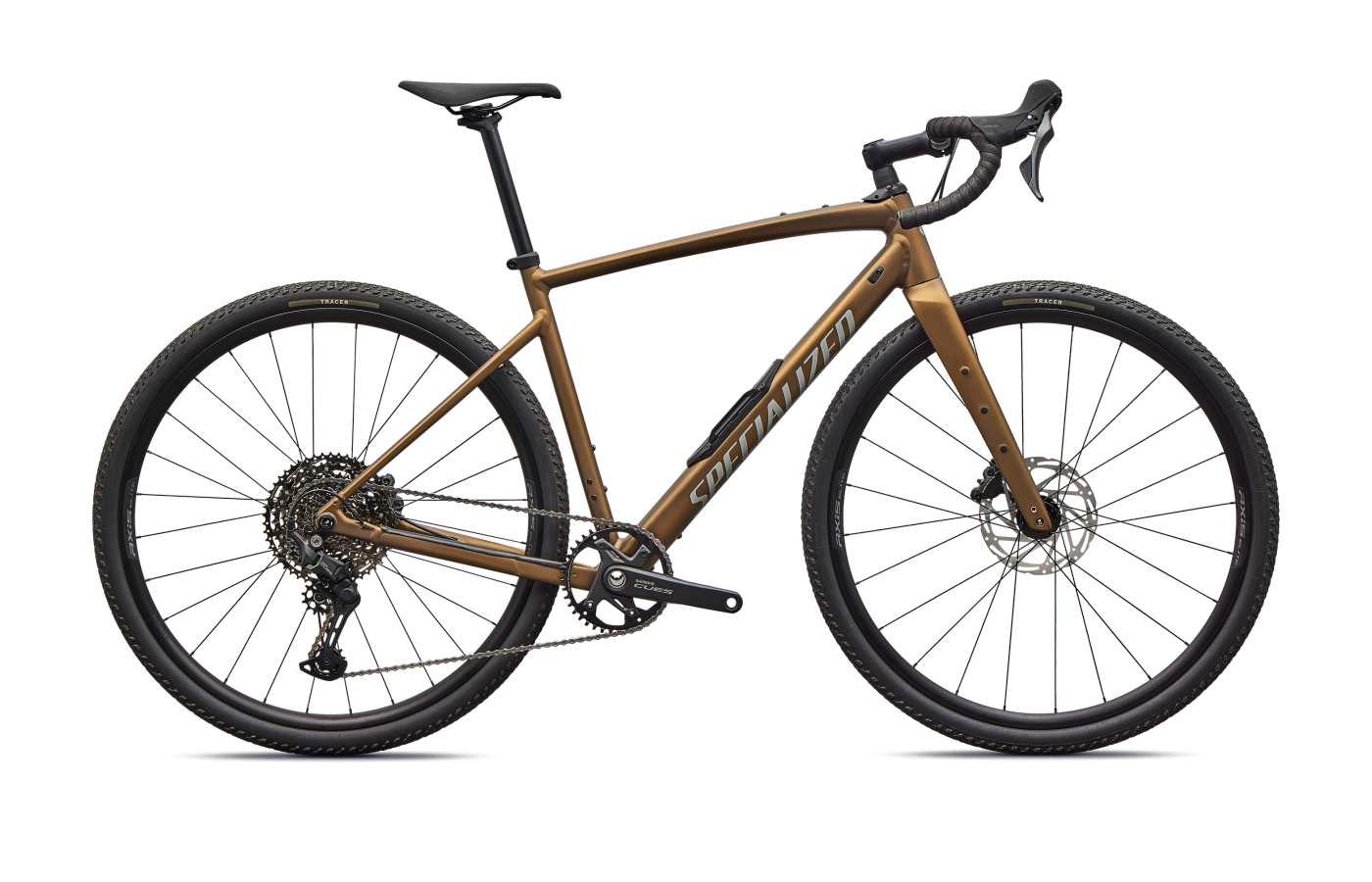
Diverge
Specialized's middle path between these two — keeps the Crux's pedigree but adds Future Shock front suspension, a dropper-compatible frame, and proper rack mounts. The bike to consider if you want one Specialized for both group rides and overnighters.
Compare →
Grail
Canyon's race-focused gravel sibling to the Grizl — sharper, lighter, and built around the divisive Hoverbar cockpit. Same DTC pricing, same factory, but tuned to chase Crux-style speed instead of bikepacking capability.
Compare →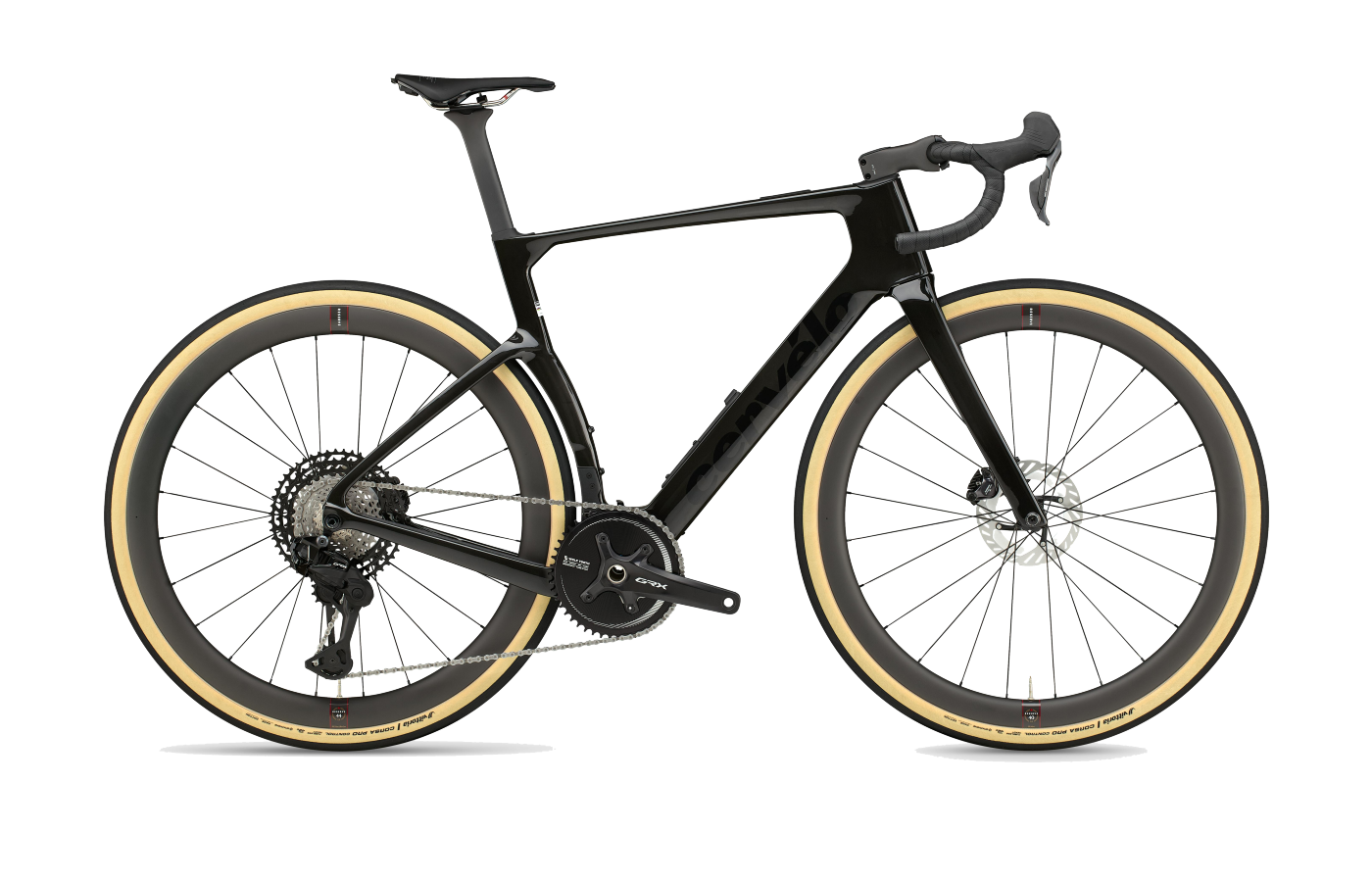
Aspero-5
If the Crux's race brief speaks to you but you want aero tube shapes for flat-out gravel racing, the Aspero-5 is the direct rival — equally light, equally sharp, with a slipperier silhouette.
Compare →