Grail
vsKanzo Fast
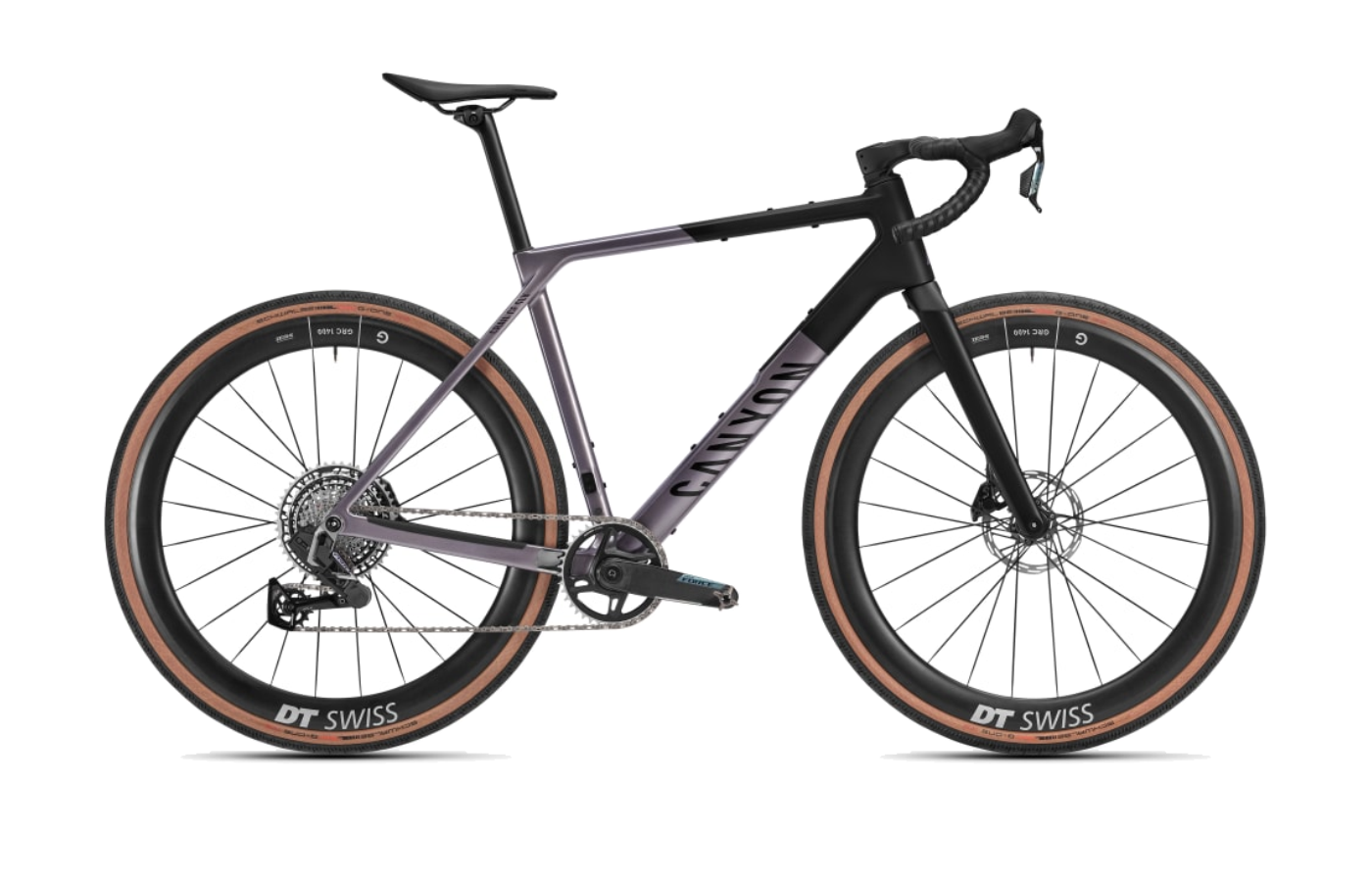
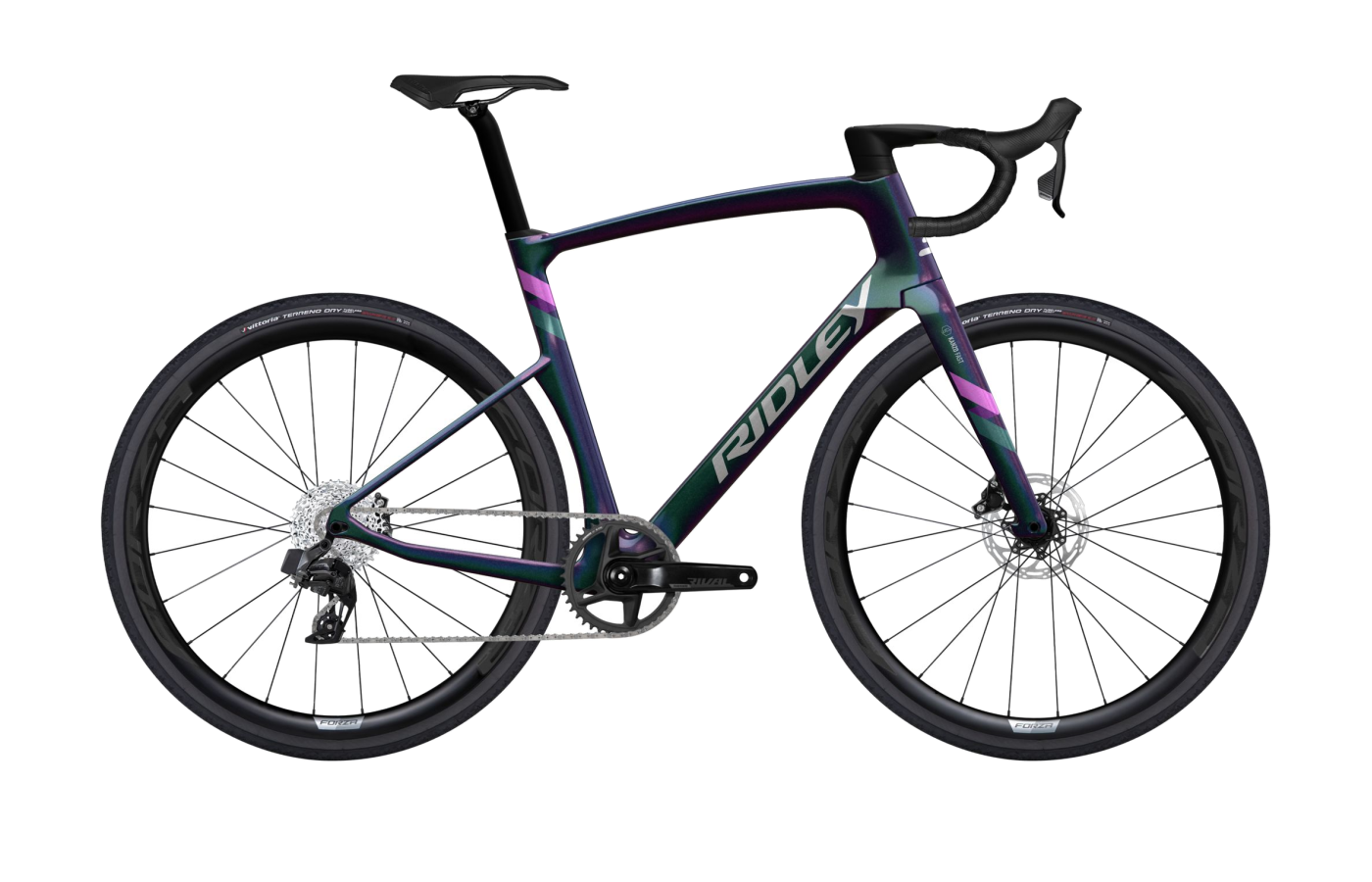
Two aero gravel bikes, two race philosophies.
The Canyon Grail is a long-wheelbase missile built for ultra-distance attrition. The Ridley Kanzo Fast is a road racer that wandered onto a fire road and refused to slow down.
Grail
- Long-wheelbase stability — 1,024 mm at size XS, with a degree of slacker head angle versus Gen 1, for confident high-speed tracking on rough gravel.
- Integrated frame storage — LOAD down-tube compartment plus a Fidlock-mounted frame bag Canyon claims is aero-positive at speed.
- Direct-to-consumer pricing — a full Force XPLR AXS, DT Swiss GRC 1400 carbon, integrated cockpit build for $6,099.
- Firm ride — reviewers consistently flag that the D-shaped seatpost and stiff cockpit transmit chatter on rougher terrain.
- Stock 420 mm bar on XS/S frames is wide for smaller riders, and the integrated cockpit limits cheap fixes.
Kanzo Fast
- Road-bike-sharp acceleration — a stiff oversized bottom bracket and short 1,017 mm wheelbase make every effort feel snappy out of the saddle.
- Online configurator — 42 colors, multiple drivetrain choices, and Classified Powershift hub options that fake a 2x range without a front derailleur.
- Mudguard mounts — a rare addition on a race-focused gravel bike, making it a viable winter trainer.
- Ride 'reaches its limits quickly' on rooty or technical terrain (Granfondo) — the aero frame doesn't hide bigger hits.
- 42 mm tire ceiling, and some older builds shipped with road-narrow 17 mm internal rims that wallow at low pressures.
Editor’s analysis
Both cap their tire clearance at 42 mm and chase the same race-day stopwatch — but they get there from opposite ends of the gravel map.
The Canyon Grail (Gen 2) and Ridley Kanzo Fast share a thesis: aero shapes, integrated cockpits, 1x-friendly drivetrains, and a flat refusal to entertain bikepacking ambitions. Both quote multi-watt aero claims (9.1 W for the new Grail at 45 km/h; Ridley puts the Kanzo at 17 W vs. an 'ordinary' gravel bike). Both come with one-piece carbon cockpits that look fast and limit fit. The differences start the moment you compare wheelbases.
The Canyon Grail stretches out. At a fit-picked XS for our 5'8" reference rider it runs a 1,024 mm wheelbase, with the Gen 2 platform adding 27 mm over the previous Grail and slackening the head tube a degree to 71.5 on most sizes. Reviewers describe it as 'calm, confident and stable' (BikeRadar) and 'snappy yet stable' (Road.cc) — a long, planted machine engineered for the grueling middle hours of an Unbound effort. The down tube hides Canyon's LOAD storage and a Fidlock frame bag that Canyon claims is faster than no bag at all.
The Ridley Kanzo Fast stays road-bike compact. Its small frame sits 7 mm shorter at the wheelbase (1,017 mm) on a slightly steeper front-end character, with NACA-profile tubes and F-Wings on the fork lifted directly from the Noah Fast. Reviewers call it 'extremely responsive,' 'lightning-fast,' and a bike that 'goaded me into pushing hard constantly' (Cyclist Magazine). Where the Grail wants you to settle in for hours, the Kanzo Fast wants you to attack the next roller out of the saddle.
Put another way: the Canyon Grail is the bike you buy when your A-race is six hours long and the surface is mostly compact gravel. The Ridley Kanzo Fast is the bike you buy when your A-race is two hours, half-paved, and won by whoever can hang in the front group when the road tilts up. Both will eat each other's lunch on the wrong terrain.
Where the builds differ.
Comparing our editor's-pick builds side-by-side. Winners highlighted row-by-row — lower price and weight, and the better-spec component, each mark a point.
Build variants & pricing
Both run 1x-leaning lineups. Canyon scales from $2,899 (GRX 12s) up to $6,099 (Force XPLR AXS); Ridley sells through configurator builds and dealers, with a Red XPLR 1x13 flagship sitting above the Force AXS pick.
Prices are current US MSRP where published. Ridley's North American pricing is dealer- and configurator-driven, so the Force XPLR pick may carry a meaningful premium versus the Canyon equivalent — direct-to-consumer is a real cost lever here.
How they fit, how they steer.
Compared at the fit-picked sizes for a 5'8" rider — XS Canyon Grail vs. S Kanzo Fast. The Ridley sits 7 mm taller at the stack with 5 mm less reach, on a 7 mm shorter wheelbase. Same 71° head tube, same 425 mm chainstays, same 73.5° seat tube — but the Kanzo's BB sits 3 mm higher off the ground.
Which size should I buy?
Sizing recommendations from stack, reach, and effective top tube. Canyon runs from 2XS to 2XL; Ridley spans XS to XL. Canyon notably sizes large — riders on a Medium elsewhere often land on a Small Grail.
→These are starting points. Flexibility, riding style, and preferred position all shift the answer — if you’re between sizes, a professional fit beats a chart.
What the magazines said.
Published reviews from trusted cycling outlets. Click through for the full write-up.
Which one should you buy?
If your race is six hours of compact gravel, get the Grail. If your race is a paceline that occasionally turns onto a fire road, get the Kanzo Fast.
Grail
If your calendar is built around 200-mile efforts on smoother gravel — Unbound, Mid South, BWR — the Grail's long wheelbase, integrated storage, and slacker geometry are tuned for exactly that. It's a bike that asks you to settle in and hold pace, not attack every roller.
Kanzo Fast
If you came to gravel from a road racing background and want a bike that feels like your road bike on tarmac and a road bike on hardpack — the Kanzo Fast's tight wheelbase, stiff BB, and Noah Fast tube shapes are exactly that. It rewards aggression and punishes lazy lines.
Questions buyers actually ask.
Short answers to the things we get emailed about most often.
01Which is faster on smooth, rolling gravel?
Pick the right tool for the right surface. The Ridley Kanzo Fast has the larger published aero claim — Ridley quotes 17 W saved versus an 'ordinary' gravel bike — and reviewers consistently call it 'lightning-fast' on hardpack and tarmac.
The Canyon Grail Gen 2 quotes a more modest 9.1 W gain over the previous Grail at 45 km/h, but its longer wheelbase and slacker head tube mean less rider energy spent fighting the front end at speed. On a long, flat-ish course, the Grail's stability advantage often eats Ridley's tube-shape advantage.
02Which handles rough or technical terrain better?
Neither is a singletrack bike — both cap tire clearance at 42 mm and reviewers flag both as firm.
The Grail is the more capable of the two when terrain gets ugly. Its longer 1,024 mm wheelbase (size XS) and 27 mm wheelbase stretch versus Gen 1 give it noticeably more composure on chattery, off-camber sections. Reviewers like Cyclist Magazine recount 'chasing folks riding mountain bikes on the gravel descents.'
The Kanzo Fast 'reaches its limits quickly' on rooted or rocky terrain (Granfondo). On compact dirt it's superb; on real off-road, it asks for a firm hand.
03What's the maximum tire clearance?
Canyon Grail: 42 mm officially. Stock builds ship with Schwalbe G-One RS or G-One R 40 mm tires.
Ridley Kanzo Fast: 42 mm officially, partly limited by the seat tube clearance to the rear tire (per Granfondo). Stock builds typically run Vittoria Terreno Dry 38 mm.
If you want anything wider than ~42 mm, neither bike is for you. Canyon's own Grizl and the Specialized Crux are better fits for adventure-oriented riding.
04Are both 1x-only?
Mostly. The Ridley Kanzo Fast frame is only compatible with 1x drivetrains (Granfondo, 2020). Ridley offers a Classified Powershift internal-hub option on several builds that adds a second virtual gear range without a front derailleur — close to a 2x in feel.
The Canyon Grail allows 2x. The CF SLX 8 Di2 build runs Shimano GRX Di2 2x with a 4iiii power meter, and the entry-level CF SL 7 GRX 12s also runs a 2x crankset. So if you want a true road-style double, only the Canyon delivers it from the factory.
05How serviceable are the integrated cockpits?
Both bikes use one-piece integrated bar/stem combinations that limit easy fit changes.
The Canyon CP0039/CP0045 'Double Drop' cockpit is a one-piece carbon unit. Crucially, Canyon kept a standard 1 1/8" steerer, so you can swap to any third-party stem and bar if the stock combo doesn't fit — though Canyon-specific accessories (computer mount, frame bag, fork sleeves) only attach to the proprietary Gear Groove.
The Forza Cirrus Pro on the Ridley uses fully integrated cable routing through the F-Steerer — slick aesthetically, more involved for hose replacements. Ridley's online configurator at least lets you spec different bar widths up front.
06Which has the better entry price?
The Canyon, by a wide margin. The Grail range starts at $2,899 (CF SL 7 Shimano GRX 12s) and gets you a full carbon frame, GRX 12-speed mechanical, and DT Swiss alloy wheels. The CF SL 7 AXS at $3,299 adds electronic shifting.
Ridley does not publish a comparable budget entry point in the US, and even the lowest-tier Sram Rival builds are typically positioned well above the Canyon's floor when you factor in the configurator and dealer markup. Direct-to-consumer is the real budget lever here — if entry price is the deciding factor, the Grail wins by default.
07Can I run a road wheelset to convert it to a road bike?
Both work for this, but the Kanzo Fast is the more natural fit. Reviewers (Buycycle, Cyclist) repeatedly note that the Kanzo Fast 'feels every inch a road bike' on tarmac, with road-shop slick swaps creating 'a formidable and fast road bike.' The aero tube shapes were inherited directly from Ridley's Noah Fast, so the road DNA is genuine.
The Grail does the same trick less convincingly — its longer wheelbase and slacker head angle make it feel more 'fast gravel bike on tarmac' than 'road bike with knobs off.'
08Which has the better build quality and reliability long-term?
Both share known integrated-cockpit headaches — internally routed cables make headset service slower at the shop.
The Canyon Grail has a few specific concerns: Escape Collective received a test bike with assembly issues out of the box (misaligned brake caliper, warped rotor, misadjusted derailleur), and reviewers flag the press-fit bottom bracket as a long-term creak risk. Drivetrain reliability is a bright spot — GRX Di2 and SRAM AXS rated 9/10 for durability by road.cc.
The Ridley Kanzo Fast is generally praised for build quality (Granfondo notes 'high-quality workmanship'), but the seamless fork-to-down-tube transition collects mud that scours paint, and there's no chainstay protector on some builds.
Similar bikes
If your priorities don’t map cleanly onto either of these, one of these adjacent bikes probably fits better.
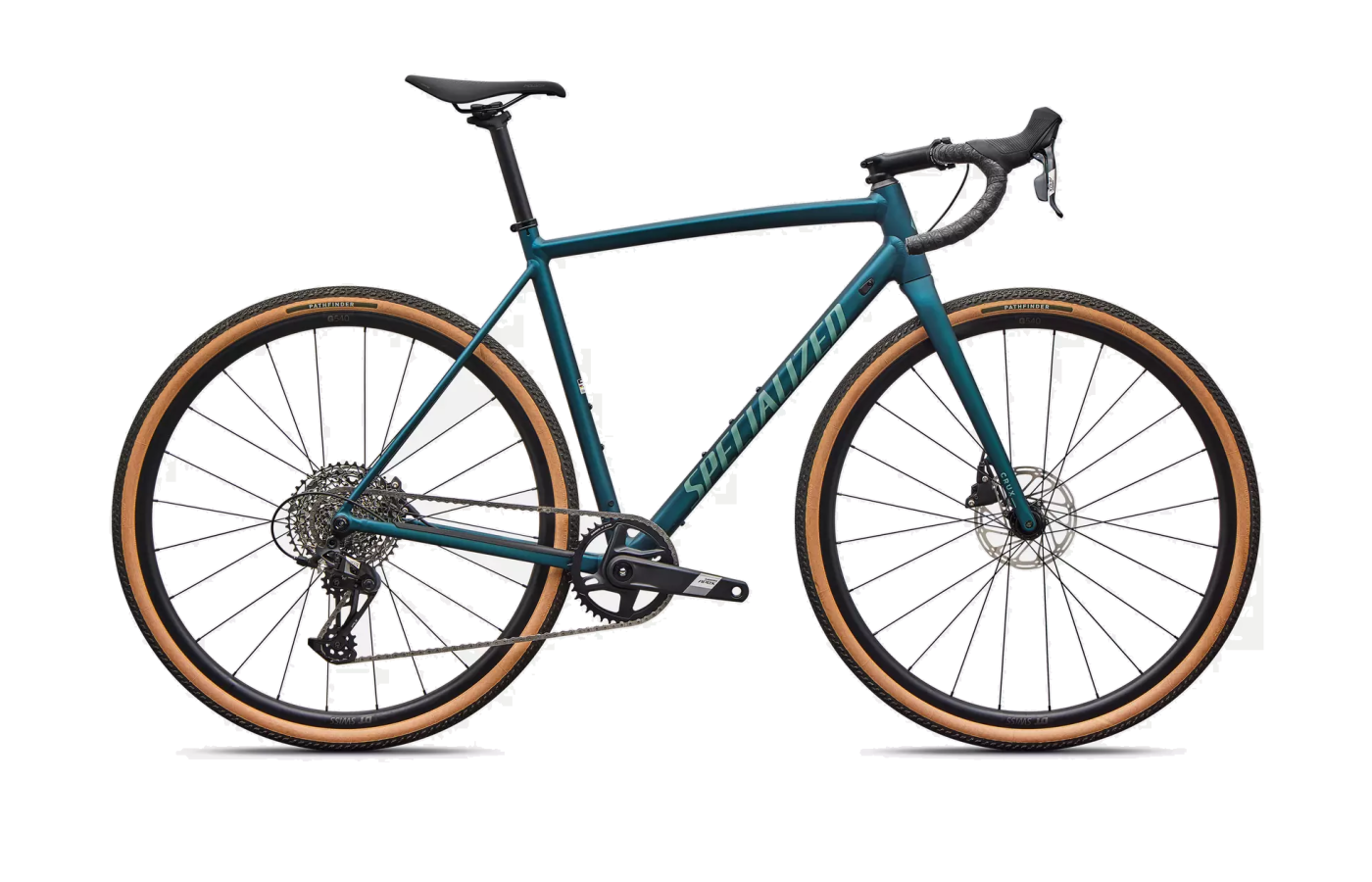
Crux
The minimalist anti-aero option — a classic, lightweight gravel race frame with much wider tire clearance than either the Grail or Kanzo Fast. Pick this if you'd rather save grams than chase watts.
Compare →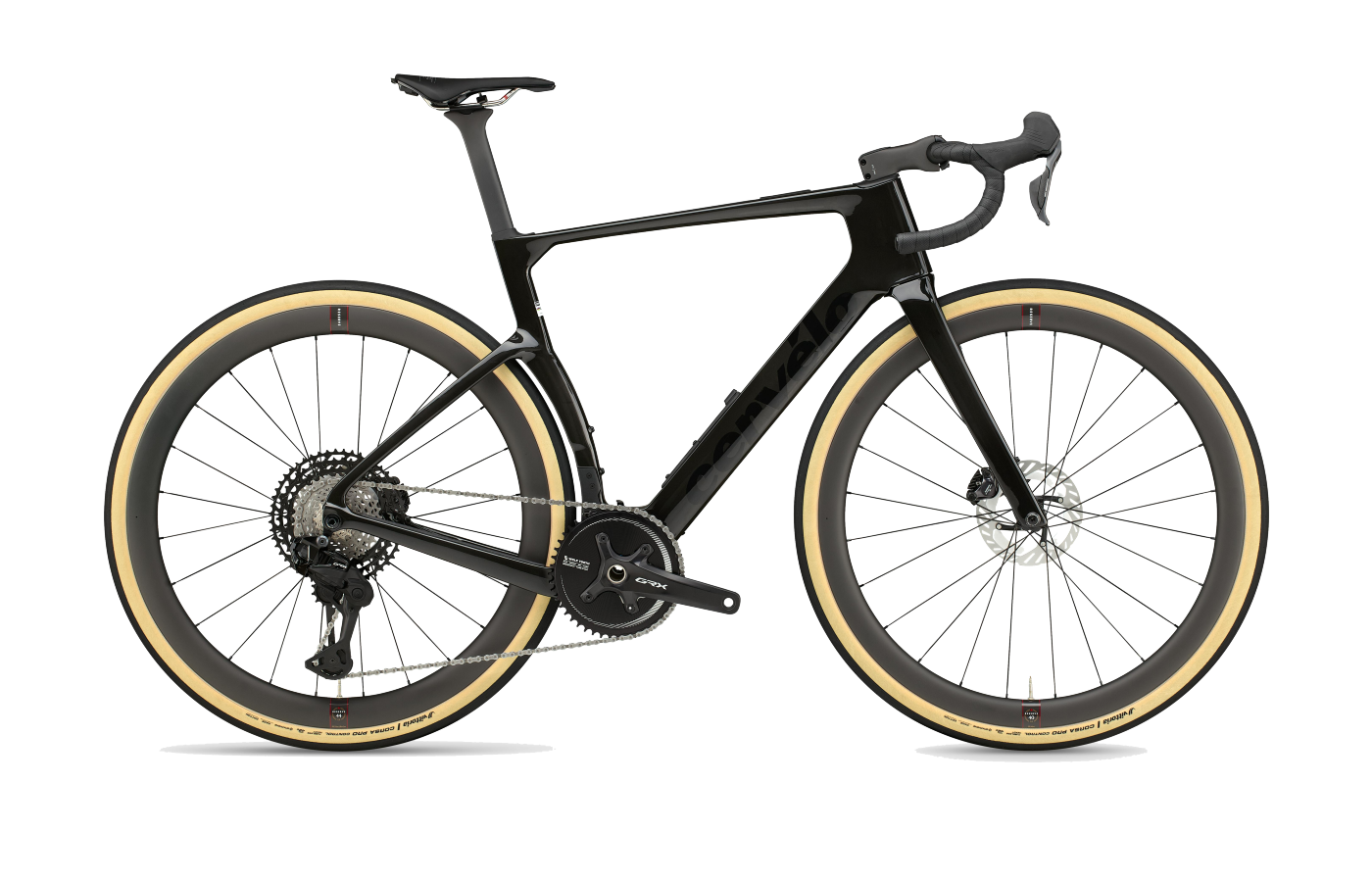
Aspero-5
Cervélo's direct rival to the Kanzo Fast — same aero-integrated cockpit philosophy, with a more adjustable front end and a slightly more polished ride on mid-sized chatter. The grown-up Belgian alternative.
Compare →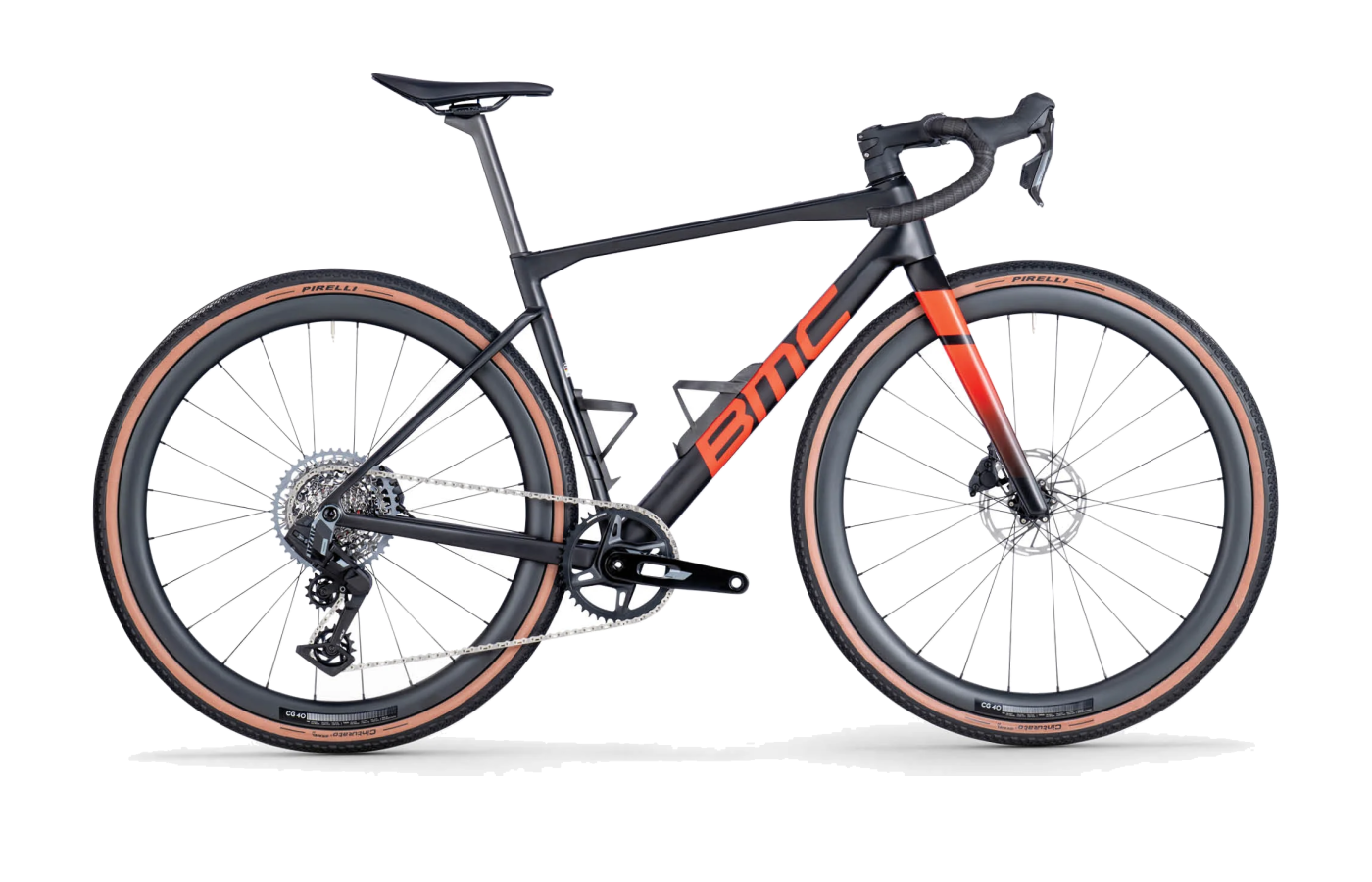
Kaius
BMC's pure aero-race play — a narrower cockpit and a geometry that essentially demands you actually race to make it make sense. The most uncompromising bike of the bunch.
Compare →