Synapse
vsCaledonia-5
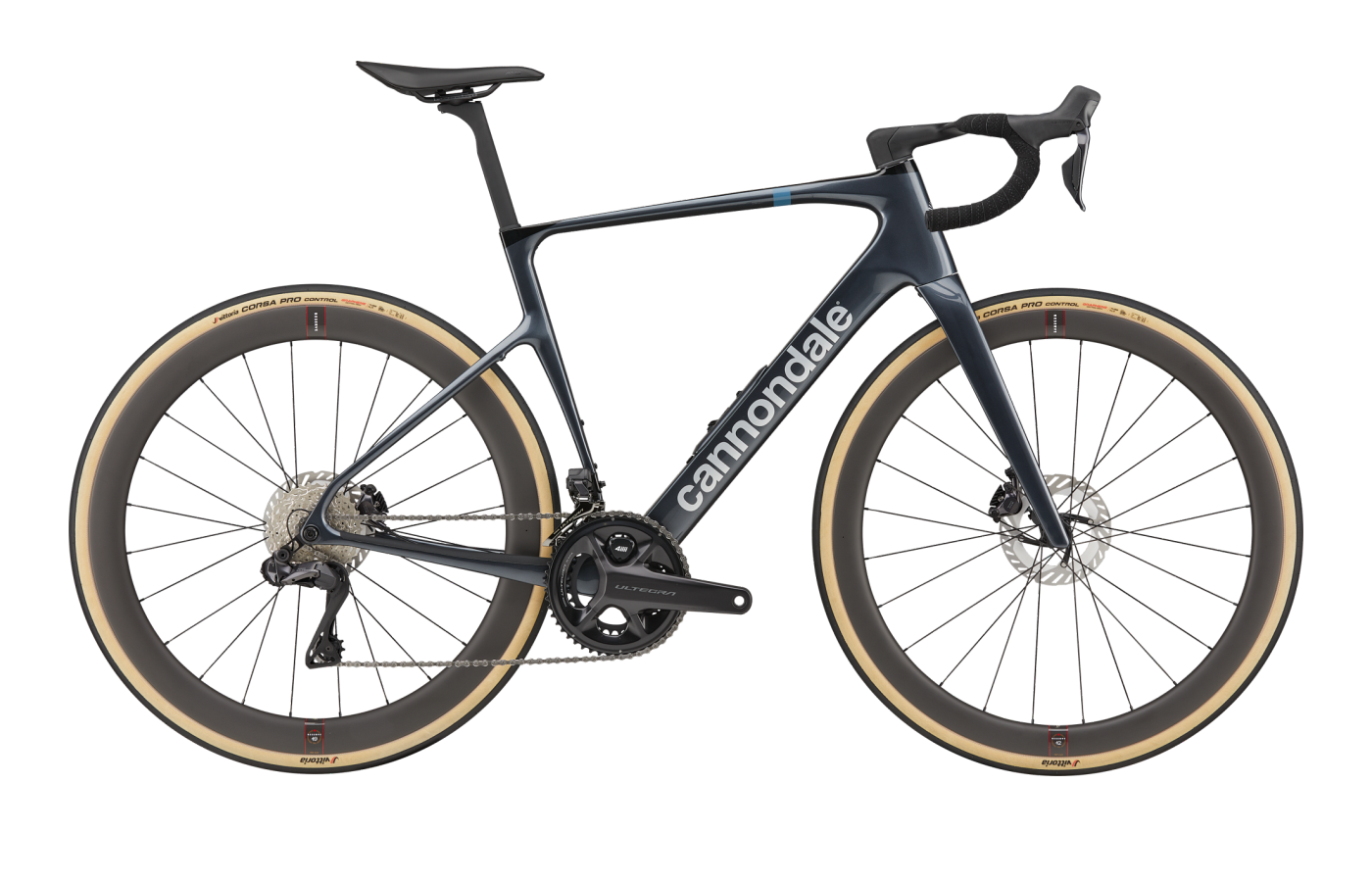
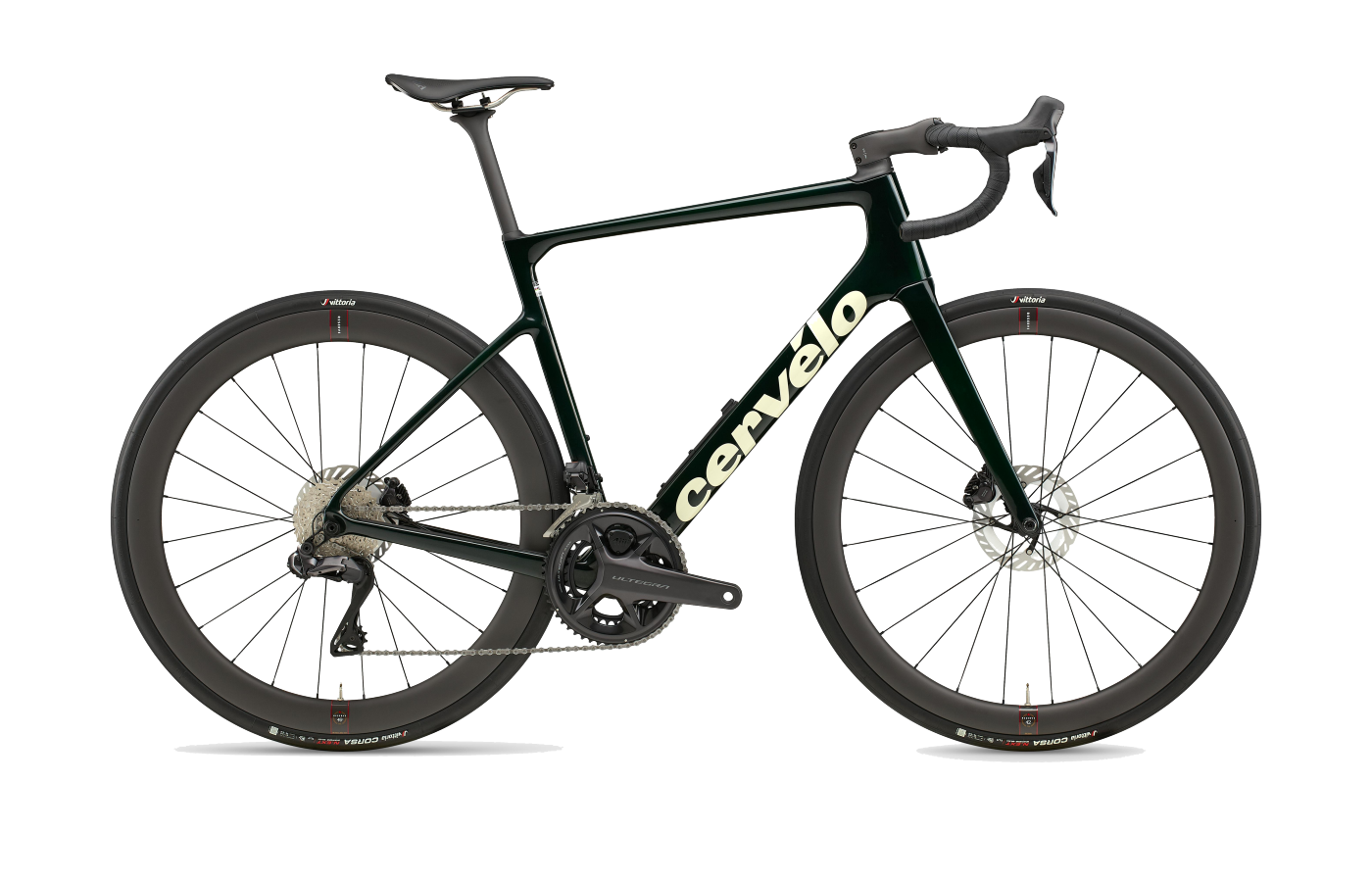
Two endurance bikes, two definitions of 'long day.'
The Synapse goes wide — 42 mm clearance, integrated lights, a starting price under $1,500. The Caledonia-5 stays narrow and fast, with a race-bike front end and no build under $7,400.
Synapse
- Class-leading clearance — 42 mm rear, 48 mm fork. Genuinely opens up dirt-road shortcuts most endurance bikes can't touch.
- Wide price spread — 13 builds from $1,299 to $16,499. The only platform here with sub-$5k options.
- Integrated SmartSense lights and rear radar share one frame battery with the AXS drivetrain on equipped builds — no zip-tied accessories.
- The longer wheelbase and slacker head tube can feel 'sedate' on quick group rides — a stability tax some testers flag.
- Mid-range builds ship with tube-type Vittoria Rubinos; expect to swap for tubeless if you want the frame's full ride quality.
Caledonia-5
- Sharper, race-bred handling — 72-degree HTA, 57.8 mm trail, 415 mm chainstays across the range. Rewards out-of-saddle efforts the way the Synapse won't.
- Carbon and electronic across every build — even the base $7,400 Rival AXS gets Reserve carbon wheels and a power meter.
- Cleaner aero shaping — inherited tube profiles from the S5 keep flat-road speed honest in a way comfort-first endurance frames give up.
- $7,400 entry price with no alloy or mechanical option — the cheap end of the endurance category isn't on the menu.
- 36 mm tire clearance is generous for road but rules out chunkier all-road tires the Synapse handles easily.
Editor’s analysis
Both want to keep you fresh after six hours in the saddle. They've picked opposite roads to get you there.
On paper the Cannondale Synapse and the Cervélo Caledonia-5 sit in the same endurance bracket — both 2025 redesigns, both with internal storage, both marketed as the all-day all-rounder. Spend ten minutes with the geometry charts and the divergence is obvious: this is a comfort-first all-roader against a barely-tamed race bike, dressed in matching marketing.
The Synapse is the wider tool. Cannondale stretched the chainstays to 425–430 mm, slackened the head angle to 71.3 degrees, and opened the frame to 42 mm tires (48 mm in the fork) — class-leading clearance for a non-gravel platform. The result is a 1,013 mm wheelbase at size 51 with a 61 mm trail figure: stable, planted, designed to disappear underneath you on chip-seal and broken tarmac. Reviewers consistently call it 'numbed' or 'sedate' — and they don't always mean it as a compliment.
The Cervélo Caledonia-5 picks the narrower lane. A 72-degree head angle, 415 mm chainstays across every size, 57.8 mm trail, and a wheelbase 17 mm shorter than the Synapse at the fit-picked size. It's the geometry of an aero road bike with enough stack added to keep your back working, and it shows up in the ride — testers describe it as 'a race bike that's been calmed down' rather than an endurance bike that learned to go fast. Tire clearance caps at 36 mm; Cervélo is not pretending this is a gravel-curious machine.
Then there's the price floor. Cannondale Synapse starts at $1,299 (alloy, Sora) and the lineup spans 13 builds across a $15,000 range. The Cervélo Caledonia-5 starts at $7,400 (Rival AXS) and tops at $12,750 — five builds, all carbon, all electronic shifting, all premium wheels. If your budget caps under $5k, this isn't a comparison; only the Synapse exists. If your budget starts at $8k and 36 mm tires is plenty, the Caledonia-5 earns the look.
Where the builds differ.
Comparing our editor's-pick builds side-by-side. Winners highlighted row-by-row — lower price and weight, and the better-spec component, each mark a point.
Build variants & pricing
Identical drivetrains at the editor's-pick tier — within $451 of each other. The bigger story is what's available below it: Cannondale keeps going, Cervélo doesn't.
Prices are current US MSRP. Cervélo's lineup starts at $7,400 (Rival AXS) and tops at $12,750 (Red AXS) — there's no entry-level alloy or 105 build. Cannondale spans $1,299 to $16,499 across 13 builds, including a $1,799 alloy CUES build for budget-first buyers.
How they fit, how they steer.
Sizes are picked separately for each bike to land the same rider on the right fit — Synapse 51, Caledonia-5 54. Stacks line up within 5 mm and reaches within 2 mm; the real differences are at the front and rear: Caledonia is 0.7° steeper at the head tube, 3.2 mm tighter on trail, and 10 mm shorter at the chainstays.
Which size should I buy?
Use the chart below to compare each frame's available sizes by stack and reach. Synapse offers 7 sizes (44–61); Caledonia-5 offers 6 (48–61).
→These are starting points. Flexibility, riding style, and preferred position all shift the answer — if you’re between sizes, a professional fit beats a chart.
What the magazines said.
Published reviews from trusted cycling outlets. Click through for the full write-up.
Which one should you buy?
If you'll ride broken tarmac and unpaved shortcuts on a budget, get the Synapse. If you want a race bike that can survive a six-hour day, get the Caledonia-5.
Synapse
If your endurance loop drifts onto chip-seal, gravel connectors, or roads the county forgot, the Synapse's 42 mm clearance and longer wheelbase will make the day easier. It's the right pick if you want one bike that handles century rides, commuting with fenders, and the occasional dirt detour — and the only one of these two that exists below $7,000.
Caledonia-5
If your endurance riding is fast group rides on smooth roads with the occasional rough patch, the Caledonia-5 keeps the race-bike reflexes intact while adding just enough stack to save your back. It's the bike for the rider who'd own an S5 if they didn't also need to finish 100-mile days.
Questions buyers actually ask.
Short answers to the things we get emailed about most often.
01Which has more tire clearance?
The Cannondale Synapse, by a clear margin. Synapse fits up to 42 mm in the rear and 48 mm in the fork — class-leading for an endurance road bike. The Cervélo Caledonia-5 caps at 36 mm.
In practice: a 35 mm gravel tire fits the Synapse with room to spare, while the Caledonia-5 is comfortable on a 32–34 mm road tire and that's about it. If smooth dirt connectors are part of your normal ride, the Synapse handles them. The Caledonia-5 doesn't pretend to.
02Which handles better at speed?
The Caledonia-5 for sharp, reactive handling; the Synapse for stability under load. The Cervélo runs a 72-degree head tube angle with 57.8 mm of trail and 415 mm chainstays across every size — a race-bike geometry calmed down for endurance use. The Synapse uses a 71.3-degree head tube, 61 mm trail, and 425–430 mm chainstays for a longer, more planted wheelbase.
That translates to a Caledonia-5 that rewards out-of-saddle attacks and quick direction changes, and a Synapse that holds a line on rough descents and crosswinds. Multiple reviewers describe the Synapse as 'sedate' and 'numbed' compared to faster endurance bikes — meant as both a compliment (composure) and a knock (lack of fizz).
03How do the prices compare across the lineups?
Cannondale Synapse: 13 builds from $1,299 (alloy, Shimano Sora) to $16,499 (LAB71 SmartSense, SRAM Red AXS).
Cervélo Caledonia-5: 5 builds from $7,400 (Rival AXS) to $12,750 (Red AXS). Every build is full carbon with electronic shifting and Reserve carbon wheels.
If your budget is under $7,000, the Caledonia-5 isn't an option. If you want the cheapest entry into a modern endurance platform, the Synapse 1 ($2,099) or 2 ($1,799) are the only doors here.
04Are the editor's-pick builds really apples-to-apples?
Yes — both run Shimano Ultegra Di2 electronic groupsets with hydraulic disc brakes, Reserve 42|49 carbon wheels, and 30–32 mm Vittoria tubeless tires. Synapse Carbon 1 lists at $8,499; Caledonia-5 Ultegra Di2 lists at $8,950.
Two small asymmetries: the Synapse Carbon 1 uses Cannondale's higher-grade Hi-MOD carbon and a one-piece SystemBar R-One integrated cockpit, while the Caledonia-5 uses a 2-piece Cervélo ST31 stem with HB13 carbon bar. Functionally close; the Synapse is slightly more integrated.
05Will I notice the geometry difference at the fit-picked sizes?
Probably yes for handling, probably not for fit. At Synapse 51 vs. Caledonia-5 54 (the sizes the fit algorithm picks for the same rider), stack matches within 5 mm (550 vs. 555) and reach within 2 mm (376 vs. 378) — your contact points will land in roughly the same place.
What differs is everything between the wheels: 17 mm of wheelbase (1,013 vs. 996), 10 mm of chainstay (425 vs. 415), 0.7 degrees of head angle. That's the difference between a stable cruiser and a quick-steering road bike — small numbers, very different feel.
06Does the Synapse's SmartSense system really matter?
Depends entirely on whether you ride solo on roads with cars. SmartSense bundles an 800-lumen front light, a Garmin Varia eRTL615 rear radar/light, and a single down-tube battery that also powers the SRAM AXS drivetrain on equipped builds.
For solo road riders, the integrated radar is the killer feature — it pings a head-unit alert for cars approaching from behind, with no zip-tied bracket. For group riders or anyone who avoids car traffic, it's 460 g of dead weight you won't use. Note: SmartSense is only on certain Synapse builds (LAB71, Carbon 2 SmartSense, Carbon 3 SmartSense); the Caledonia-5 doesn't offer anything similar.
07Which is better for centuries on rough roads?
The Synapse, with reasonable confidence. The 20% claimed compliance increase, longer wheelbase, slacker head angle, and ability to run 35–40 mm tires combine into a bike that — per multiple reviewers — 'isolates you from the worst energy-ebbing vibrations' on chip-seal and broken tarmac.
The Caledonia-5 is more comfortable than its R5 sibling and competent on rough roads at 32 mm tires, but it's not engineered as an isolation chamber. If 'rough' means broken pavement and the occasional dirt connector, the Synapse will leave you fresher at hour six.
08Can either be set up tubeless from the factory?
Both ship tubeless-ready wheels, but the stock tire choice matters. The Caledonia-5 specs Vittoria Corsa N.EXT or Corsa Pro Control TLR (true tubeless tires) on every build. The Synapse mid-range builds (Carbon 2, 3, 4, 5) ship with tube-type Vittoria Rubino Pro IV — they fit the rims but you'll need to buy actual tubeless tires to convert. Reviewers flag this as one of the Synapse's only spec missteps.
The top Synapse builds (LAB71, Carbon 1) ship with tubeless Vittoria Corsa Pro Control. So: tubeless out of the box on every Caledonia-5, but only on the priciest two Synapses.
Similar bikes
If your priorities don’t map cleanly onto either of these, one of these adjacent bikes probably fits better.
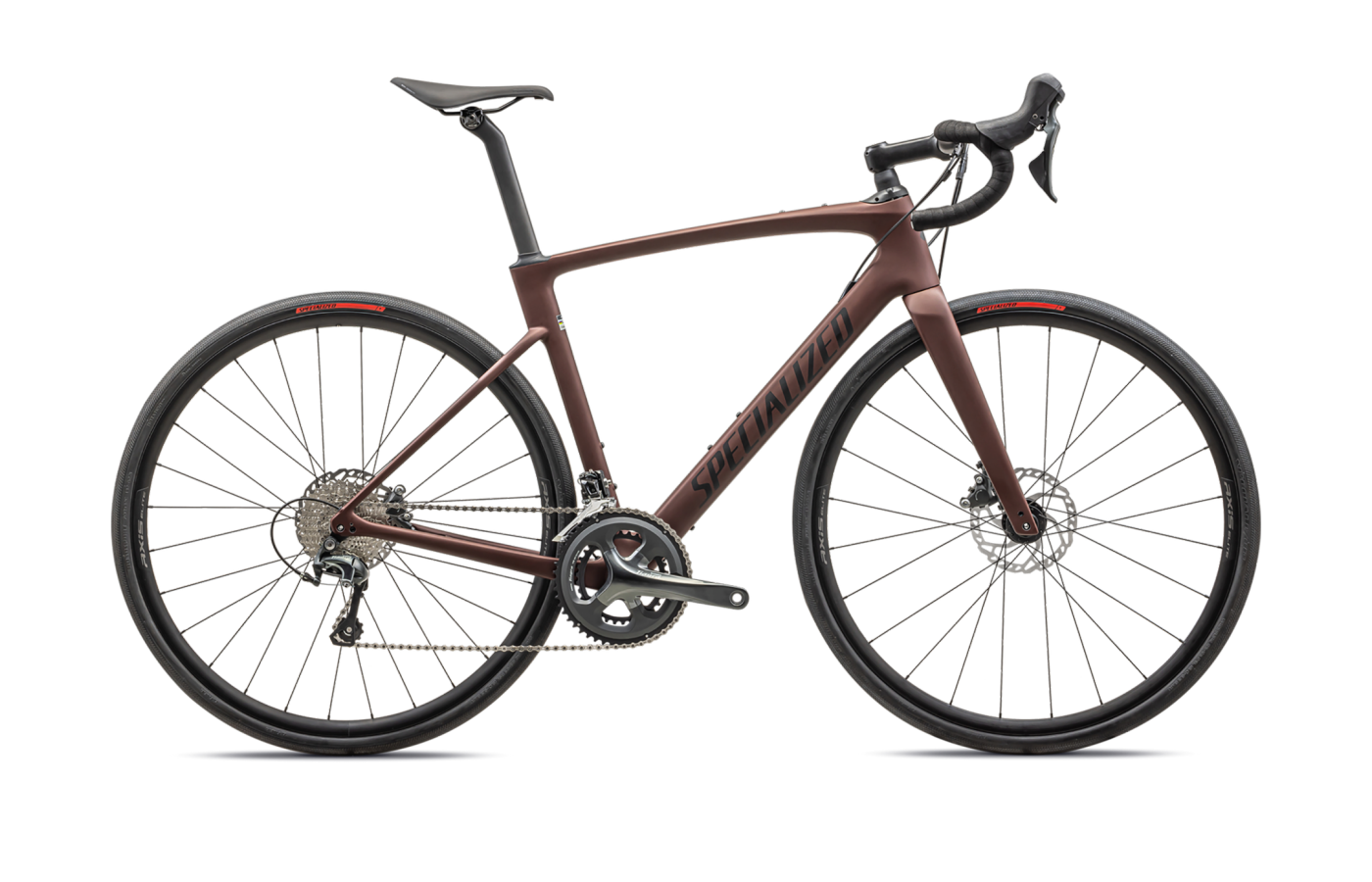
Roubaix
If wrist and hand fatigue is your real complaint on long rides, the Specialized Roubaix's Future Shock front suspension is the only one of these comfort solutions that actually moves. A different answer to the same question.
Compare →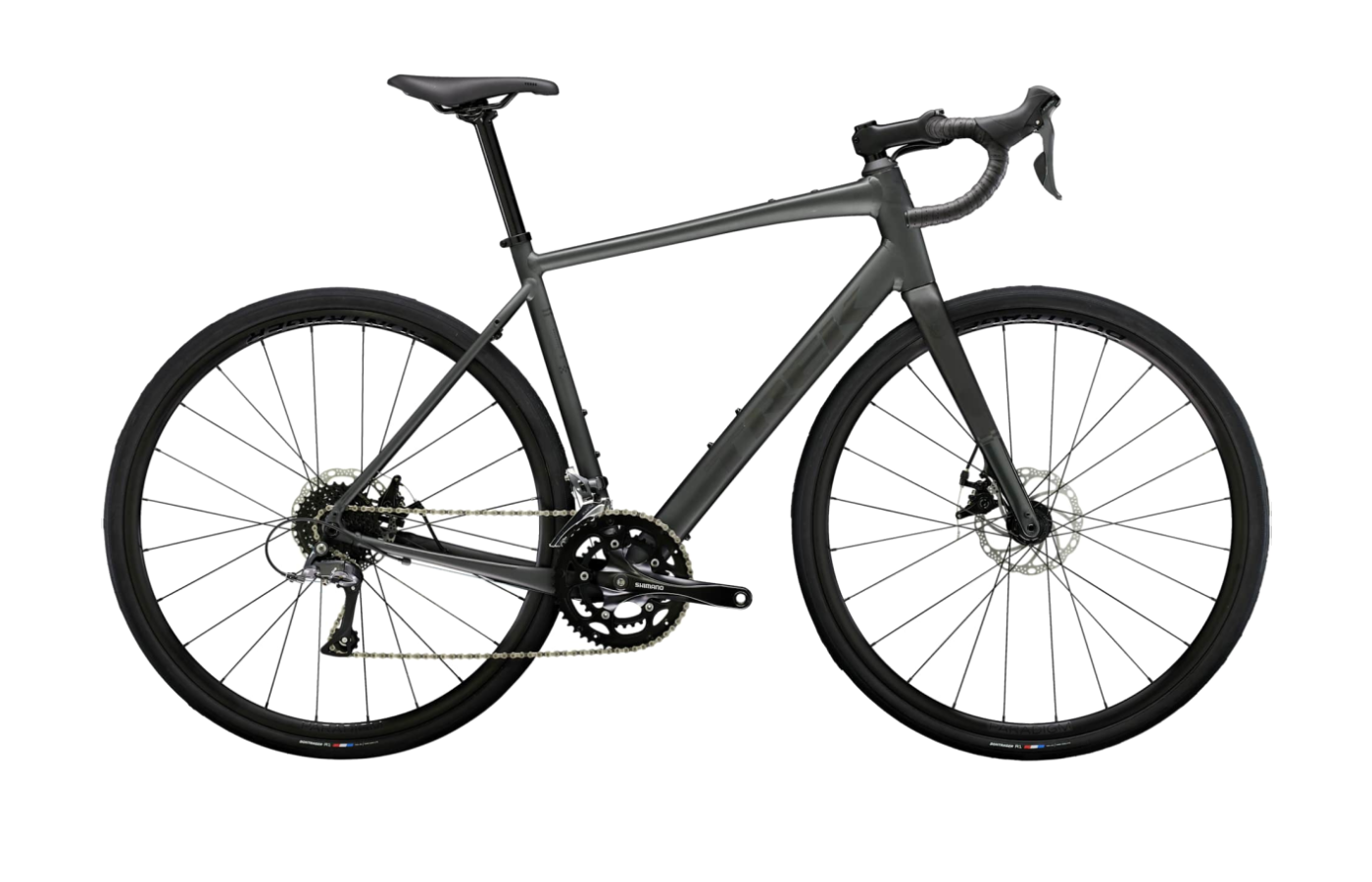
Domane
Trek's most direct rival to the Synapse — IsoSpeed decoupler at the rear, similar internal storage, comparable tire clearance. Worth a cross-shop if you want the comfort-first endurance pitch with a slightly different brand voice.
Compare →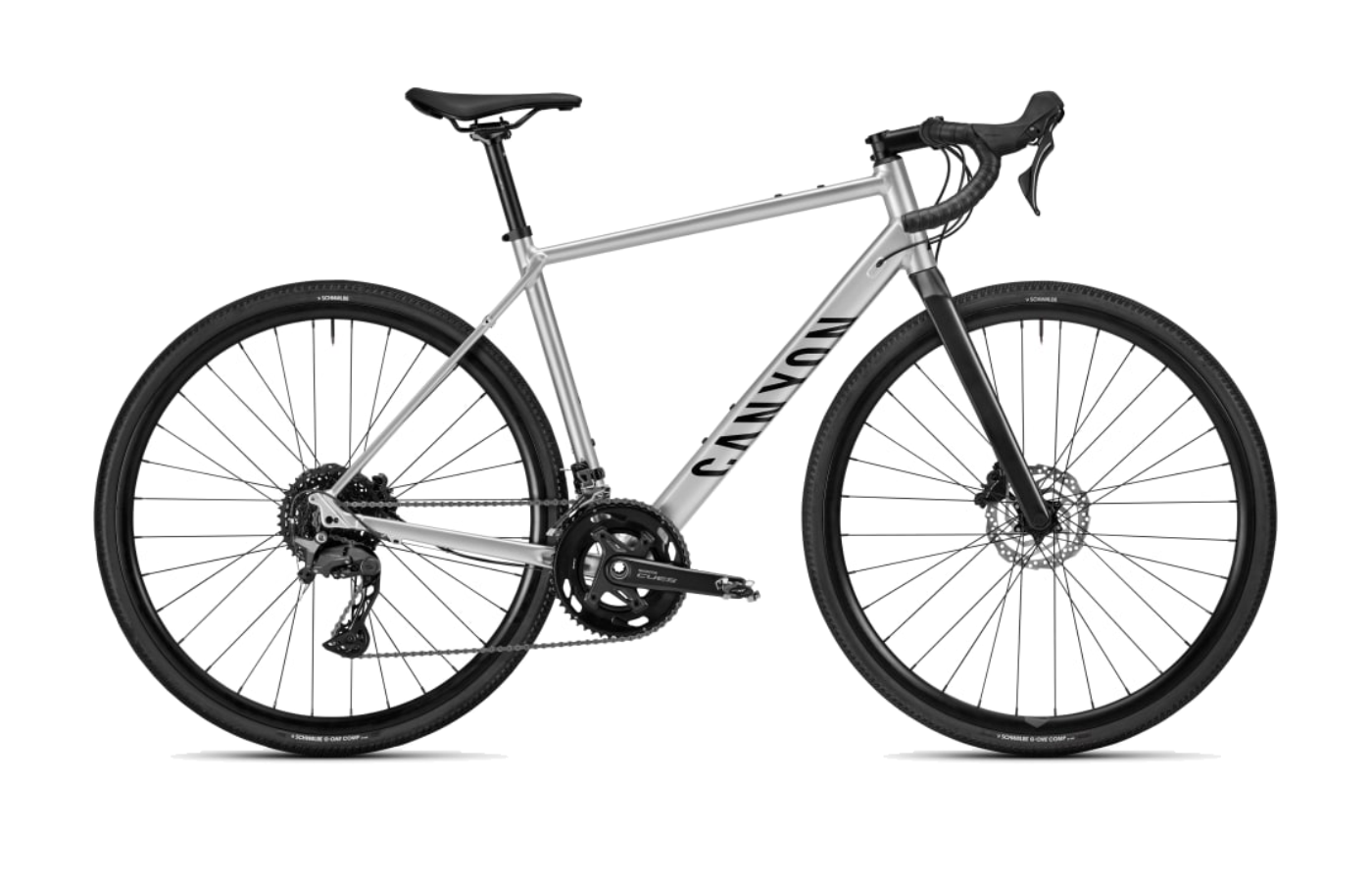
Endurace
Same fast-endurance brief as the Caledonia-5 at meaningfully less money — the catch is direct-to-consumer with no demos and no local dealer support. Best if you already know your fit numbers.
Compare →