SuperX
vsCheckmate
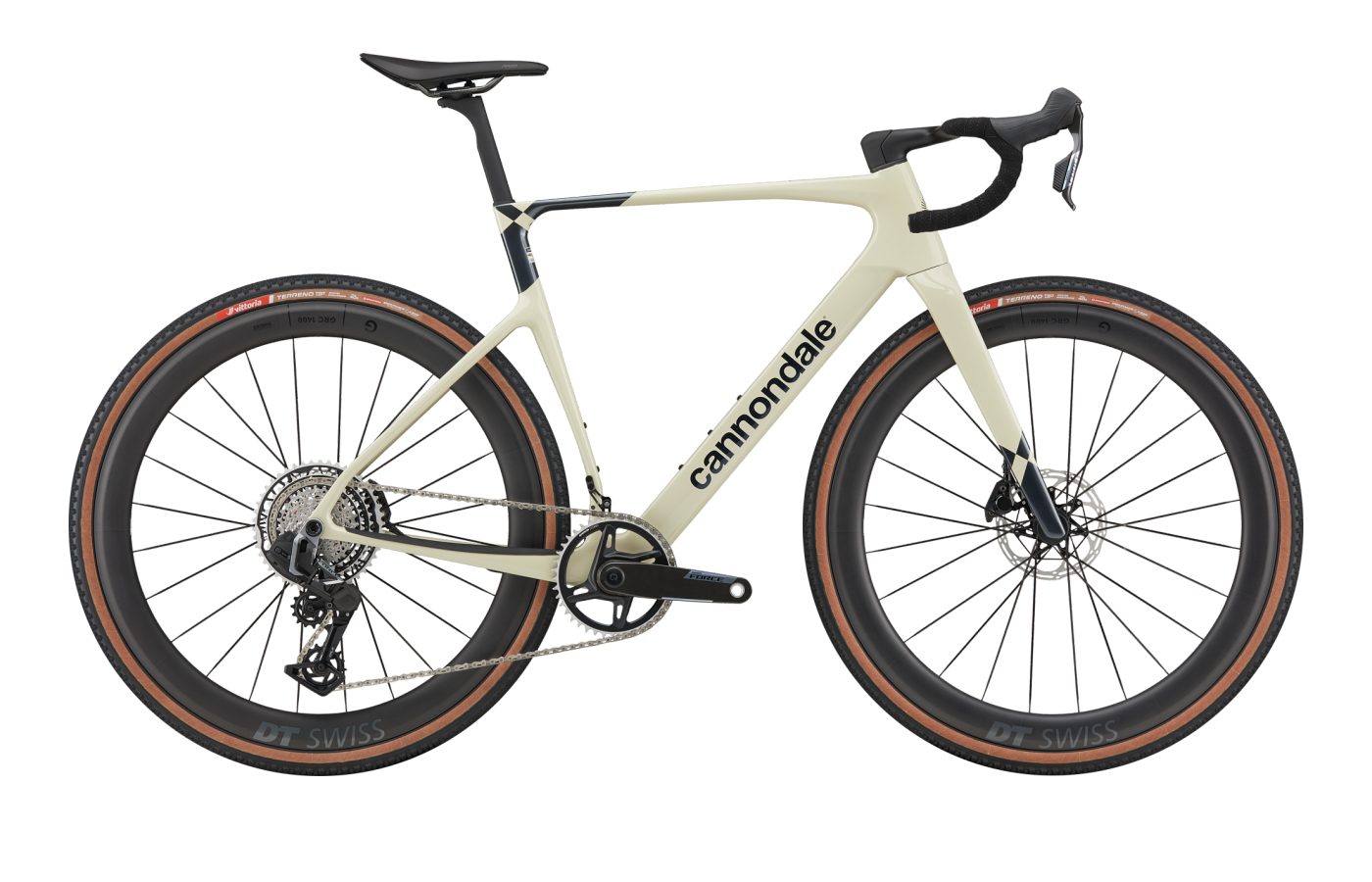
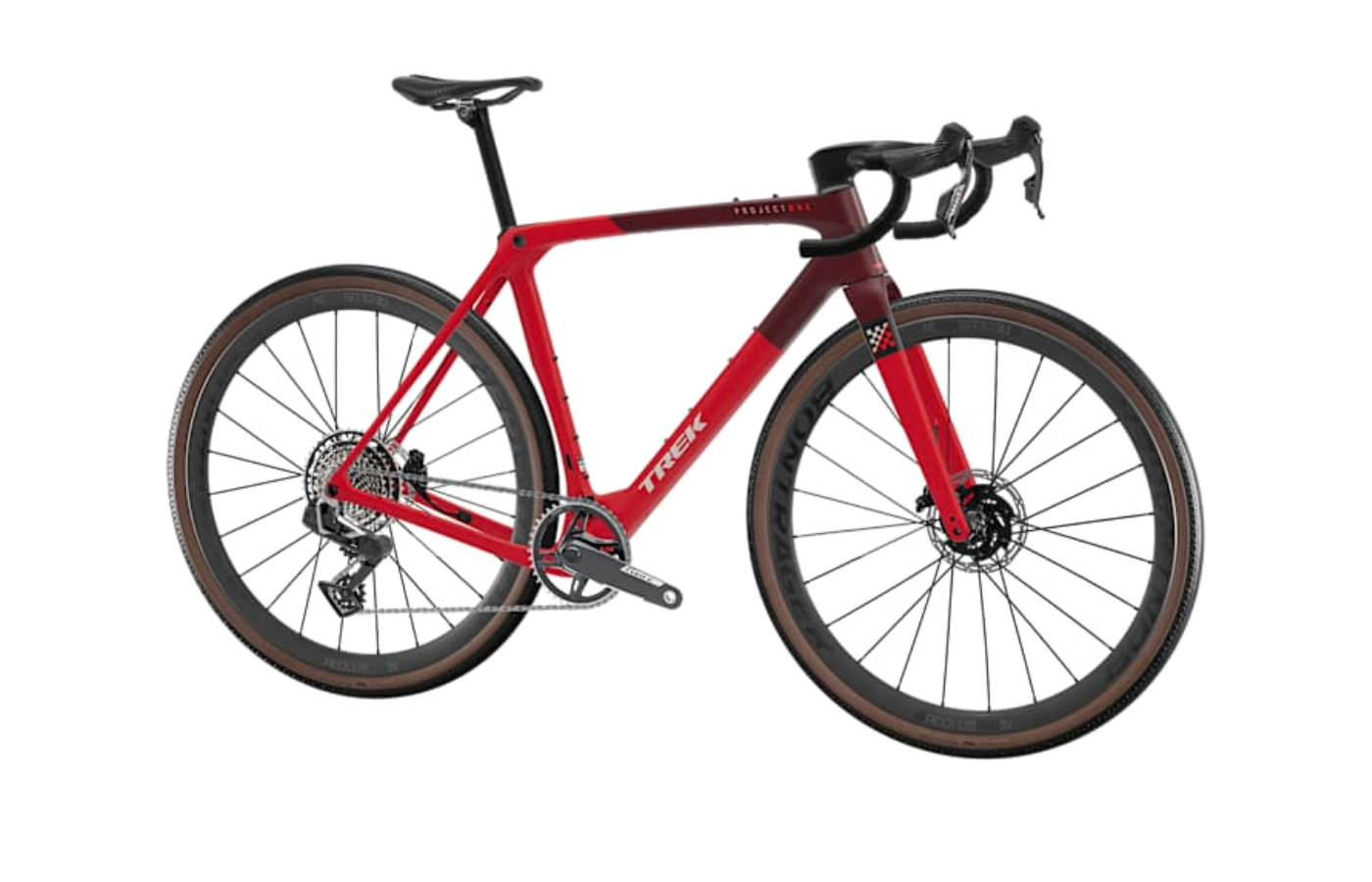
Two gravel racers, two different bets on terrain.
The SuperX is a cyclocross thoroughbred retrained for long gravel days. The Checkmate is a Madone with wider tires — a road racer that refuses to slow down when the pavement ends.
SuperX
- Wider tire clearance at 48 mm rear / 51 mm front — headroom for chunky courses the Checkmate can't fit.
- Entry at $4,199 — an Apex AXS build lets you onto the platform for roughly half the Checkmate's price floor.
- Five-rung build ladder from Apex to LAB71 — every SRAM tier plus a Shimano GRX Di2 option.
- Firm front end noted in the Cyclist review — the SystemBar R-One integrated cockpit isn't as compliant as the rear triangle.
- Reviewer weight of 8.53 kg (SuperX 2, size 56) is nearly a kilo heavier than the Checkmate SLR 9.
Checkmate
- IsoSpeed decoupler — reviewers were near-unanimous that the seat-tube flex adds compliance without a bounce, letting you stay seated over washboard.
- Lightest in class at 7.55 kg (SLR 9 AXS, size ML) — roughly 1 kg lighter than Cannondale's claimed SuperX 2 at 8.53 kg.
- 80 mm BB drop — among the lowest in the category, keeps the bike planted on high-speed hardpack.
- Hard 45 mm tire limit — 50 mm tires and 2.1" MTB rubber rub the frame; not a choice for the rockiest modern courses.
- Only two builds ($8,199 / $11,999) — no entry-level option, and SRAM 1x only.
Editor’s analysis
This isn't a question of which is faster — it's a question of what kind of gravel you actually ride.
Both the Cannondale SuperX and Trek Checkmate are 2025's answer to gravel's arms race — aero-tubed carbon race frames with integrated cockpits, electronic drivetrains, and deep carbon wheels. Both have already shown up at Unbound. But spend any time with the numbers and the philosophies split cleanly.
The Checkmate is the narrower, sharper tool. Trek gave it an 80 mm bottom-bracket drop (one of the lowest in the category), a 392 mm reach at size M, and borrowed the Madone Gen 8's Aero RSL one-piece cockpit wholesale. Reviewers across Bicycling, Velo, and BikeRumor converge on the same description: it rips on pavement and flies on champagne gravel, but gets jittery when the course turns chunky. Tire clearance stops hard at 45 mm — one tester reported frame rub with 50 mm Maxxis Ramblers and 2.1" MTB rubber. If your gravel is smooth and your target is the podium, this is a surgical instrument.
The Cannondale SuperX is the wider-aperture bike. 48 mm rear clearance, 51 mm up front, a taller 575 mm stack at size 56, and a 55 mm fork offset that trades some of the Checkmate's front-end sharpness for stability when you're eight hours into a race. It also has something the Checkmate doesn't: a full build ladder. Apex AXS at $4,199, Rival at $5,499, Force at $7,499, GRX Di2 at $7,499, Red at $12,499 — five rungs versus the Trek's two. If you want a carbon gravel race bike and don't have $8k to start with, the Checkmate isn't in the conversation.
Put another way: the Checkmate is the bike you buy when your gravel races look like road races with dust. The SuperX is the bike you buy when you also want to ride cyclocross in October, finish Unbound in June, and keep your budget below five figures.
Where the builds differ.
Comparing our editor's-pick builds side-by-side. Winners highlighted row-by-row — lower price and weight, and the better-spec component, each mark a point.
Build variants & pricing
The SuperX scales from $4,199 to $12,499 across five builds. The Checkmate only sells at the top — $8,199 and $11,999.
Prices are current US MSRP. The editor's-pick pairing below matches both bikes at the SRAM Force AXS tier; the SuperX 1 runs a 2x13 road-gravel drivetrain while the Checkmate SLR 7 runs the 1x13 XPLR version — an ideological difference worth noticing before you commit.
How they fit, how they steer.
Compared at SuperX 56 and Checkmate M. The SuperX sits 15 mm taller in stack (575 vs 560 mm) with 7 mm less reach (385 vs 392 mm) — a meaningfully more upright cockpit. Trail is close (65 vs 68 mm); chainstays are 4 mm shorter on the SuperX (422 vs 426 mm).
Which size should I buy?
Sizing recommendations derive from stack, reach, and effective top tube. The SuperX offers a wider numeric range (46–61); the Checkmate covers XS–XL with an added ML.
→These are starting points. Flexibility, riding style, and preferred position all shift the answer — if you’re between sizes, a professional fit beats a chart.
What the magazines said.
Published reviews from trusted cycling outlets. Click through for the full write-up.
Which one should you buy?
If you want one gravel bike for everything from cyclocross to 200-mile races, get the SuperX. If your gravel looks like fast dirt roads and you want a Madone with bigger tires, get the Checkmate.
SuperX
If you want a race-focused gravel bike that still clears 48 mm tires, scales down to a sub-$5k entry point, and handles both cyclocross seasons and backcountry epics, this is the more flexible tool. The taller stack and wider clearance also make it the easier bike to live with outside of race day.
Checkmate
If your gravel is smooth, your target is a podium, and your reference point is a Madone, this is the sharper weapon. IsoSpeed handles the seated comfort; the aero cockpit and 80 mm BB drop handle the speed. Just know the 45 mm ceiling is a ceiling.
Questions buyers actually ask.
Short answers to the things we get emailed about most often.
01Which has more tire clearance?
The Cannondale SuperX — 48 mm at the rear and 51 mm on the fork, versus 45 mm all-around on the Checkmate.
The gap matters more than it reads. Multiple Checkmate reviewers reported frame rub when trying to run 50 mm Maxxis Ramblers or 2.1" MTB tires, which are increasingly common at races like Unbound. The SuperX's extra 3–6 mm gives you meaningful headroom for that kind of rubber without shaving knobs.
02Which is lighter?
The Checkmate, by a clear margin. Trek claims 7.55 kg for the SLR 9 AXS in size ML (with sealant, no tubes). Cannondale lists the SuperX 2 at 8.53 kg in size 56 per Granfondo's test — roughly a kilo heavier.
That said, the LAB71 SuperX at $12,499 closes some of that gap with a lighter carbon layup and Red AXS, though Cannondale doesn't publish a claimed weight for it.
03What's the price difference?
The SuperX starts at $4,199 (SuperX 4 AXS, SRAM Apex) and tops out at $12,499 (LAB71). The Checkmate starts at $8,199 (SLR 7 AXS, Force) and tops out at $11,999 (SLR 9 AXS, Red).
At the top of the range they're roughly comparable. At the bottom, the SuperX has no competitor — Trek simply doesn't sell a sub-$8k Checkmate. If your budget is $5k, this isn't a comparison; it's a SuperX.
04How different is the geometry?
At the fit-picked sizes (SuperX 56 vs Checkmate M), the SuperX is 15 mm taller in stack (575 vs 560 mm) and 7 mm shorter in reach (385 vs 392 mm). That's a meaningfully more upright cockpit.
Handling numbers are closer than you'd expect: trail is 65 mm (SuperX) vs 68 mm (Checkmate), chainstays 422 vs 426 mm. The biggest character difference isn't in the standard geo table — it's Trek's 80 mm bottom-bracket drop, one of the lowest in the category, which makes the Checkmate feel planted on fast hardpack but increases pedal-strike risk in technical terrain.
05Can I use these as cyclocross bikes?
The SuperX, yes — that's literally its heritage. The name first appeared in 2010 as a dedicated cyclocross race bike, and the 2025 version still clears mud generously and keeps a shoulder-friendly top tube for off-bike running.
The Checkmate is not designed for cyclocross. The 80 mm BB drop alone is a problem for UCI-regulation courses with off-camber features and barriers; the aggressive aero position is the wrong posture for CX. Reviewers describe it as a gravel race bike with road-race DNA, not a CX bike.
06Which cockpit is easier to service?
Both top-tier builds use fully integrated one-piece bar/stem units with internal routing, so neither is friendly to length or width changes.
On the SuperX, however, the mid-tier builds (SuperX 2 and SuperX 3) ship the Cannondale C1 Conceal two-piece alloy cockpit, which still hides cables internally but lets you swap stems conventionally. The Checkmate ships the one-piece Trek Aero RSL on both builds — no two-piece option. If fit precision matters and you don't want to commit sight-unseen, this favors the Cannondale mid-range.
07What drivetrain options do I have?
The SuperX offers the widest spread of any bike in its class: SRAM Apex AXS, Rival AXS, Force AXS, Shimano GRX 825 Di2, and SRAM Red AXS. Both 1x and 2x configurations ship from the factory.
The Checkmate is SRAM-only and 1x-only — Force XPLR on the SLR 7, Red XPLR on the SLR 9. If you want Shimano, or if you want a 2x setup for varied terrain, the Checkmate is out.
08What warranty do they come with?
Both frames come with a lifetime frame warranty to the original owner. Trek additionally covers Bontrager carbon rims for life. Both brands offer crash-replacement programs (typically 30–50% off a new frame) for accident damage.
Similar bikes
If your priorities don’t map cleanly onto either of these, one of these adjacent bikes probably fits better.
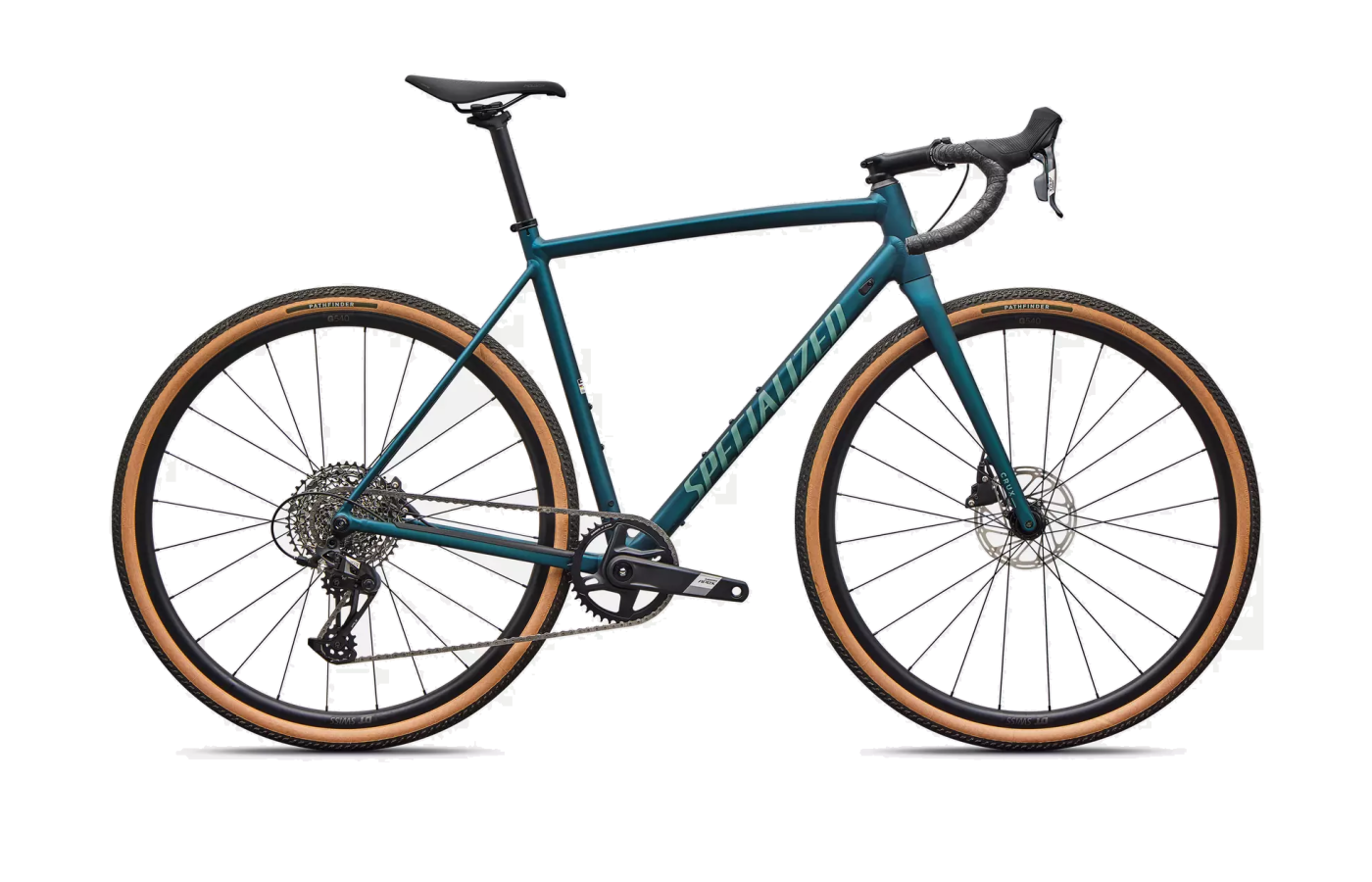
Crux
The weight-weenie counterpoint — the Crux skips aero tube shaping to land significantly lighter than both. If your gravel is hilly and you're willing to trade some flat-road speed for climbing gram-counting, it's the other alternative.
Compare →
Grail
The Checkmate's closest philosophical twin — integrated cockpit, aero tubes, in-frame storage — typically at a lower price. If the Trek aesthetic puts you off but the formula doesn't, start here.
Compare →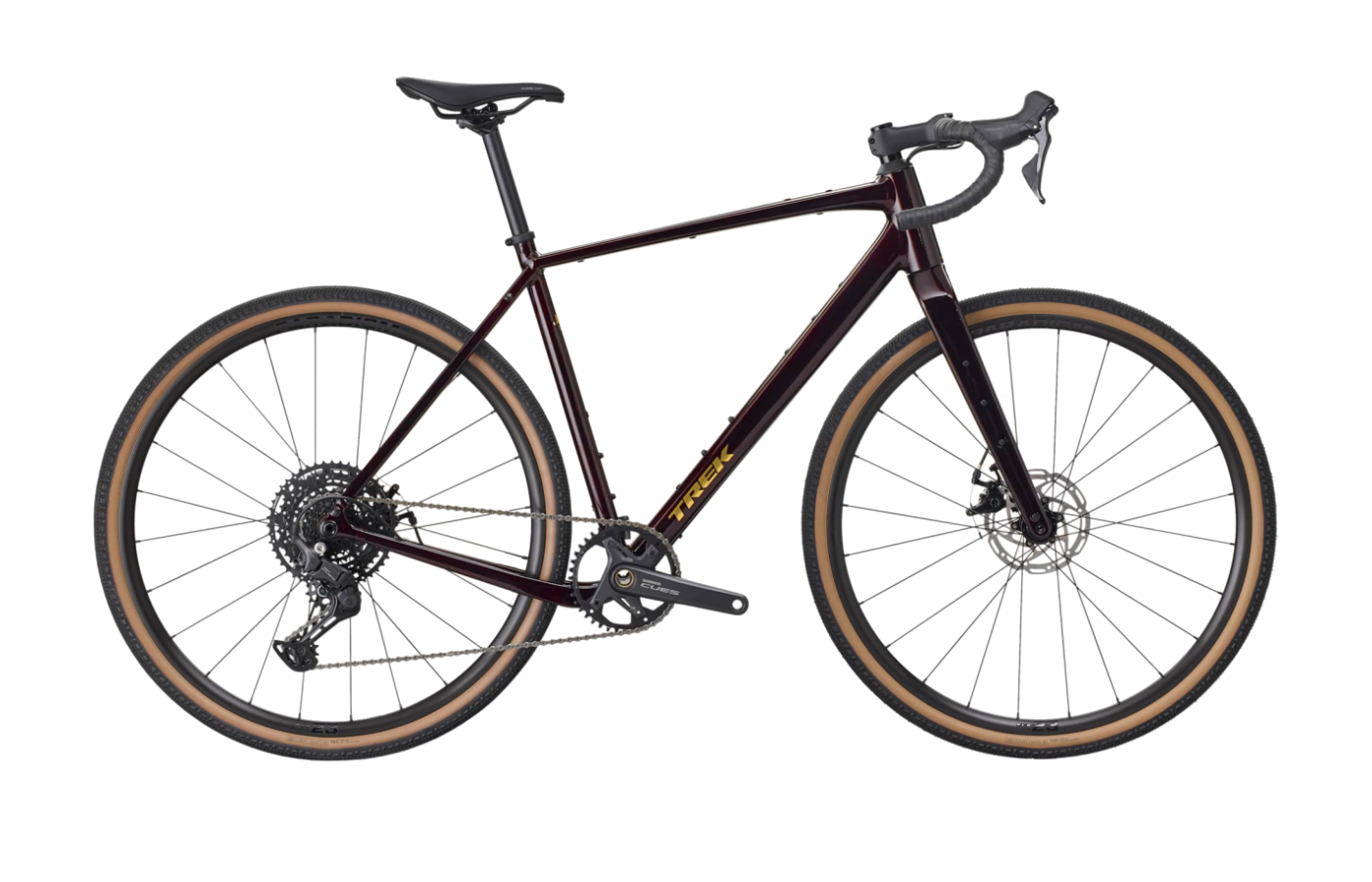
Checkpoint
The Checkmate's own sibling. If 45 mm clearance feels like a ceiling and you'd rather have 50 mm, internal downtube storage, and a more relaxed fit, the Checkpoint is the bike Trek built for that rider.
Compare →