Scalpel
vsSupercaliber
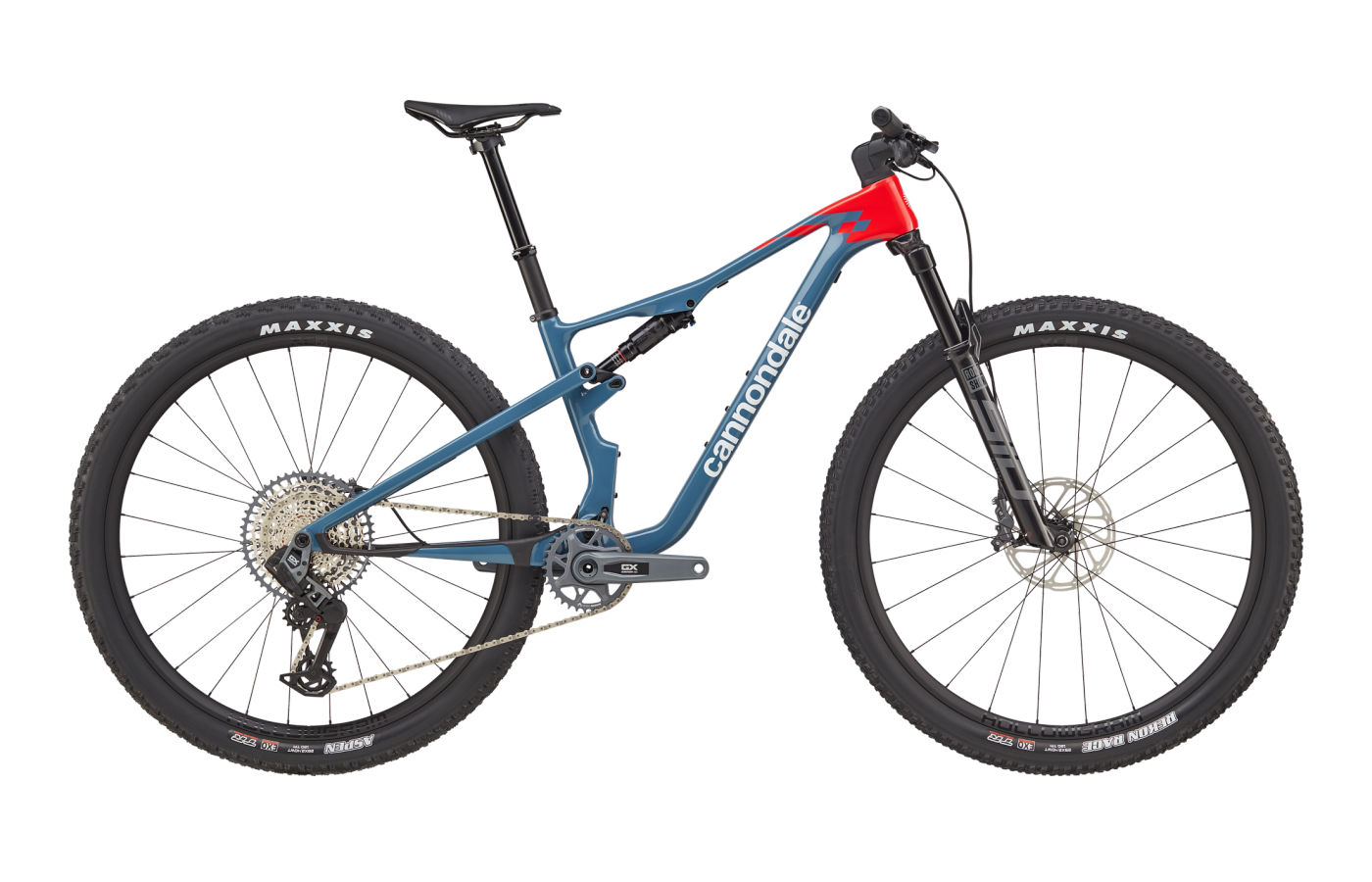
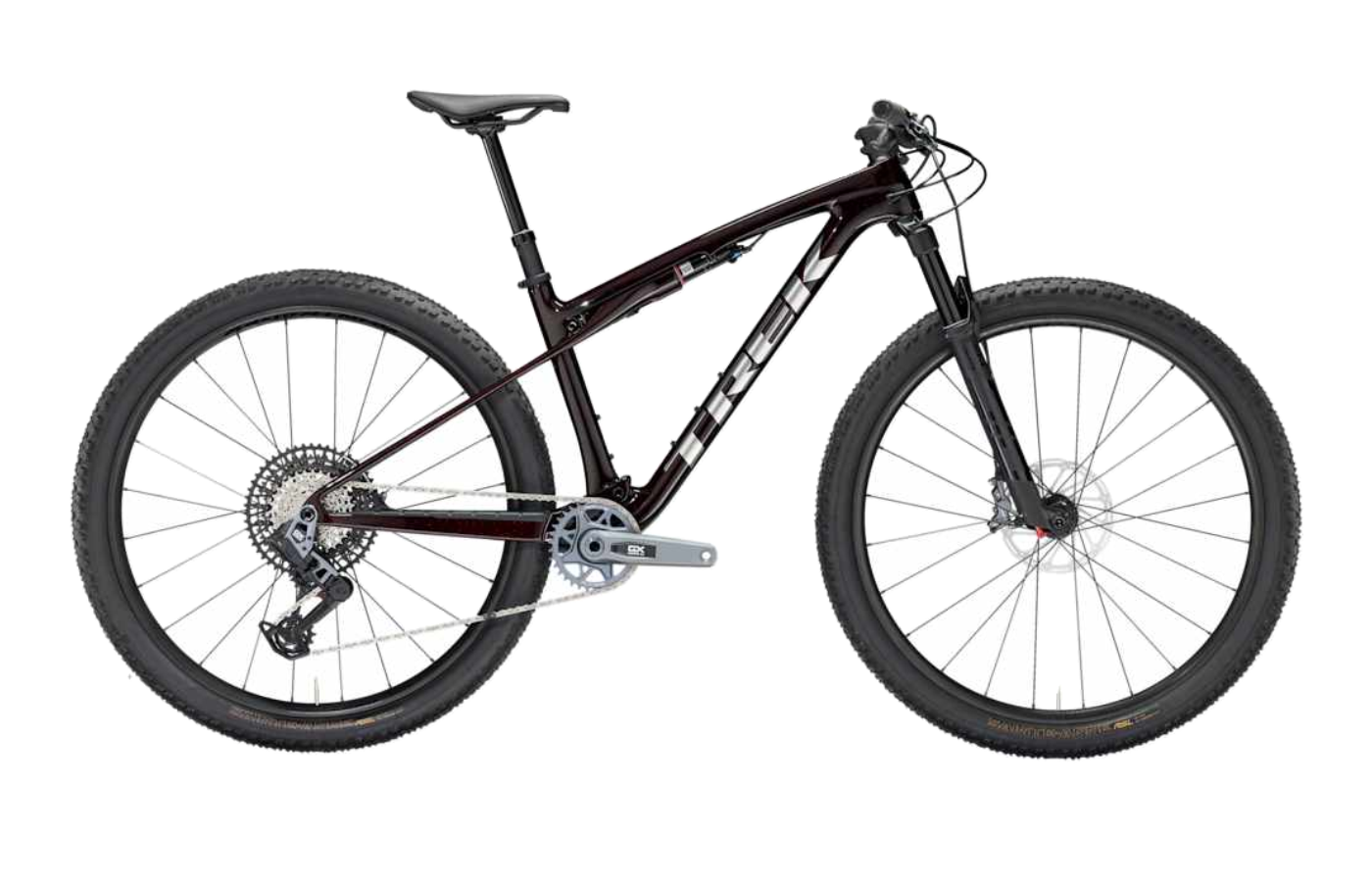
Two XC race bikes, two definitions of fast.
The Scalpel is a 120 mm downcountry-leaning racer that wants to descend. The Supercaliber is an 80 mm hardtail-killer that wants to go uphill, now.
Scalpel
- 120 mm of travel front and rear — meaningfully more capable on chunky descents and roots than the Trek's 80 mm rear.
- Size-specific chainstays (434–446 mm) keep balance consistent for short and tall riders alike.
- Modern slack geometry — a 66.6-degree head angle gives genuine high-speed stability for an XC bike.
- Thru-headset cable routing on every model is widely criticized as a "mechanic's nightmare."
- Heavier than the Supercaliber across the range — the lightest build sits around 11.15 kg vs. ~10 kg for the Trek.
Supercaliber
- Ruthless pedaling efficiency — the IsoStrut barely moves under power; reviewers describe "e-bike-like" acceleration.
- Lighter across the range — the SLR frame plus shock is roughly 1,950 g; complete bikes go as low as ~10.08 kg.
- No headset cable routing — Trek kept hoses out of the steerer, which reviewers called a small win for serviceability.
- Only 80 mm of rear travel — bottoms out harshly on chunky terrain and bigger drops.
- Press-fit PF92 bottom bracket remains, and the IsoStrut needs a ~10-hour bedding-in period before it feels right.
Editor’s analysis
This isn't long-travel vs. short-travel. It's a question of what kind of XC race you actually do — the rough modern World Cup loop, or the ninety-minute lung-buster.
Both bikes won World Cups in 2024, both are 29ers, both ride on a UDH-equipped carbon frame with a dropper and a one-by drivetrain. From there, the platforms head in opposite directions. The Cannondale Scalpel runs 120 mm of travel front and rear with a 66.6-degree head angle. The Trek Supercaliber runs 80 mm in the back, 110 mm up front, and a 67.5-degree head angle. That's not a small delta — it's an entire category of XC bike between them.
The Scalpel is the modern, slacker, longer take. Its FlexPivot rear end uses engineered carbon flex instead of a Horst-link pivot to mimic a four-bar layout, and reviewers describe it as a "rocket ship" on climbs that also "feels like a mini trail bike" on the way down. Cannondale's Proportional Response geometry tunes chainstay length per size — 434 mm on Small up to 446 mm on XL — so balance stays consistent across riders. The trade is mass (around 11.15 kg for the Scalpel 1, size M) and a thru-headset cable routing scheme that mechanics openly hate.
The Supercaliber is the focused, sharper, lighter take. The IsoStrut shock — now built by RockShox with a 38 mm stanchion sharing seals with the Zeb enduro fork — is a structural member of the frame, which is why the rear feels so direct. Reviewers compare its pedal response to a lightweight e-MTB and call it the fastest XC bike they've ridden. The flagship SLR frame and shock weighs about 1,950 g; the lightest complete build is around 10.08 kg. The trade is travel: when you run out of those 80 mm on a chunky drop, you feel it as a "metallic" bottom-out.
Put another way: the Scalpel is the bike you buy when your race courses are getting rougher and your rides are getting longer. The Supercaliber is the bike you buy when you'd otherwise be on a hardtail and you only stopped because your back finally complained.
Where the builds differ.
Comparing our editor's-pick builds side-by-side. Winners highlighted row-by-row — lower price and weight, and the better-spec component, each mark a point.
Build variants & pricing
Scalpel runs $3,349–$8,499 across four builds. Supercaliber runs $4,799–$14,999 across eight, split between SL and lighter SLR frames.
Prices are current US MSRP. The Scalpel range is shorter and starts cheaper; the Supercaliber goes higher with a flagship Flight Attendant build at $14,999. Editor's picks here are tier-matched at SRAM GX AXS T-Type so the spec table is apples-to-apples.
How they fit, how they steer.
Scalpel M and Supercaliber ML are the fit-picked sizes for a 5'8" rider on each bike. Reach is identical at 450 mm; the Scalpel sits 7 mm taller in the stack, runs a 0.9-degree slacker head angle, and adds 3 mm of chainstay — slower steering, more stability.
Which size should I buy?
Trek splits a Medium and a Medium-Long; Cannondale doesn't. If you're between sizes on the Trek, it gives you a finer-grained call that the Scalpel can't.
→These are starting points. Flexibility, riding style, and preferred position all shift the answer — if you’re between sizes, a professional fit beats a chart.
What the magazines said.
Published reviews from trusted cycling outlets. Click through for the full write-up.
Which one should you buy?
If your race courses are getting rougher and your rides are getting longer, get the Scalpel. If you'd otherwise be racing a hardtail, get the Supercaliber.
Scalpel
If you race the contemporary, rougher World Cup-style courses or treat XC weekends as half-trail riding, the Scalpel's 120 mm and slack head angle let you carry speed through chunder the Supercaliber has to tiptoe over. Marathon distances, jagged rock gardens, and longer days in the saddle all fall to it.
Supercaliber
If most of your racing is short-track or 90-minute lung-busters and you used to be on a hardtail, the Supercaliber's structural IsoStrut delivers a pedal response no 120 mm bike can touch. Smooth, fast courses with short, punchy climbs are where it makes the field hurt.
Questions buyers actually ask.
Short answers to the things we get emailed about most often.
01Which is faster on a flat-out climb?
The Trek Supercaliber, almost certainly. It's roughly 1 kg lighter than an equivalent-tier Scalpel (the SLR 9.9 XTR comes in at about 10.08 kg vs. about 11.15 kg for the Scalpel 1) and its IsoStrut platform barely moves under pedaling load, so more of your watts go into forward motion. Reviewers consistently describe its acceleration as "e-bike-like" and call it the fastest XC bike they've ridden.
The Scalpel isn't slow — its FlexPivot suspension is also extremely efficient — but if your benchmark is a 30-minute fire-road climb, the Trek is the sharper tool.
02Which descends better?
The Cannondale Scalpel, by a clear margin. It runs 120 mm of travel front and rear vs. the Supercaliber's 110 mm fork and 80 mm rear, and pairs that with a 66.6-degree head angle — almost a full degree slacker than the Trek's 67.5 degrees. Reviewers describe the Scalpel as feeling "like a mini trail bike at times."
The Supercaliber is more capable than the previous generation, and its dropper-standard spec helps, but it still bottoms out hard on chunky terrain. Multiple reviews call out a "metallic" sensation when you run out of those 80 mm.
03How much travel does each bike have?
Scalpel: 120 mm rear, 120 mm fork. Every model in the range — from the $3,349 Scalpel 4 to the $8,499 Scalpel 1 — gets the same travel.
Supercaliber: 80 mm rear (via the IsoStrut), 110 mm fork. The 80 mm rear figure is the entire ballgame — Trek deliberately stopped short of a conventional 100/120 mm XC layout to keep the IsoStrut's hardtail-like pedaling character.
04Are the editor's-pick builds really comparable?
Yes — both are SRAM GX Eagle AXS T-Type Transmission, both run a RockShox SID-class fork, and both sit in the upper-mid tier of their range. The Scalpel 2 at $5,799 gets carbon HollowGram wheels; the Supercaliber SL 9.7 GX AXS T-Type at $6,249 gets alloy Bontrager Kovee Comp wheels. The Scalpel's wheel upgrade partially explains the price gap.
We avoided pairing the Scalpel against the lighter SLR-frame Supercalibers because the SL frame is the closer match to the Series 1 carbon Scalpel — both are the platform's mid-grade carbon.
05What about cable routing and serviceability?
The Scalpel runs cables through the headset on every build, with the higher-end models routing them through the integrated handlebar too. Reviewers and shop mechanics are openly hostile to the layout — Pinkbike comments call it a "mechanic's nightmare" and Cannondale itself recommends a professional headset bearing inspection every six months.
The Supercaliber kept conventional internal routing into the down tube — no headset cables. Mountain Bike Action called the choice "a restoration of faith in the bicycle industry." Trek balances that with a press-fit PF92 bottom bracket, which has its own creak-prone reputation.
06Which is better for a marathon or longer race?
The Scalpel, comfortably. The extra 40 mm of rear travel and the more compliant FlexPivot rear end take a real edge off three-, four-, and five-hour days. Blister Review did note that the Scalpel can feel "fidgety" past four hours if the cockpit isn't set up right, but it's still a substantially less punishing platform than the Supercaliber over distance.
The Supercaliber is purpose-built for short, intense races. Multiple reviews suggested that for "all-day epic rides," you'd actually want Trek's longer-travel Top Fuel instead.
07What's the maximum tire clearance?
Both frames clear up to 61 mm (a true 2.4" tire), which is more than enough for any modern XC race tire. Both ship with 2.4" rubber across most of the range.
The one exception is the flagship Supercaliber SLR 9.9 XX Flight Attendant, which comes with 2.2" tires to save weight. Multiple reviewers said those tires "hold the bike back" and recommended swapping to 2.4" rubber to match what the rest of the range gets stock.
08What kind of warranty do they come with?
Both frames carry a lifetime warranty to the original owner against manufacturing defects. The Scalpel did suffer a documented frame failure during a Theloamwolf/Pinkbike test on a 5-foot rock drop — well outside the bike's stated remit — which kicked off some debate about XC frame durability for heavier riders pushing the platform hard. Trek's warranty also covers the proprietary IsoStrut, which is meaningful because the shock is a structural member of the frame and not user-replaceable in the conventional sense.
Similar bikes
If your priorities don’t map cleanly onto either of these, one of these adjacent bikes probably fits better.
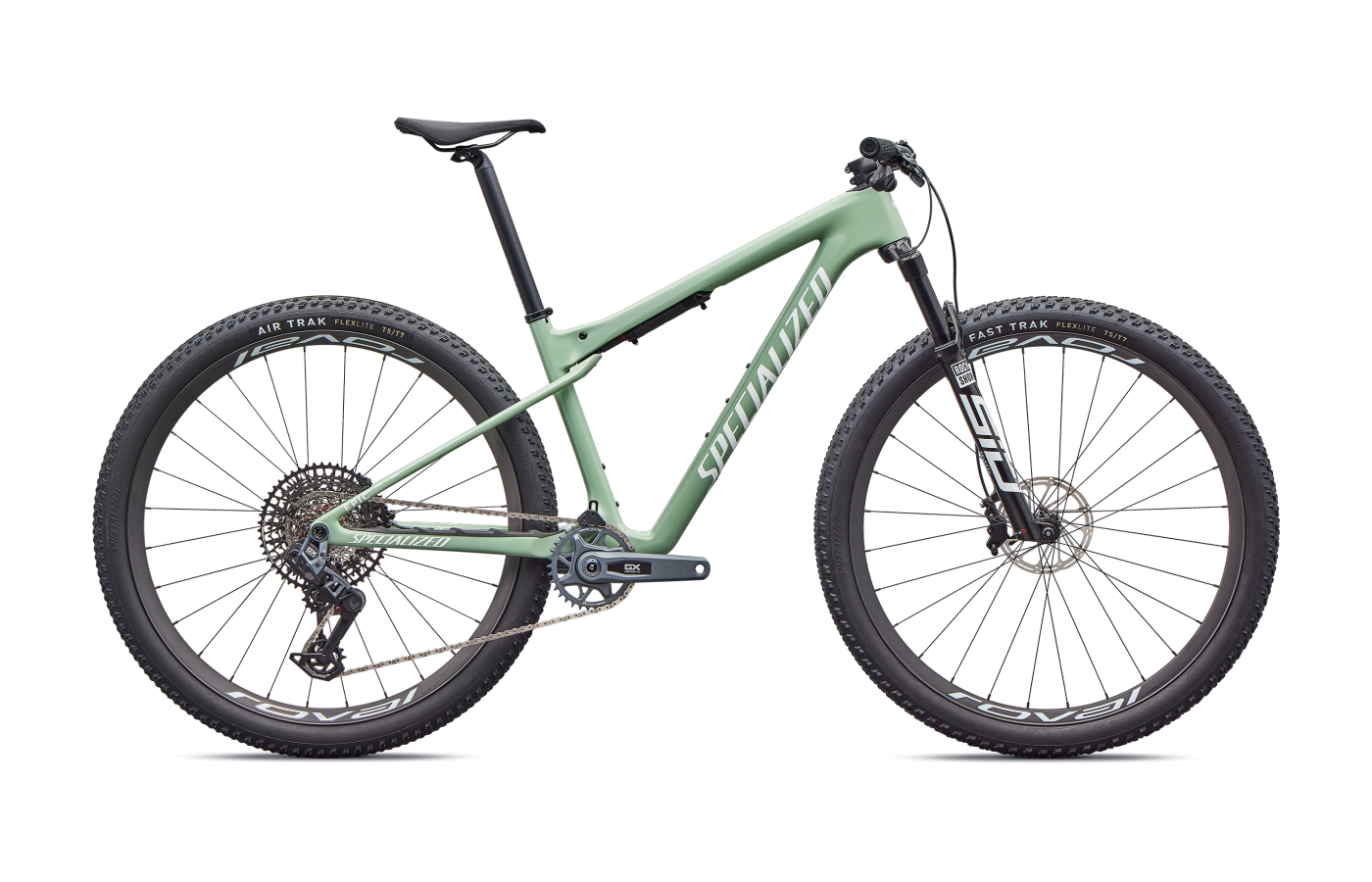
Epic World Cup
The Supercaliber's most direct rival — a 120 mm hardtail-replacement that uses an automated suspension brain instead of a remote lockout. Pick it if you want hardtail-like pedaling without managing a switch.
Compare →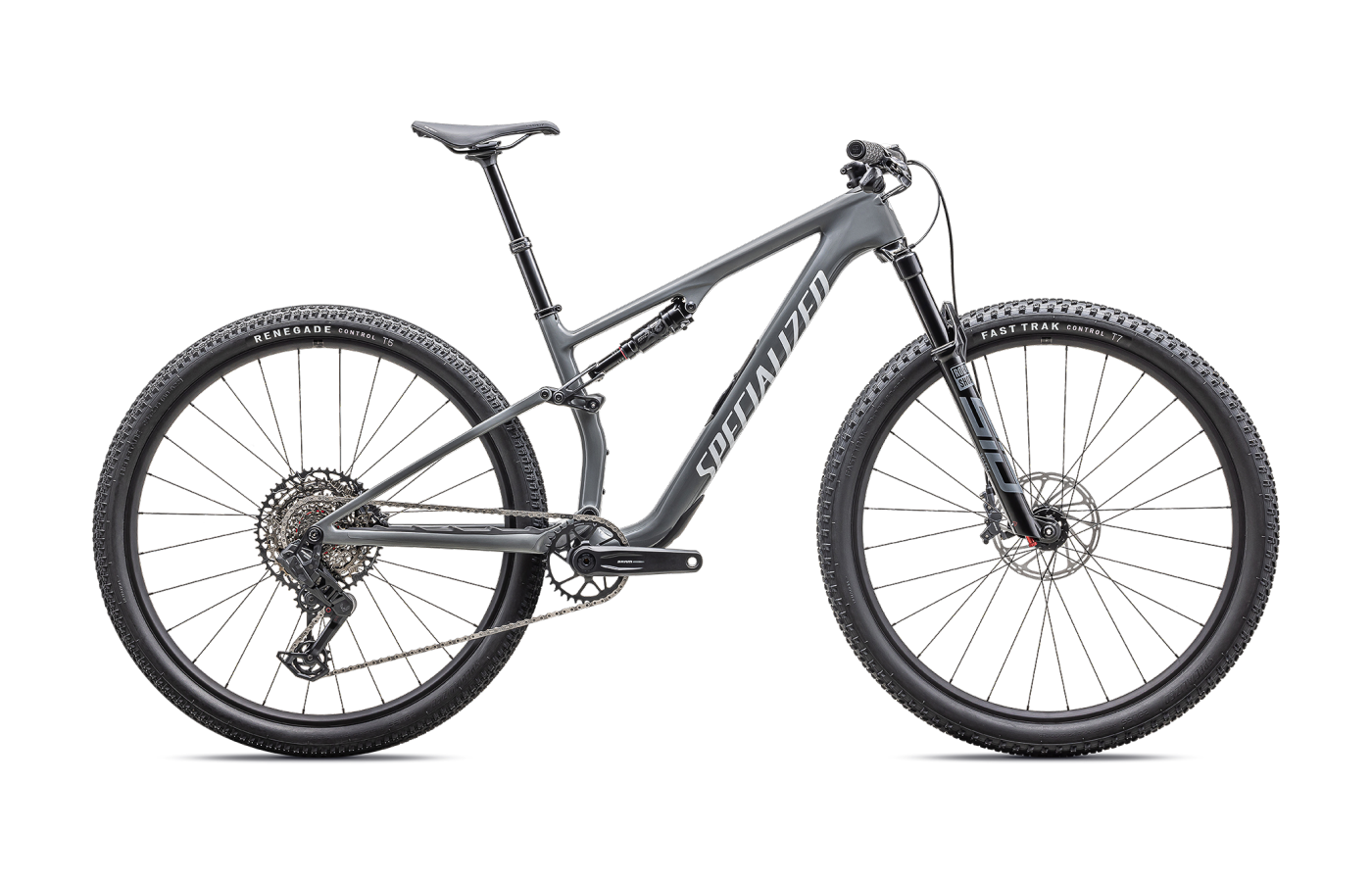
Epic
The Scalpel's natural cross-shop. 120 mm of travel and a 65.9-degree head angle — even slacker than the Cannondale — for riders whose XC courses look more like trail rides.
Compare →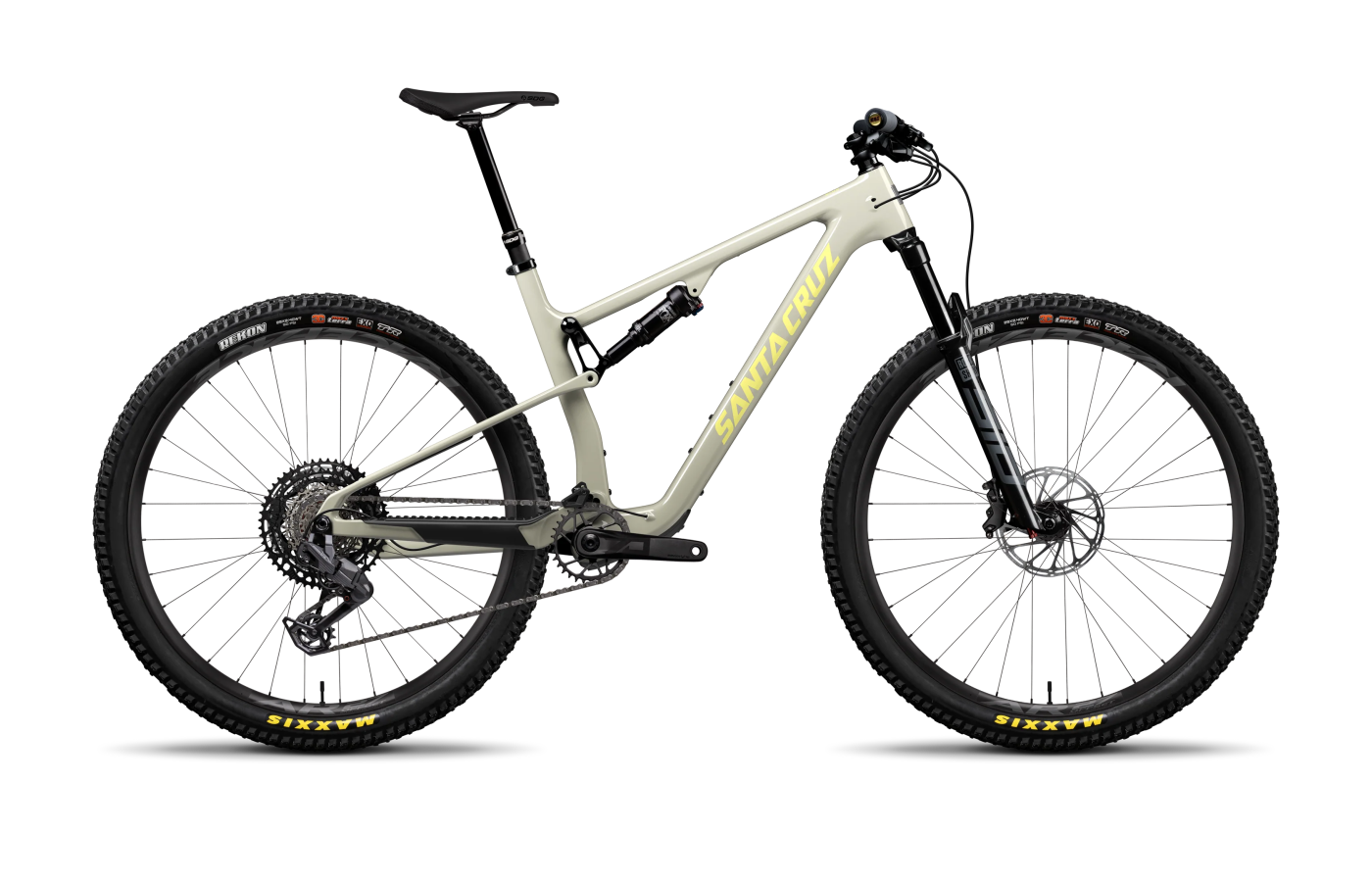
Blur
Another 120 mm flex-stay XC bike. Similar comfort-and-efficiency philosophy to the Scalpel, but with conventional cable routing and fewer of Cannondale's polarizing maintenance choices.
Compare →