Scalpel
vsPodium
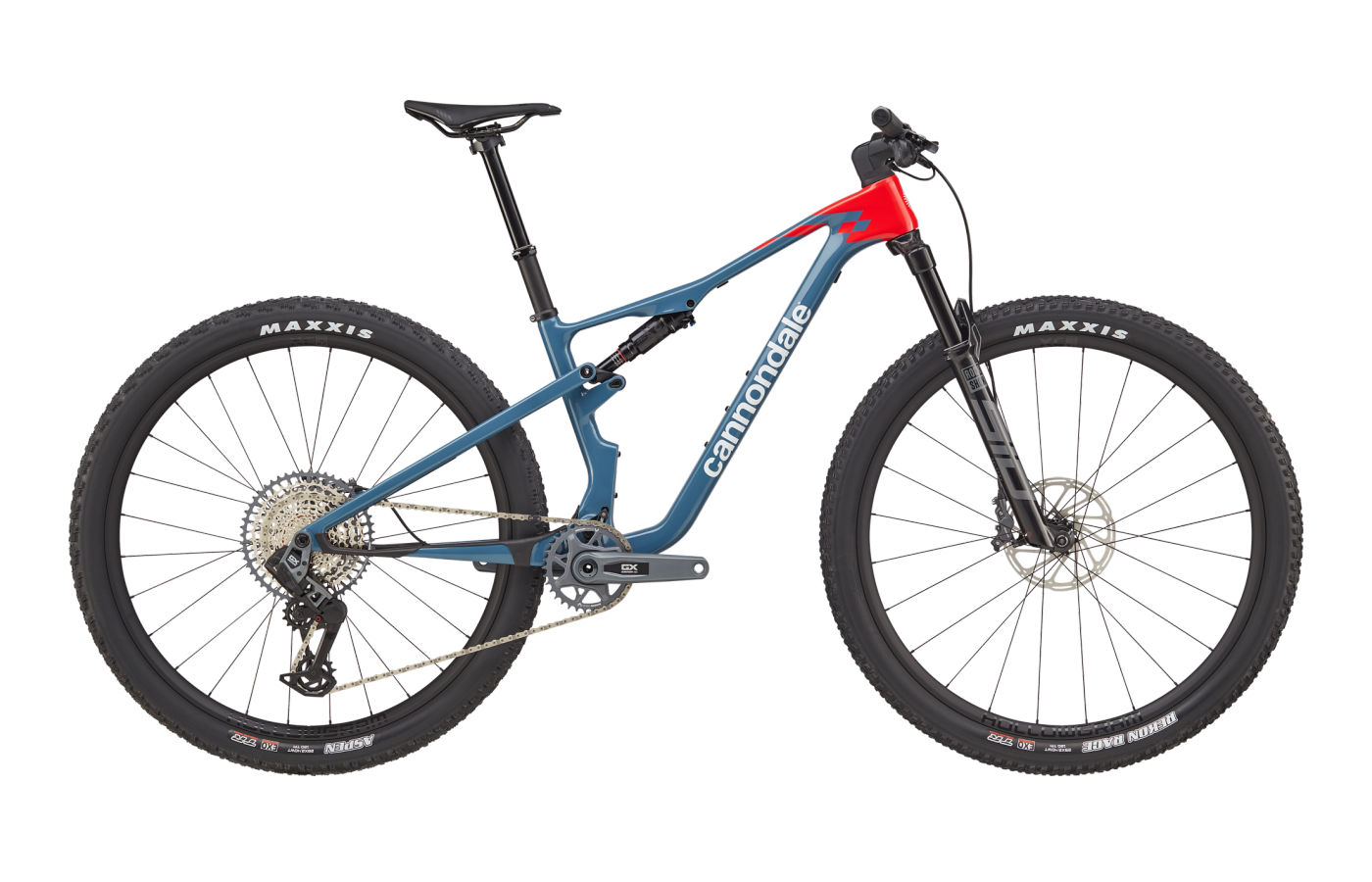
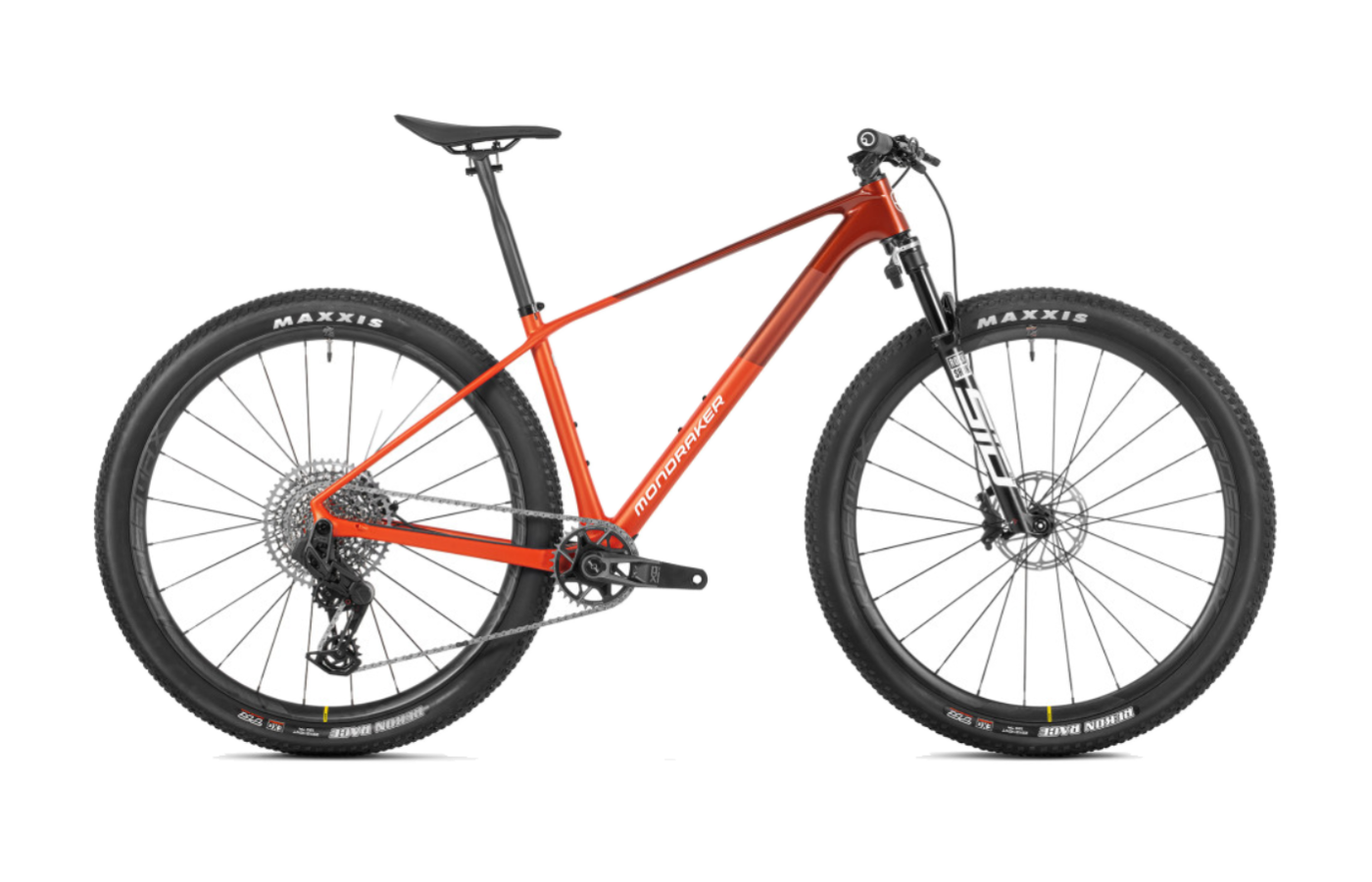
Full-suspension versus the hardtail holdout.
The Scalpel gives you 120 mm of trail-capable travel. The Podium stays lean, stiff, and fully rigid out back.
Scalpel
- 120 mm rear travel — the Scalpel descends and brakes into chatter far better than any hardtail.
- Slacker 66.6-degree head angle with size-specific 434–446 mm chainstays — stable at speed, balanced through corners.
- World Cup-proven — Alan Hatherly's 2024 Olympic bronze and XCO overall came on this platform.
- Heavier than the Podium by roughly 2 kg at equivalent spec tiers.
- Through-headset cable routing makes bearing service a shop job.
Podium
- Sub-800 g claimed frame weight (775 g size M) — top builds hit 8.1 kg complete.
- Forward Geometry — long reach plus short stem delivers more stability than most hardtails can offer.
- 25-year frame warranty — the longest in the XC segment by a wide margin.
- No rear suspension — rough descents and braking bumps punish the rider, not the bike.
- 100 mm of front travel limits technical capability versus the Scalpel's 120 mm.
Editor’s analysis
This isn't about who races XC better — it's about whether you still believe a rear shock is worth its weight.
The Cannondale Scalpel and Mondraker Podium are both carbon XC race bikes, both UDH-equipped, both built around 29" wheels and modern AXS drivetrains. Then they diverge hard. The Scalpel runs 120 mm front and rear on Cannondale's FlexPivot four-bar. The Podium is a 100 mm-front hardtail with a claimed sub-800 g frame. One is a race bike that's been re-engineered toward downcountry. The other is a race bike that's refused to move an inch off the old brief.
On paper, the Scalpel's sales pitch is forgiveness. The 66.6-degree head angle is nearly two degrees slacker than the Podium's 68.5, the 120 mm rear smooths braking bumps the Podium can only absorb through tire volume and a 27.2 mm carbon seatpost, and reviewers repeatedly describe it as a "mini-trail bike" that happens to win World Cups. Alan Hatherly's 2024 XCO world title is existence proof that modern courses reward capability, not just weight.
The Podium's counter-argument is physics. Mondraker's Forward Geometry — long reach (444 mm on a Medium), 60 mm stem, 74.5-degree effective seat angle — stretches you over the front wheel for traction without the complexity of a linkage. Top-spec RR SL builds hit 8.1 kg complete. On a smooth, climb-heavy course with a fast racer on top, that's a weapon the Scalpel simply can't match on acceleration or sustained grade.
Put another way: the Scalpel is the bike you buy when your XC trails have gotten rougher than your XC bike used to handle. The Podium is the bike you buy when you've decided rear suspension is a tax you're not willing to pay.
Where the builds differ.
Comparing our editor's-pick builds side-by-side. Winners highlighted row-by-row — lower price and weight, and the better-spec component, each mark a point.
Build variants & pricing
Both platforms span roughly $3.3k to $10.5k. The Scalpel's lineup skews a touch cheaper tier-for-tier; the Podium only goes up from the middle.
Prices are current US MSRP. Our editor's picks sit one tier below each flagship — Scalpel 2 at $5,799 versus Podium RR at $7,999. Both are electronic AXS Transmission builds on carbon wheels; the $2.2k gap reflects Mondraker's upmarket component choices (X0 versus GX, Flight Attendant-capable fork platform) rather than a true apples-for-apples delta.
How they fit, how they steer.
Both at size M. The Scalpel sits 5 mm lower in stack and 6 mm longer in reach — a racier posture on paper, though its 120 mm fork sags into something closer to parity. Head angles are nearly two degrees apart (66.6 vs 68.5), which is the real character gap.
Which size should I buy?
Size recommendations based on stack, reach, and effective top tube. The two ranges overlap tightly through S/M/L, with the Scalpel stretching slightly longer at XL.
→These are starting points. Flexibility, riding style, and preferred position all shift the answer — if you’re between sizes, a professional fit beats a chart.
What the magazines said.
Published reviews from trusted cycling outlets. Click through for the full write-up.
Which one should you buy?
If your trails are rocky, root-laced, or you value descending composure, get the Scalpel. If you race smooth courses and chase grams, get the Podium.
Scalpel
If your race calendar includes rock gardens, punchy descents, or long marathon days, the Scalpel's 120 mm of travel and slacker geometry let you stay on the gas where a hardtail has to ease off. It's also the better choice if you want one bike that doubles as a capable downcountry ride midweek.
Podium
If you race on smooth, climb-heavy XC courses and believe every gram matters, the Podium's sub-800 g frame is the sharpest tool here. Reviewers call it a bike that "flies on wings" uphill — and the 25-year warranty means you're not gambling on a fragile lightweight build.
Questions buyers actually ask.
Short answers to the things we get emailed about most often.
01Hardtail versus full-suspension — which actually wins on race day?
It depends on the course. On smooth, climb-dominated XC tracks, the Podium's weight advantage — roughly 2 kg at equivalent build tiers — translates directly into faster climbing and acceleration. Reviewers describe top-spec RR SL builds at 8.1 kg as feeling like they "fly on wings."
On modern technical courses with rock gardens and steep descents — closer to what the UCI World Cup circuit now looks like — the Scalpel's 120 mm of travel and 66.6-degree head angle let riders carry more speed through rough sections. Cannondale's own rider Alan Hatherly took a 2024 Olympic bronze, the XCO World Championship, and the World Cup overall on it.
02How much does the suspension travel difference really matter?
Up front, the Scalpel runs 120 mm to the Podium's 100 mm — a 20 mm gap that's noticeable but not category-defining on its own.
Out back is where the real gap lives. The Scalpel's 120 mm FlexPivot rear end smooths braking bumps, root sections, and repetitive chatter in a way a hardtail physically cannot. The Podium leans on a 27.2 mm carbon seatpost and high-volume 2.35–2.40" tires for compliance, which reviewers say works better than you'd expect — but it's still a hardtail when the trail gets rocky.
03Which geometry suits technical riding better?
The Scalpel, by a clear margin. Its 66.6-degree head tube angle is nearly two degrees slacker than the Podium's 68.5 degrees, and size-specific chainstays (434 mm on Small, up to 446 mm on XL) keep the rider centered across the size range.
The Podium's Forward Geometry is progressive for a hardtail — long 444 mm reach on a Medium, short 60 mm stem — but the steep head angle and lack of rear travel mean you still have to pick clean lines. Reviewers call its handling "calm" rather than "playful."
04What do I lose with the Scalpel's through-headset cable routing?
Serviceability. The SystemBar XC-One cockpit on higher Scalpel builds routes cables through the bar and headset, and reviewers have been blunt about it — Pinkbike comments called it a "mechanic's nightmare," and Cannondale itself recommends professional headset inspection every six months.
The Podium uses internal frame routing through a conventional headset, which is materially simpler to service. If you work on your own bike, this is a real factor.
05Are there real differences in warranty and durability?
Yes. Mondraker backs the Podium's frame with a 25-year warranty — the longest in the XC segment by a wide margin, and reviewers flag it as a signal of confidence in the carbon layup.
Cannondale offers a lifetime frame warranty on the Scalpel to the original owner. Both are solid, but one documented Scalpel frame failure (reported by Theloamwolf after a 5-foot drop outside the bike's intended use) has raised questions about how aggressively the Scalpel can be ridden. For XC race conditions, both platforms appear reliable.
06Which editor's pick did you choose and why?
Scalpel 2 ($5,799) and Podium RR ($7,999). Both are electronic SRAM AXS Transmission builds on carbon wheels — the Scalpel 2 with GX AXS, the Podium RR with X0 AXS. Tier-adjacent and both one step below each flagship, which is where most serious buyers actually land.
The $2.2k gap reflects Mondraker's upmarket component choices (X0 versus GX, SID Flight Attendant-compatible fork platform, Mavic CrossMax S Carbon wheels) rather than a true platform price parity gap.
07Can either bike work as a daily trail bike?
The Scalpel, comfortably. Reviewers repeatedly describe it as a "mini-trail bike" with XC efficiency — the 120 mm of travel and slacker geometry let it handle chunkier trail riding than its race designation suggests. Swap the stock Maxxis Aspen rear tire for something grippier and it's a legitimate trail-capable bike.
The Podium really isn't built for that. It's a race hardtail that does the race hardtail job exceptionally well. If you want a daily trail bike from Mondraker, the F-Podium full-suspension is the better-matched answer.
08How do component specs compare at the editor's-pick level?
Close on drivetrain, different on suspension and wheels.
Scalpel 2: SRAM GX Eagle AXS T-Type, RockShox SID Select+ fork / SIDLuxe Select+ shock, HollowGram XC-S 27 carbon wheels (27 mm internal), Maxxis Rekon Race / Aspen tires.
Podium RR: SRAM X0 Eagle AXS T-Type, RockShox SID SL Ultimate Flight Attendant fork (no rear shock — hardtail), Mavic CrossMax S Carbon wheels (30 mm internal), Maxxis Rekon Race tires.
The Podium gets the higher-tier derailleur and a more sophisticated fork platform; the Scalpel's spec money goes into its rear shock and linkage that the Podium doesn't have.
Similar bikes
If your priorities don’t map cleanly onto either of these, one of these adjacent bikes probably fits better.
F-Podium
Mondraker's own full-suspension answer — same Forward Geometry DNA as the Podium with 100 mm of rear travel added. The natural move if the Podium's ride feel speaks to you but your lower back doesn't agree.
Compare →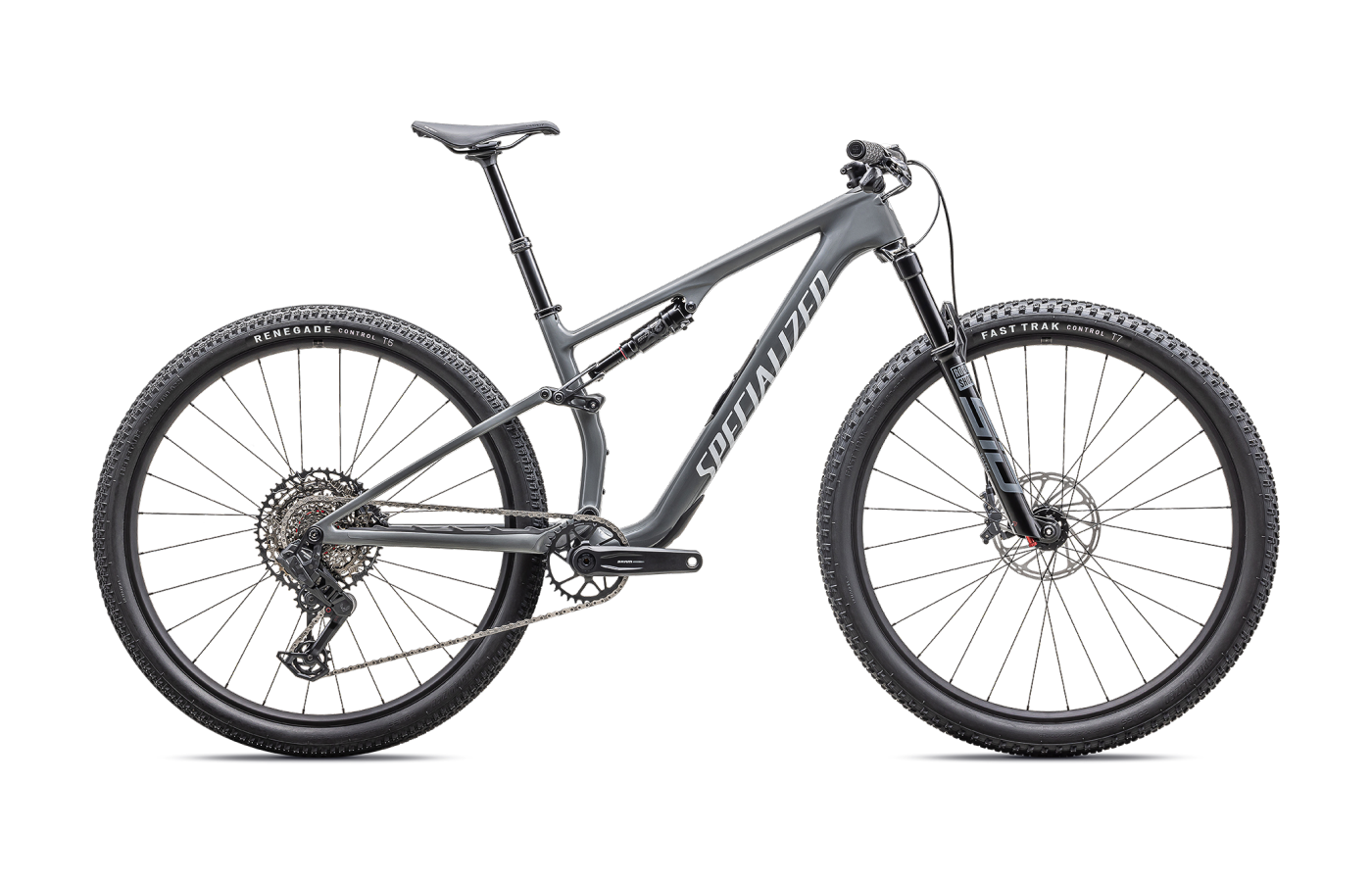
Epic
The Scalpel's most direct rival — 120 mm of travel, similar trail-capable XC brief, and no divisive Lefty or through-headset routing complications. Cleaner cockpit, similar performance bracket.
Compare →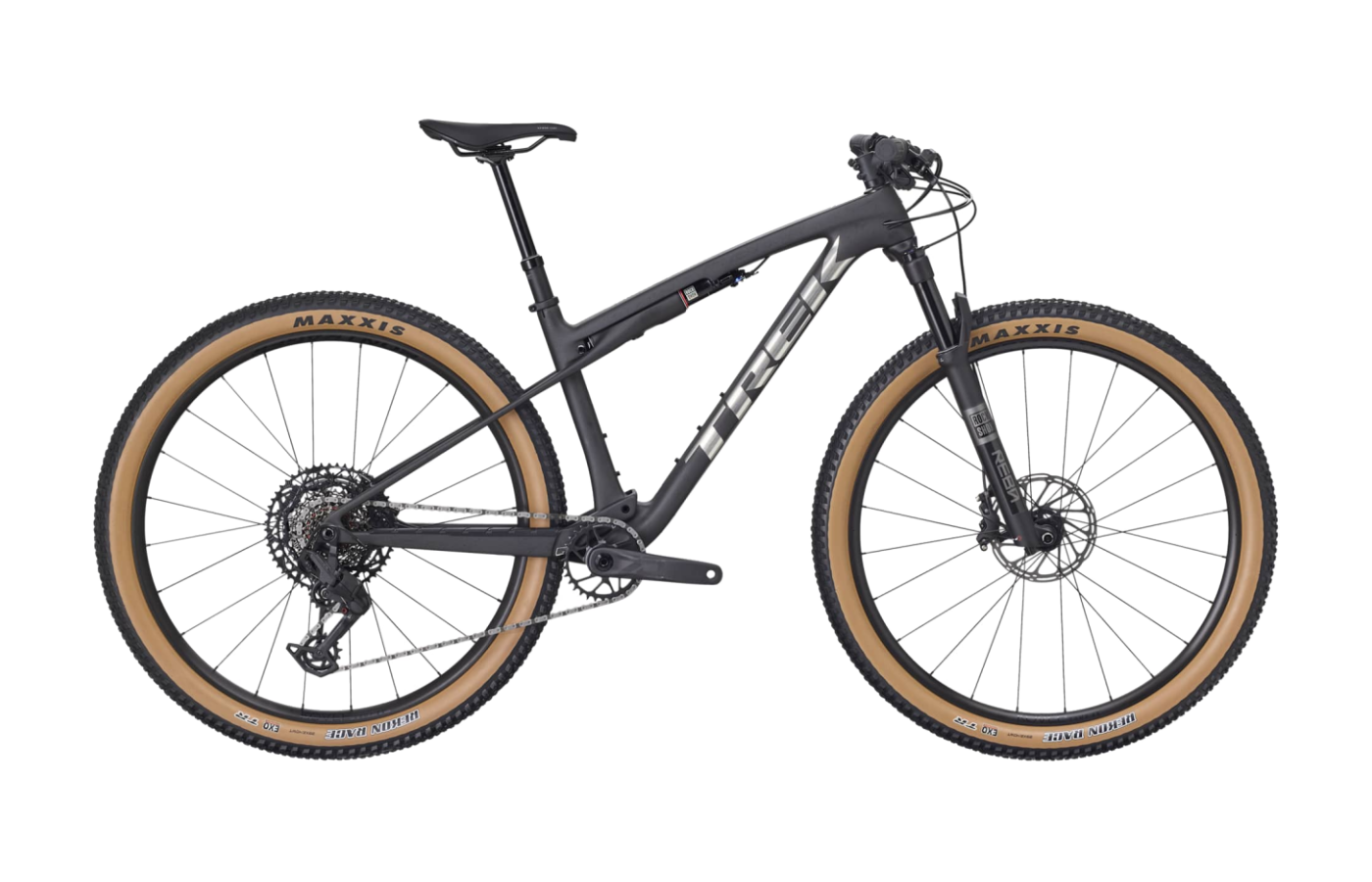
Supercaliber
Trek's 80 mm IsoStrut platform splits the difference — more forgiveness than the Podium, less complexity than the Scalpel. Best when your races sit right on the hardtail/full-suspension fence.
Compare →