Habit HT
vsTrail
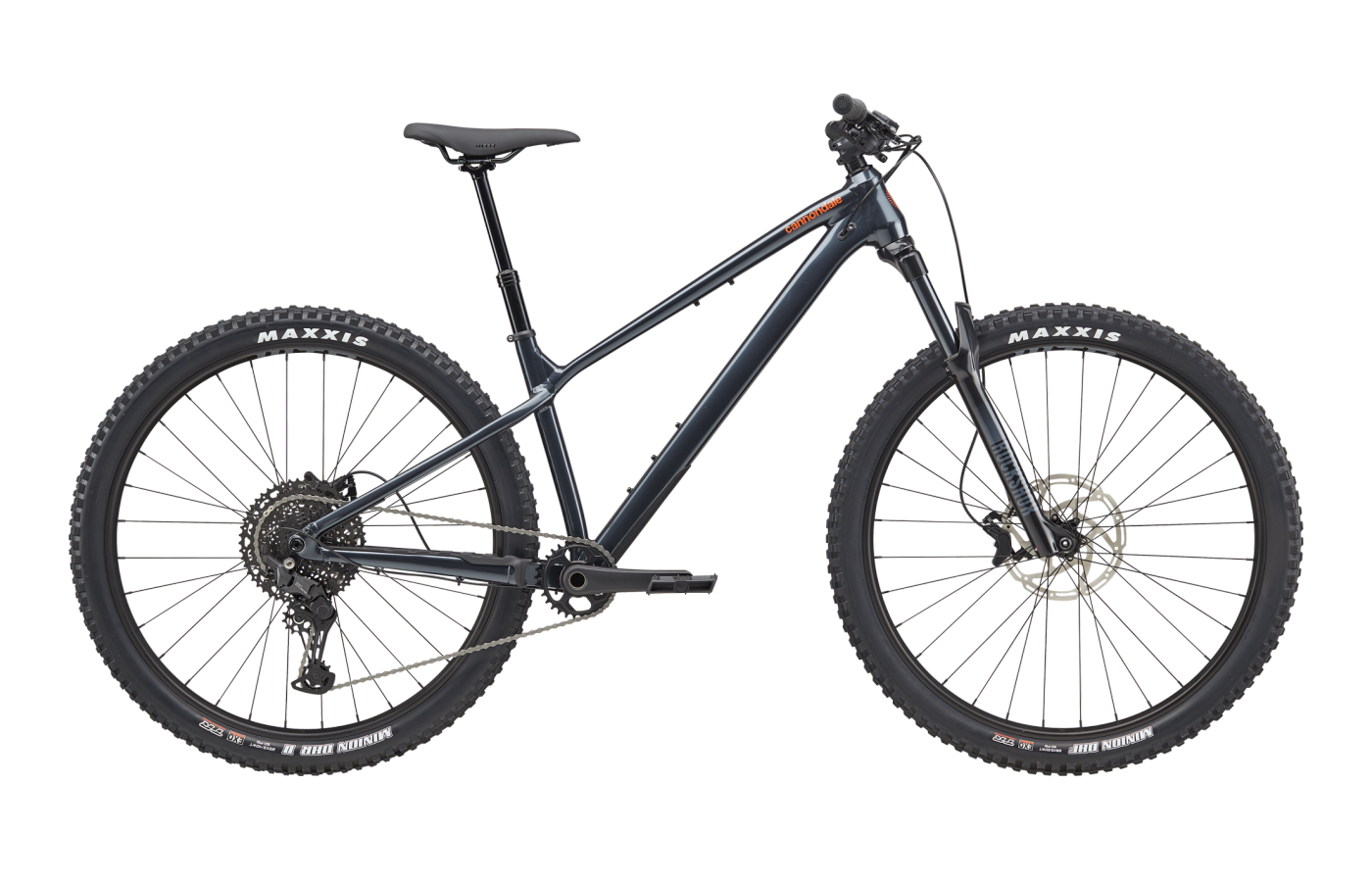
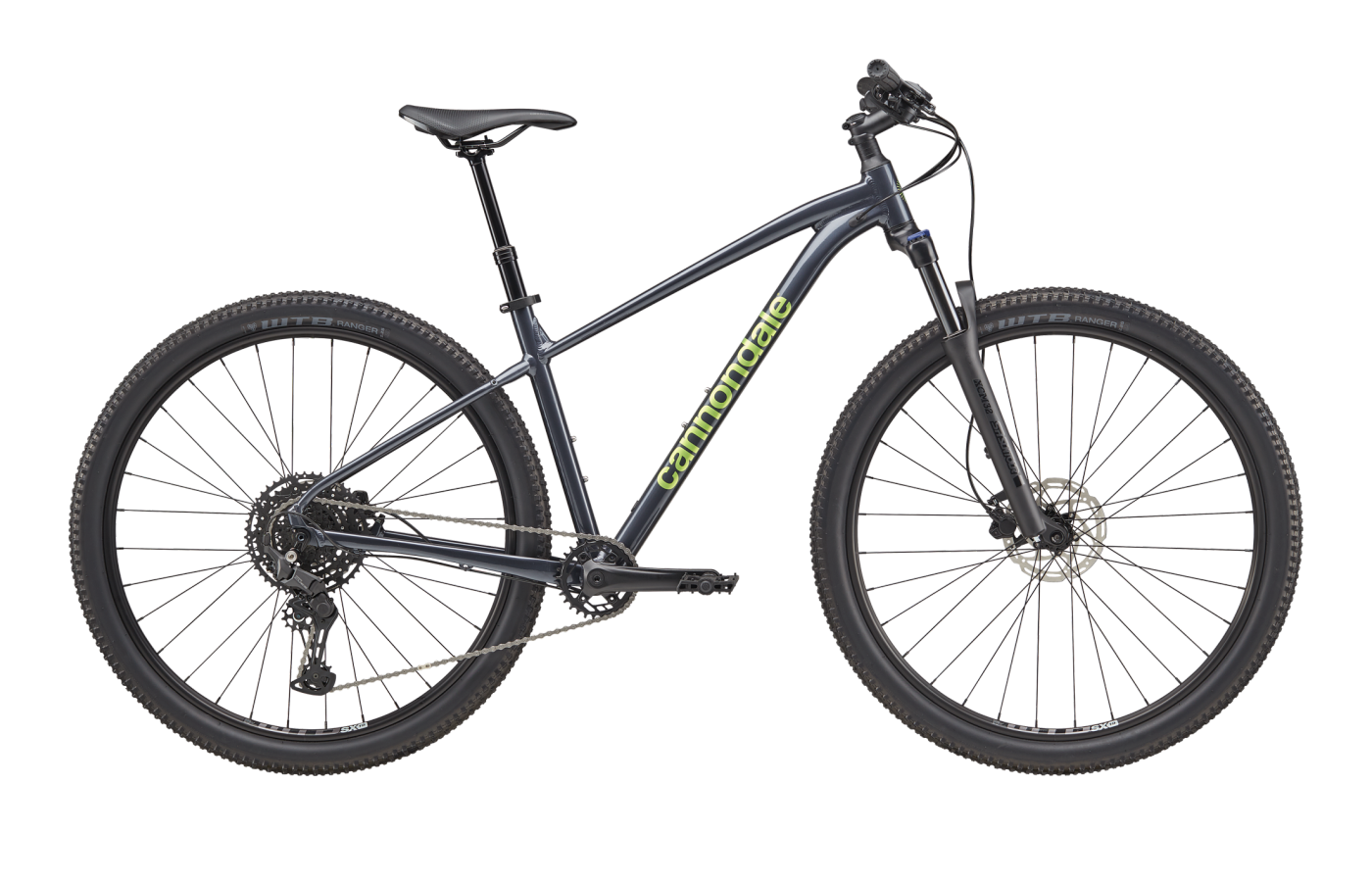
Two hardtails, two missions.
The Habit HT is a budget 'hardcore hardtail' built for steep singletrack. The Trail is Cannondale's broad-spectrum entry MTB that doubles as a commuter.
Habit HT
- Modern trail geometry across the lineup — 64-degree HTA and 130 mm of front travel on every build, not just the flagship.
- Upgrade-ready chassis with Boost 148 thru-axles, a UDH hanger, and dropper routing on every build.
- 61 mm tire clearance leaves room for genuine 2.5-inch trail rubber, stock or aftermarket.
- Only 29-inch wheels — small riders don't get a 27.5 option.
- Three builds total, all alloy — no carbon, no SLX-or-better drivetrain ceiling.
Trail
- Cheapest way into a Cannondale hardtail — the Trail 8 lands at $699 with disc brakes, a suspension fork, and 14 gears.
- Right-Sized wheels — XS and S frames get 27.5" wheels, M and up get 29ers, so handling stays consistent across heights.
- Versatile build mounts — rear-rack, kickstand and bottle mounts on most builds make it a real second-life commuter.
- Conservative 68-degree head angle and 75–100 mm fork limit it on steep, technical trails.
- Lower builds use QR rear hubs and mechanical disc brakes — a hard ceiling for future upgrades.
Editor’s analysis
Same brand, same SmartForm alloy, same paint pen — but the geometry sheets read like they were drawn for two different sports.
The Cannondale Habit HT and Cannondale Trail share a head badge and not much else. The Habit HT is a focused trail tool — 64-degree head angle, 130 mm fork, modern long-and-slack geometry on every build in the lineup. The Trail is a sprawling family of entry-level hardtails that runs from a $699 7-speed commuter up to a $1,175 women's SE — built around a conservative 68-degree head angle and 75 to 100 mm of front travel depending on which build you grab.
Look at the size-M numbers and the gap is hard to miss. The Habit HT runs a 440 mm reach, 643 mm stack, 1206 mm wheelbase, and a 76-degree seat angle. The Trail runs a 425 mm reach, 623 mm stack, 1140 mm wheelbase, and a 73.5-degree seat angle. The Habit HT is a full 4 degrees slacker up front, 2.5 degrees steeper at the seat, and 66 mm longer between the axles. That isn't a trim difference — it's a different bike for a different rider.
The Habit HT also wins on chassis hardware that matters when you actually upgrade things. Boost 148 thru-axles, a UDH derailleur hanger, dropper-compatible routing, and 61 mm tire clearance across all three builds. Most Trail builds still use 12x142 mm rear spacing (the Women's SE 4, the Trail 1 and Trail 2) and the cheaper Trail 6/8 drop to QR hubs — a real ceiling on future wheel choices. Tire clearance caps at 57 mm.
The Habit HT is a hardtail you can ride hard. The Cannondale Trail is a hardtail you can buy cheap and ride often — to work, to the canal path, to a local green loop. They're both honest, neither is hiding from what it is, and that's most of why this comparison exists at all.
Where the builds differ.
Comparing our editor's-pick builds side-by-side. Winners highlighted row-by-row — lower price and weight, and the better-spec component, each mark a point.
Build variants & pricing
The Habit HT is a tight 3-build alloy lineup from $949 to $1,349. The Trail spans 7 builds from $699 up to $1,175, including women's-specific and SE variants.
Prices are current US MSRP. The Habit HT lineup is intentionally narrow — only the priciest build (Habit HT 1, $1,349) ships with a RockShox Recon Silver air-sprung fork; the cheaper two get SR Suntour XCM coil units. On the Trail side, only builds 1, 2 and the Women's SE 4 use Boost 148 thru-axles; the rest are 142x12 or QR.
How they fit, how they steer.
Both at size M. The Habit HT is 4 degrees slacker up front (64 vs 68), 2.5 degrees steeper at the seat (76 vs 73.5), and stretches the wheelbase by 66 mm — pure descender vs. classic upright XC.
Which size should I buy?
Size recommendations are based on stack, reach, and effective top tube. The Trail covers XS through XL and uses smaller 27.5" wheels on XS/S for a more proportional fit; the Habit HT only comes in S through XL, all on 29ers.
→These are starting points. Flexibility, riding style, and preferred position all shift the answer — if you’re between sizes, a professional fit beats a chart.
What the magazines said.
Published reviews from trusted cycling outlets. Click through for the full write-up.
Which one should you buy?
If your riding involves steep singletrack, drops, and rock rolls, get the Habit HT. If you want a versatile, affordable hardtail for light trails and commuting, get the Trail.
Habit HT
If you've outgrown your old hardtail and want modern long-and-slack geometry without the cost of a full-suspension trail bike, the Habit HT is the rare sub-$1,500 hardtail that doesn't compromise on the chassis. It's a 'hardcore hardtail' template at an alloy price.
Trail
If you're new to mountain biking, on a tight budget, or want one bike that handles a green-rated loop on Saturday and a grocery run on Tuesday, the Trail is the safer pick. The wide build range means you can spend $699 or $1,175 and still get the right starter bike.
Questions buyers actually ask.
Short answers to the things we get emailed about most often.
01What's the real geometry difference between the Habit HT and the Trail?
On a size M, the Habit HT runs a 64-degree head tube angle, a 76-degree seat tube angle, a 440 mm reach, and a 1,206 mm wheelbase. The Cannondale Trail runs a 68-degree HTA, a 73.5-degree STA, a 425 mm reach, and a 1,140 mm wheelbase.
The 4-degree HTA gap is the headline number — it puts the Habit HT in modern aggressive-trail territory (the same range as enduro hardtails) while the Trail sits in classic recreational-XC geometry. The Habit HT is more stable on steep descents; the Trail is quicker and more upright at low speeds.
02Can the Cannondale Trail handle real singletrack?
It can handle light to medium trail riding — green and easier blue loops, gravel doubletrack, and bike-path singletrack — but reviewers consistently flag it as not built for jumps, drops, or steep technical descents. The conservative head angle and short-travel fork (75 mm on the Trail 8, 100 mm on most builds, 120 mm on the SE versions) start to feel out of their depth once the trail tilts down sharply.
If your local trails involve sustained steep descents, rock gardens, or anything with serious exposure, the Habit HT's 130 mm fork and 64-degree HTA are a much better match.
03Why is the Habit HT a hardtail when Cannondale also sells the full-suspension Habit?
The Habit HT borrows the full-suspension Habit's geometry philosophy — long reach, slack head angle, steep seat angle — and applies it to an alloy hardtail frame at roughly half the price. You get a similar handling character on the descents at a sub-$1,500 entry point, with the trade-off that there's no rear shock to take the edge off chunky terrain.
Think of it as the Habit's geometry sheet on a budget chassis — fewer pivots, less maintenance, and a much lower asking price.
04What's the difference between the Habit HT 1, 2, and 3?
All three Habit HT builds share the same alloy frame, 130 mm fork travel, 29-inch wheels, and Boost 148 / UDH chassis hardware. The differences are in the fork and drivetrain.
Habit HT 1 ($1,349): RockShox Recon Silver air-sprung fork, Shimano CUES U6000 1x11.
Habit HT 2 ($1,299): SR Suntour XCM 34 LO coil fork, Shimano CUES U6000 1x10.
Habit HT 3 ($949): SR Suntour XCM34 LO coil fork, microSHIFT Advent X 1x10.
The air fork on the HT 1 is the meaningful upgrade — it's noticeably more tunable and supportive than the SR Suntour coil units on the cheaper two. If the budget allows, it's the build that best matches the platform's intent.
05Are these tubeless-ready out of the box?
Habit HT: all three builds ship with WTB tubeless-ready rims (ST i30 TCS on the HT 1, STX i25 TCS on the HT 2 and HT 3). The HT 1's tires (Maxxis Minion DHF/DHR II EXO) are tubeless-ready too; the cheaper two ship with non-tubeless WTB Breakout/Trail Boss Comp tires that you'd want to swap if going tubeless.
Trail: the higher builds (Trail 1, Trail 5, Women's SE 4) use WTB STX i25 or SX19 tubeless-ready rims with non-tubeless tires. The Trail 6 and Trail 8 don't include tubeless-ready wheels — converting them is a wheel swap, not a tape job.
06How much tire can you actually fit?
Habit HT: 61 mm of clearance, leaving room for true 29x2.5" rubber (which is what the HT 1 ships with). You can run a 2.6" without rubbing on most builds.
Cannondale Trail: 57 mm of clearance — enough for the stock 29x2.25" or 27.5x2.25" tires and a small bump up if you want more grip, but you won't fit a real 2.5" trail tire.
For reference, neither of these is a 'plus' bike — if you want 2.8" or wider, look at a different platform.
07Which one is a better long-term upgrade platform?
The Habit HT, by a wide margin. Every build runs Boost 148 thru-axles, a UDH derailleur hanger, dropper-compatible cable routing, and modern thru-axle / 110 mm Boost front spacing. That means the wheels, fork, dropper, and drivetrain you buy today will all transfer to a future frame, and parts will keep being available for years.
The Trail is a mixed bag. Only the Trail 1, Trail 2 and Women's SE 4 use Boost 148 rear; the rest are 142x12 or QR. Lower builds also lack dropper-routed seat tubes. If you suspect you'll want to upgrade aggressively, start on the Habit HT instead.
08What about the warranty?
Both frames are covered by Cannondale's lifetime frame warranty against manufacturing defects to the original owner — though one 2024 review of the Habit HT 1 specifically called out a 25-year frame warranty as a standout feature for the price. Expect crash-replacement pricing on either platform if you damage the frame in a wreck.
Note: a few user comments on Trail 8 reviews flagged customer-service friction with persistent drivetrain issues. Anecdotal, but worth keeping in mind on the entry-level builds.
Similar bikes
If your priorities don’t map cleanly onto either of these, one of these adjacent bikes probably fits better.
Roscoe
The most direct rival to the Habit HT — Trek's progressive trail hardtail with a 140 mm fork and the same long-and-slack philosophy. If you like the Habit HT's geometry but want a touch more travel up front, the Roscoe is the obvious cross-shop.
Compare →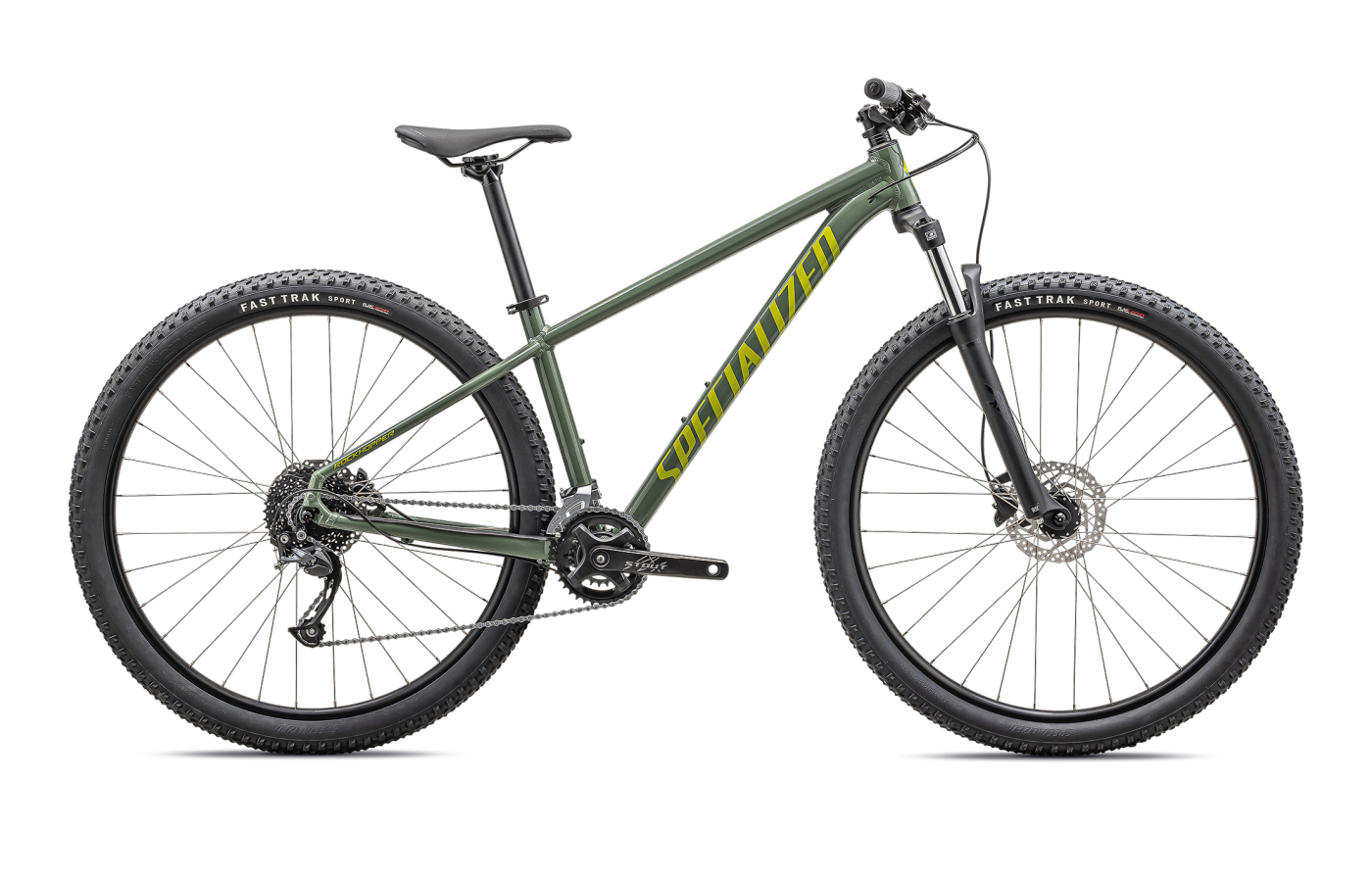
Rockhopper
Specialized's answer to the Cannondale Trail — a sprawling entry-level hardtail family that targets the same beginner-to-intermediate buyer with an even wider range of builds and frame sizes. Worth a look if you find your size sold out on the Trail.
Compare →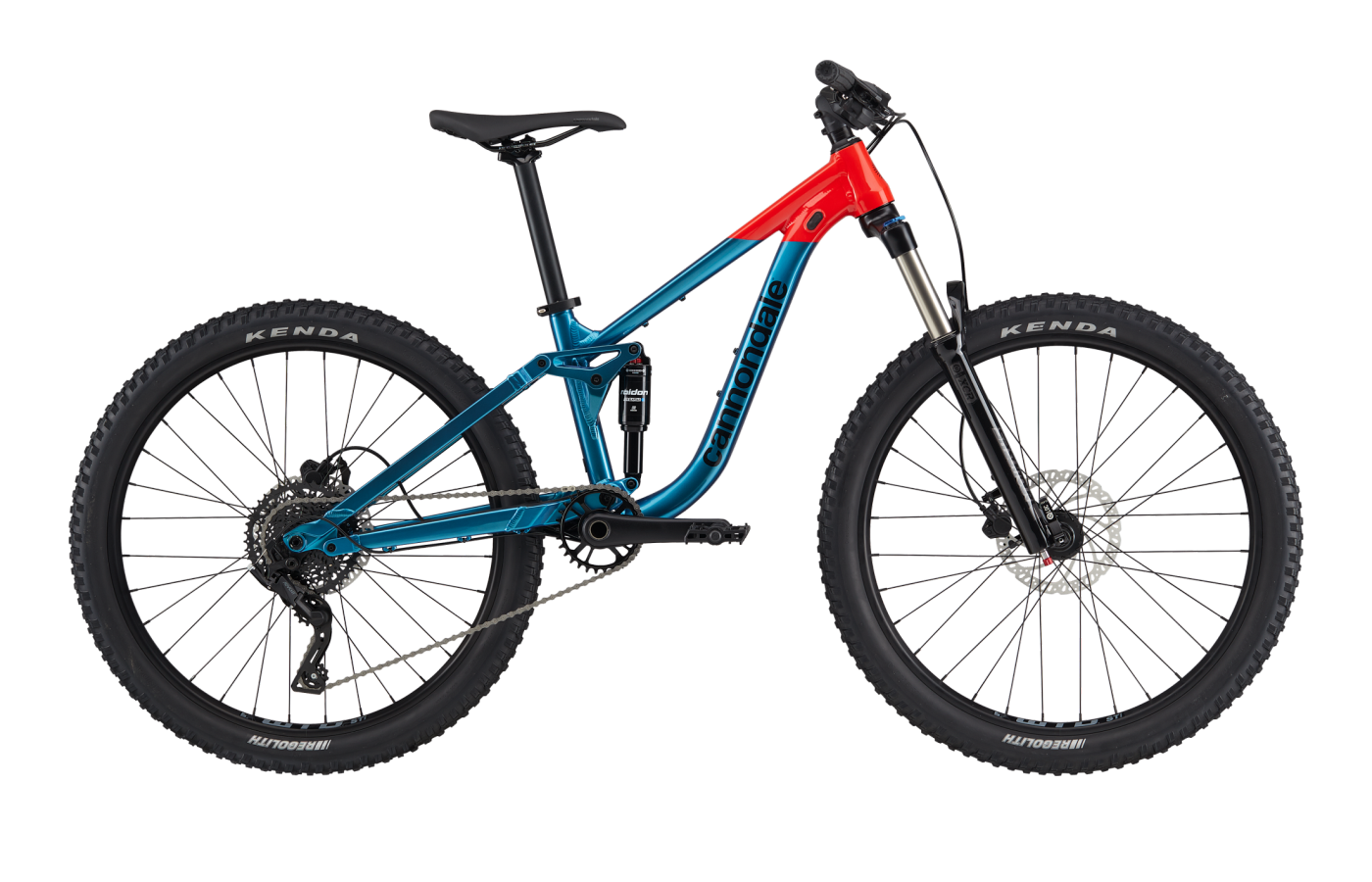
Habit
If you like the Habit HT's geometry but find a hardtail too punishing on rough descents or long days, the full-suspension Habit adds 130 mm of rear travel to a similar chassis. Roughly double the price, but the rear shock changes what trails you can comfortably session.
Compare →